
It may sound like a strange word, but gomasio, also known as kantatsu, is an excellent seasoning used in Japanese cuisine to replace salt. It’s composed of a low percentage of sea salt and the rest just toasted and ground sesame seeds! Sometimes it is enriched with seaweed, spices, and aromatic herbs and is mostly used to season a variety of preparations, from salads to vegetables, from meat to rice, but it pairs even better with grains, as it enhances their pleasant flavor, giving them an extra touch. Its use is now quite widespread, also because it allows you to flavor dishes intelligently without overdoing it with sodium, which we know is already present in many foods, especially processed ones, so reducing it is really important for our health! The magic is precisely in the sesame seeds, as I explained when I showed you how to make homemade tahini, they are also very rich in proteins, vitamins, and calcium, even more than milk and cheese. Furthermore, in this preparation, the presence of salt is rendered inactive by the action of sesame seed oil, which would not allow it to absorb high amounts of water. Result? A food flavored with gomasio will not cause any particular sensation of thirst and will guarantee many advantages from the therapeutic and healing properties point of view. For this reason, it is healthier to use this preparation instead of seasoning exclusively with salt.
The important thing is to use it only raw and never in cooking, as sesame is affected by heat. Gomasio is easily found for sale in organic shops or ethnic markets. But lately, its diffusion is such, especially also in vegan cuisine, that it is even available in large stores. But did you know that gomasio can also be easily prepared at home? And it is certainly more economical and very easy to make. All you need is a good mortar and pestle, a few minutes of patience, and you’re done! You’ll find the proportions in the recipe according to your needs!
Given the properties of sesame seeds, which you can also find below in the notes, I leave you some recipes that include them and from which to take inspiration:
- Rest time: 15 Minutes
- Preparation time: 20 Minutes
- Cooking time: 45 Minutes
- Portions: 20 Ø pan
- Cuisine: Italian
Ingredients
⚠ THIS RECIPE CONTAINS ONE OR MORE AFFILIATION LINKS. The products I recommend are the same I use in my recipes; purchasing them through my blog supports me and my work, while it won’t cost you anything extra!
- 50 g sesame seeds (approx. 14 teaspoons *)
- 5 g sea salt
Tools
⚠ THIS RECIPE CONTAINS ONE OR MORE AFFILIATION LINKS. The products I recommend are the same I use in my recipes; purchasing them through my blog supports me and my work, while it won’t cost you anything extra!
- 1 Sieve
- 1 Baking Tray
- 1 Parchment Paper
- 1 Mortar
- 1 Knife
Steps
First of all, wash the sesame under running water using a sieve. Once drained, toast it in the oven at 250°F for 15′, spreading it evenly in a baking tray lined with parchment paper.**
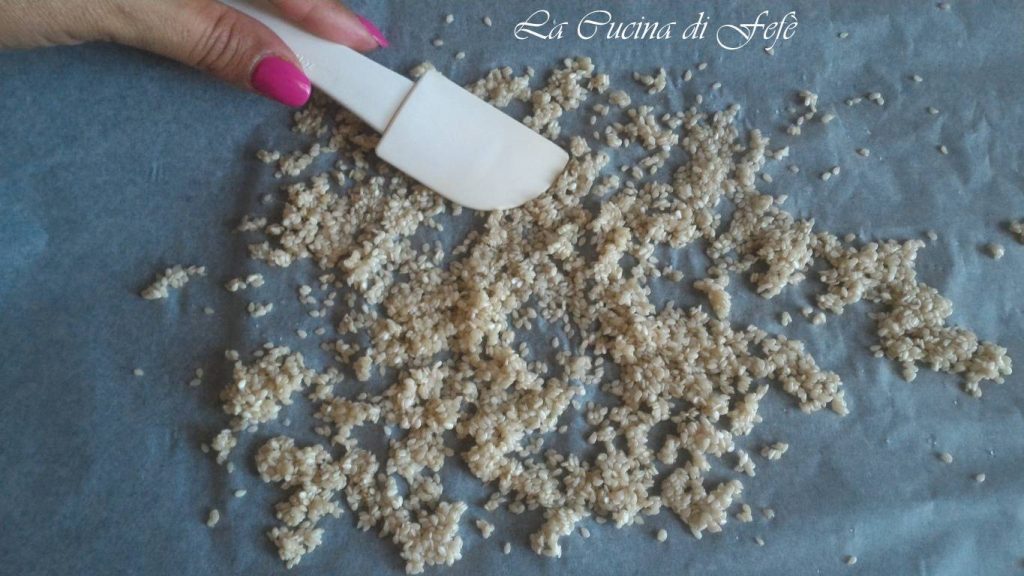
To verify that they are well toasted, take a dry spoon and scoop up some seeds: if they stick to the spoon or to each other, it means the sesame is not yet correctly toasted. Once toasting is finished, let them cool completely.
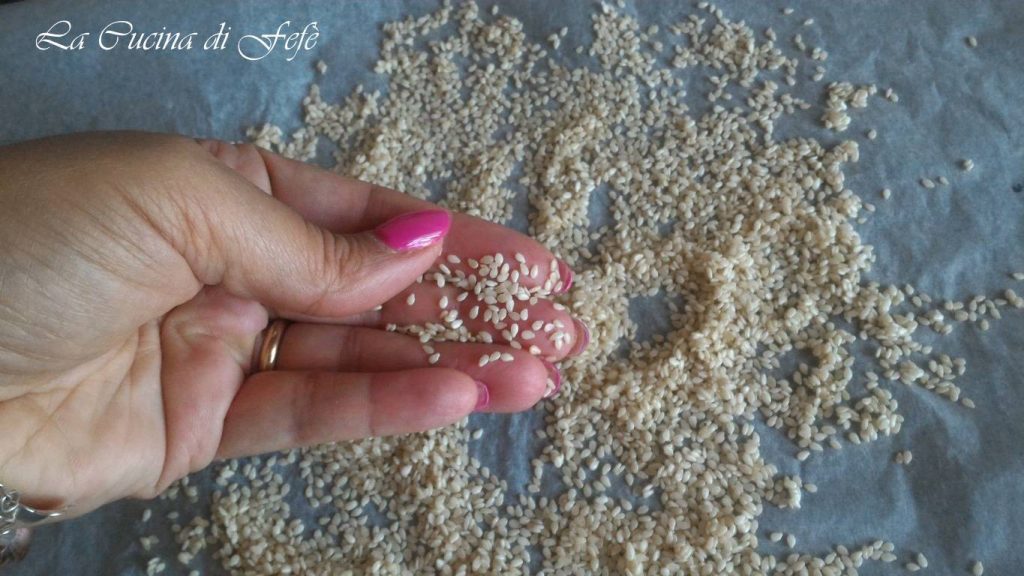
Transfer the cooled sesame seeds to the mortar.
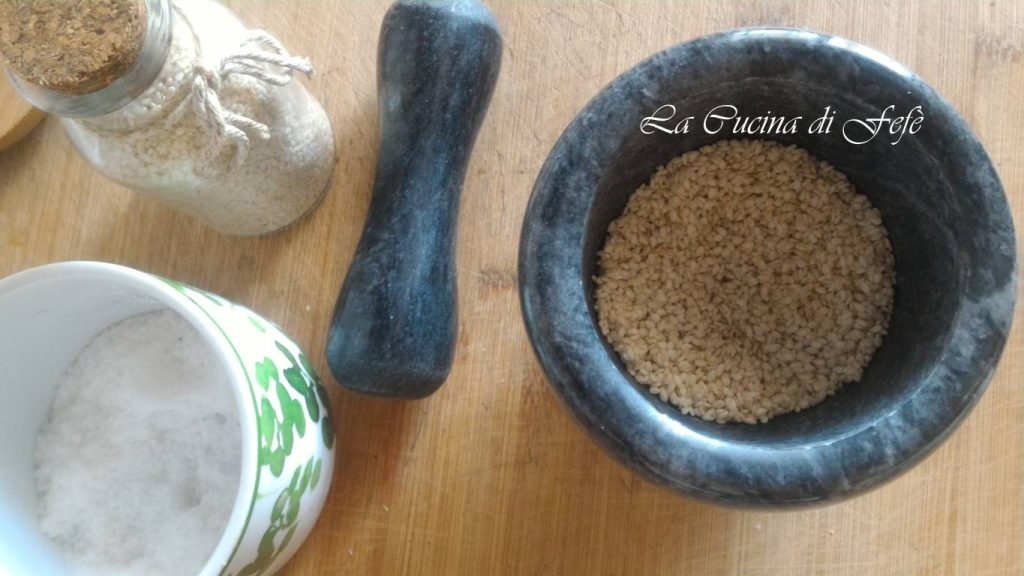
Add the salt and in the meantime, chop fresh rosemary finely with a knife.***
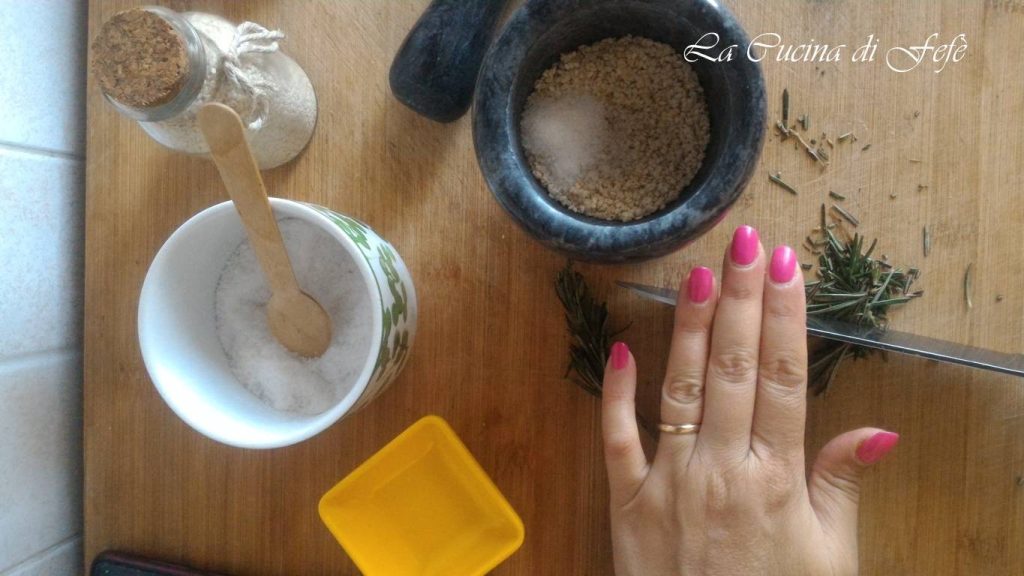
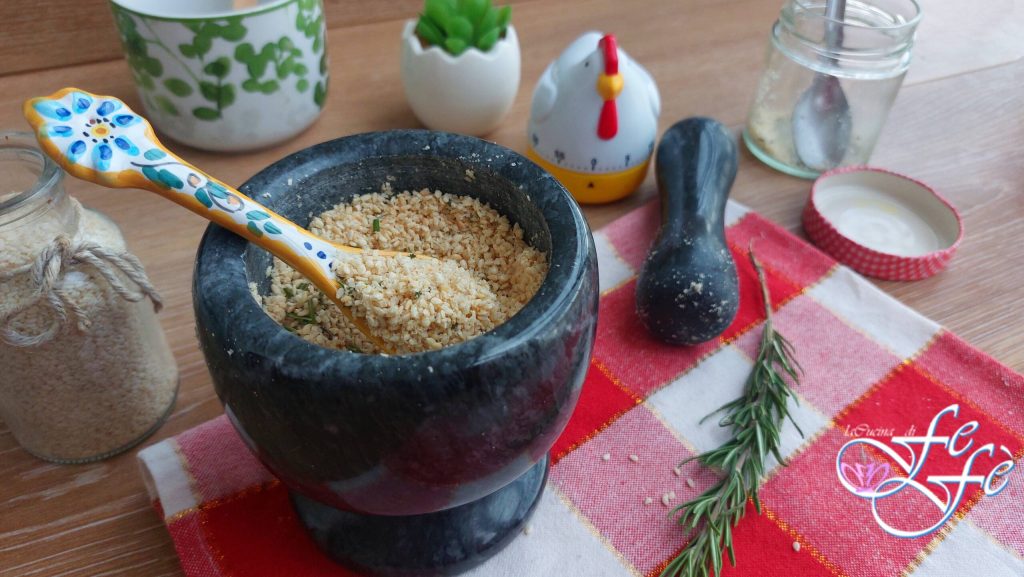
Grind the first two ingredients together in circular motions. The result should be a not-too-fine and slightly oily powder: only then is the gomasio ready.
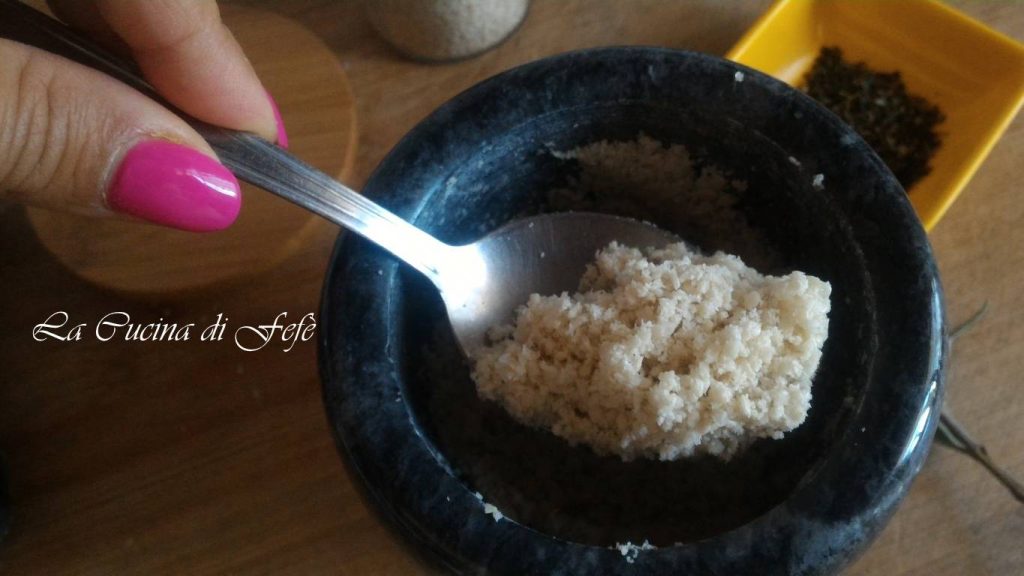
Add the chopped rosemary and mix with a spoon.
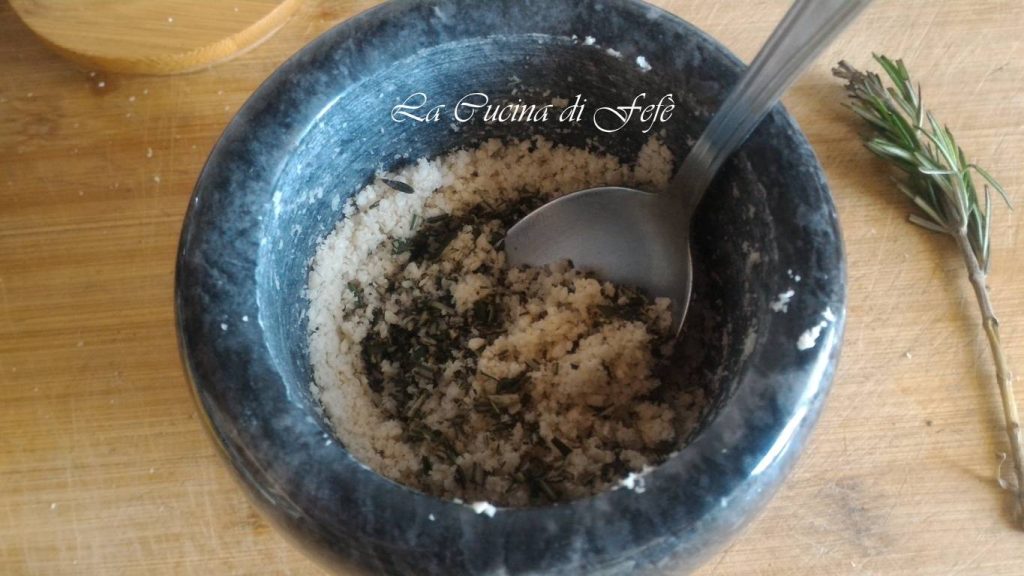
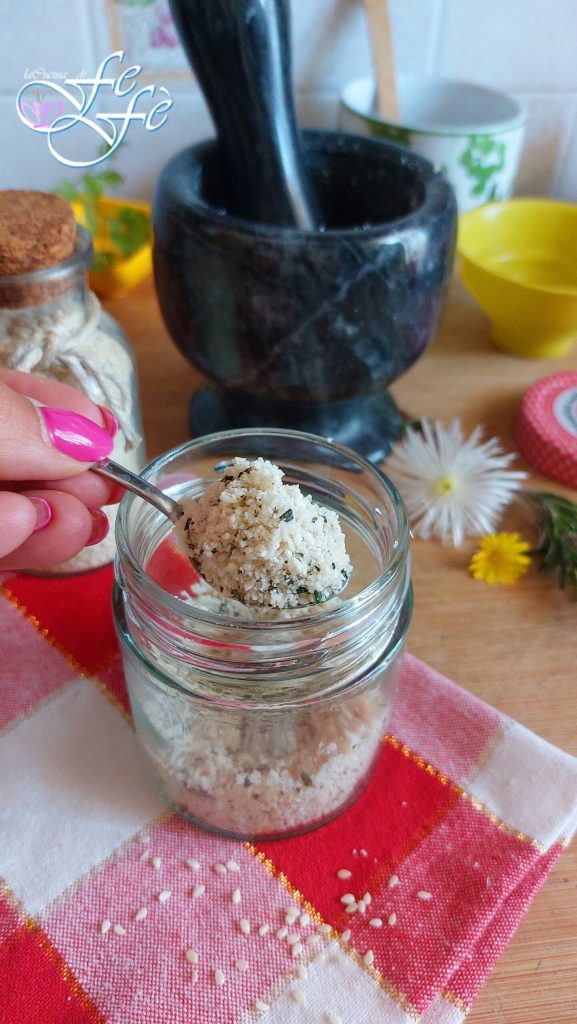
And voilà…the homemade gomasio is ready to be used!
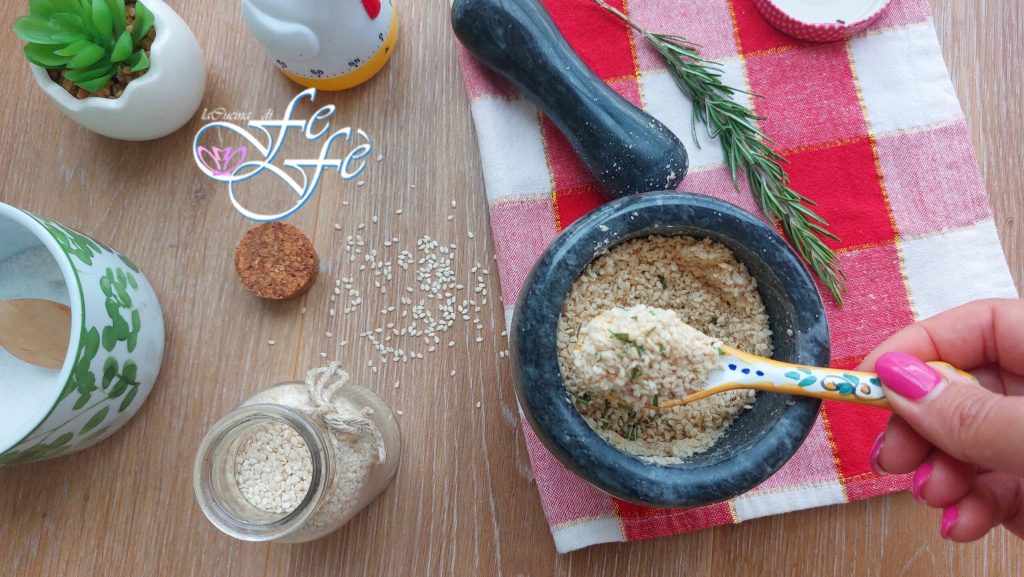
Use it to flavor any dish you desire!
Bon Appétit from La Cucina di FeFè!
Storage
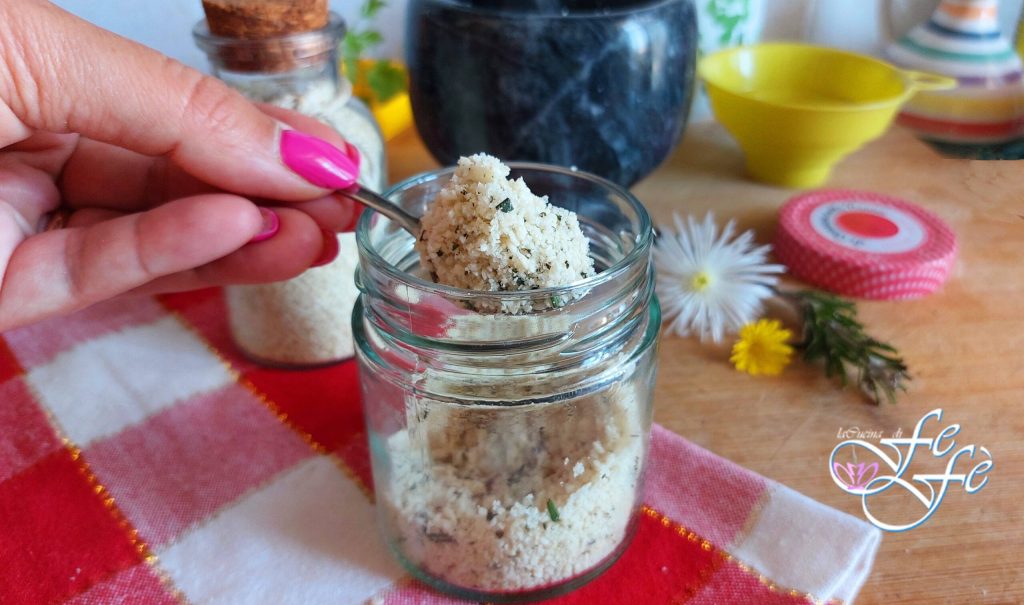
👉 You can store the gomasio in the fridge, inside a glass jar with a lid for up to 2 weeks.
Tips, notes, variations, and suggestions
🟣* The ideal proportions are 10:1, that is, for every 10 teaspoons of sesame seeds, preferably organic, a teaspoon of sea salt, preferably whole, is needed. Obviously, these proportions can vary depending on health needs, with a greater amount of sesame seeds, so the ratio can rise to 14:1 up to a maximum of 20:1.
🟣** As an alternative to the oven, you can also toast the sesame seeds in a pan over very low heat. Here, unlike the oven, cooking is the most critical phase, as the seeds can burn in just a few moments, so it is necessary to stir them constantly with a spoon, as sesame is sensitive to heat excess, losing all its properties.
🟣*** Gomasio can also be made with black sesame seeds and enriched with other fresh Mediterranean herbs such as chives, sage or thyme, or dried aromatic herbs like oregano.
🟣 An interesting variation of the classic gomasio is with the addition of dried cherry tomatoes. You just need to chop them in a mixer and add them to the mortar along with the toasted sesame seeds and salt.
🟣 Sesame seeds are particularly nutritious, as they contain fats but also proteins and carbohydrates in significant quantities. They are also rich in vitamins, minerals, and antioxidants as well as essential fatty acids like omega 6 and omega 3. However, with all these benefits, gomasio is a caloric product, although less energy-dense than oil, so for all these reasons, gomasio should be used in quantities of up to 10-20 grams at a time.
