
Homemade Tahina: The Calcium-Rich Sesame Cream Recipe
Do you know tahina? I love it! Also called “sesame butter,” it is a Middle Eastern condiment made by grinding sesame seeds. Its toasted aroma is similar to peanuts, but it has a unique versatility that makes it the star in the kitchen, from babaganoush to the indispensable chickpea hummus.
Properties and Benefits of Tahina: More Calcium Than Milk
Despite its exotic name, tahina is actually a health treasure for our bodies. Adding it to your diet provides a richness of calcium (up to five times more than milk!), essential to help prevent osteoporosis, and Omega-3 and Omega-6, which protect the cardiovascular system as natural anti-inflammatories. Grinding the seeds allows the body to better absorb all the nutrients compared to whole seeds.
How to Use Tahina in the Kitchen
This cream is a real all-rounder! You can use it to dress salads as a creamy dressing, to accompany falafel, meatballs and vegetables. I also use it for breakfast when I want a protein boost. Spread on bread together with jam it is an energetic and healthy snack. It will also be perfect to accompany meat and vegetable dishes, enhancing the ingredients without overpowering them.
Why make it at home? (Cost Savings and Quality)
Making homemade tahina is very simple, quick and definitely more economical than store-bought. You only need three ingredients, a nonstick pan and a good food processor. Once you try it, you won’t be able to do without it!
Here you will find other really interesting recipes to use sesame more often in your dishes:
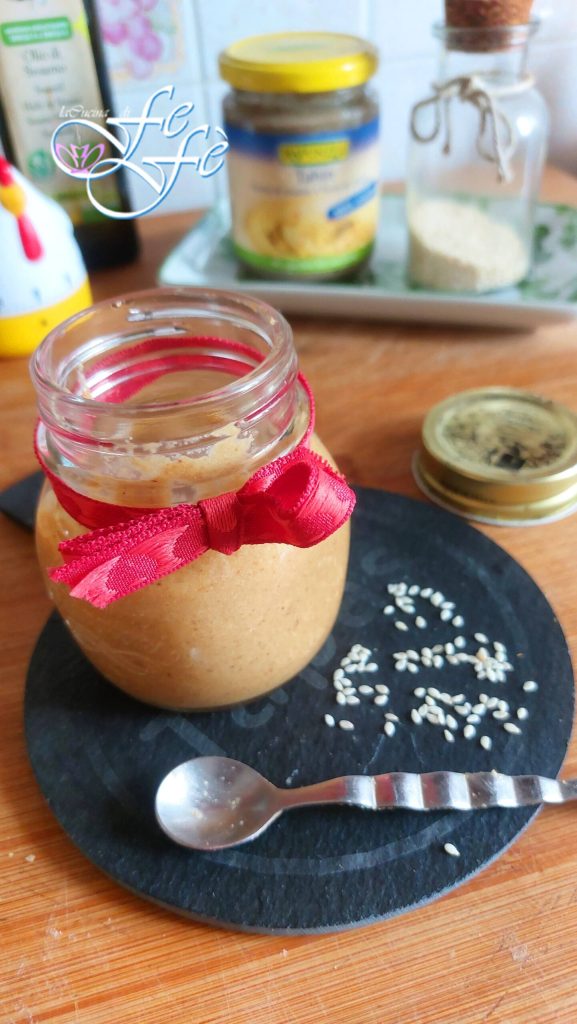
- Difficulty: Very easy
- Cost: Affordable
- Preparation time: 5 Minutes
- Portions: 1 medium jar
- Cooking methods: No-cook
- Cuisine: Middle Eastern
- Seasonality: All seasons
Ingredients
⚠ IN THIS RECIPE THERE ARE ONE OR MORE AFFILIATE LINKS. The products I recommend are the same ones I use in my recipes; buying them through my blog helps support me and my work at no extra cost to you!
- 6 oz sesame seeds (about 1 1/6 cups)
- 2 1/3 tbsp sesame oil (or sunflower oil, peanut oil, etc.)
- salt (optional)
Tools
- 1 Pan
- 1 Food processor
- 1 Spatula
- 1 Ladle
Steps
Place the sesame seeds in a large nonstick pan and toast them over low heat for about 4–5 minutes, stirring constantly with a wooden spoon so they don’t burn*.
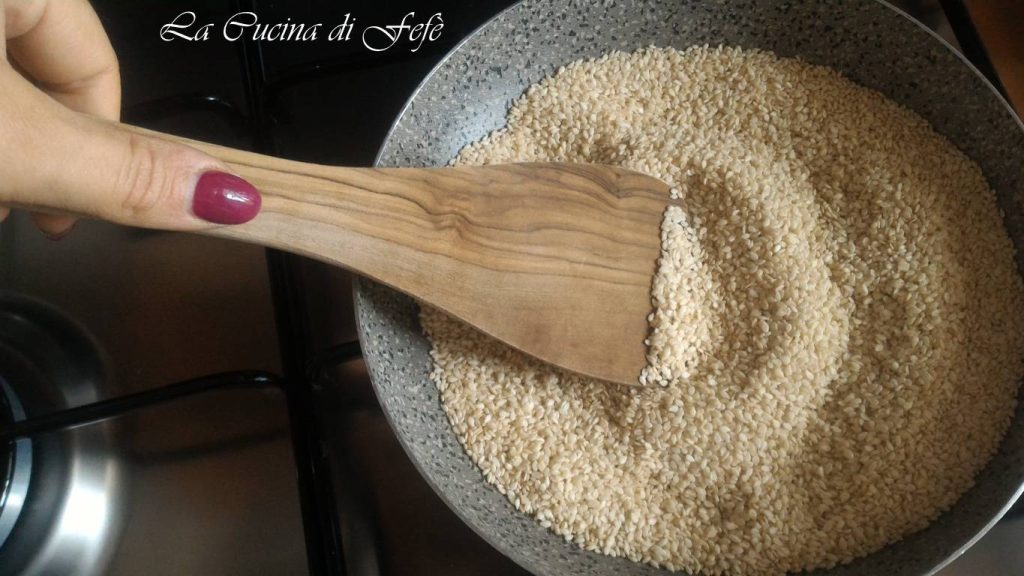
They should just turn golden but not darken too much; otherwise they will not only become bitter, but will also lose their beneficial properties and their ability to release essential oils when you blend them.
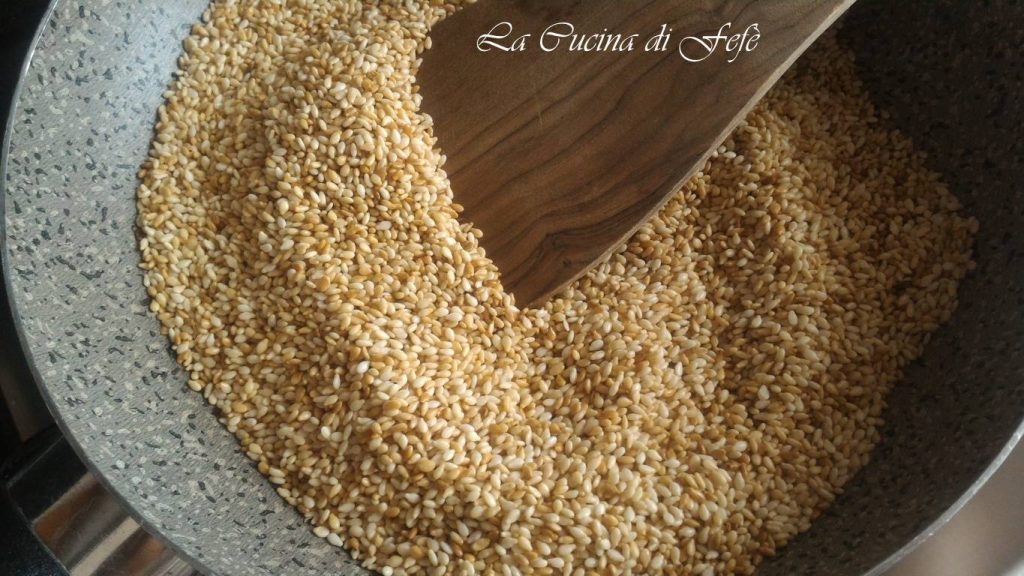
Once toasted, let them cool for 10 minutes and transfer them to a food processor together with the sesame oil.
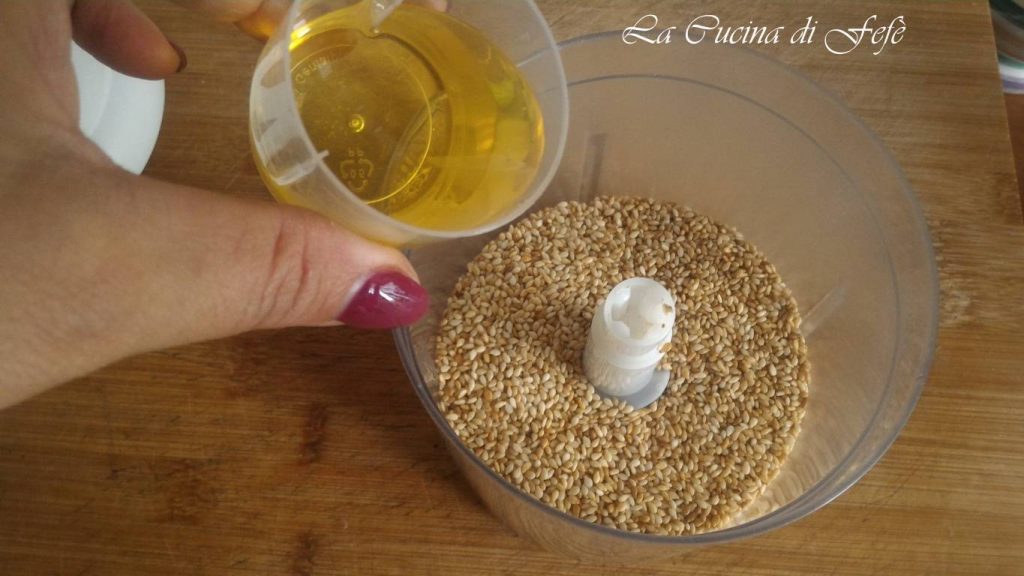
Finally add a pinch of salt, if you like.
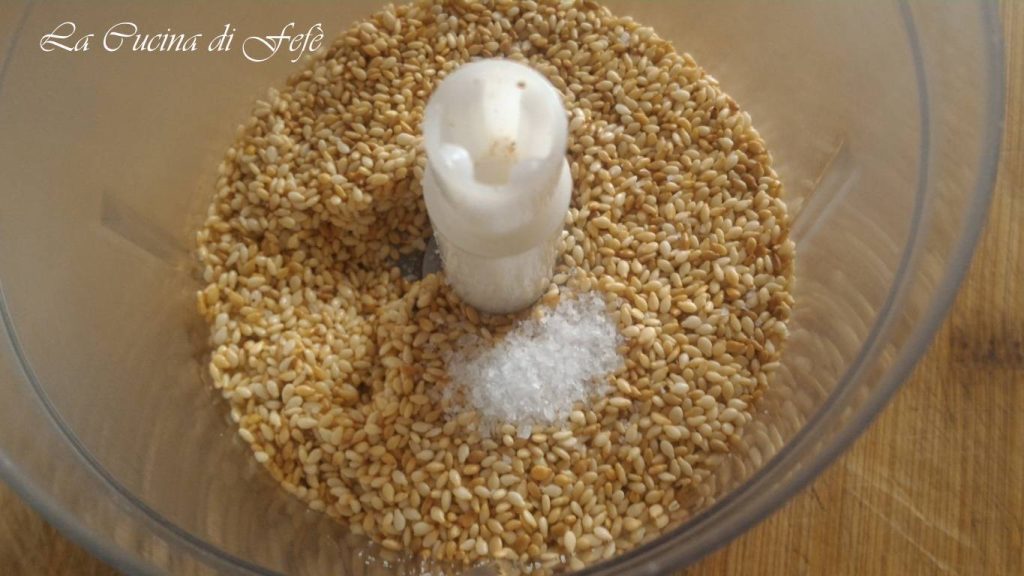
Blend in pulses so the mixture doesn’t overheat, to preserve all active compounds. Stir occasionally with a spatula, pushing the mixture down from the sides. At first you will have a pasty, dense mixture.
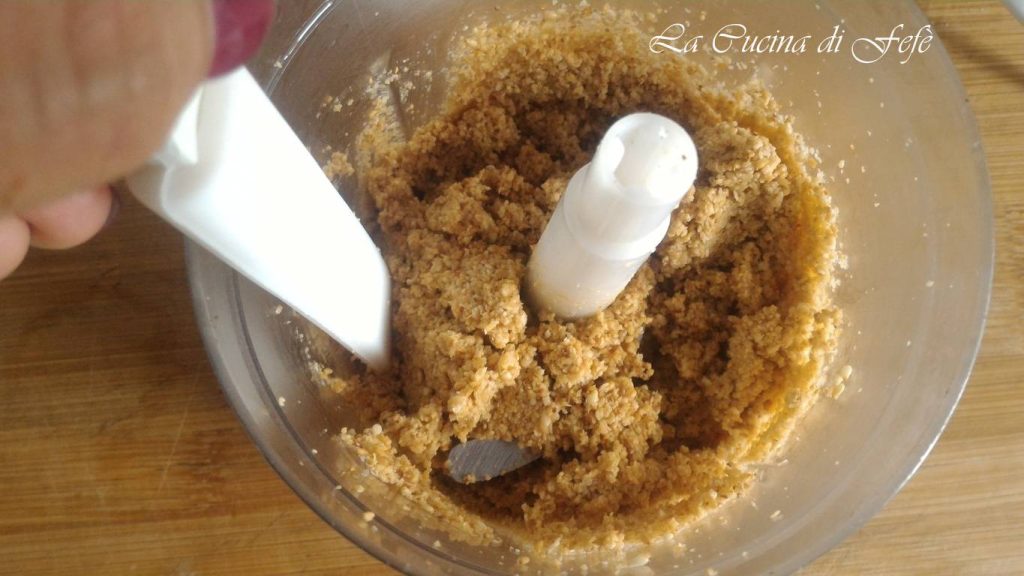
It takes a bit of patience, but continuing to blend little by little, the sesame seeds will start to release their rich oil and you will obtain a smooth, fluid cream.
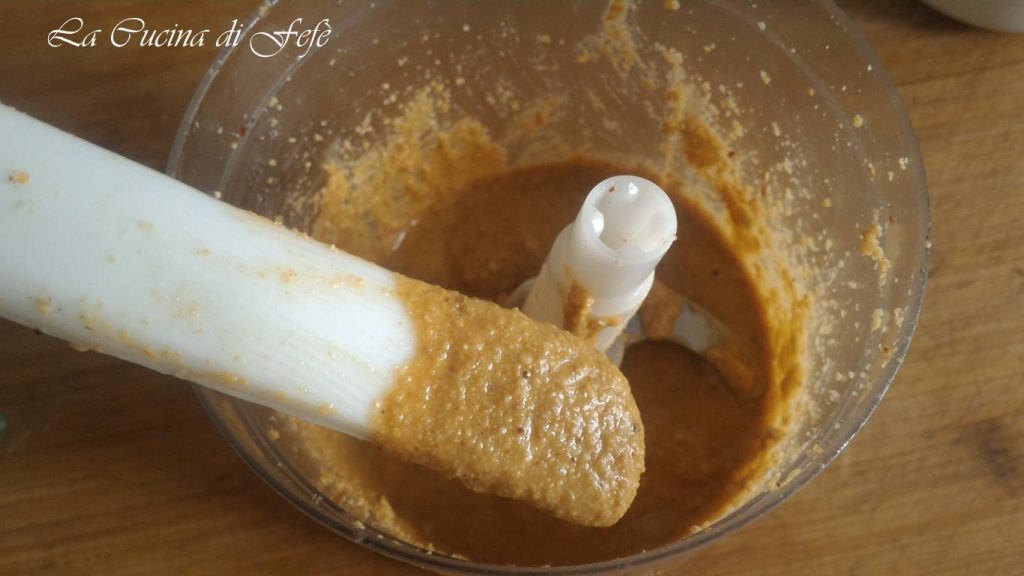
Transfer the resulting cream into a glass jar.
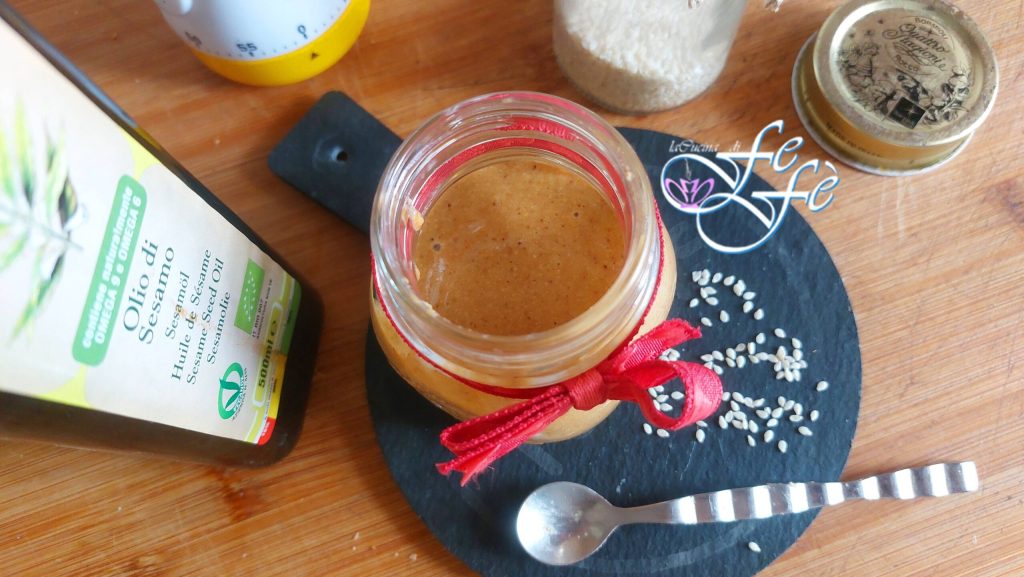
And voilà… the homemade tahina is ready to enjoy!
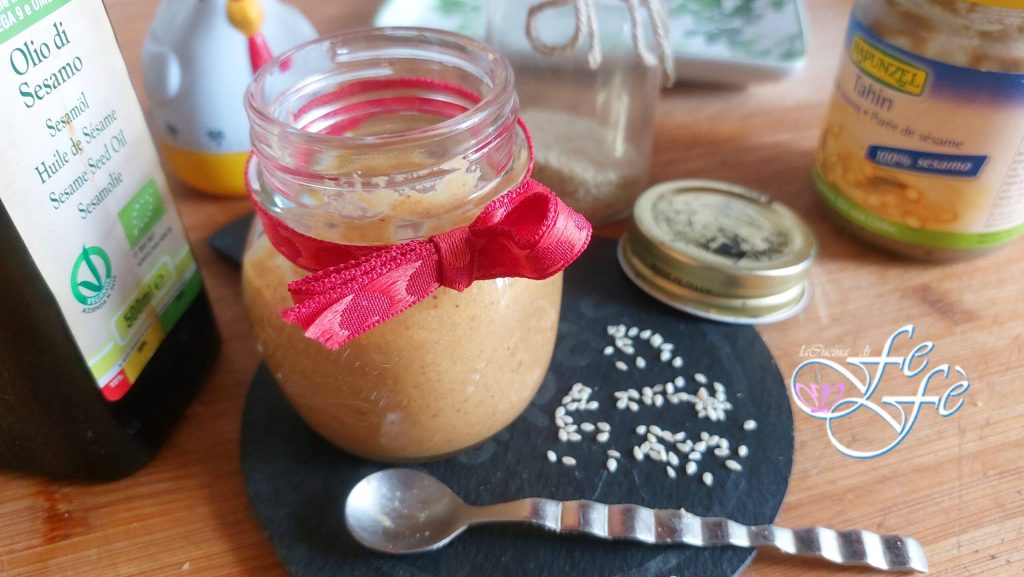
Enjoy from La Cucina di FeFè!
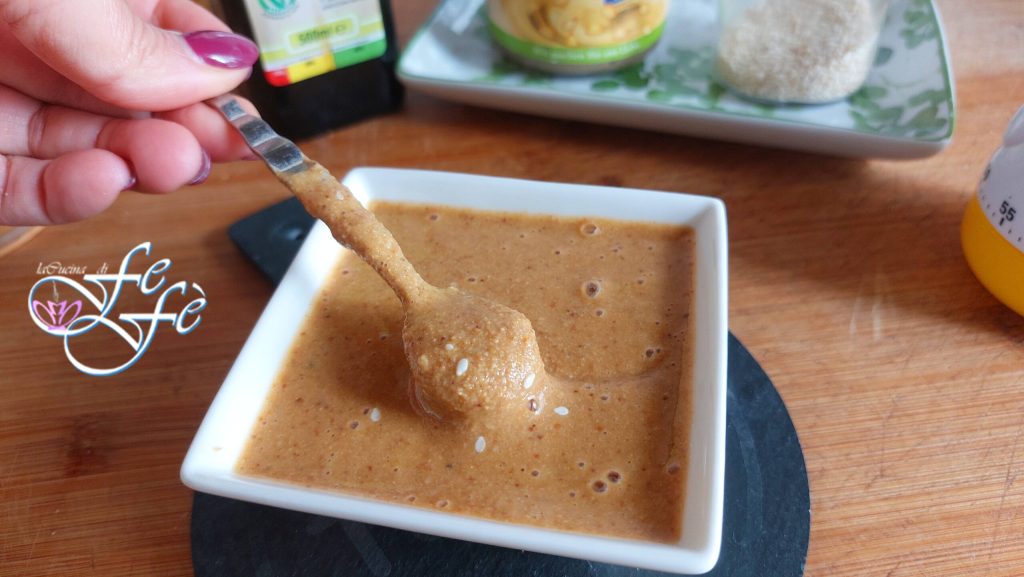
Storage
👉 Homemade tahina keeps for 2–3 weeks at room temperature in a glass jar with a lid, or up to 6 months in the refrigerator in a glass jar.
Tips, notes, variations and suggestions
🔵 * If you want to skip a step and speed things up, you can buy pre-toasted sesame seeds, ready to be blended with the other two ingredients in the recipe, without even waiting for the seeds to cool after toasting — a nice advantage, don’t you think?.
🔵 If you can’t find sesame oil, you can replace it with another seed oil such as peanut oil, sunflower oil, etc., or with extra virgin olive oil.
🔵 Instead of the food processor, a mortar and pestle also works. This will certainly avoid overheating the sesame seeds, preserving all their active compounds, but beware — it will take much longer and require considerable effort. For those using a blender, to prevent the blades from overheating, chill them in the refrigerator for at least 1 hour before preparation. Then blend intermittently, as you would for pesto.
FAQ (Questions & Answers)
1. Why is my tahina bitter?
Bitterness usually depends on the toasting of the sesame seeds. If the seeds are cooked too long or at too high a heat, they become bitter. The secret is to toast them over low heat for a few minutes until they release a nutty aroma and are just golden.
2. Can I use black sesame?
Absolutely! The procedure is identical; you’ll get a black tahina with a slightly more intense, aromatic flavor, very striking visually for garnishing gourmet dishes.
