
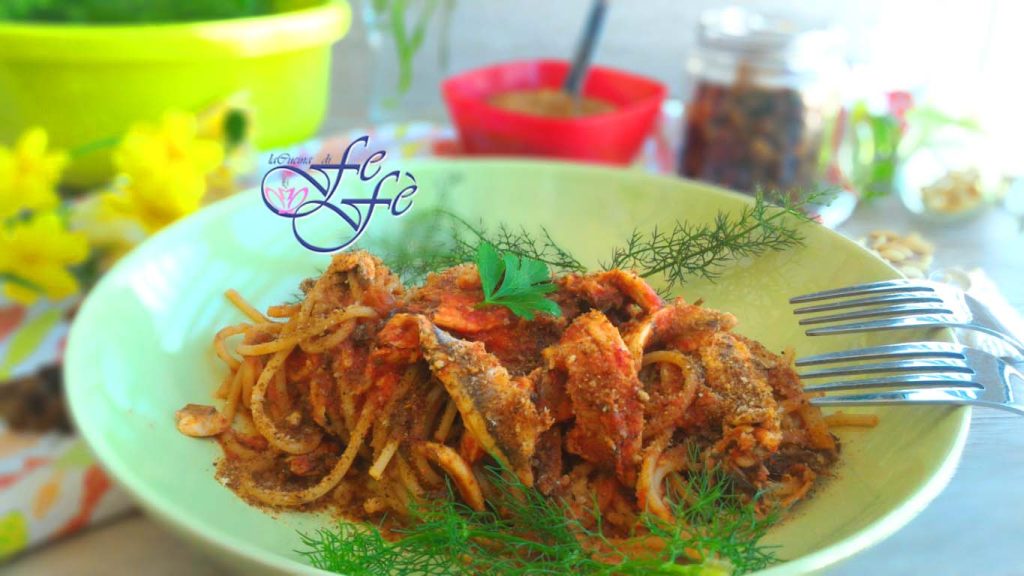
For days I had been wanting to prepare this typical dish of the Catanese culinary tradition, but I couldn’t find wild fennel anywhere, which I would say is one of the essential ingredients to prepare it! So you can imagine my joy when I managed to find a farmer at the fruit and vegetable market who was selling the last three bunches of this precious aromatic plant! Of course, I bought them all, and besides the Catanese pasta, I prepared many other delicious things, including wild fennel pesto, a real delicacy! But let’s get to us, with this recipe passed down by my dear grandmother Elvira, who often proposed it at the table as a Sunday dish. A pasta chi masculini she called it cu finocchiettu rizzo, so we call it too! It is a must that is made precisely with spaghetti, fresh anchovies, and wild fennel, which here in Sicily, as in the entire Mediterranean basin, grows spontaneously. And precisely because it is not the result of human selection but only natural selection, it grows where the conditions are optimal without any artificial forcing by man. That’s why it is an important resource for our body more than any other vegetable, even if grown in our garden! If we then think that it is also very fragrant and attributes that extra something to our dishes, it is impossible not to use it! Of course, I know that in other parts of Italy it is a plant that is practically unknown and difficult to find, but if you manage to have the fortune to find it, don’t let it slip away. Certainly, a dish like this would deserve to become a world heritage, I propose it to you as my grandmother used to prepare it, with lots of pine nuts, sultanas, and toasted breadcrumbs to finish! A delight for true connoisseurs! And while I prepare it, with pride I think of her and those days of youth and immense carefreeness!
CURIOSITY: Did you know that in addition to being used in cooking as an aromatic herb, wild fennel also has numerous phytotherapeutic properties? In fact, leaves and seeds can be used to prepare purifying and digestive herbal teas. The seeds in particular are rich in active ingredients interesting for the physiological functionality of the stomach and intestines. Wild fennel has carminative properties, that is, the ability to absorb and eliminate gases due to food malabsorption, wrong food combinations with the formation of meteorism. And by preparing an excellent decoction, it also promotes intestinal peristalsis, treating colitis, constipation, or diarrhea. Additionally, fennel has diuretic, draining, and purifying properties. It also performs an expectorant and secretolytic action, helping to fluidify mucus and eliminate it. A hot infusion taken at night indeed improves breathing and predisposes to a restorative sleep.
Lastly, it has galactogenic properties, helping to promote milk production for new mothers, and indirectly its benefits also reach the baby, protecting it from the typical colics of newborns.
If you love pasta, also try these dishes that also incorporate a bit of Sicilian flair:
- CASERECCE WITH YELLOW CHERRY TOMATOES, CAPER CRUMBS, AND TOASTED BREADCRUMBS
- WHOLE WHEAT TIMILÌA PENNE IN ZUCCHINI FLOWER AND RICOTTA CREAM
- SPAGHETTI WITH MUSSELS AND PISTACHIO BREADCRUMBS
- LINGUINE WITH FISH ROE SAUCE (Sicilian Recipe)
- PASTA WITH TENERUMI, POTATOES, AND CHICKPEAS (Sicilian Revised Recipe)
- Difficulty: Easy
- Cost: Expensive
- Preparation time: 15 Minutes
- Cooking time: 20 Minutes
- Portions: 4
- Cuisine: Italian
- Seasonality: Spring, Summer, and Autumn
Ingredients
⚠ THIS RECIPE CONTAINS ONE OR MORE AFFILIATE LINKS. The products I recommend are the same ones I use in my recipes; buying them through my blog helps support me and my work, while it won’t cost you anything more!
- 12 oz spaghetti
- 1.4 lbs sardines (freshly deboned)
- 18 oz tomato sauce (cherry tomato)
- 1 bunch wild fennel
- 7 oz breadcrumbs
- 1 fresh spring onion
- 1 clove garlic
- 3 tablespoons sultanas
- 3 tablespoons pine nuts
- to taste extra virgin olive oil
- to taste salt
Tools
- 1 Colander
- 1 Saucepan
- 1 Slotted spoon
- 1 Wooden spoon
- Scissors
- 1 Pan
Preparation
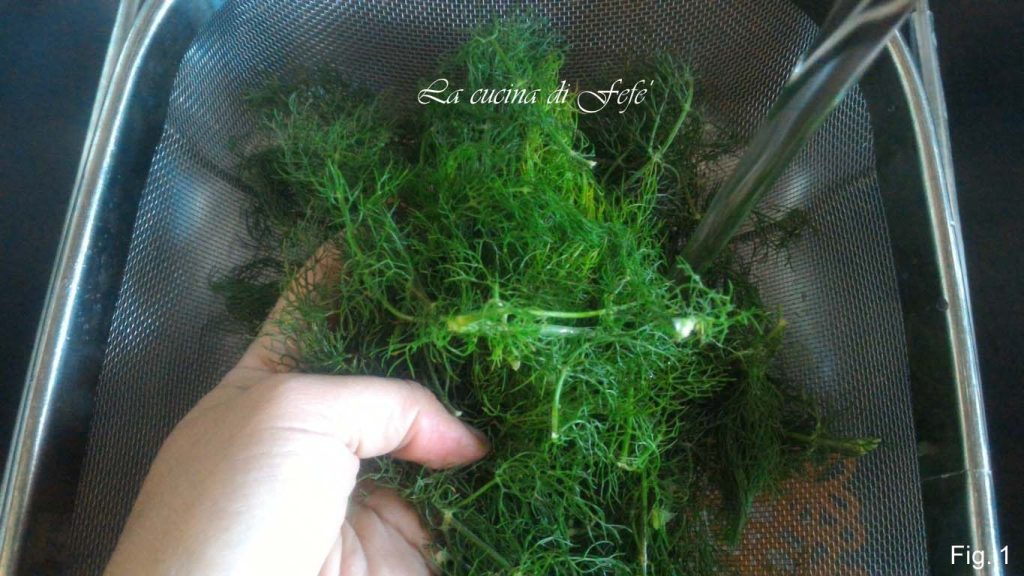
Start by cleaning the fennel*, removing all the tougher stalks, then wash it thoroughly under running water using a colander.
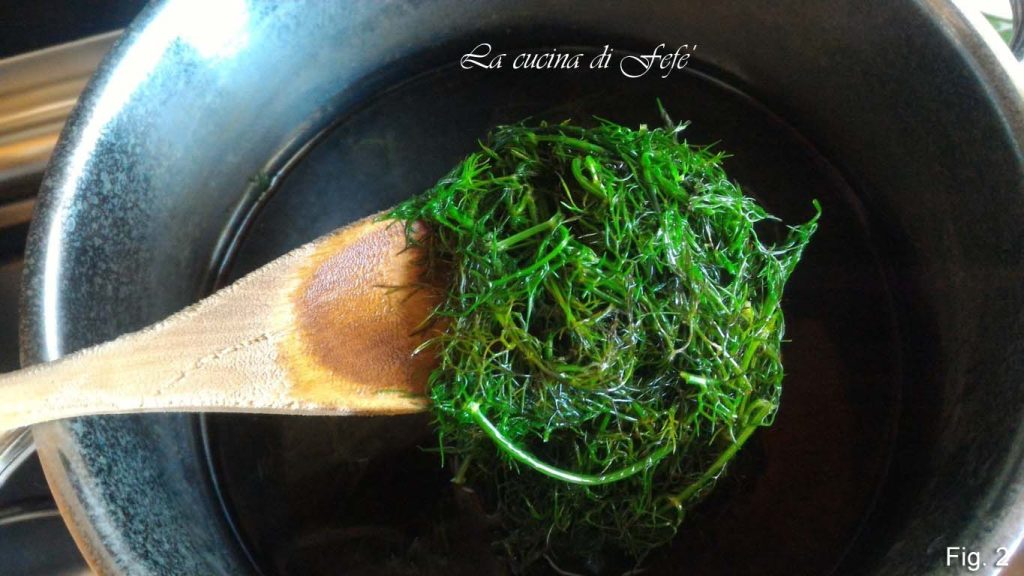
Cook it in a saucepan with plenty of lightly salted water for about 10′, then drain it without throwing away the cooking water, which you will use to cook the pasta.
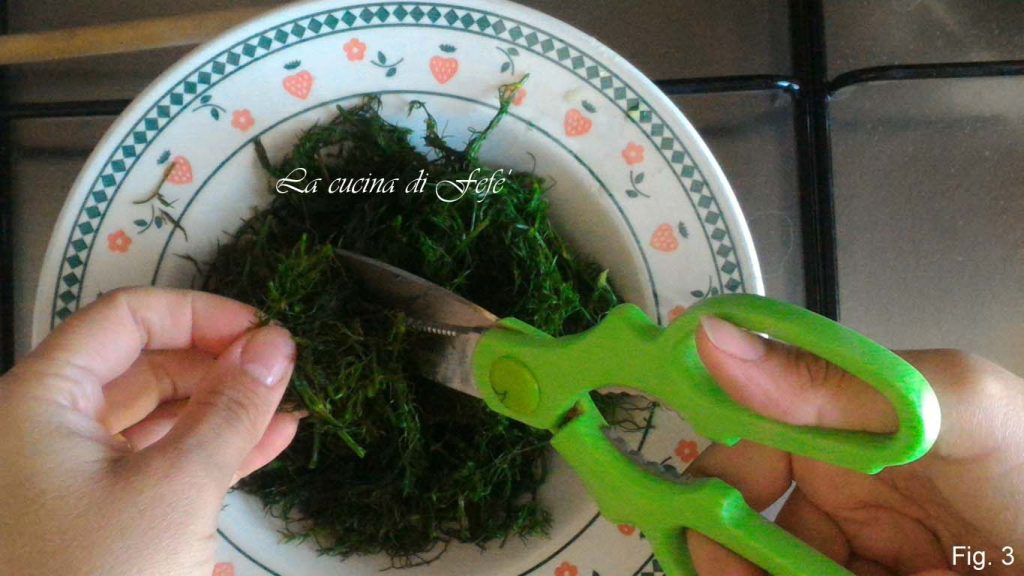
Chop it coarsely with the help of scissors.
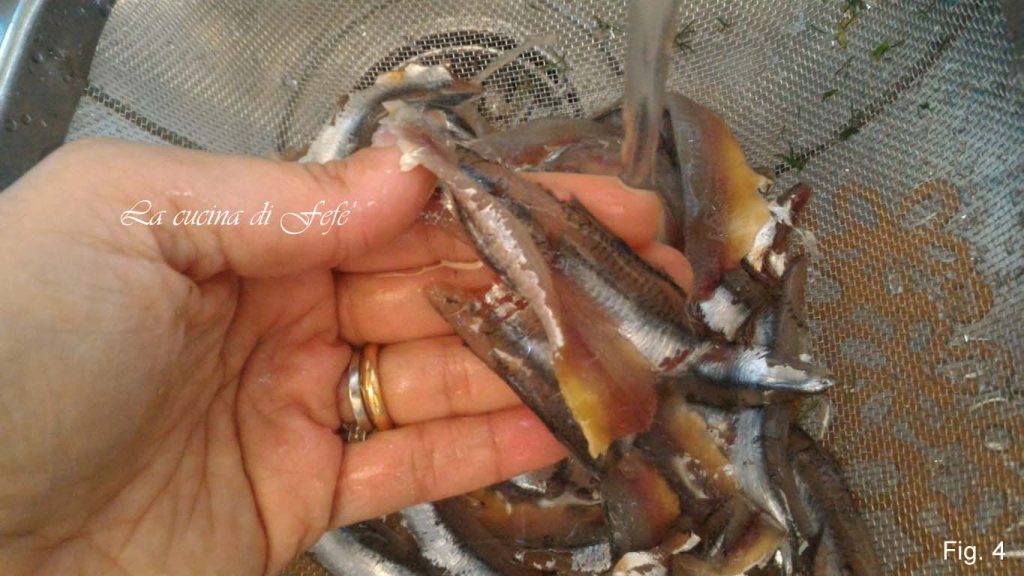
Meanwhile, once your anchovies are cleaned, boned, and with the tail removed with its little bone, which can be bothersome during chewing, wash them under running water.
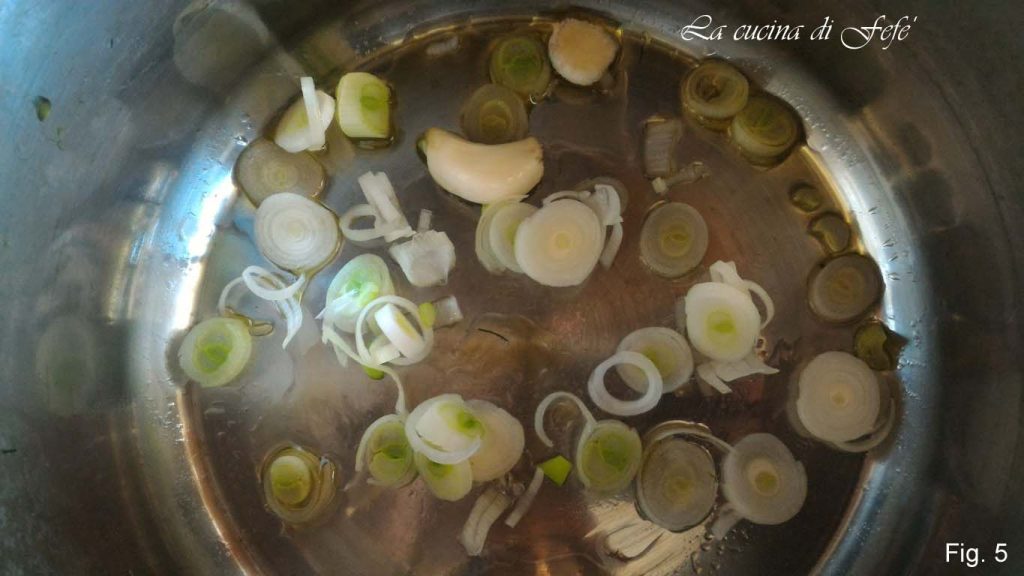
In a separate pan, meanwhile, prepare your sauce by browning the garlic and the fresh spring onion cut into slices with a drizzle of oil for a couple of minutes.
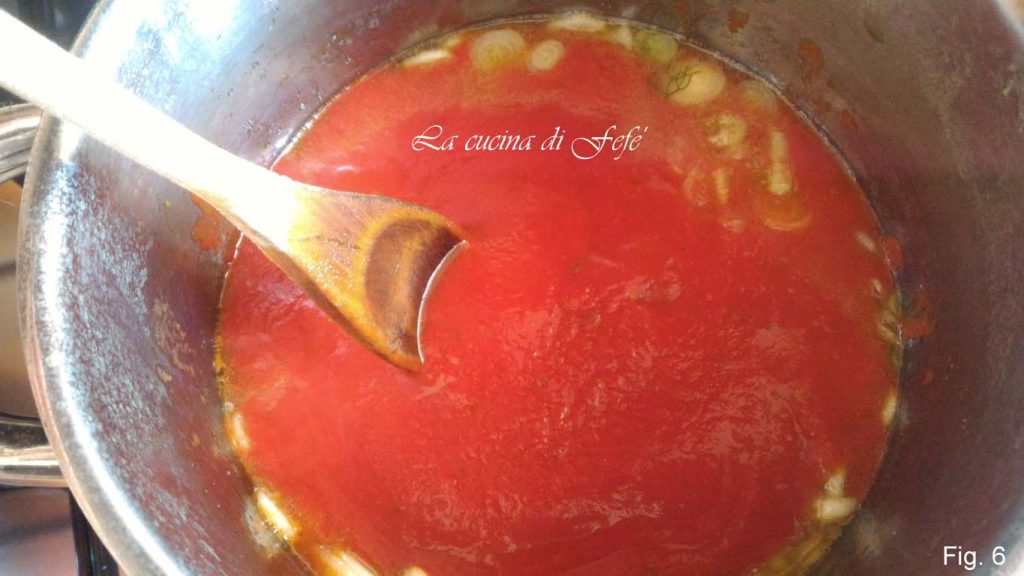
Add the tomato sauce and adjust the salt. Cook over low heat for a few minutes.
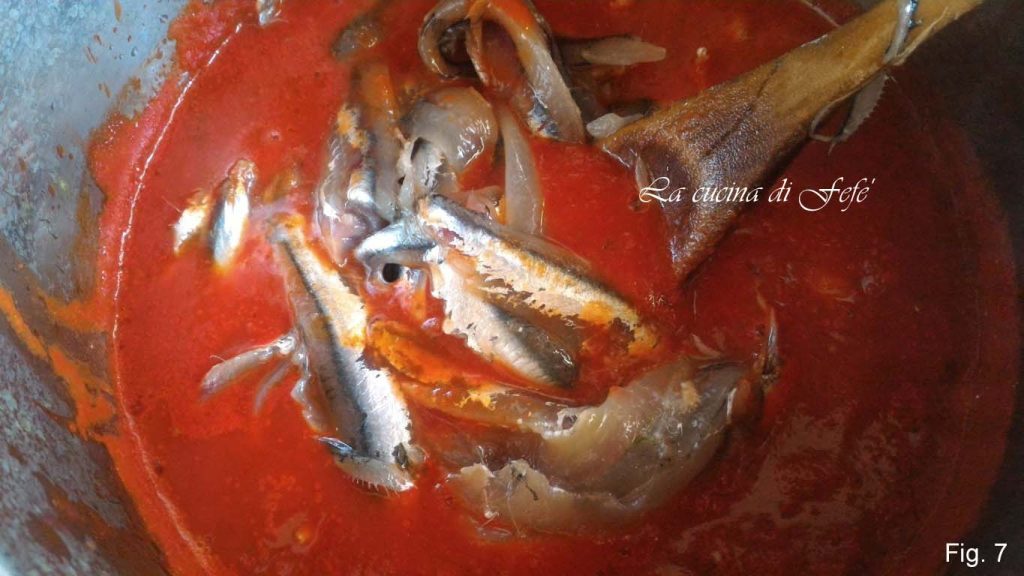
Then add the anchovies, stirring carefully not to break them.
After about 1 minute, also add the wild fennel.
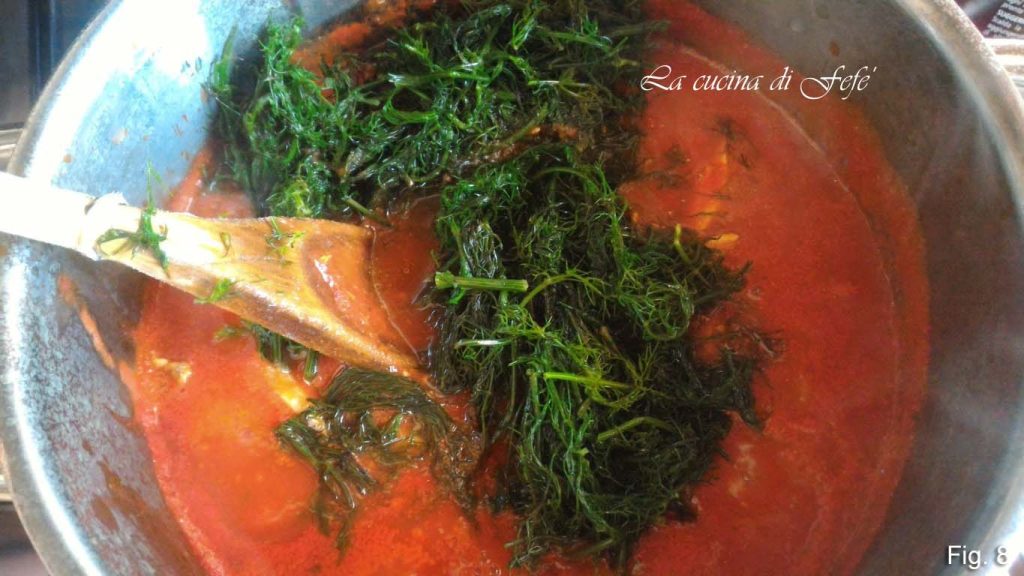
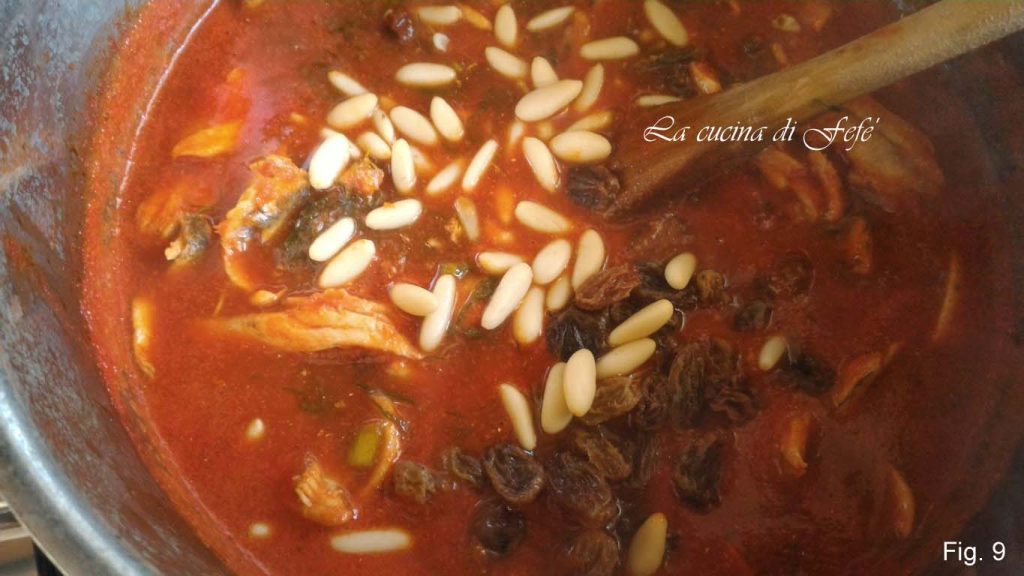
Let it cook for about 10′ over low heat. Shortly before turning off, add the pine nuts and sultanas and let all the ingredients blend well.
In a pot, boil the spaghetti in the fennel cooking water. Drain it slightly al dente and dress it with the tomato and anchovy sauce. Serve with plenty of toasted breadcrumbs, previously prepared separately, in a pan until it has taken on a beautiful amber color.
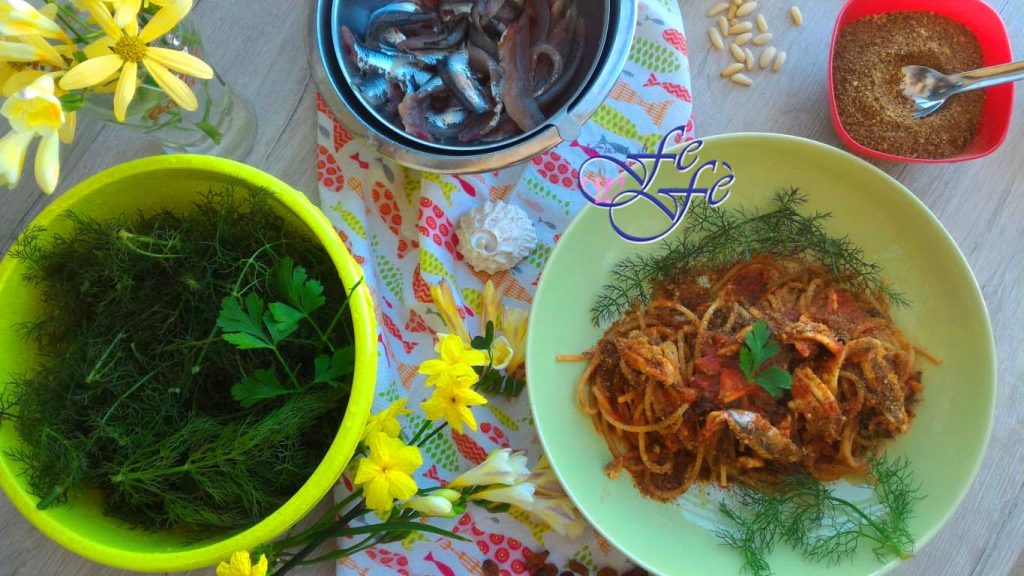
If you like, once off the stove, garnish with chopped parsley. You can serve.
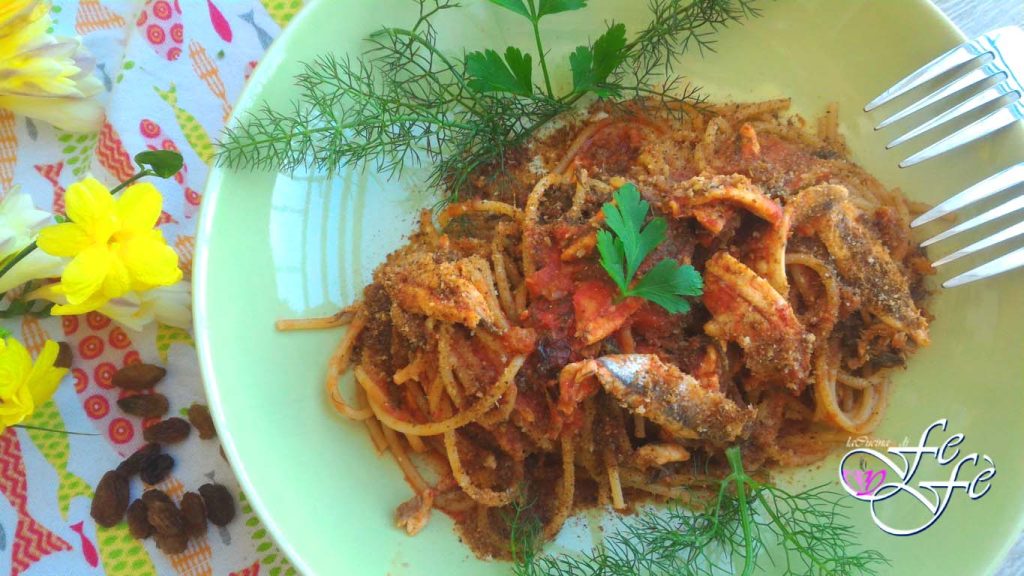
And voila… pasta chi masculini and wild fennel rizzo is ready to be enjoyed!
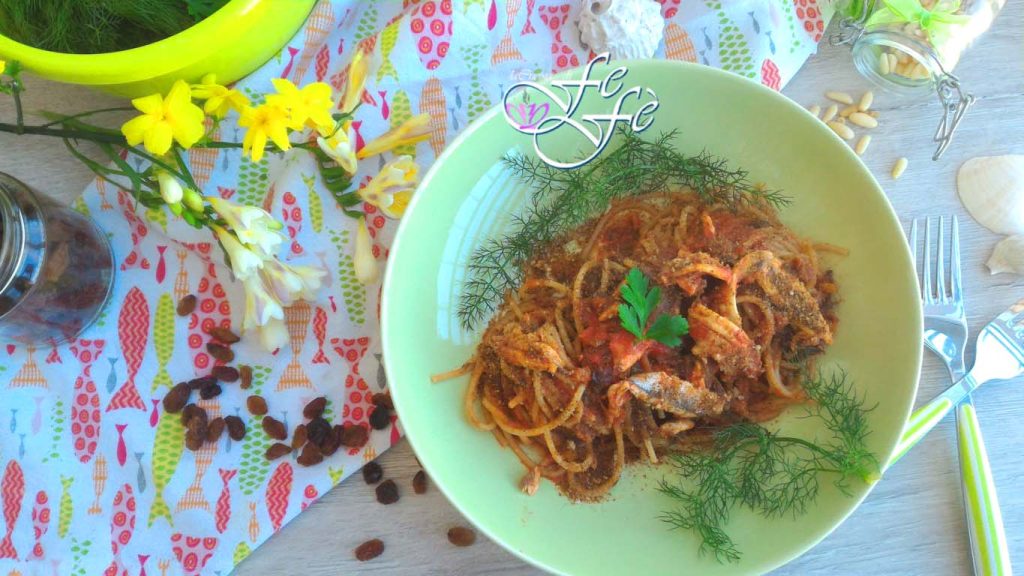
Bon Appetit from La Cucina di FeFè!
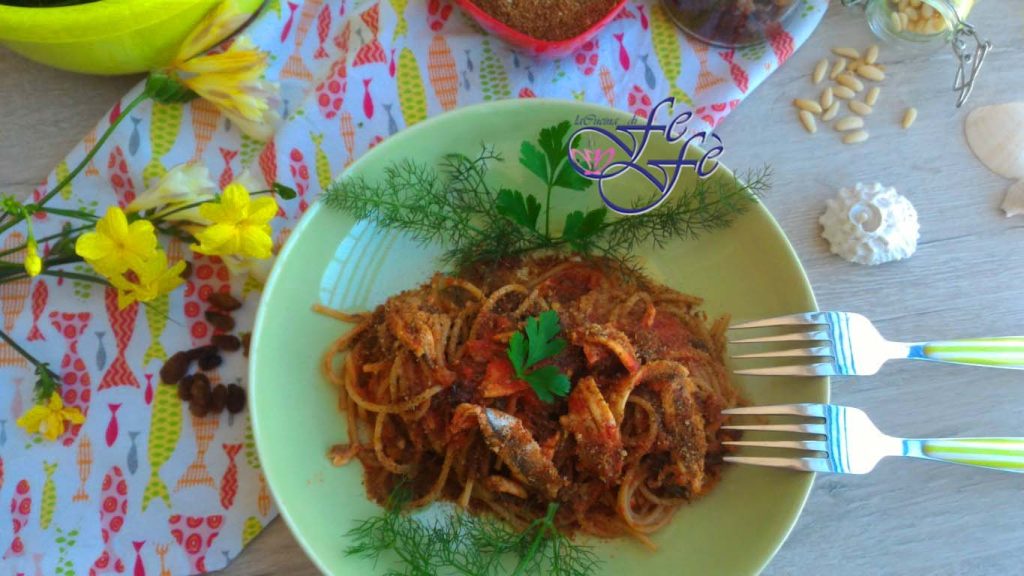
Tips, notes, variations, and suggestions
🟣* If you lack wild fennel or it is not easily available in the geographical area where you live, dill, both fresh and dried, is certainly a valid substitute for wild fennel. Dill is often mentioned as “bastard fennel” precisely because of this aesthetic similarity, but with a well-distinct identity in terms of flavor. Many recipes therefore that call for the use of fennel can be reinterpreted with dill, keeping in mind a variation in the aromatic profile. Add less quantity at the beginning and taste, so as to calibrate the desired flavor and maintain a good balance.
🟣 Wild fennel should be consumed immediately upon purchase if you want to maintain all its qualities, including the aromatic ones. If you are forced to keep it in the fridge, I invite you to wrap it inside a damp, well-wrung cloth and store it in the fridge for no more than 2-3 days or, once cleaned, you can put it in freezer bags and freeze it for up to 3 months.
