
Pesto from Broccoli Scraps: the Money-saving Recipe, rich in Fiber, Flavor and Sustainability
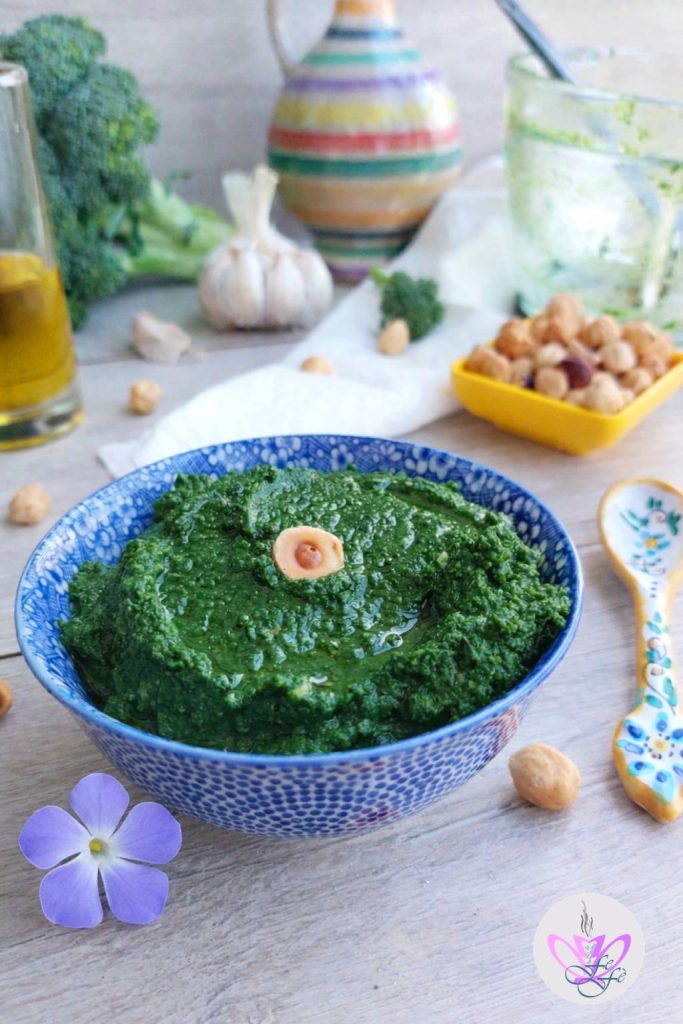
From the trash to the plate! Here’s my challenge to recycling, saving and sustainability with this super creamy and delicious broccoli-scraps pesto! How many times have you cleaned a broccoli and, with a bit of regret, thrown the leaves and stems into the compost bin? Don’t do it anymore! Did you know they are a real mine of flavor and nutrients? In particular, the leaves offer a slightly more herbaceous taste than the florets, almost reminiscent of black cabbage or turnip tops. Today I’ll take you into my creative recycling kingdom, where nothing is wasted and everything transforms into a condiment that will make you lick your lips.
Let’s be honest: we in the South have a cult of “nothing is thrown away,” and this recipe is the ultimate proof. While the florets often end up sautéed in a pan, the stems — which are the sweetest and tenderest part if treated well — become the base for a velvety sauce that has nothing to envy from classic Genovese pesto. Plus, it’s super clever because in a few simple steps I create an ideal sauce for my first courses at zero cost and without much effort at the stove! Making it is actually child’s play: just peel the stem to remove the fibrous outer part, cut it into chunks and blanch it together with the leaves. Then blend everything with a good extra virgin olive oil, nuts and a touch of seasoning. The result? A base for cheap, healthy and versatile first courses that will do good for the environment and will leave your guests speechless when you reveal the secret ingredient.
So are you ready to discover how to turn a “scrap” into the star of your table?
Here are other smart recycling recipes in the kitchen that might interest you:
- Difficulty: Very easy
- Cost: Very inexpensive
- Preparation time: 10 Minutes
- Portions: 4 Servings
- Cooking methods: Boiling
- Cuisine: Italian
- Seasonality: Autumn, Winter
Ingredients
⚠ IN THIS RECIPE THERE ARE ONE OR MORE AFFILIATE LINKS. The products I recommend are the same ones I use in my recipes; buying them through my blog helps support me and my work, while it won’t cost you anything extra!
- 2 1/2 cups broccoli scraps (stem and leaves)
- 1 1/2 oz toasted hazelnuts
- 1/2 cup grated Parmesan cheese
- 1/2 clove garlic
- 1/4 cup extra virgin olive oil
- to taste salt
- 1 pinch pepper
Tools
- 1 Saucepan
- 1 Skimmer
- 1 Colander
- 1 Knife
- 1 Food chopper
Steps
Preparing this pesto is very simple: detach all the leaves from a large broccoli, selecting the greenest and nicest ones, and remove the central rib, which is tougher.
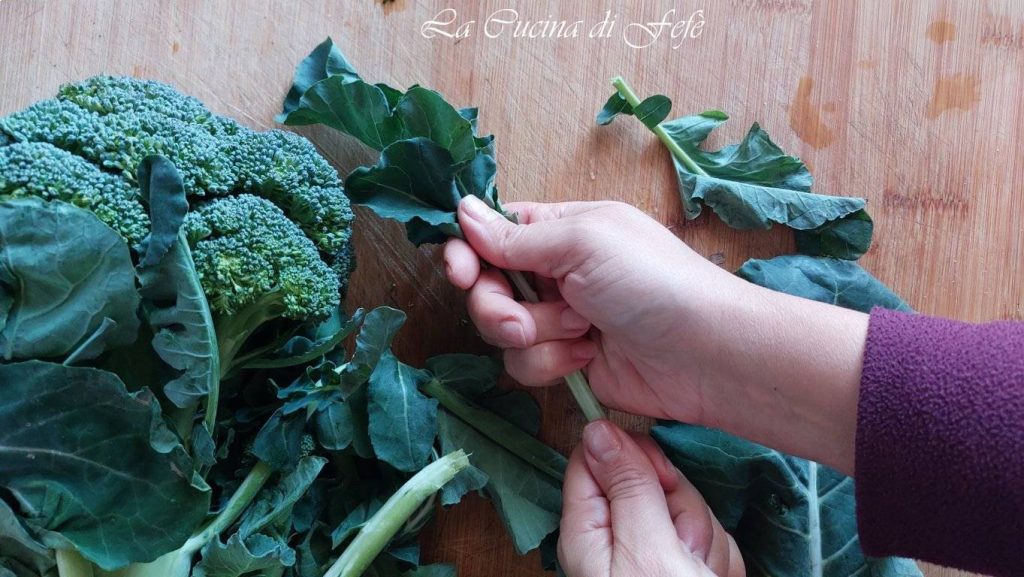
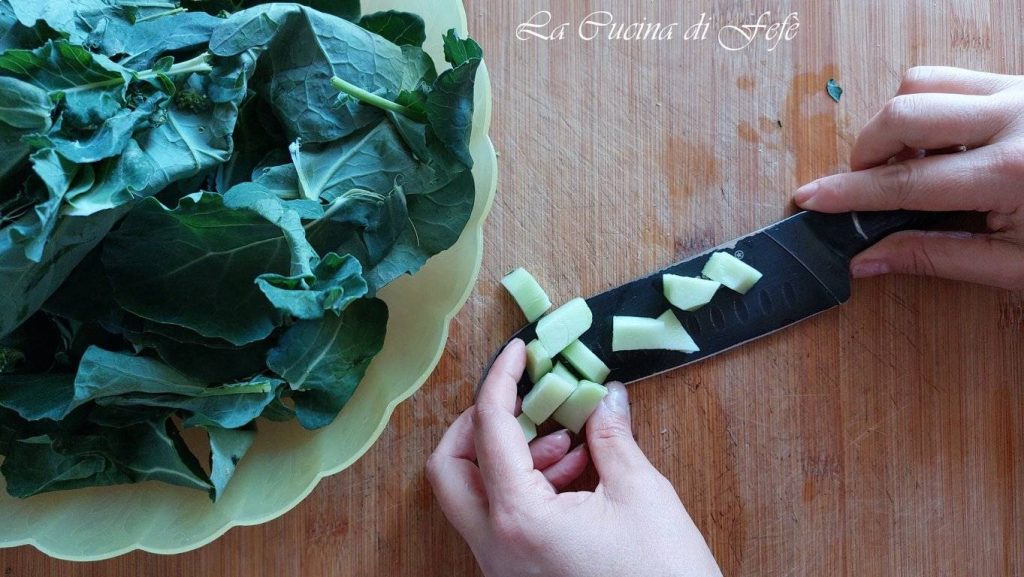
Separate the central stem from the florets using a vegetable peeler or a paring knife, remove the tougher fibrous outer part. You should reach the heart, which is a light green, almost white. Then cut it into small cubes. Wash it well under running water together with the leaves.
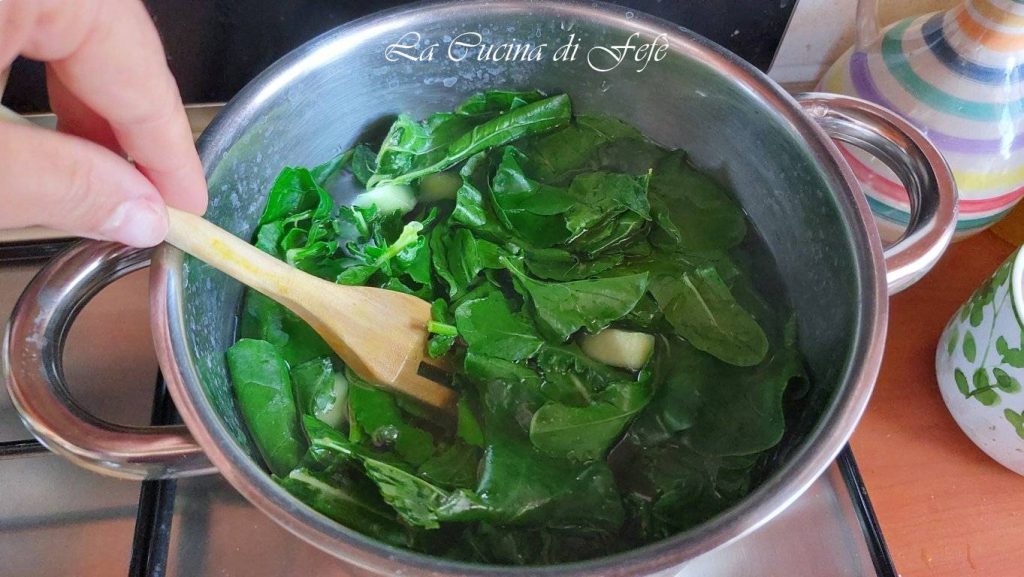
Bring a saucepan of salted water to a boil. First drop in the stem cubes and let them cook for about 5 minutes. Add the leaves as well; they will wilt immediately, releasing all their aroma. Let them cook for another 2 minutes.
Scoop the vegetables out with a skimmer and let them drain completely in a colander or sieve*.
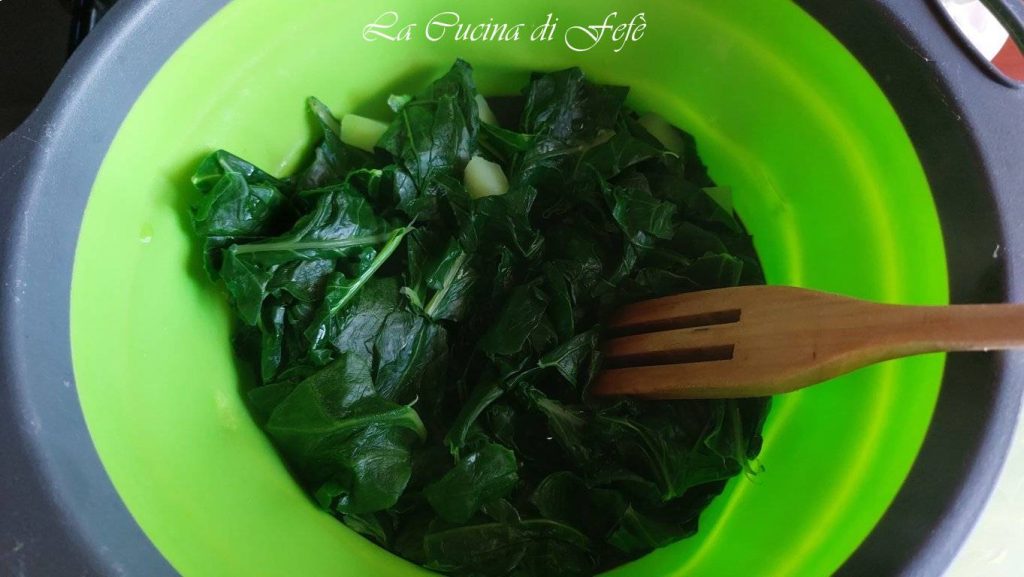
Transfer the well-drained stems and leaves to the chopper, add the toasted hazelnuts, the garlic clove (with the green germ removed to make it more digestible), the grated Parmesan, a pinch of salt (a little) and pepper.
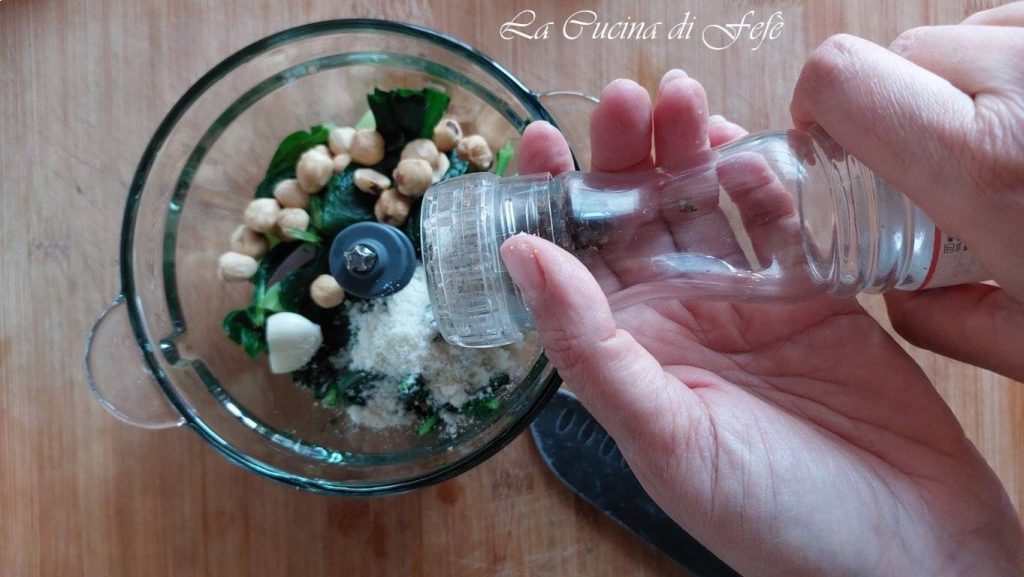
Start blending, adding the extra virgin olive oil in a thin stream. If the mixture is too dense, add another 2-3 tbsp of oil or 1-2 tablespoons of the vegetable cooking water.
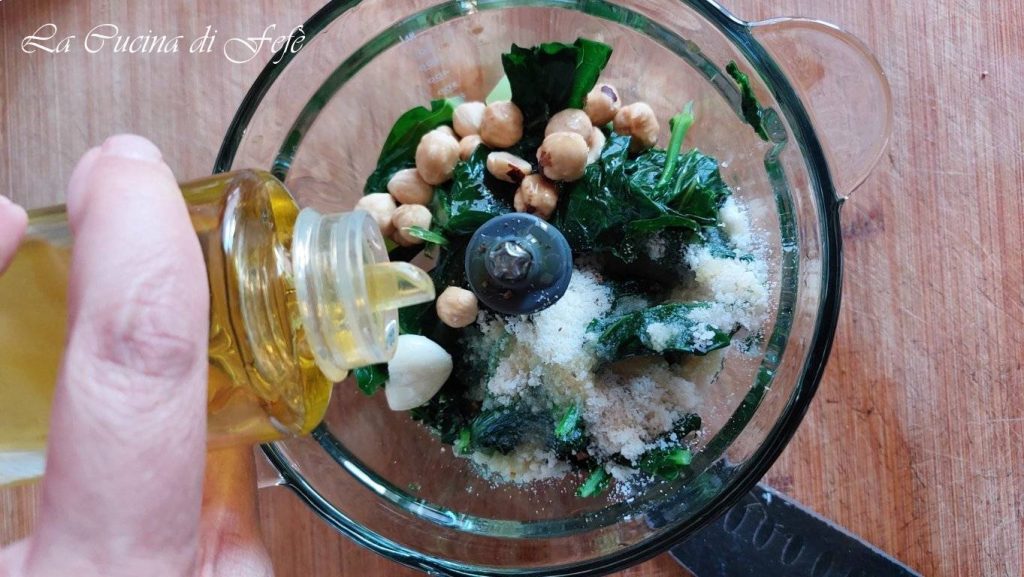
You should obtain a smooth, creamy and velvety consistency.
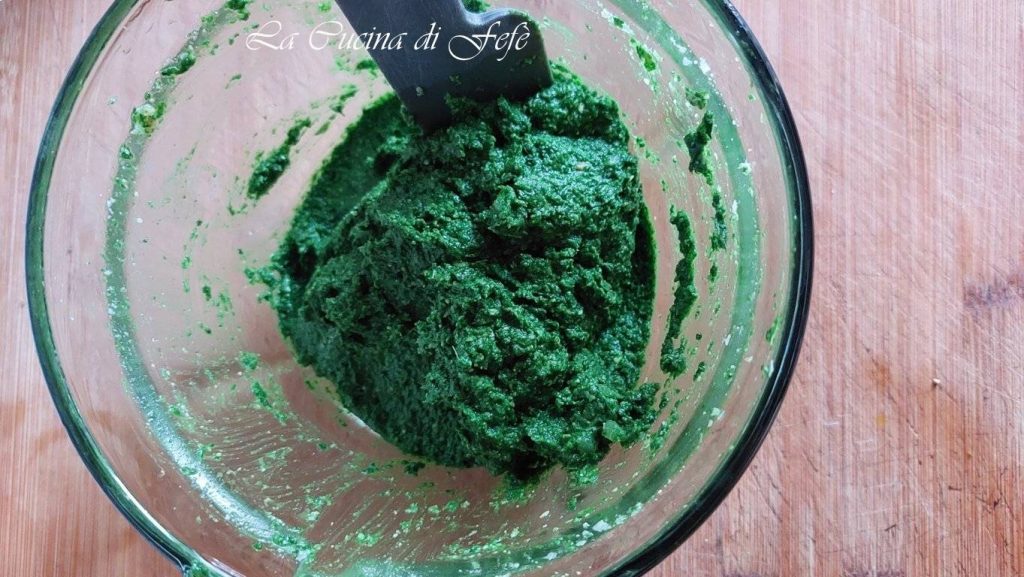
And voilà… the broccoli scraps pesto is ready to be enjoyed!
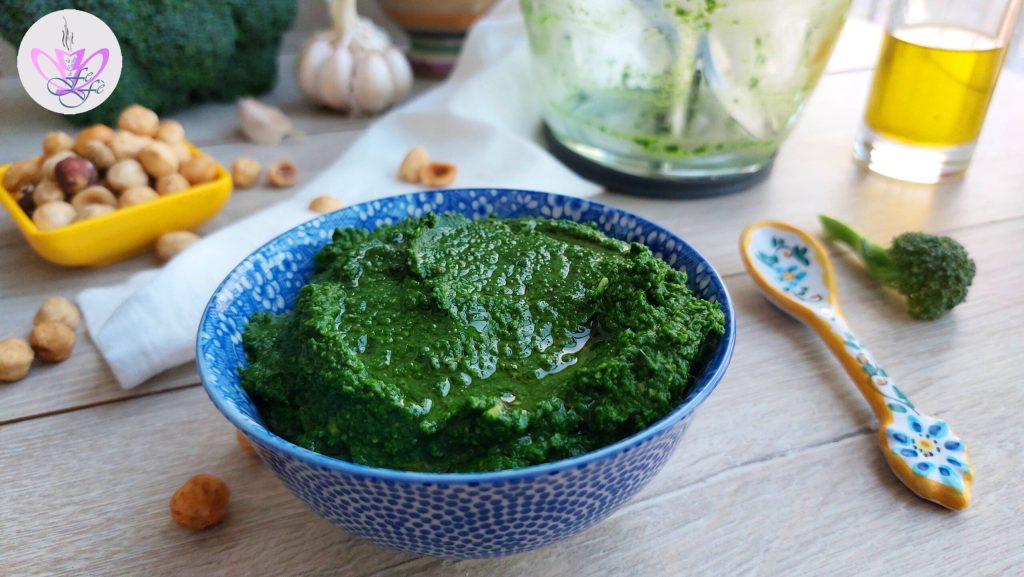
Enjoy your meal from La Cucina di FeFè!
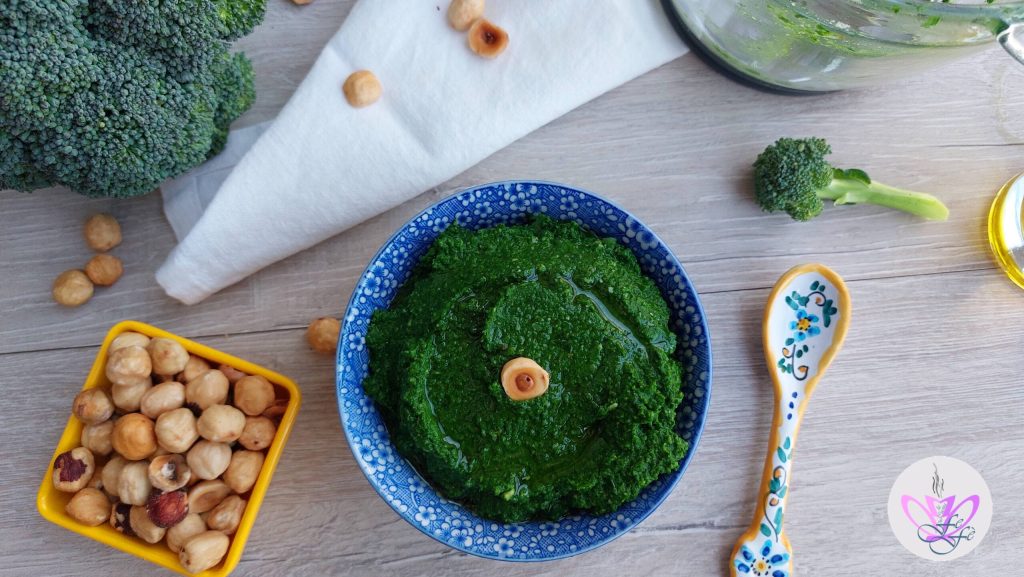
I used this pesto to dress whole-wheat pasta with anchovies and toasted breadcrumbs with pine nuts. Delicious!
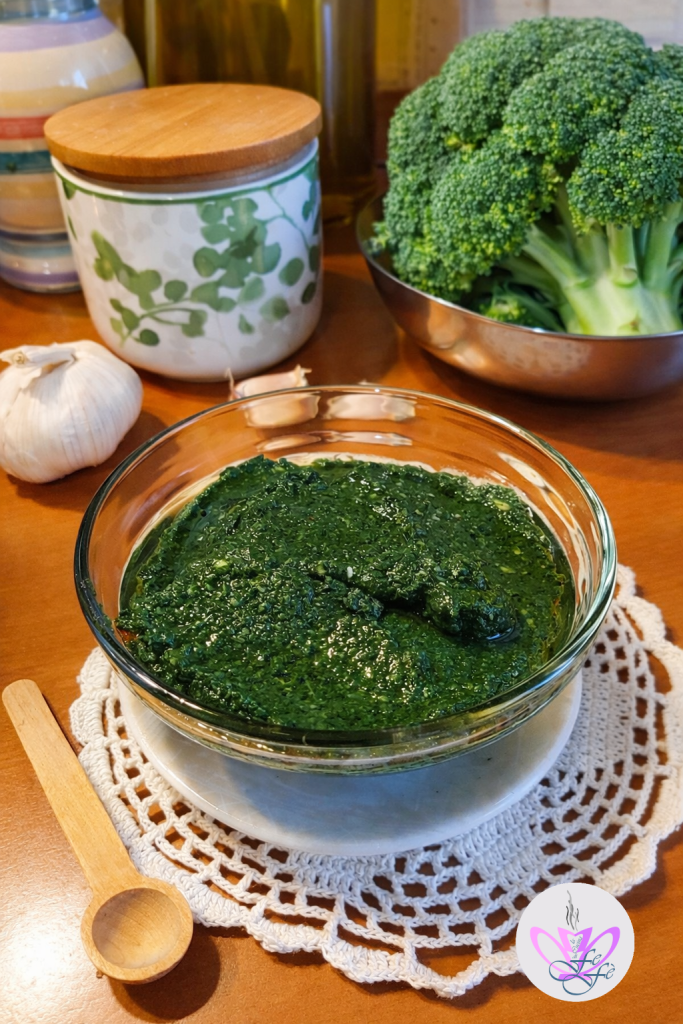
Storage
👉 Put the pesto in a glass jar, cover the surface with a thin layer of extra virgin olive oil and close tightly. It keeps in the fridge for 2-3 days.
👉 Freeze it in ice cube trays: you’ll have cubes ready to drop directly into the pan with pasta when you get home late from work.
Tips, notes, variations and suggestions
🟣*Right after blanching the vegetables, you can immediately plunge them into a bowl of ice water. This optional step will stop the cooking and fix the color. Your pesto will remain a bright emerald green!
🟣For a fully vegan version, replace the cheese with one tablespoon of nutritional yeast flakes and slightly increase the amount of hazelnuts and salt. The result will be equally creamy and tasty!
🟣Cheese (the savory touch): instead of Parmesan, you can use Grana or Pecorino Romano (for a stronger flavor; obviously I suggest reducing the salt since Pecorino is already very salty!)
🟣For an aromatic boost, add a few leaves of basil or mint for extra freshness.
🟣Second recycling idea: if you have leftovers, use it as a gourmet bruschetta base with an anchovy on top or as a sauce to accompany grilled chicken.
FAQ (Questions and Answers)
1. Can I use leaves even if they are a bit yellowed?
Better not. For a pesto with a bright green color and fresh taste, use only the green, turgid leaves. Yellowed ones could be bitter.
2. Can the pesto be made with raw stems and leaves?
It is not recommended. Broccoli stems and leaves are quite tough and have an unpleasant “raw grass” taste. A quick blanch is essential for digestibility and texture.
