
Baked Castagnole with Ricotta and Citrus: The Soft Carnival Recipe
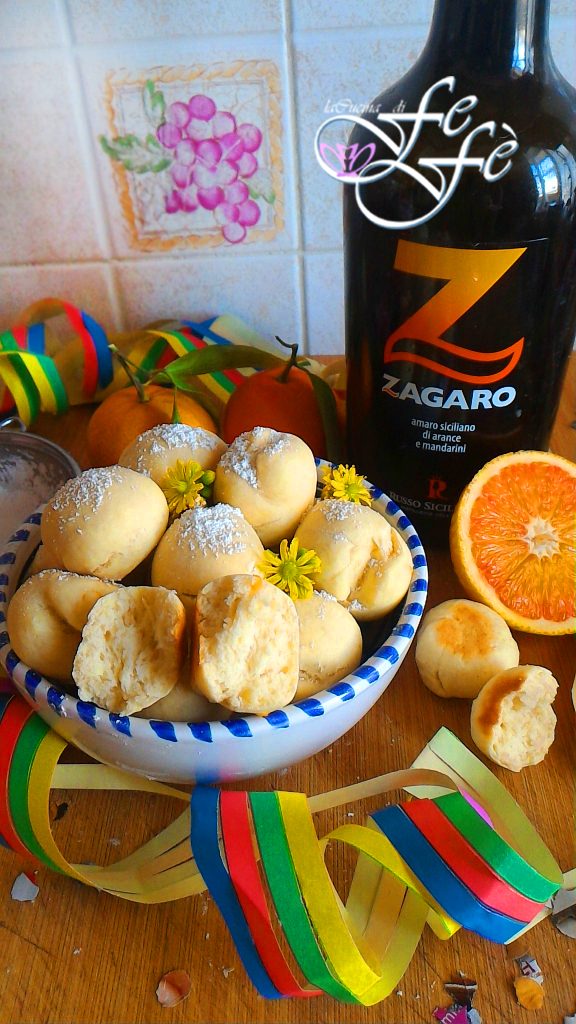
In anticipation of the upcoming Carnival celebration, castagnole (also known as favette) are a must-have dessert to honor tradition, but with a touch of lightness since they are baked. Although they are part of the culinary history of Emilia-Romagna, Marche, Lazio, and Umbria, I have created my own version with ricotta that makes them incredibly soft, ideal for those seeking a healthy alternative to the classic fried version.
The Secret to Softness: Ricotta and Sicilian Aromas
The recipe I propose, which I also presented during my third appearance on the show “At Home and in Shape” hosted by Manuel Bartolini on TV Cusano, is extremely simple and quick. The secret to keeping them from hardening in the oven is using ricotta in the dough, which guarantees a velvety texture. To make them unique, I chose to add fresh orange juice, an intense citrus aroma for a fruity and natural note.
But the special touch is the Amaro Zagaro, a fine Sicilian liqueur with mandarins and oranges that releases a heavenly fragrance during baking.
Baking or Frying? Choose Your Variant
Although I prefer baking for a healthier and more digestible snack, this recipe is quite versatile. At the end of the post, you will find the correct measurements for the fried variant, in case you want to indulge in the typical Fat Tuesday treat. Try them, and you will be amazed!
CURIOSITY: Did you know that the castagnole recipe is very old? In the state archives of Viterbo, a handwritten volume from the 1700s was found describing four different castagnole recipes, one of which includes baking. This indicates it was not recently adopted to make the dessert lighter, as is often believed.
SOURCE: Wikipedia.org
- Difficulty: Easy
- Cost: Medium
- Rest time: 30 Minutes
- Preparation time: 15 Minutes
- Portions: 30 Pieces
- Cooking methods: Oven
- Cuisine: Italian
- Seasonality: Carnival
Ingredients
⚠ THIS RECIPE CONTAINS ONE OR MORE AFFILIATE LINKS. The products I recommend are the same ones I use in my recipes; purchasing them through my blog helps support me and my work, while costing you nothing extra!
- 10.5 oz type 1 flour (or 00 flour)
- 5.5 oz sheep ricotta
- 2.8 oz brown sugar
- 1 egg
- 2 tablespoons orange juice (fresh)
- 1 tablespoon orange liqueur (or mandarinetto and similar)
- 1 teaspoon orange zest (untreated and grated)
- 1/2 lemon zest (untreated and grated)
- 1 ampoule orange aroma (optional)
- 1/2 packet baking powder
- 1 pinch salt
Steps
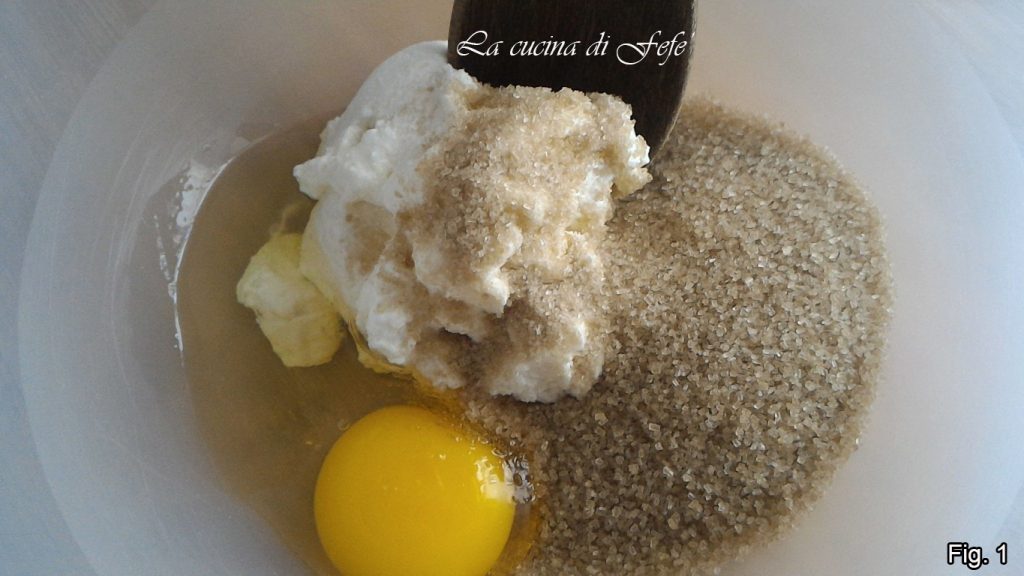
In a bowl, work with a wooden spoon the ricotta previously well sifted and drained of whey with the egg and sugar until you obtain a dense and homogeneous cream.
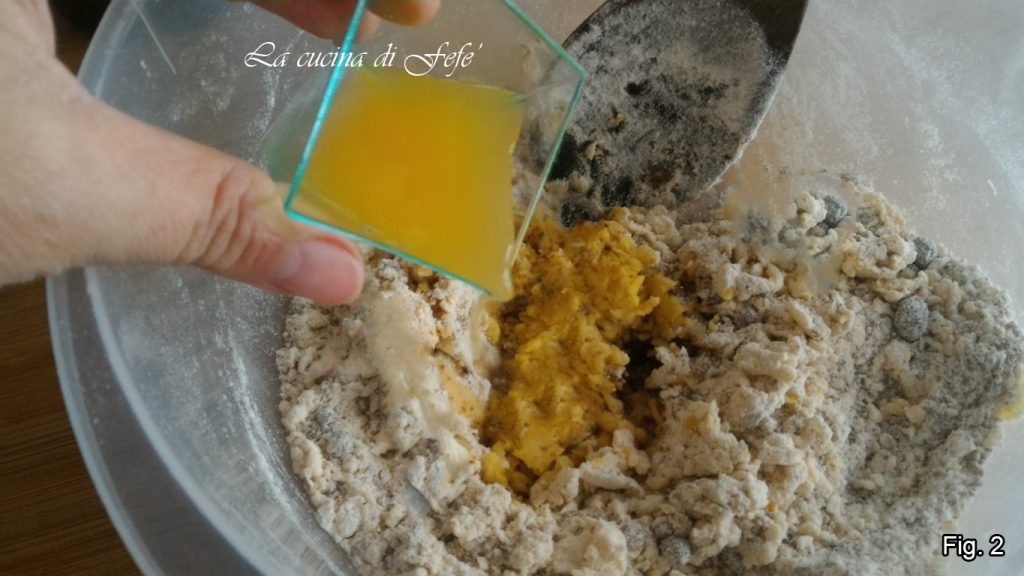
Add the orange aroma, the citrus zest, then gradually incorporate the sifted flour with the baking powder, alternating with the liqueur and orange juice. Finally, add the pinch of salt.
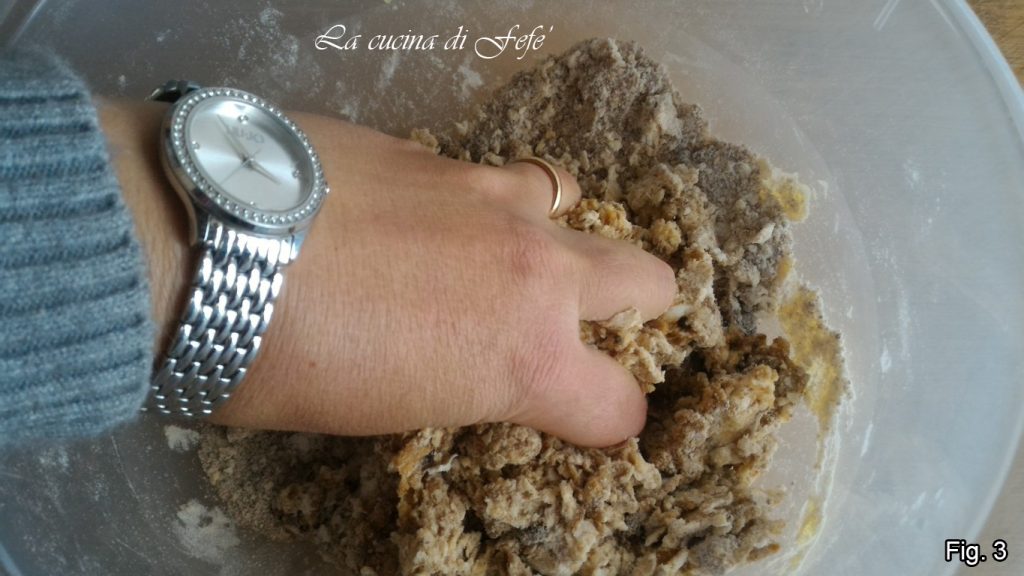
When the dough becomes more consistent, begin to knead by hand, initially in the bowl.
Then transfer the dough onto the work surface with the remaining flour.
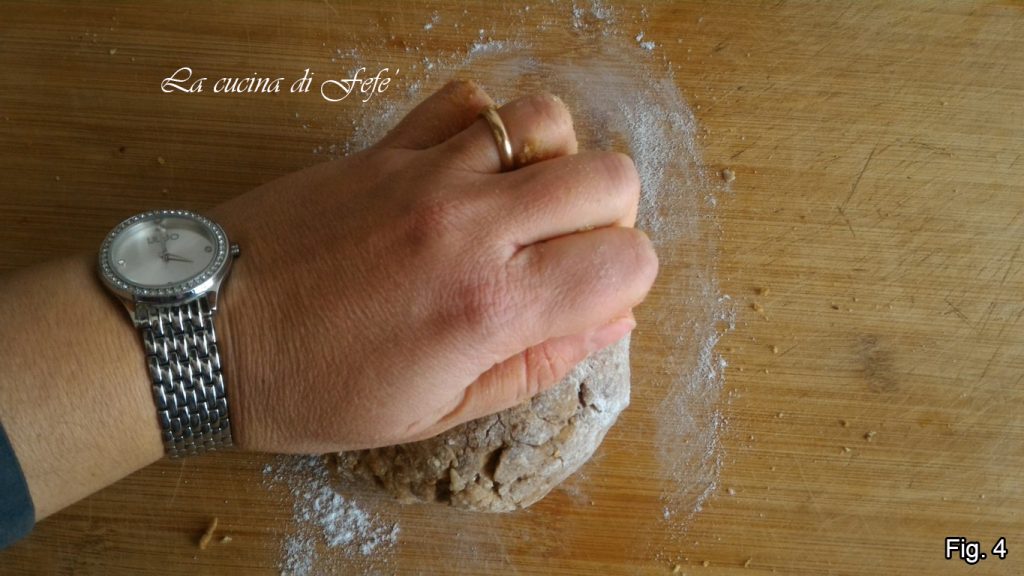
Work the dough vigorously for several minutes until you obtain a smooth and homogeneous dough.
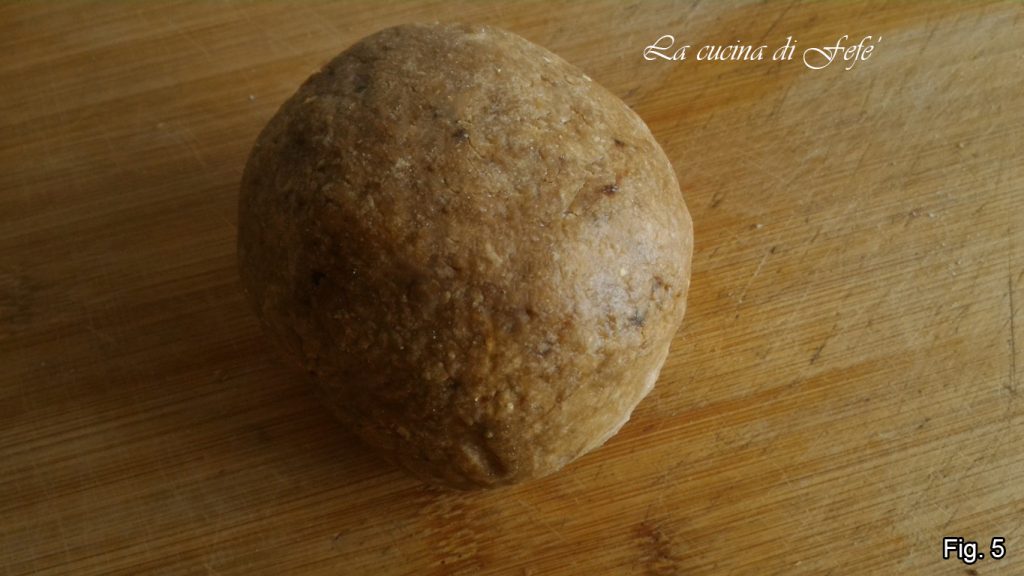
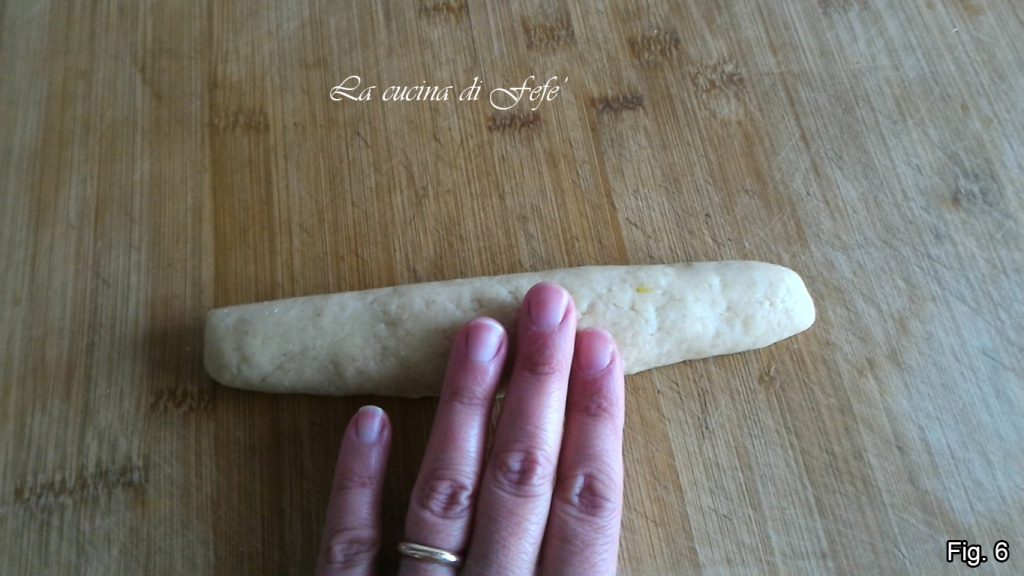
Let it rest covered for 30′ in the fridge or 15′ in the freezer, then, after this time, take a portion with the help of a dough cutter and shape with your hands cylinders about 0.6 inches in diameter.
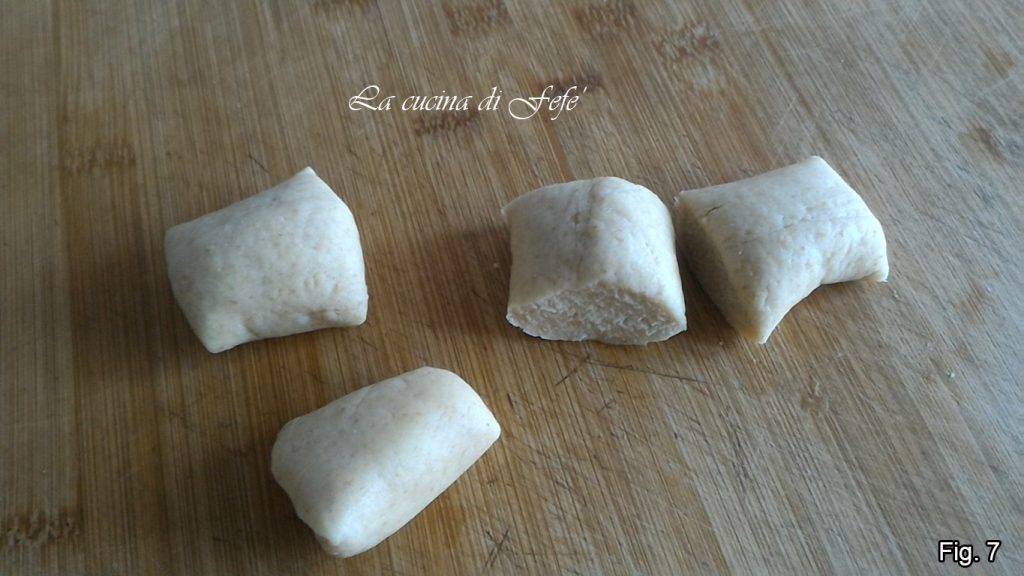
Then cut pieces with a knife as if they were gnocchi but slightly larger. They should weigh about 10-12 grams each.
Roll them to give a spherical shape and place them on a baking sheet with a silicone mat as I did or lined with parchment paper in an orderly manner, a couple of centimeters apart, to prevent them from sticking together during baking. Bake in a preheated oven, static mode at 350°F for about 10′-11′.
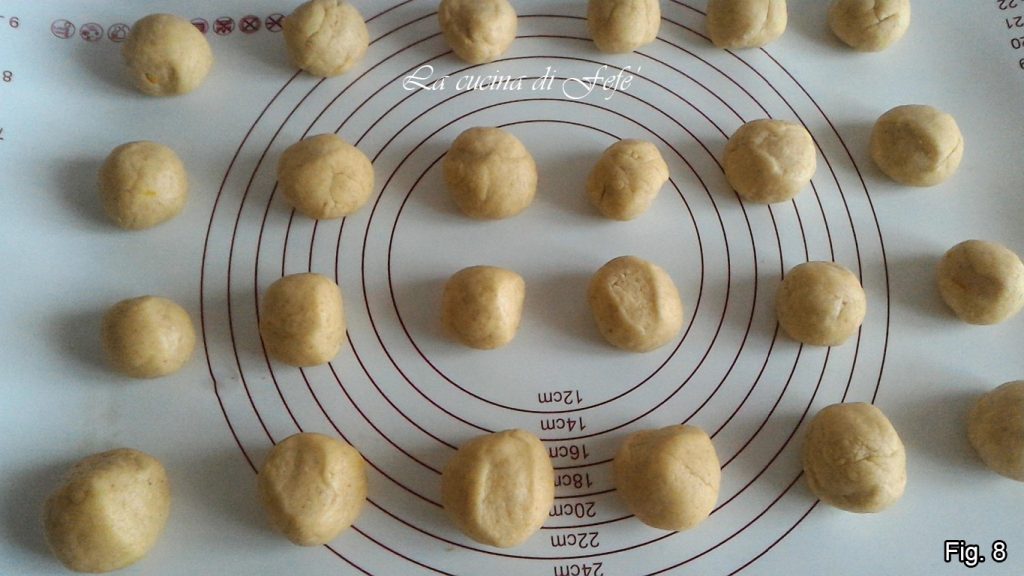
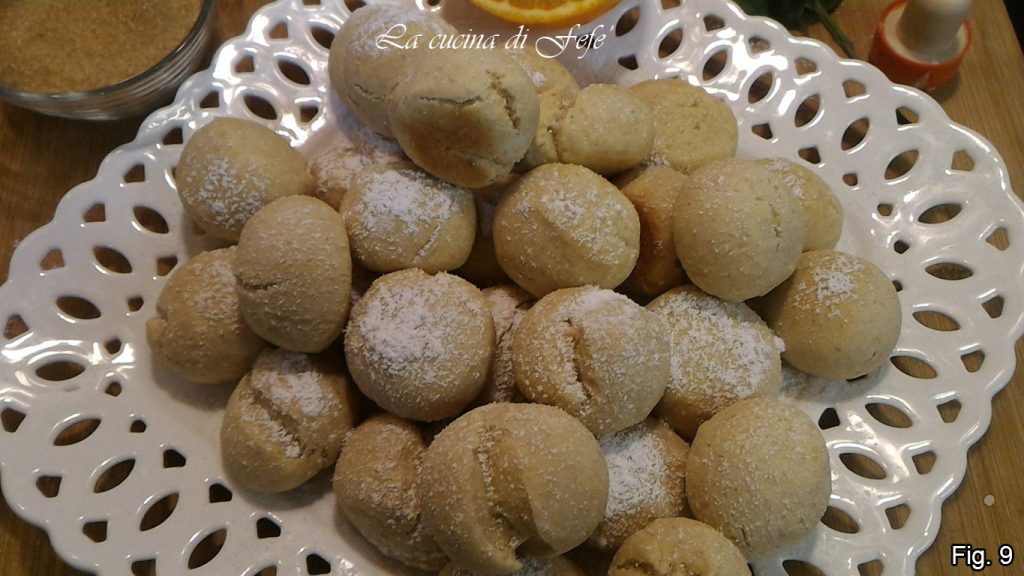
The castagnole will be done when they slightly puff up; don’t expect them to brown too much*. Once ready, let them cool slightly and dust with powdered sugar as desired.
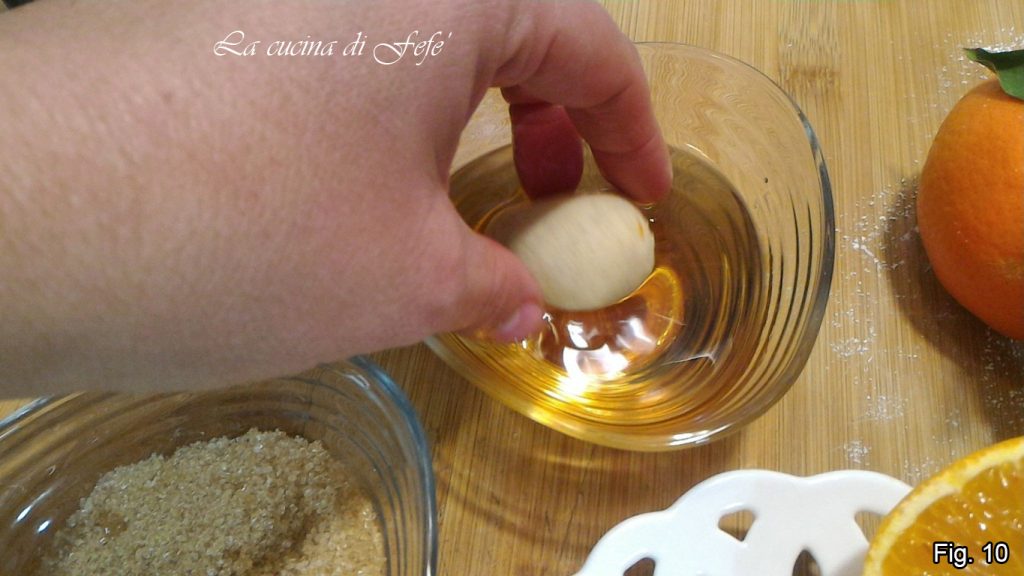
Once cooled, you can also make a more indulgent version, dipping some castagnole first in the same liqueur used in the dough or in your favorite liqueur (or in a mix of water and sugar).
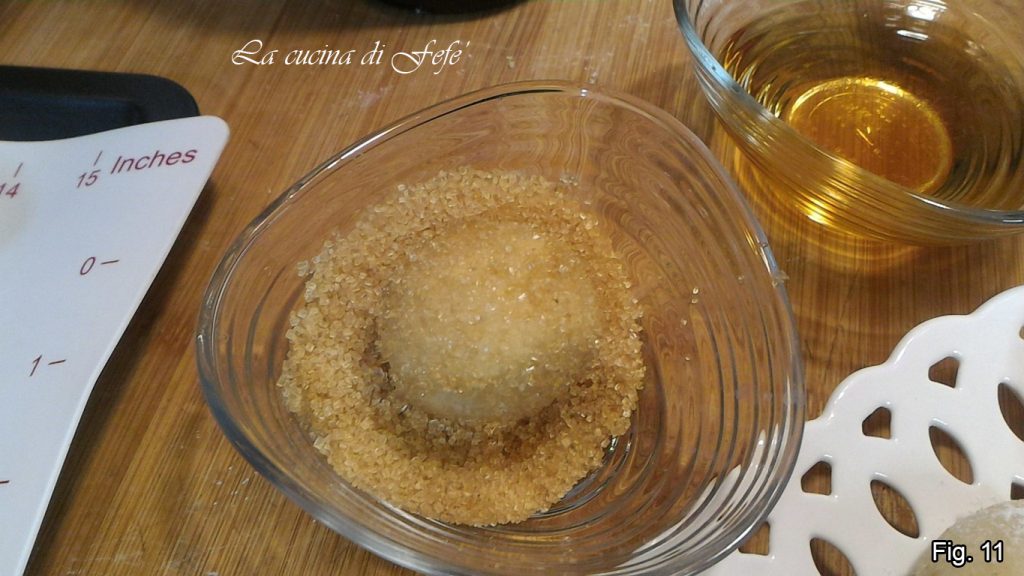
Then roll them in granulated or brown sugar: they will create an irresistible crust.
And voila…the baked ricotta and orange castagnole are ready to be enjoyed!
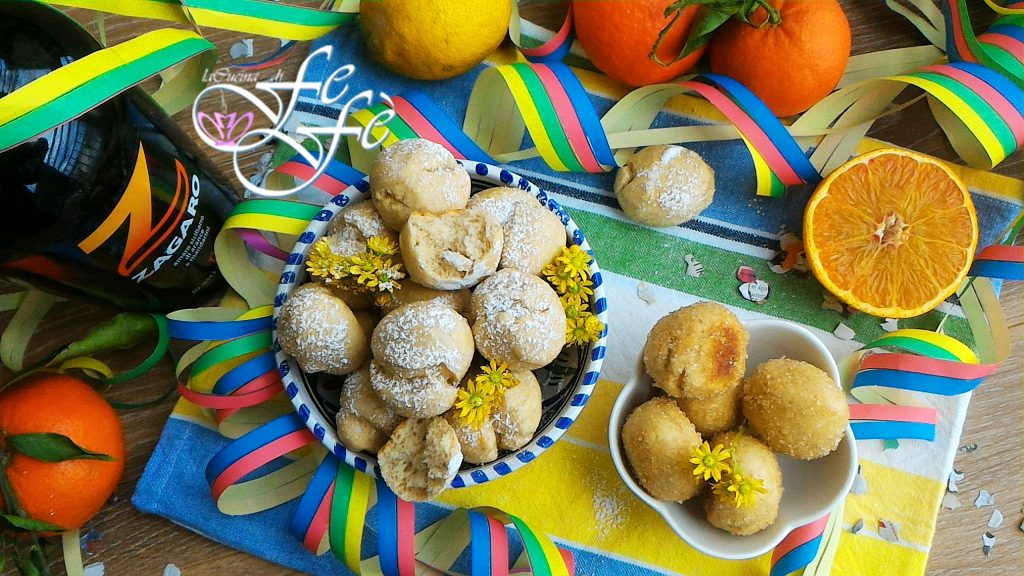
Bon Appétit from La Cucina di FeFè!
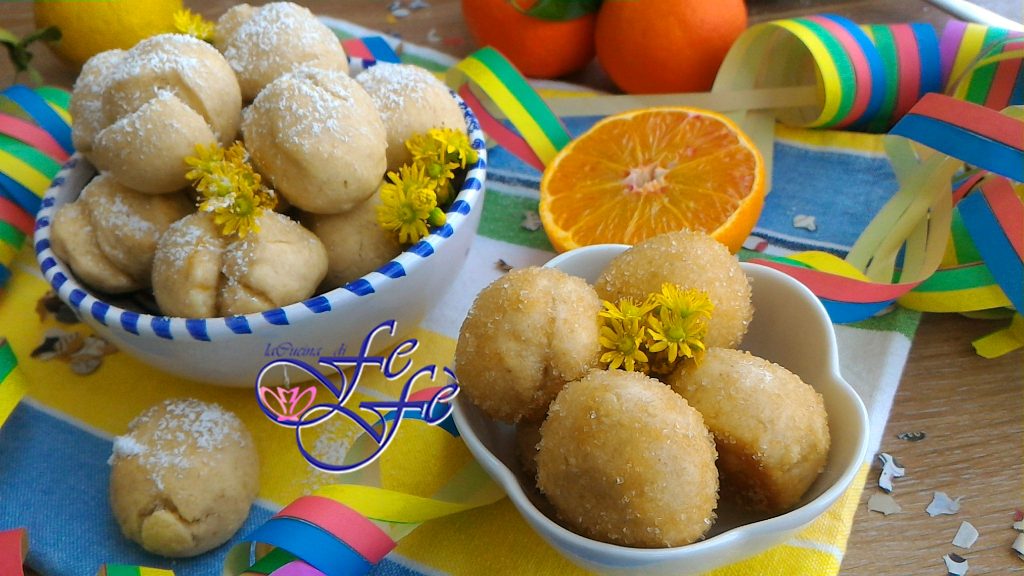
Detail of castagnole dipped in Zagaro and sugar.
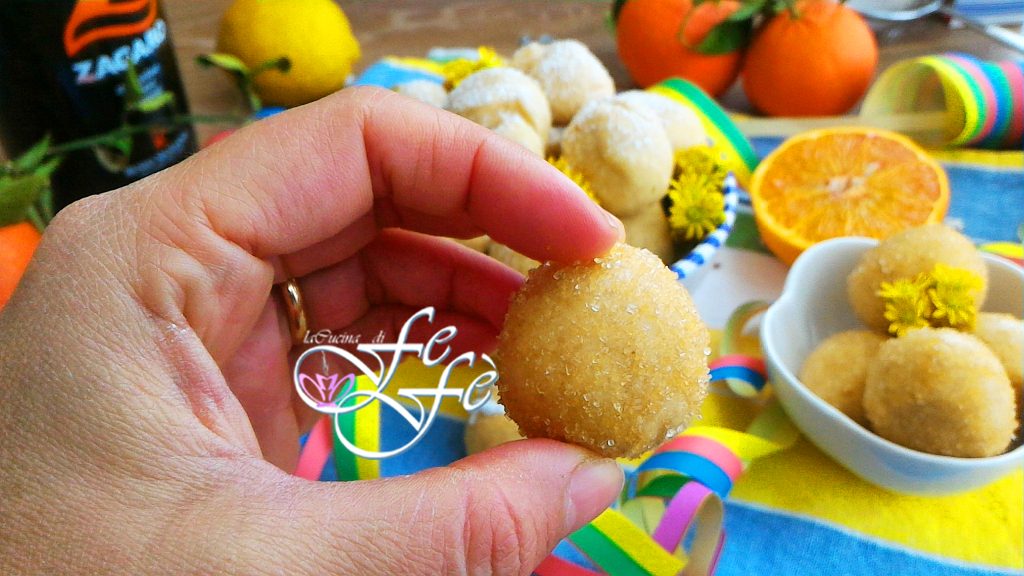
Preservation
👉You can store the castagnole at room temperature inside an airtight container, preferably glass, for a few days. Once cooled. If you want to regenerate them, pass them through the air fryer at 160°C for a couple of minutes: they will be like freshly baked.
Advice, notes, variations, and suggestions
🟣* Please, do not be misled by the very light color of the castagnole on the surface! With oven baking, it is absolutely normal! Do not prolong the baking time hoping they will color, but look underneath: if they are golden, they are already done.
🟣If you decide to fry the castagnole, use only 250 g of flour instead of 300 and replace the remaining 50 g with potato starch. Always keep the heat moderate and immerse a few at a time, turning with a slotted spoon after about 2′. Proceed with all the other castagnole.
THE COLUMN
The Granary–Baking time, is the column that every first and third Thursday of the month offers a basket full of incredible and irresistible ideas, many recipes that you can see by visiting the official pages of Facebook, Instagram and also Pinterest
The Granary–Baking time, is the column that every first and third Thursday of the month offers a basket full of incredible and irresistible ideas, many recipes that you can see by visiting the official pages of Facebook, Instagram and also Pinterest
If you are kitchen lovers like us, we invite you to tie your apron and replicate our recipes! If you do, do not hesitate to write to us for advice and suggestions, and to let us know if you enjoyed them, please! Now I leave you to the preparations of my skilled colleagues:
Sabrina: Whipped Cream Cake Without Butter and Oil (dairy-free recipe)
Simona: Genoese Focaccia with Apples (with prescinsêua)
Zeudi: Venetian Carnival Fritters (fritole)
Zeudi: Venetian Carnival Fritters (fritole)
FAQ (Frequently Asked Questions)
1. Can they be made lactose-free?
Absolutely. You can replace cow’s ricotta with lactose-free ricotta or a plant-based version made from almonds. The result will be equally fragrant and inclusive for all your guests.
