
The taste of memories: my mother’s Swiss Chard and Potato Soup
There are dishes that have the magical power to stop time. Just a scent spreading through the kitchen — that unmistakable mix of sautéed leek and garlic — takes me back to when I was young.
This is not one of the many soups, this is the soup, my mother’s recipe. She always made it on cooler evenings, moving confidently at the stove while I watched, waiting for dinner. It was her way of taking care of us, turning simple garden ingredients into a warm, nourishing embrace.
The secret is in the details
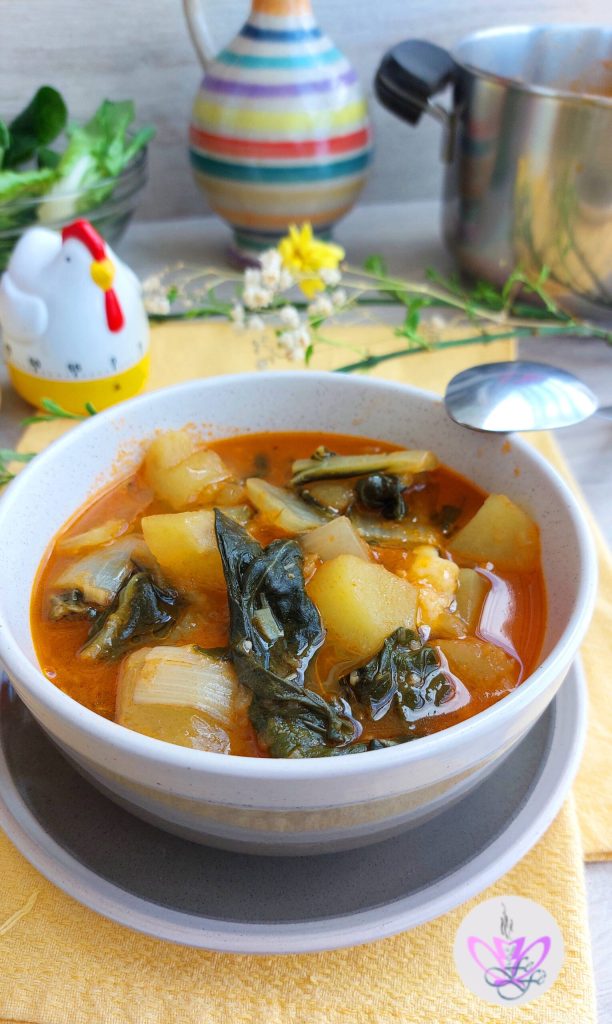
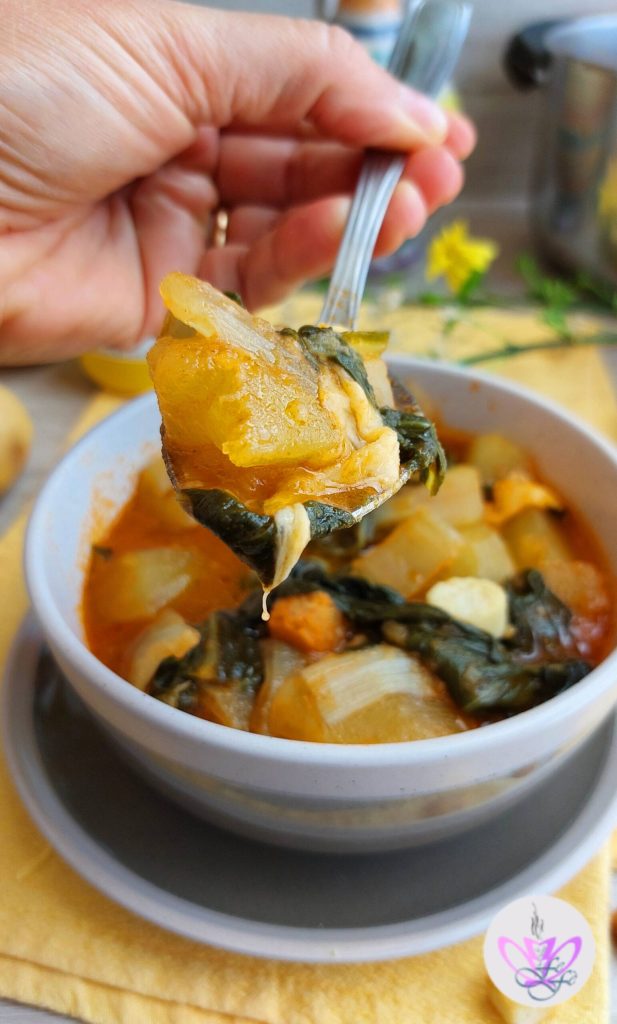
The beauty of this dish lies in contrasts: the sweetness of the potatoes, the earthy note of the Swiss chard, and that touch of acidity from the tomato purée that colors the broth a vivid red. But the real finishing touch, the one I eagerly awaited, came at the end: the cubes of Grana. This is how my mother did it: at the end of cooking she turned off the heat and dropped them into the hot soup just before serving. She closed the lid for a few minutes to trap the heat and let them melt slightly; they became soft and stringy, creating a savory surprise with every spoonful. The soup is left on the looser side if you want to add short pasta, or it can be reduced a bit for a version, as she always says, “to soak the bread” — perfect for dunking bread and making the obligatory “scarpetta”.
The indispensable crunch
To complete the dish, there were always toasted bread croutons. Golden and crunchy, they were the perfect companion to scoop up the last sip of broth at the bottom of the bowl.
Today, when I make this soup in my kitchen, I feel that bond has never been broken. Every bite is a journey through time, a return home, an homage to the simplicity that only mothers know how to make extraordinary. And now I share it with you as a gift!
Other ideas to make soups or broths you might like:
- Difficulty: Very easy
- Cost: Budget-friendly
- Preparation time: 20 Minutes
- Cooking time: 25 Minutes
- Portions: 4 Servings
- Cooking methods: Stovetop
- Cuisine: Italian
- Seasonality: Autumn, Winter
Ingredients
⚠ IN THIS RECIPE THERE ARE ONE OR MORE AFFILIATE LINKS. The products I recommend are the same ones I use in my recipes; purchasing them through my blog helps support me and my work at no extra cost to you!
- 3 bunches Swiss chard (medium)
- 3 potatoes (medium)
- 1/2 leek
- 2 cups vegetable broth
- 3/4 cup tomato purée (cherry)
- 2 oz Grana Padano PDO (cut into cubes)
- 1 clove garlic
- 4 tbsp extra virgin olive oil (+ to taste)
- to taste salt
- to taste chili pepper
- to taste toasted bread croutons
Tools
- 1 Knife
- 1 High-sided pot
- 1 Lid
- 1 Wooden spoon
- 1 Ladle
Steps
Start by cleaning the Swiss chard: separate the leaves from the ribs (the white part). Immerse them in plenty of cold water (you can add a pinch of baking soda) and let them rest for a few minutes. Rinse them several times until the water is perfectly clear.
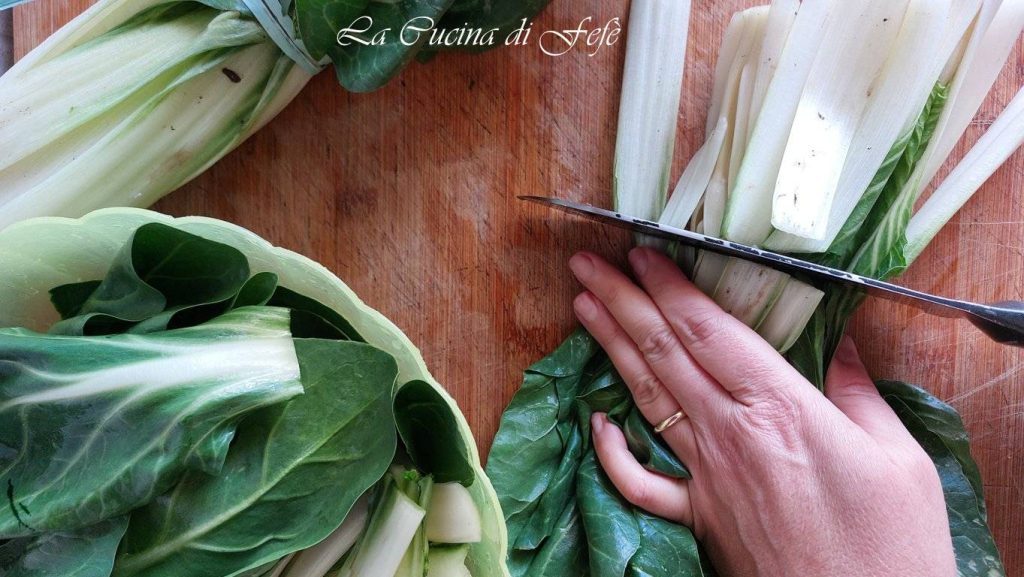
With a sharp knife, remove any tougher fibers from the ribs.
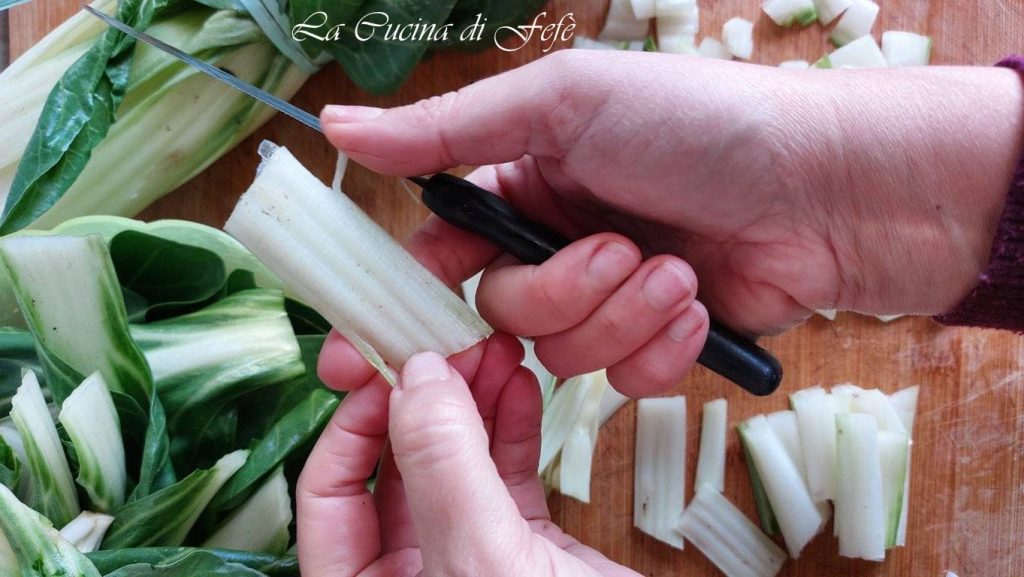
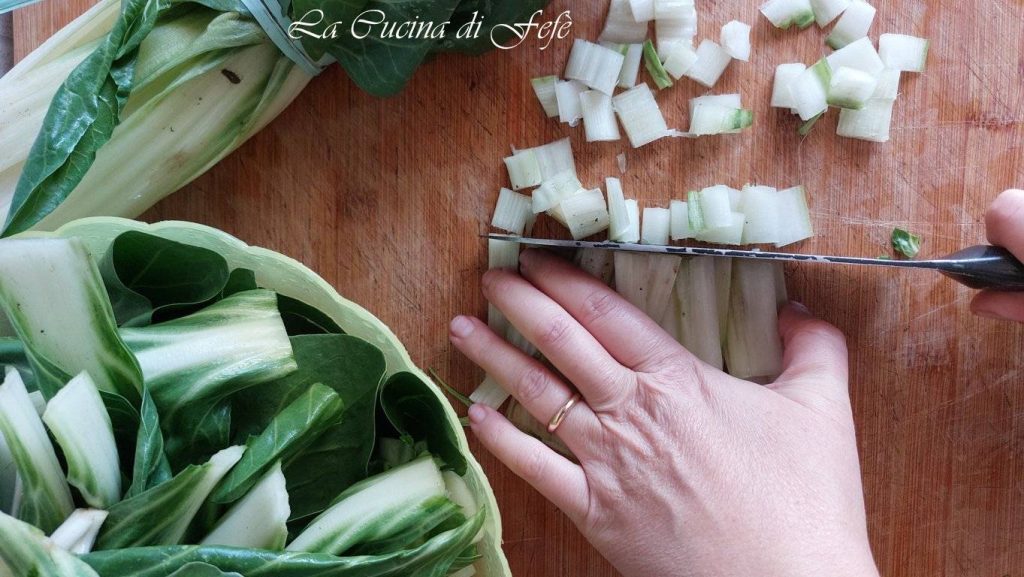
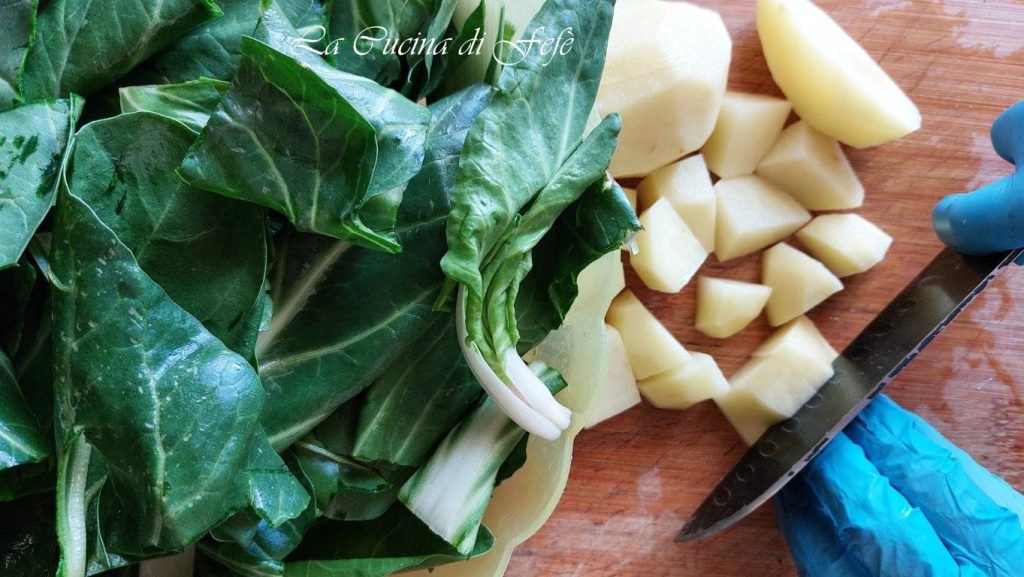
Cut the ribs into small cubes. The green leaves should be stacked, rolled, and sliced into strips about 1 1/4–1 1/2 in wide.
Peel the potatoes with a peeler, rinse well under running water and cut them into cubes about 1 1/4 in.
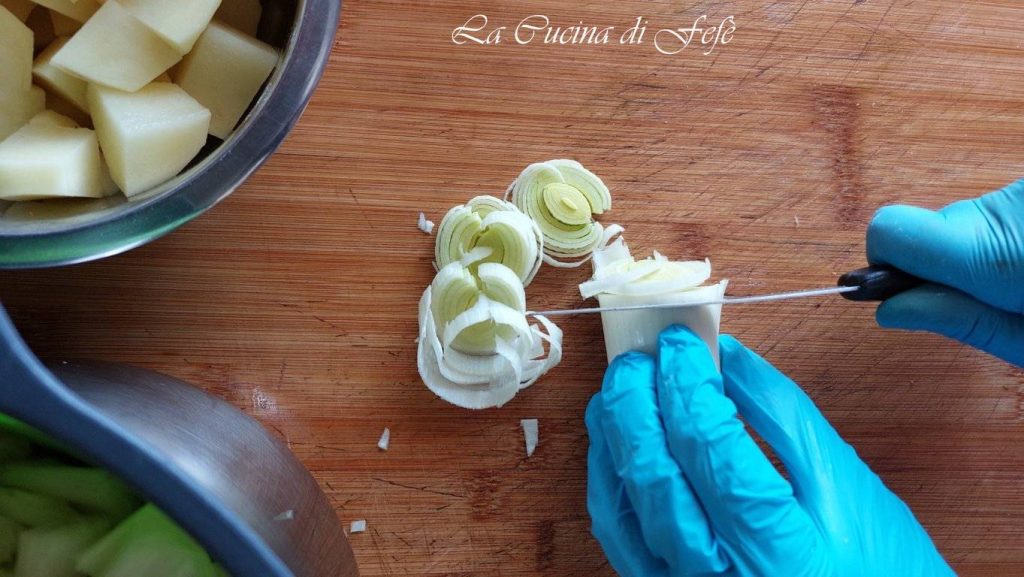
Remove the root of the leek and the tougher dark-green end but keep the pale green. Split it lengthwise, rinse under running water, and slice half of it into thin rounds. You can include some of the tender green stalk for a more intense aroma.
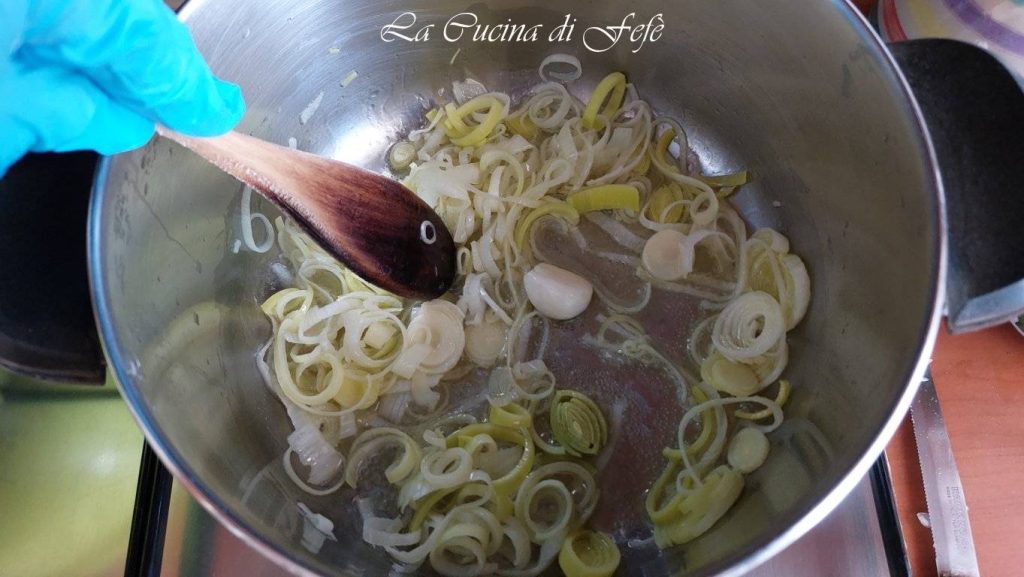
In a large pot (better if heavy-bottomed), heat a generous splash of extra virgin olive oil. Add the leek (or spring onion) and the whole garlic clove (either unpeeled or peeled). Let it soften over low heat until the leek is tender and translucent, stirring continuously so it doesn’t burn.
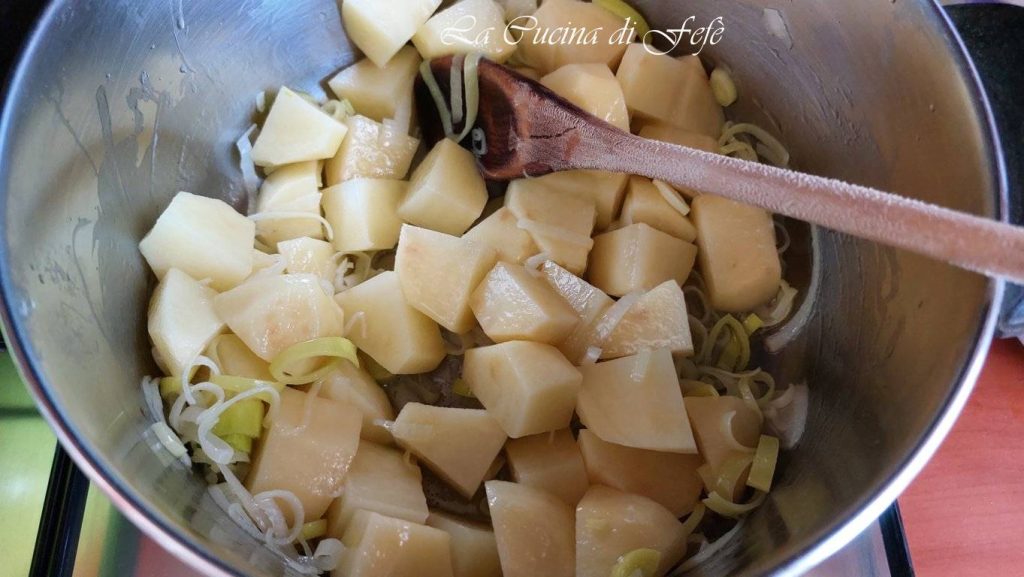
Then add the ribs and the potatoes cut into cubes and let them brown slightly over a fairly high heat for about 5 minutes, stirring frequently.
Add 2 ladles of hot vegetable broth only if the pan starts to dry out.
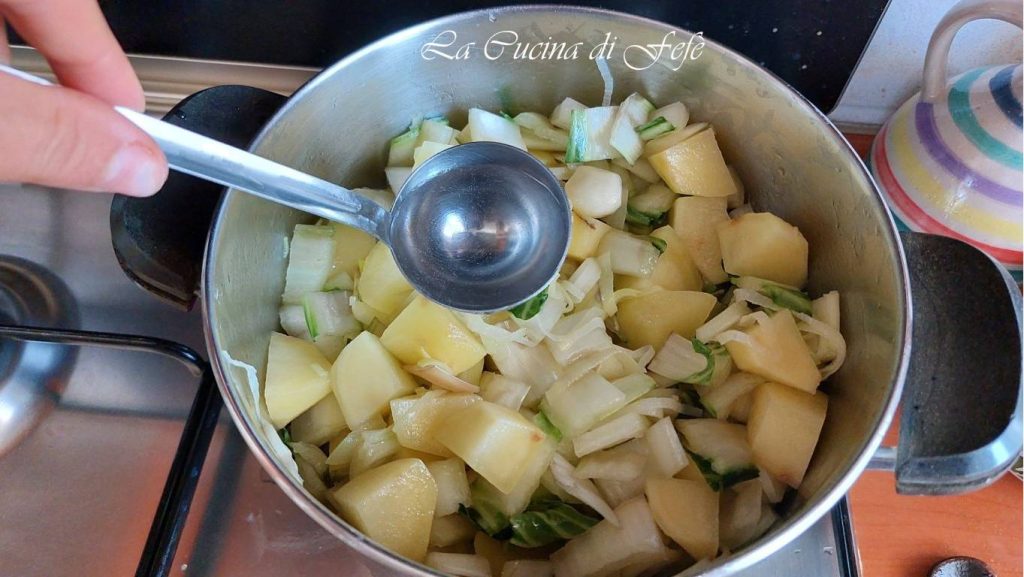
Add the tomato paste, dissolve it with a ladle of hot broth and stir well: this step will intensify the flavor.
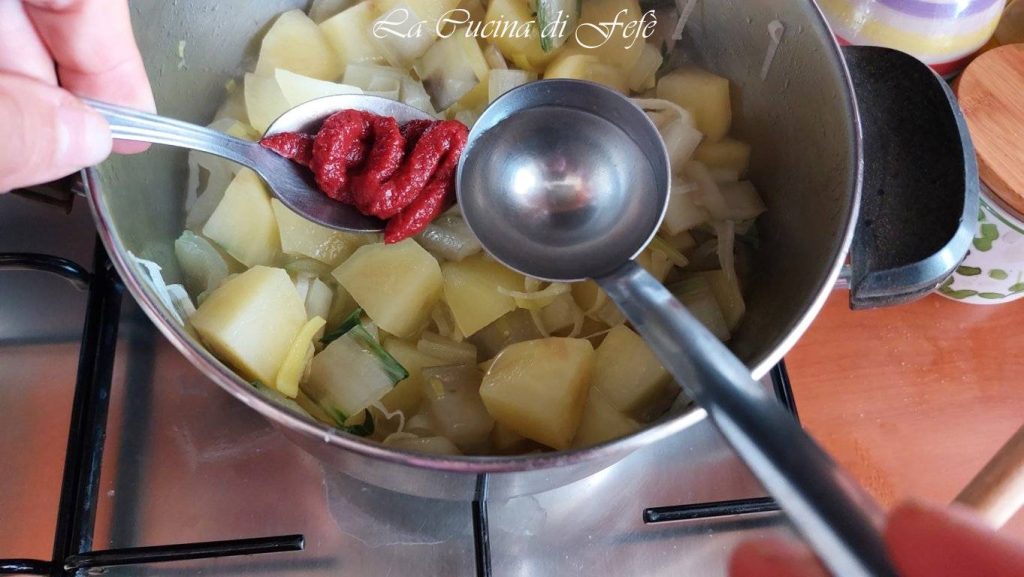
Cover with the remaining broth, bring to a boil, then lower the heat and cover with a lid. Let cook for about 15 minutes, or until the potatoes are tender.
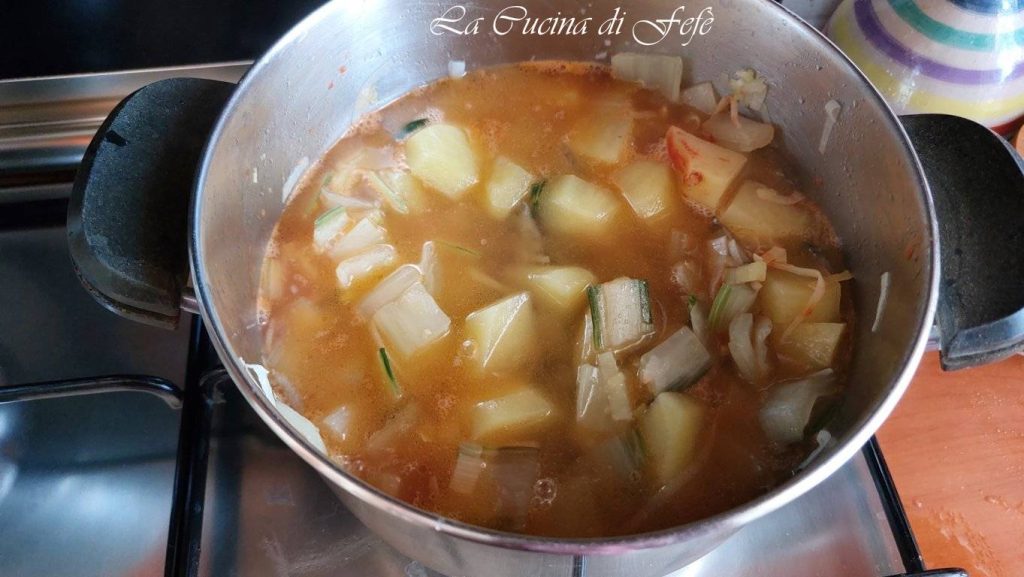
After that time, remove the lid and add the Swiss chard sliced into strips.
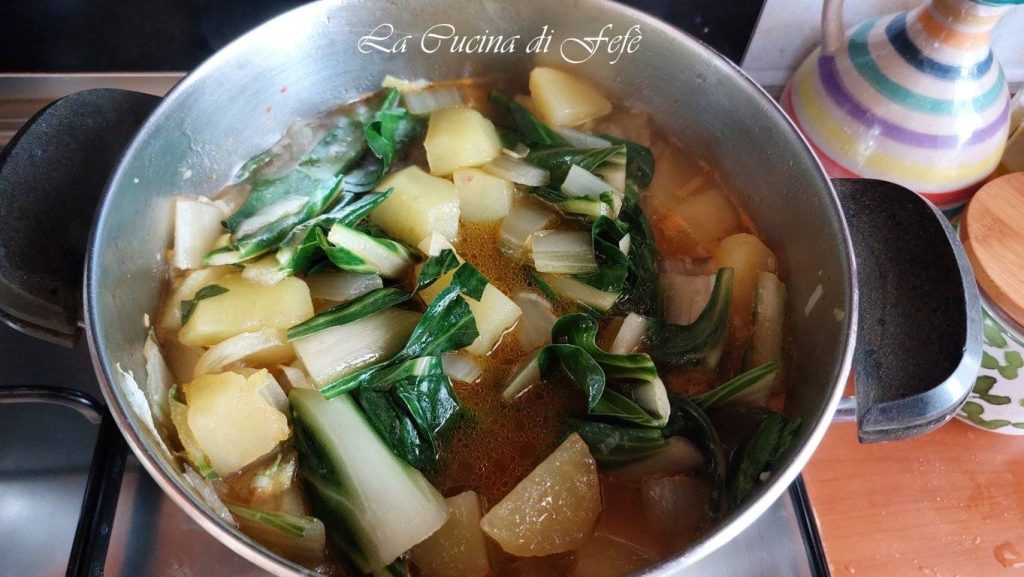
Add the tomato purée (I used cherry tomato purée) and mix well. Continue cooking for another 8–10 minutes over low heat.
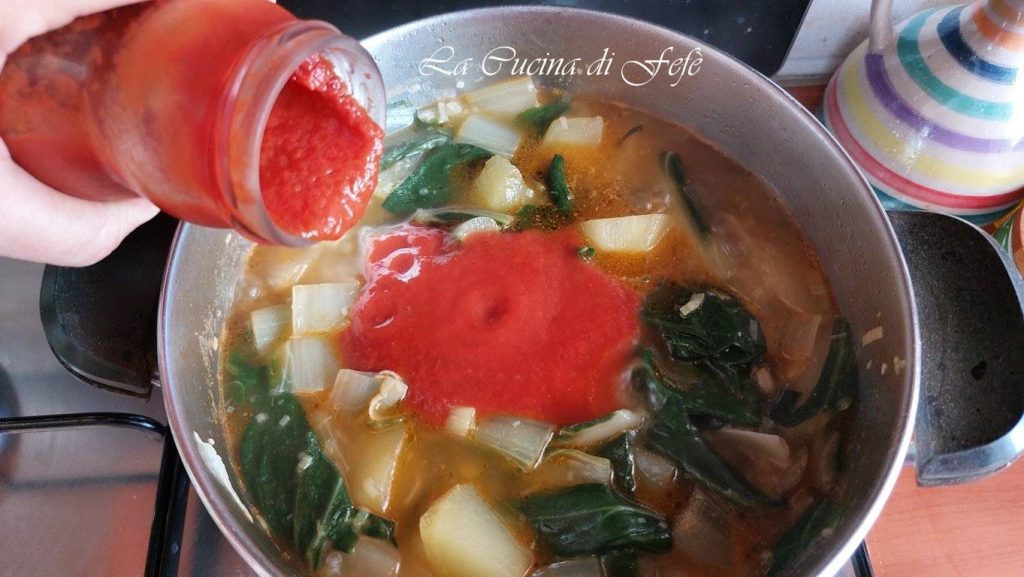
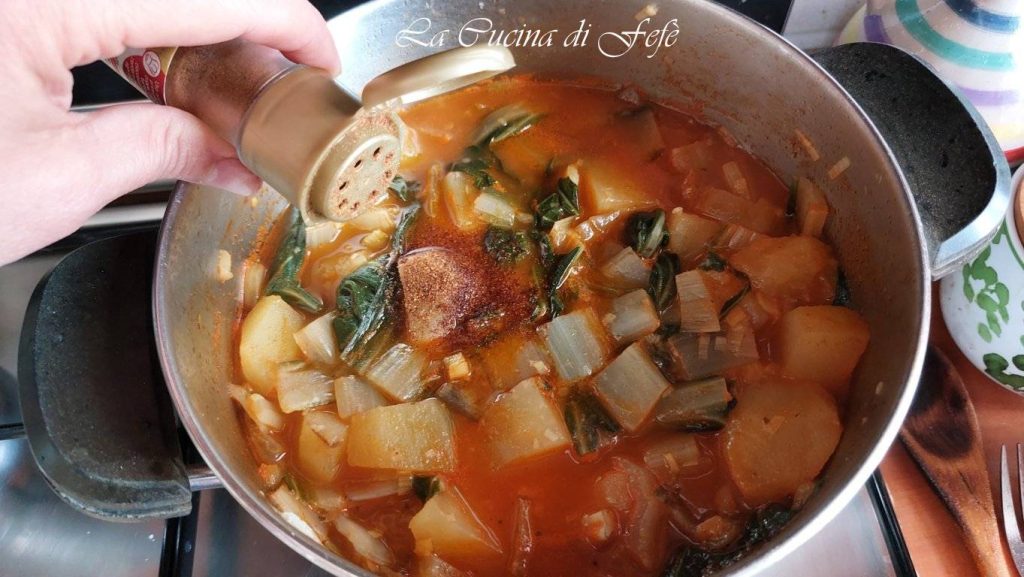
Adjust salt and chili pepper to taste (but remember the Grana will add saltiness at the end).
Turn off the heat and immediately toss in the cubes of Grana. Stir gently only once and close the lid: the residual heat will start to soften the cheese without melting it completely.
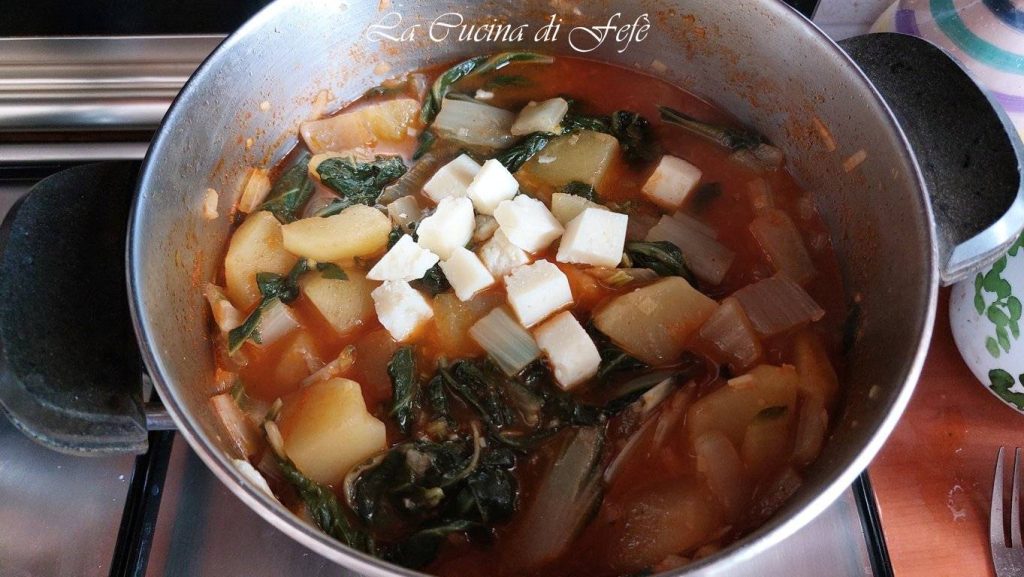
Let the soup rest with the lid on for 5 minutes so the cheese reaches the right melting point!
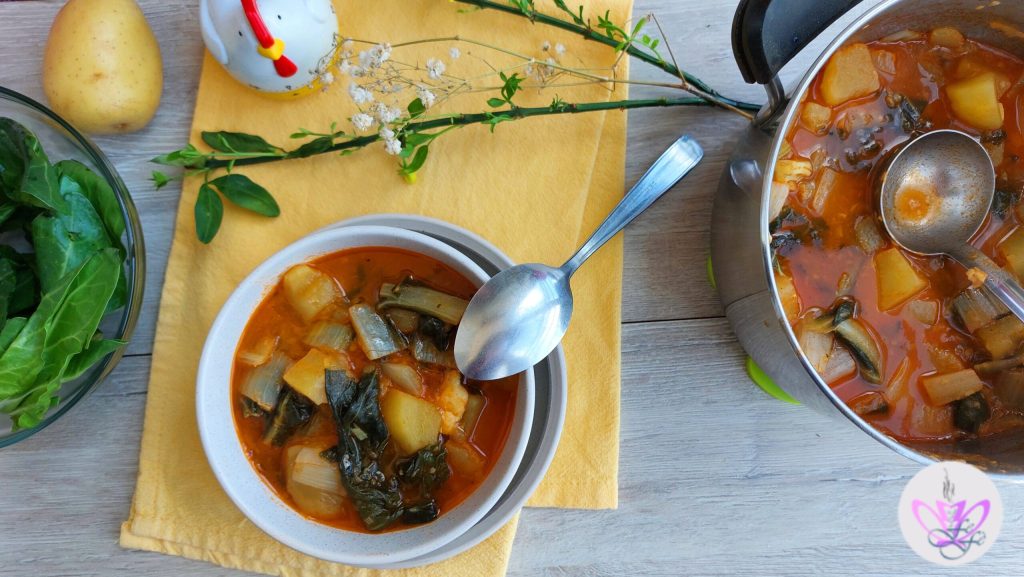
Serve the soup piping hot in bowls, making sure each portion has its precious Grana cubes, and finish with a drizzle of raw olive oil and toasted bread croutons toasted in the oven or in a pan.
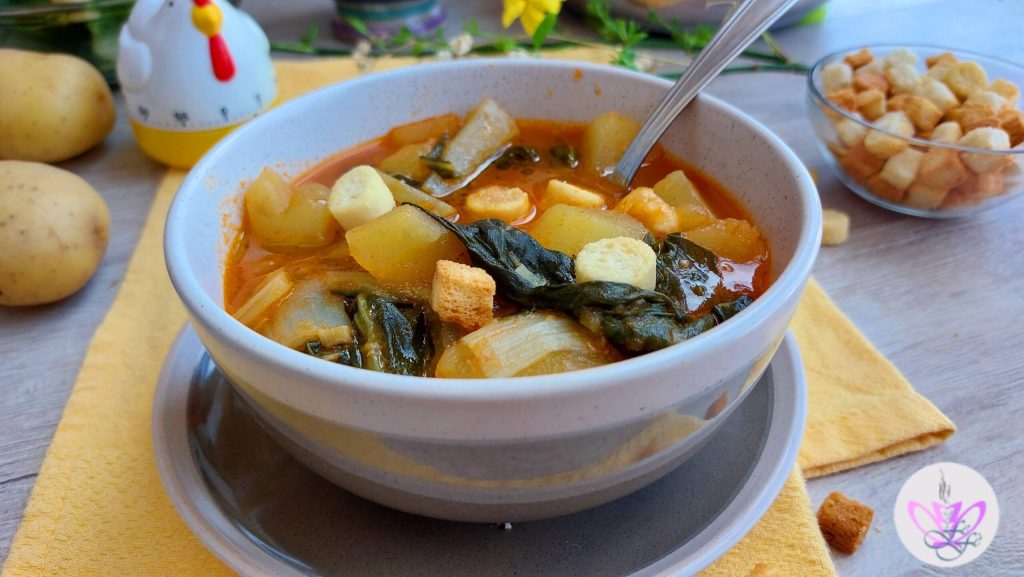
And voilà… the rustic Swiss chard and potato soup is ready to enjoy!
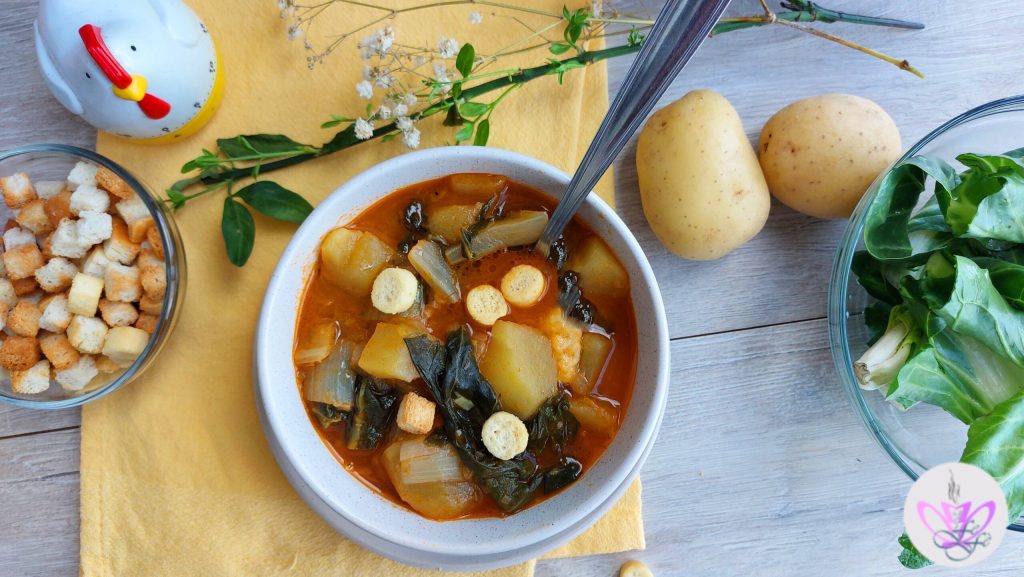
Enjoy from La Cucina di FeFè!
Storage
👉 The potato and Swiss chard soup is one of those dishes that tastes even better the next day because the flavors have time to meld perfectly. It keeps very well in the refrigerator for 3-4 days inside an airtight container, preferably glass. The next day the potatoes will have absorbed much of the broth, so when reheating you may need to add a splash of water or vegetable broth. But we actually prefer it that way.
👉 You can also freeze it and store it in the freezer for up to 3 months. Attention: I recommend freezing it without the cheese. Add fresh cubes of Grana only after thawing and reheating so they keep the right texture.
Tips, notes, variations and suggestions
🟣If you want to make this soup for vegan friends or prefer a 100% plant-based alternative, you can replace the Grana with cubes of hard plant-based cheese (there are excellent almond- or cashew-based varieties that melt slightly). If you prefer a more natural flavor, use cubes of smoked tofu quickly sautéed with a splash of soy sauce: they will give that savory, slightly chewy note similar to cheese. For the broth, make sure to use a homemade vegetable broth (celery, carrot, onion) or an organic vegetable stock cube.
FAQ (Questions & Answers)
Your questions about Mom’s Soup
1. Can I use frozen Swiss chard?
Yes, you can use frozen chard if you can’t find fresh. I recommend blanching it briefly in boiling water or adding it directly to the pot while still frozen, but keep in mind the texture will be a bit softer than fresh garden chard, so it will cook faster.
2. What type of potatoes are best?
Yellow-fleshed potatoes are best because they hold up well during cooking. If you prefer a soup that naturally thickens into almost a cream, use starchy white potatoes, which tend to break down slightly.
3. Can I substitute the leek?
Certainly. If you don’t have leek you can use a spring onion or the classic yellow onion, and shallot will also work. The flavor will be only slightly stronger and less sweet.
4. The soup is too watery, what can I do?
No problem! Take a ladle of potatoes and chard from the pot, puree them quickly with an immersion blender or mash them with a fork, then return the resulting cream to the soup. It will become thick and enveloping immediately. Alternatively, remove a few ladles of broth without the vegetables, but keep it aside if you want to use the soup as a sauce for pasta.
5. Does the Grana have to be cubed?
The beauty of this recipe is precisely finding the soft, stringy cube! If you grate it, the flavor will still be excellent but you’ll lose that “surprise” texture that makes my mother’s soup special. If you have well-cleaned Grana rinds, you can cook them in the soup: they’ll become very soft and delicious.
