
Sicilian five-hole pasta: discover the ingredients, doses, and tips for preparing it at Carnival
When talking about first courses in Italian cuisine, one cannot help but think of pasta, the star of many iconic recipes. Regional cuisine also includes numerous preparations based on typical formats and types: orecchiette, tortellini, gnocchi, etc., with a variety of sauces (sauces, ragouts) to delight even the most demanding palates.
The Secret of the Catanese Dish between Tradition and Variants
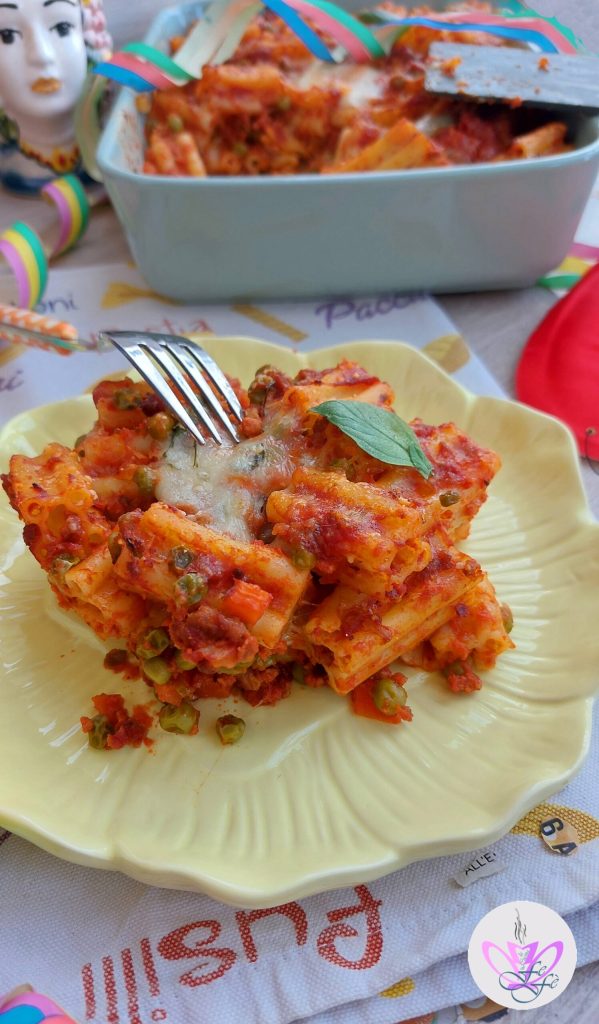
If there is a dish that embodies the crazy, generous, and indulgent spirit of Carnival in Sicily, it is undoubtedly the Five-Hole Pasta (pasta chî cincu puttusa). A unique pasta shape in the world, typical of Catania, with its baroque structure made of a large central tube surrounded by four smaller ones, is designed for one purpose: to hold as much sauce as possible.
Today I take you on a journey to discover this beautiful and succulent recipe, a triumph of Mediterranean flavors, and my own version with only mixed minced meat, perfect for those who want a rich and tasty preparation but more digestible.
The Tradition: The Carnival Sauce “In Its Pure State”
The historic recipe wants this pasta to be dressed with pork ragù. Not just any ragù, but a slow-cooked one where “falsomagro”, pork ribs (costine), and sausages with fennel seeds meld into the tomato sauce. It is the dish for festive Sundays, where the seasoning literally enters the holes of the pasta, creating an explosion of flavor with every bite.
But for those like me, who find pork indigestible or prefer a more uniform texture, I’ve experimented with a variant that has been incredibly successful: the mixed minced meat ragù (beef and veal).
Why it works: The finely chopped mixed mince penetrates all five holes of the pasta, making each penne a small stuffed treasure. Baking will then create that crispy crust typical of pasta ‘ncasciata, or beautifully browned.
Try it yourself, it will become a must for your special occasions!
Other typical Sicilian first course recipes you might be interested in:
- PASTA CHI MASCULINI E FINOCCHIETTU RIZZO (PASTA WITH ANCHOVIES AND WILD FENNEL – Traditional Catanese Recipe)
- PASTA CO’ CAVOLO TRUNZU DI ACI (Sicilian Recipe)
- LINGUINE WITH FISH ROE SAUCE (Sicilian Recipe)
- CASERECCE WITH YELLOW CHERRY TOMATOES, CAPER CRUMBS, AND TOASTED BREADCRUMBS
- PASTA WITH LONG ZUCCHINI AND POTATOES (Sicilian Recipe)
- Difficulty: Easy
- Cost: Medium
- Portions: 4 People
- Cuisine: Italian Regional
- Region: Sicily
Ingredients
⚠ THIS RECIPE CONTAINS ONE OR MORE AFFILIATE LINKS. The products I recommend are the same ones I use in my recipes; purchasing them through my blog helps support me and my work, while it won’t cost you anything extra!
- 1.2 lbs mixed minced meat (veal and beef)
- 1 stalk celery
- 1 golden onion (medium)
- 1 carrot
- 26.5 oz tomato passata
- 1.5 cups frozen peas
- 2 tbsps tomato paste
- 5.3 oz red wine
- 1 pinch ground cinnamon (preferably in stick)
- 2 leaves bay leaf
- 2.7 oz extra virgin olive oil
- to taste salt
- to taste pepper
- 14 oz pasta (5-hole or macaroni)
- 4.2 oz spicy Sicilian tuma cheese (or other stringy cheese)
- 2.5 oz grated Parmesan cheese
- 1.1 oz Sicilian pecorino cheese (grated)
- to taste butter
- to taste salt
Tools
- 1 Knife
- 1 Pan
- 1 Lid
- 1 Wooden Spoon
- 1 Casserole
- 1 Colander
- 1 Baking Dish
Steps
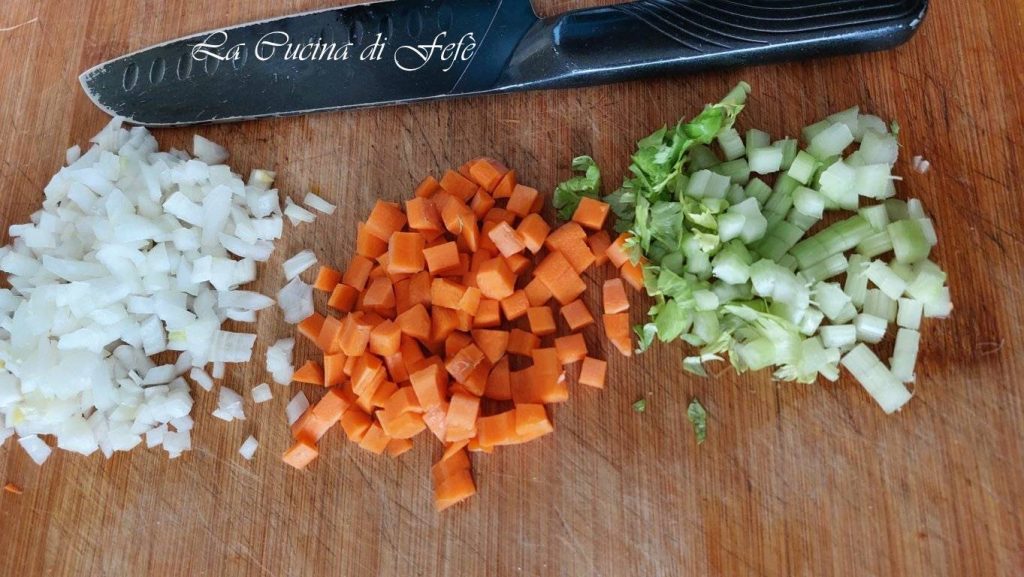
Start by cleaning the vegetables: wash them well, peel the onion, trim and peel the carrot, and remove the strings from the celery, then cut them all into small and regular cubes for the sauté.
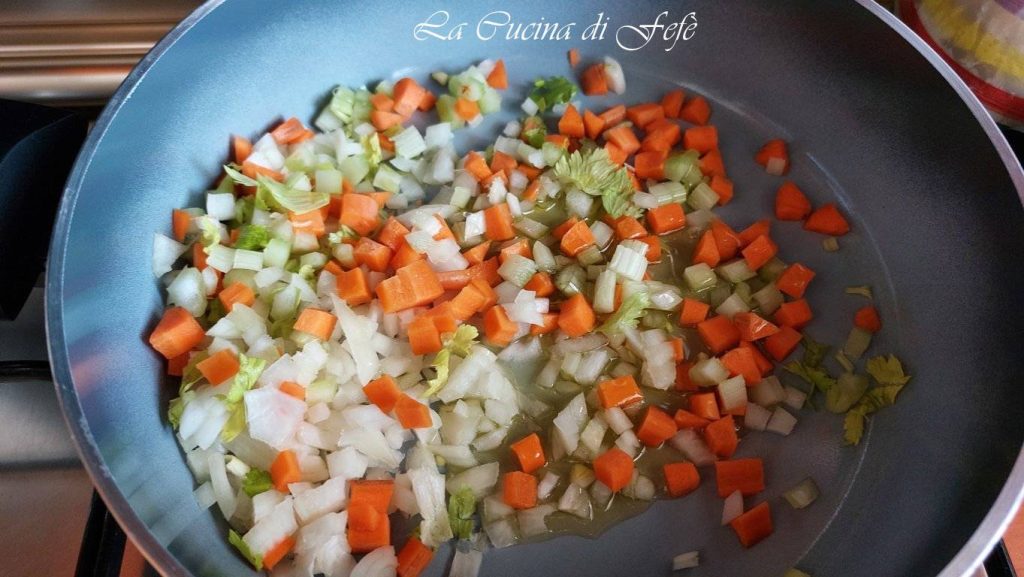
Now transfer the vegetables to a large pan with the extra virgin olive oil and let them gently brown for a couple of minutes.
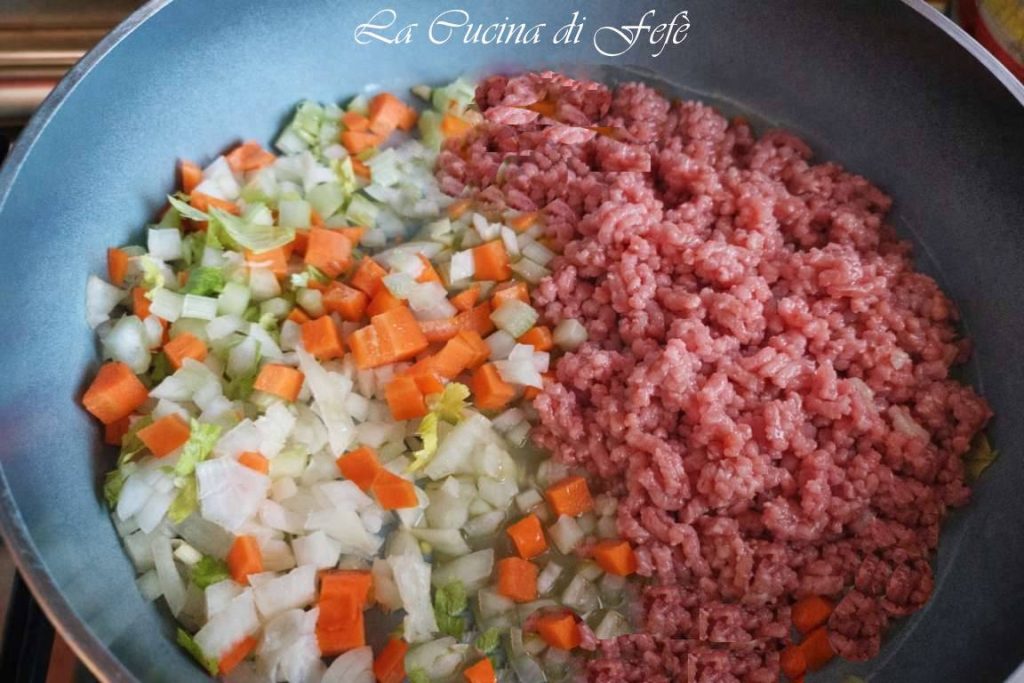
As soon as the vegetables are golden, add the minced meat and let it flavor for another 2′.
When the meat is well flavored, raise the heat and deglaze with red wine and let the alcohol evaporate.
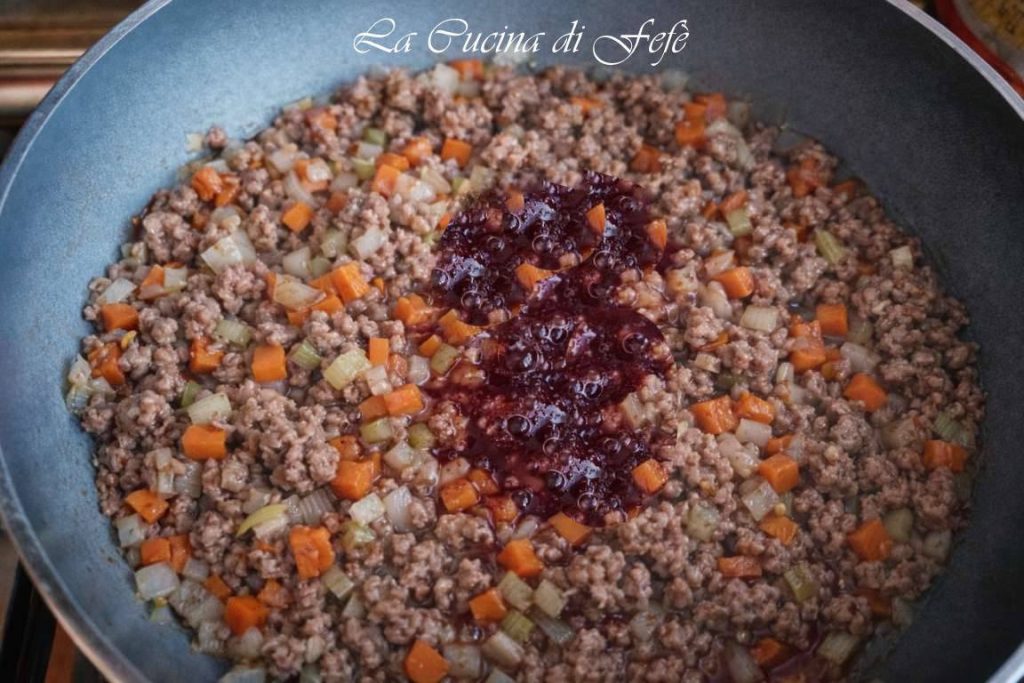
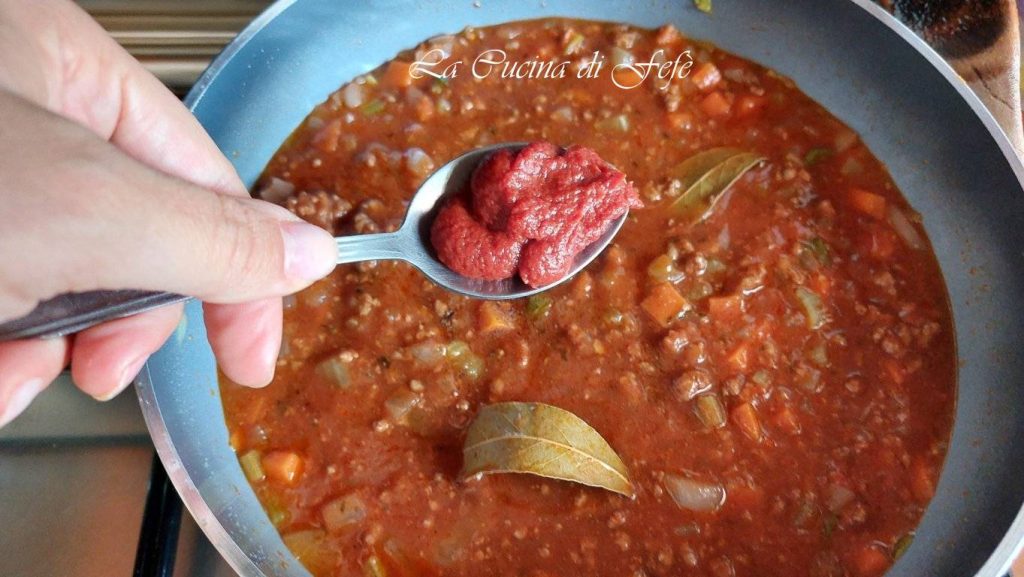
Add the tomato passata, tomato paste, bay leaves and add some water. Close with a lid leaving a small vent and cook on low heat for about 1 hour and 30‘, stirring occasionally. If the sauce becomes too dry during cooking, add some ladles of boiling water.
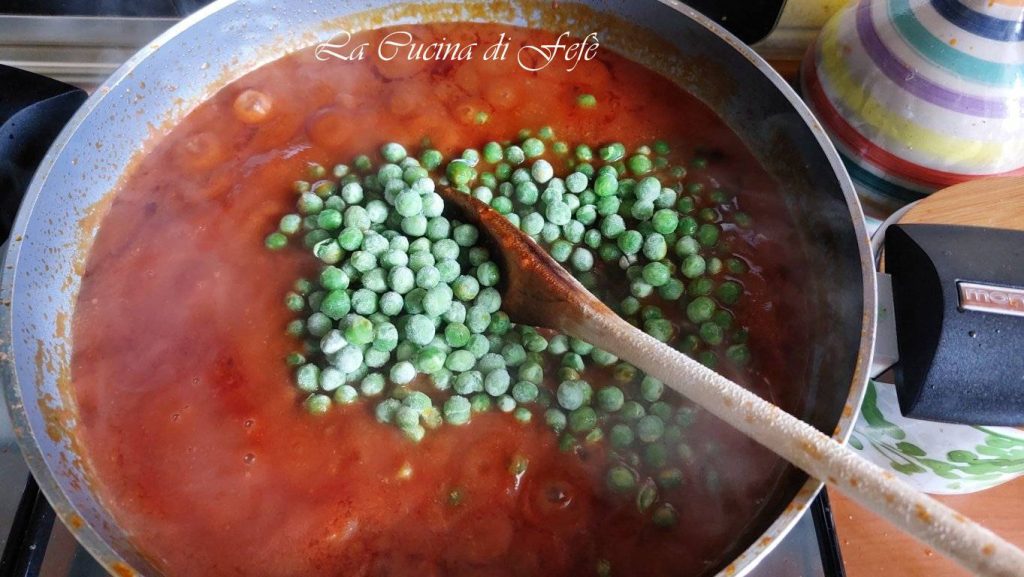
After this time, add the frozen peas and continue cooking for another 10′ or until the peas are cooked.
Also adjust salt and pepper.
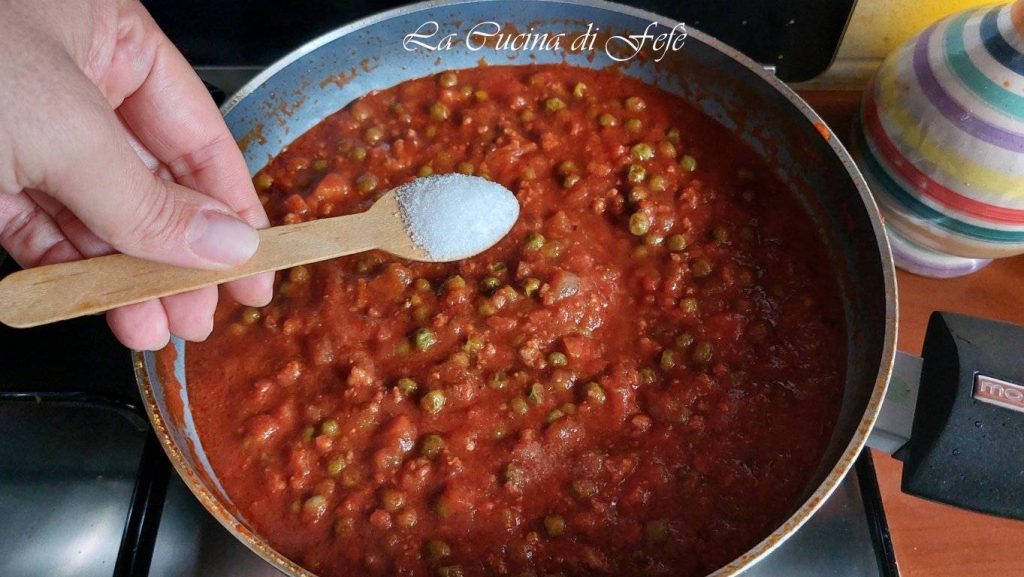
Finally, the secret touch of Sicilian sauce is to add a pinch of cinnamon* (without exaggerating!) a few minutes before the end of cooking. The secret is that it should “be felt but not immediately recognized”.
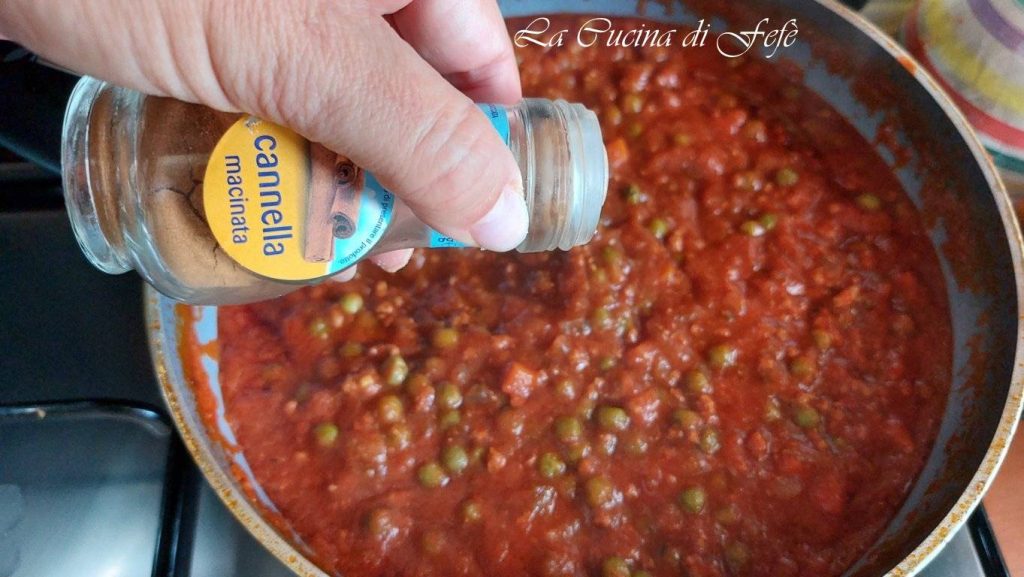
In a saucepan, boil plenty of salted water, pour the five-hole pasta and cook.
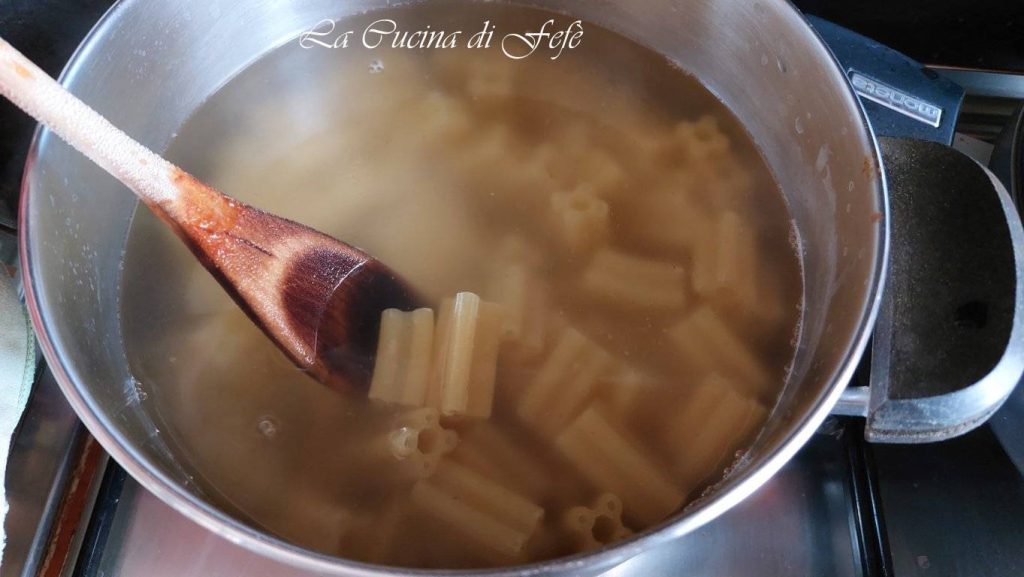
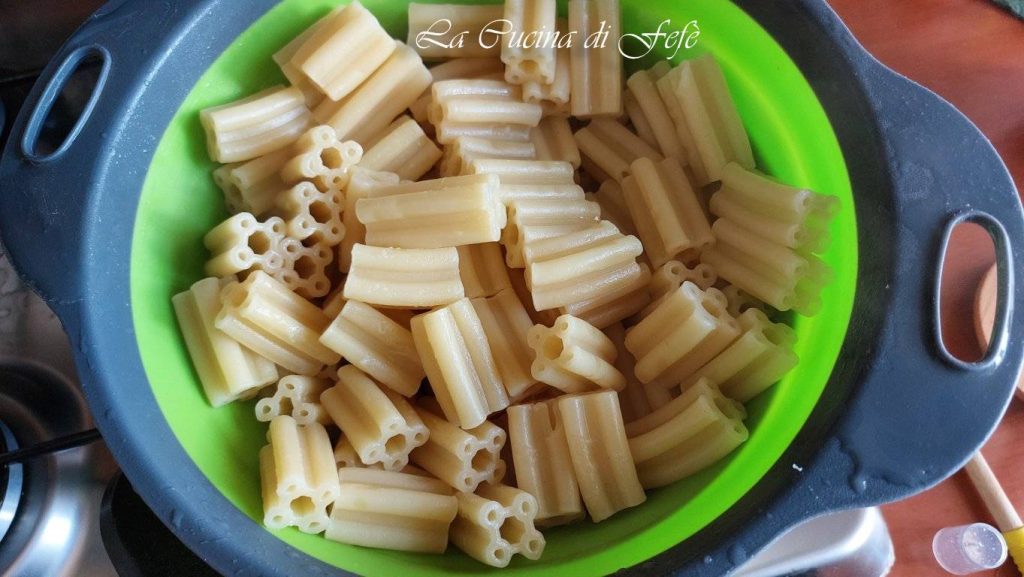
Drain it al dente with a colander, about 3′-4′ before the cooking time indicated on the package. This will ensure perfect consistency after baking.
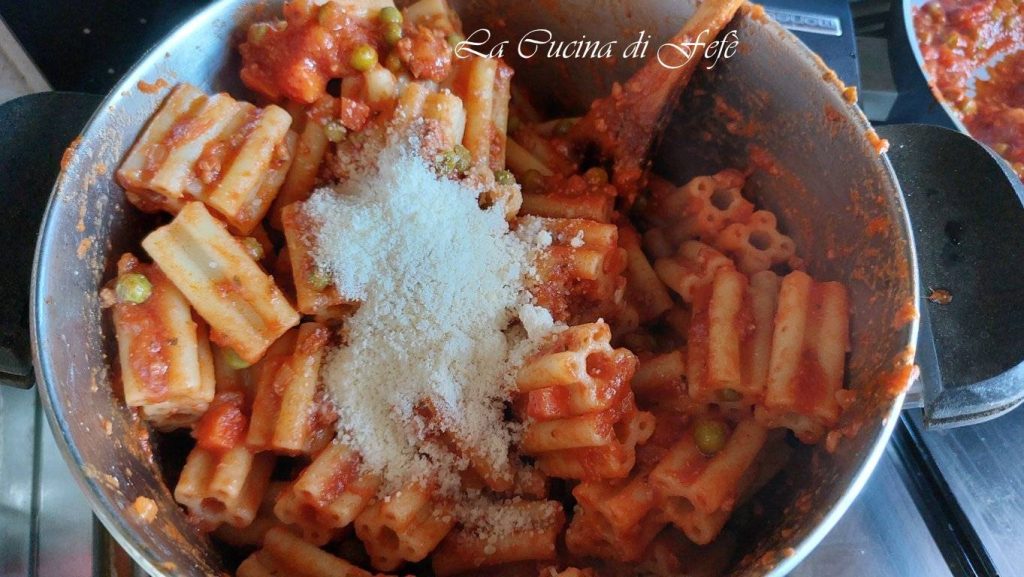
Return it to the pot and season it with a few ladles of sauce so that it can be well flavored without leaving dry parts, then add 1-2 tablespoons of grated Parmesan and Sicilian pecorino previously mixed, and stir.
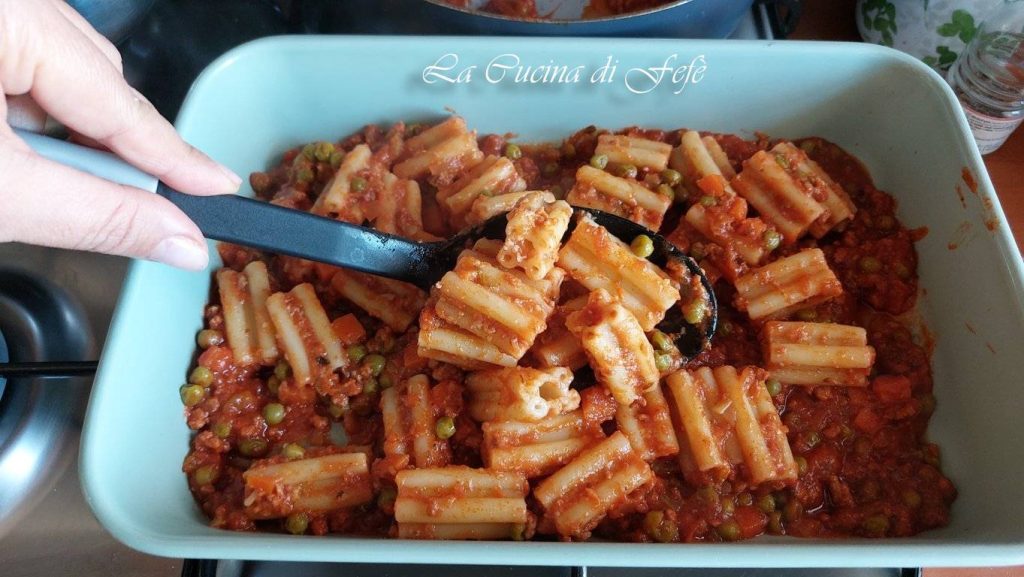
Start by “smearing” the bottom of a large baking dish with a generous layer of sauce. This will create a moist base that will keep the pasta from sticking. Then proceed to pour a first layer of pasta, ensuring it is well covered with more seasoning.
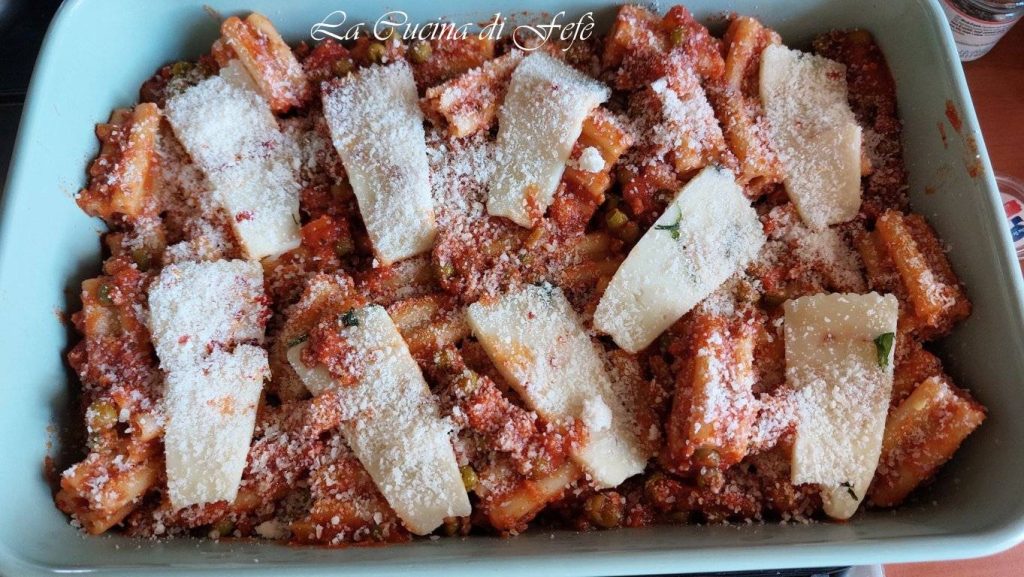
Add half the cheese sliced and a few tablespoons of the grated mix.
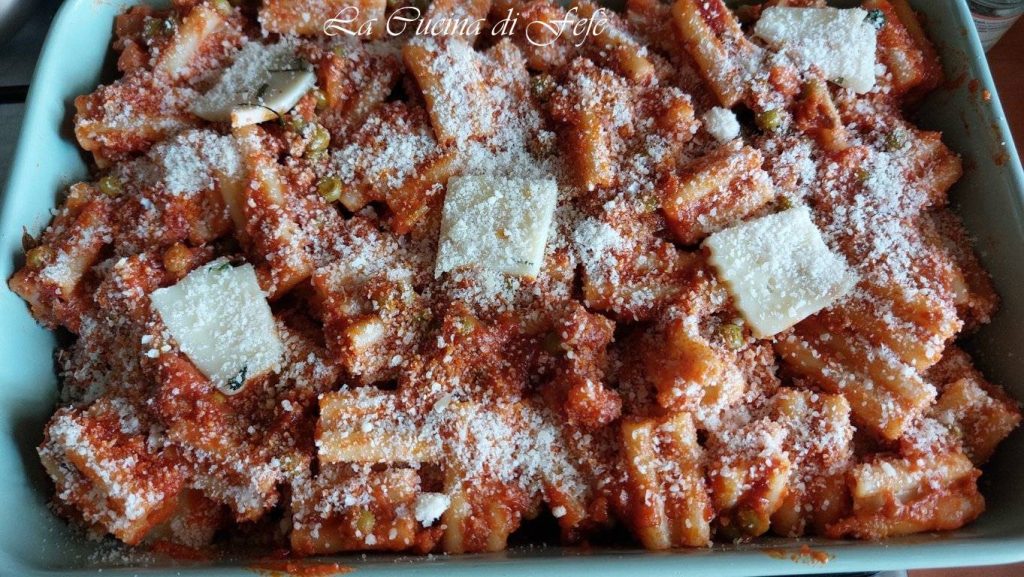
Finish the last layer with more pasta, cheese slices, abundant grated Parmesan and pecorino and a few dabs of butter here and there. Bake in a preheated static oven at 350°F for 25′ or until the surface is nicely golden.
Serve it hot or slightly warm
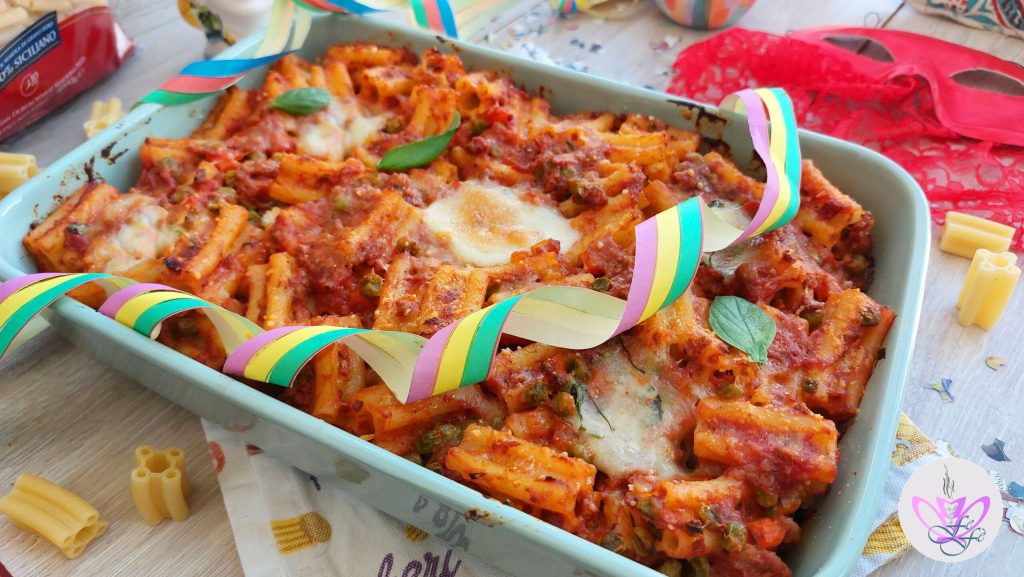
And voilà… the Sicilian five-hole pasta is ready to be enjoyed!
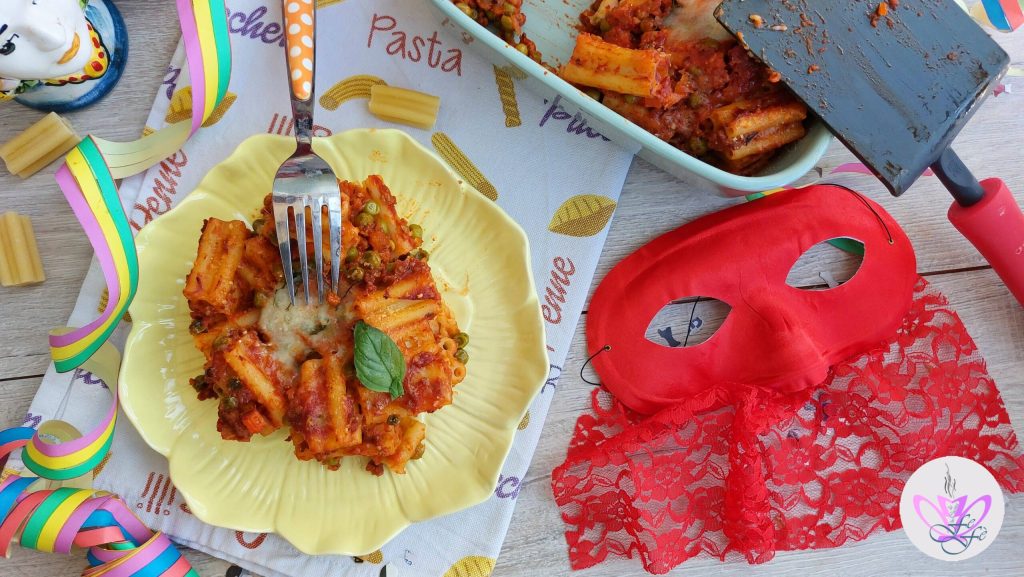
Bon Appétit from La Cucina di FeFè!
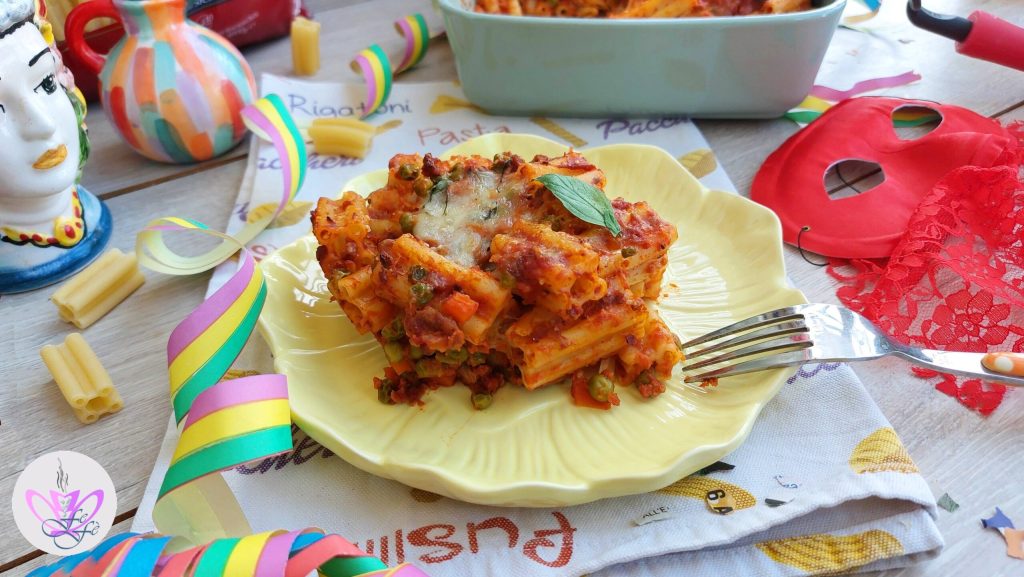
Storage
👉The five-hole pasta is a dish that defies the laws of physics: the next day it is almost always better! However, it requires some care. If you have leftover pasta already seasoned or prepared it in advance, you can store it in the fridge for 2-3 days inside a glass container. Plastic tends to absorb the color of the tomato and the odors of the ragù.
How to Reheat It (“Just Baked” Effect)
Do not simply reheat it in the microwave, or it will become rubbery. Place the pasta in a pan with a drizzle of oil and a ladle of water. Cover with a lid to create steam. Once softened, remove the lid and stir-fry on high heat for a minute. Or back in a preheated oven at 340°F adding a ladle of hot water with 1 tablespoon of tomato paste dissolved in it (I also add more grated cheese). Cover with a sheet of wetted and squeezed parchment paper and cook for 15′, then remove the sheet and leave for another 5′.
Tips, Notes, Variations, and Suggestions
🟣*Cinnamon is the “secret touch” that distinguishes the Sicilian festive ragù from a common meat sauce. That’s why it should never be missing in your five-hole pasta:
Cinnamon adds a spicy note that makes the sauce infinitely deeper and baroque, a legacy of Arab rule in Sicily. Together with cloves, cinnamon is what gives the Carnival sauce that unmistakable scent that is felt in the streets of Catania in February.
Finally, it helps to mitigate the acidity of the tomato, acting like sugar but with a much more elegant aromatic profile.
Note: in this recipe, cinnamon would be best added in sticks (about 2) during the long cooking of the ragù. It will gradually release its aroma and you can easily remove it before seasoning the pasta. If you don’t have it, you can opt for ground cinnamon.
🟣The Seasoning: the number one enemy is dryness. To combat it, your sauce should reduce less, that is, it should be more liquid and abundant than usual. Hence the choice to cook it only for 1 hour and 40′ instead of 2 hours. The pasta, in the oven, will absorb this extra moisture, becoming flavorful and remaining incredibly creamy. Remember: what seems too liquid in the pot will become perfect in the baking dish.
FAQ (Questions and Answers)
1. Why is it eaten specifically at Carnival?
Five-hole pasta symbolizes abundance before the Lenten fast. Its complex shape and opulent seasoning represent the “madness” and excess typical of Catanese Fat Tuesday.
2. How is it cooked correctly so it doesn’t break?
Given its shape, this pasta is delicate. Cook it in plenty of salted water and drain it very al dente. Finish cooking directly in the pot with the ragù, adding a ladle of cooking water: the starch will help the sauce seal inside the holes.
3. Where can you buy this pasta shape?
Being a seasonal shape, it is found in Sicilian bakeries and pasta shops (especially in Catania) only during the period from Sant’Agata to the end of Carnival. If you can’t find it, you can substitute it with large macaroni or paccheri, although the “five-hole” experience is inimitable!
