
Light Spring Lasagna: The Secret of the Cauliflower Fake Béchamel
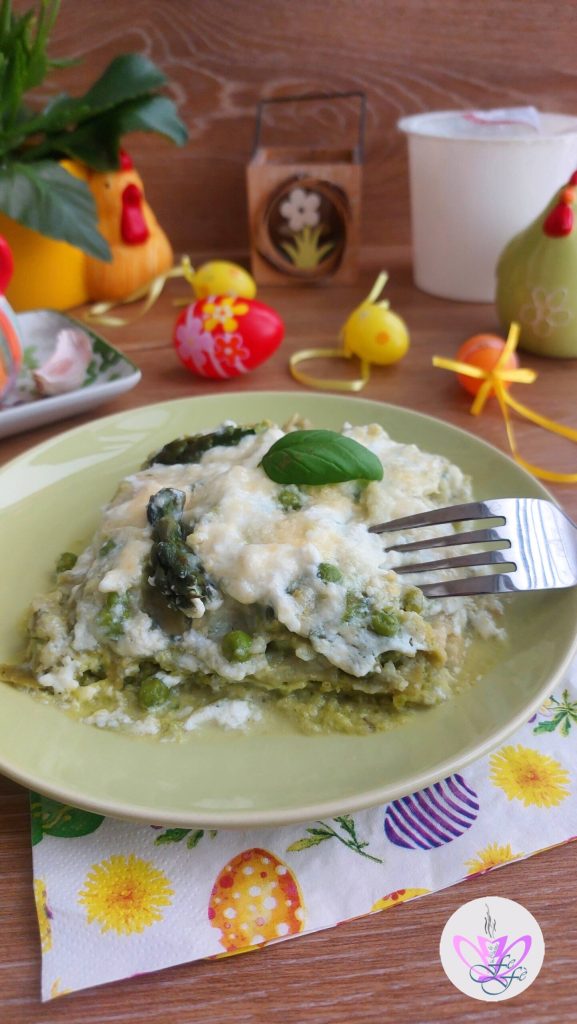
Spring is just around the corner and with it comes the desire for fresh, colorful dishes that celebrate the garden’s treasures. I couldn’t wait! So here I propose a reinterpretation of the classic lasagna, turning it into an explosion of lightness and wellbeing: Spring Lasagna with Asparagus, Seasonal Legumes and Cauliflower Béchamel.
Why you’ll love this recipe
The secret of this dish lies in replacing the traditional béchamel with a super-silky cauliflower cream. This variation not only drastically reduces fat and calories, but also adds valuable minerals, fiber and vitamins. Paired with the freshness of asparagus and the sweetness of baby peas and the first fresh fava beans, it creates a perfect balance. The touch of pistachio pesto will give it that push that balances everything and wins you over at the first bite! It will be the perfect first course for vegetarian-style occasions like Easter lunch or family Sundays!
Other recipes with asparagus and spring vegetables you might like:
- Difficulty: Easy
- Cost: Medium
- Preparation time: 35 Minutes
- Cooking time: 30 Minutes
- Portions: 6Persone
- Cooking methods: Stovetop, Oven
- Cuisine: Italian
- Seasonality: Spring, Easter
Ingredients
⚠ IN THIS RECIPE THERE IS ONE OR MORE AFFILIATE LINKS. The products I recommend are the same I use in my recipes; buying them through my blog helps support me and my work at no extra cost to you!
- 1 white cauliflower
- 2 cups vegetable broth (made with the cauliflower stems)
- 1 1/4 cups milk (or plant-based milk)
- 2 leaves bay leaves
- 1 bunch parsley
- 1 teaspoon ground nutmeg
- 1 1/3 tbsp extra virgin olive oil
- to taste salt
- to taste pepper
- 10 oz egg lasagna sheets
- 1 1/4 cups ricotta
- 1 3/4 cups fava beans (fresh, shelled weight)
- 1 1/2 cups peas (fresh already shelled or frozen)
- 1 bunch asparagus
- 1/2 leek
- 2 cups vegetable broth
- 1/2 cup pistachio pesto
- 1/2 cup grated Parmigiano-Reggiano
- 1/3 cup Sicilian pecorino (grated)
- 2 sprigs parsley
- 4 tbsp extra virgin olive oil
- 1 3/4 tbsp butter
- to taste salt
- to taste mixed peppercorns
Tools
- 1 Vegetable peeler
- 1 Knife
- 1 Pan
- 1 Lid
- 1 Wooden spoon
- 1 Mezzaluna (rocker knife)
- 1 Strainer
- 1 Immersion blender
- 1 Baking dish
- 1 Ladle
- 1 Parchment paper
Steps
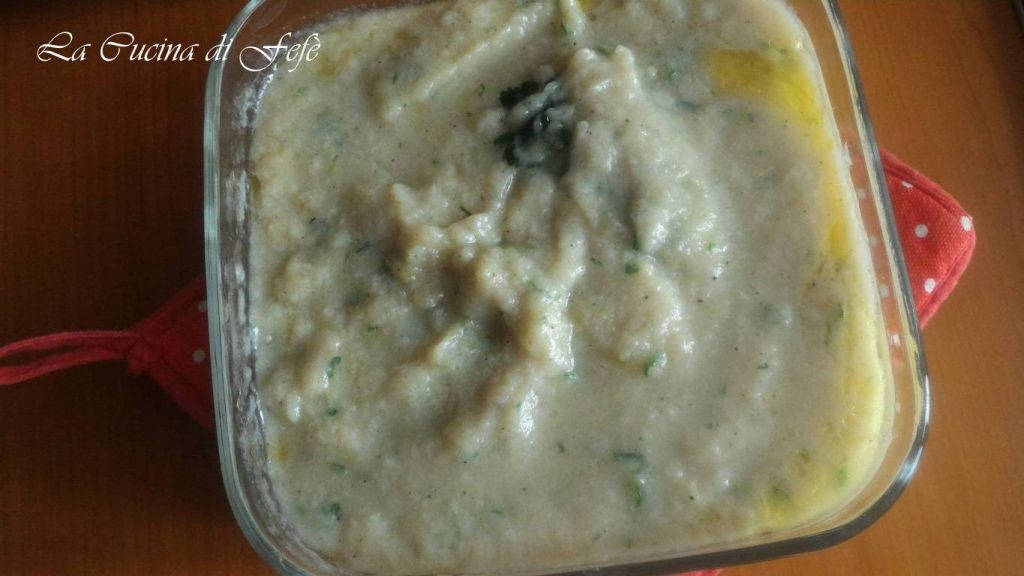
Start preparing the cauliflower fake béchamel, preferably the day before, following all the steps of the recipe*.
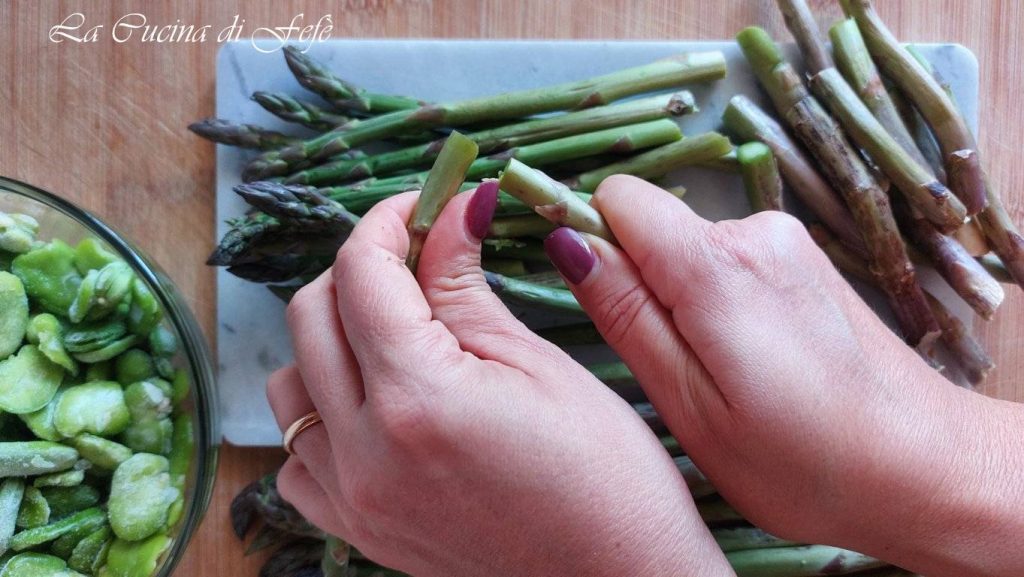
Wash and trim the asparagus**: there is a foolproof method, suitable for any variety you bought — take one asparagus at a time and bend the tip until it naturally snaps between the woody part and the tender part.
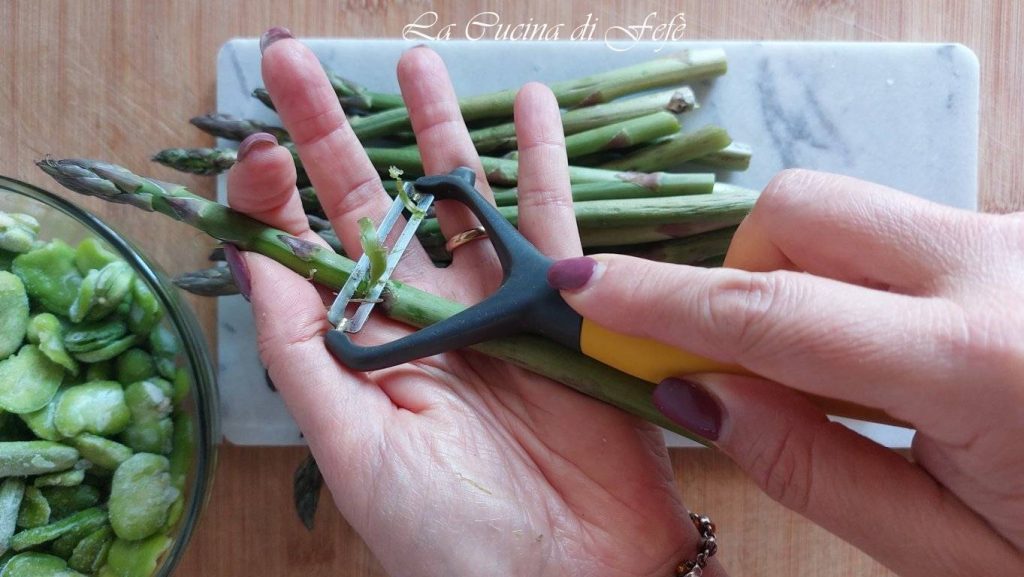
Peel the asparagus with a vegetable peeler or gently with a small knife, working vertically from top to bottom until the stalk has no fibrous green threads. Wild asparagus are very tender and thin and do not need peeling.
Also wash the leek under running water, cut it in half, remove the root fibers, then make a light longitudinal cut on one half and slice it into rings.
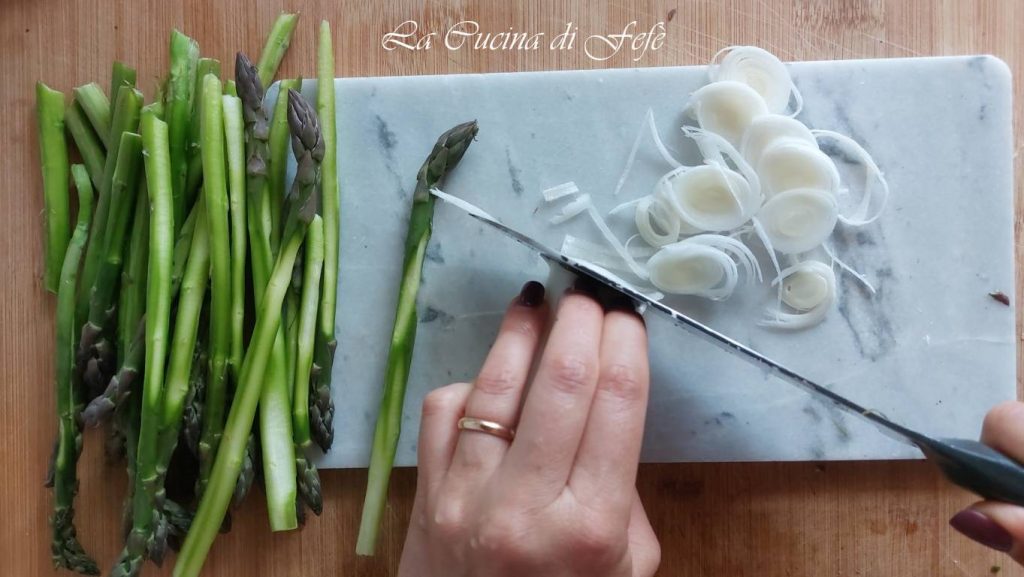
Once the vegetables are trimmed, cut and set aside the asparagus tips.
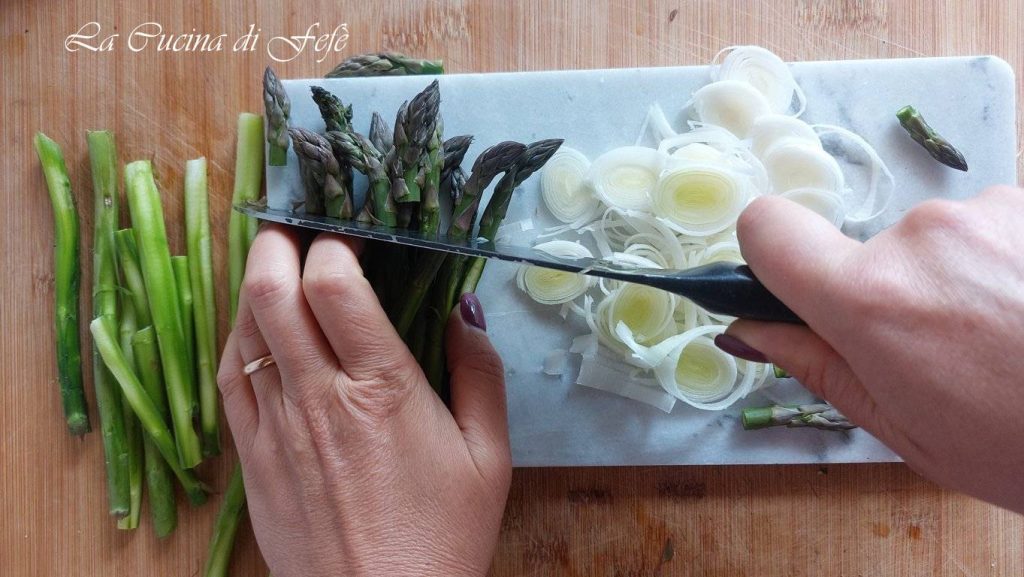
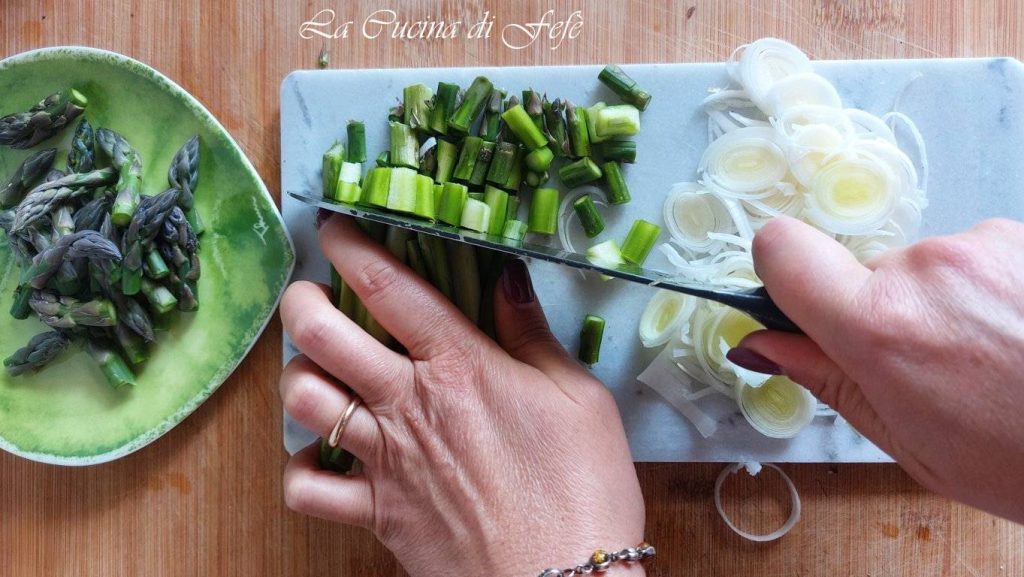
Cut the rest of the stalks into pieces.
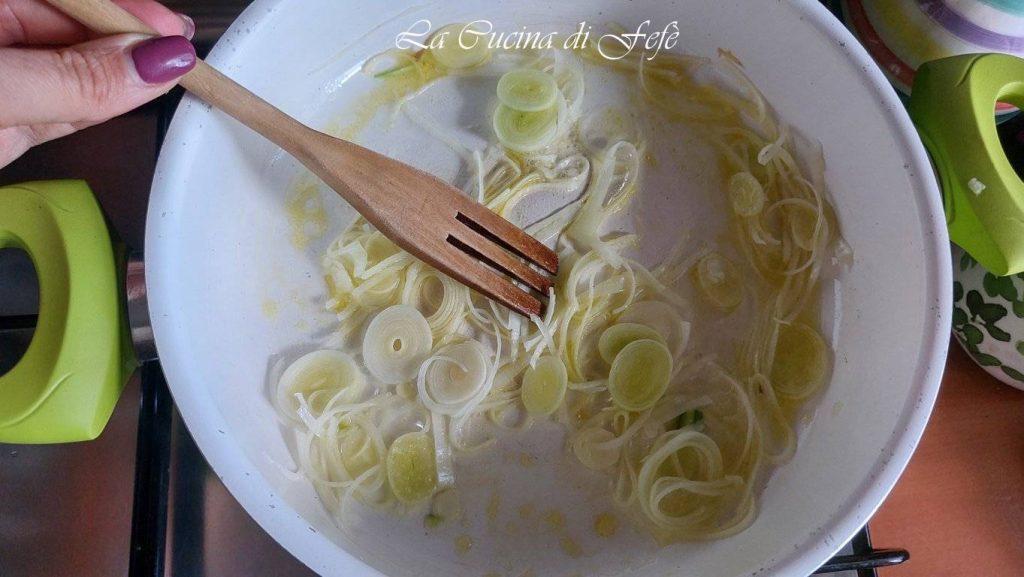
In a large pan, brown the leek over high heat with 4 tablespoons of oil.
Add the asparagus stalks as well and sauté for 5′ over reduced heat so they absorb the flavors.
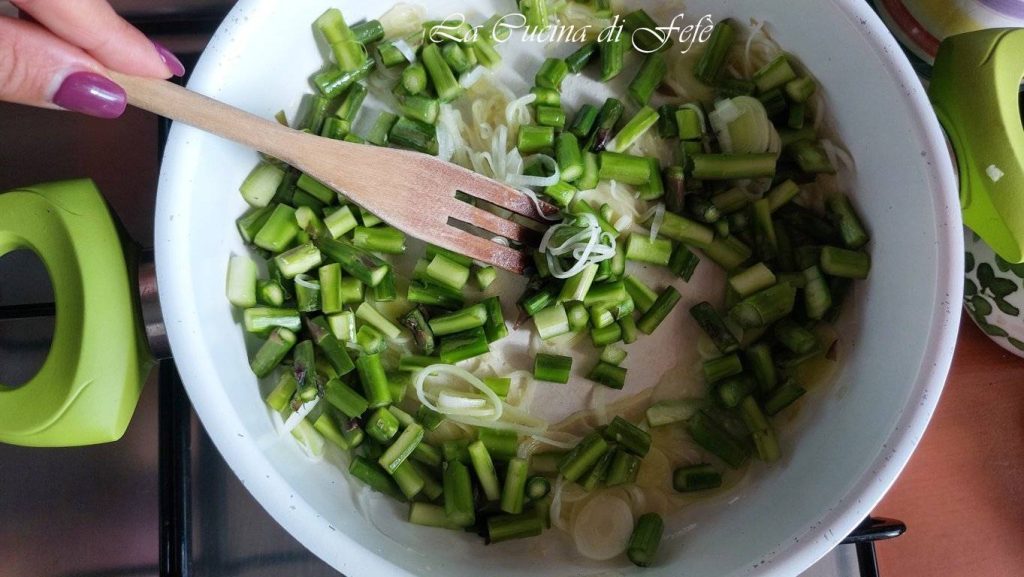
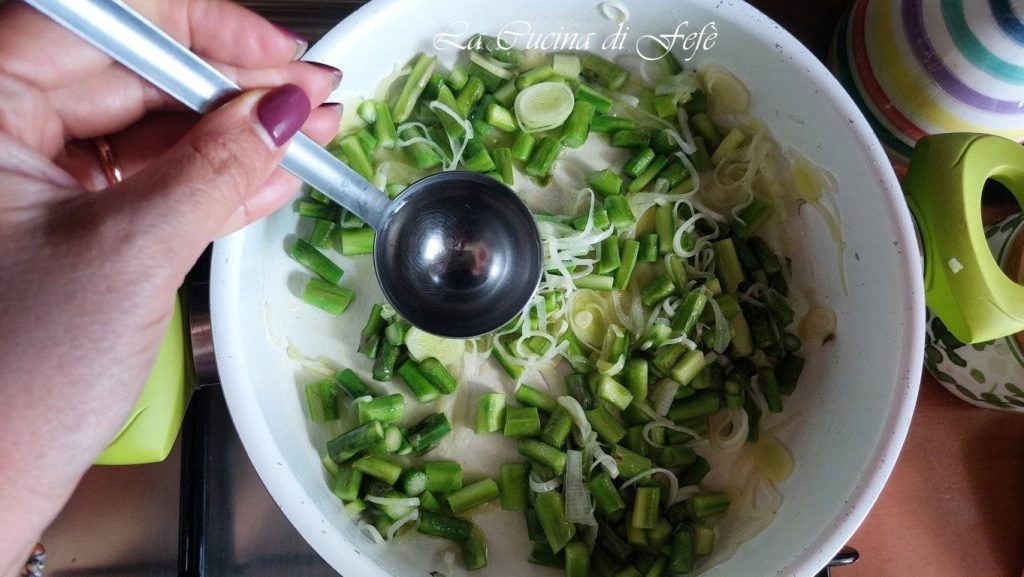
If necessary, add 1-2 ladles of hot vegetable broth so they cook evenly.
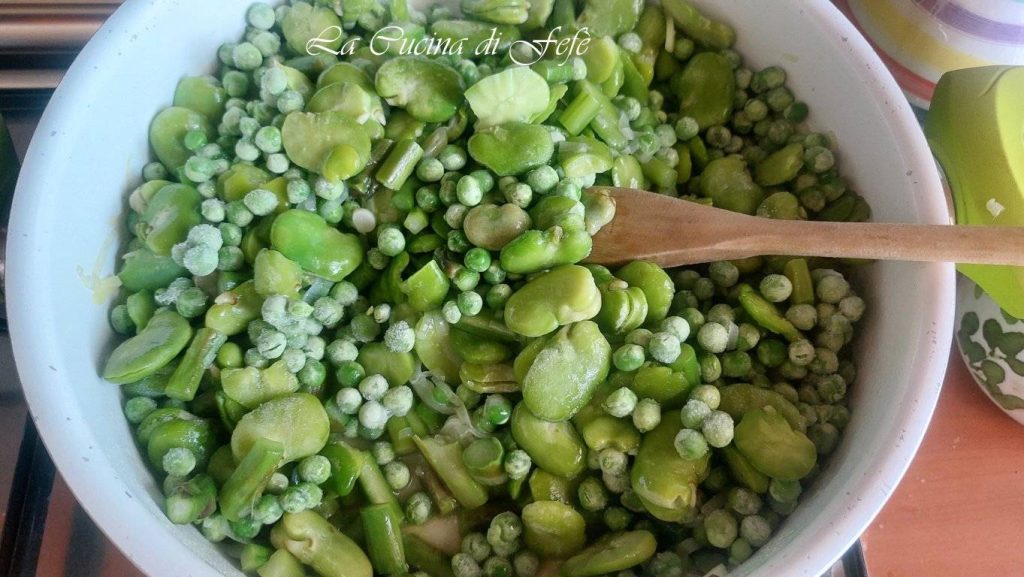
Then add the peas and the already shelled and skinned fava beans and let them simmer gently for about 10′ with a lid on, adding more hot broth only if needed.
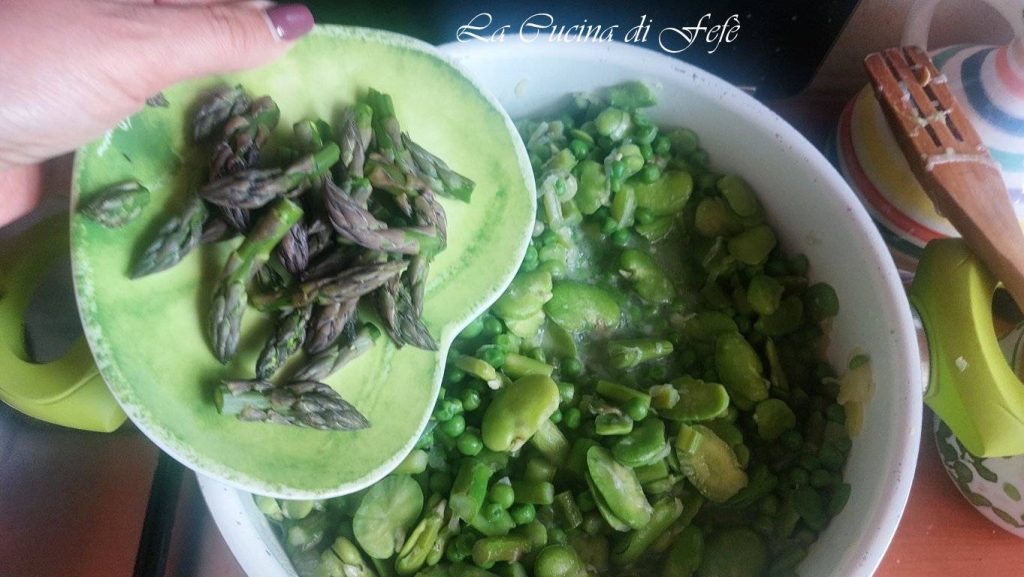
A couple of minutes before the end of cooking, add the asparagus tips.
Season with salt and pepper to taste and flavor with roughly chopped parsley.
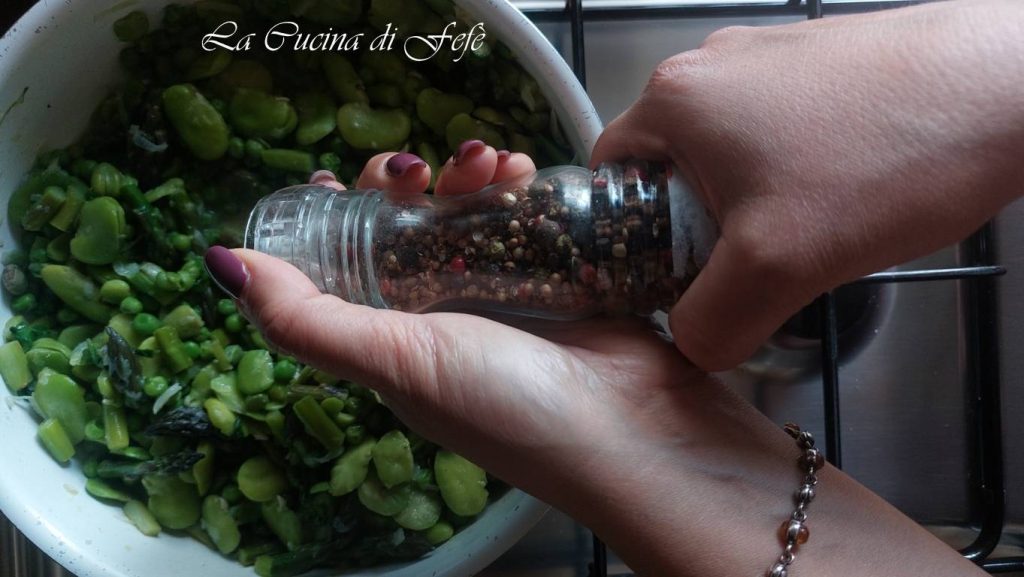
Let cool slightly and set aside.
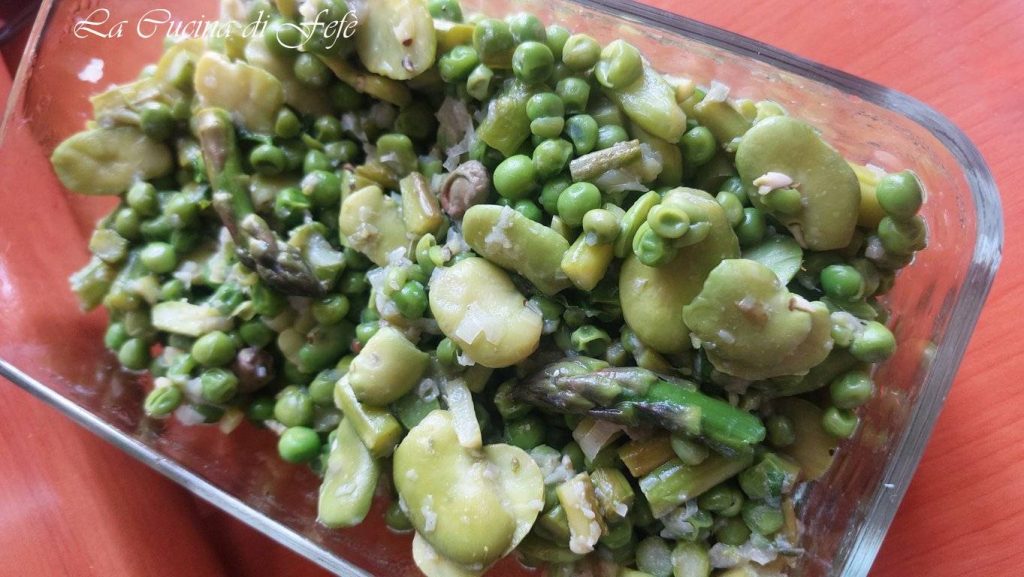
Sieve the ricotta using a strainer, transfer it into the beaker of an immersion blender together with 2-3 tablespoons of the seasoning you just prepared and that is now lukewarm.
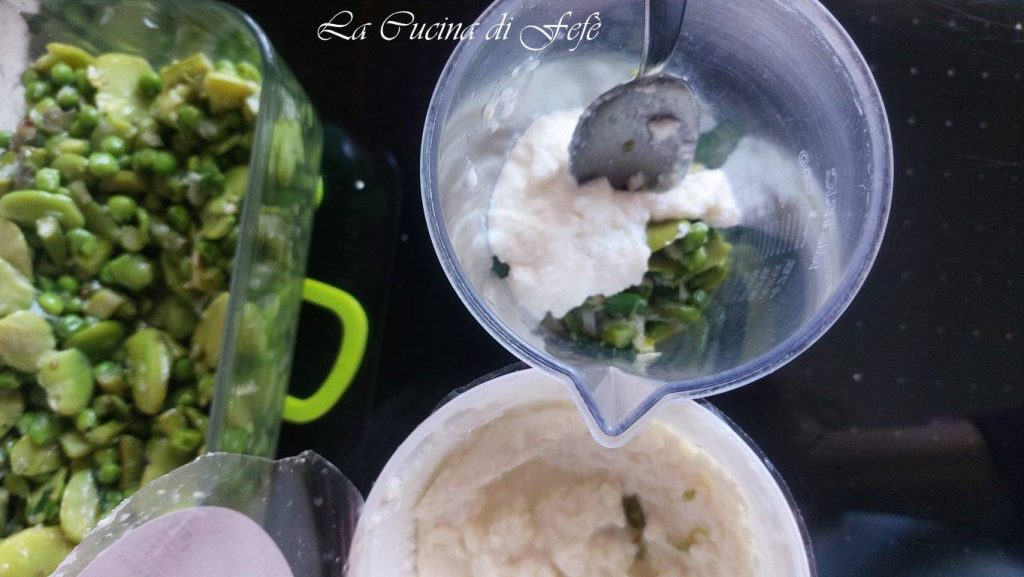
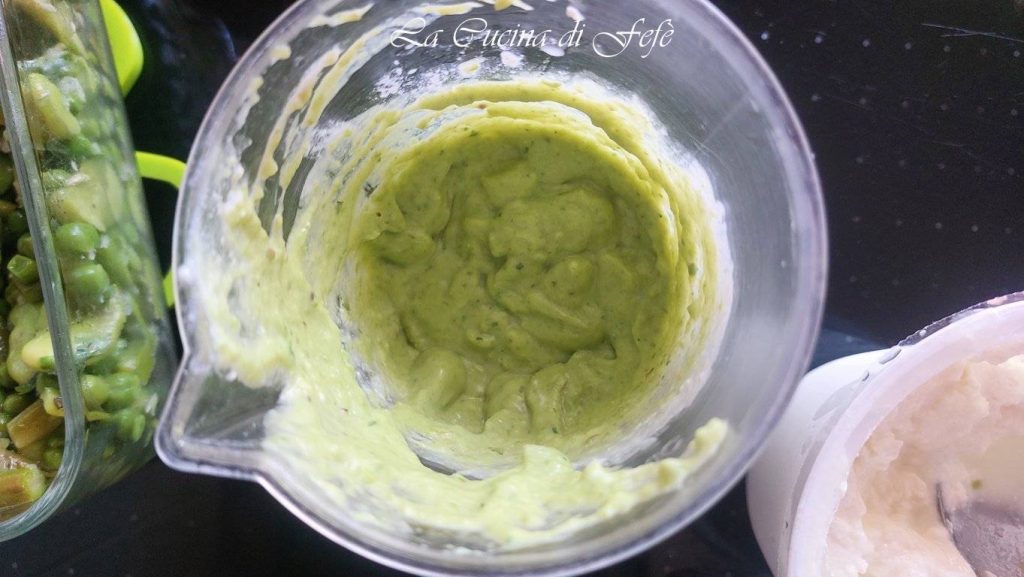
Blend until you obtain a smooth, bright green cream.
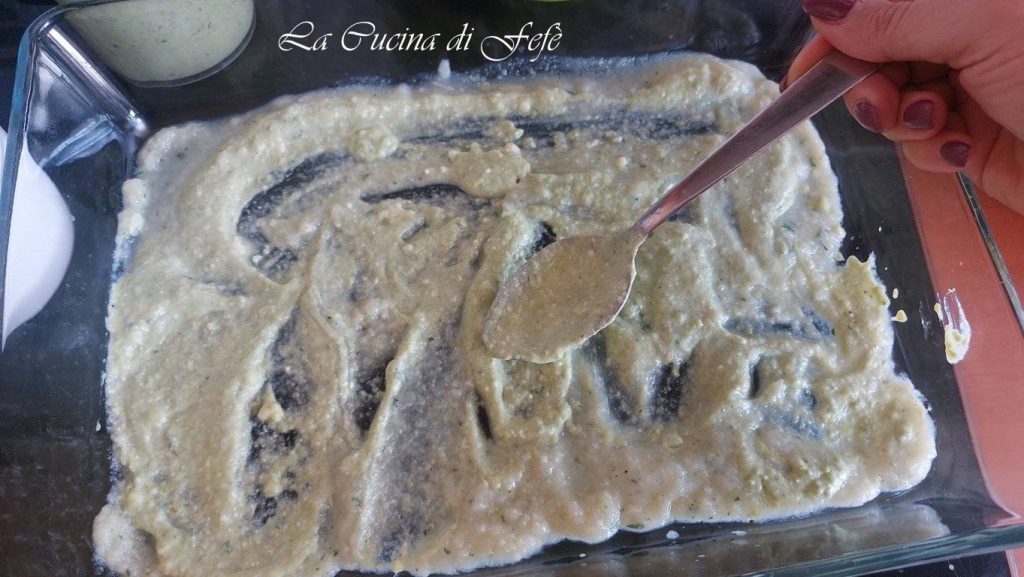
Spread a little of the cauliflower fake béchamel on the bottom of a baking dish.
Create the first layer of lasagna, then spread a little ricotta cream, 1-2 ladles of fake béchamel, a few tablespoons of the asparagus, peas and fava mixture and sprinkle with grated Parmigiano and pecorino.
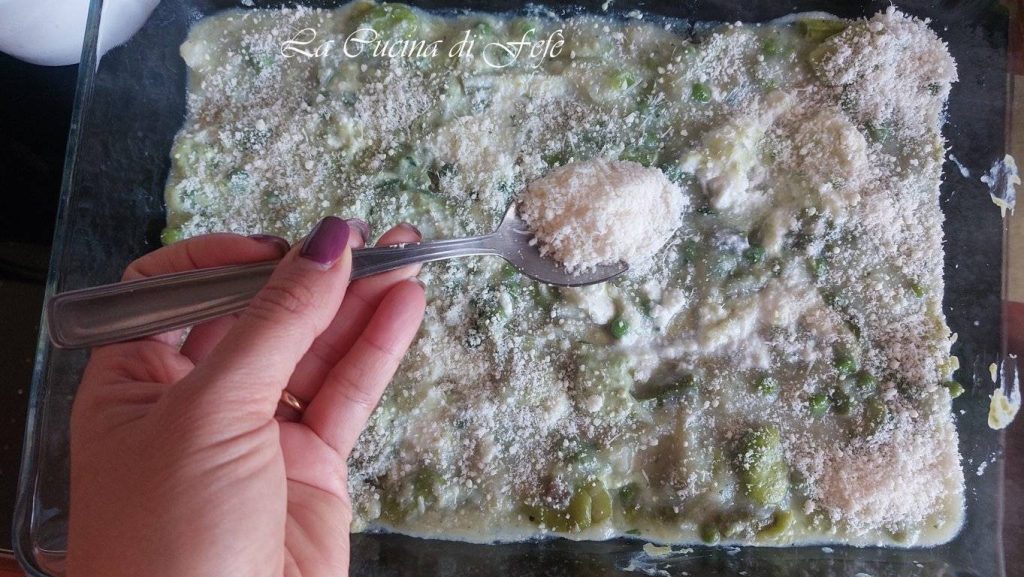
Repeat the ingredient sequence to create a second layer, to which you will add (along with the rest) also some spoonfuls of pistachio pesto.
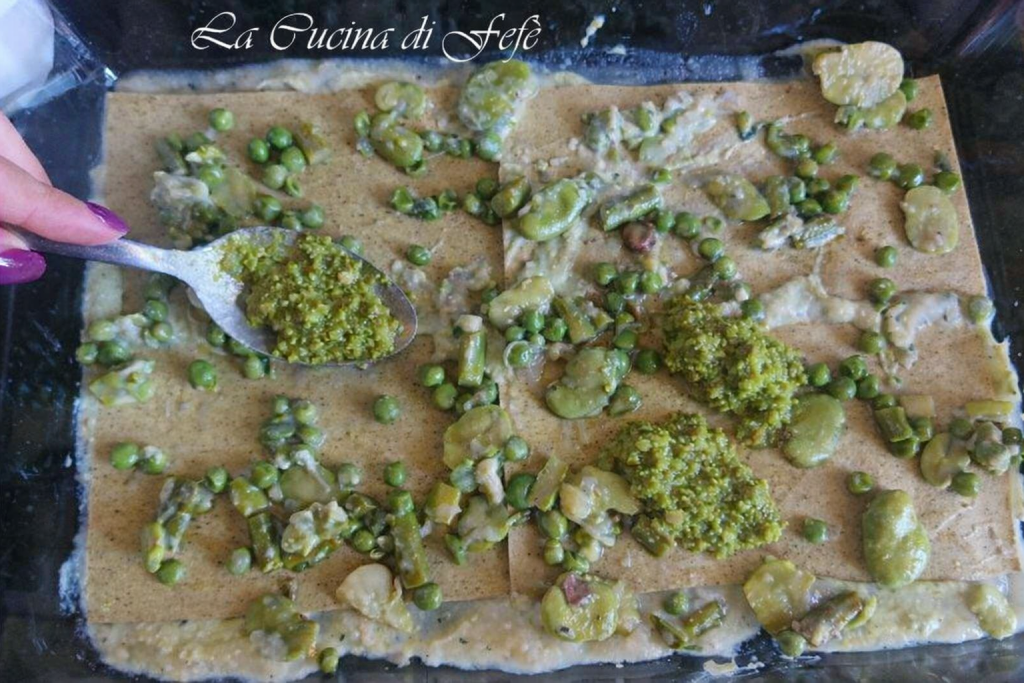
Continue to make a third and possibly a fourth layer until all the ingredients are used up.
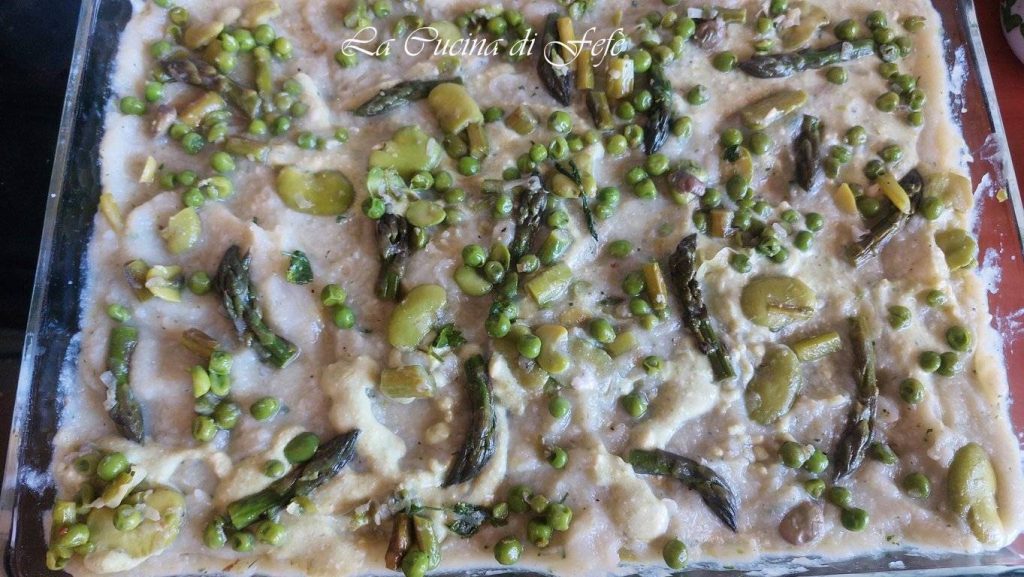
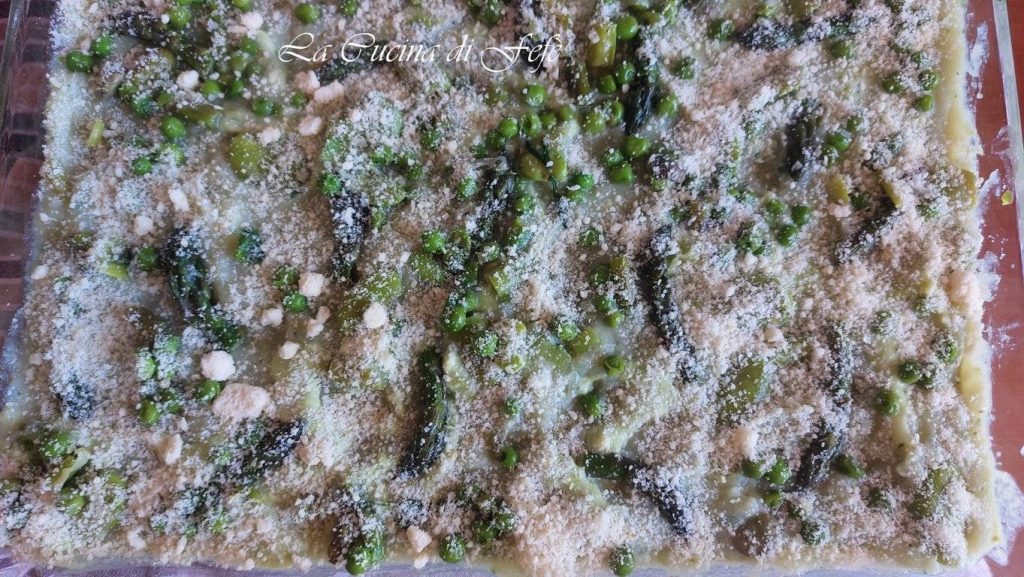
Add a few knobs of butter on the surface and a little more grated pecorino and Parmigiano. If the béchamel is too thick, you can pour a few spoonfuls of vegetable broth into the corners of the pan: this will prevent the lasagna from drying out too much during baking. Cover with parchment paper and bake in a preheated oven at 356°F for 20′, then remove the parchment paper and continue baking for another 10′ or until the surface of the spring lasagna is slightly golden.
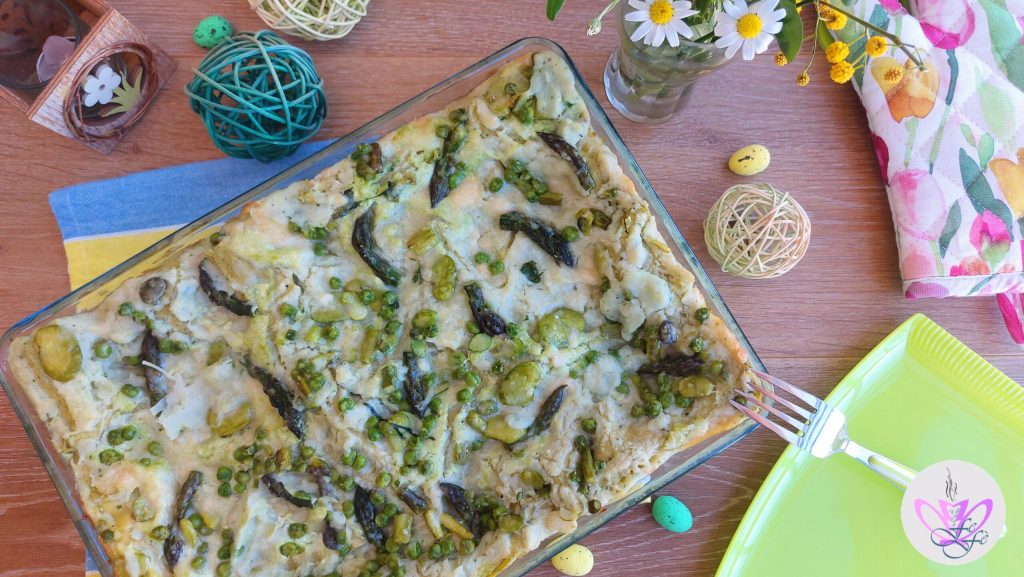
And voilà… the spring lasagna with pistachio pesto is ready to enjoy!
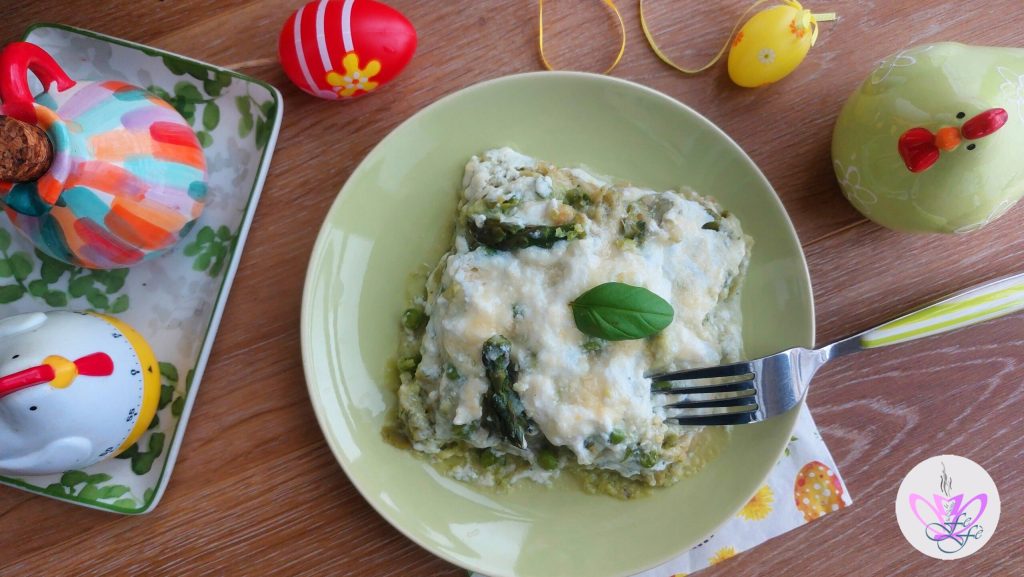
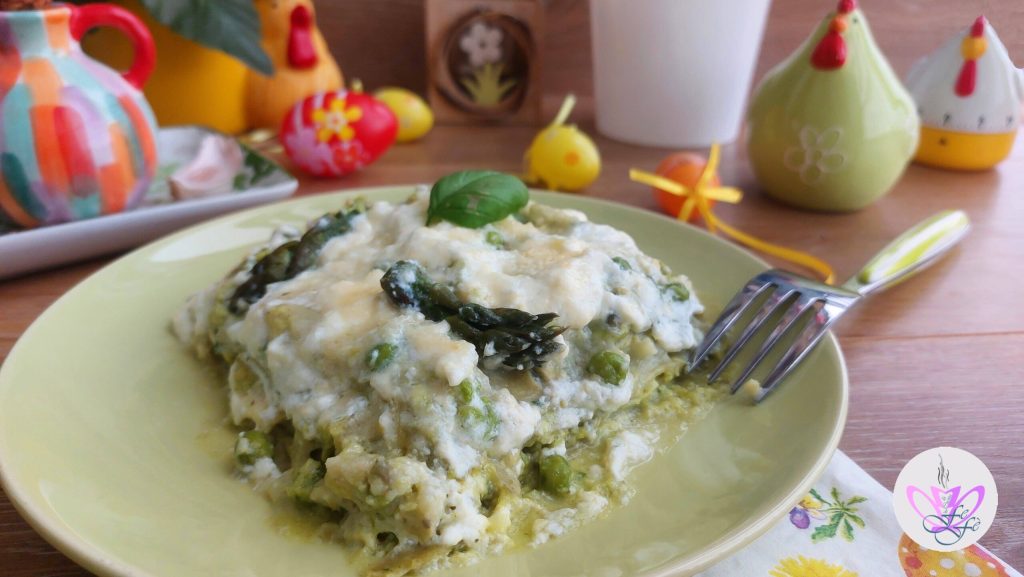
Enjoy from La Cucina di FeFè!
Storage
👉You can store the spring lasagna with pistachio pesto in the refrigerator in an airtight container, preferably glass, for 2-3 days. When reheating, add a splash of water or milk to revive the cauliflower béchamel, which tends to firm up.
👉If the ingredients (especially the legumes) are fresh and not previously frozen, you can freeze the lasagna in the freezer either raw or cooked. They keep well for about 2-3 months.
Tips, notes, variations and suggestions
🟣* The choice of béchamel: the version I offer is a much more nutritious, digestible and healthy lasagna because it is made with a sauce that mimics béchamel but is actually based on a cooked and blended vegetable. If you are a purist or fear you won’t appreciate this alternative, you can still make these lasagnas using the more common classic béchamel.
🟣**There are many varieties of asparagus, some are green with white stalks, others are completely white (the variety that does not receive sunlight and remains white underground) or purple (the famous Albenga asparagus). Therefore, to remove the final, toughest part that should not be cooked, do not rely only on the color of the stalk so as not to remove too much or too little.
🟣If you want to add a bold note and “push” the flavor, here are 3 perfect options to enrich your lasagna while keeping harmony with the vegetables:
Speck strips: brown them in a pan until crispy and add between the layers. They pair divinely with the sweetness of the legumes. In this case, watch the salt of the other seasonings, as they are already very flavorful.
High-quality cooked ham: cut into cubes or thin slices, it is the gentlest choice that children also love.
Smoked pancetta: pair it especially if you use many peas, for a traditional touch.
🟣For a touch of the sea: add some smoked salmon cut into strips between the layers. With asparagus and the cauliflower cream it creates a refined, Nordic pairing.
FAQ (Questions & Answers)
1. Does the cauliflower béchamel taste too much like cabbage?
No, if you blanch the florets well as indicated in the recipe in milk and broth and add a pinch of nutmeg, the flavor will become very neutral and delicate.
2. Can I use frozen legumes?
Certainly, but for an optimal result I recommend briefly blanching them before assembling the layers.
