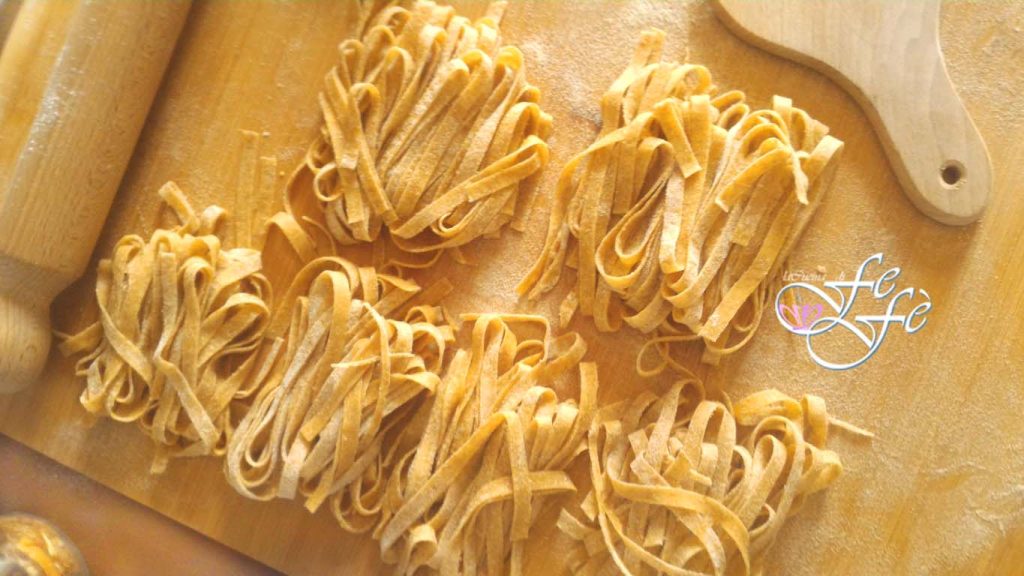
As I explained last week, the original basic recipe for homemade egg tagliatelle requires 100 grams of soft flour for each egg, but once you become familiar with this type of process, you can experiment with some new variations! For instance, with this recipe I propose today, you can approach a more robust and rustic flavor. If you are a fan like me of less refined and more pronounced flavors, this recipe is for you, and I highly recommend noting the amounts because you will be truly thrilled! You will feel the rough texture under your fingers with each step of the process, each time rolling thinner and more perfect. Whole wheat flour, compared to regular 00, is richer in fiber, helping to keep cholesterol in check. Additionally, the use of durum wheat semolina, more widespread in the south, does not essentially change the process but, being richer in protein, will allow you to obtain a pasta with a significantly superior cooking hold. It will also be interesting to introduce you soon to its use in creating fresh pasta sheets without eggs, but only with warm water, to facilitate starch hydration. This type of dough will be excellent for making ravioli or other shapes like orecchiette, cavatelli, bucatini, strozzapreti, etc. Well, I’m already hungry, how about you?
- Difficulty: Medium
- Cost: Very Cheap
- Rest time: 30 Minutes
- Preparation time: 20 Minutes
- Portions: 4
- Cooking methods: Boiling
- Cuisine: Italian
Ingredients
⚠ THIS RECIPE CONTAINS ONE OR MORE AFFILIATE LINKS. The products I recommend are the same ones I use in my recipes; purchasing them through my blog helps support me and my work, while it won’t cost you anything extra!
- 5.3 oz whole wheat flour
- 3.5 oz re-milled durum wheat semolina
- 2 eggs
- 1 tbsp water (as needed)
- 1 tbsp extra virgin olive oil (only if needed)
- 1 pinch salt
Preparation:
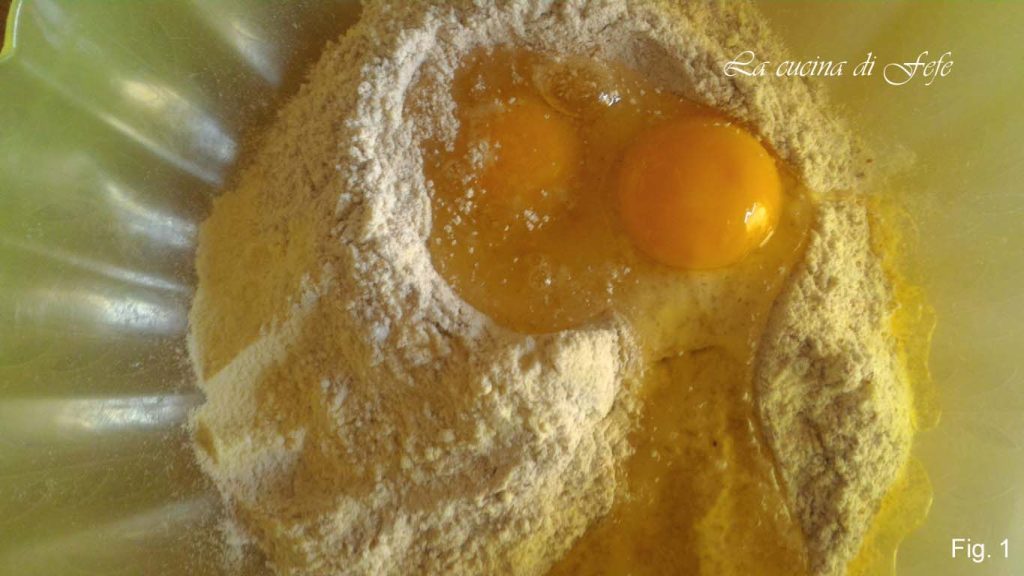
Pour the two flours into a large bowl, create a well and break the eggs into the center (fig. 1).
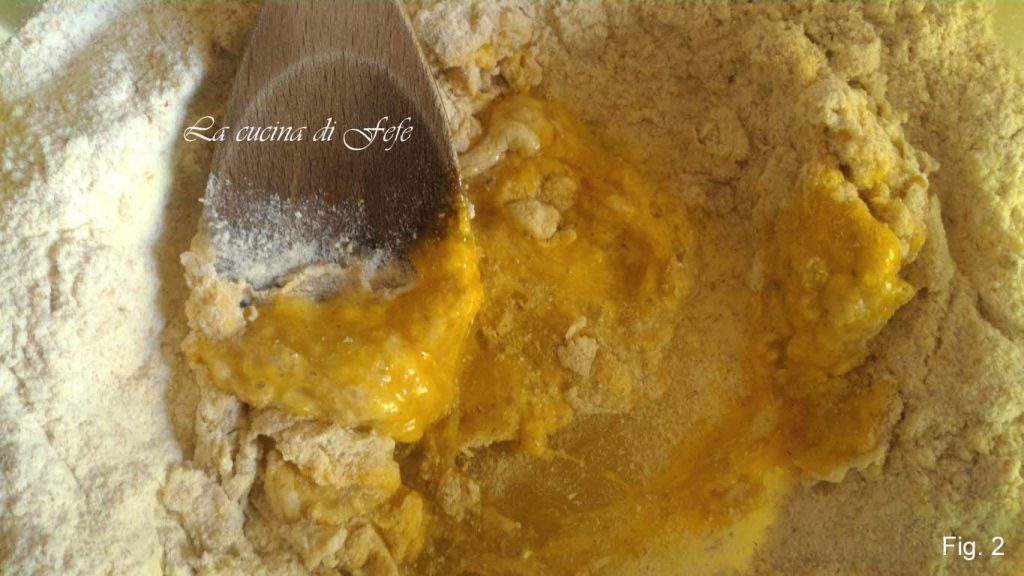
Add a pinch of salt and begin to mix and blend first with a wooden spoon (fig. 2).
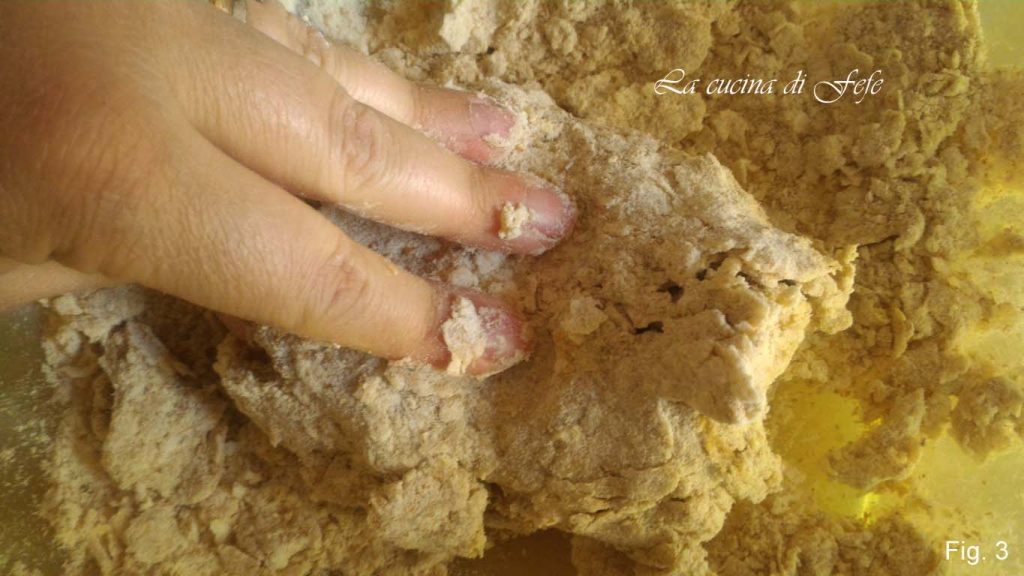
Then, continue to work with your hands, adding water little by little as needed (fig. 3).
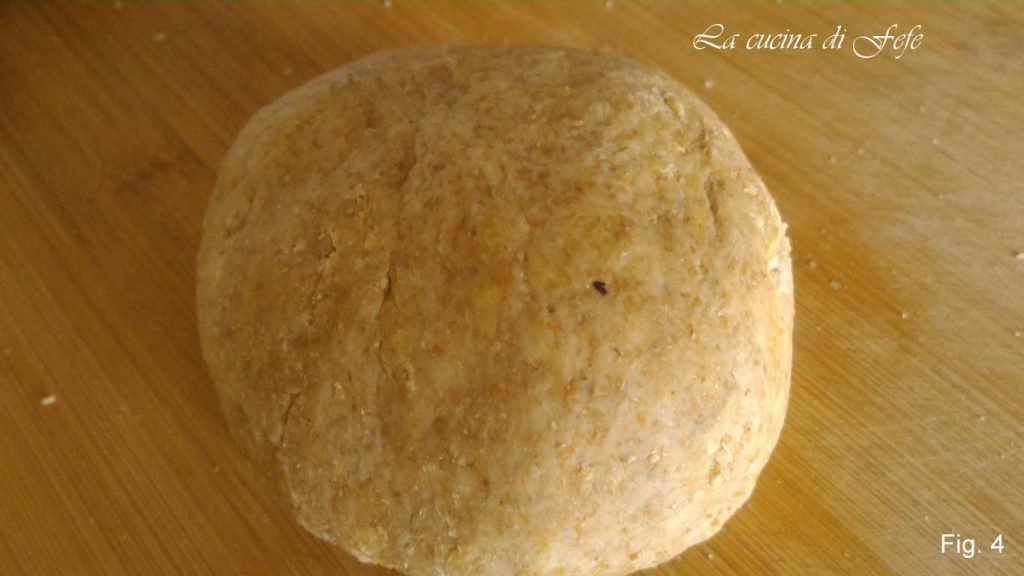
Transfer the dough to a work surface and keep kneading. If necessary, add a tablespoon of oil. Form a ball and let it rest for 30 minutes wrapped in plastic wrap (fig. 4).
Once this time has passed, divide the dough into two pieces. The one you don’t use immediately should remain wrapped in food wrap (fig. 5)

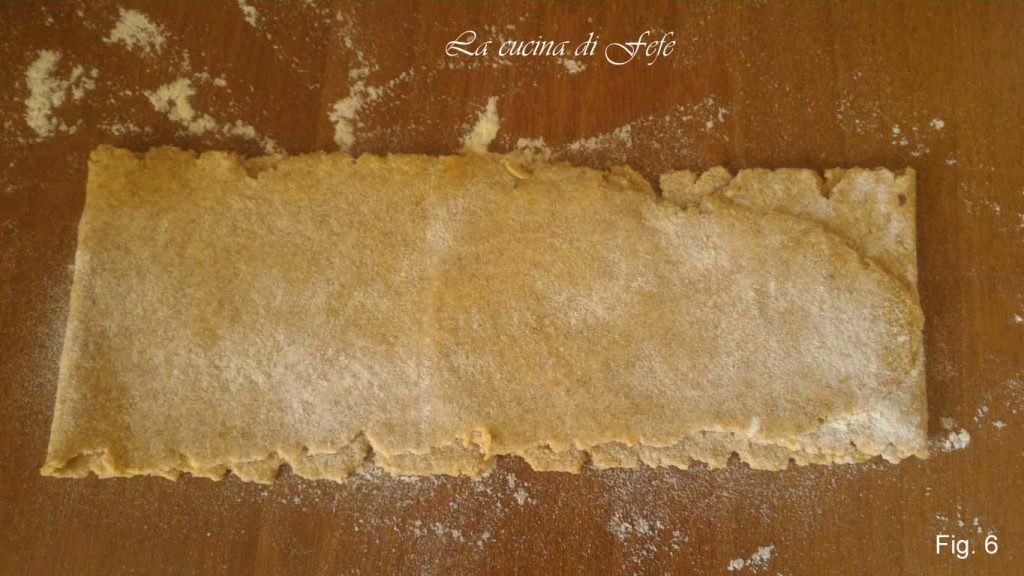
Start rolling the dough with the appropriate machine, starting with the rollers at a larger thickness and obtaining a coarse sheet (fig. 6).
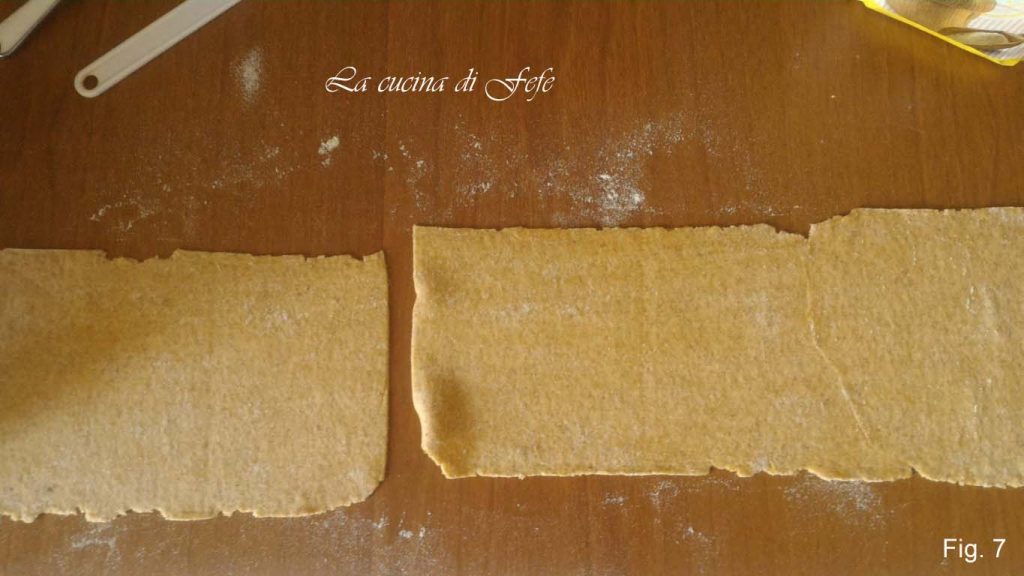
Fold it over itself until you gradually obtain a thinner, smoother, and longer sheet, which I recommend cutting for convenience (fig. 7).
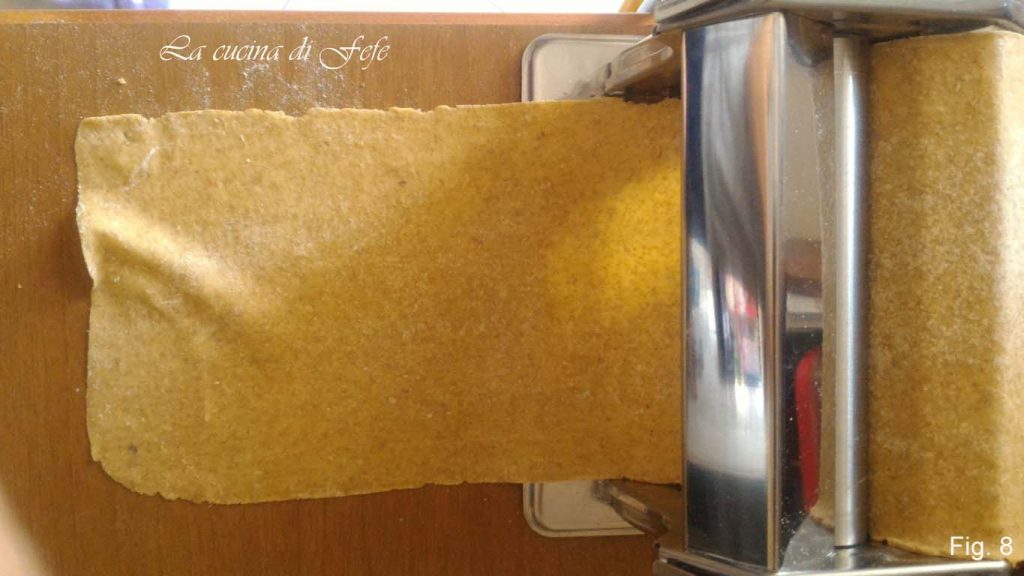
You should achieve a sheet that is not too thin, smooth, and well-stretched (fig. 8).
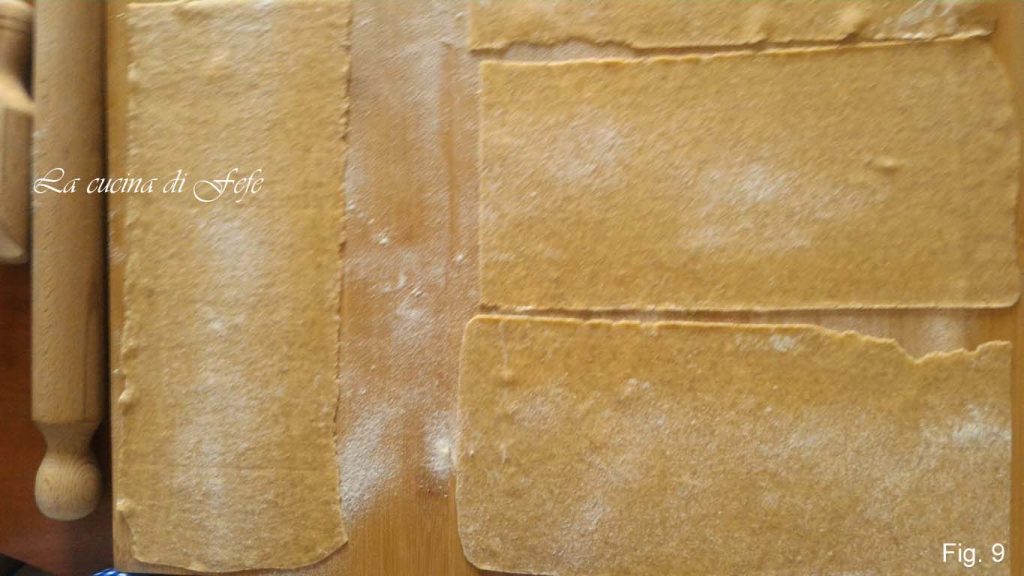
Place each sheet on a work surface well dusted with semolina and let dry (fig. 9).
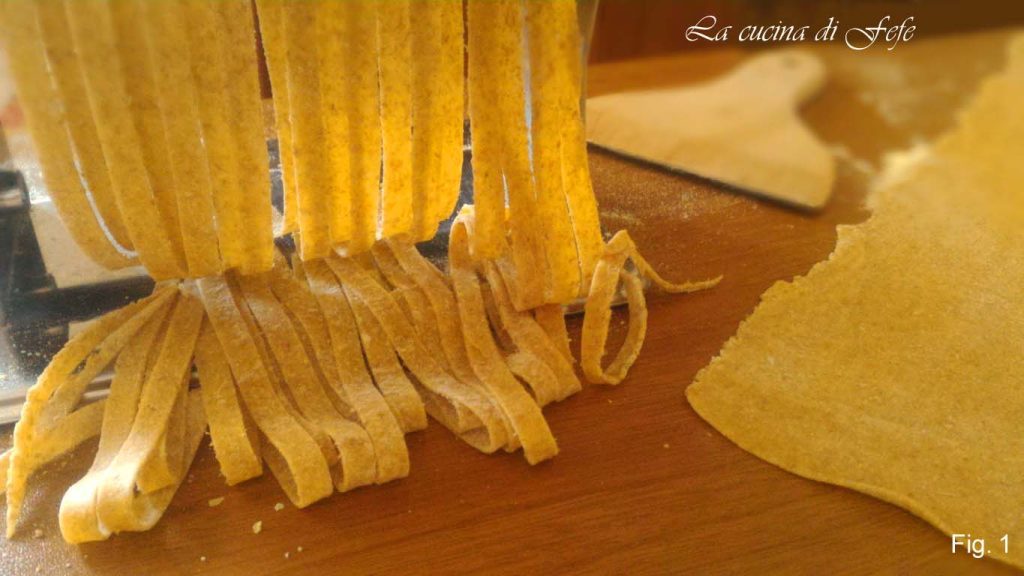
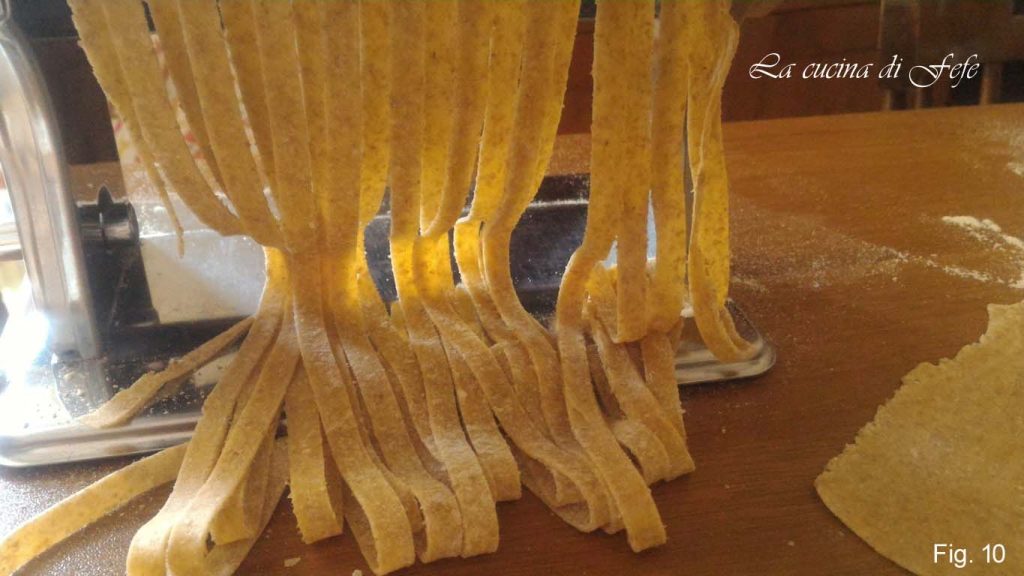
Then cut your tagliatelle by passing the well-dried sheets through the pasta cutter (fig. 10).
Group them into small nests and sprinkle with a little flour.
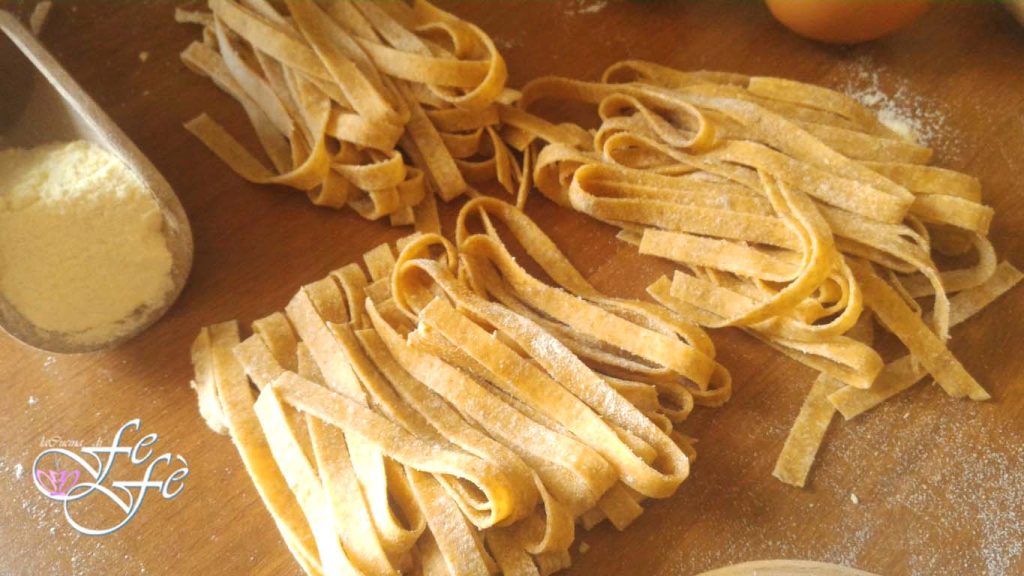
And voilà… your whole wheat and semolina tagliatelle are ready to be cooked!
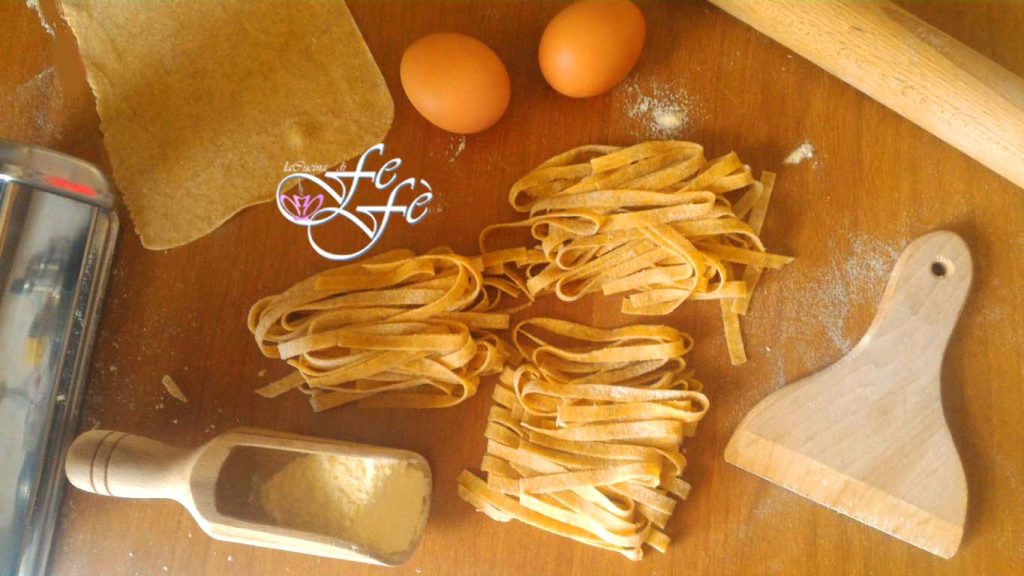
Bon Appétit from FeFe’s kitchen!