
Cold pasta salads have always been the undisputed stars of our summer tables, perfect to offer at any meal of the day or to take to the office or the beach. Here on the blog, you will find a section entirely dedicated to them, and not only, so I invite you to take a peek HERE.
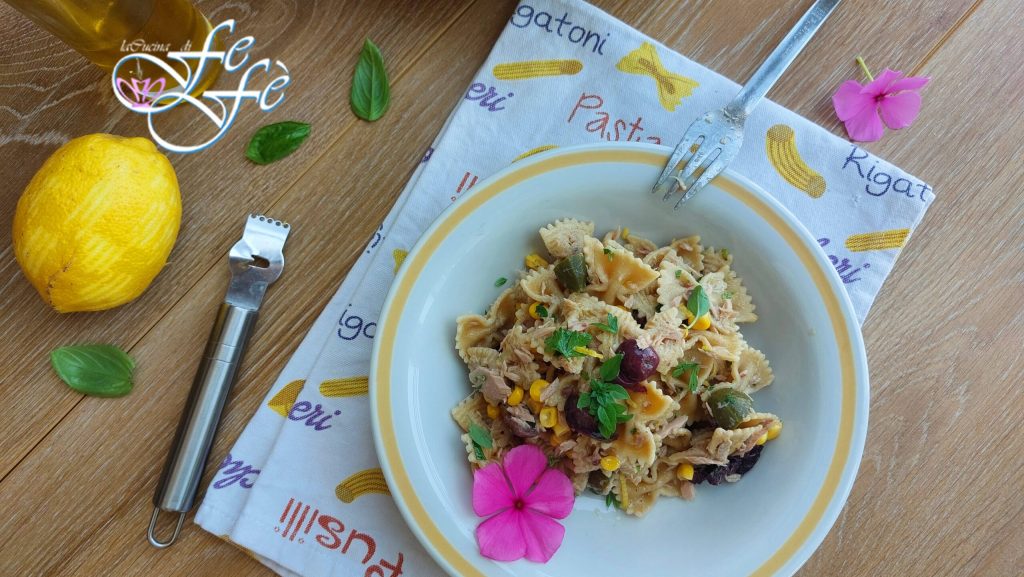
These farfalle with tuna and lemon are a truly enticing dish that I saw prepared by the talented Isabel, and which I replicated with great pleasure, making only a few slight modifications! In my opinion, the additional ingredients I add do not alter the final result; they simply further enrich it, like my beloved caperberries from the Aeolian Islands, being a good Sicilian that I am! After all, isn’t cooking also about this? You take inspiration and then personalize it according to your taste! Let me tell you, the touch of grated lemon zest is the ultimate, it gives an exceptional fragrance, while the juice in the dressing really makes the difference, so much so that compared to the original recipe, I dared much more! You’ll be pleasantly surprised! For the rest, it takes only a few other ingredients that together create an incredible combination! In my case, I chose whole wheat farfalle, a type more suitable for me, but if you prefer, you can also opt for other types of pasta, but always respecting a short and possibly ridged format. It will be perfect to retain the dressing and further enhance the intense and savory flavor.
Source: [From the blog Piovono ricette] with my personal modifications
If you also love pasta and cereal salads, here are some enticing ideas to save or get inspiration from:
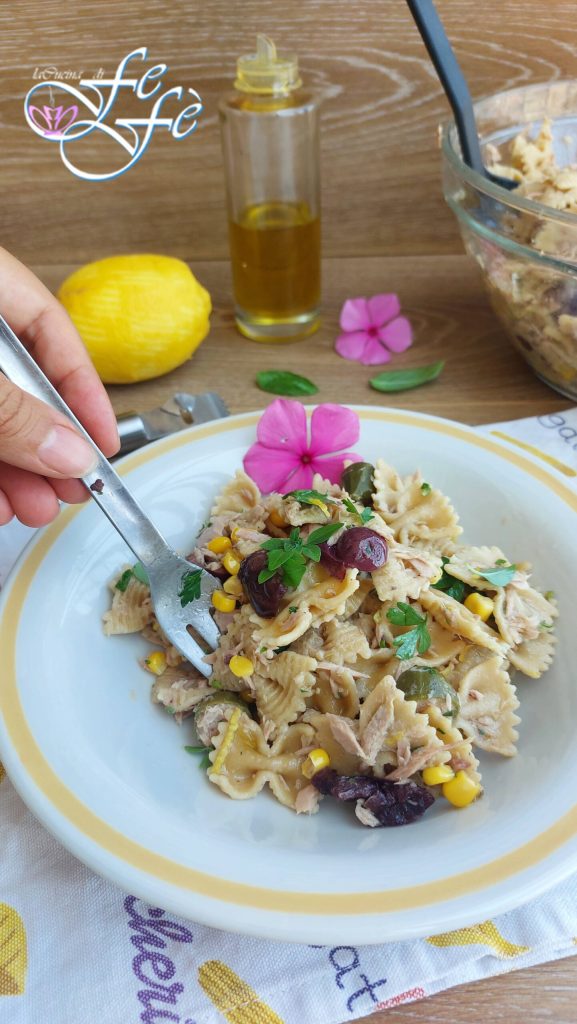
- Difficulty: Very Easy
- Cost: Medium
- Preparation time: 15 Minutes
- Portions: 4 servings
- Cooking methods: Stovetop
- Cuisine: Italian
- Seasonality: Spring, Summer, and Autumn
Ingredients
⚠ THIS RECIPE CONTAINS ONE OR MORE AFFILIATE LINKS. The products I recommend are the same ones I use in my recipes; purchasing them through my blog helps support me and my work at no additional cost to you!
- 13.4 oz Whole Wheat Farfalle
- 8.8 oz tuna in olive oil (drained)
- 4.9 oz canned sweet corn, drained
- 2.1 oz caperberries (or salted capers)
- 2.5 oz black olives
- as needed aromatic herbs (thyme and parsley)
- as needed lemon zest (untreated)
- 2 tablespoons extra virgin olive oil
- as needed salt
- 3.0 oz extra virgin olive oil
- 1.7 oz lemon juice
- 1.0 oz water
Tools
- 1 Bowl
- 1 Fork
- 1 Wooden Spoon
- 1 Saucepan
- 1 Vegetable Peeler
- 1 Skimmer
- 1 Salad Bowl
- 1 Glass
Steps
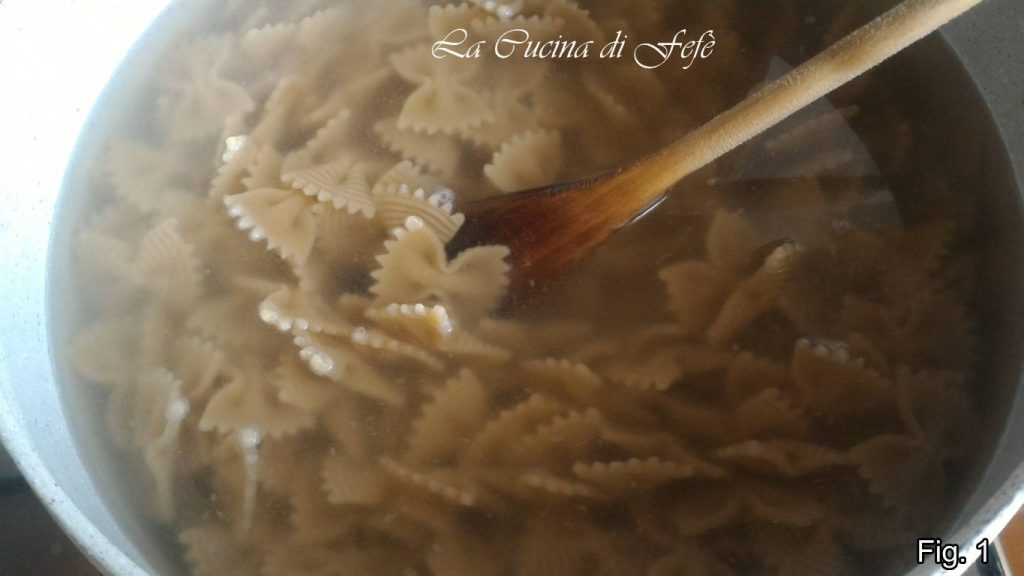
Begin preparing the whole wheat farfalle with tuna and lemon by placing a large saucepan full of water on the stove and bring it to a boil, then salt it and add the pasta (fig. 1).
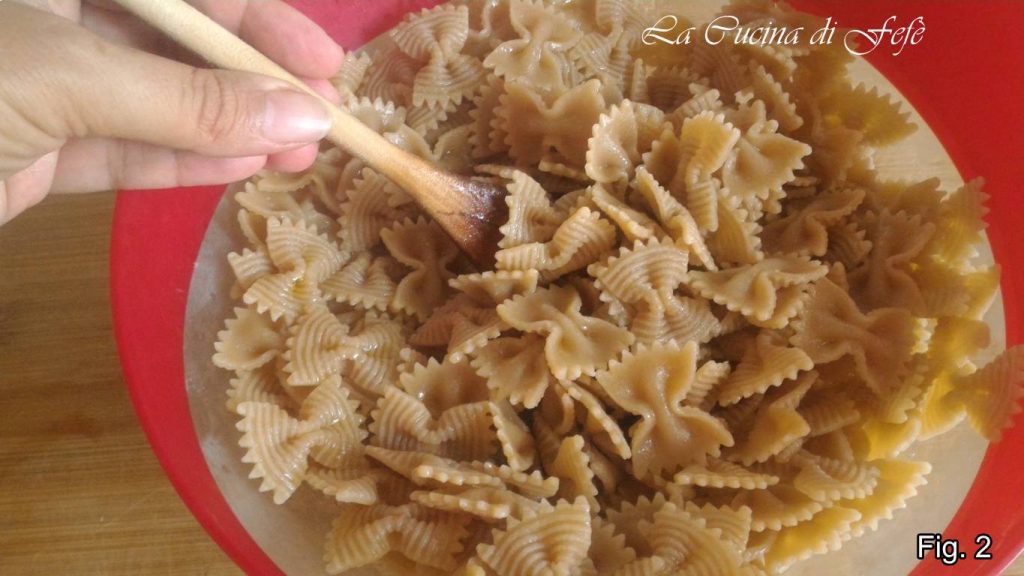
Cook for the cooking times indicated on your package and drain with the help of a skimmer, then transfer the pasta to a large salad bowl and drizzle with two tablespoons of oil and mix well to shine it and prevent it from sticking (fig. 2). Meanwhile, drain the tuna from the excess oil and transfer it to a large bowl, trying to crumble it carefully with a fork (fig. 3).
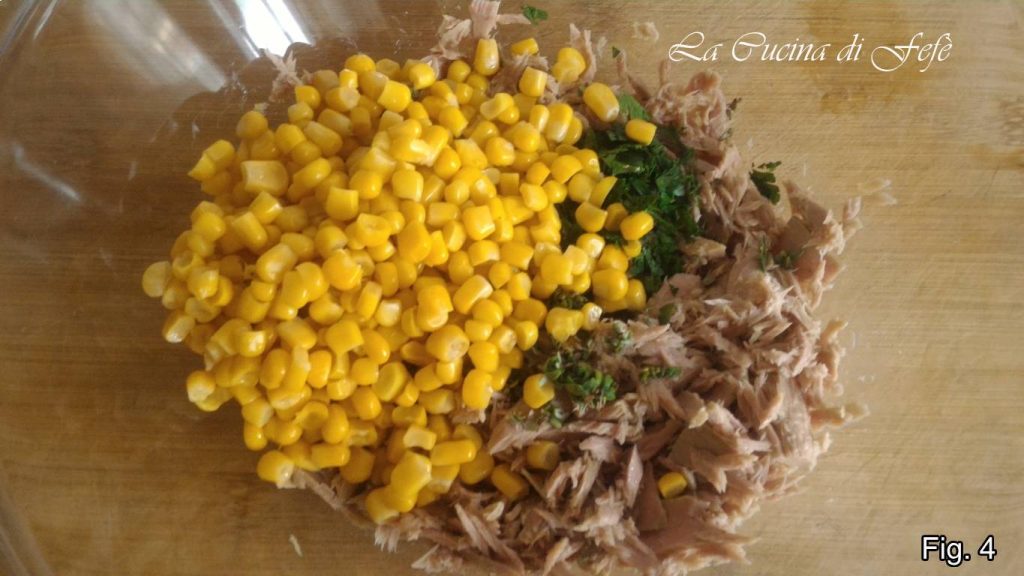
Add the finely chopped aromatic herbs, a grind of pepper, the drained corn (fig. 4), the whole or halved caperberries, the pitted olives, and the grated lemon zest (fig. 5).
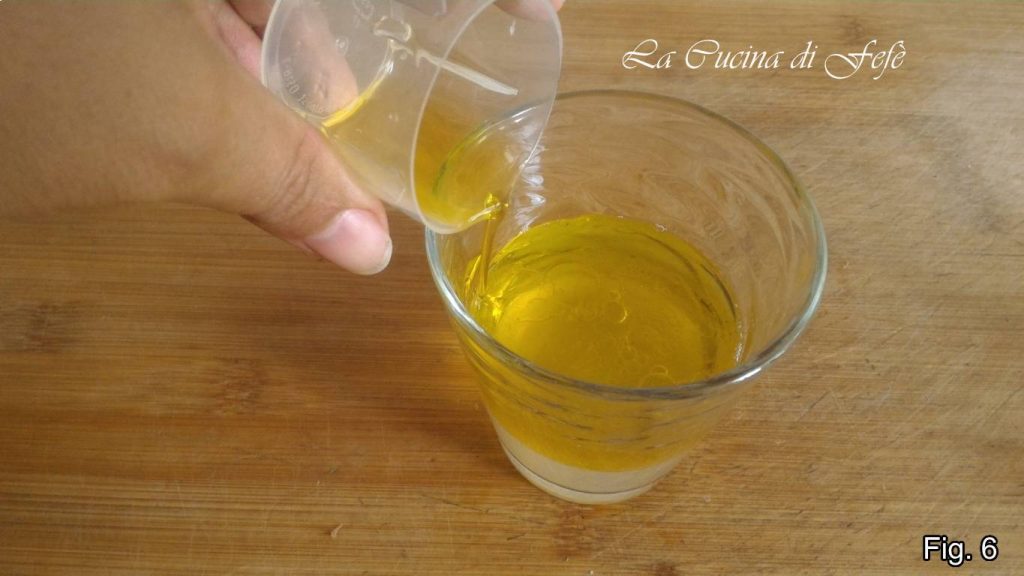
Then prepare the emulsion that will be used to dress the pasta, combining the filtered lemon juice, water, and oil inside a glass (fig. 6). Emulsify vigorously with a fork to create a homogeneous and well-bound sauce (fig. 7).
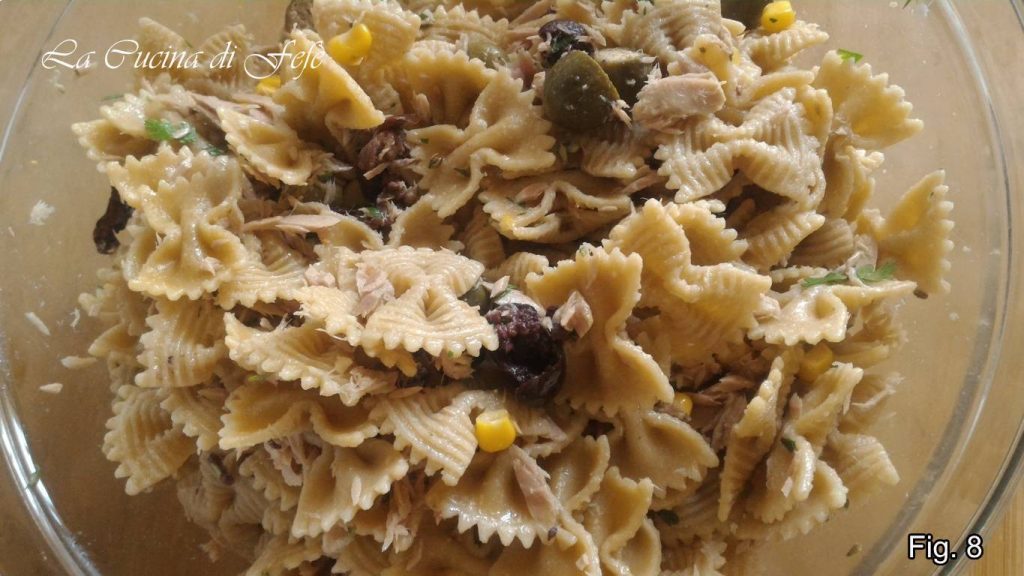
Add the farfalle to all the other ingredients (fig. 8), also add the obtained emulsion and mix well (fig. 9).
Serve at room temperature or even cold with more fresh parsley and lemon zest to taste.
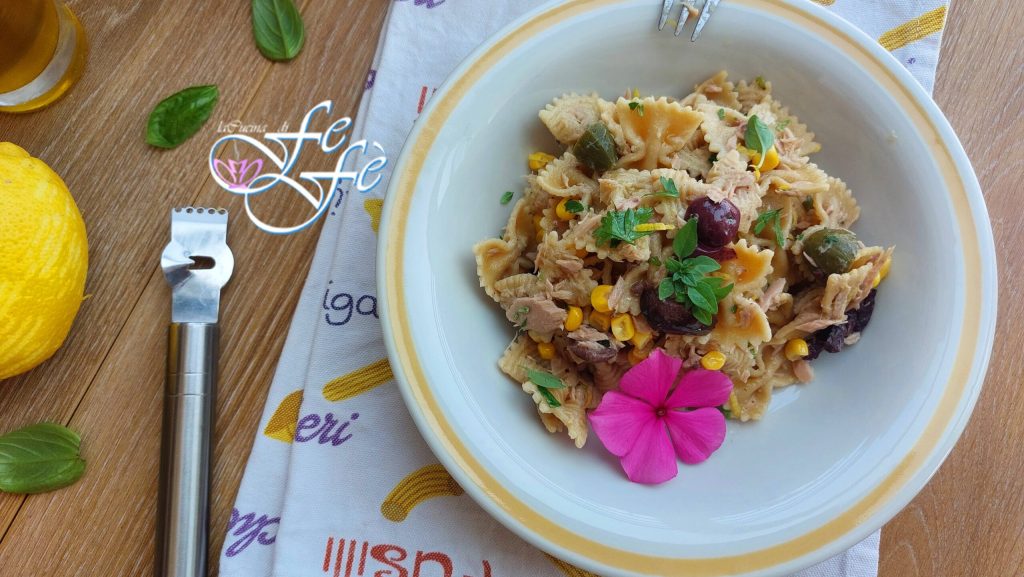
And voilà…your whole wheat farfalle with tuna and lemon are ready to be enjoyed!
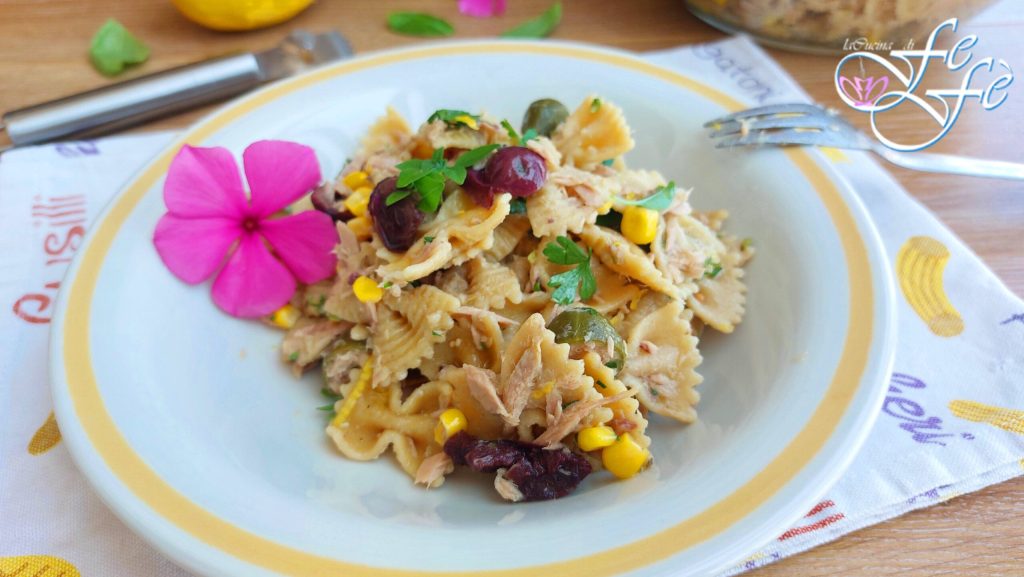
Bon Appétit from La Cucina di FeFè!
Storage
👉 Whole wheat farfalle with tuna and lemon can be stored in the fridge in suitable refrigeration containers for 2-3 days at most.
Curiosities, tips, and suggestions
🟣 * For those unfamiliar with caperberries, they are produced by the same plant as capers, but while capers are the unopened flowers of the plant, caperberries are the actual fruit and are larger and elongated, with a crunchy and juicy texture. Caperberries are a commonly used ingredient in Sicilian cuisine, especially in the Aeolian Islands, but also in other areas of Sicily, although in recent years, interest in their incredible flavor has definitely grown. So if you have difficulty finding them, you can replace the caperberries in the recipe with a handful of well-desalted salted capers under running water.
🟣 * For those unfamiliar with caperberries, they are produced by the same plant as capers, but while capers are the unopened flowers of the plant, caperberries are the actual fruit and are larger and elongated, with a crunchy and juicy texture. Caperberries are a commonly used ingredient in Sicilian cuisine, especially in the Aeolian Islands, but also in other areas of Sicily, although in recent years, interest in their incredible flavor has definitely grown. So if you have difficulty finding them, you can replace the caperberries in the recipe with a handful of well-desalted salted capers under running water.
