
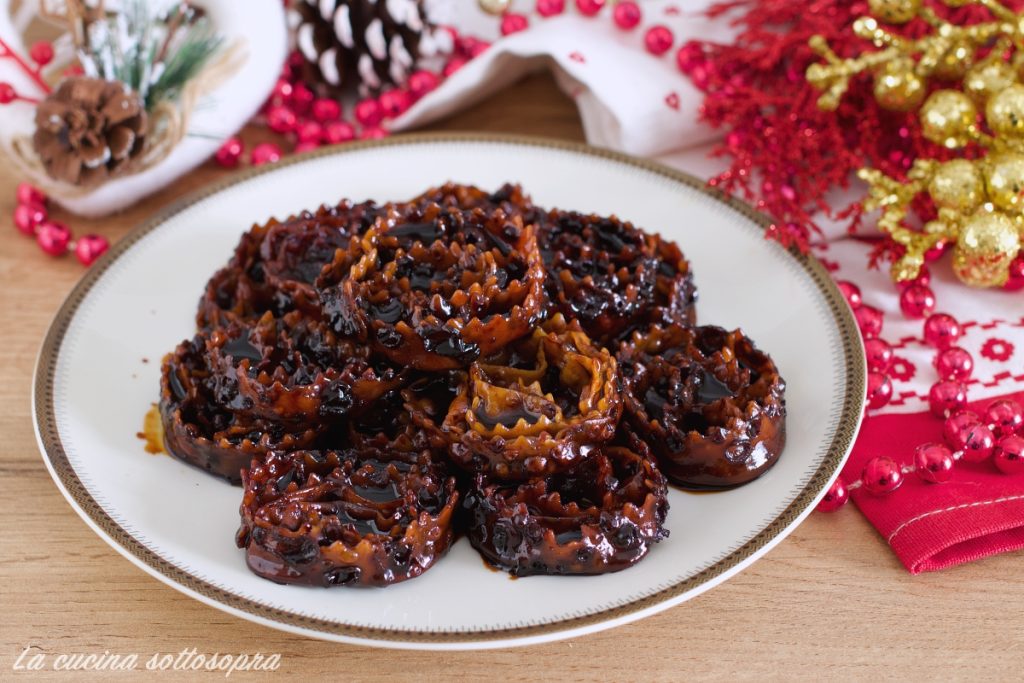
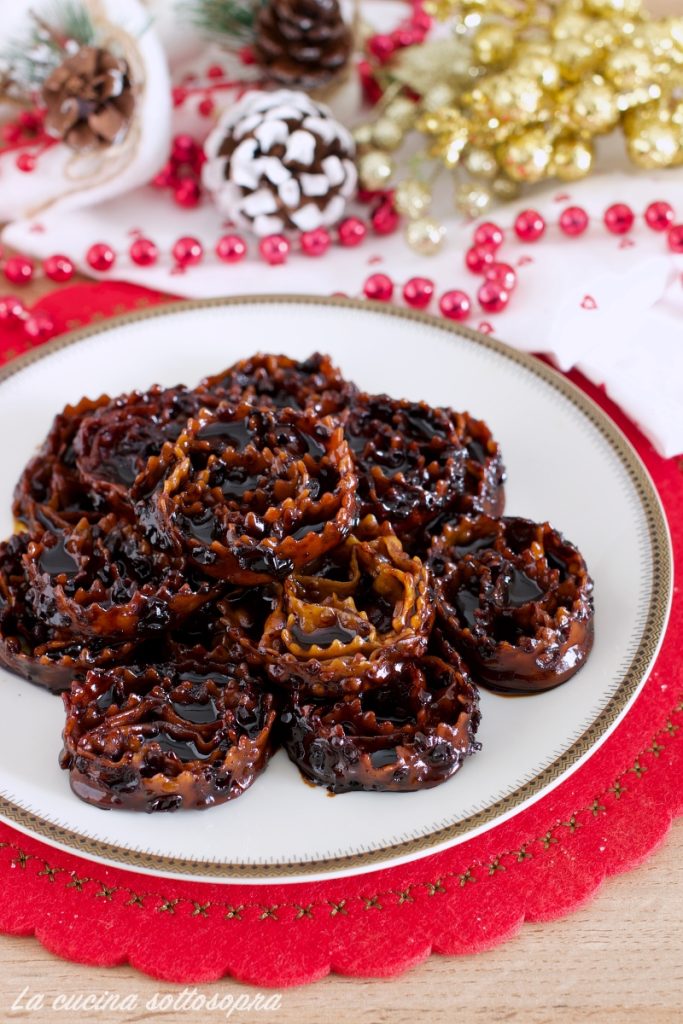
Apulian cartellate are the most well-known traditional Christmas sweets outside of Puglia. Cartellate or “carteddate” are small sweets shaped like roses or crowns. They are made with a simple, thin dough. They are fried and dressed with fig vino cotto or grape, with granulated sugar or honey and sprinkles.
The goodness of cartellate lies precisely in their particular shape: the holes formed accommodate the vino cotto or honey, making them truly delicious to taste.
Generally, along with cartellate, calzoncelli and pettole are also prepared. Traditionally, a large quantity is prepared at the beginning of December to last throughout the Christmas holidays. Often, however, they are gone much sooner because they are so irresistible.
Apulian cartellate are not very quick desserts. You will need a pasta machine to prepare them, capable of creating thin sheets. The thinner the sheets, the more crumbly and bubbly your cartellate will be. It’s the thin sheet that makes them so delicious, as they absorb the vino cotto better.
Their creation also requires some practice. However, once you learn the technique, they are quick to make. If you are not very experienced, I recommend making small cartellate as they are easier to handle.
Talking about Apulian cartellate immediately brings to mind tradition, Christmas, family celebrations, and conviviality. Often, people gather to prepare traditional sweets. A small assembly line is created, and everyone has their task.
What I share with you is my family recipe. It’s the recipe my mother and I prepare every year, refined over time until we found the perfect one. Our dough is cinnamon-flavored, but you can also flavor it with orange or lemon peel.
Before moving on to the recipe, I leave you the link to prepare some delicious Christmas cookies and butter cookies. I also leave other Apulian sweets that should always be on our tables during the Christmas period.
- Difficulty: Medium
- Cost: Economical
- Rest time: 1 Hour
- Preparation time: 2 Hours
- Portions: 8 People
- Cooking methods: Frying
- Cuisine: Regional Italian
- Region: Puglia
- Seasonality: Autumn, Winter, Christmas
- Energy 1,707.65 (Kcal)
- Carbohydrates 127.61 (g) of which sugars 83.06 (g)
- Proteins 8.03 (g)
- Fat 131.49 (g) of which saturated 13.84 (g)of which unsaturated 104.10 (g)
- Fibers 2.03 (g)
- Sodium 2.97 (mg)
Indicative values for a portion of 187 g processed in an automated way starting from the nutritional information available on the CREA* and FoodData Central** databases. It is not food and / or nutritional advice.
* CREATES Food and Nutrition Research Center: https://www.crea.gov.it/alimenti-e-nutrizione https://www.alimentinutrizione.it ** U.S. Department of Agriculture, Agricultural Research Service. FoodData Central, 2019. https://fdc.nal.usda.gov
Ingredients to prepare Apulian Cartellate
- 4 cups all-purpose flour (or pastry flour)
- 5 tbsp extra virgin olive oil
- 2/3 cup white wine (lukewarm)
- 3 tbsp liqueur (dry or limoncello)
- 1/2 tsp ground cinnamon
- 2 tbsp sugar (leveled)
- 1 quart vino cotto (fig or grape)
- 1 liter sunflower seed oil (for frying)
Tools
- Pasta Machines
- Pan
- Fluted Pastry Wheel
Steps to prepare Apulian Cartellate
Let’s see together all the steps to prepare Apulian cartellate. Remember that cartellate need to dry for an entire night. Therefore, start preparing them well in advance.
Start with the cartellate dough. Remember that with the same dough you can also prepare Apulian calzoncelli.
For a more elastic dough, warm the wine and liqueur before using them.
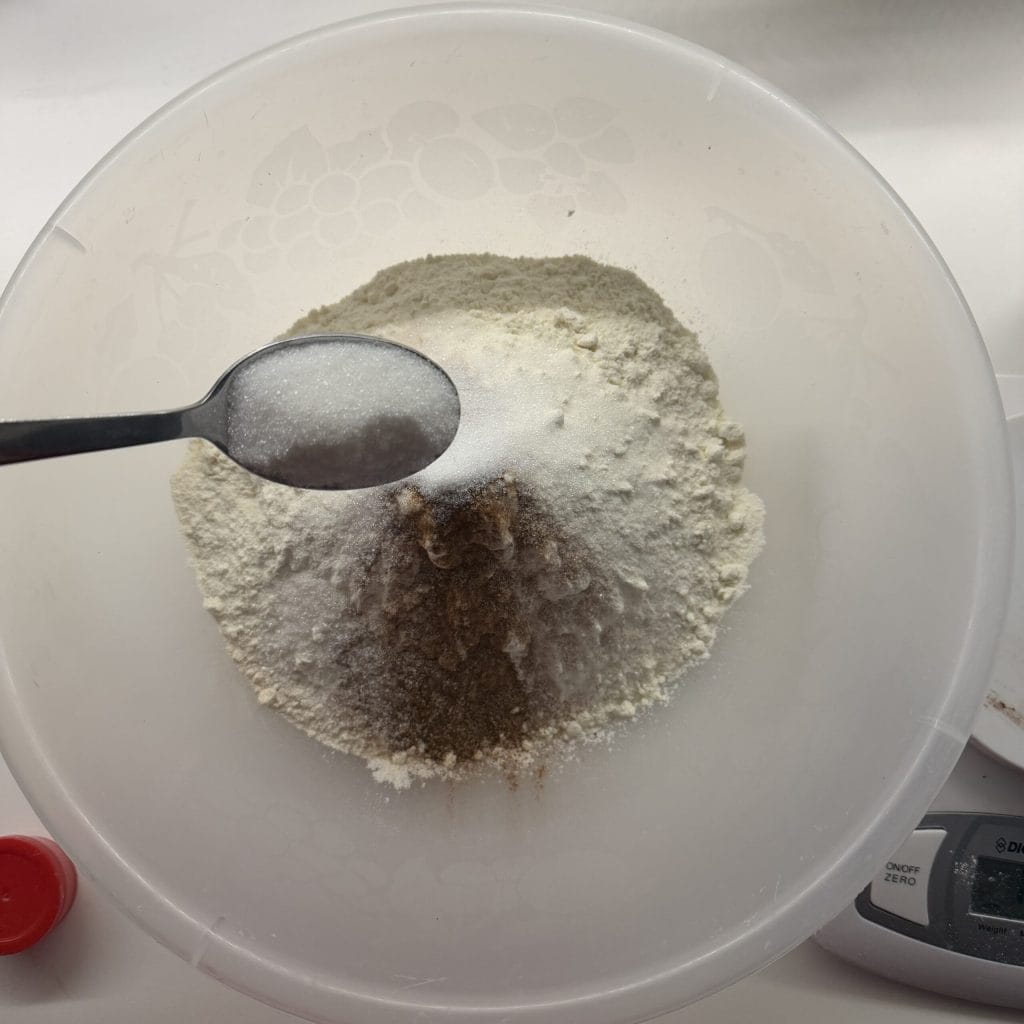
In a bowl, place the flour, cinnamon, and the 2 leveled tablespoons of sugar. Mix the dry ingredients.
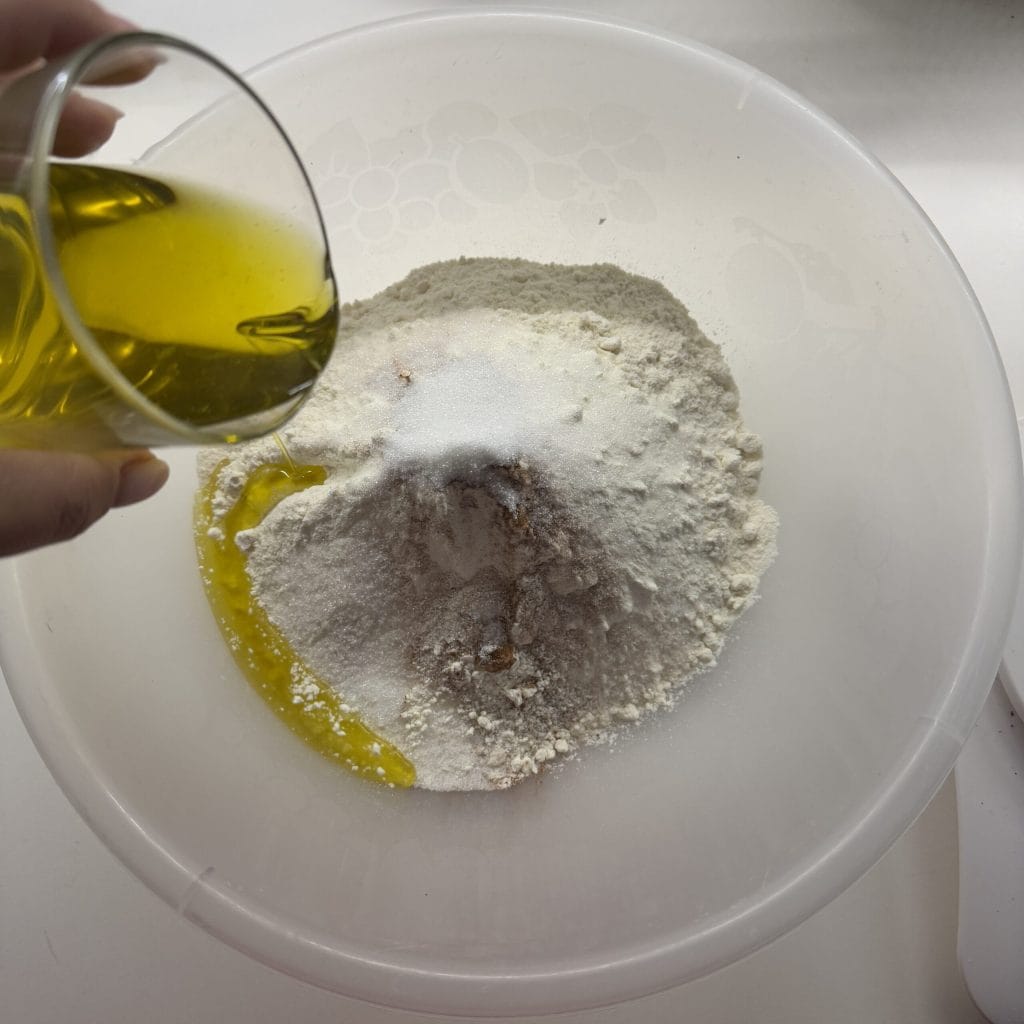
Add the extra virgin olive oil.
Immediately add the lukewarm wine.
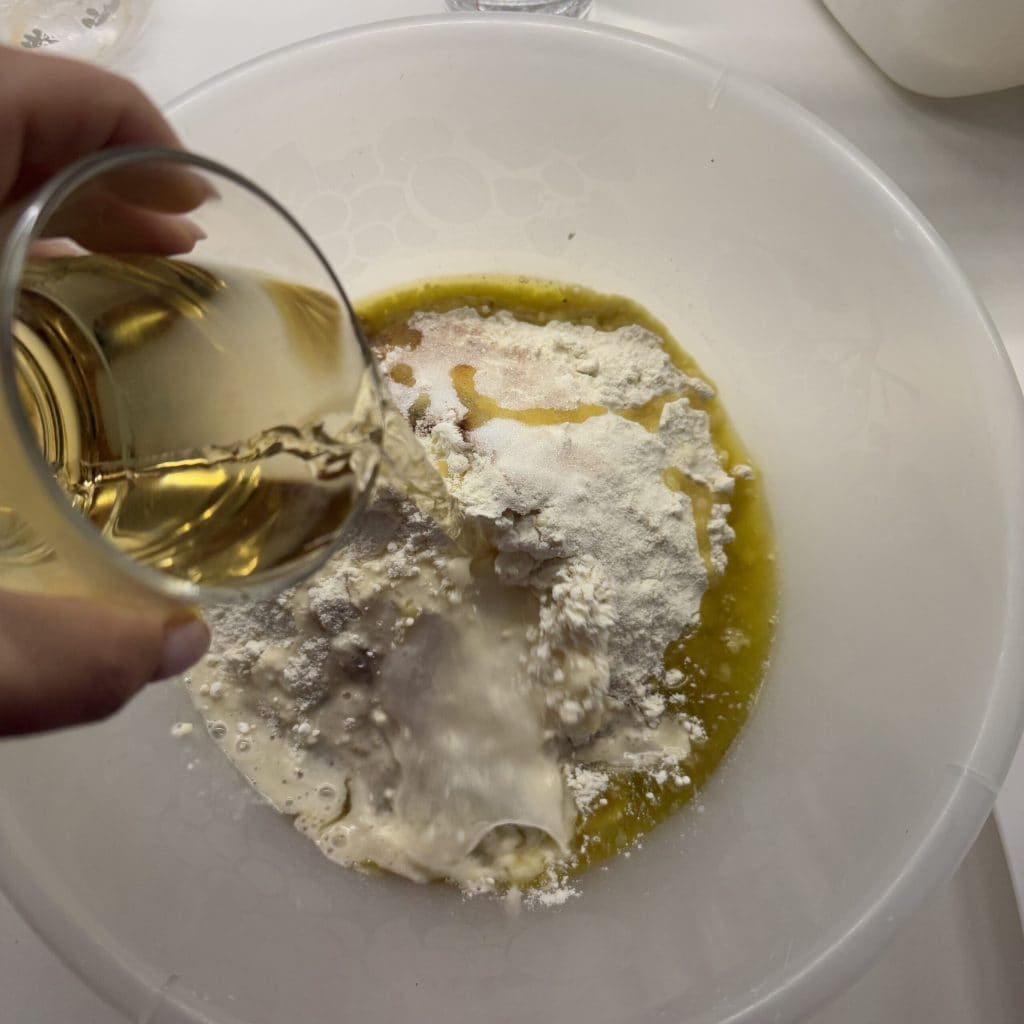
Finally, add the dry liqueur or limoncello.
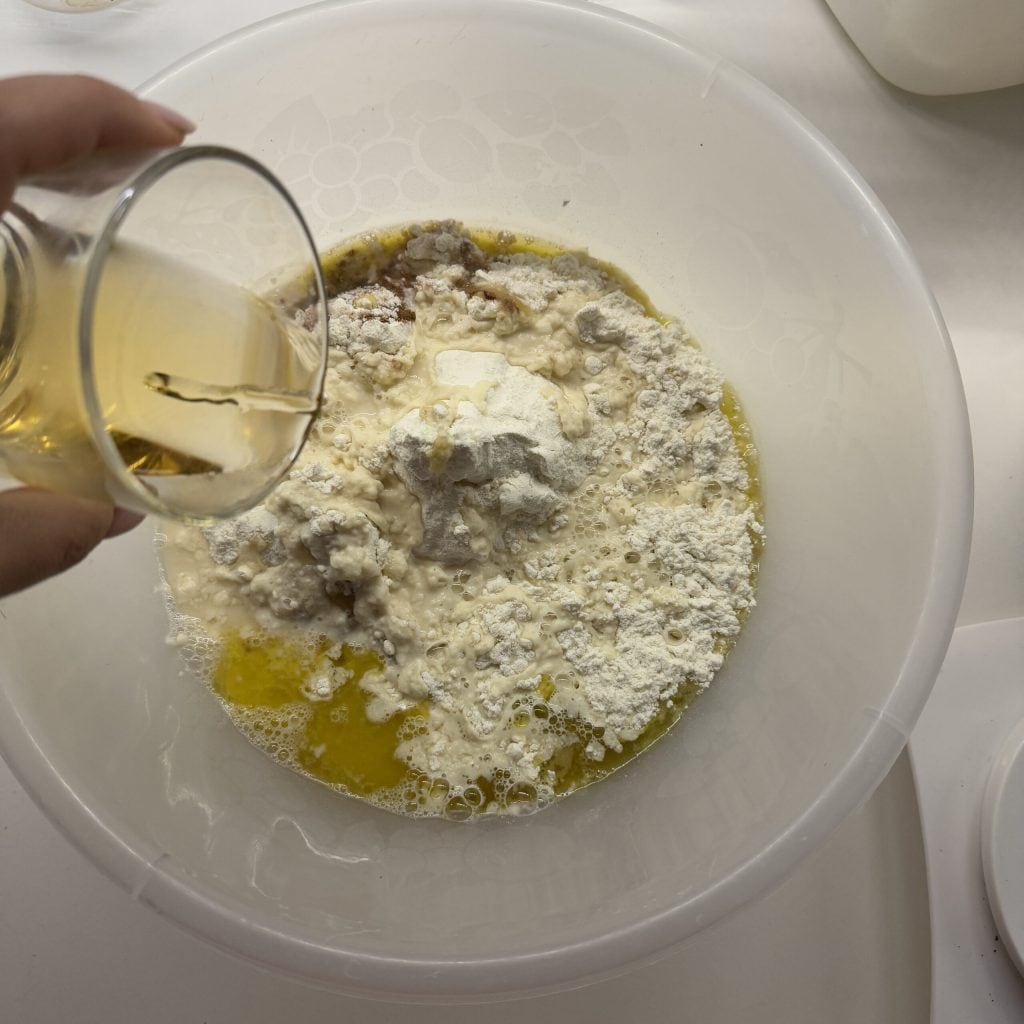
Begin kneading with your hands in the bowl until the ingredients start to come together.
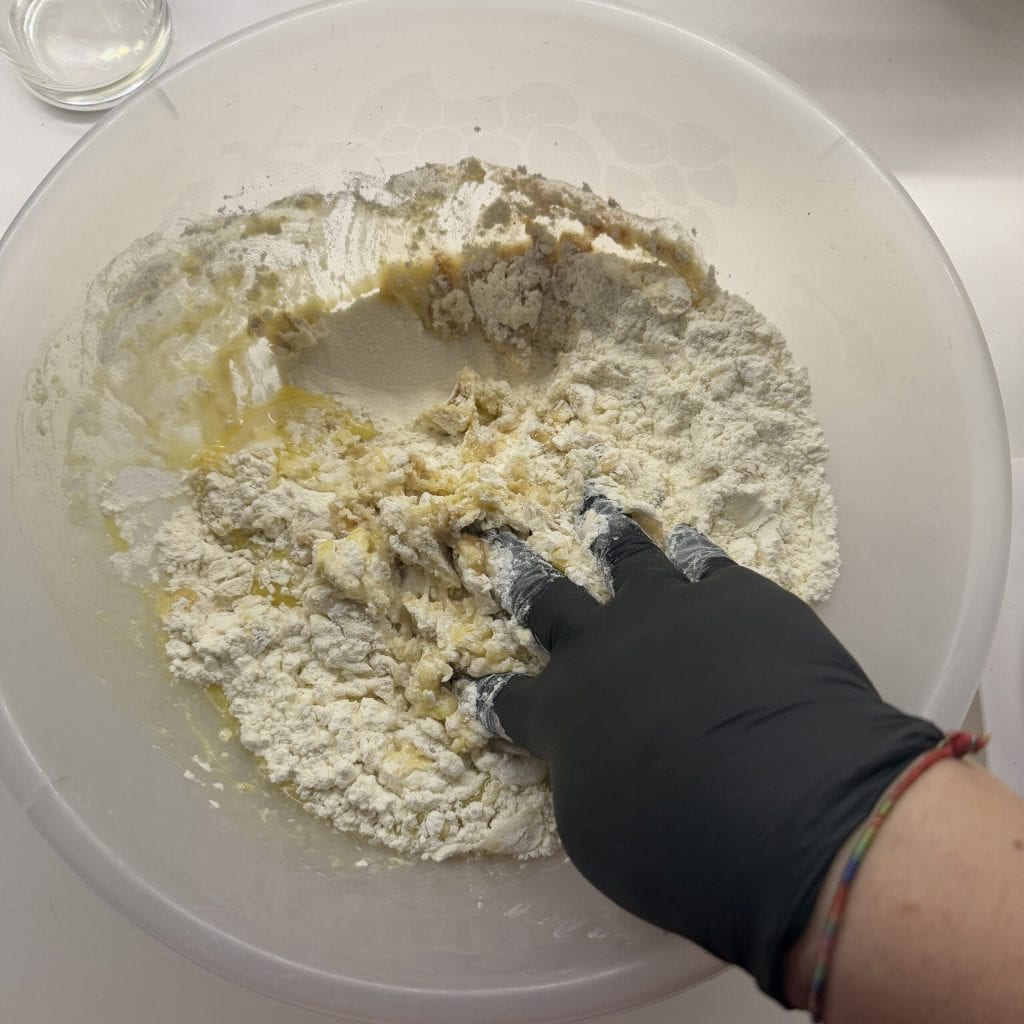
Then transfer the dough to a work surface and continue to knead until smooth and homogeneous.
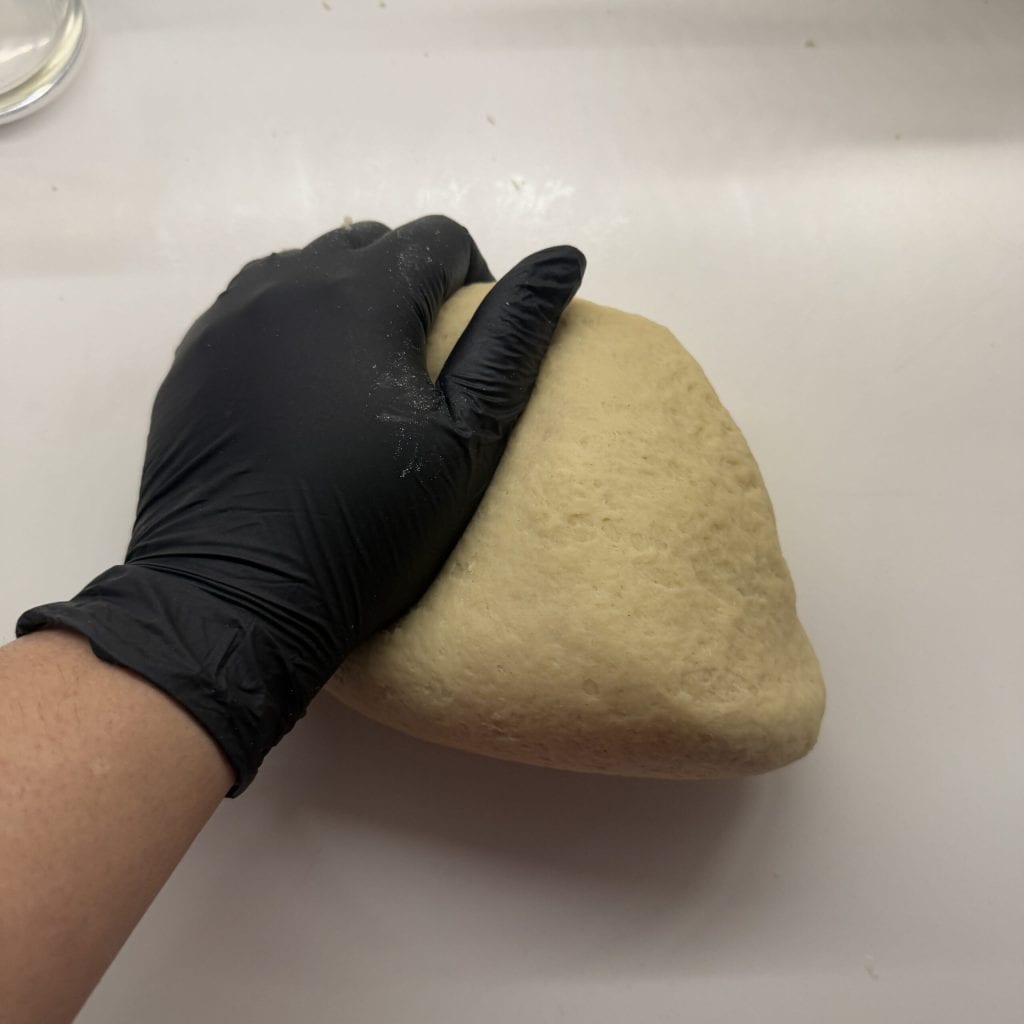
Now the dough is ready.
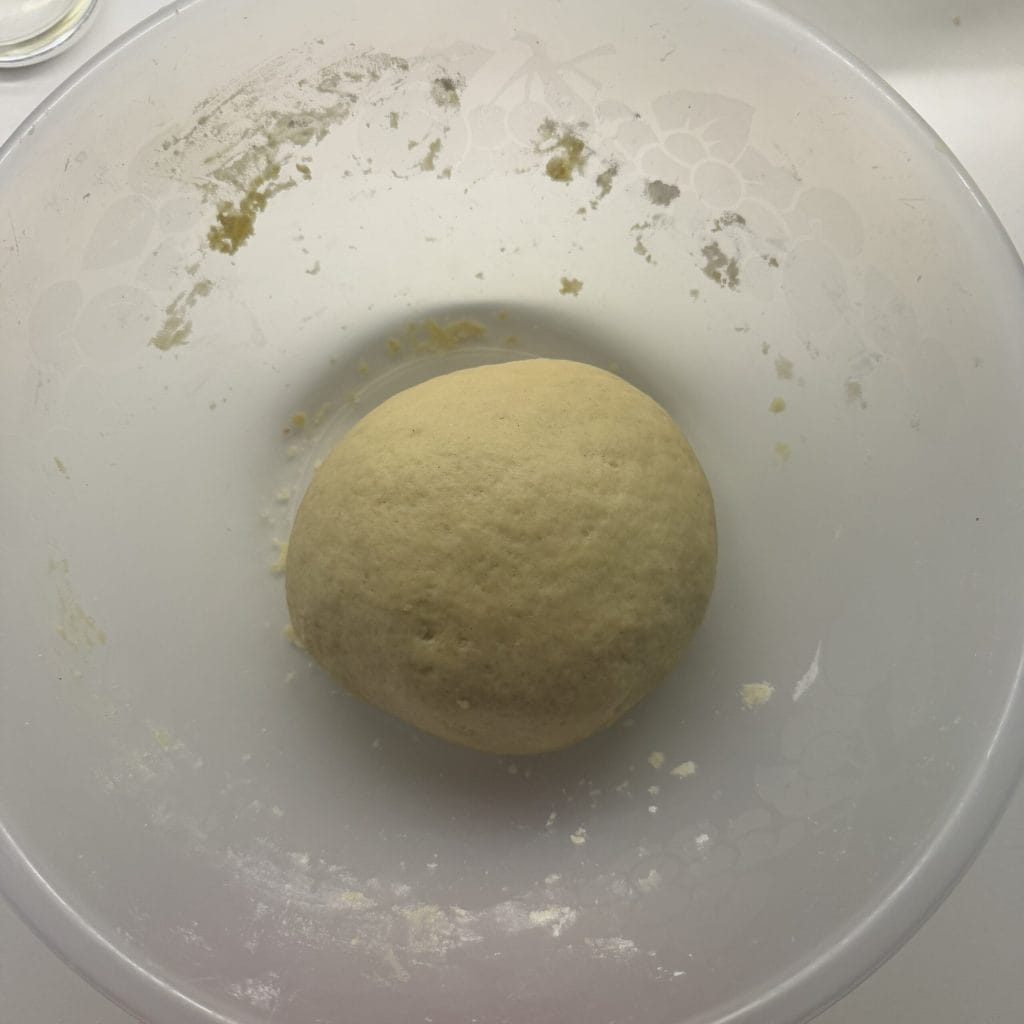
Wrap it in plastic wrap and let it rest for at least 30 minutes at room temperature.
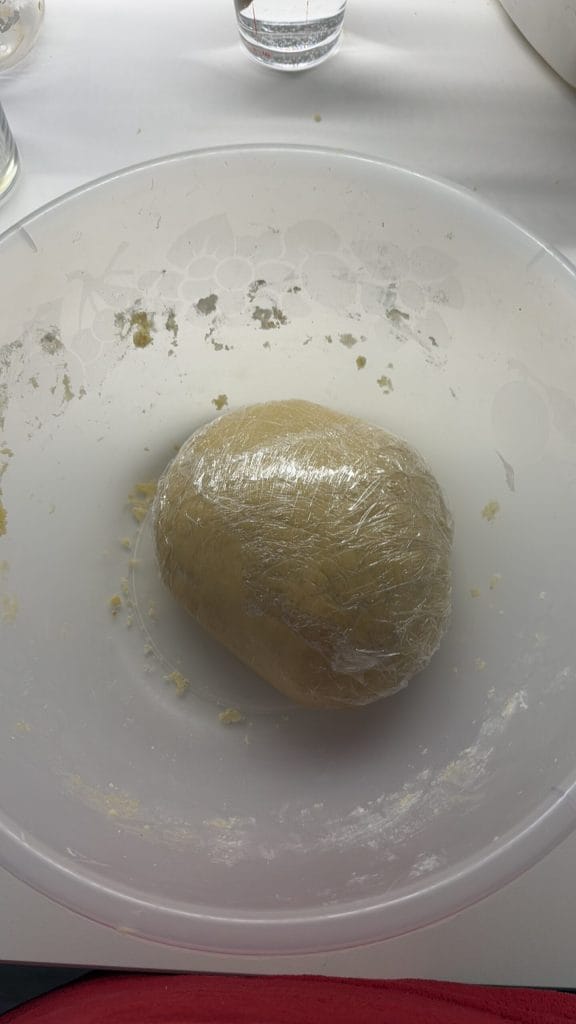
After the resting time, you can start preparing the cartellate. Prepare the pasta machine to make the sheets and have a surface ready with a clean cloth, where you will place the freshly made cartellate.
Take a small amount of dough and start working it in the pasta machine with the rollers set to the largest width.
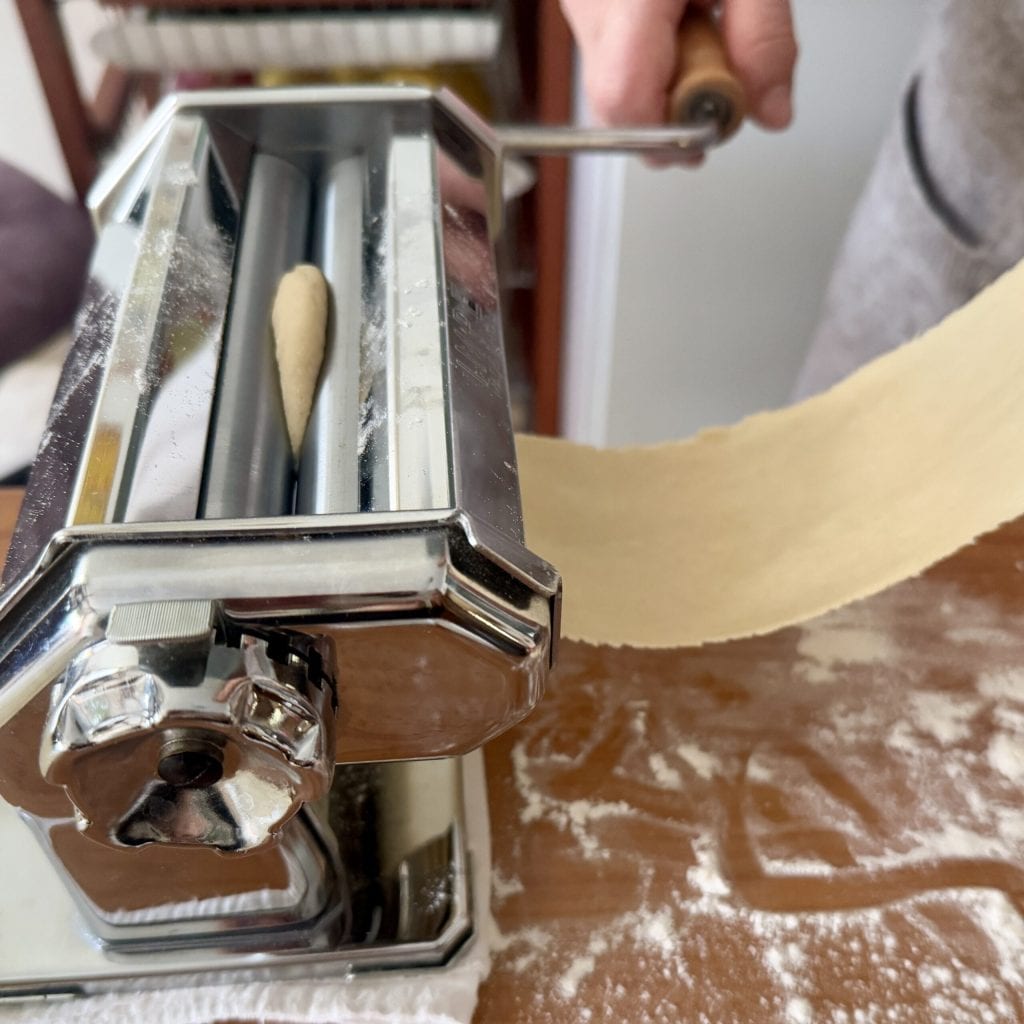
Then fold the sheet onto itself and pass it through the rollers, setting the rollers to a smaller thickness.
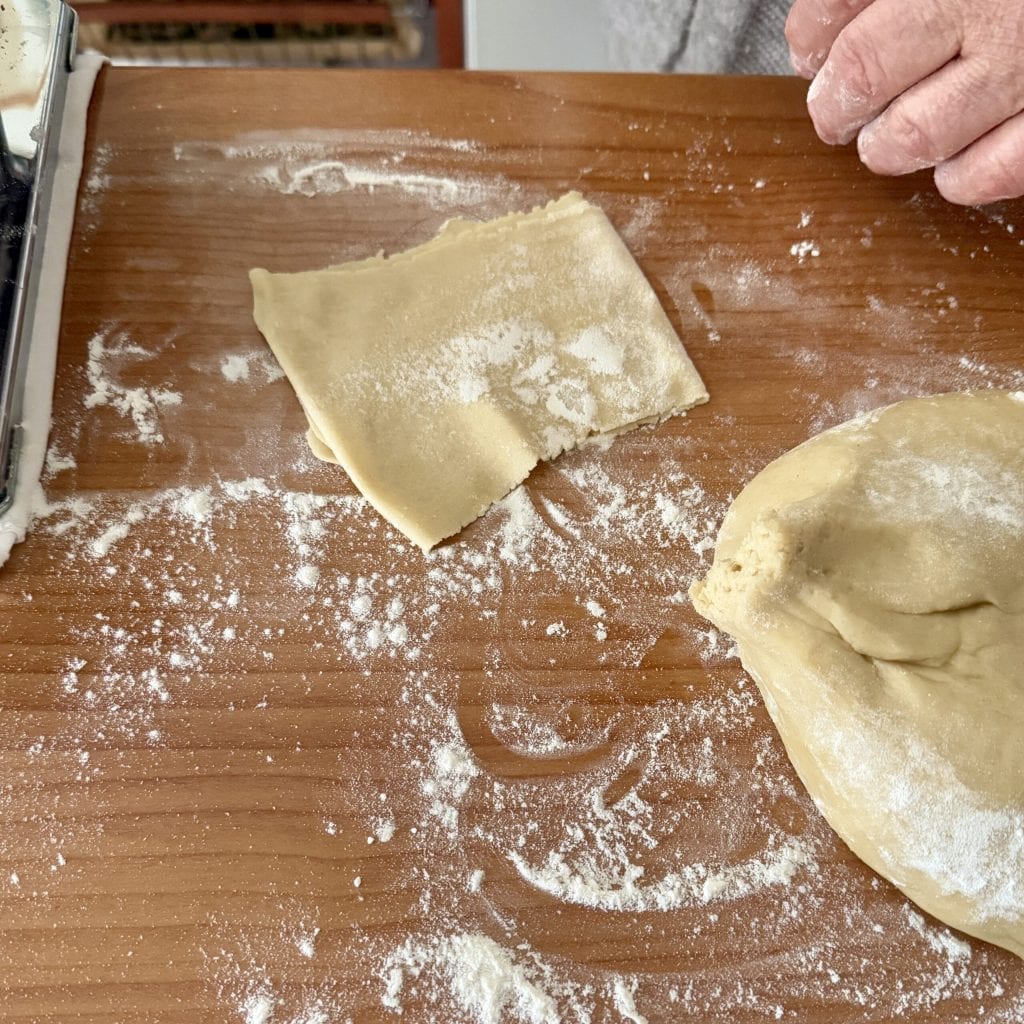
Repeat the operation 2-3 times until you reach the narrowest thickness on the pasta machine. The sheet you need should be smooth and very thin.
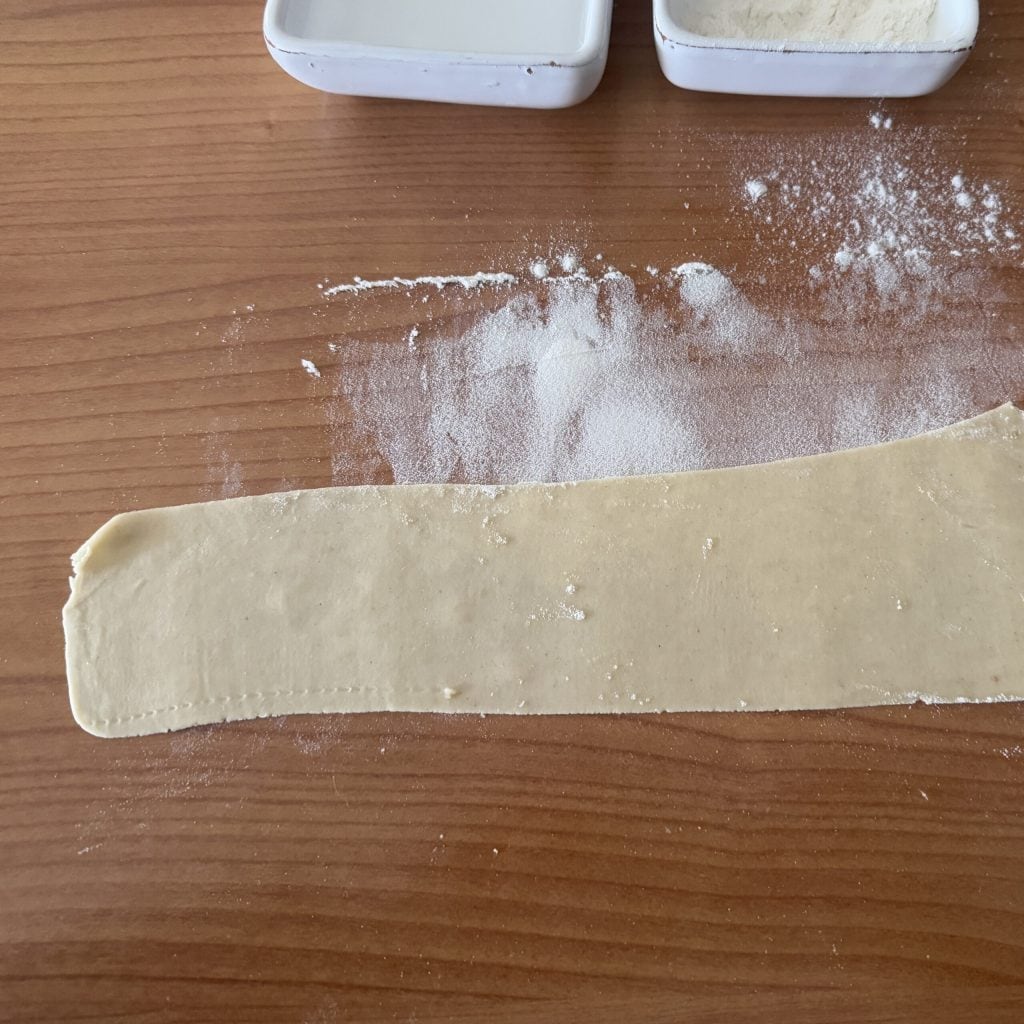
With a fluted pastry wheel, cut strips of dough about 1.5-2.5 inches wide and 6-8 inches long (depending on the size of the cartellate you want. The longer the strip, the larger the cartellate).
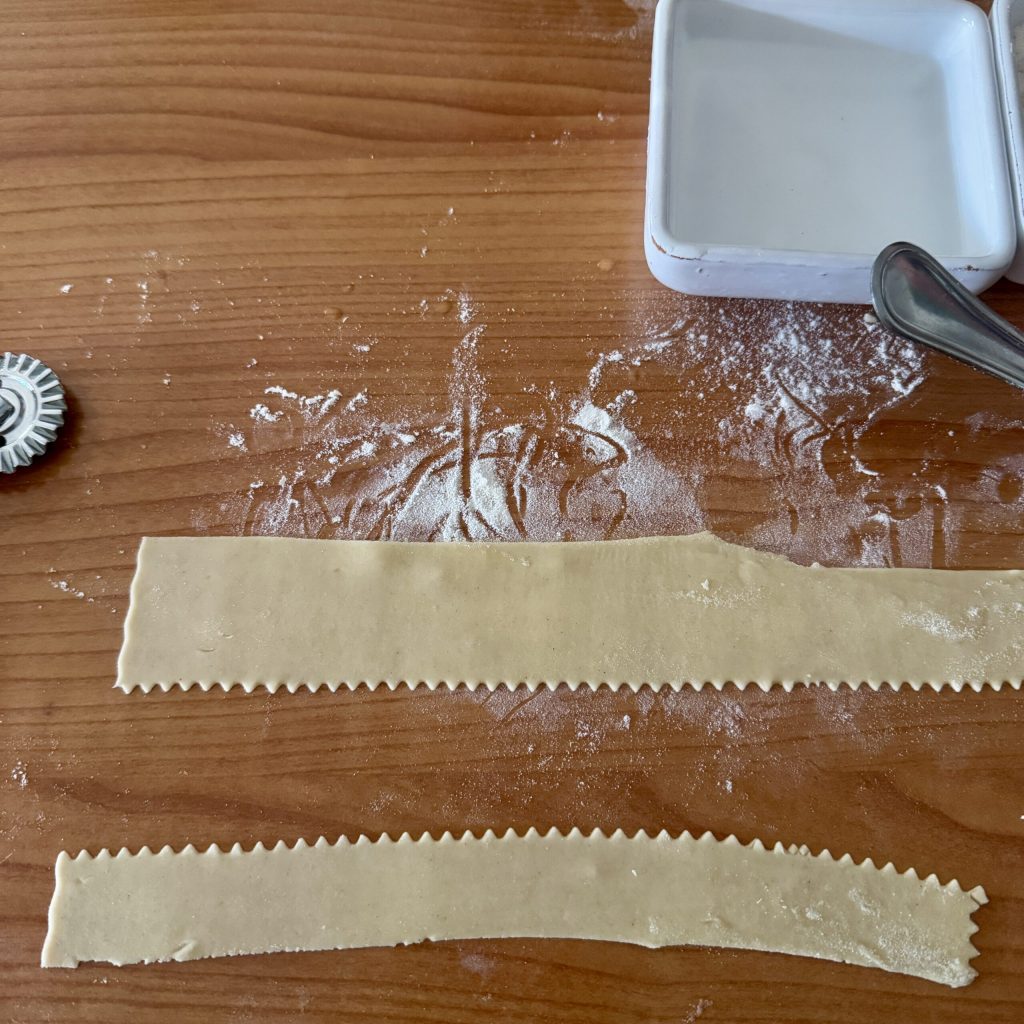
Fold the obtained strip in half lengthwise and pinch the dough with your thumb and forefinger, applying slight pressure with your fingers.
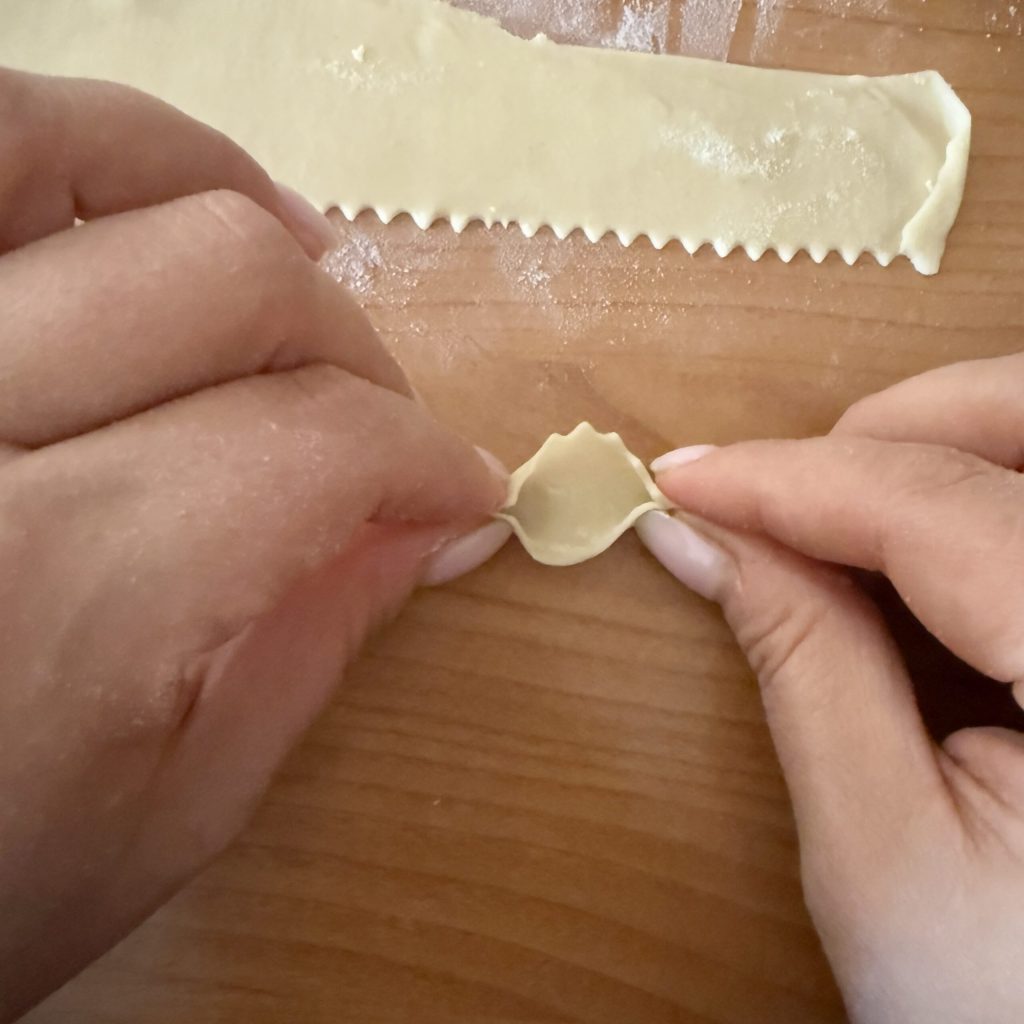
Continue like this to the end of the strip.
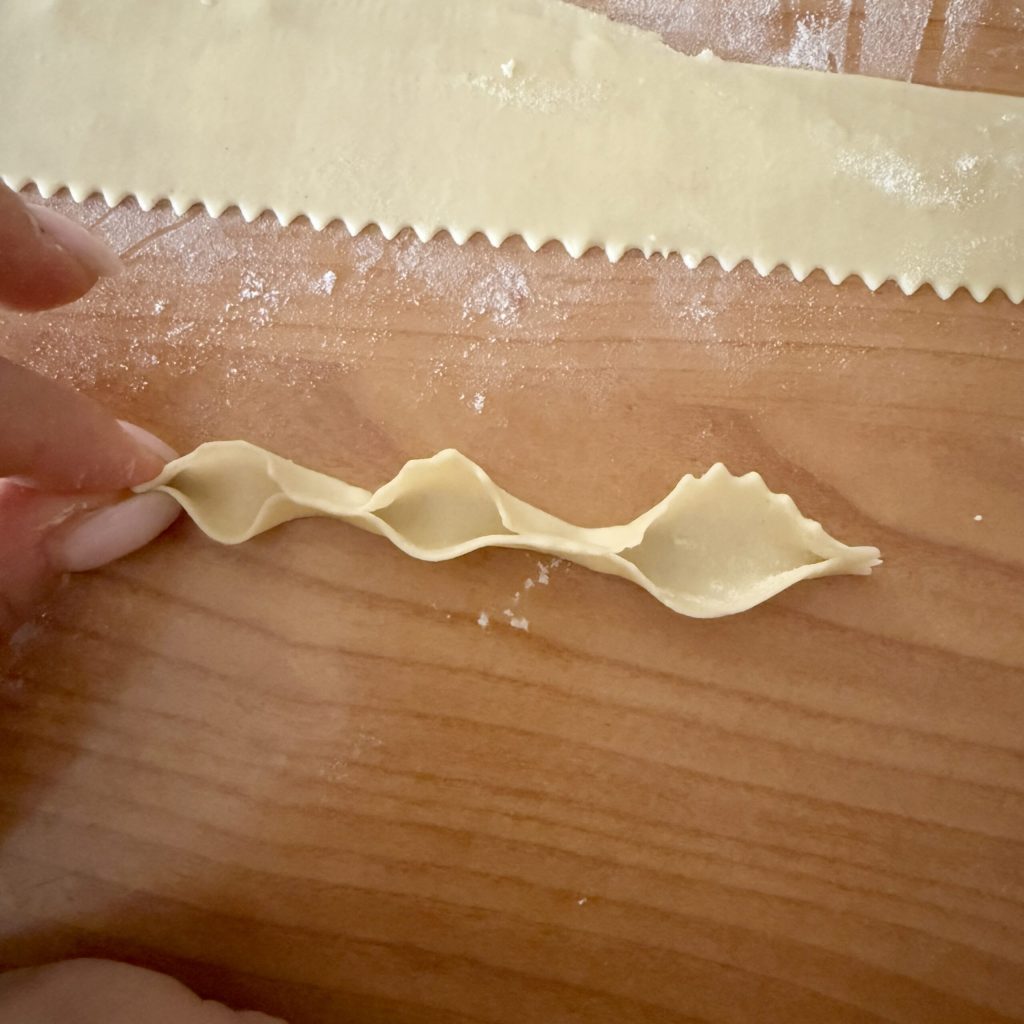
Now you need to roll it onto itself.
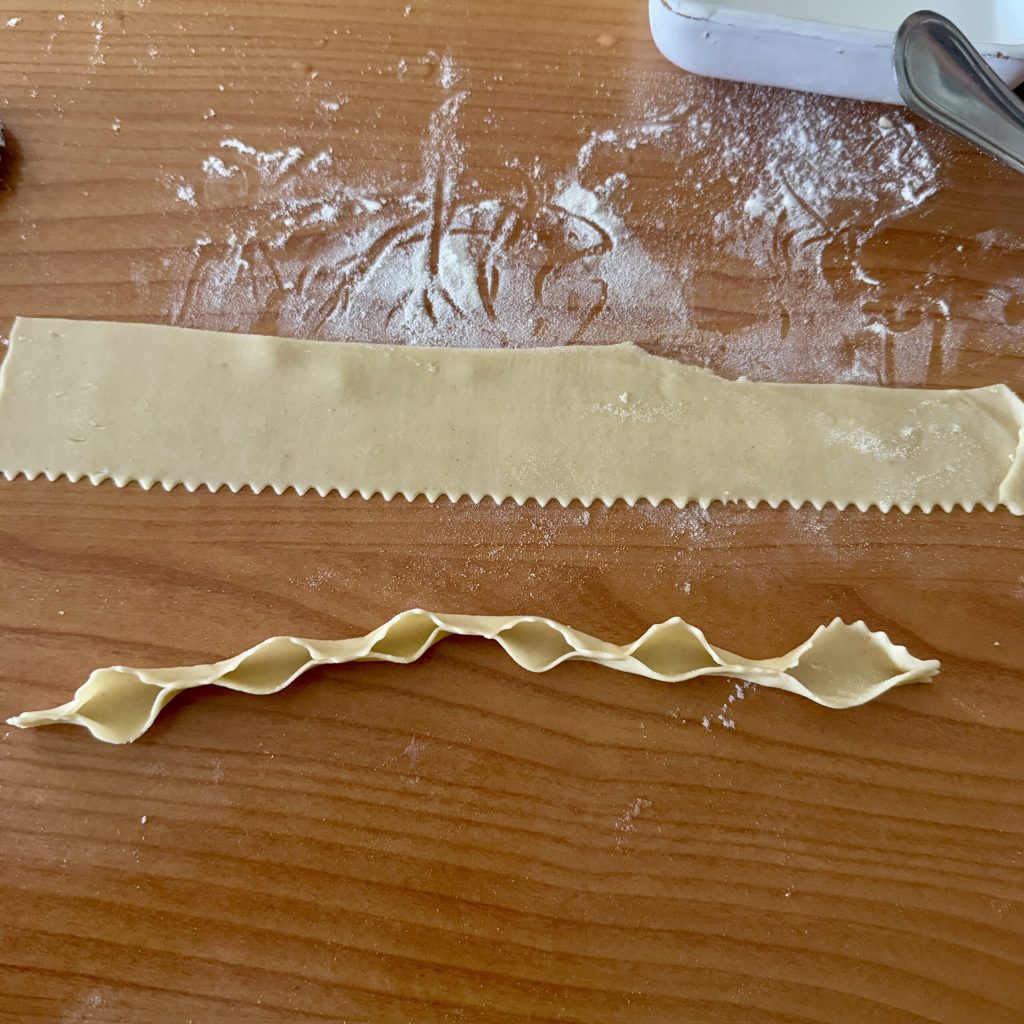
As you roll, always pinch the edges of the dough with your fingers to create a rose that will not open during frying.
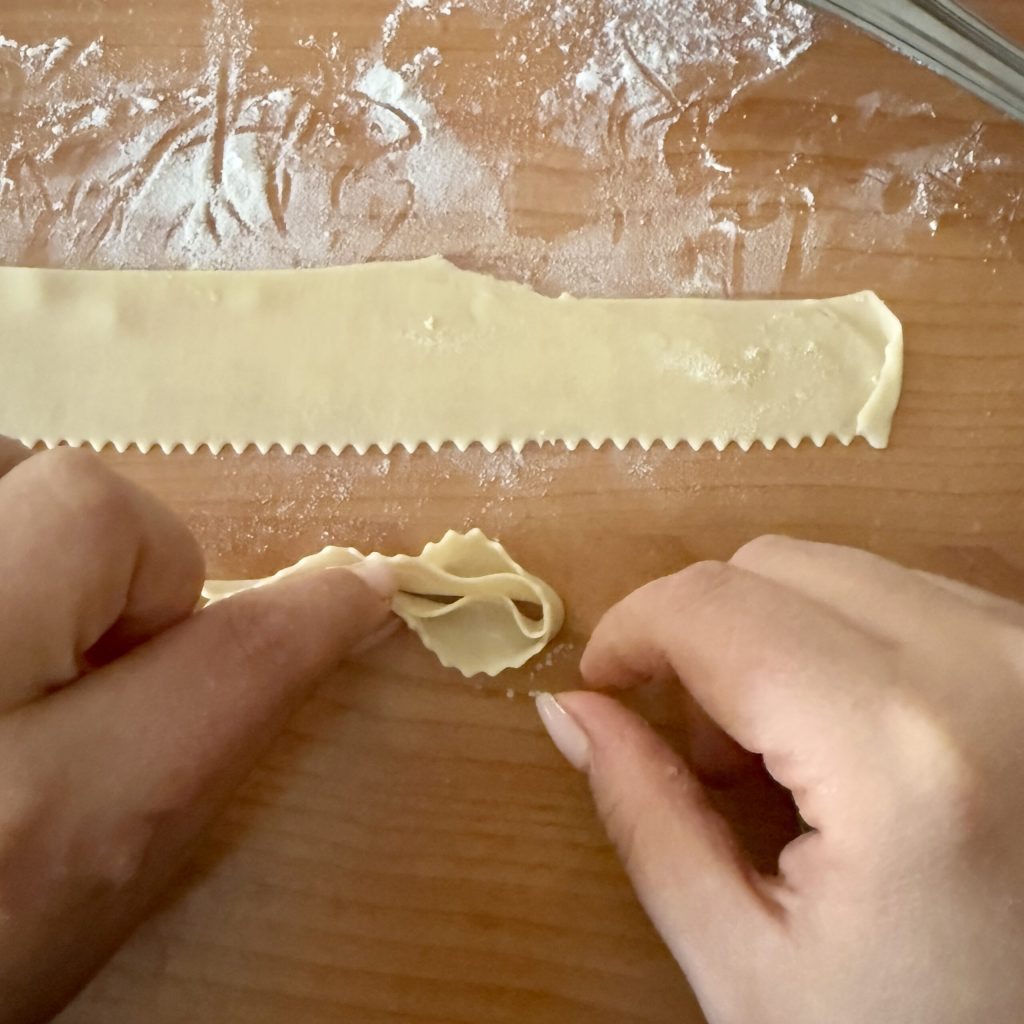
If the dough doesn’t stick easily, slightly moisten your fingers.
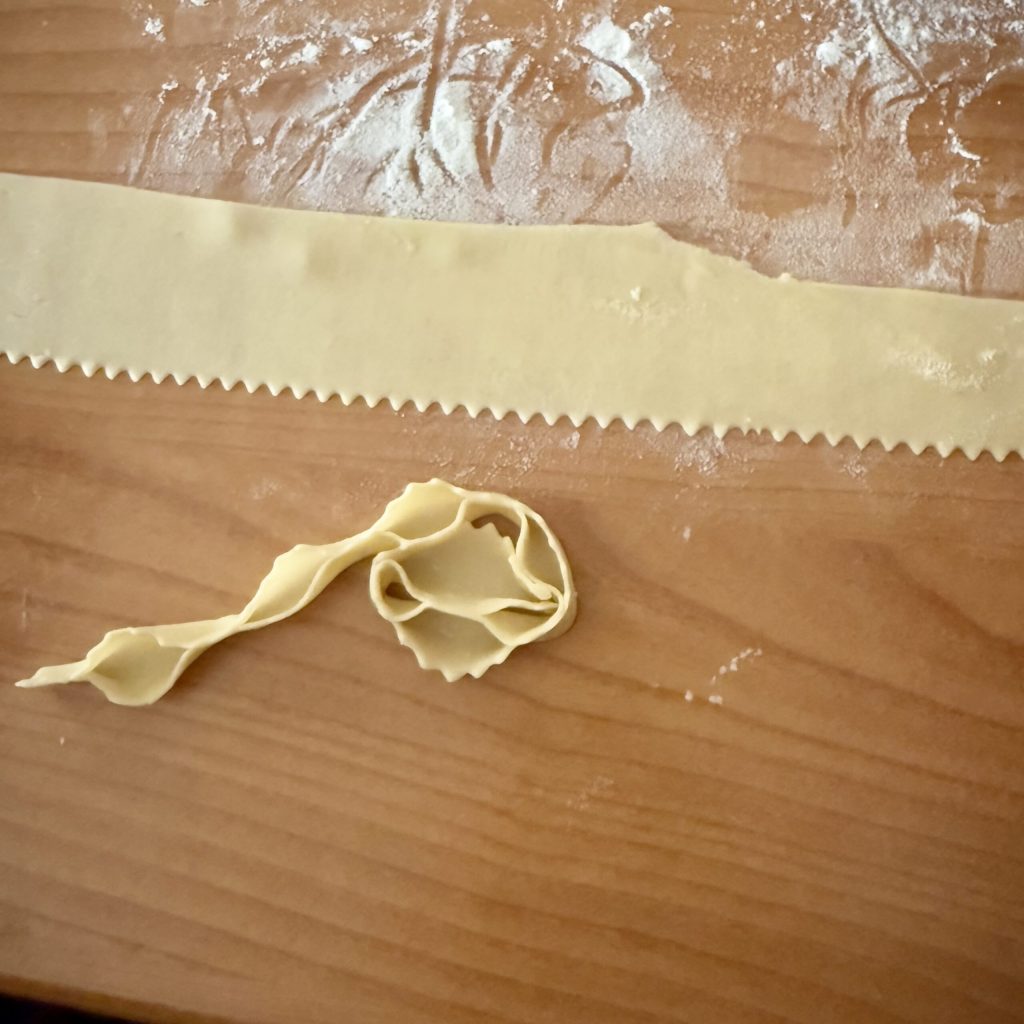
Close the end well.
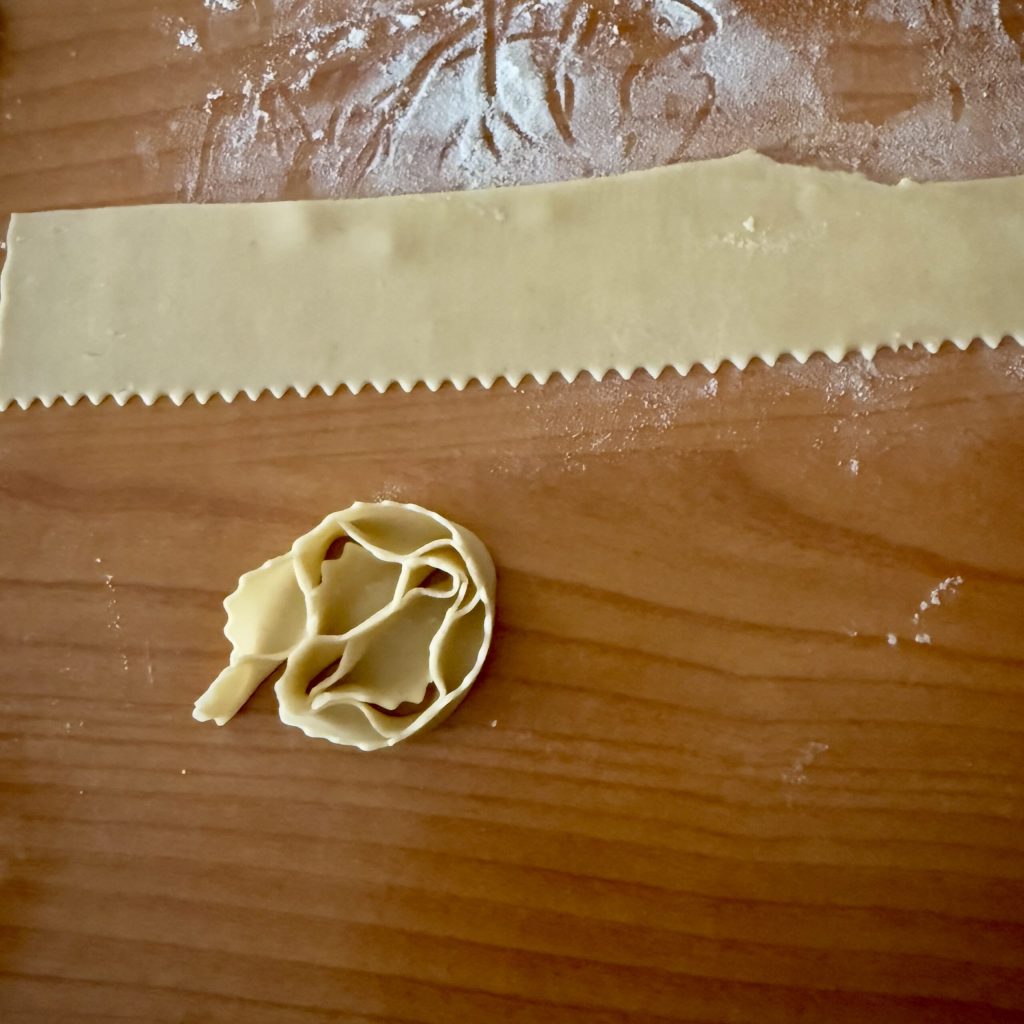
Also, make sure to leave the little holes open.
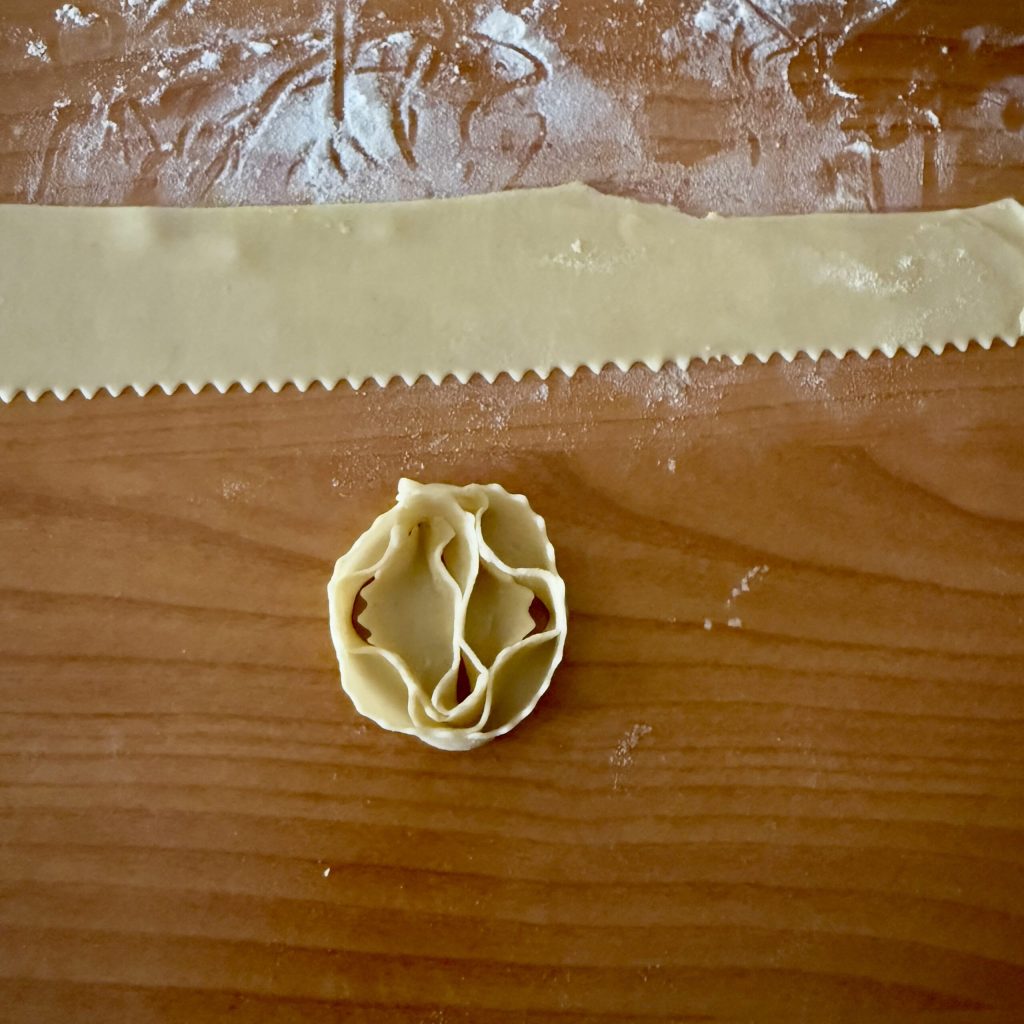
Once the cartellata is ready, place it on a clean cloth and continue like this until the dough is finished. Cover the cartellate with a dry cotton cloth and let them dry for a few hours. Ideally, let them dry overnight and fry them the next day.
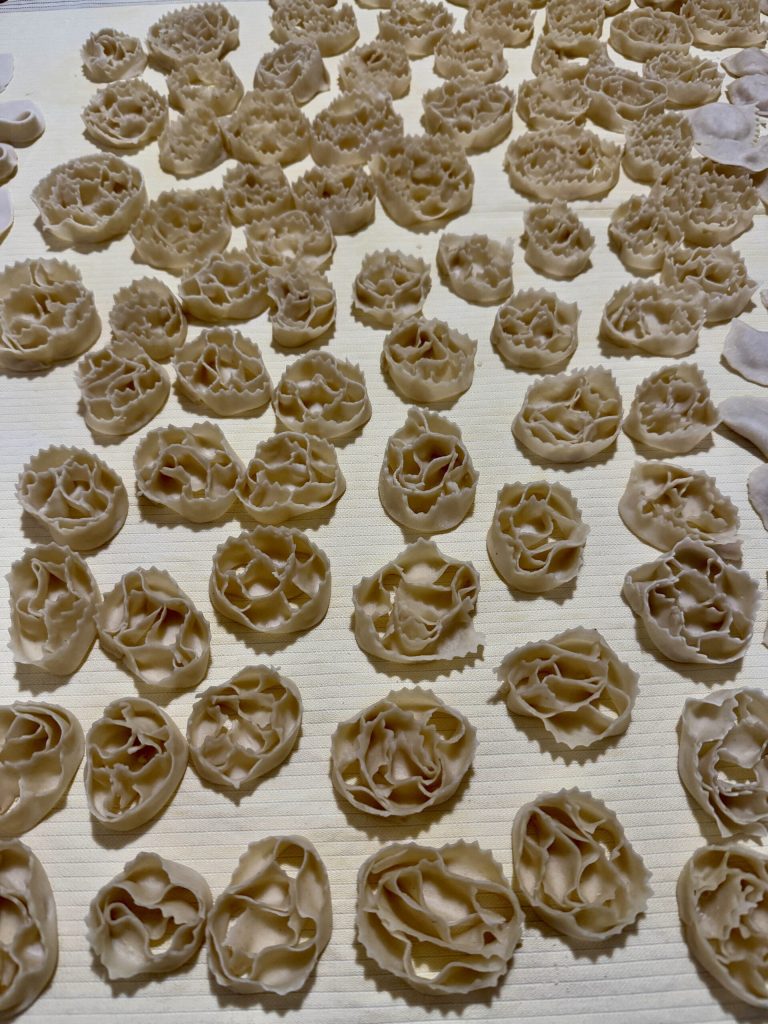
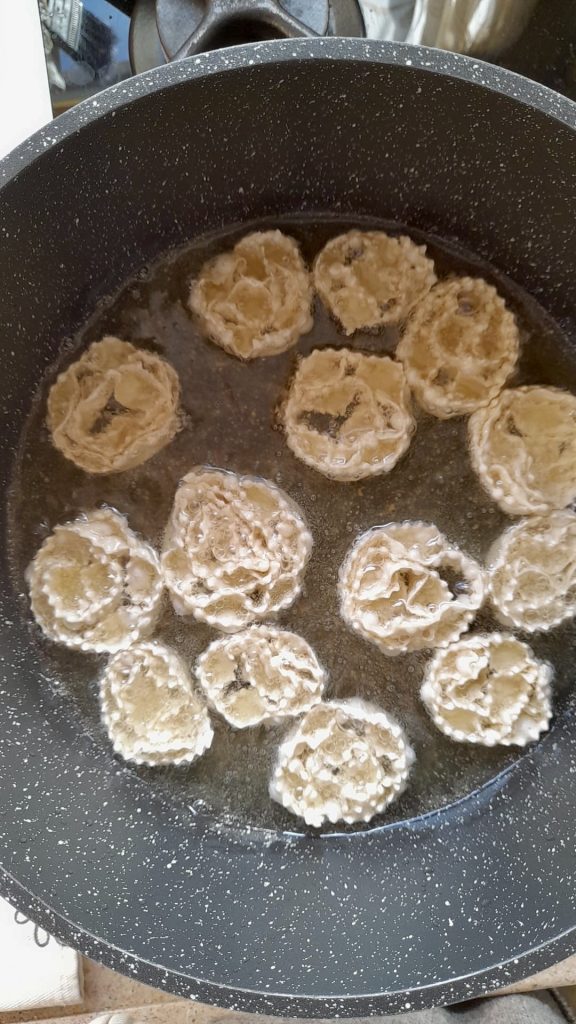
After the resting time, when the cartellate have dried, you can fry them.
Prepare a large pot with plenty of sunflower seed oil and heat it. Fry a few cartellate at a time over moderate heat. The frying should be gentle because the cartellate should only slightly brown.
Let them drain on absorbent paper.
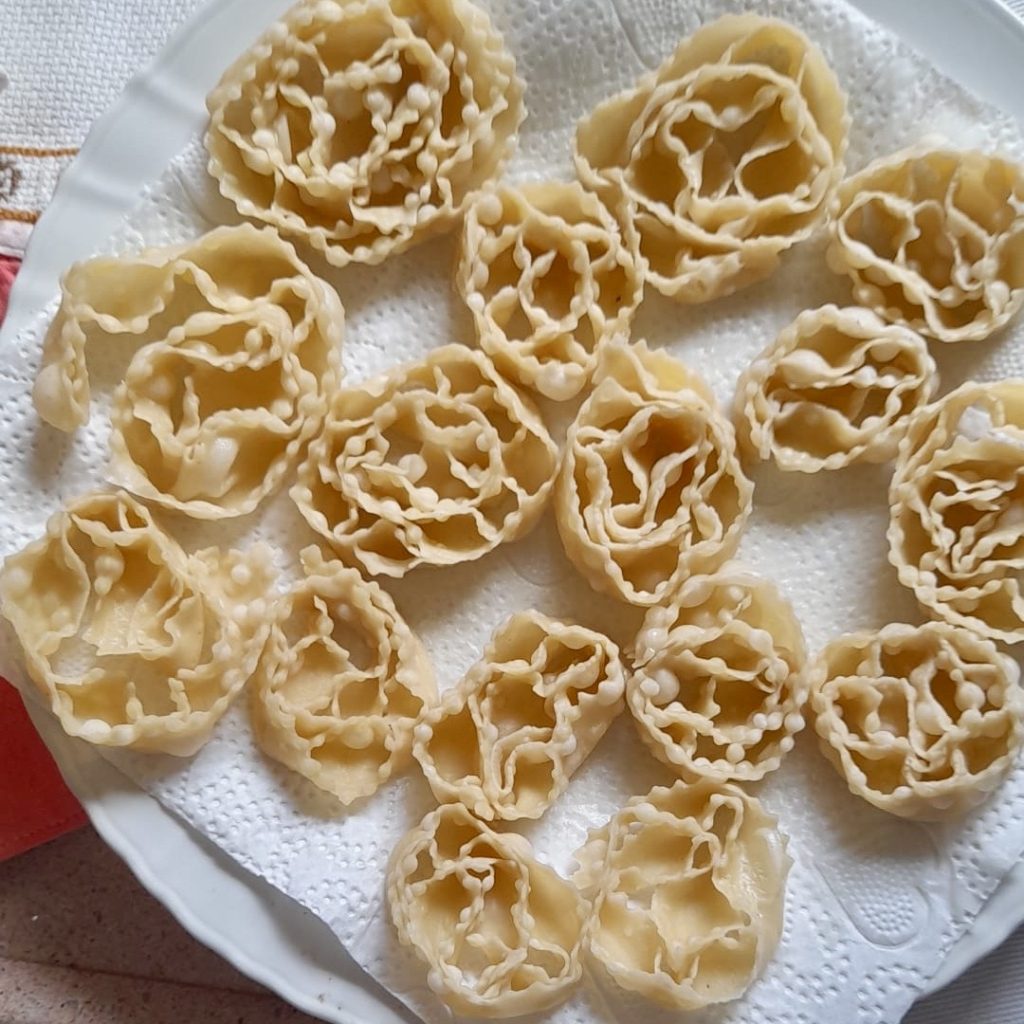
Then turn them over to remove excess oil from the cavities.
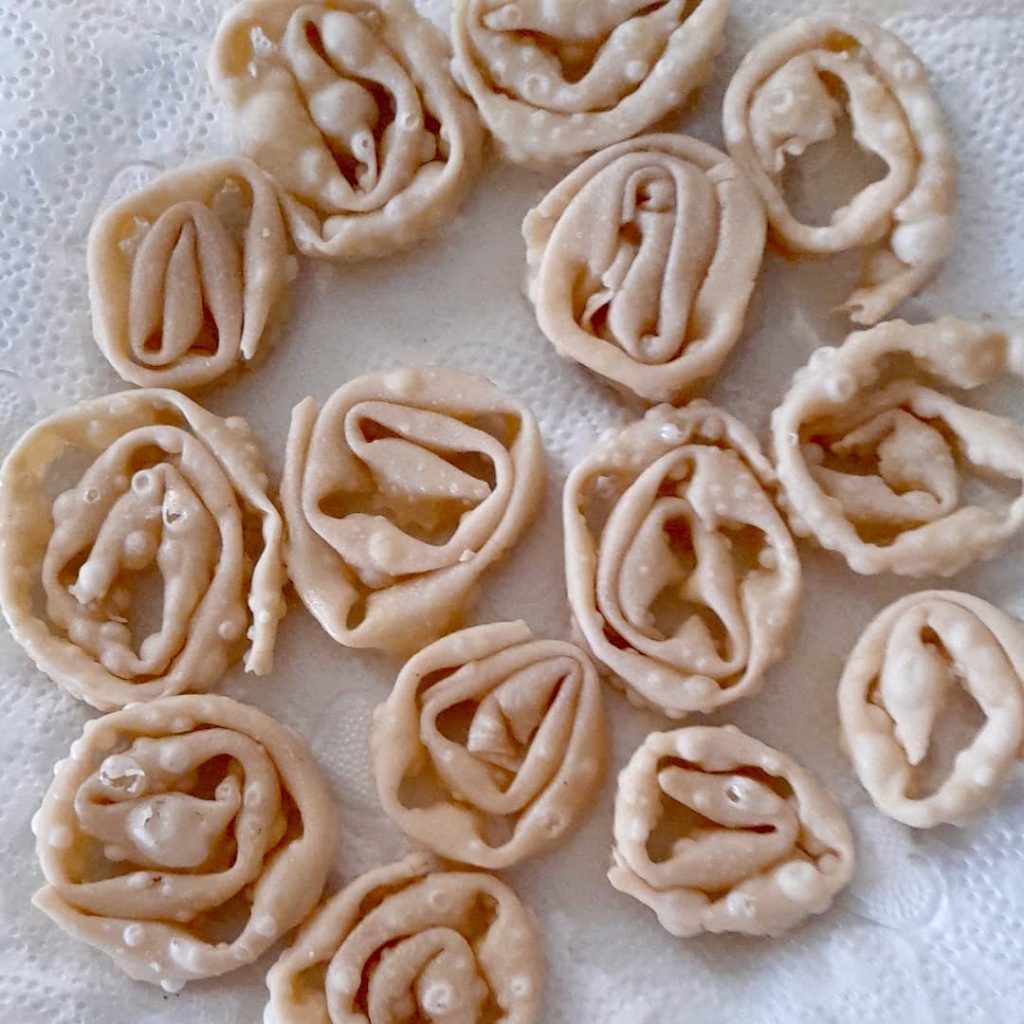
After letting them drain, you can proceed with the dressing. If you decide to use only granulated sugar, they should be coated in sugar while still hot and freshly fried; otherwise, the sugar won’t stick. If you want to prepare them with vino cotto, heat it over moderate heat in a large pot until it almost boils. If it’s very thick and concentrated, dilute it with a little water. With the flame at a minimum, place the cartellate in the hot vino cotto and gently turn them for a couple of minutes.
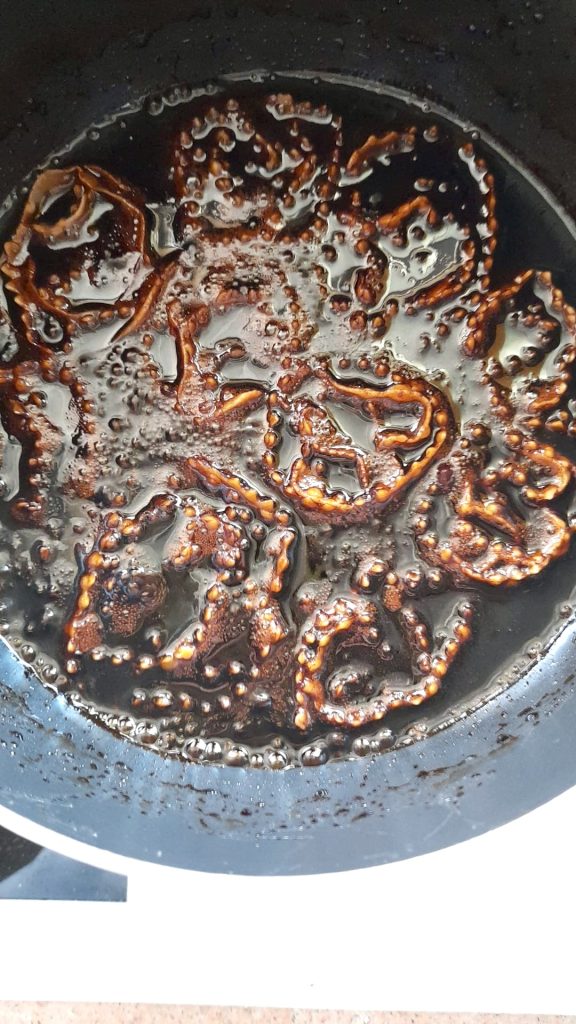
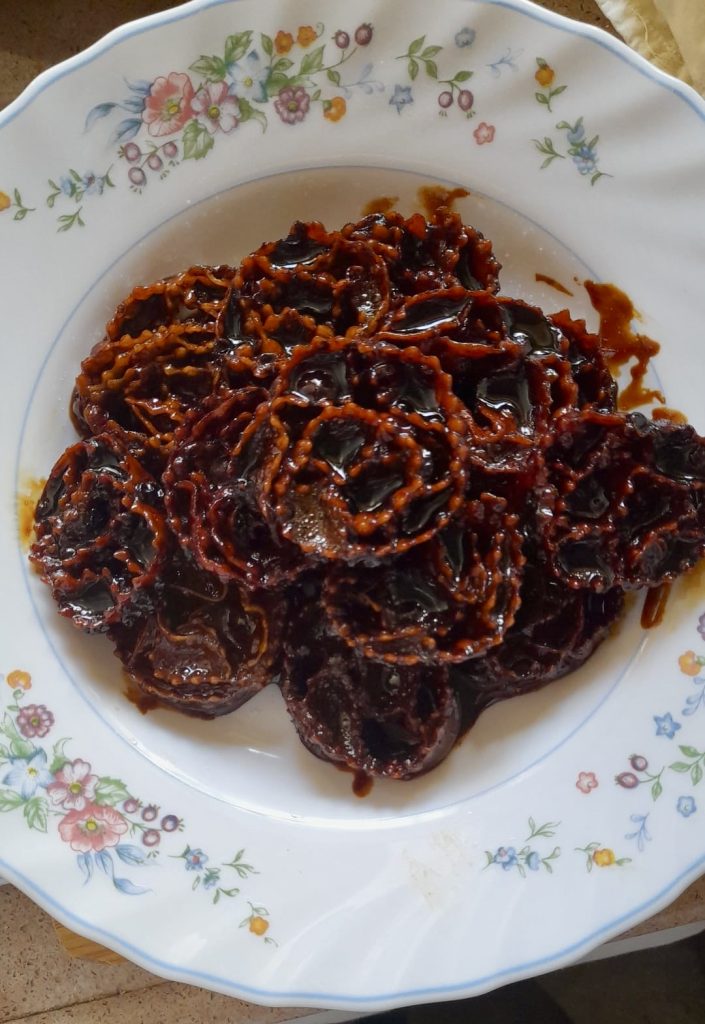
As the cartellate are ready, place them on a serving platter. If you have leftover vino cotto in the pot, dilute it with a little water and pour it over the Apulian cartellate on the serving dish. It will make the cartellate even more delicious!
Storage and Tips
– Apulian cartellate keep well for a couple of weeks in a tightly closed container, away from heat and humidity.
– You can also store white cartellate in a tightly closed container and dress them with vino cotto just before consuming.
– When dressing cartellate with vino cotto, ensure that it remains fluid. If it appears too thick, dilute it with a little water. Always keep the flame low, as the vino cotto could burn and alter the flavor, becoming slightly bitter.
FAQ (Questions and Answers)
Is the liqueur necessary in the cartellate dough?
Yes, because it makes the cartellate crumbly and bubbly. The alcohol, evaporating quickly during frying, creates the classic bubbles on the cartellate surface. It’s the same as when preparing Carnival chiacchiere.
Why does the dough shrink when I work it?
Because it hasn’t rested enough. Resting is important to allow the dough to relax.
Can I flavor the cartellate?
Yes, my recipe includes cinnamon, but you can also flavor them with lemon or orange peel. In this case, cut the lemon or orange peels, avoiding the white part. Then, heat the oil you will use for the recipe, placing the peels in the oil. Before using, remove the peels and let the oil warm.
If I don’t have vino cotto, how can I dress Apulian cartellate?
If you don’t have fig or grape vino cotto, you can dress cartellate with granulated sugar or hot honey and sprinkles. If you decide to garnish them with granulated sugar, you must pass them immediately in sugar while they are still hot and freshly fried. Otherwise, the sugar will hardly stick.
