
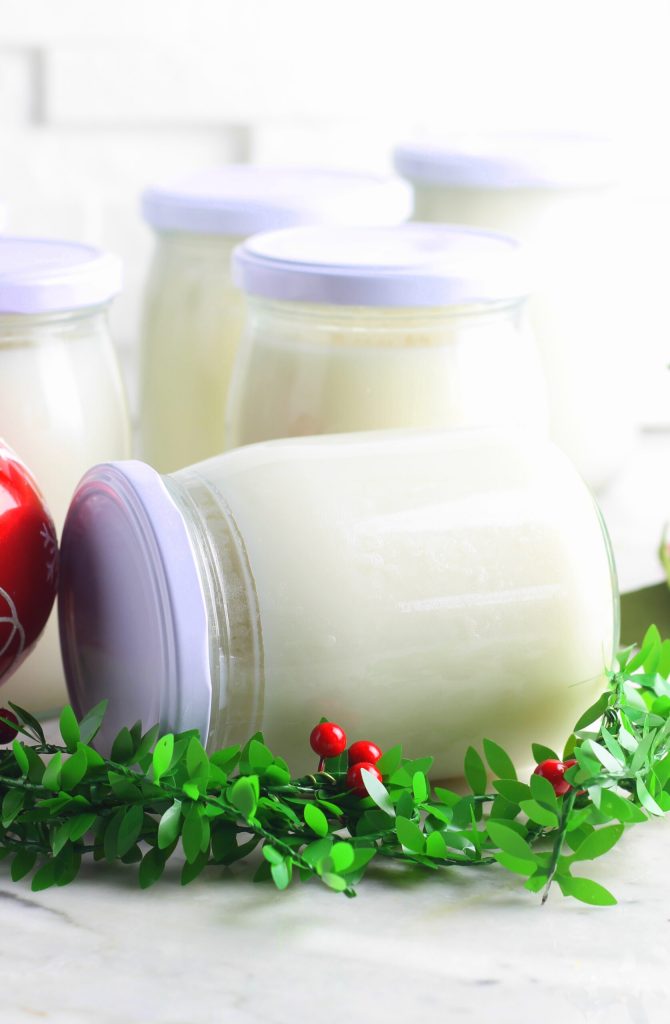
Homemade Pork Lard is truly exceptional for preparing sweet or savory dishes. Obviously much better than industrial ones and certainly healthier because it is free of any additives or preservatives. Its preparation is really very simple and not even that long: it just needs a bit of patience. Here I have provided the making of two 500 gram jars because I made a lot for the butcher shop. With the same amount of fat, you can certainly prepare 4 jars of 250 grams, more convenient for family use. In reality, lard was used for frying and maybe some still do today, but in any case, even if you’re not used to using it in recipes where it is required, you can always enrich your soups, stews, roasts by using it instead of oil to give them more flavor. If you’ve never tried it, try making it, even in small amounts, but don’t let winter pass because this is the right time to preserve it.
Here are links to some recipes that don’t require it, but where it would fit really well:
- Preparation time: 10 Minutes
- Portions: 2 jars of 1 lb each
- Cooking methods: Stovetop
- Cuisine: Italian
- Seasonality: Winter
Ingredients
- 2.65 lbs pork fat
Tools
- 1 Knife
- 1 Cutting Board
- 1 Strainer
- 1 Saucepan
- 2 Jars
How to Prepare Homemade Pork Lard
First, you need to sterilize the glass jars in which you will put the lard, to ensure your preserve is not harmful and does not spoil.
You can sterilize them by boiling in a saucepan, or by washing them at high temperature in a dishwasher.
Cut the pork fat into medium-small pieces, ensuring it is free of meat, otherwise the final result will not be the same.
Put them in a high-sided saucepan, turn on the heat, maintain a medium-low flame to avoid burning them, and let them melt.
In the meantime, prepare for jarring and preservation.
Place the jar on a plate and put the fine mesh strainer on top.
When enough liquid has formed in the pot, take it with a ladle and let it fall into the jar through the strainer so that the impurities of the fat do not enter the glass jar.
Continue this way, filling it up to one centimeter from the edge and close it immediately with its lid.
Take a cloth, tighten it well (be careful not to burn yourself) and after ensuring it is well closed, turn it upside down so that while still hot, it can immediately create a vacuum seal.
As they cool, they will take on the color we are all accustomed to.
Once they have turned white, you can turn them right side up again.
At the end of the operation, you will have many crunchy fat pieces left, those are called cracklings.
Since nothing of the pig is thrown away, these cracklings were seasoned with a bit of salt and served warm at the table: truly a delicacy, try them.
Before labeling the jars with your Homemade Pork Lard, check that they are not dirty, otherwise wash them without fear and dry them.
Once labeled, store them in a dark and dry place: they will keep intact for at least two years.
Advice and Storage
Once opened, lard keeps very well in the fridge for a few days, but if you don’t use it immediately, you can freeze it, possibly dividing it into small portions.
Clearly, as it is, it has a neutral taste, so it can be used for both sweet and savory recipes, but if you wish, you can salt it immediately during cooking.
