
Following the step-by-step procedure of Homemade Preserves, you will be able to transform and preserve fruits, vegetables, fruit juices, syrups, etc. With simple homemade techniques, so practical and effortless, it could also become a pleasant hobby. There is no better time for this type of technique; the important thing is to always use seasonal foods, preferably from organic farming. With preservation, we stop the deterioration process of foods, and neutralize the microorganisms responsible for it. All this is achieved using natural preservatives (vinegar, sugar, salt…), cooking, sterilization, and drying. Certainly, homemade food transformation maintains much more intact nutritional values of foods, compared to industrial products. Additionally, in this way, you have the chance to enjoy the dishes you crave throughout the year.
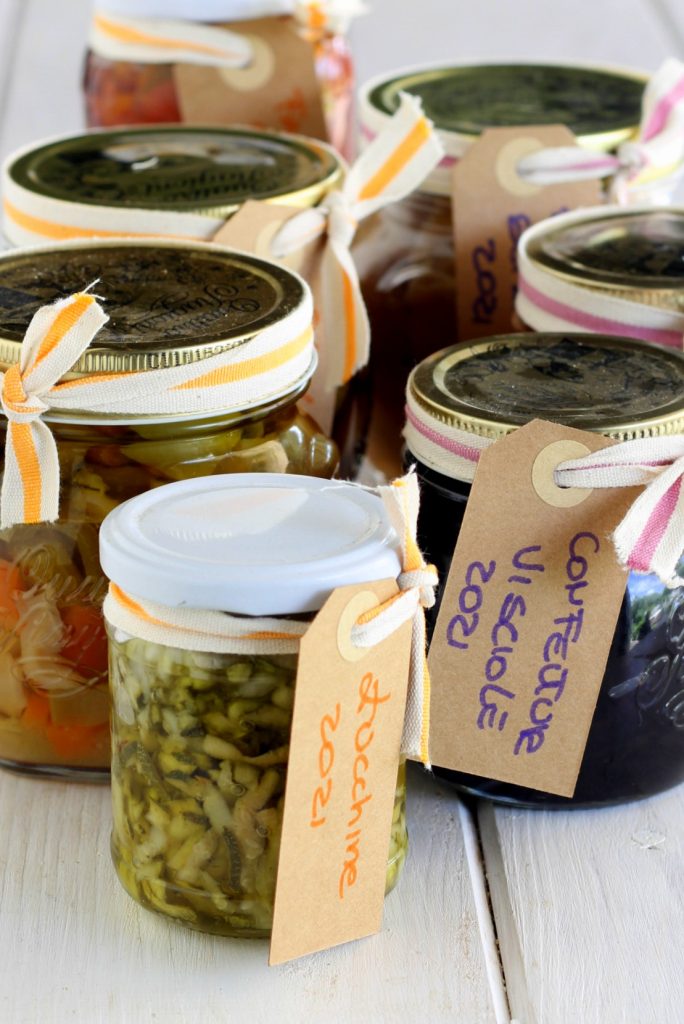
- Cuisine: Italian
Ingredients
- sugar
- vinegar
- salt
- fresh vegetables
- fresh fruits
- fresh legumes
Tools
- Jar
- Lid
- Pot
- mismatched socks/dish towels
How to Prepare Homemade Preserves
To prepare Homemade Preserves, arrange your workspace with all the tools you will need, so you have everything within reach.
The pots in which fruits and vegetables are cooked should be stainless steel.
Otherwise, other metals, when in contact with acidic ingredients, like vinegar among others, but also tomatoes… could release, as a reaction, toxic substances.
Glass is the best material because it is hygienic, and it doesn’t impart odors or flavors to the products.
It is completely resistant to possible microbial transfers from the outside, and allows you to check that the content is not affected by any alterations.
It is also important to choose containers of the right size.
The best ones are medium-small, about 8.8 oz/17.6 oz, so that the content, once opened, can be consumed as quickly as possible.
The caps for bottles and jars should be changed with each filling.
In case of reuse, they must be carefully checked to ensure they are in perfect condition.
Jars, including lids, need to be thoroughly sterilized before use.
If you do not want to boil them, do like me: put them in the dishwasher, so you also save time and money.
Appropriate control and respect for hygiene, in addition to ensuring preservation, also prevent the onset of possible diseases caused by pathogenic bacteria.
The most dangerous risk is certainly linked to the development of a microorganism called Botulinum.
Odorless and tasteless (anaerobic: it thrives in the absence of oxygen), it can cause serious forms of poisoning, even death.
And it is for this reason, that the above-mentioned natural preservatives, and high temperatures for sterilization, are used.
Above 176°F, toxins are eliminated, so with boiling that reaches 212°F for about 20/30 minutes, we also make the most suspicious foods safer.
Having made this introduction on Homemade Preserves, I invite you to follow the next articles and upcoming recipes.
Notes
Tips and Variations:
Usually, to boil jars, dish towels are used so that during boiling, they don’t come into contact and break.
I use, instead, the technique of mismatched socks, the summer ones, and keep them handy in one of the kitchen drawers.
In my opinion, they are much more practical, because each jar will have one, and therefore will be more protected.
Of course, I put them directly into the washing machine to wash, along with dish towels.
If you intend to get hands-on, then open the next link: Preserve of Zucchini and Eggplants in Oil
Did you like my recipe Homemade Preserves? Follow me on Facebook and Instagram to not miss any news!!
