
Middle Eastern hummus is a secret weapon that we Western cooks learned from our Levantine cousins, those with whom we share the wonder of the Mediterranean Sea, and beyond.
Born in Lebanon, it is prepared, among other places, in Morocco and Tunisia, but it is also common in Jerusalem and Greece, and I make it too.
Today I offer you a chickpea recipe and a fava bean recipe.
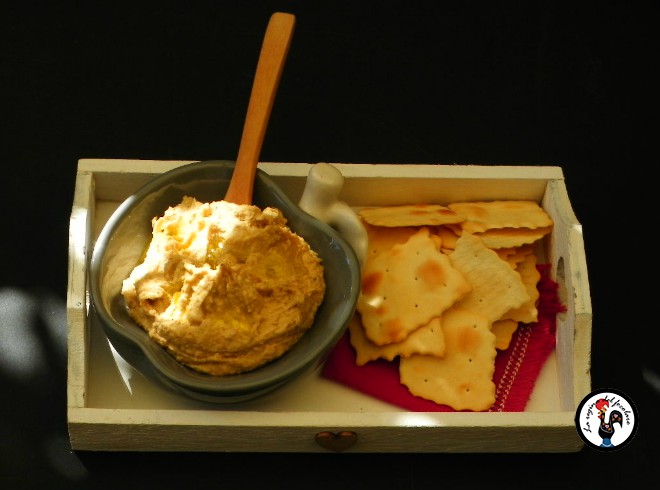
Perfect as an appetizer, served with raw vegetables or crackers, Middle Eastern hummus is also a great Main course when paired with a hearty mixed salad for a light summer lunch.
These lovely hummuses are perfect as a party pastime. With a good supply of crackers (or unleavened bread) and carrot and celery matchsticks, they will keep your guests busy for a long time between chats.
Want to learn how to make crackers? See the rice cake recipe. You will find the instructions for the crackers at the end, in the notes (…and you’ll also learn to make the rice cake).
If you don’t know how to make mayonnaise, it’s time to learn: watch my recipe, and you can add a little next to the hummus to eat with raw vegetables.
- Difficulty: Easy
- Cost: Inexpensive
- Rest time: 30 Minutes
- Preparation time: 30 Minutes
- Portions: 8
- Cooking methods: No-cook
- Cuisine: Lebanese
Ingredients
- 1 can chickpeas (canned)
- 1 juice of 1 lemon
- 1 clove garlic (without the germ)
- 3 tbsp tahini
- to taste parsley and cilantro (finely chopped)
- to taste salt and hot chili pepper
- 1 1/4 cups dried fava beans (about 8.8 oz (250 g))
- 3 tbsp tahini (heaping)
- Half lemon (juice)
- 1 clove garlic (without the germ)
- to taste oil, pepper, salt
- to taste fresh mint (finely chopped, as much as you like)
Tools
You need a food processor. If you don’t have one, use a food mill, garlic press and a mezzaluna (chopping knife).
How to prepare Middle Eastern chickpea hummus
We make life easier by using canned chickpeas, but dried chickpeas soaked overnight and then boiled are fine (and perhaps better).
In the bowl of my trusty food processor, with the blades, I put the well-drained and rinsed chickpeas. With the chickpeas I added salt and one garlic clove, with the germ removed and crushed with a garlic press. I squeezed half a lemon, poured it in with the rest and turned on the processor. Slowly I added olive oil in a thin stream while the mixture formed and, finally, three heaping tablespoons of tahini (sesame paste), which completes the flavor of hummus and adds creaminess. Lastly, add the spices. I must confess I brought home a falafel spice mix from Jerusalem and I use that. Alternatively, use a generous chop of fresh parsley and cilantro and a pinch of hot chili pepper. If the mixture seems too thick, sometimes I thin it with a very small amount of ice-cold water (a few tablespoons) to aerate and soften it.
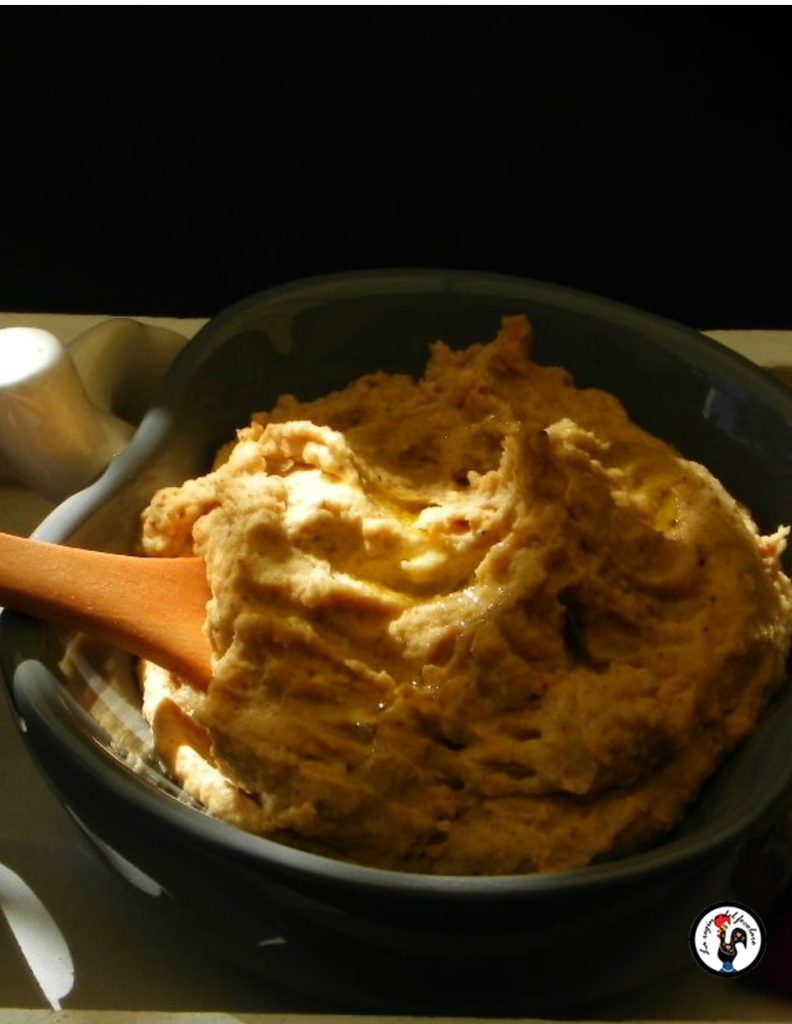
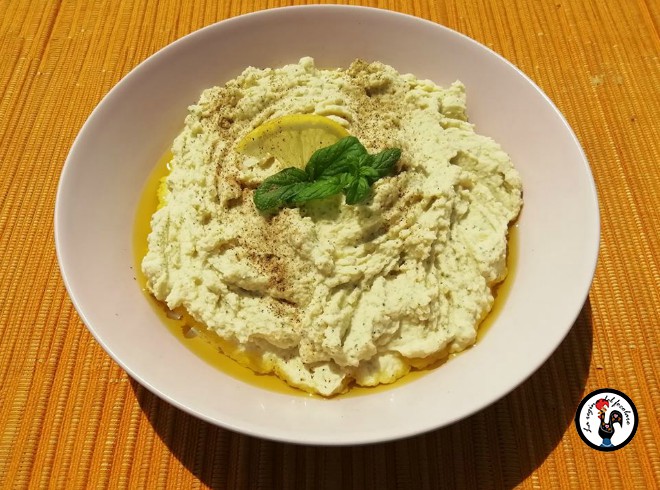
I saw this recipe in a lovely Jerusalem cookbook and tried it. To start, I cooked the fava beans in a pressure cooker, without salt, for 20 minutes (for this type of fava beans no soaking is needed); then I drained them, cooled them with cold water and put them in the bowl of my trusty food processor with a teaspoon of salt, a grind of pepper, the juice of lemon and the garlic crushed with a garlic press. Then I processed at high speed and gradually added a little oil and the mint leaves; finally, to whip and soften, a splash of ice-cold water taken from the fridge, until reaching the consistency I like. To serve, I put the hummus in a shallow dish brushed with olive oil, as they do in Jerusalem.
Tahini is a paste made from sesame seeds, similar to hazelnut or pistachio cream, or to peanut butter. You can now find it everywhere, in supermarkets or ethnic shops. It’s not only for hummus; it goes well in many other dishes. With a good combination of flavors you could even finish a risotto, for example, with parsley and lemon.
If you want to try it, I did:
Celeriac risotto – Recipe with tahini
Do you know where to find me?
Returning to the HOME you will find many other recipes, sweet and savory. There is a section dedicated to vegetarian cooking with lots of good and healthy ideas, like this one. Follow me on Facebook and on Instagram, you’ll find very quick recipes and many useful tips, and you’ll never be out of dinner ideas again.
Also you can receive all the new recipes on the Telegram channel of my blog. It’s free and to subscribe you just need to open this link: this way you’ll always be updated on recipes, secrets, tips and news. You can receive all the recipes on your phone without risking missing any and without entering any phone number or email address; if later you want to leave the channel, simply remove it.
Note: this recipe contains affiliate links..
