
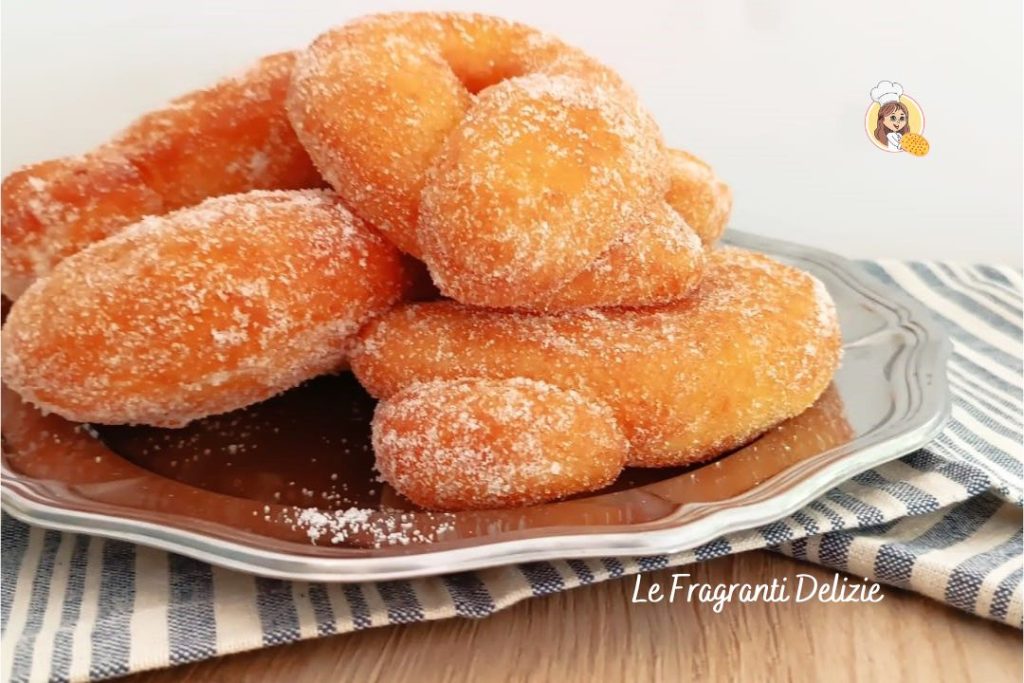
Soft and fluffy, the Neapolitan graffe are sweet fried donuts sprinkled with sugar that can be found in pastry shops and cafes for a mouth-watering breakfast.
The secret to a soft and fluffy graffa is the two-stage rising process. The final touch is the dip in granulated sugar to give a crunchy note.
This dessert was once prepared for Carnival, like castagnole and chiacchiere, but today it represents a morning delight or a typical midnight indulgence, like a croissant.
The recipe I’m sharing today is the one made in Naples with potatoes that make the dough even softer and more delicious, but if you want them without potatoes, saving some prep time, still soft and fragrant, then the graffe fried with grappa and rum are for you.
Follow me on my social media, Facebook by clicking HERE or on Instagram (HERE) and you won’t miss any recipes. Go back to the HOME PAGE
By the way, if you like desserts you can look and maybe think about preparing:
- Difficulty: Very Easy
- Rest time: 3 Hours
- Preparation time: 45 Minutes
- Portions: 15 Pieces
- Cooking methods: Boiling, Frying
- Cuisine: Regional Italian
- Region: Campania
- Seasonality: Carnival, All Seasons
Ingredients
- 21 cups all-purpose flour
- 9 oz potatoes
- 2 oz sugar
- 3.4 fl oz milk
- 0.35 oz fresh yeast
- 1 lemon zest (grated)
- 2 eggs
- 0.35 oz fine salt
- 2 oz butter
- 34 fl oz corn oil
- 9 oz sugar
- 1 packet vanillin
Preparation
The first step to prepare Neapolitan graffe with potatoes involves boiling. Wash them well and place them in a pot with plenty of water and salt. The cooking time varies based on the size of the potatoes, but generally, it will take about thirty minutes.
When they are cooked, (to check if they are cooked, insert a toothpick into the potatoes, if it goes in easily they are cooked), drain them, let them cool slightly and peel them. Avoid letting them cool too much, as it will then be more difficult to peel them.
At this point, place the flour in a bowl and form a well [1], mash the potatoes with a potato masher [2] and add the sugar.
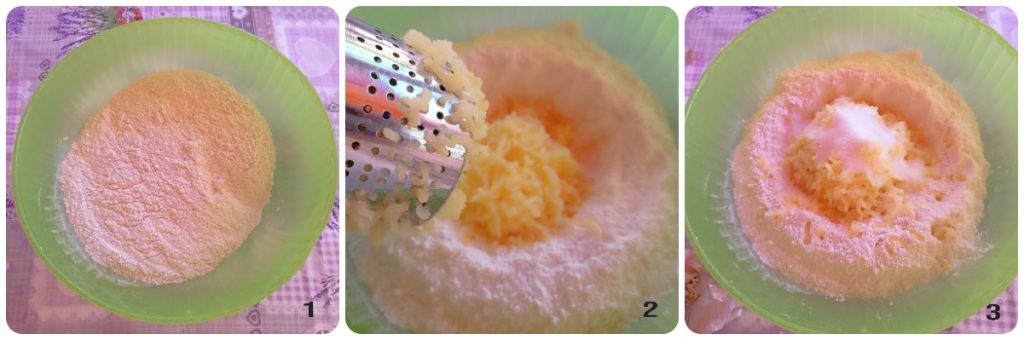
Add the whole eggs, the salt, the butter softened to a cream, the packet of vanillin, and the grated lemon zest [4]. Start mixing the ingredients [5] then dissolve the yeast in the milk placed in a glass [6].
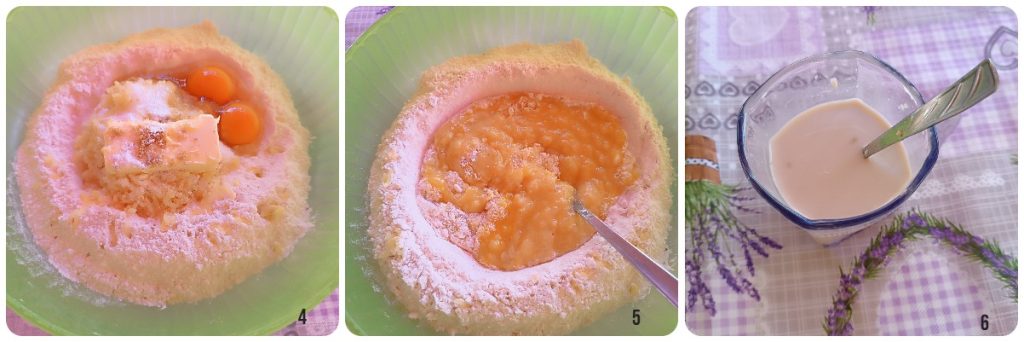
At this point, pour the yeast into the mixture [7] and knead with a fork starting to incorporate the flour [8]. When the mixture has reached a certain consistency, start working the dough with your hands [9].
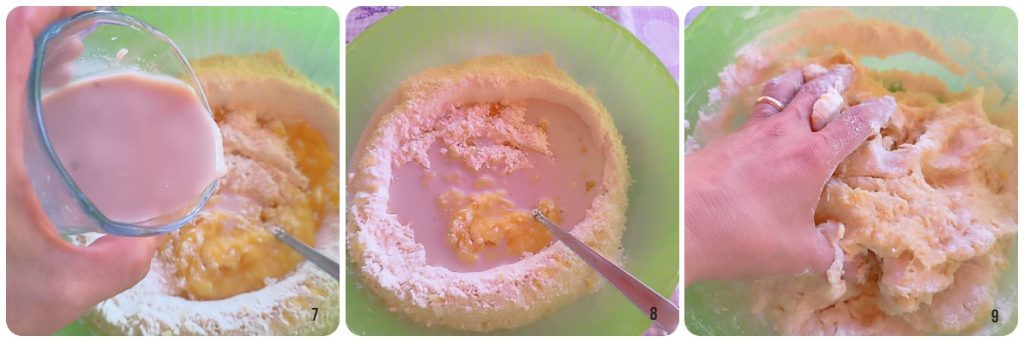
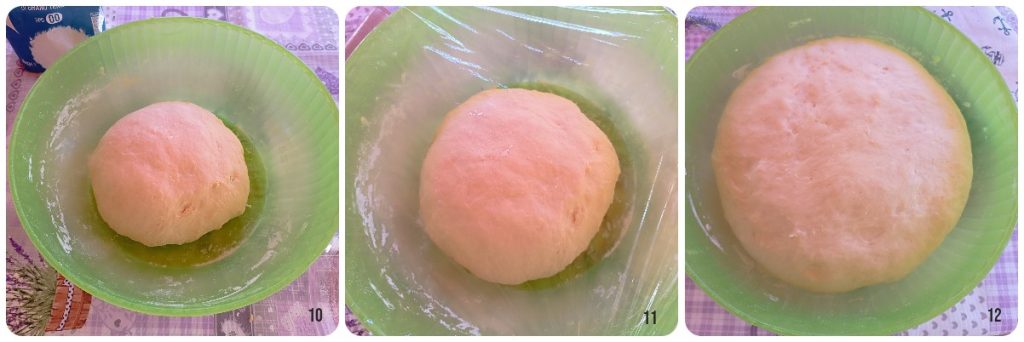
Continue kneading for about 4 minutes or until the dough is smooth, then form a ball [10], cover with plastic wrap [11] and let rise for about two hours or until doubled [12].
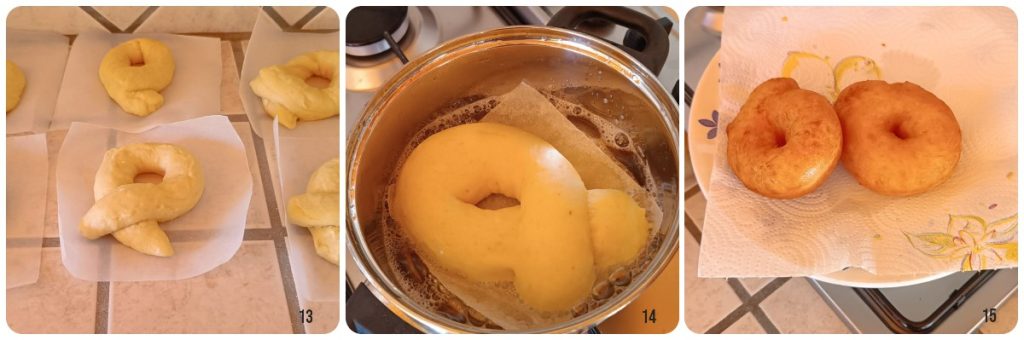
Once risen, turn the dough out onto a lightly floured work surface, knead it again forming a ball from which to take a portion of dough and work it into a log about 8 inches long and overlap one end over the other. As you make your graffe, place them on squares of parchment paper that you have prepared beforehand.
Continue in this way until the dough is used up [13]. Let rise again in a dry place away from drafts covered with a cloth until doubled in volume.
Then proceed with the cooking of your graffe!Heat the seed oil in a pot with high sides. When it has reached the right temperature (340°F), insert one or two graffe at a time with all the paper to prevent them from deflating [14]. Remove the paper with a kitchen tongs, preferably made of steel, and brown them on both sides (it will take about 2 minutes in total). Drain and place the donuts on a plate with kitchen paper to remove excess oil [16].
Finally, while still hot, roll them in granulated sugar, turning them on each side, so they are completely covered [16 and 17]. If the sugar becomes granular and does not adhere to the graffa anymore, replace it with fresh sugar.
Immediately place the graffe in another serving container [18] and … Enjoy.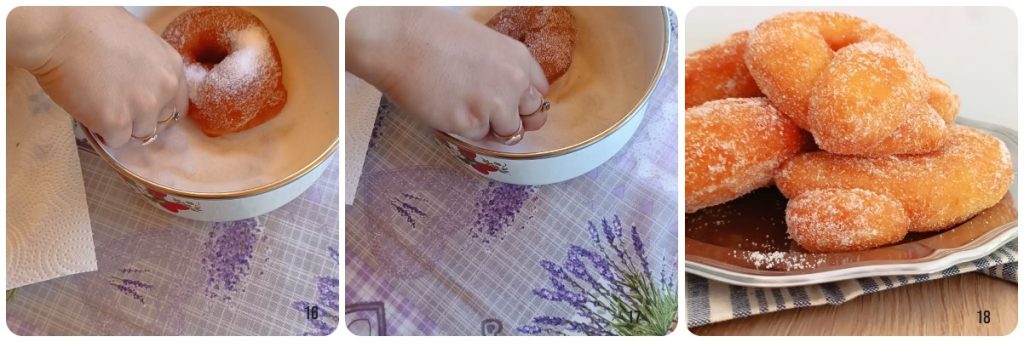
Storage
You can store graffe only until the evening to enjoy them at their best. My advice is to freeze them if there are any left, but I doubt it. I’m sure they will be gone in no time. Anyway, you can keep them in the freezer for about a month, closed in a food bag or container. When you want to consume them, let them thaw at room temperature and heat them for a short time in the microwave.
