
Minestrone, for me, tastes like home, of changing seasons, and simple cooking with whatever is at hand. When I cook it, I love the smell of the onion softening and the vegetables releasing all their flavor: it’s a soul-warming comfort food, perfect in winter but also great warm or cold when days get warmer.
Every minestrone is different because it changes with whatever you find in the fridge. I often prepare it in three different ways, depending on time and mood: in a traditional pot, in a pressure cooker, or with an Instant Pot. In all cases, the result is the same: a light, nutritious, and flavorful dish.
Why this minestrone is special
– Flexible and seasonal: you can use fresh or frozen vegetables.
– Three cooking methods: traditional, pressure cooker, Instant Pot.
– Stress-free comfort food: simple, quick, and always successful.

- Difficulty: Very easy
- Cost: Very economical
- Preparation time: 10 Minutes
- Portions: 4 People
- Cooking methods: Stove, Pressure cooker, Instant Pot
- Cuisine: Italian
- Seasonality: All seasons
Ingredients
Note: quantities are indicative. Minestrone is a dish that builds up little by little, following the season and the fridge.
You can easily use frozen vegetables, as I often do: absolute convenience and zero waste.
- 1/2 onion
- 1 tomato
- 4 tablespoons extra virgin olive oil
- to taste salt
- 3.5 oz green beans
- 3.5 oz beans (fresh, already cooked dried, or frozen)
- 3.5 oz zucchini
- 1 potato
- a few basil leaves
- to taste water
- pasta or rice (optional)
Tools
- 1 Pressure cooker
- 1 Knife
- 1 Ladle
Steps
Put about 4 tablespoons of oil in the pressure cooker.
Add the chopped onion and let it soften.
Add the chopped tomato, all the other vegetables, and the basil.
Cover with water:
slightly above the level of the vegetables if you need to add pasta or rice
slightly below the level of the vegetables if you want it without
Close the lid.
When the valve starts to whistle, lower the heat and move to the smallest burner.
Cook for about 20 minutes, then turn off.
Let the steam completely escape before opening.
Adjust the salt.
If needed, add pasta or rice and cook directly in the open pot.Put about 4 tablespoons of oil in the pot.
Let the chopped onion soften.
Add the tomato, all the vegetables, and the basil.
Cover with water:
slightly above the level of the vegetables if you need to add pasta or rice
slightly below the level of the vegetables if you want it without
Bring to a boil, then lower the heat.
Cover and cook for 50-60 minutes, stirring occasionally.
Adjust the salt.
If you want, add pasta or rice in the last minutes and cook normally.Minestrone can also be made with the Instant Pot, following the same initial steps as the traditional version.
Set the Sauté function and pour in the oil.
Add the chopped onion and let it soften gently.
Add the chopped tomato and let it flavor.
Add all the vegetables (fresh or frozen) and the basil.
Pour in the water:
slightly above the level of the vegetables if you plan to add pasta or rice
slightly below the level if you prepare it without grains.
Close the lid, valve on Sealing and cook with Pressure Cook (High Pressure) for 15 minutes.
At the end of cooking, let it naturally release for about 10 minutes, then release the remaining steam, open and adjust the salt.
If you wish to add pasta or rice, activate the Sauté function again and cook in the open pot for the necessary time.Minestrone is great as it is, but I love it with:
– bread croutons
– a drizzle of raw oil
– a sprinkle of parmesan (if you don’t want it vegan)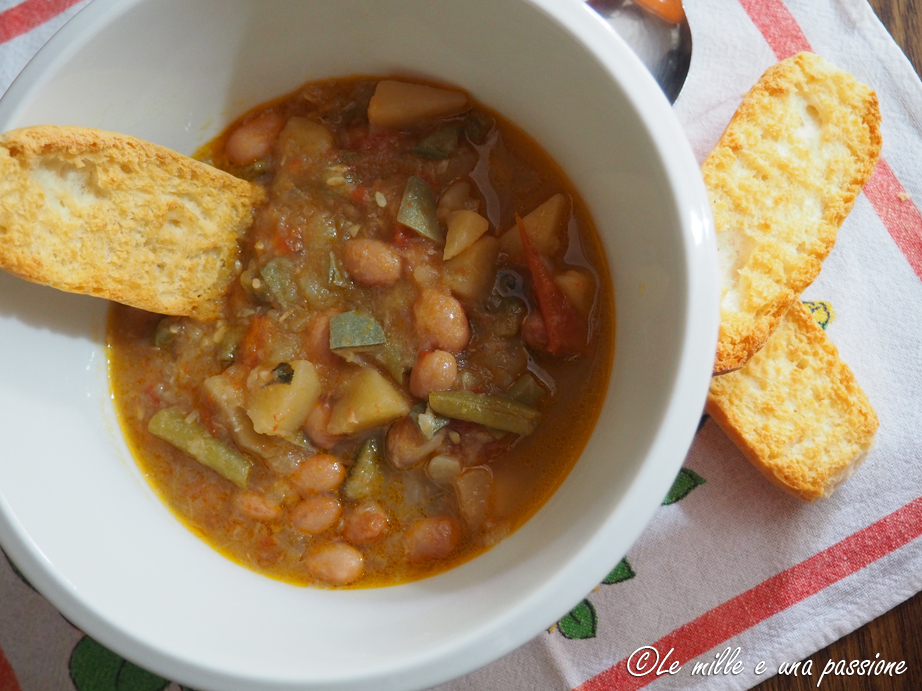
Notes
Vegetables vary depending on the season or what you have at home.
If it dries out too much, add hot water.
It tastes even better the next day.
You can blend part of it for a creamier texture.
With dried legumes: soak them first and slightly lengthen the times.
Storage
In the fridge: up to 3 days, in a closed container
In the freezer: up to 2 months, better without pasta or rice
Variations
With dried legumes: soak them first and slightly lengthen the times
Creamier: blend part of it and put it back in the pot
What Could Go Wrong (and How to Avoid It)
Too much water: the minestrone becomes watery
Adjust with the level of water: slightly above the vegetables if adding pasta, slightly below if not.
Vegetables too mushy:
Do not overcook, especially in the pressure cooker.
Flat taste:
Do not skip the initial softening of the onion and add a drizzle of raw oil at the end.
Overcooked pasta:
Add it only at the end of cooking and check often.
FAQ – Vegetable Minestrone
Can I use only frozen vegetables?
Yes, absolutely. Minestrone turns out great even with frozen vegetables, especially if they are of good quality. It’s a practical and waste-free solution that I often use myself.
The minestrone is one of those simple dishes that never gets old. It is economical, versatile, and adapts to any season and diet. With a few ingredients and zero stress, you bring something genuine to the table that truly feels like home.
I often prepare it in bulk and keep it ready for days when I don’t feel like cooking… and every time I thank myself.
