
Polenta is a dish rich in tradition, a symbol of Italian cuisine, especially in northern regions. Although the traditional method requires long cooking and constant stirring, there’s a much simpler way to prepare it, without sacrificing authentic taste.
Discover how to make no-stir polenta using a brilliant trick I learned: the dishcloth! This technique not only reduces your physical effort but ensures even cooking without the polenta sticking, preserving all the goodness of polenta made with traditional bramata cornmeal. It’s also perfect for those with mobility difficulties.
Once you’ve tried this basic polenta, you can get creative! Here are a couple of ideas to get you started:
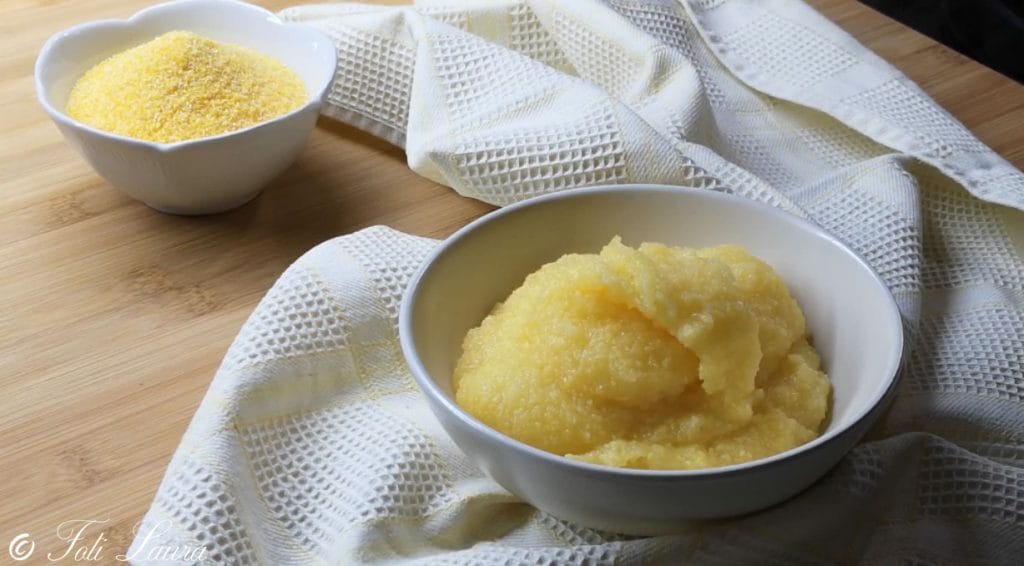
- Difficulty: Easy
- Cost: Very cheap
- Preparation time: 1 Hour
- Portions: 2 People
- Cooking methods: Stovetop
- Cuisine: Italian
- Seasonality: All seasons
Ingredients
- 8.8 oz bramata cornmeal
- 1 liter Water
- to taste Salt
Tools
- 1 Pot heavy-bottomed steel
- 1 Whisk
- 1 Dishcloth
Steps
The secret of this method is that the only time you need to stir is at the beginning, for a couple of minutes, to prevent lumps from forming. Then, the pot and the dishcloth do the rest!
Use a pot with a thick bottom. Bring 1 liter of water to a boil over the largest burner.
While the water heats up, take the dishcloth, wet it with cold water and wring it out well. Set it aside; it should be damp, not dripping.When the water boils, add the salt.
Reduce the heat to low or medium-low. Slowly sprinkle in the cornmeal, a little at a time, stirring vigorously with the whisk.
Stir during this phase for a couple of minutes, until the mixture is smooth and the lumps are gone. The mixture will thicken immediately.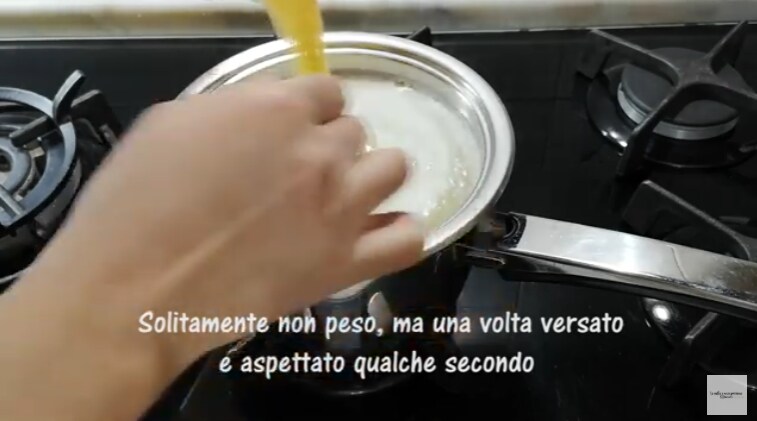
As soon as the mixture has thickened and regained a slight boil, place the damp dishcloth over the polenta.
Immediately cover the pot with the lid, sealing in the heat and moisture. Ensure the edges of the dishcloth do not touch the flame.
Reduce the heat to the absolute minimum. If necessary, move the pot to a smaller burner.
Let it cook for exactly 45 minutes. Do not open the lid and do not stir during the entire cooking time! The dishcloth will prevent the polenta from drying out and sticking.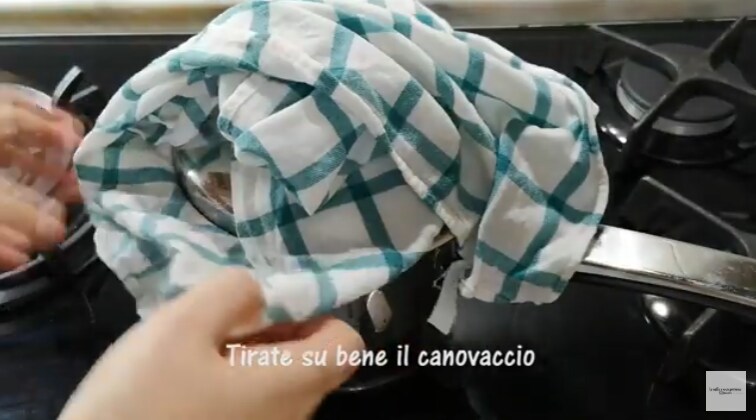
After 45 minutes, the polenta is ready. Remove the lid and the dishcloth. Stir briefly to even out the mixture.
If the polenta is too thick for your taste, add a ladle of hot water, stir, and serve immediately.Once ready, the polenta is ready to be used in numerous preparations, such as polenta flans, polenta with broccoli, or polenta with savoy cabbage and chickpeas.
Practical Tips, Variations, and Cleaning
The flour absorbs water differently. If you want a firmer polenta, slightly increase the flour; for a softer one, add hot water at the end.
You can add herbs (such as rosemary or sage) or a drizzle of olive oil to the water before pouring in the flour for a richer flavor.
If, despite everything, a slight film sticks, fill the pot with water and bring it almost to a boil. Turn off the heat and let soak for about half an hour. The film will soften, and you can easily remove it with a scouring pad.
Leftover polenta keeps in the fridge for 2-3 days. It’s fantastic grilled or fried the next day!
No-Stir Polenta FAQs
Is it really possible to make polenta without stirring?
Yes, with the dishcloth method you avoid constantly stirring for 45 minutes. The dishcloth keeps moisture and heat evenly distributed, ensuring perfect cooking and no burning on the bottom (as long as the heat is very low).
Can I use any type of cornmeal?
This method is optimal for traditional long-cooking cornmeal (like bramata, which takes about 40 minutes). It doesn’t work with pre-cooked (instant) flour because it requires a different process and much shorter cooking times.
How do I adjust the consistency of the polenta?
Firmer: Slightly increase the amount of cornmeal.
Softer: Add a bit more hot water towards the end of cooking.Why is the dishcloth necessary?
The dishcloth is the secret. It serves to retain steam and moisture in the pot, creating a sort of “mini-steam” that envelops the polenta. This prevents the polenta from drying out on the surface and ensures that heat is evenly distributed, avoiding sticking or burning.
Can I cook no-stir polenta on induction stoves?
Yes, absolutely! Induction is perfect for this method because it maintains a very constant heat. Just make sure to set the heat to the lowest level available to prevent the polenta from sticking or burning on the bottom.
The no-stir polenta is proof that tradition and practicality can go hand in hand. Try it and see how easy it is to prepare without effort! If you enjoyed this recipe, check out other quick and tasty ideas on the blog.
Share in the comments how your polenta turned out – I’m curious!
