
Hello everyone, lovers of exotic cuisine and delicate flavors! How many times have you dreamed of preparing Basmati rice that is light, fragrant and with perfectly separated grains, just like at your favorite ethnic restaurant? Perhaps you’ve ended up with a gluey mess or overcooked, sticky rice… a real nightmare!
Today I will reveal my foolproof method for cooking Basmati rice to perfection. No complicated tools or Michelin-star techniques are needed, just a few small tips that will make the difference.
Forget overcooked, sticky rice: with my advice you’ll get long, white, wonderfully fragrant and perfectly separate grains, ready to accompany any dish, from exotic sauces to the creamiest curries. Are you ready to become true rice masters? Let’s get started!
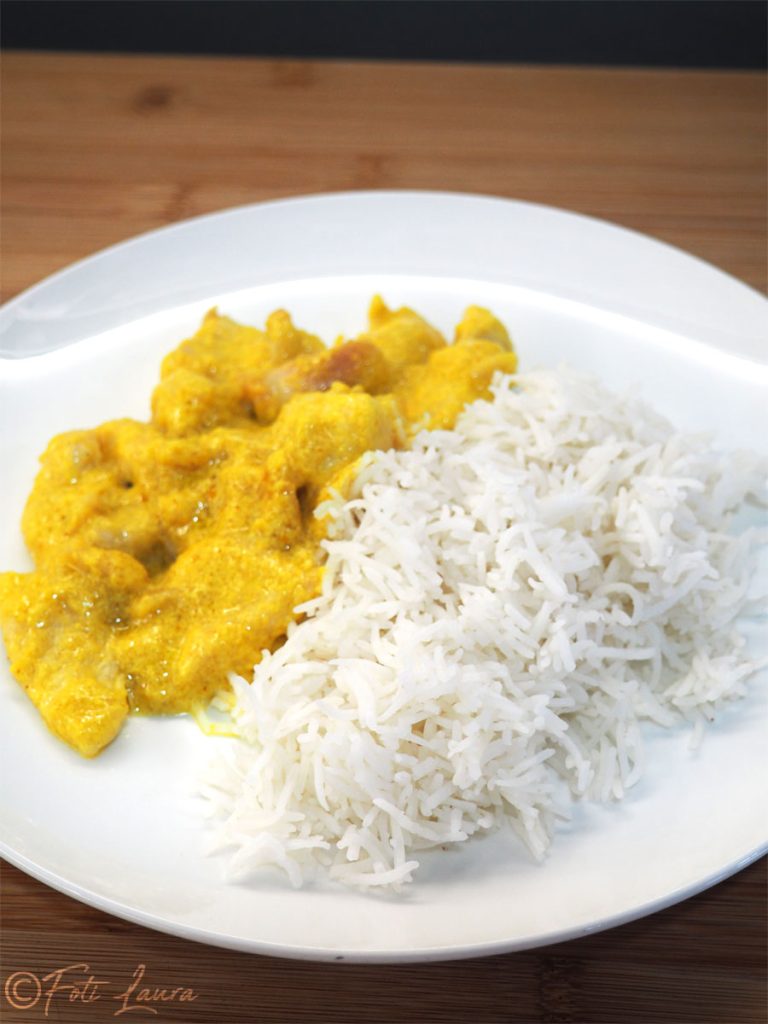
- Difficulty: Very easy
- Cost: Very inexpensive
- Rest time: 7 Minutes
- Preparation time: 5 Minutes
- Cooking time: 13 Minutes
- Portions: 2
- Cooking methods: Stovetop
- Cuisine: Asian
- Seasonality: All seasons
- Energy 112.00 (Kcal)
- Carbohydrates 20.00 (g) of which sugars 0.00 (g)
- Proteins 2.08 (g)
- Fat 1.25 (g) of which saturated 0.00 (g)of which unsaturated 0.00 (g)
- Fibers 0.40 (g)
- Sodium 50.00 (mg)
Indicative values for a portion of 200 g processed in an automated way starting from the nutritional information available on the CREA* and FoodData Central** databases. It is not food and / or nutritional advice.
* CREATES Food and Nutrition Research Center: https://www.crea.gov.it/alimenti-e-nutrizione https://www.alimentinutrizione.it ** U.S. Department of Agriculture, Agricultural Research Service. FoodData Central, 2019. https://fdc.nal.usda.gov
Ingredients
- 1 cup Basmati rice (about 200 g / 7 oz)
- 1 1/4 cups cold water (about 300 ml)
Tools
- 1 Pot heavy-bottomed
- 1 Fine mesh strainer
- 1 Fork
- 1 Kitchen towel clean, if the lid is not tight-fitting
Step-by-Step Procedure
Rinse, rinse, rinse! Take the amount of Basmati rice you want (your two handfuls per person) and put it in a large bowl, in the pot or directly in a strainer. Rinse it under cold running water at least 4-5 times. Stir the rice with your hands while rinsing.
Why? This is the first and most important secret! Washing the rice removes excess starch, the thing that makes it sticky. Keep rinsing until the water running off is almost clear. This ensures light, perfectly separate grains.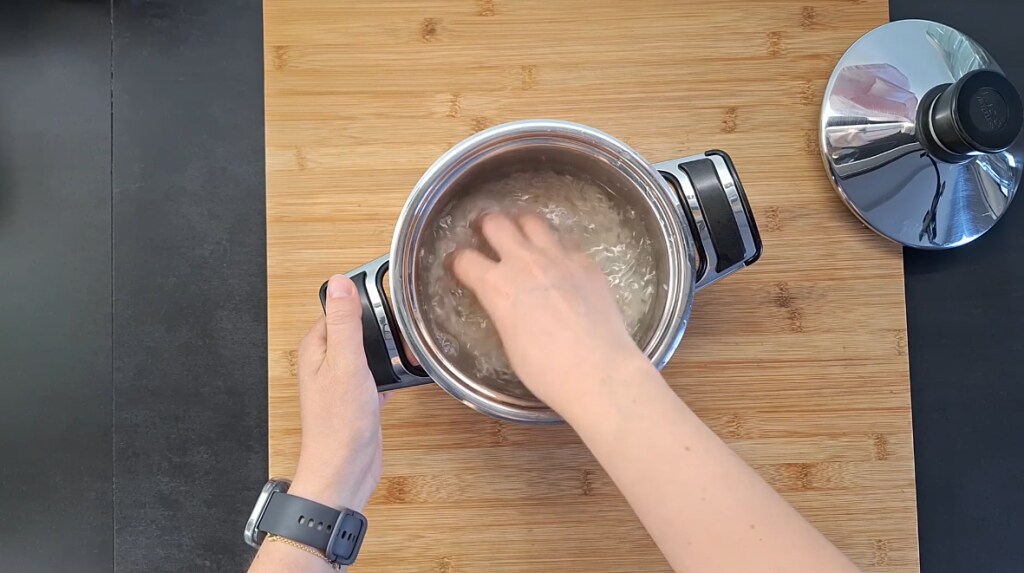
Put the rice in the pot: Transfer the well-washed and drained rice into the heavy-bottomed pot.
Measure the water by the ‘finger’ method: Add cold water to the pot until it covers the rice by about a finger’s width (about 3/4 inch).
Tip: This intuitive method is super effective for Basmati! It relies on the ratio between rice and water that forms depending on the surface of the pot. If you prefer precision, the ratio is about 1 part rice to 1.5 parts water (e.g. 1 cup rice and 1 1/4 cups water), but the ‘finger’ method is almost magical!
Salt (if you like): If you like, add a pinch of salt at this stage.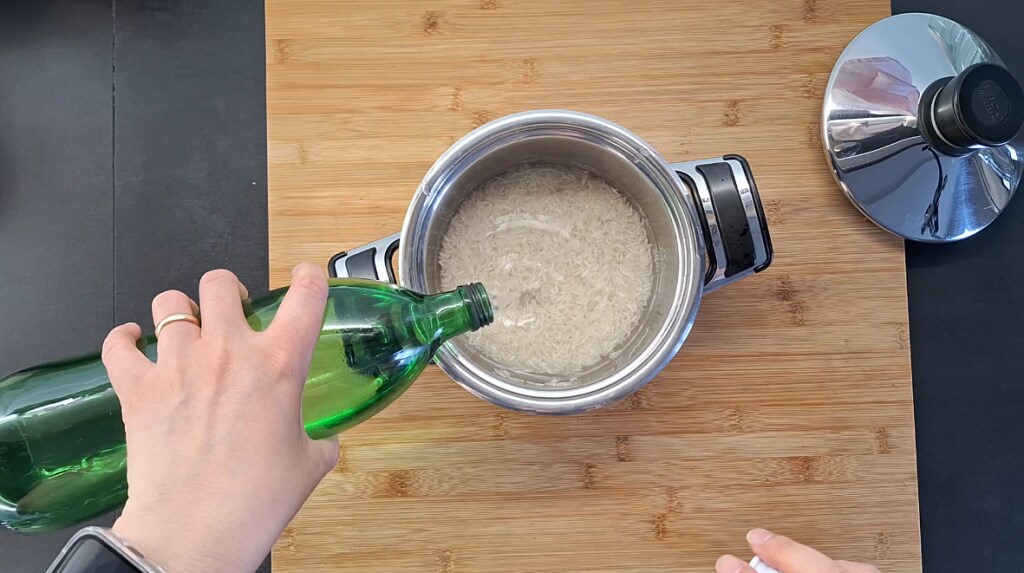
Start without the lid: Turn the heat to medium. Leave the pot uncovered and wait for the first small bubbles to form on the water surface. You don’t need a vigorous boil right away.
Why start uncovered? This allows gradual heating and helps the rice cook evenly before the steaming phase.
Cover and raise the heat: As soon as you see the first bubbles, this is the key moment! Cover the pot with a tight-fitting lid. If your lid isn’t perfect, use a clean kitchen towel between the pot rim and the lid, tucking it well around the knobs to prevent it from hanging and catching fire (you can use a kitchen elastic to secure it).Let it boil: Raise the heat slightly for about 2-3 minutes, long enough for the rice to be actively boiling under the lid.
Lowest heat and don’t touch: As soon as you feel it boiling, turn the heat down to the lowest, lowest setting! It should be almost off. And here’s another secret: never lift the lid for the next 10 minutes. Why? The steam that builds inside is essential to cook the rice evenly and perfectly. Each time you lift the lid, the steam escapes and the cooking is compromised.
Cook for 10 minutes: Let the rice cook at very low heat with the lid tightly closed for exactly 10 minutes.Turn off and rest: After the 10 minutes, turn the stove off completely. But be careful: leave the rice to rest, still covered, for another 7 minutes.
Why? This resting phase is fundamental! The internal steam continues to do its work, finishing the cooking of the grains and making them soft, fluffy and fragrant. Don’t skip this step!Open and fluff: After the 7-minute rest, you can finally open the lid. You’ll see swollen, seemingly compact grains. Take a fork and gently fluff the rice, lifting the grains from the bottom upwards. You’ll be amazed how easily they separate!
Serve immediately: Your Basmati rice is ready to serve! Pair it with your chicken curry or your favorite sauces, vegetables or curries.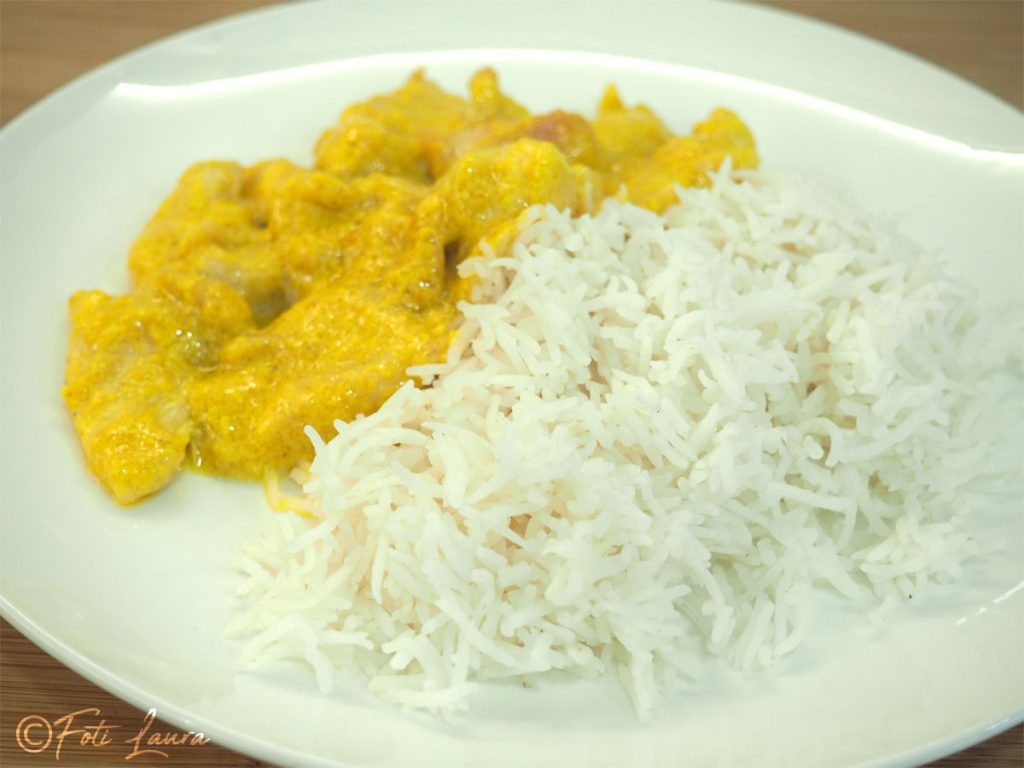
Tips and Notes
Heavy-bottomed pot: It’s truly an investment that pays off. It prevents the rice from sticking or burning on the bottom and distributes heat evenly.
If a little sticks: Don’t worry if a minimal part sticks to the bottom! Once the rice is removed, just soak the pot in plain water for a few minutes and everything will come off easily.
Storage: Cooked Basmati rice keeps in the refrigerator in an airtight container for 2-3 days. Keep in mind it will lose some of its fragrance and softness.
FAQ – Basmati Rice
Can I use another type of rice with this method?
This method is specific to Basmati rice, which is an aromatic long-grain rice that releases little starch. For other types of rice (e.g., Carnaroli for risottos, Arborio, or common short-grain rice) the cooking method changes.
Is it mandatory to wash the rice?
Yes, for Basmati it is strongly recommended to wash it. It’s the key step to obtain separate, non-sticky grains by removing excess starch.
What happens if I lift the lid during cooking?
Basmati rice cooks mainly by steam. If you lift the lid, the steam escapes, the internal temperature drops sharply and cooking may not finish evenly, leaving grains hard or altering the texture.
My rice stuck a lot to the bottom, why?
It could be due to too high a flame during the very low-heat cooking phase, or using a pot with a too-thin bottom. Make sure the heat is truly very low and that your pot has a thick bottom.
And there you have it! With this guide, you are officially a master in preparing perfect Basmati rice. You’ve seen how, with a few small tricks and a bit of patience, you can achieve impeccable results every time!
This light and fragrant rice is a versatile side that pairs wonderfully with a thousand dishes, from the simplest to the most elaborate. Now all that’s left is to try it and enjoy the exotic aroma that will fill your kitchen.
What’s your favorite pairing with Basmati rice? Let me know in the comments! And don’t forget to share this recipe with anyone dreaming of restaurant-quality Basmati!
