
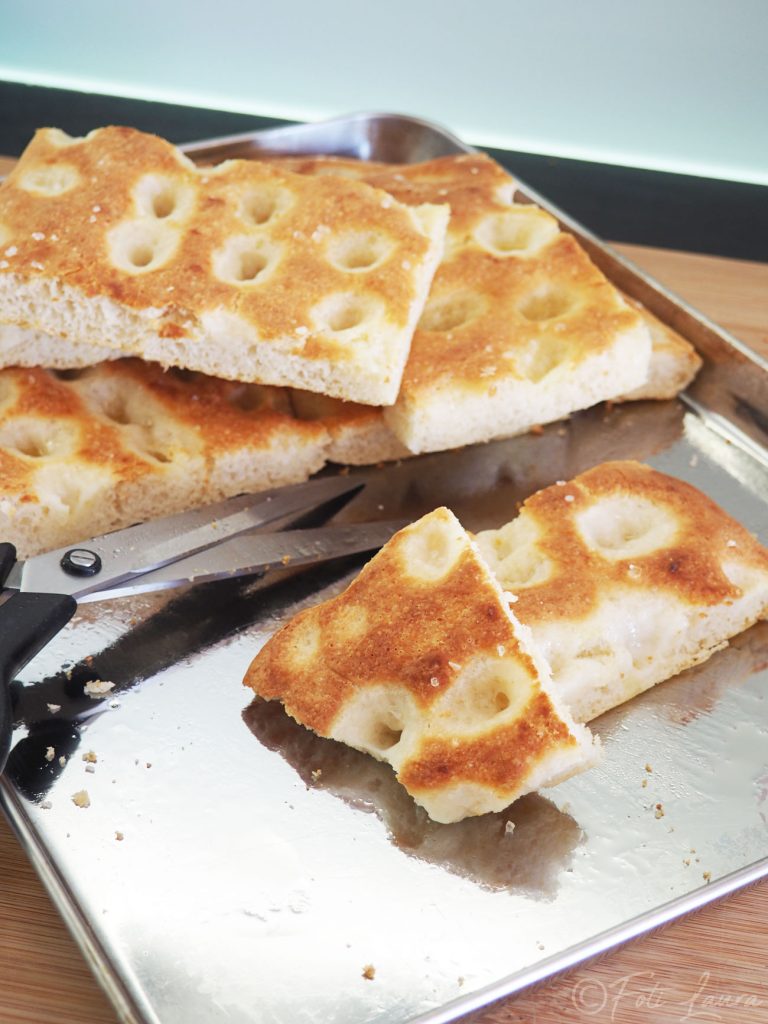
This focaccia turned out really amazing! Soft, tall, tender and with a golden crust, it looks like it came from the bakery, but made comfortably at home. If you’re looking for a real focaccia and not flatbread, this is the method you need to follow.
I tried it with the Monsieur Cuisine Smart, but nothing prevents you from kneading it with a mixer or by hand: the result will always be soft and fragrant. By following my tricks on rising and double baking, you will be able to obtain a perfect pan focaccia every time, with a golden base and soft alveolation.
Forget about “no-knead” recipes that compromise softness: here you knead, but the result is worth every minute of waiting.
- Difficulty: Easy
- Cost: Very cheap
- Rest time: 4 Hours 30 Minutes
- Preparation time: 20 Minutes
- Portions: 8Pieces
- Cooking methods: Electric oven
- Cuisine: Italian
- Seasonality: All seasons
Ingredients
- 250 g Type 0 flour (Caputo Aria (with mother dough))
- 250 g Type 0 flour
- 1 cup g water
- 2 tbsp g extra virgin olive oil
- 1 tsp honey
- 0.3 oz g fresh brewer's yeast
- 0.4 oz g fine salt
- water
- 3 tbsp g extra virgin olive oil
- 0.2 oz g fine salt
- to taste coarse salt (for the surface)
Tools
- 1 Bowl
- 1 Baking pan 12×16
- 1 Kitchen robot
- 1 Plastic wrap
Steps
You can prepare this dough with the Monsieur Cuisine Smart, with the mixer or by hand. Below I leave you all three procedures so you can knead as you see fit.
1. Dough with MONSIEUR CUISINE
Pour into the bowl water, yeast, and honey.
Set Custom Mode 98.6°F – 2 min – speed 2 – this helps activate the yeast.
Add the flours and start Kneading Mode – 2 minutes
Let the dough rest for 3–4 minutes (this helps hydration).
Knead again using Kneading Mode – 2 minutes and after a few seconds, pour the oil through the hole, then add the salt, still with the machine running.
Knead until you get a smooth and soft dough.
Transfer the dough to a greased bowl, cover with plastic wrap or lid, and let rise for 2 hours or until it doubles.
2. Dough with MIXER
Put in the bowl water, yeast, and honey. Mix for 30 seconds.
Add the flours and start kneading with the K-beater or hook at low speed.
After 2–3 minutes, slightly increase the speed.
When the dough takes shape, pour in the oil gradually.
When absorbed, add the salt.
Continue until the dough becomes homogeneous, soft, and elastic.
Transfer to a greased bowl, cover with plastic wrap or lid, and let rise for 2 hours.
3. Hand Kneading
In a bowl, dissolve yeast and honey in the water.
Next, combine the flour. Mix together until you get a rough dough.
Add the oil a little at a time. The dough will initially slip: it’s normal.
Finally, incorporate the salt.
Work for 8–10 minutes, folding towards the center.
Place in a greased bowl covered with plastic wrap or lid and let rise for 2 hours.INFORMATION ABOUT RISING METHODS
If the environment is warm (71.6–78.8°F), it takes about 2 hours for the dough to double.
If the environment is cool (64.4–68°F), the rising may take 2.5–3 hours.
If the environment is cold (<64.4°F), or cool, you can speed it up by placing the bowl in the oven after preheating the oven to a temperature of 82.4°F until doubled, or you can use the Instant Pot for controlled temperature rising in a bowl.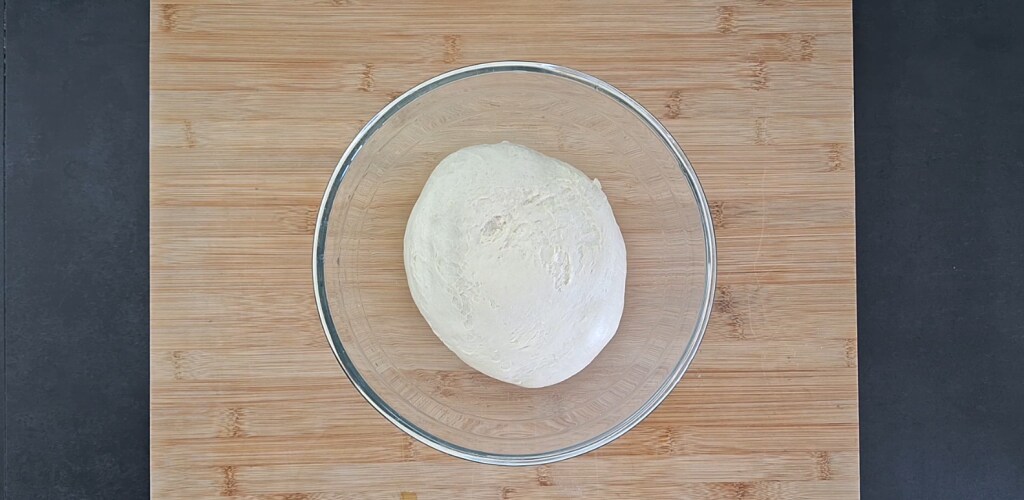
Grease the baking pan well (or use greased parchment paper, if you prefer).
Pour the dough into the pan and let it relax for 15 minutes with plastic wrap on top to prevent drying, then spread it with oiled hands, without forcing. If it retracts, wait 10 minutes and try again.
Once spread across the entire pan, cover with plastic wrap and let rise for 40–60 minutes.INFORMATION ABOUT RISING METHODS
If the environment is warm (71.6–78.8°F), about 60 minutes is enough.
If the environment is cool (64.4–68°F), the rising may take 90 minutes, or until the dough is tall and fluffy.
If the environment is cold (<64.4°F), or cool, you can speed it up by placing the pan in the oven covered with plastic wrap after preheating the oven to a temperature of 82.4°F until doubled.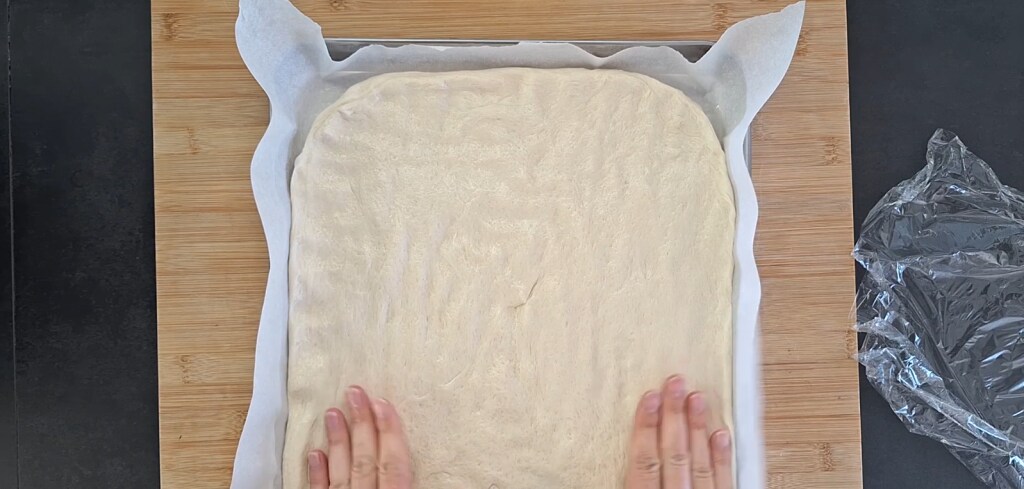
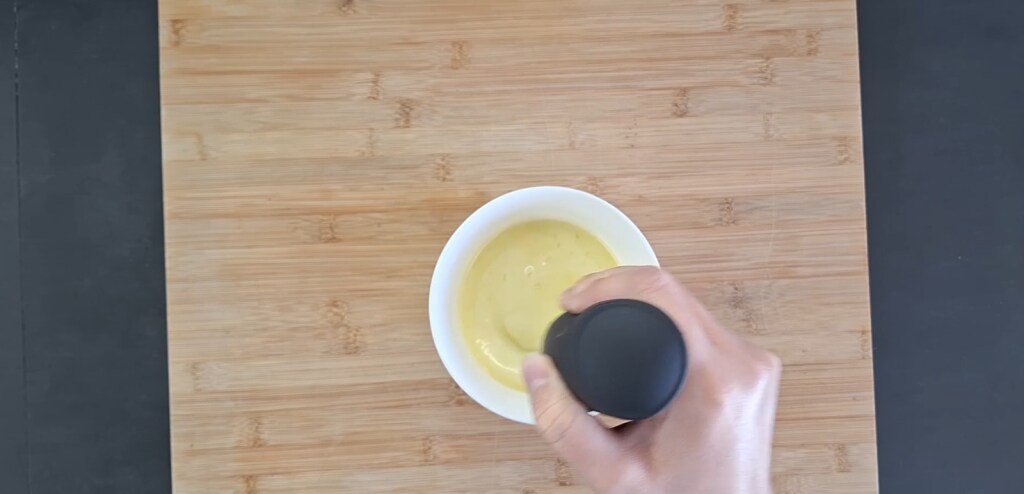
In a bowl, mix water, oil, and fine salt until everything is dissolved. To facilitate the process, you can use the milk frother whisk.
Sprinkle a light layer of Type 0 flour on the dough, then proceed with the classic holes using well-oiled fingers.
Pour the brine over, covering all the holes, and let it rise for another 15 minutes.
Add a little coarse salt on the surface.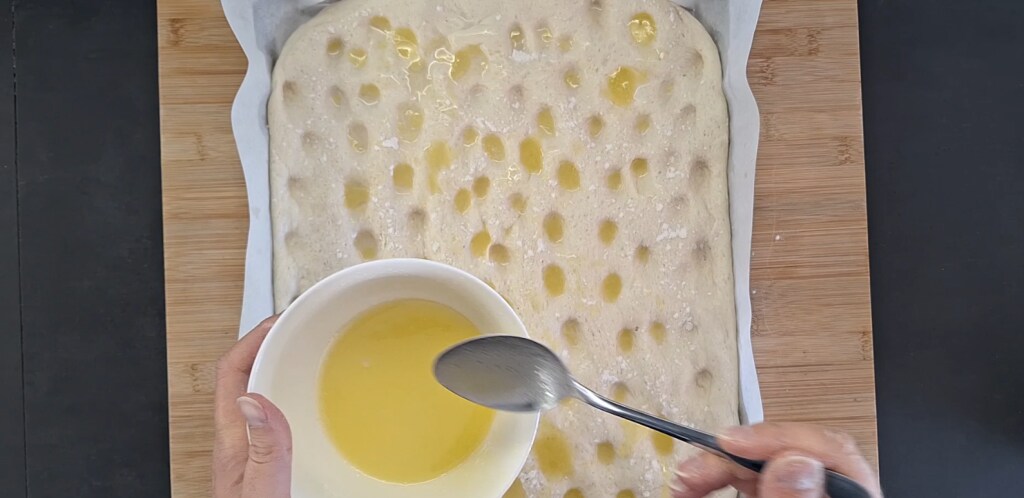
Position the racks: one in the middle and one at the top, and preheat the oven to 446°F in static mode
Once it has reached temperature, bake on the lowest part for 12 minutes, right at the bottom of the oven.
(After 12 minutes, if you used parchment paper, you can remove it by sliding it out and let it bake a few more minutes on the lower part of the oven until it colors).
Then move the pan to the center and bake for 10 minutes.
To color the focaccia more, move the pan to the upper part of the oven and activate the grill function for 2 minutes.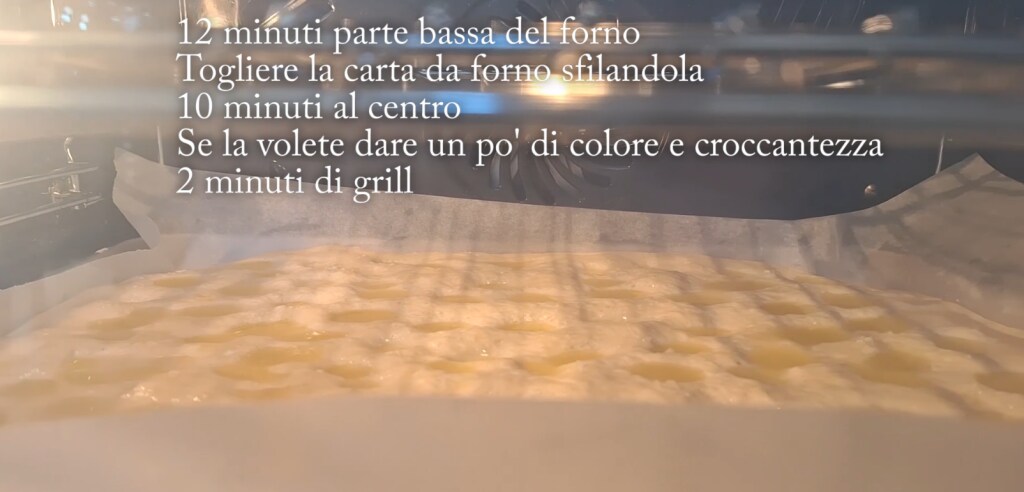
Remove from the oven and wait patiently for it to cool down a bit! This focaccia, made with slow rising and my double baking tricks, will give you a softness and flavor that quick recipes can’t match. This is your new foolproof recipe.
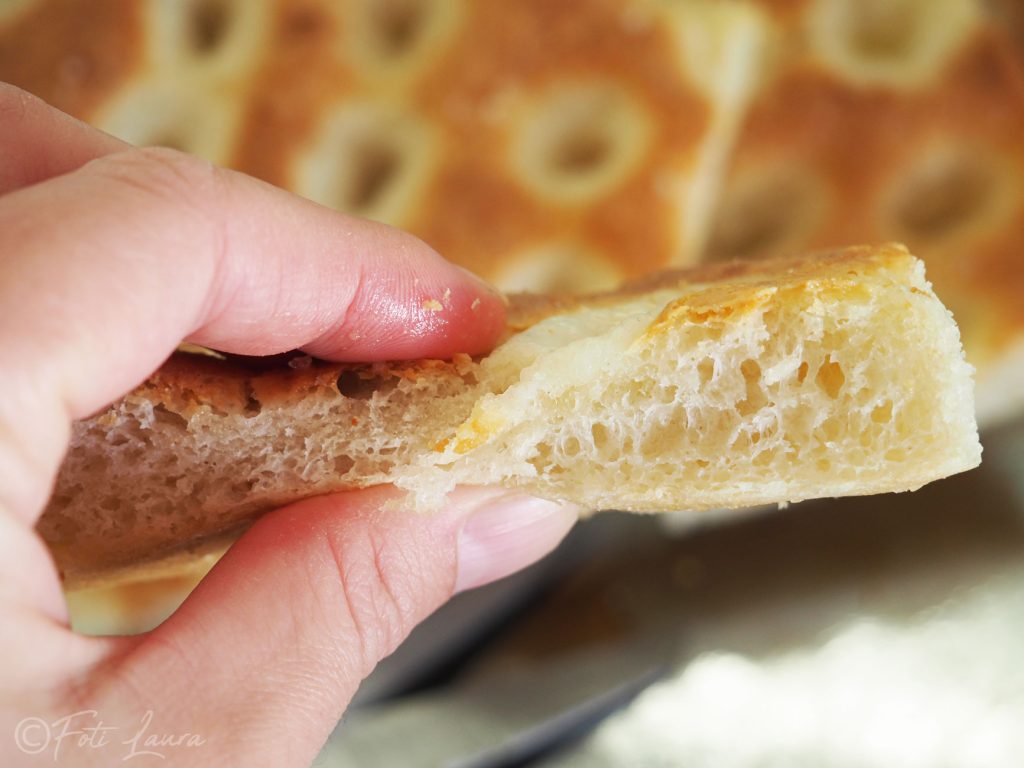
Why the focaccia sometimes isn’t tall and soft
Even following the recipe to the letter, the focaccia may not turn out as you imagine. Here are the most common problems and some tricks to avoid them:
Dough too dry: if the dough seems hard or doesn’t stretch well, it probably lacks a bit of water. A soft and slightly sticky dough is the secret to a fluffy focaccia. Knead well and give the water time to be completely absorbed.
Pan too large: if you put it in an oversized pan, the focaccia will “spread” too much and remain low. Better to use the right pan or slightly increase the dough: this way it stays nice and tall and soft.
Rising too short: don’t rush! Rising well makes the difference. If the dough doesn’t double in volume, wait a bit longer. Patience here is rewarded with large air pockets and a soft texture.
Oven not hot enough: to make the focaccia puff up well and brown the surface, a nice hot oven is needed. Do not skip preheating: the difference is noticeable at the first bite.
Insufficient salt or oil on the surface: the surface seasoning is not just for flavor, but for crunchiness too. Spread oil and coarse salt well: they will give that extra touch to the golden and fragrant crust.
Tips, notes, and variations
For a taller focaccia, increase the dough by 20% or slightly reduce the pan size.
If you want to plan the focaccia for the next day, you can do a long rise in the refrigerator after the first phase: 8–12 hours (so make it before going to bed). The next day, let it acclimate at room temperature for 1–2 hours before spreading.
This method allows for an even more digestible focaccia!
You can use sugar instead of honey.
VARIATIONS
Add fresh rosemary, sesame seeds or sunflower seeds on the surface before baking.
For a taller focaccia slightly reduce the pan or increase the dough by 20%.
For a stuffed focaccia, add thin slices of onion or cherry tomatoes before the second rise, along with the brine.
FAQ (Questions and Answers)
Why does my focaccia stick to the bottom of the pan?
Use slightly greased parchment paper or grease the pan well.
Check that the dough isn’t too hydrated.
Make sure the oven is already hot before baking.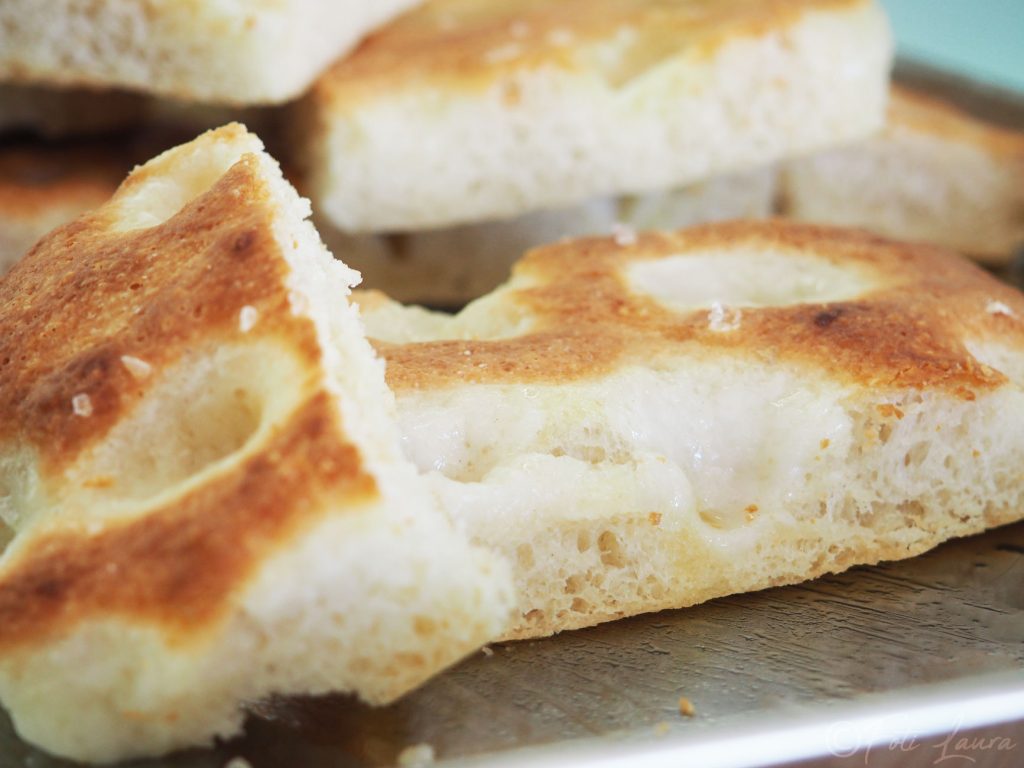
After slow rising and double baking, your tall and soft focaccia is ready to be enjoyed. Do you smell the aroma from the oven? That’s the reward for choosing the authentic method over an easy compromise.
This recipe, with its times and tricks on the dough, will give you an incredible alveolation and perfect softness. It’s not just focaccia; it’s the satisfaction of bringing a piece of true Italian tradition to the table, perfect for any occasion. It’s your new foolproof recipe, guaranteed by those who love to knead.
