Bucatini all’amatriciana original recipe step by step
The Amatriciana sauce (matriciana in Romanesco) is an ancient, delicious condiment, a great classic of Italian regional cuisine.
A simple and quick first course, yet very tasty.
The Amatriciana is also the typical dish of conviviality with friends and family, which always achieves great success.
Like every ancient recipe, everyone has their own version, but the true original Amatriciana recipe with all its simple secrets, includes the following ingredients:
1) strictly aged guanciale (NO pancetta) cut into strips (NO cubes). The difference between guanciale and pancetta is crucial: guanciale is much fattier than pancetta but also more aromatic and flavorful, as it cooks the fat melts, flavoring the amatriciana, and it does not become dry like pancetta;
2) Fresh San Marzano tomatoes, previously blanched, peeled, deseeded, and cut into fillets, but good quality peeled tomatoes also work well (NO tomato sauce or pulp);
3) Aged Pecorino (NO Parmesan);
4) NO onion and garlic (but I add it);
5) Spaghetti (but I prefer bucatini);
6) Chili pepper, a splash of white wine, everything should preferably be prepared in an iron pan (or aluminum).
The Amatriciana is such a good and tasty ancient condiment that it is famous worldwide, also for its simplicity of execution, always achieving great success.
If you love first courses, including the great classic condiments like Ragù, Genovese, Bolognese, etc., you can find them all in the Section of my Blog dedicated to “First Courses“.
If you are looking for other easy and fast recipes (sweet or savory), click on my Special: “Easy and fast recipes“.
If you are looking for top recipes like this, well-tested and guaranteed to be successful, click on the Special: “My TOP recipes“.
You might also be interested in:
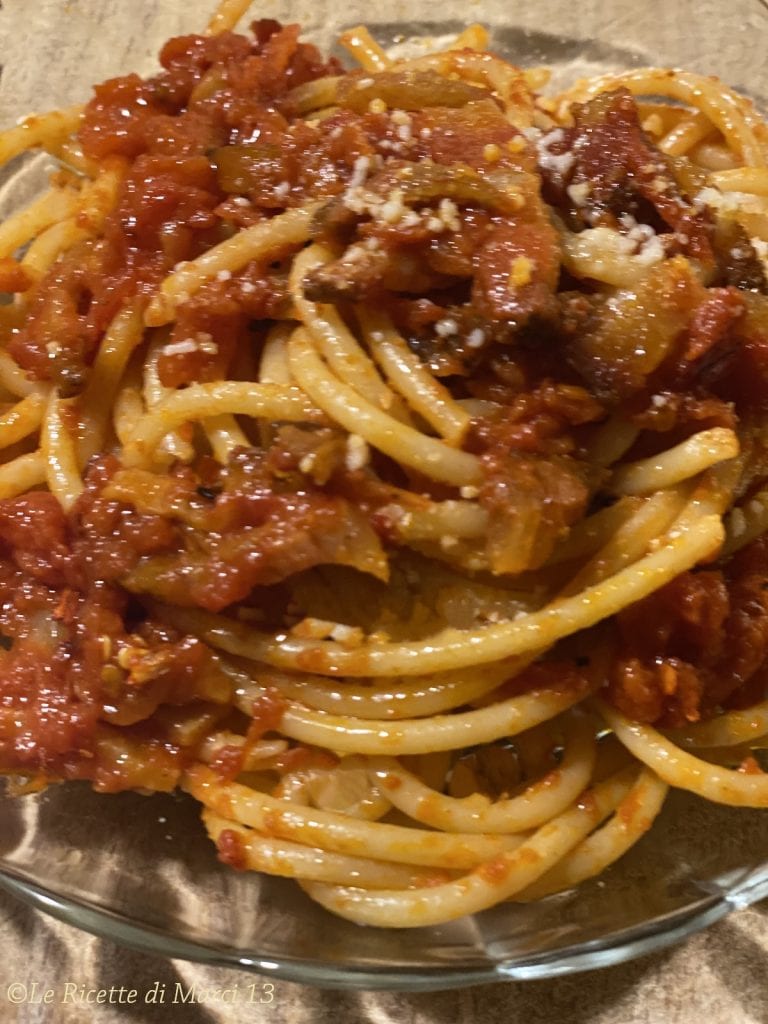
- Difficulty: Very easy
- Cost: Very affordable
- Preparation time: 10 Minutes
- Portions: 5
- Cooking methods: Stovetop
- Cuisine: Italian Regional
- Region: Lazio
- Seasonality: All seasons
Ingredients for Bucatini all’amatriciana original recipe
- 1.1 lbs bucatini (or spaghetti)
- 4.2 oz guanciale
- 2 tsp extra virgin olive oil (optional)
- chili pepper
- Half small glass dry white wine
- 1 garlic clove (optional)
- 14 oz peeled tomatoes (or 6-7 San Marzano tomatoes)
- 3.5 oz Pecorino Romano cheese
- to taste salt
- to taste black pepper (optional)
Tools for Bucatini all’amatriciana original recipe
- Food Scale
- Bowls of various sizes
- Cutting board with two integrated side trays for scraps
- Mezzaluna sharp, with double blade
Steps for Bucatini all’amatriciana original recipe
Remove the rind from the guanciale and cut it into strips, take an iron (or aluminum) pan, pour in 2 tsp of extra virgin olive oil (optional), the garlic (optional) and the chili pepper, let the garlic turn golden and then add the strips of guanciale and cook it over medium-low heat for a few minutes, so it has time to release its fat and become crispy.
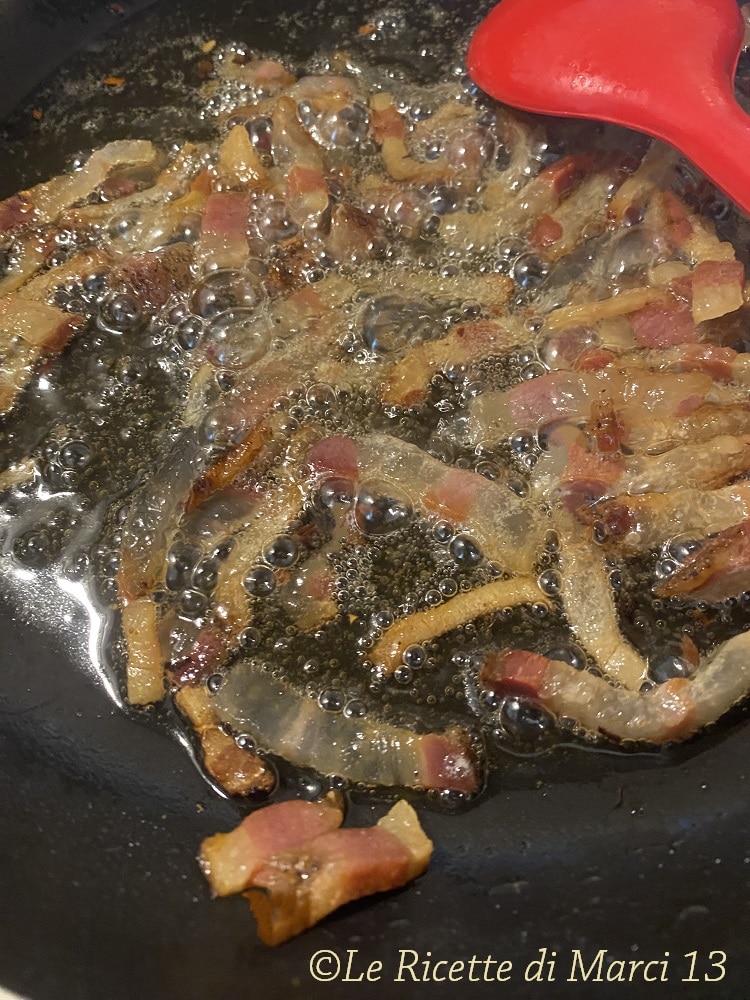
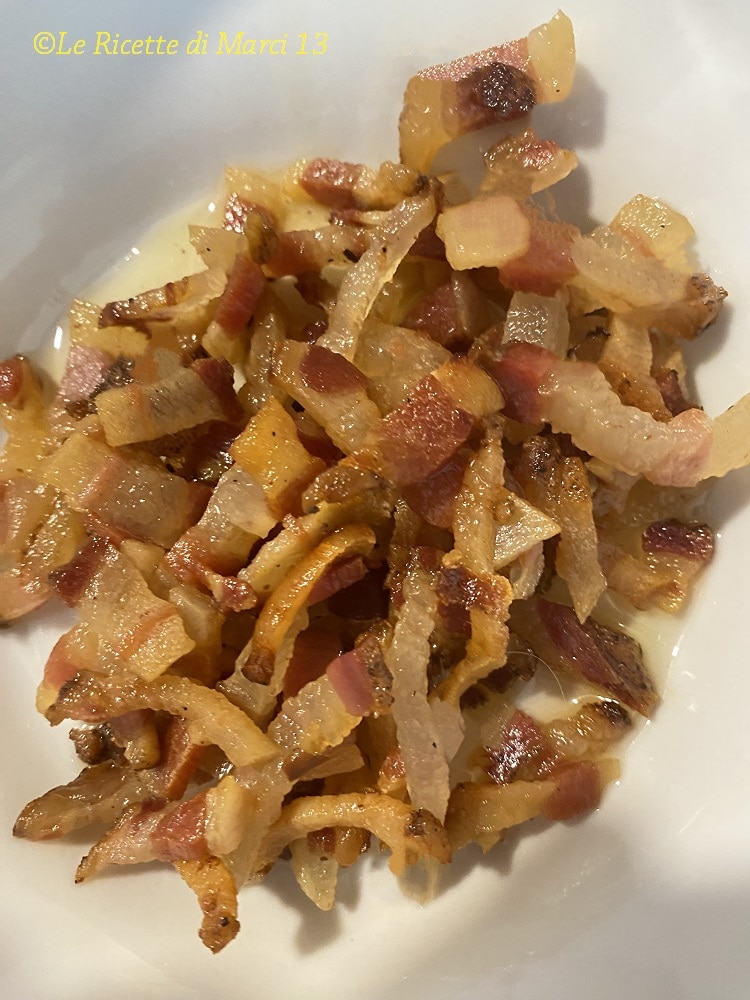
Deglaze the pan with a little dry white wine, then remove the pieces of guanciale, drain them well and cover them to prevent them from becoming too dry.
Add the peeled tomatoes to the same pan where the fat from the guanciale remains, mash them with a fork, then cook first on a high flame, then on medium-low flame, adjust the salt.
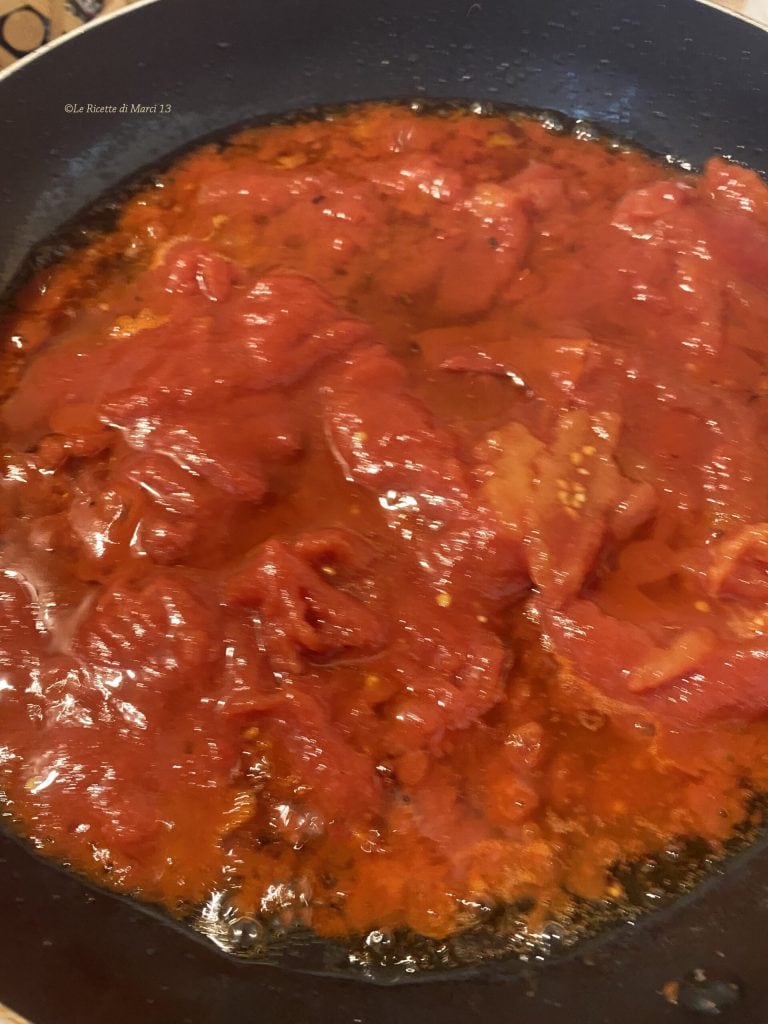
The sauce should thicken well, it will take about 15 minutes.
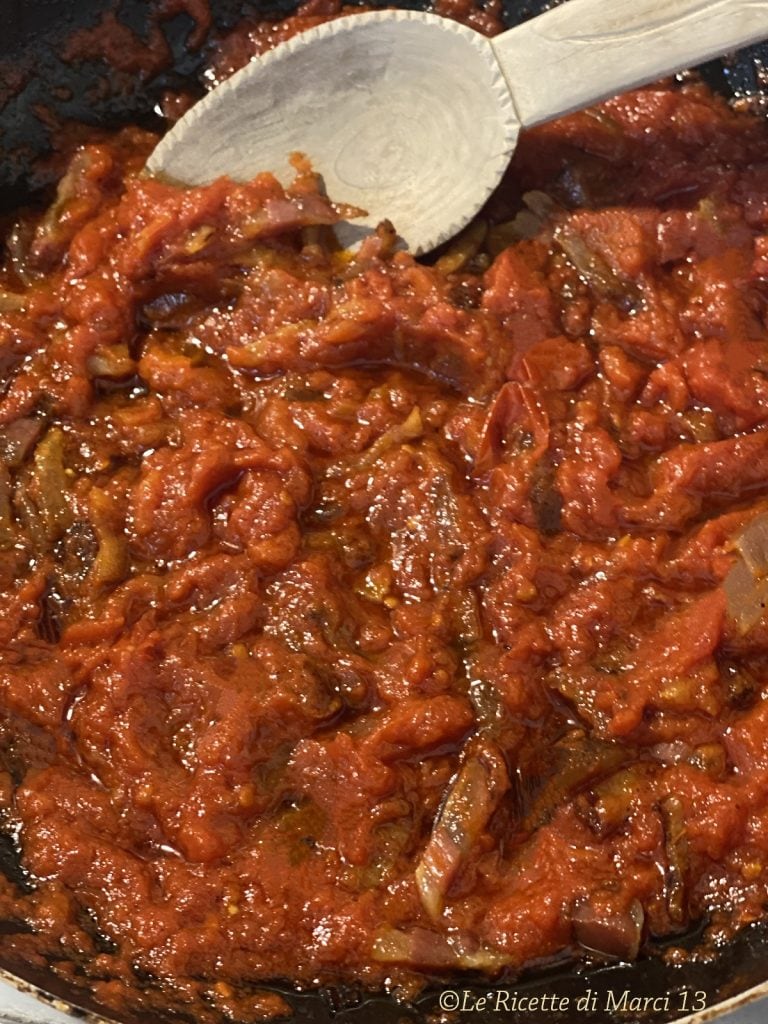
Once the sauce is cooked, put back the pieces of guanciale, give the sauce another stir.
Meanwhile, cook the bucatini very al dente in plenty of salted water (reserve a small ladle of cooking water) then transfer them to the pan with the sauce and toss with a small ladle of pasta cooking water.
Off the heat, add the grated Pecorino cheese and adjust with freshly ground black pepper to taste (optional).
Mix well and serve your bucatini all’amatriciana immediately, topping with more grated Pecorino cheese.
NOTES and Tips
If instead of peeled tomatoes, you use fresh San Marzano tomatoes, first blanch them briefly in boiling salted water, drain them and cool them under running water. After peeling them, remove the seeds and cut them into fillets.
Shopping Tips!!!
For cooking the Amatriciana, it is almost indispensable to use an iron pan like this one available on Amazon, in various sizes, at a great quality/price ratio, click here.
To slice the bacon and vegetables I used this handy cutting board with integrated side trays (one for the sliced food, the other for scraps) and this very sharp mezzaluna with double blade.
FAQ (Questions and Answers)
Origins and history of the Amatriciana sauce
The Amatriciana sauce (matriciana in Romanesco) is an ancient condiment, which some mistakenly attribute to Roman cuisine, forgetting that originally Amatrice was part of the province of L’Aquila, so the Amatriciana is not strictly a Roman culinary recipe, but it was the shepherds, with their seasonal transhumance movements towards the Roman countryside, who introduced this recipe to the capital.
Transhumance forced, in fact, the shepherds to stay away from home for at least 4 months, so they brought with them products that could be easily and long preserved, such as guanciale, Pecorino, flour.
The original recipe is white and without tomato, also known as Gricia, the introduction of tomato into the recipe occurred later around the end of the 1700s, when the Neapolitans, among the first in Europe, recognized the great organoleptic properties of tomato, and so the Amatricians, whose territory fell within the Kingdom of Naples, had the opportunity to appreciate it, and with a happy intuition, added it to the original recipe (see production specification).