Neapolitan rustic donuts with fontina and mortadella (fascingraf)
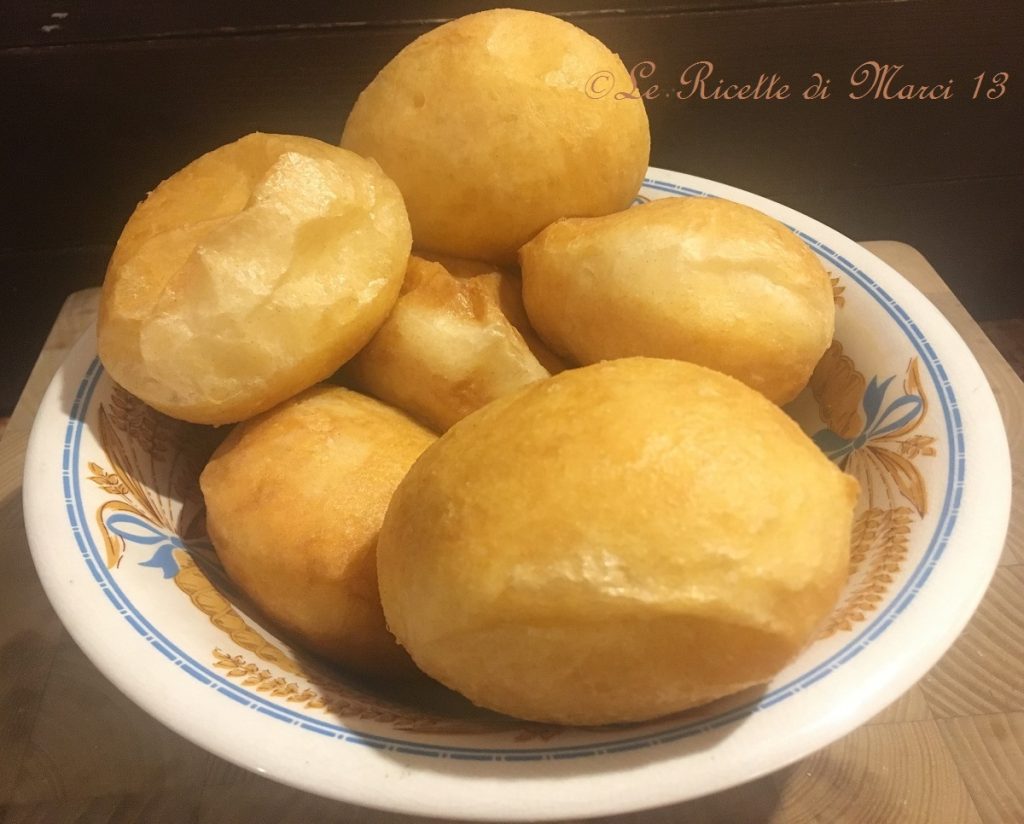
Here is one of my most requested signature dishes, a precious and unmissable recipe from the ancient aristocratic Neapolitan cuisine: Soft and cheesy Neapolitan rustic donuts (fascingraf) filled with fontina and mortadella. An ancient Neapolitan recipe, a must-try!
These Neapolitan rustic donuts are incredibly soft and cheesy and, in my home, they are literally devoured as soon as I fry them. They are so soft that they melt in your mouth!!
In short, they are a kind of rustic krapfen!
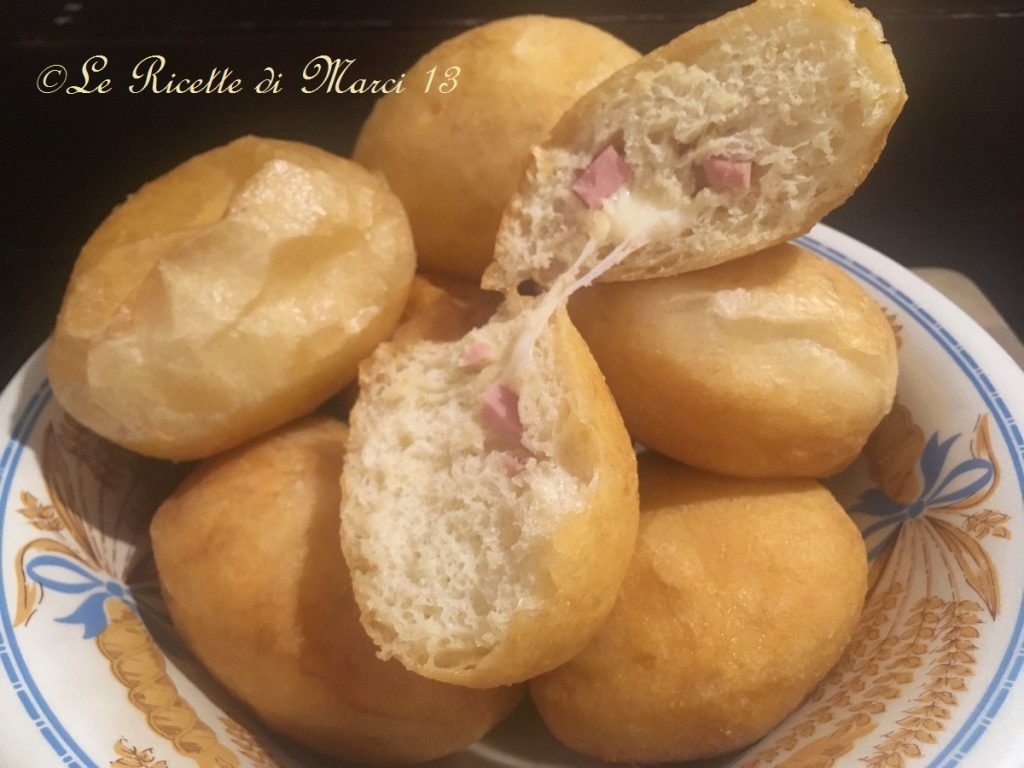
Of course, you can fill them as you like, according to your taste, but I assure you that the fontina/mortadella combination is perfect.
I recommend saving this ancient and precious Neapolitan recipe: with my Neapolitan rustic donuts with fontina and mortadella, you will make a great impression on your guests even for parties and important occasions, especially during Carnival, when frying is so common.
If you love Neapolitan cuisine, I strongly suggest checking out the Special Section of my Blog, entirely dedicated to Neapolitan recipes: “NEAPOLITAN CUISINE DOC“
You might also be interested in:
- Neapolitan fried calzoncelli by Grandma Anna, super soft and cheesy
- Sweet fritters with smoked provola. Ancient Neapolitan recipe
- Cheesy Neapolitan Gattò. Original step-by-step recipe
- Super soft rustic brioche: the Gateau Santa Chiara
- Baked donuts with cinnamon and divine maple syrup glaze. Easy and quick recipe.
- Difficulty: Medium
- Cost: Economical
- Rest time: 2 Hours
- Preparation time: 1 Hour
- Portions: 15-20 donuts
- Cooking methods: Frying
- Cuisine: Regional Italian
- Region: Campania
- Seasonality: All seasons, Carnival
Ingredients for Neapolitan Rustic Donuts (fascingraf)
- 2 1/2 cups All-purpose flour (I use Petra n.1 or Caputo Blu)
- 2 1/2 cups Potatoes (yellow flesh)
- 7 tbsp Butter (softened)
- 3 Eggs (small)
- 0.88 oz Fresh brewer's yeast
- 2 tbsp Milk (warm)
- 2 tsp Salt
- 4 1/4 cups Olive oil (or seed oil for frying)
- 5 oz Mortadella (coarsely chopped or diced)
- 9 oz Fontina (diced)
Tools
- Kitchen Scale
- Bowls of various sizes
- Hand Blender powerful, with 5 accessories
- Stand Mixer kenwood 1200 W power and double bowl
- Deep Fryer electric with timer and basket
Preparation of Neapolitan Rustic Donuts (fascingraf)
Wash the potatoes and place them whole and unpeeled in a pot with cold water and a pinch of coarse salt, on high heat, covering them with the lid.
As soon as the water reaches boiling point, remove the lid and cook the potatoes on medium heat for about 20-30 minutes (depending on their size and quality).
Drain them and mash them while still hot using a potato masher.
In the stand mixer’s bowl, pour the flour (about 2 1/2 cups) BUT the amount of flour depends on the quality of the potatoes and the flour itself (if the dough is very sticky, add another 1/2 or 1/4 cup), also add the mashed potatoes, the yeast (dissolved in a little warm, but not boiling, milk to activate) and finally the 3 whole eggs, and mix everything with the flat beater.
Work the dough well and for a long time with the flat beater, and when it begins to come together (after about 20 minutes) add the salt.
Soften the butter without melting it and add it to the dough, in small pieces, a bit at a time.
At this point, replace the flat beater with the dough hook and knead the whole dough for an additional 10 minutes.
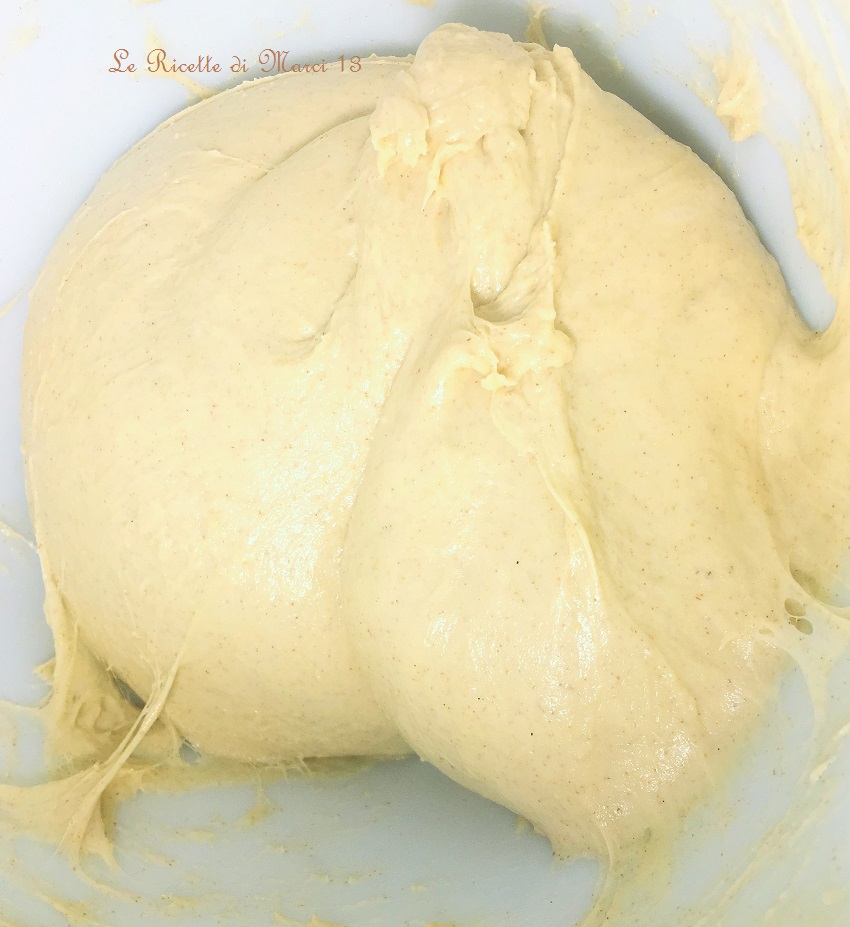
The dough should end up soft and stretchy, and come away from the bowl in one piece.
On a floured surface, form small balls about 1-1.5 inches, flatten them with your hands (as if making a small pizza), place a bit of fontina and mortadella in the center, close them into an egg shape, ensuring they have a regular and rounded form, making sure they are well sealed over the filling.
Place the formed donuts on a sheet of parchment paper and let them rise for about 2 hours.
Once the donuts have risen, cut each donut along with the parchment paper.
Take a pot 4-5 inches deep, pour in olive oil up to two-thirds of the height, and as soon as the oil is hot (about 350°F), start frying by gently placing each donut into the oil three to four at a time (no more) with its little piece of parchment paper attached, making sure to continuously spoon hot oil over the surface of each one, an essential step to make them puff up well and evenly.
As the donuts puff up in the frying process, the parchment paper will detach on its own (the same method is used for frying San Giuseppe zeppole).
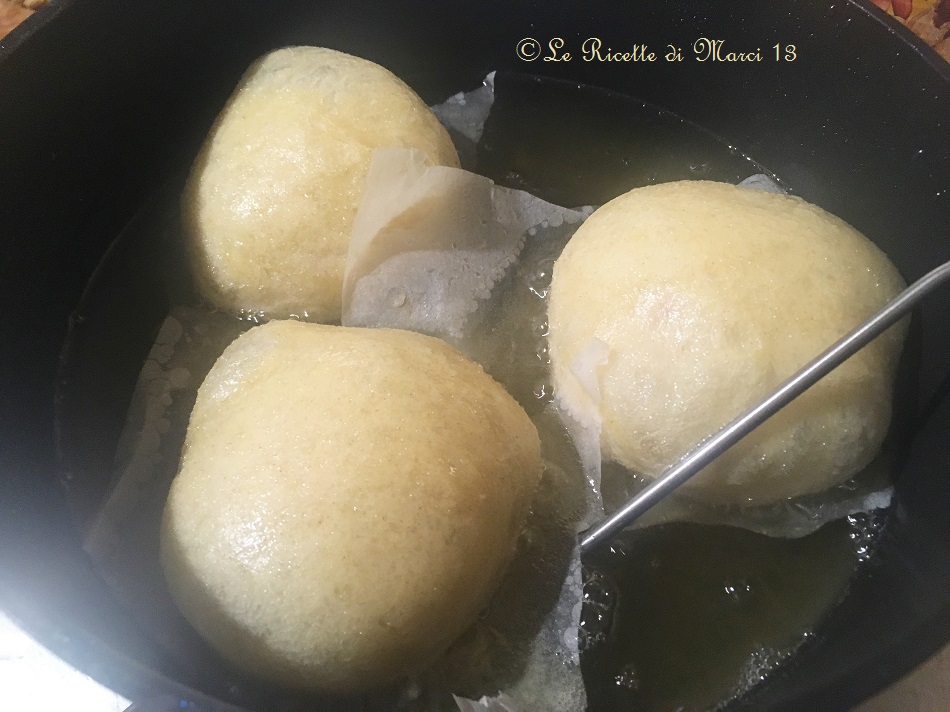
Fry until they are golden brown, drain the fascingraf on absorbent paper as you fry them.
Serve Neapolitan rustic donuts hot at the table, accompanied by a fresh salad with arugula.
Notes and Tips
Smart tip, especially handy for Carnival, when there’s a lot of frying: with the same dough, you can make both the savory version and the sweet version: I split the dough in half.
For the Sweet Donuts: I made balls with half the dough (as per the recipe), fried the donuts, and then coated them hot in sugar (you can mix it with cinnamon), they turned out to be krapfen that are delicious and cloud-like soft.
For the Savory Donuts, I made balls with the remaining half of the dough, filled them as per the recipe, and then fried them.
So, if you have guests or for your kids’ party, with one single dough (perhaps using a double batch) you can make wonderful donuts, both rustic and sweet!!
If you should prepare and fry them a bit in advance, before serving, put them in a baking dish and heat them for about ten minutes in the oven at 210-250°F.
They are equally delicious the next day heated in a preheated oven at 390°F (or in the microwave).
If by chance there are any leftovers (BUT there won’t be any, you’ll see!), you can freeze the cooked fascingraf in single-portion bags and then, when you want to eat them, just defrost them for a couple of minutes in the microwave or 15 minutes in the oven at 300°F.
Here’s also a link for achieving perfect and even frying: 10 golden rules for frying (including Non-Fried Frying).
As mentioned above, the recipe for these Neapolitan rustic donuts is ancient and priceless and is taken from a precious and now unavailable book: “La cucina aristocratica napoletana” by Franco Santasilia di Torpino.
Shopping Tips!!!
I mashed the potatoes smooth and lump-free with the very handy electric potato masher
already included in my Braun Minipimer Hand Blender, with 5 Accessories, 1200 W, multifunction, very useful for chopping, blending, conveniently mashing potatoes, for making mashed potatoes and many other functions.
To easily work with leavened doughs, I use my Kenwood Titanium Chef stand mixer with double bowl 3 and 5 l, integrated scale and a powerful 1200 W.
For a perfect, evenly cooked frying I bought the Cecotec deep fryer with timer and a lid with glass that prevents splashes, smoke, and bad odors, with an external removable container that facilitates cleaning.
Alternatively, for an excellent frying, this frying pan with basket included is also very convenient.
You can purchase all the items I recommend above, on Amazon, at a great price, simply by clicking directly on the related links.
Origins of Neapolitan Aristocratic Cuisine?
“Neapolitan Aristocratic Cuisine” originated with Queen Maria Carolina of Bourbon who wanted to refine the deliciously poor Neapolitan cuisine with the touch of refined chefs from abroad.
In the court and aristocratic families, chefs – later called Monzù (a twist on the French Monsieur) passed down these precious recipes that often took on the names of the families themselves. The pinnacle of Monzù’s cuisine were the timbales, pizzas, and generally leavened doughs”.