Traditional Neapolitan Migliaccio
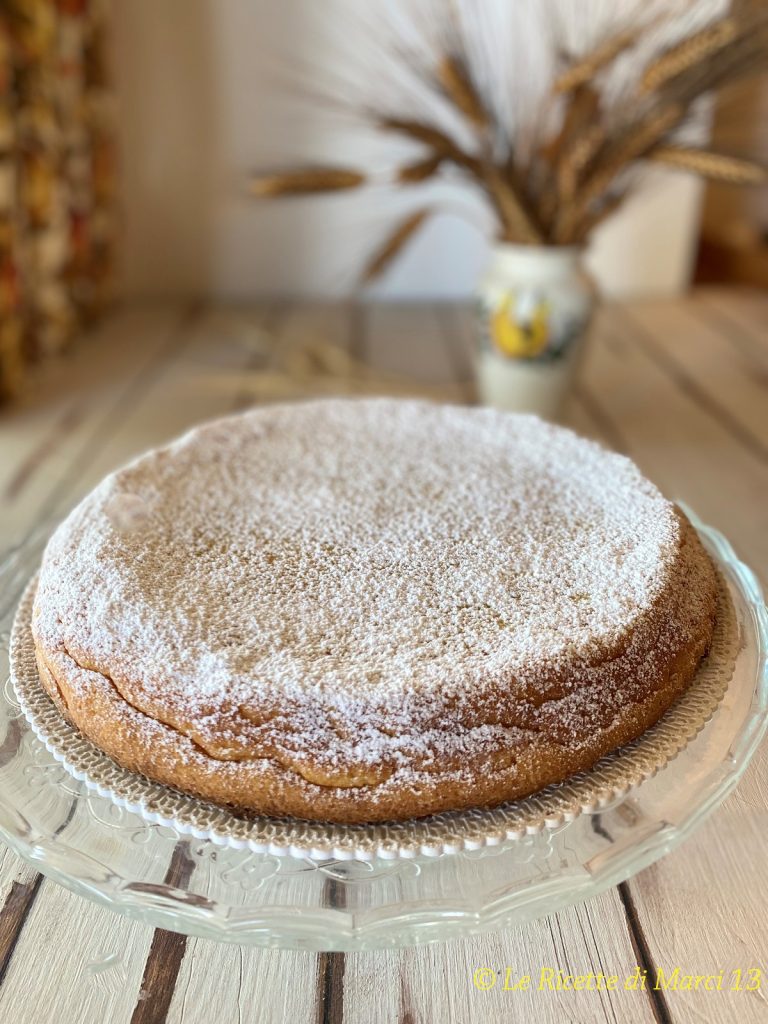
The Migliaccio is the typical sweet of the Neapolitan Carnival (along with chiacchiere and sanguinaccio) a delicious, moist, fragrant, and creamy Neapolitan dessert (melts in the mouth) with very ancient origins, perhaps the oldest dessert of the Neapolitan tradition among those for Carnival.
The taste and aroma of the traditional Neapolitan migliaccio remind you of the Neapolitan pastiera, in fact, it is called “the poor cousin of the pastiera”
It is a delicious dessert and the scent of orange blossom water pervades the house, like a foretaste of spring.
It is a very easy recipe to make, but to get the true Neapolitan migliaccio there are secrets that I explain step by step in this recipe.
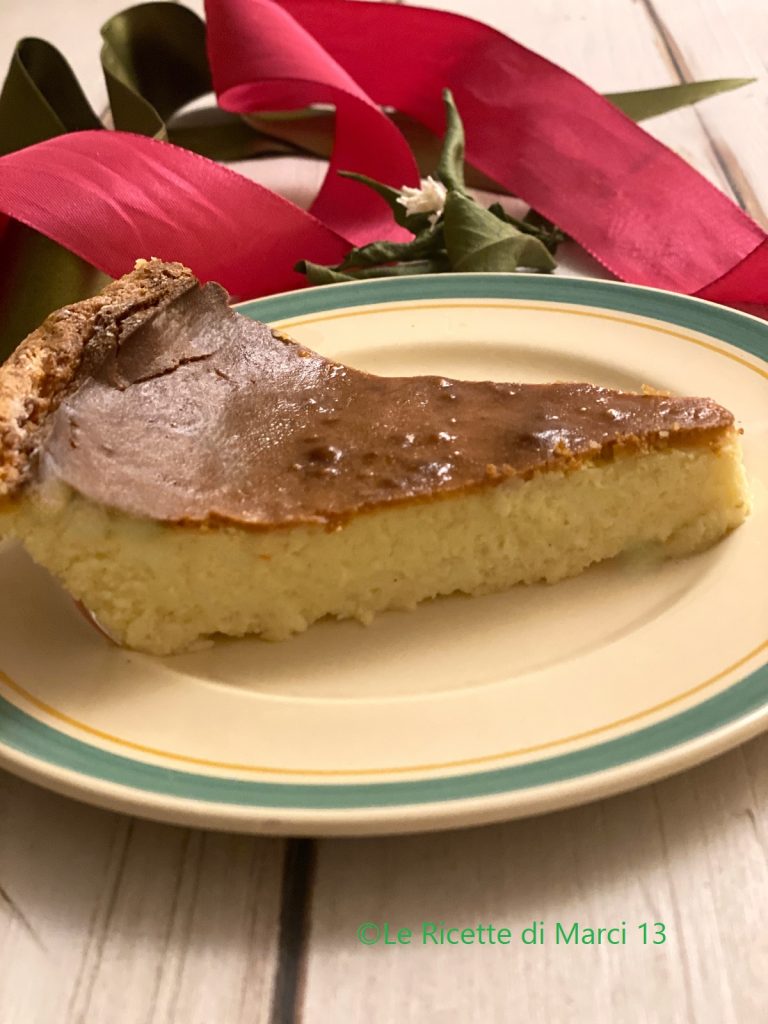
The perfect Carnival migliaccio is syrupy and shiny on the surface (see the photo of the slice below)
Important note: the sweet migliaccio should NOT be eaten immediately, but only after at least 12 hours, to allow the flavors to blend, just like the Neapolitan pastiera.
Essential for its success is not having lumps in the dough, which should be as smooth as possible.
The migliaccio is traditionally prepared at Carnival and specifically for Mardi Gras, but also for Easter.
Don’t miss my Savory Neapolitan Migliaccio, a very appetizing savory pie that everyone always loves!
If you love sweet Migliaccio, I recommend trying my “Neapolitan Migliaccio with Clementines (or Coffee)“ or my “Chocolate Migliaccio“.
If you’re looking for more (sweet and savory) recipes for Carnival, click on my “Carnival Special“.
You may also be interested in:
- Difficulty: Very easy
- Cost: Economical
- Rest time: 12 Hours
- Preparation time: 20 Minutes
- Portions: 5 people
- Cooking methods: Oven, Stove
- Cuisine: Regional Italian
- Region: Campania
- Seasonality: Carnival, Spring
Ingredients for Traditional Neapolitan Migliaccio
- 4.4 oz semolina flour (I use Senatore Cappelli or Casillo)
- 1.6 cups whole milk
- 13.2 oz ricotta (basket or fuscella)
- 12.3 oz granulated sugar
- 3 eggs (whole)
- 1 tbsp butter (softened, I use Lurpak)
- 0.7 oz water (thousand flowers, I use double concentrated, about 20 ml)
- 1 tsp vanilla extract (Bourbon)
- 1 tbsp limoncello
- 0.04 oz fine salt
- 0.04 oz lemon zest (grated)
- 0.04 oz orange zest (whole)
Tools
- Food Scale
- Bowls in various sizes
- Sifter steel, 500g capacity, with spring handle
- Stand Mixer Kenwood 1400 W power, illuminated bowl
- Immersion Blender Braun 750 W power with accessories
- Springform Pan 20 cm
Steps for Traditional Neapolitan Migliaccio
Premises:
It is important that all ingredients are at room temperature.
Migliaccio should be prepared 1 or 2 days before serving.
Take a small saucepan and heat the milk, salt, butter, grated zest of lemon and orange, bring to a simmer and – off the heat – incorporate the semolina, little by little, with a hand whisk, then put back on the minimum heat until it sizzles and detaches from the sides (it will take 3-4 minutes).
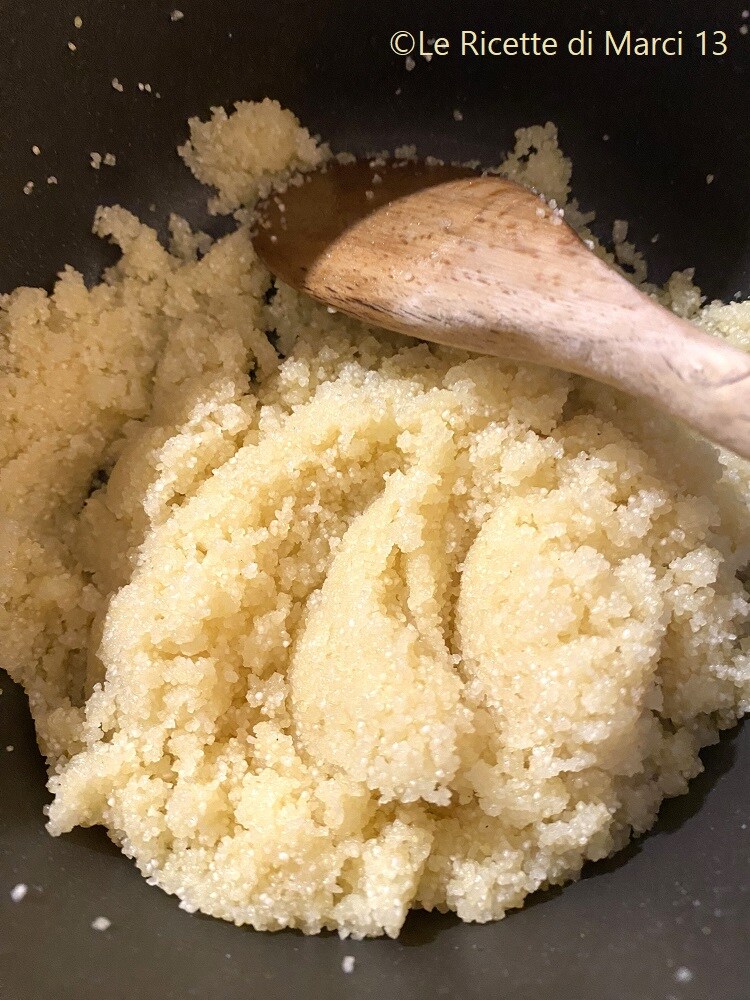
Remove the saucepan from heat and immediately add the sugar, stirring until it completely dissolves (about 1 minute).
At this point, process the semolina mixture with the immersion blender (to obtain a smooth and lump-free dough) and finally let it cool down well completely (this step is important because otherwise, if you add the hot semolina mixture to the eggs, it will taste like eggs).
Also pass the ricotta through a sieve to avoid lumps.
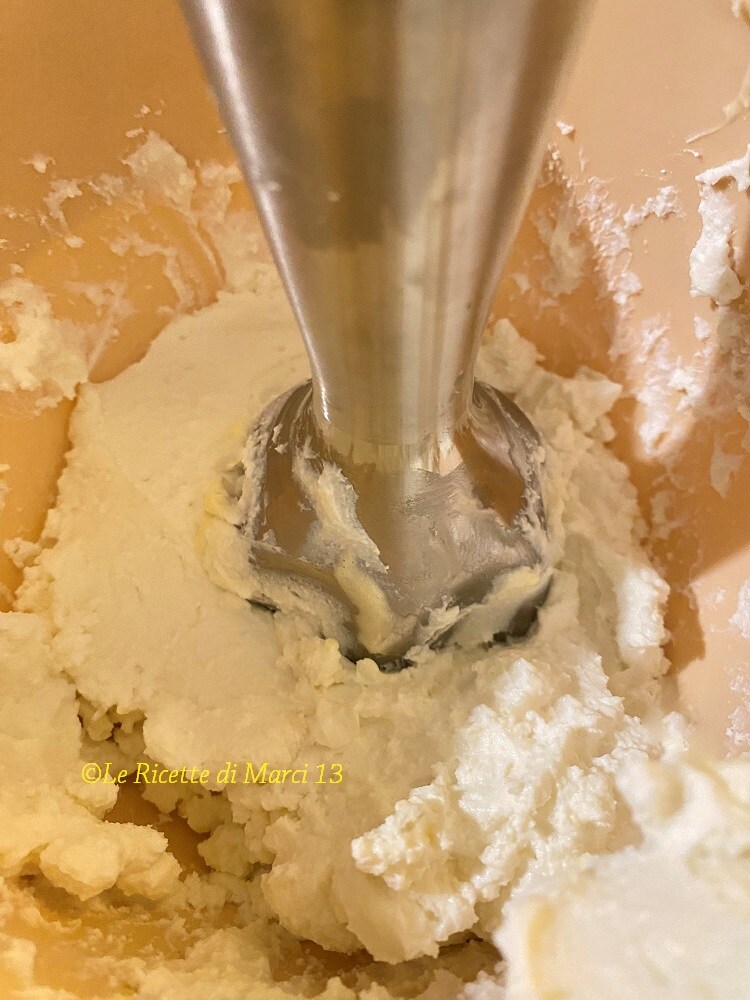
Then, add to the sieved ricotta, the cooled semolina mixture (previously worked with the immersion blender) and then also add the 3 eggs – one at a time – the vanilla extract and beat for about 5 minutes, then add the limoncello and only at the end, add the thousand flowers water.
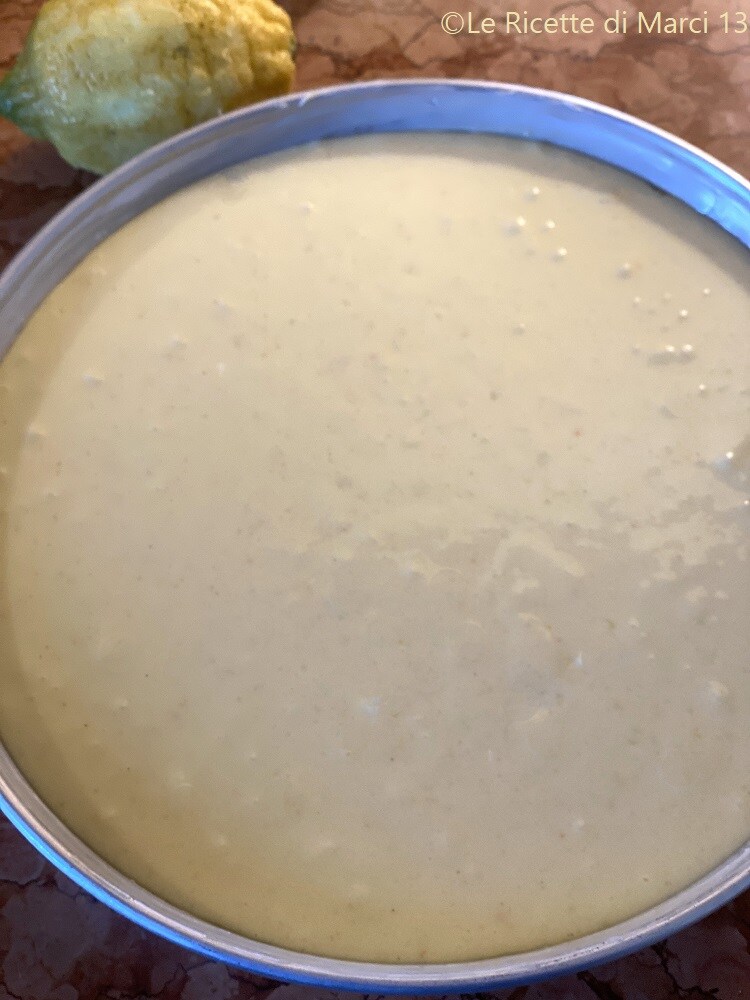
Butter and flour a 20 cm diameter springform pan.
Pour the mixture into the pan and bake in a static oven at 340°F for about 90 minutes, depending on your oven (it should cook slowly) in any case, remember that the mixture is moist.
At the end of cooking, dust the migliaccio with powdered sugar and let it cool in the oven turned off with the door open.
Serve it after at least 12-24 hours of rest.
Here is the migliaccio (cooled in the oven) after 12 hours of rest, as you can see from the photo: the perfect migliaccio is glossy and syrupy on the surface, the syrupy effect on the surface forms only after the 12 hours of rest.
You can store the migliaccio well covered for up to 4 days at room temperature!
It can also be frozen in portions, for about 3 months, just in time to reach Easter!
Notes and Tips
If you want to make the migliaccio more indulgent, you can enjoy it with sanguinaccio or try adding last-minute dark chocolate chips, frozen and floured. You can also flavor the dough by adding limoncello.
Some people, instead of citrus aromas, prefer to add cinnamon.
Shopping Tips!!!
– To weigh the ingredients, I use this practical digital kitchen scale, with a large removable bowl, tare function, and built-in timer, available on Amazon at a great price.
– To beat the eggs perfectly, I use my Titanium Chef Patissier XL planetary mixer with illuminated bowl and a powerful 1400 W, integrated scale and blender, a faithful ally in the kitchen for: kneading, weighing, beating, cooking, chopping, pasteurizing eggs.
If you are looking for a more economical and smaller planetary mixer model, you can safely choose to purchase the excellent Kenwood Titanium Chef Baker XL, 1200W power, 5l bowl and integrated scale.
– To eliminate lumps in the dough and make it smooth, I used the very handy immersion blender from my Braun MultiQuick 7, which you can purchase at a special price on Amazon.
Read my review for GialloZafferano on the Minipimer “Braun MQ9045 MultiQuick”.
You can purchase all the items I recommend here above, on Amazon, at a great price, just click directly on the respective links.
FAQ (Questions and Answers)
What are the origins of Neapolitan migliaccio?
Migliaccio is a typical dessert of Neapolitan rural traditionprepared since the Middle Ages.
Like almost all traditional Neapolitan culinary desserts, migliaccio also has very ancient origins.
The first recipe dates back to the medieval period (around the year 1000) and was probably invented by some peasant woman. To confirm this thesis is one of the necessary ingredients for the preparation of the sweet: pig’s blood.
This was a typical food of poor peasant tables, as it was considered a complete and very nutritious food, and thus able to sustain the efforts of those working in the countryside.
However, the recipe was soon modified by the will of the Catholic Church and the rich bourgeoisie. According to them, the use of pig’s blood in cooking was linked to “pagan” traditions.
Despite the fact that for many centuries the same authorities tried to oppose the use of this ingredient, animal blood continued to be used in poor and peasant cooking, enriched with chocolate (the sanguinaccio) various spices, and vanilla.
It was only towards the end of the 18th century that the traditional recipe was modified: the blood was replaced by water and milk and the semolina took the place of millet flour, thus becoming the dessert that we all know.
It must be said that the disappearance of pig’s blood was not particularly rapid: for some centuries, in the poorest places of the Kingdom of Naples, the blood was replaced by pork cracklings.
Today this custom has completely disappeared, also because the sale of pig’s blood has been banned since the 90s for hygienic/sanitary reasons and blood has been replaced by water/milk.
In ancient times, the sweet migliaccio (there is also a savory version) was made with bread of millet and pig’s blood. The name of the cake, in fact, comes from the Latin “miliaccium” which means millet bread, a cereal linked to poor Neapolitan cooking.
Today the old ingredients have been replaced with semolina, milk, and butter.
The dough of the migliaccio also closely resembles another Neapolitan dessert: the sfogliatella, the ingredients used for the realization of the Neapolitan migliaccio, in fact, are the same used for the filling of the Neapolitan sfogliatella (semolina, sugar, and ricotta), and it is for this reason that in some areas of Campania the migliaccio is also known as “sfogliata”.