
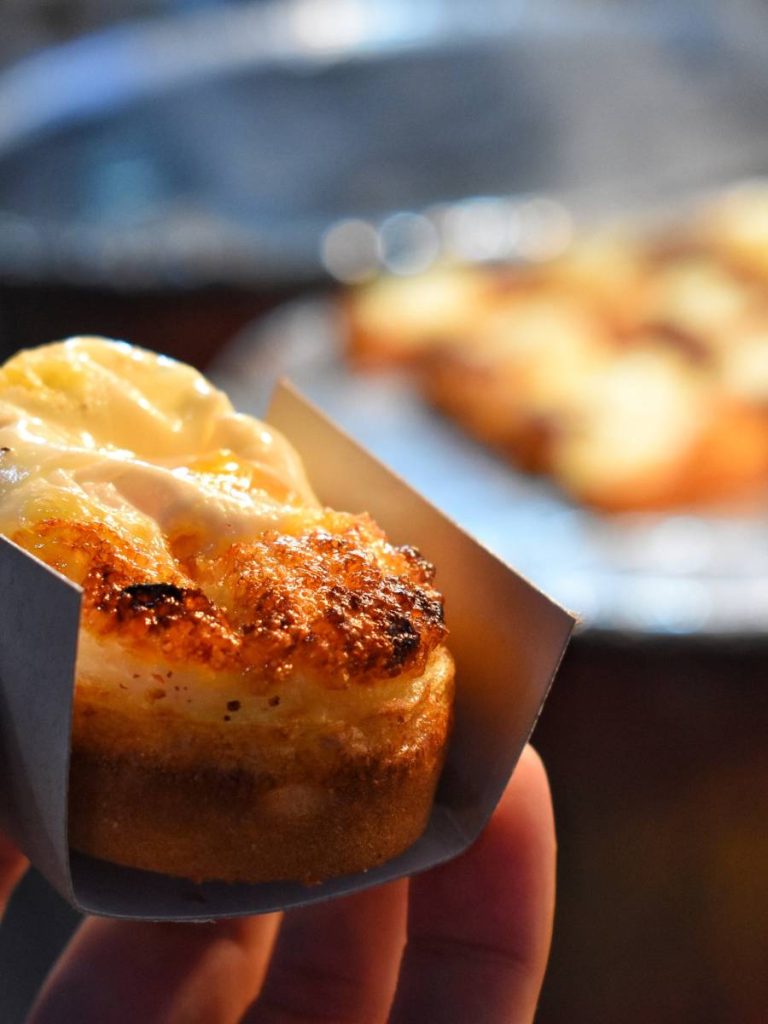
Gyeran-ppang, also known as Korean egg bread, is one of South Korea’s most iconic and fascinating street foods. It is a small, soft, slightly sweet loaf with a whole egg cooked inside, creating an irresistible contrast between the dough’s softness and the filling’s creaminess. This snack, simple in form yet surprising in taste, has become a global sensation in recent years, capturing not only the markets of Seoul but also social media, food bloggers, and Asian cuisine enthusiasts worldwide. It was no accident that CNN included it in the list of the top 50 breads of the world, a recognition that has helped it gain popularity beyond Korea.
The gyeran-ppang originated as street food, designed to warm cold Korean winter days. The stalls selling it exude an unmistakable aroma: a mix of butter, vanilla, and eggs that immediately attracts anyone passing by. Its oval shape and golden surface make it instantly recognizable, while the whole egg center adds a nutritious and surprising touch. According to the most credible historical sources, this snack first appeared in the 1980s near Inha University, where it quickly became popular among students looking for a warm, economical, and hearty snack.
The traditional recipe calls for a simple batter made from flour, milk, eggs, butter, and sugar, enriched with a pinch of salt and sometimes a hint of vanilla. The whole egg is added directly on top of the batter before baking, creating the characteristic “hidden treasure” effect that intrigues those tasting it for the first time. Today, there are numerous variations: with cheese, ham, parsley, or more modern and creative versions for international palates. Despite this, the classic version remains the most beloved, especially for its simplicity and the comfort it provides.
The success of gyeran-ppang is not only culinary but also cultural. It perfectly embodies the spirit of Korean street food: accessible, genuine, warm, and deeply connected to everyday life. It is one of those foods that tell a story, made of tradition, innovation, and conviviality. Including it in your blog means offering readers not just a recipe but a journey into Korean culture through one of its most authentic and surprising flavors.
Here are some recipes where eggs are the star.
- Difficulty: Easy
- Cost: Economic
- Preparation time: 20 Minutes
- Portions: 9 gyeran-ppang
- Cooking methods: Oven
- Cuisine: Korean
- Seasonality: Fall, Winter
- Energy 251.66 (Kcal)
- Carbohydrates 24.73 (g) of which sugars 8.60 (g)
- Proteins 11.01 (g)
- Fat 12.64 (g) of which saturated 7.06 (g)of which unsaturated 5.32 (g)
- Fibers 0.59 (g)
- Sodium 215.42 (mg)
Indicative values for a portion of 100 g processed in an automated way starting from the nutritional information available on the CREA* and FoodData Central** databases. It is not food and / or nutritional advice.
* CREATES Food and Nutrition Research Center: https://www.crea.gov.it/alimenti-e-nutrizione https://www.alimentinutrizione.it ** U.S. Department of Agriculture, Agricultural Research Service. FoodData Central, 2019. https://fdc.nal.usda.gov
Ingredients for gyeran-ppang
- 1 3/4 cups all-purpose flour
- 2/3 cup milk
- 1 egg
- 2 tbsps butter (melted)
- 3 tbsps sugar
- 1 tsp instant yeast for savory preparations
- 1/2 tbsp baking soda
- 1 lemon
- 9 eggs
- to taste cheese (grated)
- 1 bunch chopped parsley
- to taste butter (for greasing the molds)
Tools
- Loaf pans
Preparation of gyeran-ppang
Pour two tablespoons of lemon juice into the milk. Let it rest for 10 minutes.
In a bowl, mix the flour, yeast, baking soda, and salt. Add the sugar and stir the dry ingredients with a spoon.
Add the egg and milk, then the melted butter. Start mixing with a whisk; the mixture is quite fluid.
Grease the loaf pans and fill each pan halfway with the batter. Crack an egg into each pan and cover with the remaining batter. Sprinkle with grated cheese and chopped parsley.
Bake the gyeran-ppang at 356°F in a static oven for about 18 minutes.
Once ready, remove the bread from the oven and wait a few minutes before taking them out of the molds.
Enjoy the gyeran-ppang while hot.
Follow me on social media
my page Facebook my profile Instagram my page Pinterest
FAQ (Questions and Answers)
When and where was gyeran-ppang born?
Gyeran-ppang first appeared in the early 1980s near Inha University in Incheon. According to widely shared accounts, a street vendor sought a way to offer students a warm, nutritious, and economical snack during winter. The idea of a small sweet bread with a whole egg on top proved immediately successful: simple to prepare, fragrant, and incredibly comforting. From there, it quickly spread throughout South Korea, becoming a symbol of winter street food.
Where can you find gyeran-ppang?
It remains a mainstay of night markets and the main streets of Korean cities, especially during the cold months. Outside Korea, it is increasingly found in specialty bakeries, Korean restaurants, and festivals dedicated to Asian food. Its growing international fame has also made it a home trend: many enthusiasts prepare it at home thanks to the simplicity of the recipe.
Are there any interesting facts related to gyeran-ppang?
Yes, several. One of the most notable is that despite being considered a classic Korean street food today, gyeran-ppang does not have ancient roots: it is one of the few iconic foods born in modern times. Another interesting fact is its popularity on social media: its oval shape and visible egg make it extremely “photogenic,” which is why it has gone viral on Instagram and TikTok. Additionally, in Korea, there are molds dedicated exclusively to gyeran-ppang, often customized with decorative patterns that imprint small designs on the bread’s surface.
