
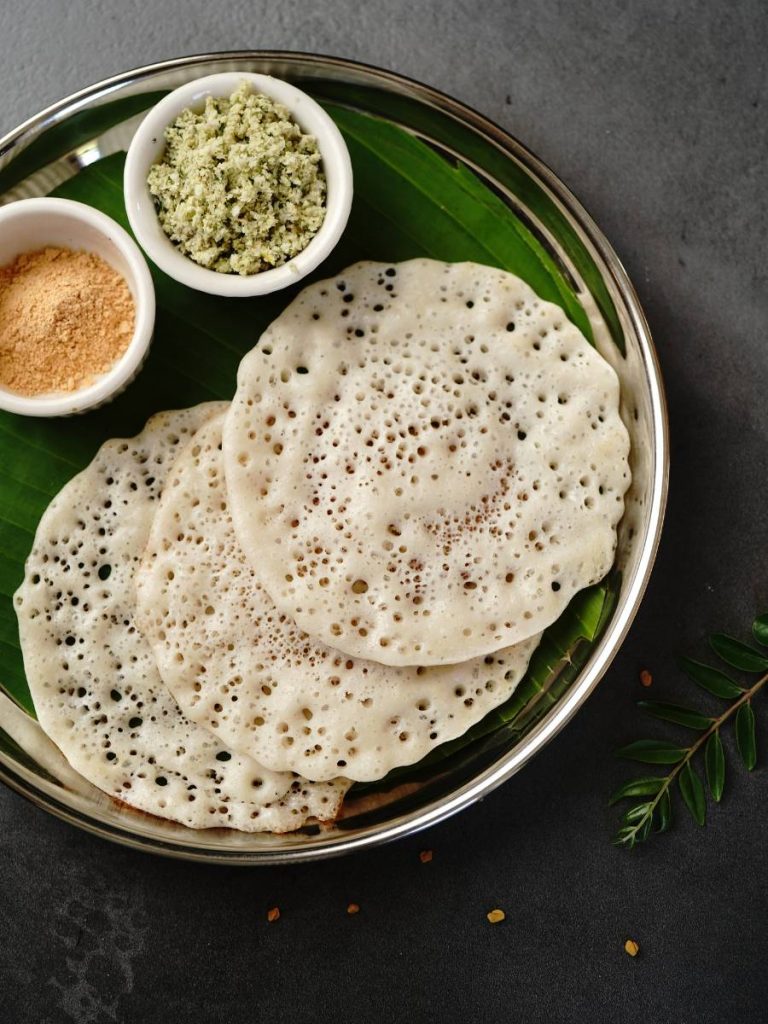
Uttapam is one of the most beloved and recognizable dishes in South Indian cuisine, a true symbol of Indian street food and the traditional breakfast served in homes and small popular venues. Often described as a “savory pancake,” the uttapam is much more than a simple pancake: it is a concentration of history, culture, and flavors that tell the soul of Dravidian gastronomy. Made with a fermented batter of rice and lentils, the same base as dosa and idli, the uttapam stands out for its soft interior texture and slightly crispy exterior, enriched with a medley of fresh vegetables that make it colorful, fragrant, and irresistible.
What makes uttapam so special is its versatility. In India, it is consumed at breakfast, lunch, or as a quick snack, often accompanied by coconut chutney, hot sambar, or a simple spicy tomato sauce. Each region, each family, and even each street vendor has their own version: some prepare it thin and crispy, some prefer it thicker and fluffier, some add green chilies and onions, and others enrich it with tomatoes, fresh coriander, or a mix of spices. Uttapam is a democratic dish, accessible and deeply rooted in Indian everyday life.
Its origin is ancient and rooted in the tradition of fermentation, a fundamental technique in the regions of Tamil Nadu, Karnataka, and Andhra Pradesh. The batter, left to rest for several hours, naturally develops slightly tangy aromas that give the uttapam its characteristic flavor. This process not only improves digestibility but makes the dish nutritious and perfect for those following a vegetarian or vegan diet.
In recent years, uttapam has also conquered the West, thanks to its simplicity and the possibility of personalizing it with local ingredients. It is a dish that lends itself to a thousand interpretations: you can prepare it with seasonal vegetables, add different spices, or even transform it into a fusion version with cheeses, aromatic herbs, or creative toppings. Despite modern reinterpretations, the essence of uttapam remains the same: a genuine dish, rich in flavor and deeply linked to tradition.
In this article, I will guide you through the discovery of uttapam, from its history to the most common variants, to the perfect recipe for making it at home. Whether you are a fan of Indian cuisine or simply curious to try something new, uttapam will win you over with its simplicity and authentic charm.
I add this recipe to those I love most among pancakes and crepes and leave you some of the most delicious ones.
- Difficulty: Medium
- Cost: Economical
- Rest time: 17 Hours
- Preparation time: 30 Minutes
- Portions: 8-10 uttapam
- Cooking methods: Stove
- Cuisine: Indian
- Seasonality: All seasons
Ingredients for uttapam
- 1 1/2 cups parboiled rice (or rice for idli (regular rice is also fine))
- 1/2 cup lentils (urad dal (shelled white lentils, whole or split))
- 1 tsp fenugreek
- as needed water (for soaking and blending)
- as needed salt
- 1 onion (small, chopped)
- 1 tomato (diced)
- 1 fresh chili (green, chopped (optional))
- 2 tbsps coriander (chopped fresh)
- 1 pinch salt
Tools
- Crepe Pan
Preparation of uttapam
In a bowl, place the urad dal and fenugreek seeds. Rinse well and soak with 1 cup of water for 4-5 hours.
In another bowl, rinse the rice and soak it with 2 cups of water for 4-5 hours.Drain the urad dal, reserving the water.
Blend the lentils, adding water little by little until you obtain a smooth, light, and frothy cream. Transfer the cream into a large bowl.Drain the rice and blend it in 2-3 batches with 1/4-1/2 cup of water at a time, until you achieve a smooth or slightly grainy consistency.
Combine the rice batter with the urad dal batter.Add salt (or 1/4 teaspoon of sugar if it’s very cold).
Mix well.
Cover and let it ferment for 8-12 hours in a warm place. The batter should increase in volume and become slightly frothy.Prepare the batter for cooking.
The next day, mix gently. If it is too thick, add a little water.Heat a non-stick pan or a cast-iron griddle. Lightly grease it.
Pour a ladle of batter and spread it gently to get a thick pancake.
Distribute the topping of onion, tomato, chili, and coriander on top while the uttapam is still soft.
Add a drizzle of oil around the edges.
Cook over medium heat until the base is golden. Flip the uttapam and cook the other side for 1-2 minutes.
Continue in this way until the batter is finished.
Follow me on social media
my Facebook page, my Instagram profile, and my Pinterest page
FAQ (Questions and Answers)
What are uttapam?
Uttapam are savory pancakes typical of South India, made with a fermented batter of rice and lentils. Unlike dosa, which is thin and crispy, uttapam is thicker and softer, enriched with fresh vegetables like onions, tomatoes, green chilies, and coriander. It is a common breakfast dish but is also consumed as a snack or light meal.
What is the difference between uttapam, dosa, and idli?
All three originate from the same fermented batter of rice and lentils but differ in shape and consistency:
Idli: soft steamed buns.
Dosa: thin and crispy crepes cooked on a griddle.
Uttapam: thicker pancake, soft inside and slightly crispy outside, with vegetables directly on the surface. These are three different ways to enhance the same base, each with a unique personality.What are uttapam traditionally served with?
Uttapam are served with typical accompaniments from South Indian cuisine:
Coconut chutney
Sambar, a spicy lentil soup
Tomato or onion chutney These condiments perfectly balance the softness of the uttapam and enhance its flavors, making the dish complete and nutritious.
