
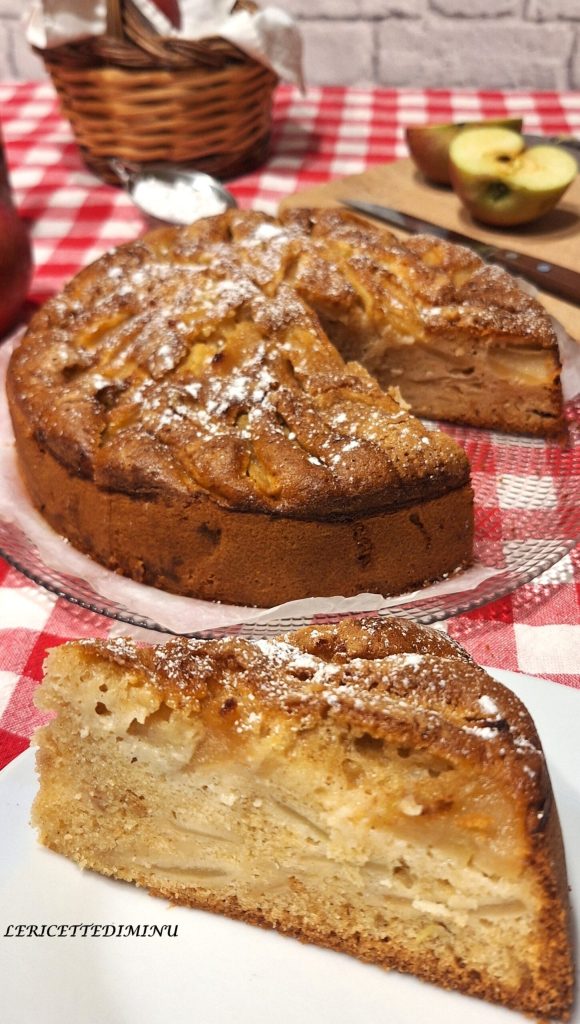
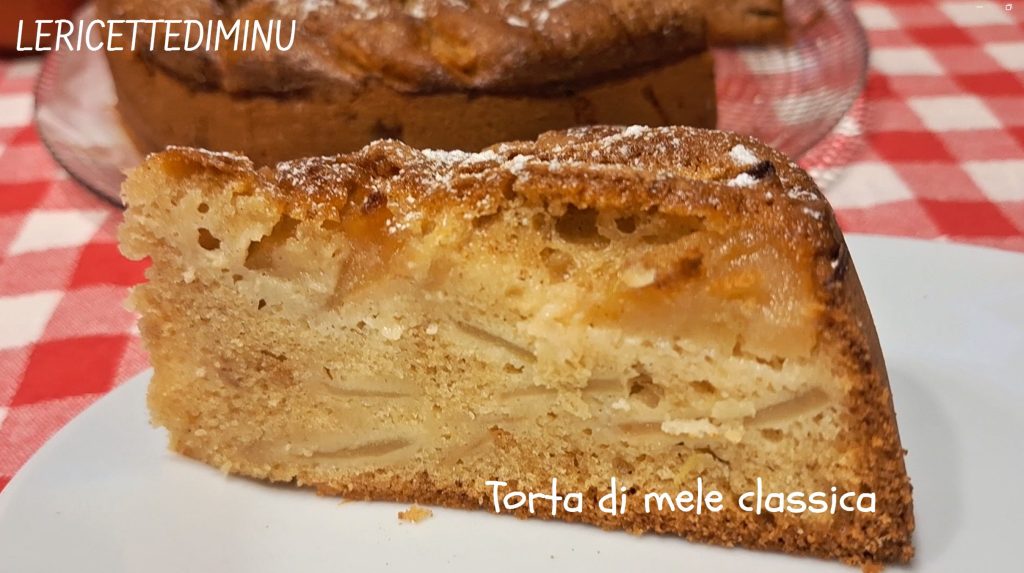
The classic apple cake is a timeless staple of homemade baking: fragrant, soft, and made with lots of juicy apples.
The most commonly used varieties are generally Renette, Fuji, and Golden, perfect because they maintain their texture during baking and provide a balanced aroma between sweetness and acidity.
In this version, the apples appear both in the batter, sliced to make the cake moist and soft, and on the surface to create a simple yet very inviting decorative effect.
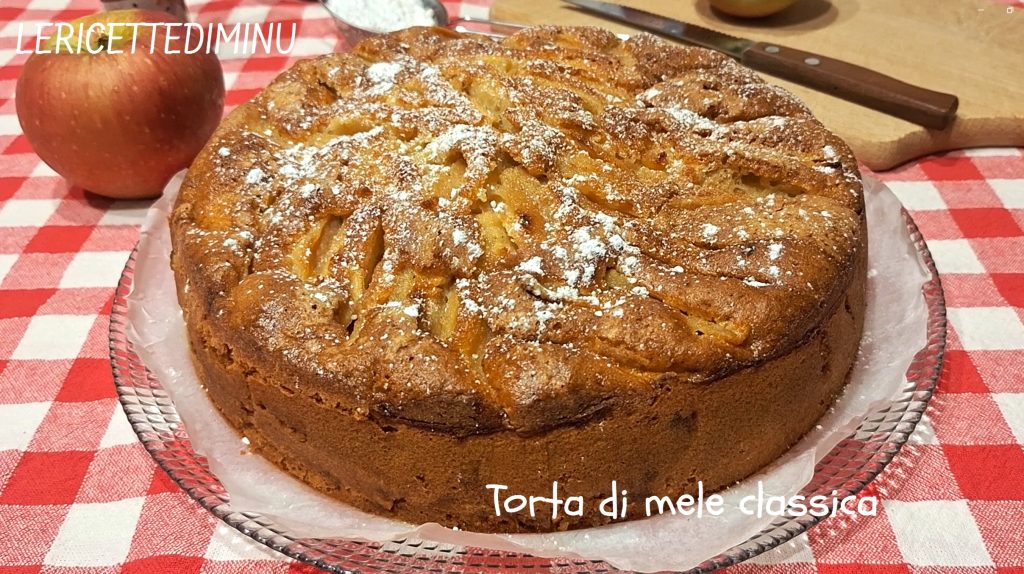
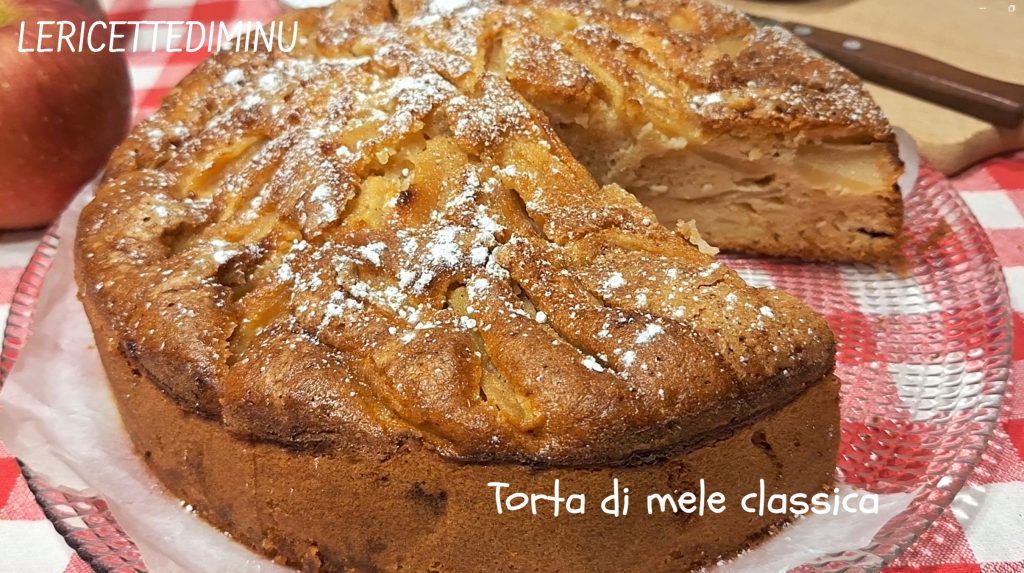
Once the cake has completely cooled, it’s traditional to sprinkle it with a dusting of powdered sugar; those who like it can also add a pinch of cinnamon, which enhances the aroma of the cake and makes it even more enveloping.
There are countless variations of apple cake, and often every family jealously guards their own recipe, passed down over time and considered unbeatable. Some love more rustic versions, others prefer soft and light batters, while some add raisins, pine nuts, lemon zest, or yogurt to give the cake a unique character.
Personally, I prefer very soft cakes, rich in apples, with a slightly buttery texture that release an irresistible aroma even while baking, and offer a full and velvety bite.
After all, apple cake is a dessert known and loved worldwide.
In the United States, for instance, the “apple pie” has become a true national symbol: the dough is often enriched with spices like cinnamon, nutmeg, or ginger, and the dessert is served warm, accompanied by vanilla cream or a generous scoop of ice cream.
Each culture offers a variant, but everywhere you find the same spirit: a simple, welcoming dessert that tastes like home.
- Difficulty: Easy
- Cost: Economical
- Preparation time: 20 Minutes
- Portions: 10
- Cooking methods: Oven
- Cuisine: Italian
- Seasonality: Fall, Winter, and Spring
- Energy 351.00 (Kcal)
- Carbohydrates 47.44 (g) of which sugars 32.45 (g)
- Proteins 5.34 (g)
- Fat 16.29 (g) of which saturated 10.11 (g)of which unsaturated 6.08 (g)
- Fibers 3.23 (g)
- Sodium 75.09 (mg)
Indicative values for a portion of 120 g processed in an automated way starting from the nutritional information available on the CREA* and FoodData Central** databases. It is not food and / or nutritional advice.
* CREATES Food and Nutrition Research Center: https://www.crea.gov.it/alimenti-e-nutrizione https://www.alimentinutrizione.it ** U.S. Department of Agriculture, Agricultural Research Service. FoodData Central, 2019. https://fdc.nal.usda.gov
Ingredients
- 1 3/4 cups all-purpose flour
- 3/4 cup sugar (plus 4 tablespoons)
- 12 tbsp butter
- 4 eggs (large)
- 1 packet baking powder
- 1 packet vanillin
- to taste fine salt
- 2.2 lbs apples (Fuji)
- lemon juice (half a lemon)
- to taste powdered sugar
- to taste ground cinnamon
Tools
- Electric Beater
- 3 Bowls
- 1 Saucepan
- 1 Spatula silicone
- 1 Sieve for flour
- 1 Baking Pan non-stick springform diameter 9.5 inches
Steps
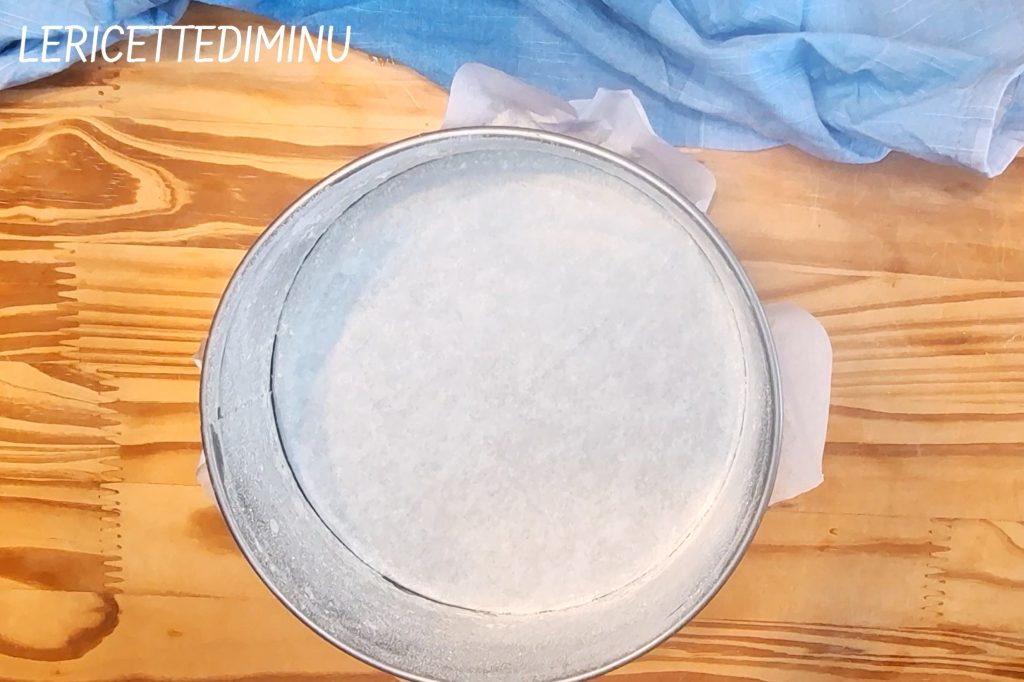
To prepare the classic apple cake, start by lining the bottom of a non-stick springform pan with parchment paper.
Butter and flour the sides.
Sift both the flour and the baking powder.
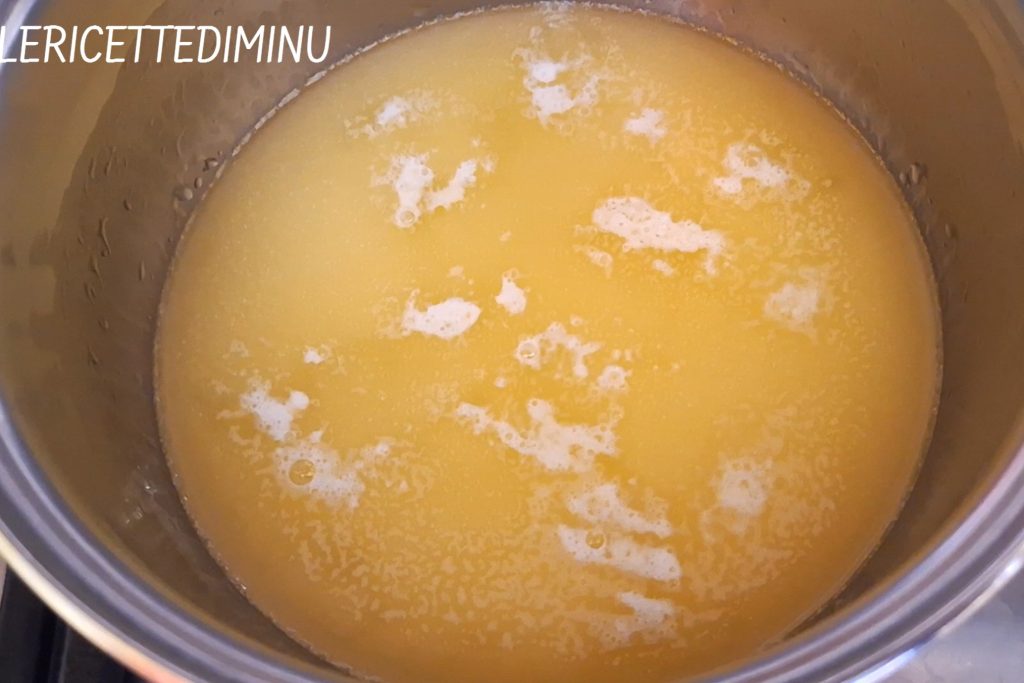
In a saucepan, melt the butter over very low heat, without letting it fry.It’s advisable to stir it very often during this phase.
Wash and peel the apples, cutting them into many slices.
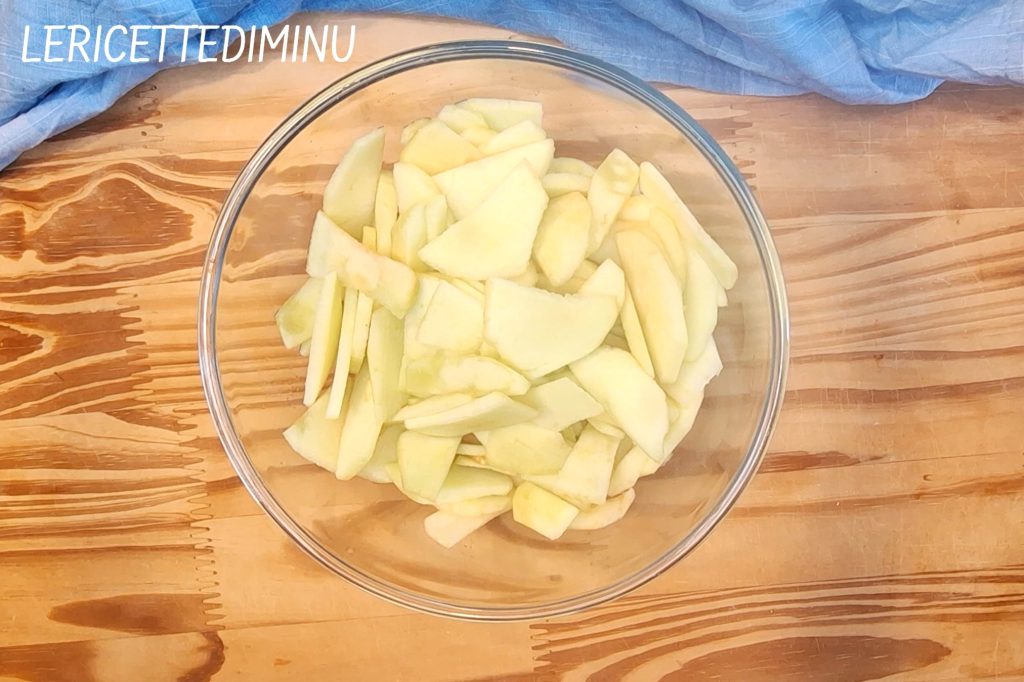
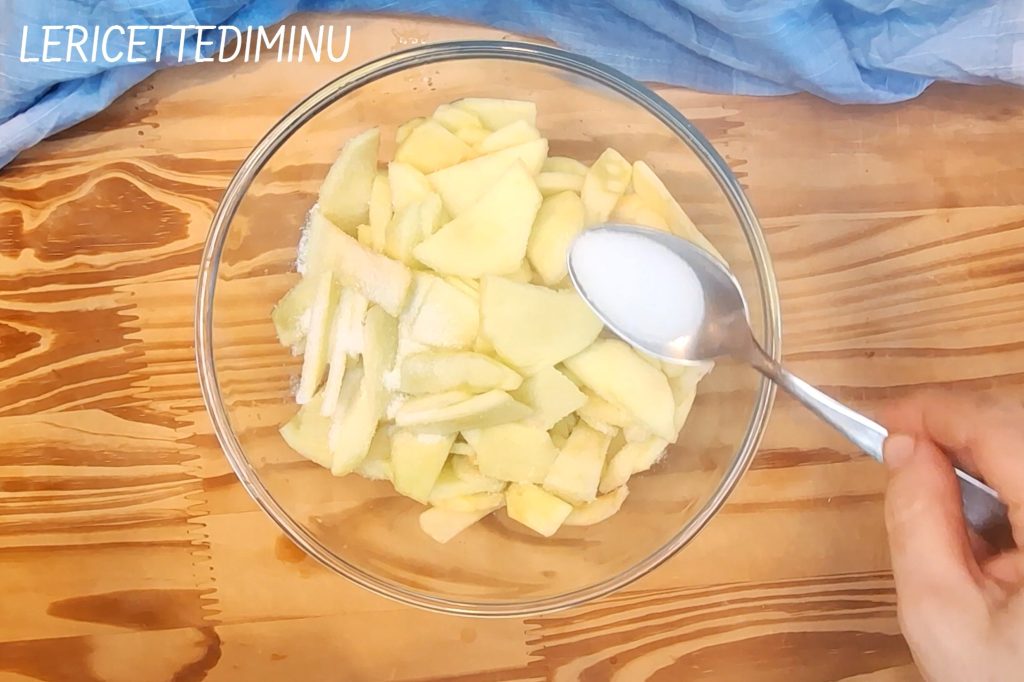
Place them in a bowl, adding the strained juice of half a lemon and 2 level tablespoons of sugar.
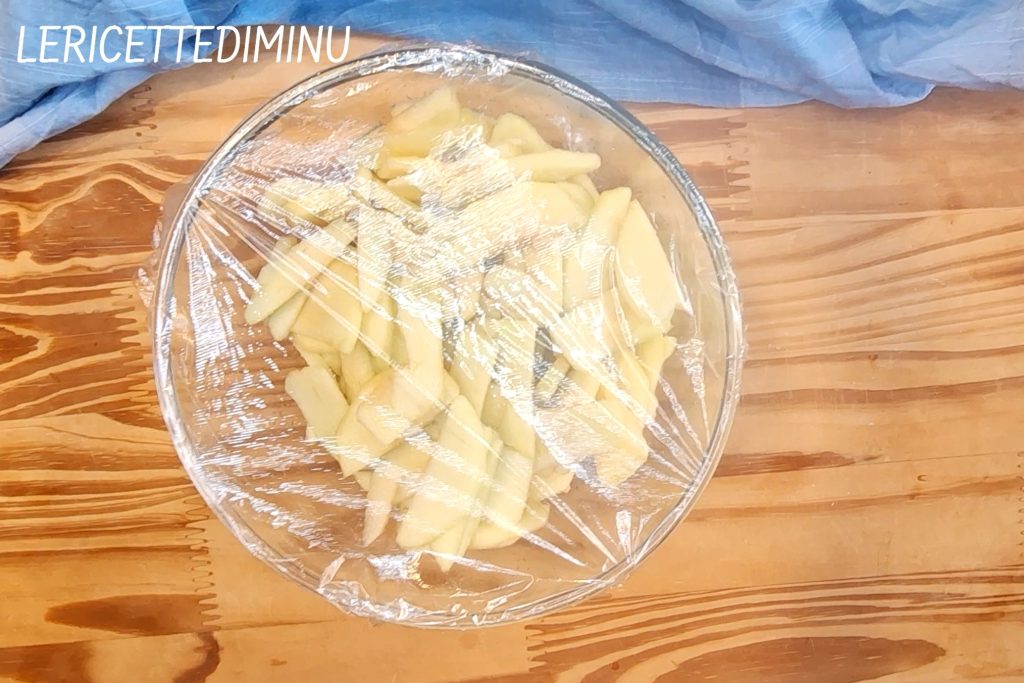
Gently stir and cover with cling film.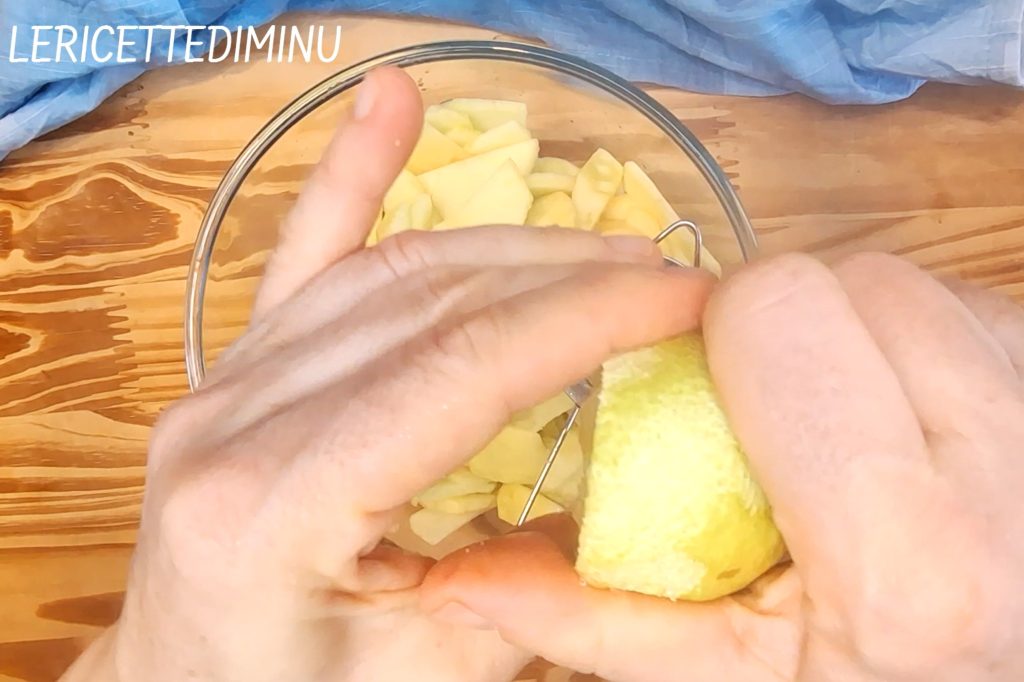
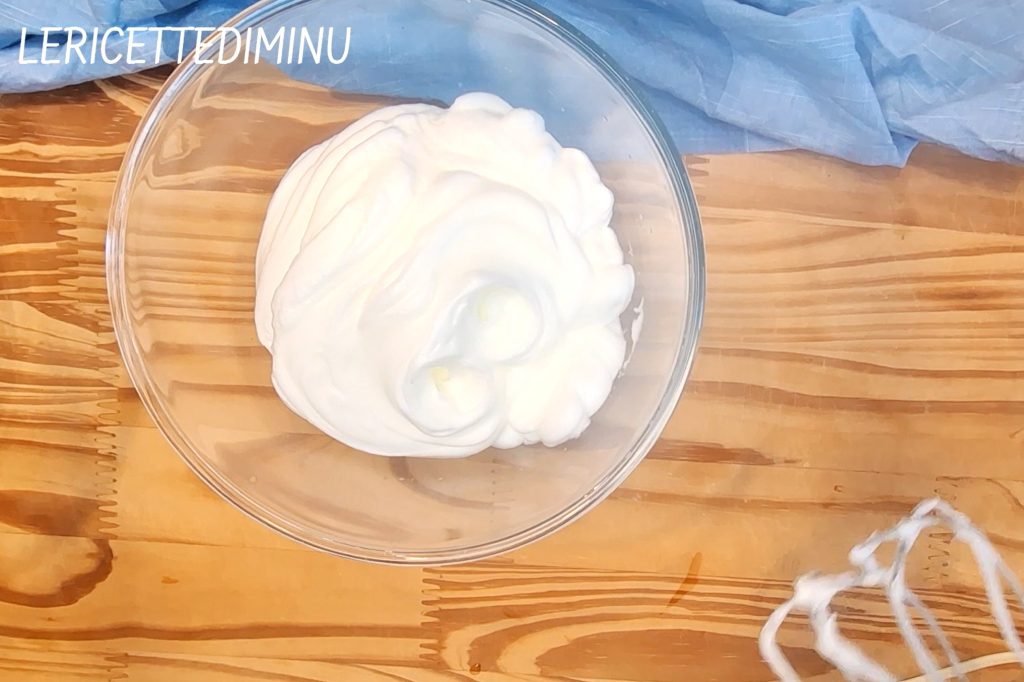
Separate the egg whites from the yolks and beat the whites to stiff peaks with an electric beater.
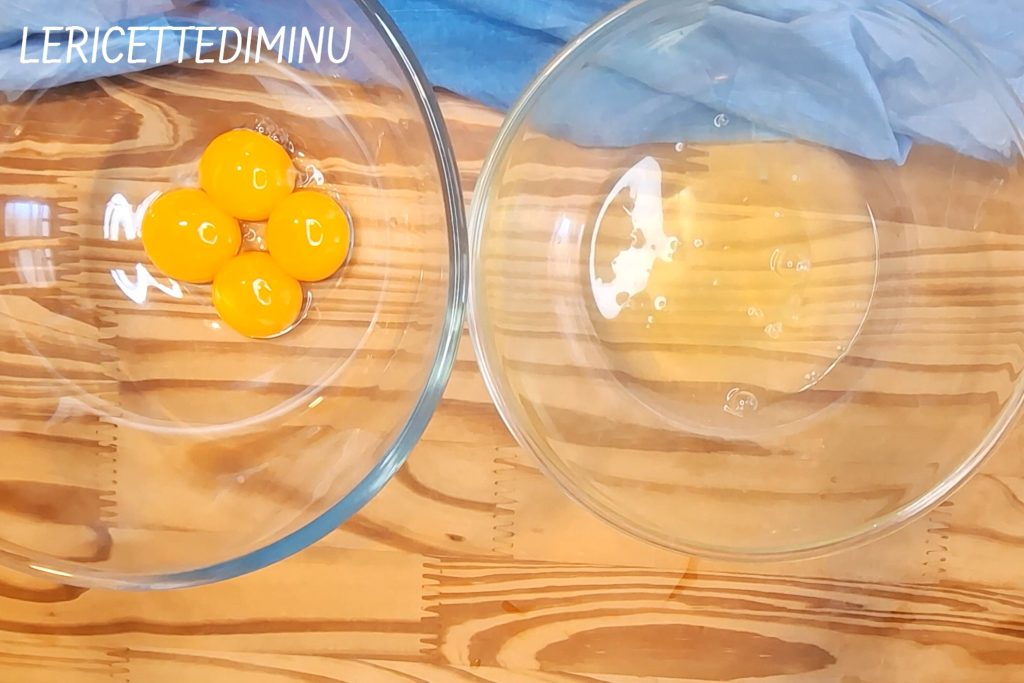
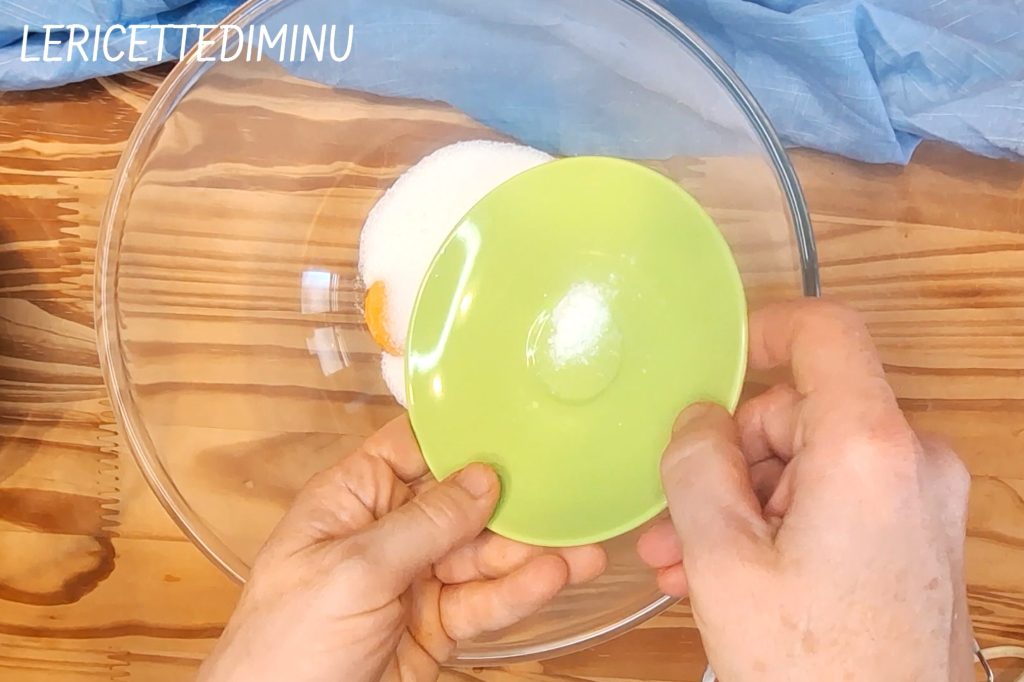
Similarly, beat the yolks well with sugar and vanillin.
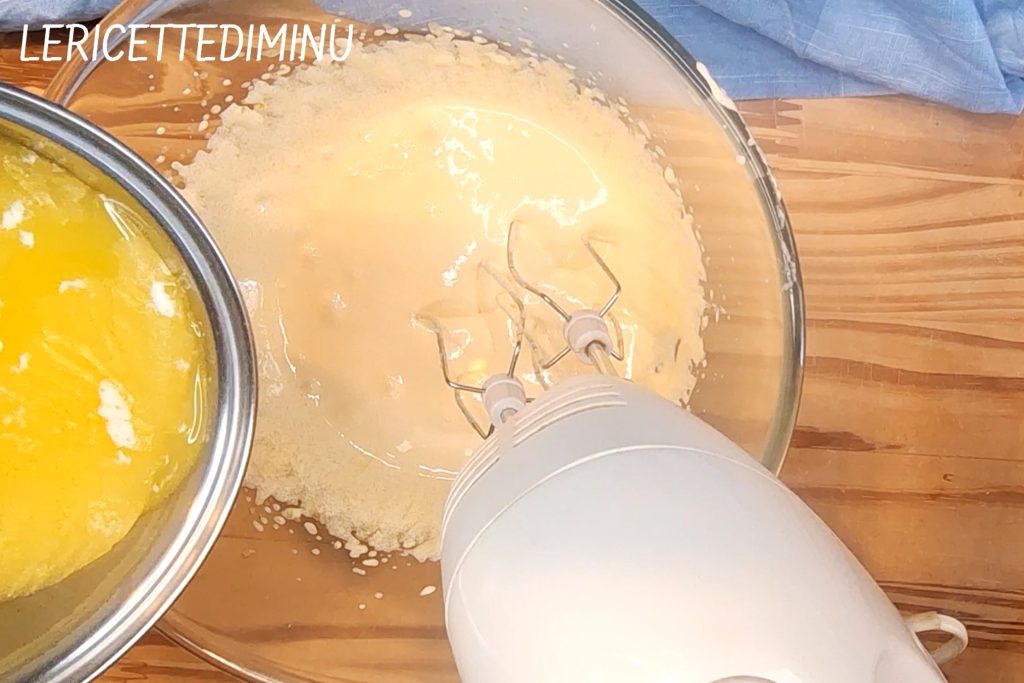
To the yolks mixture, add the melted butter (reserving the equivalent of 2 tablespoons for the surface of the cake). Keep mixing.
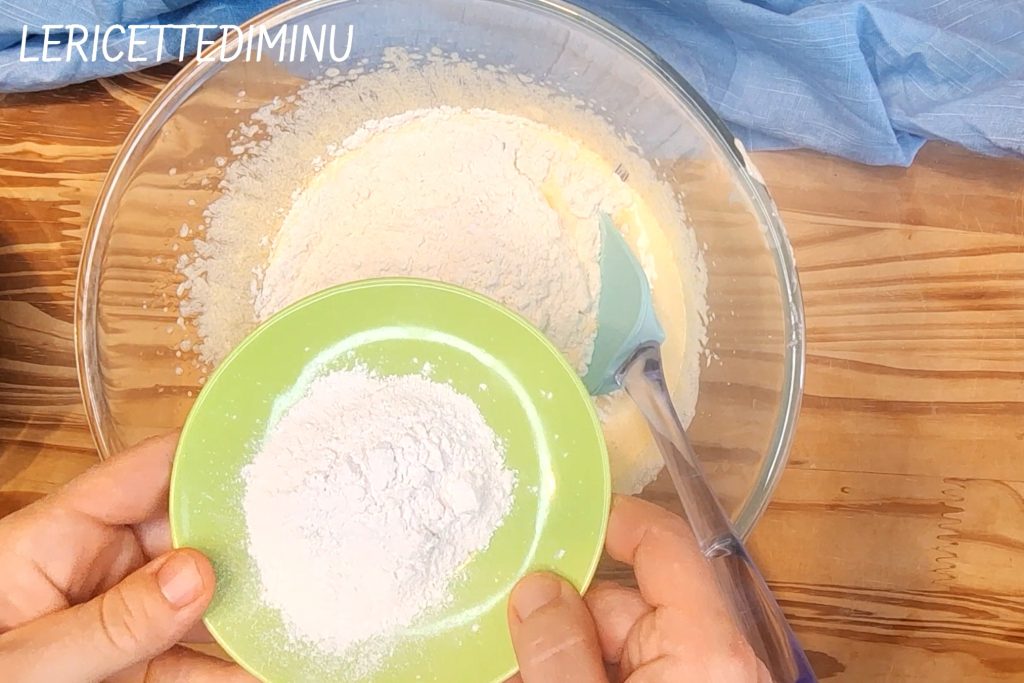
Next, incorporate the flour and the baking powder using the mixer.
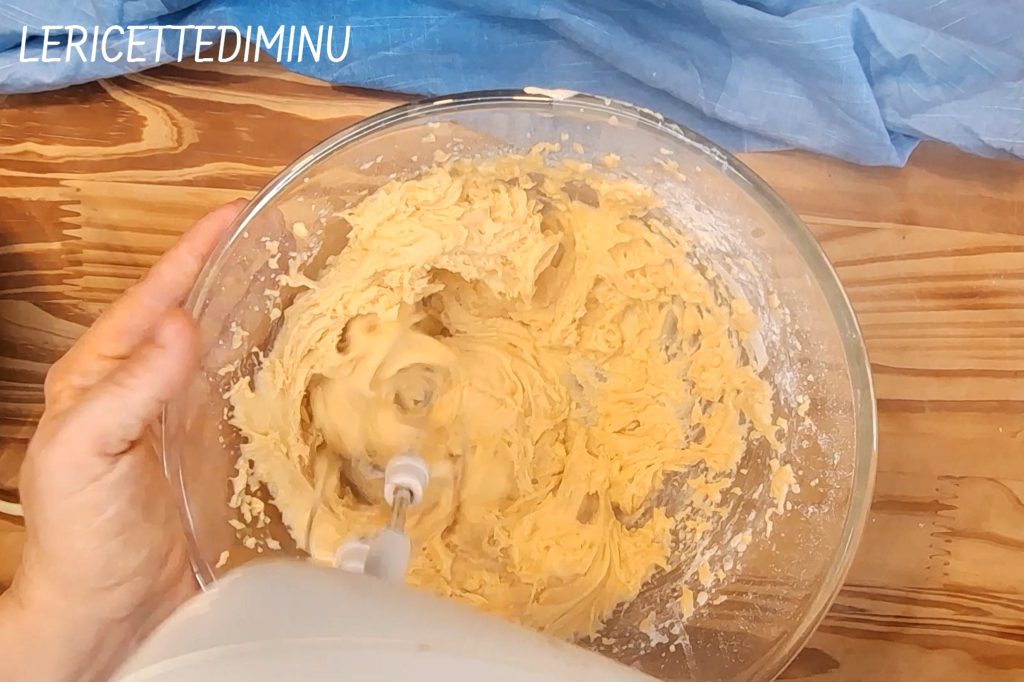
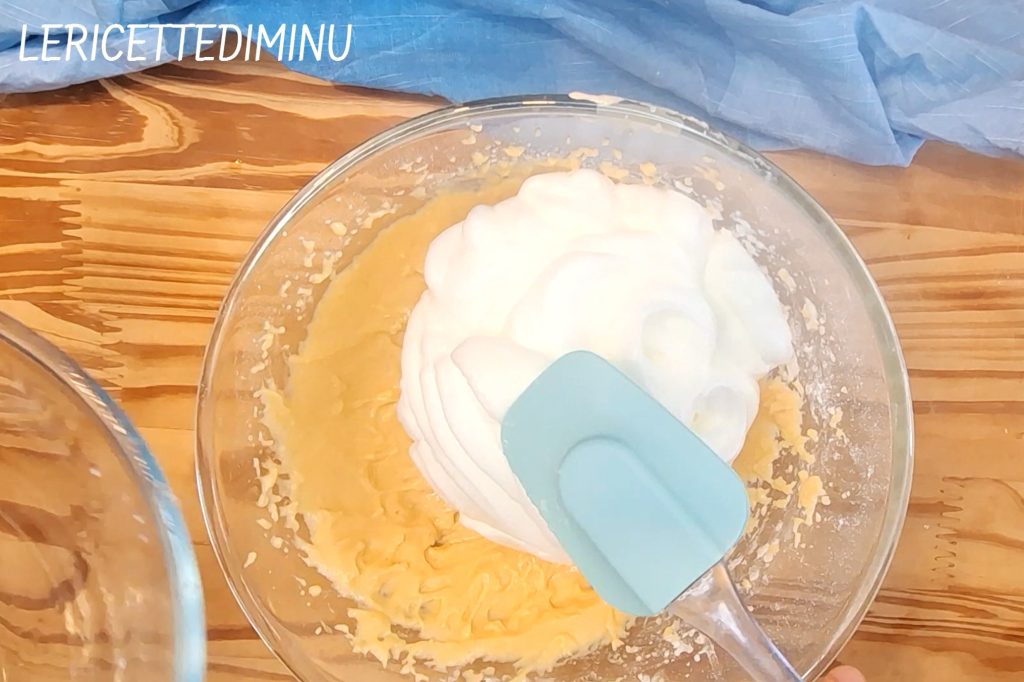
Add the egg whites, folding them in with a spatula.
Finally, fold into the batter a pinch of salt and then more than half of the apple slices, making sure to remove the liquid first.
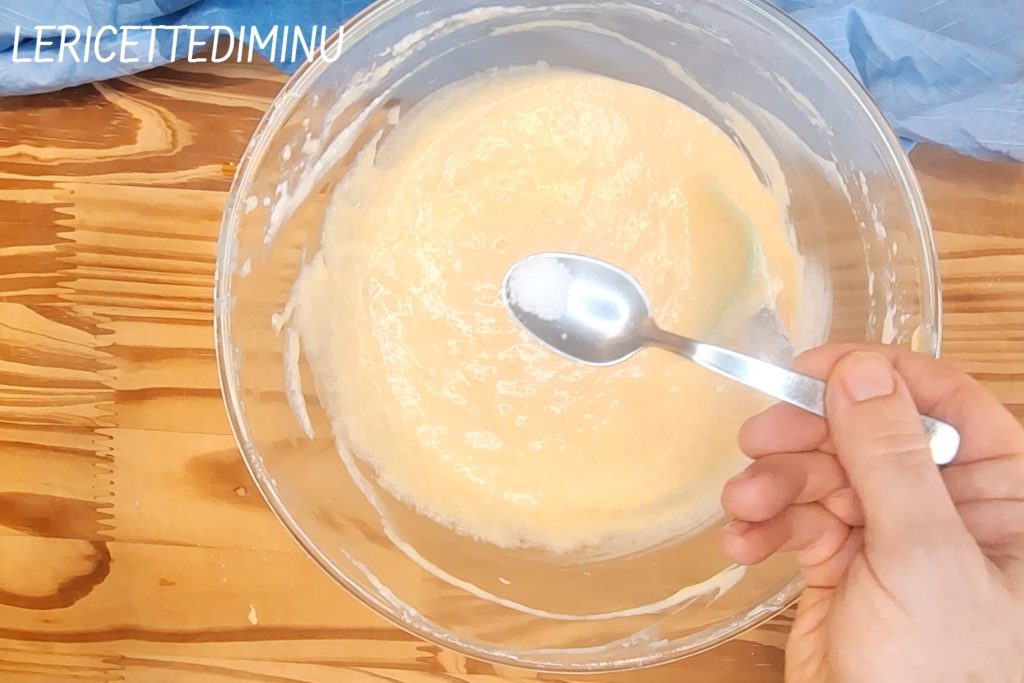
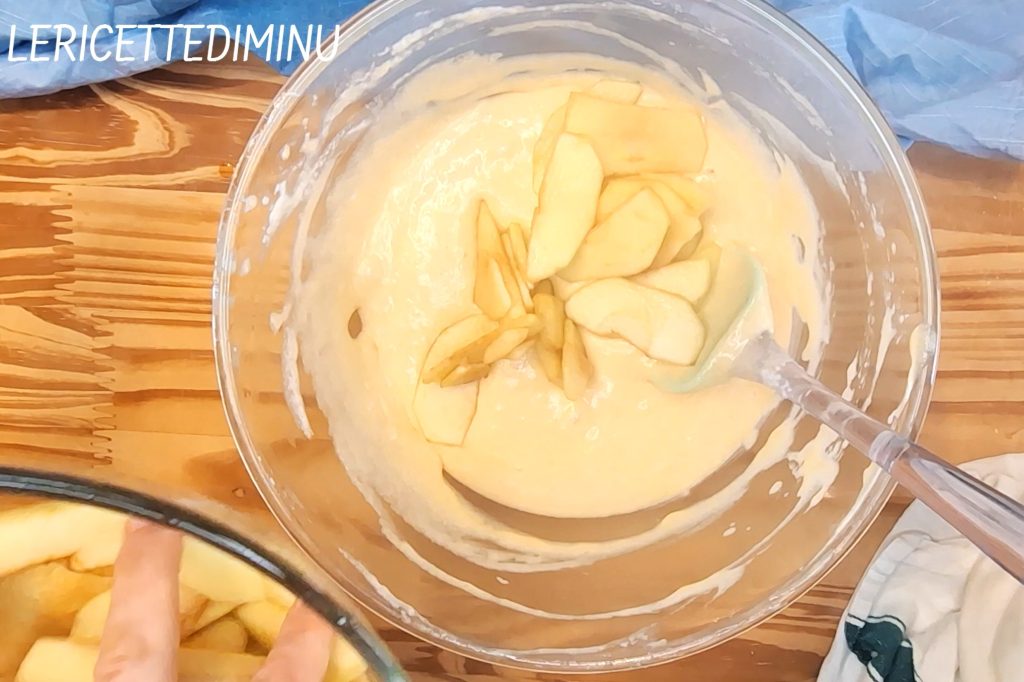
Once the batter is smooth, pour it into the pan and level it.
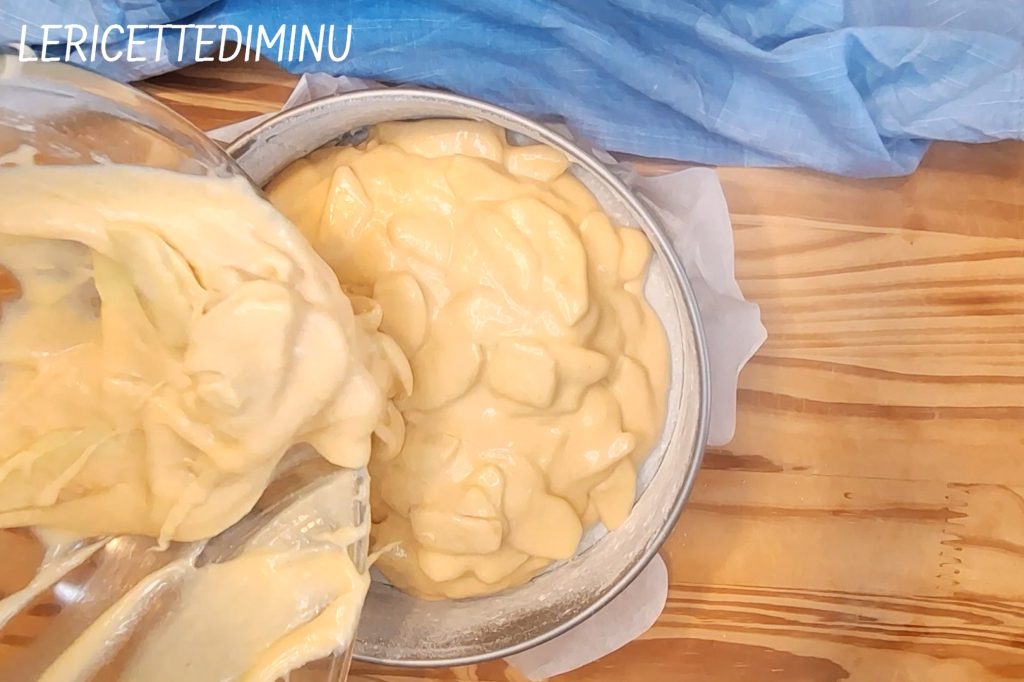
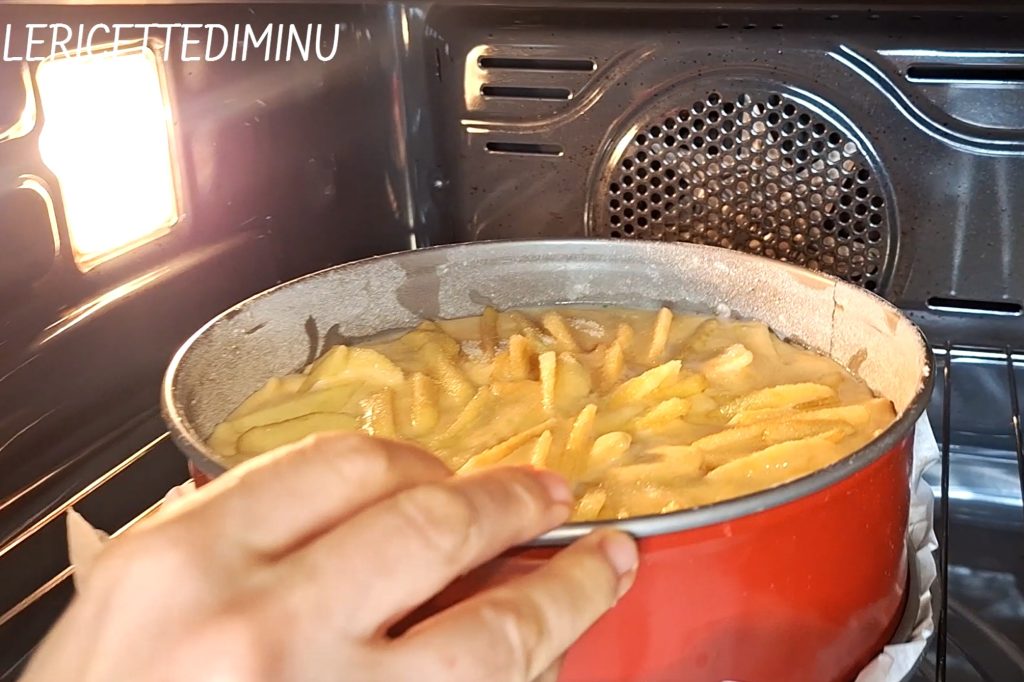
Arrange the remaining apple slices on top and sprinkle with 2 tablespoons of melted butter and 2 tablespoons of sugar.
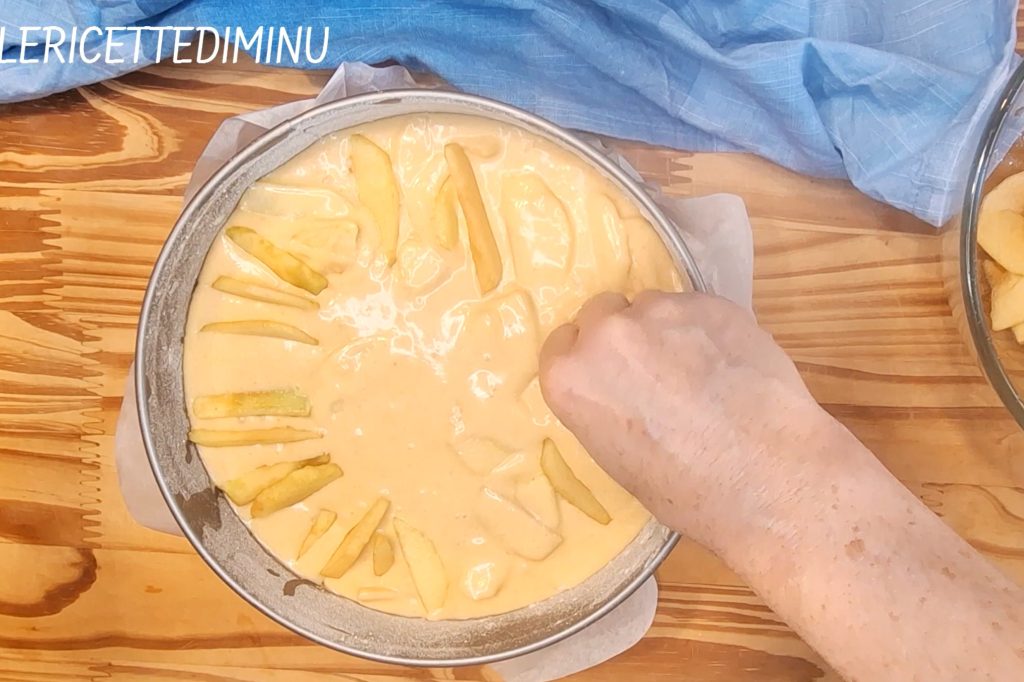
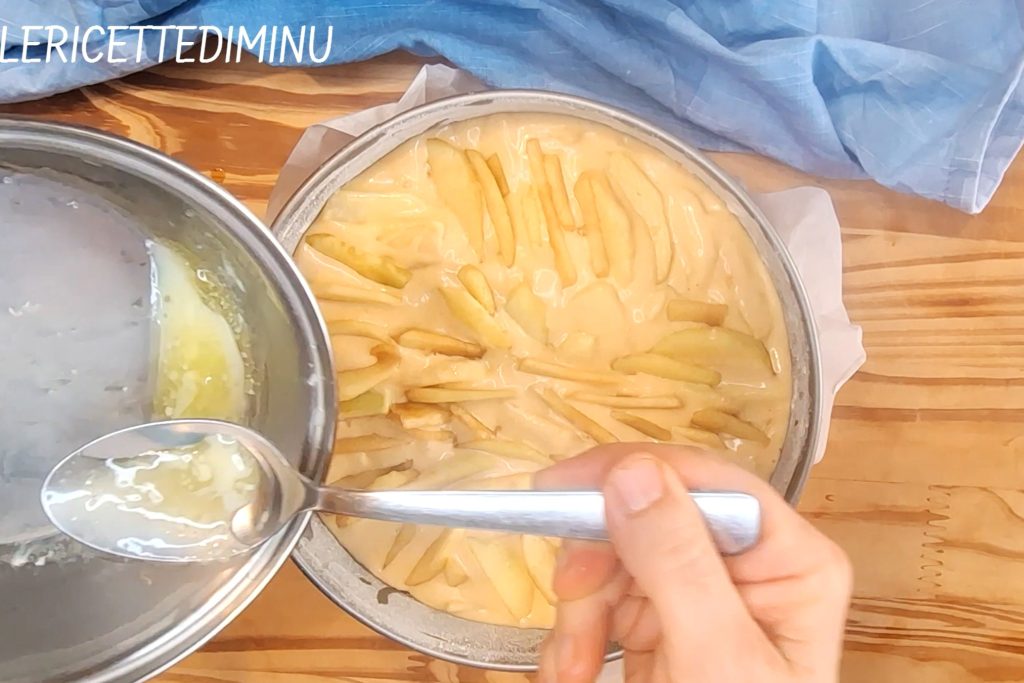
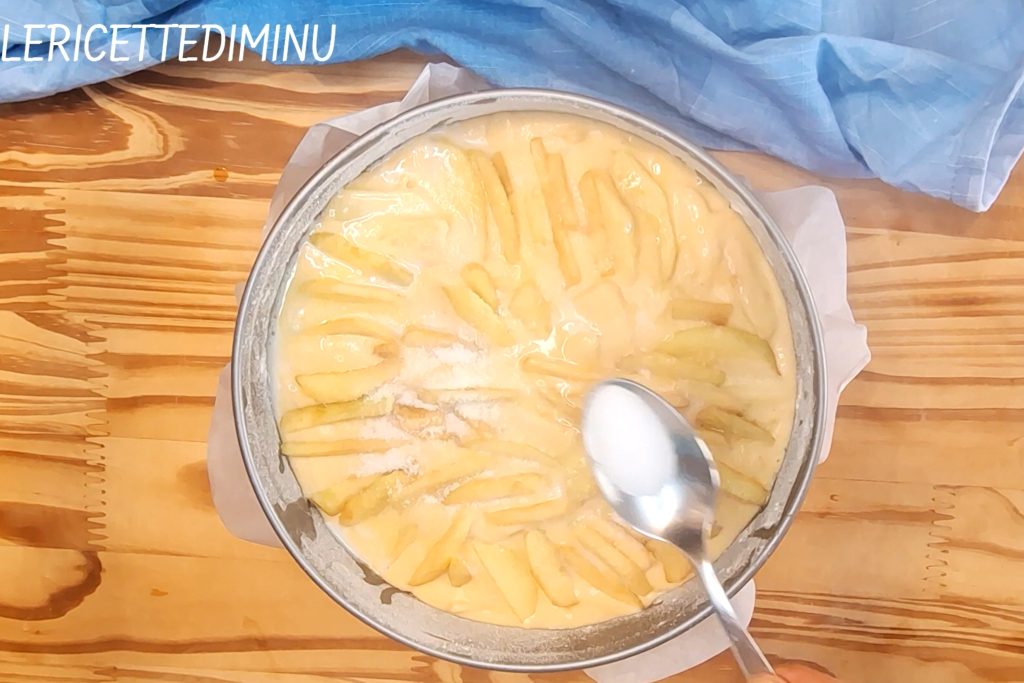
Bake in the central part of the preheated static oven at 356°F for about an hour.
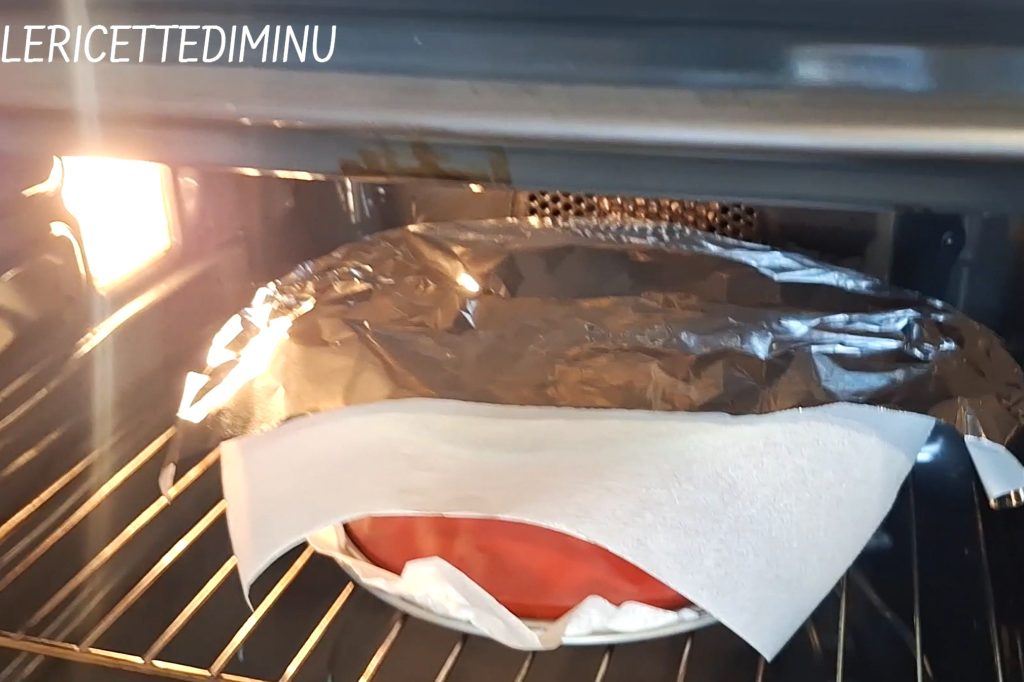
Halfway through baking, if the surface of the cake is already nicely golden, cover with a sheet of parchment paper topped with a sheet of aluminum foil.
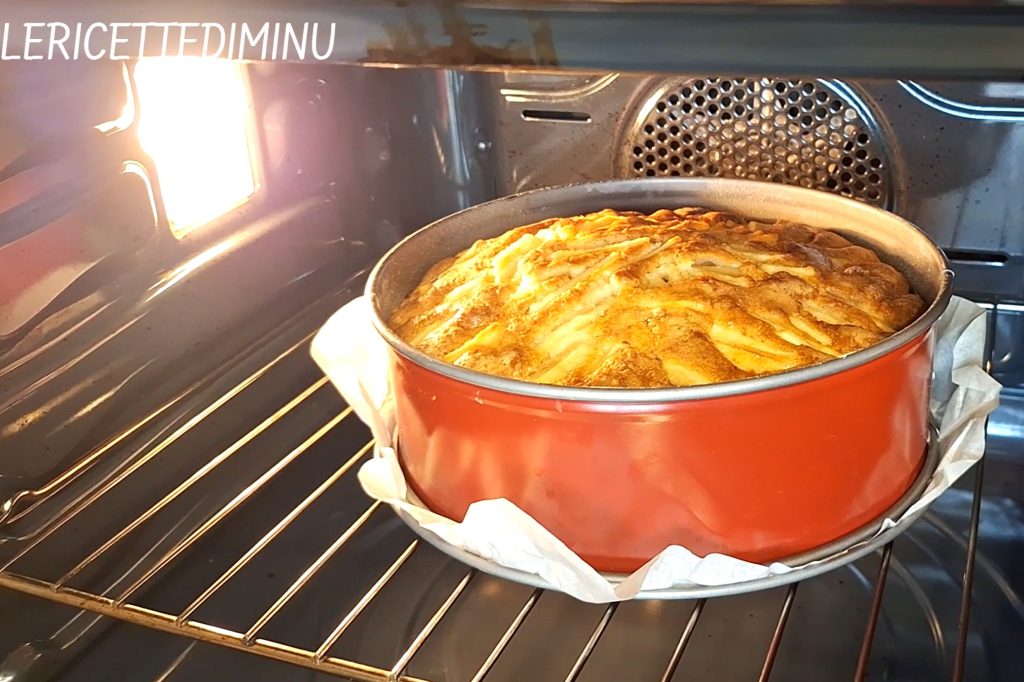
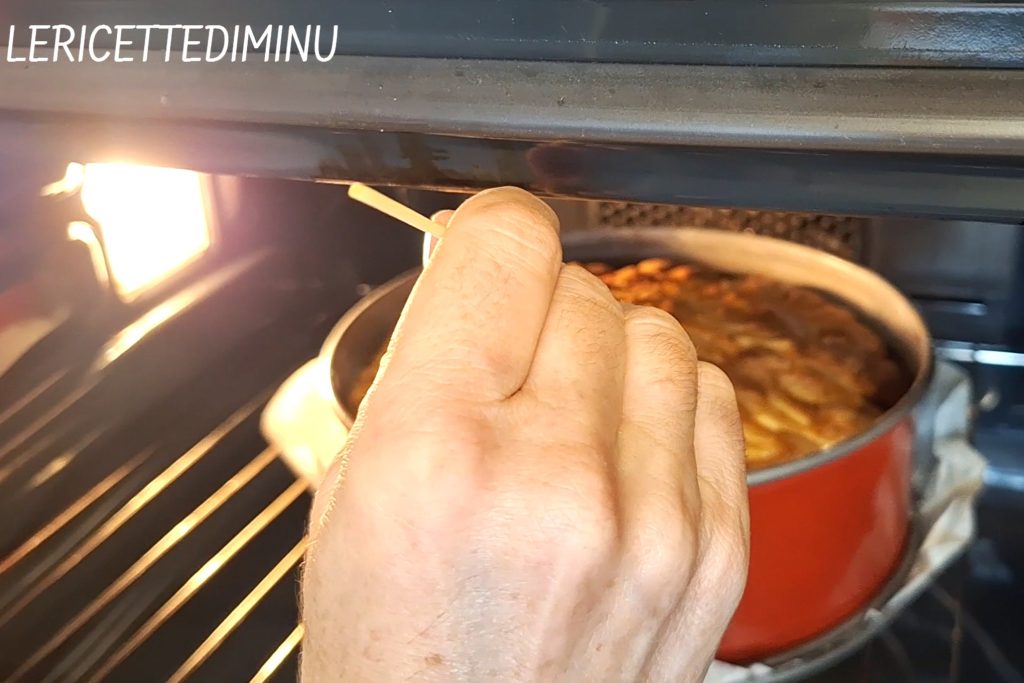
Before taking it out of the oven, do the toothpick test.
However, consider that it will always come out a little damp from this cake, as long as no batter residue is attached and the cake structure feels stable.
The classic apple cake is now ready.
Let it cool before removing from the mold.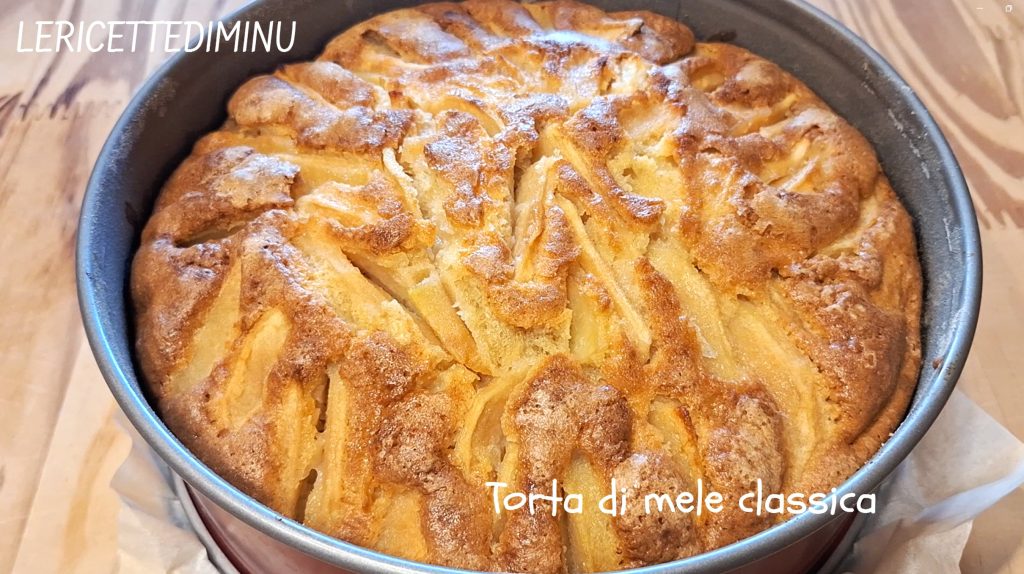
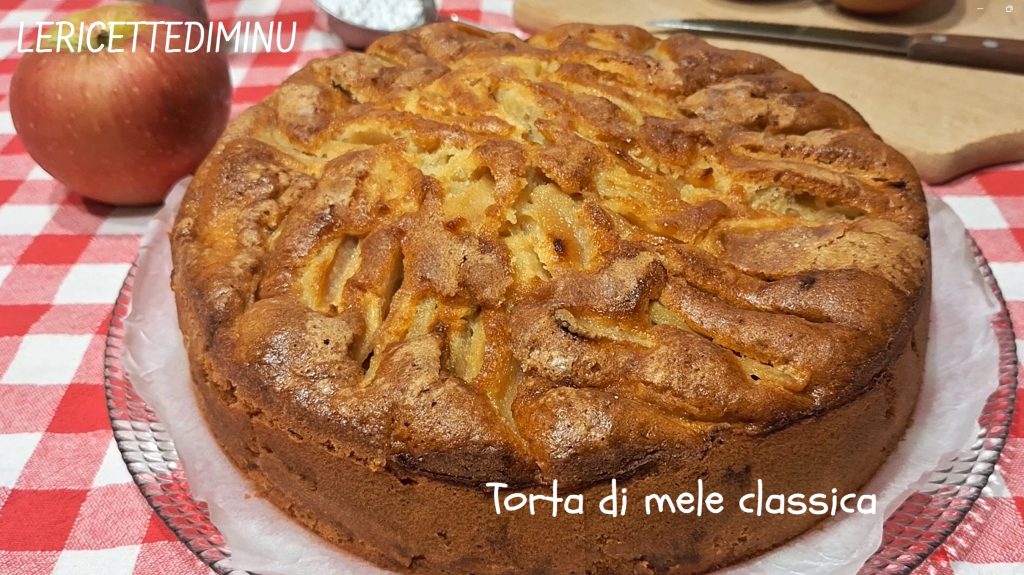
Before serving, sprinkle the top with powdered sugar and cinnamon.
Storage
At room temperature, under a glass dome, for 2 to 3 days maximum.
