
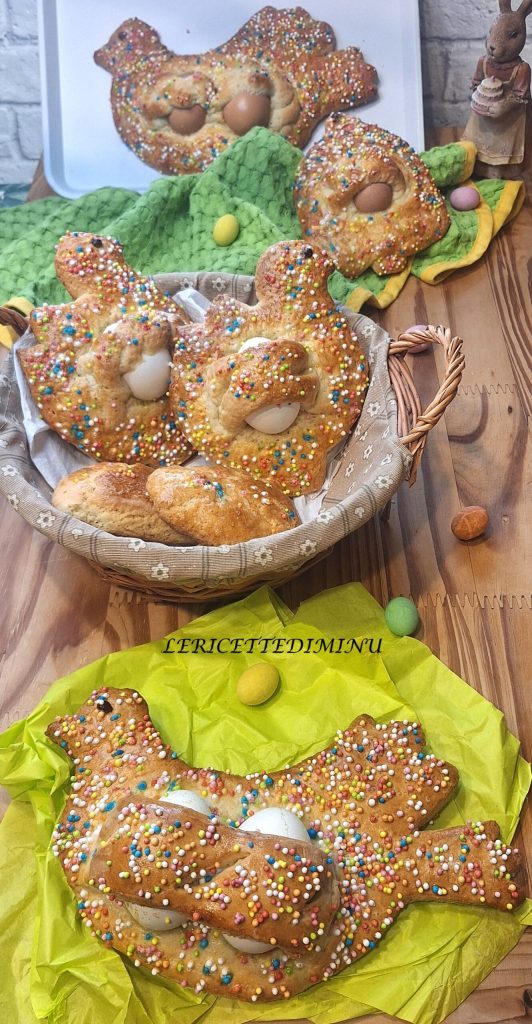
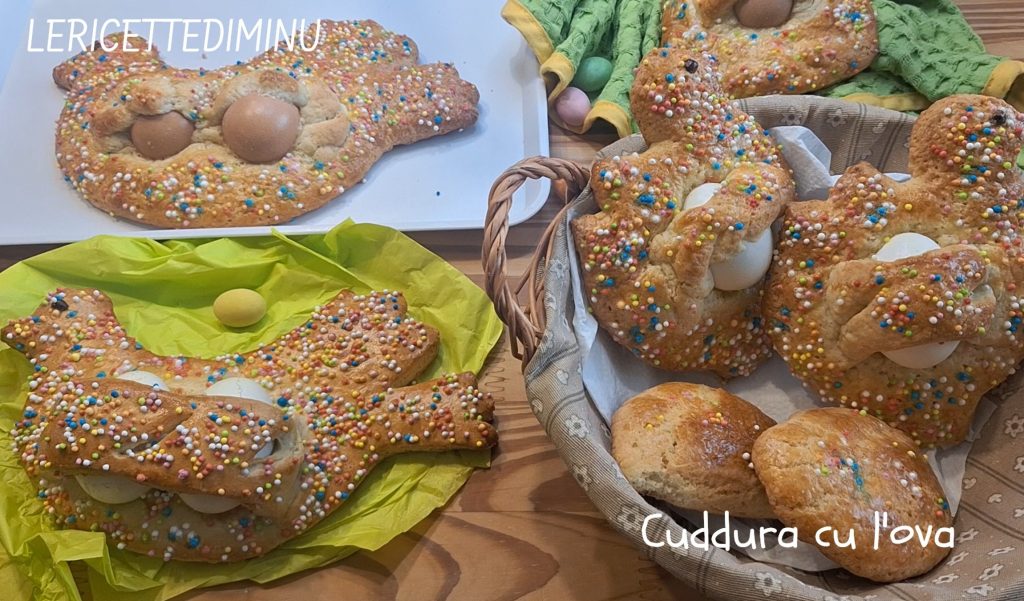
Cuddura cu l’ova are typical Easter cookies from Sicily. Their name seems to derive from the term “Kollour,” which referred to the bread crown that the Greeks offered to the gods during religious rites to receive indulgence in return.
Cuddura has a drier biscuit dough compared to a shortcrust pastry, which differs due to the addition of milk to the dough.
The type of fat used is lard, which gives them much of their characteristic flavor and texture.
Exchanging cuddura cu l’ova during Easter, in the past as well as today, is a way to wish the other person a happy Easter, with the egg symbolizing new life and thus Resurrection.
In the past, families would gather women together to make these traditional sweets.
These were thus homemade preparations, involving various generations of women, each contributing according to their experience and age.
Usually, older and younger women handled the dough and all the various decorative phases.
The simplest tasks were always assigned to the youngest ones, among whom I often found myself as a child.
They would attach the eye to doves and chicks, brush the shapes made by the women with beaten egg, and finally sprinkle everything with many cheerful sprinkles, that is, round colored sprinkles.
Joyful moments of sharing remain in the memories of those generations who experienced them, preparing themselves for the arrival of Holy Easter.
If you like my recipes, you can follow me on my FACEBOOK page and on INSTAGRAM
Thank you ❤️😘❤️
- Difficulty: Easy
- Cost: Economical
- Rest time: 30 Minutes
- Preparation time: 20 Minutes
- Portions: 10
- Cooking methods: Oven
- Cuisine: Italian
- Seasonality: Easter
- Energy 366.65 (Kcal)
- Carbohydrates 54.88 (g) of which sugars 19.56 (g)
- Proteins 7.74 (g)
- Fat 14.02 (g) of which saturated 5.48 (g)of which unsaturated 7.62 (g)
- Fibers 1.10 (g)
- Sodium 138.49 (mg)
Indicative values for a portion of 110 g processed in an automated way starting from the nutritional information available on the CREA* and FoodData Central** databases. It is not food and / or nutritional advice.
* CREATES Food and Nutrition Research Center: https://www.crea.gov.it/alimenti-e-nutrizione https://www.alimentinutrizione.it ** U.S. Department of Agriculture, Agricultural Research Service. FoodData Central, 2019. https://fdc.nal.usda.gov
Ingredients
- 4 cups all-purpose flour
- 3/4 cup sugar
- 4.2 oz lard
- 2 eggs (medium)
- 1.5 tsp baking ammonia
- 1 tsp vanilla extract
- 3.3 tbsp milk (or as needed)
- 1 pinch salt
- 6 eggs
- 1 pinch vanillin
- 1 oz sprinkles (round colored)
Tools
- 1 Rolling Pin graduated
- Baking Pans oven trays
- 1 Bowl
- 1 Knife well-sharpened or smooth pastry cutter
- Cutting Templates made on parchment paper: dove, chick, and bell
Steps
To prepare the cuddura cu l’ova, start by boiling at least half an hour in advance, the 5 eggs we will need for decoration.
Once it starts boiling, lower the heat and keep on the stove for 10 minutes.Then drain the hot water and leave the eggs immersed in cold water to stop cooking.
In a large bowl, combine the flour, sugar, lard, the 2 eggs, 1 teaspoon of vanilla extract, the baking ammonia dissolved in a bit of milk, and a pinch of salt.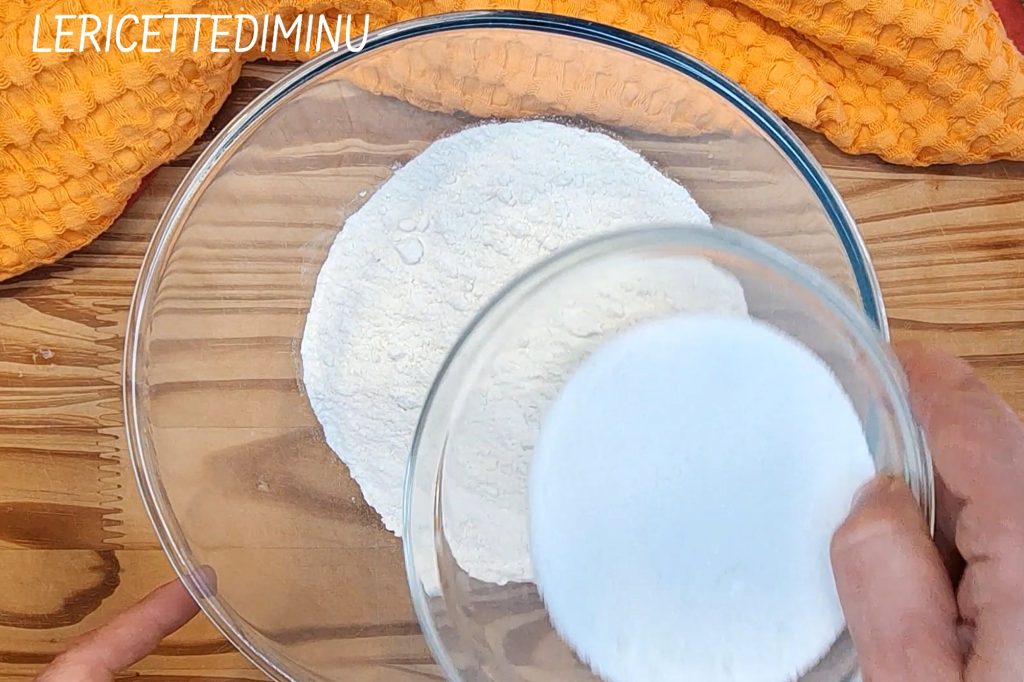
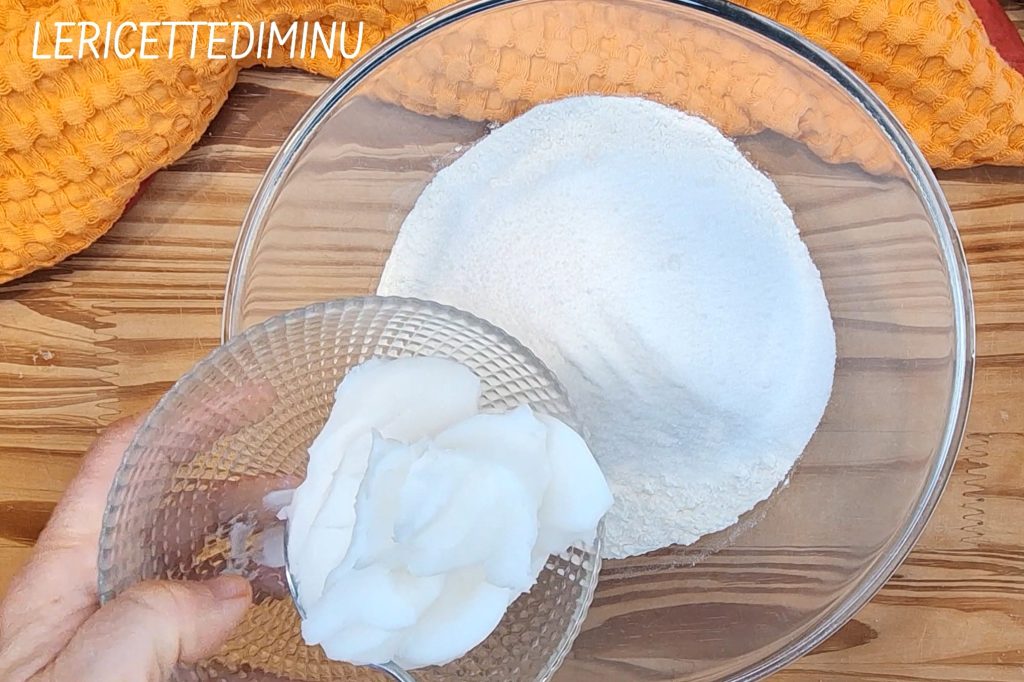
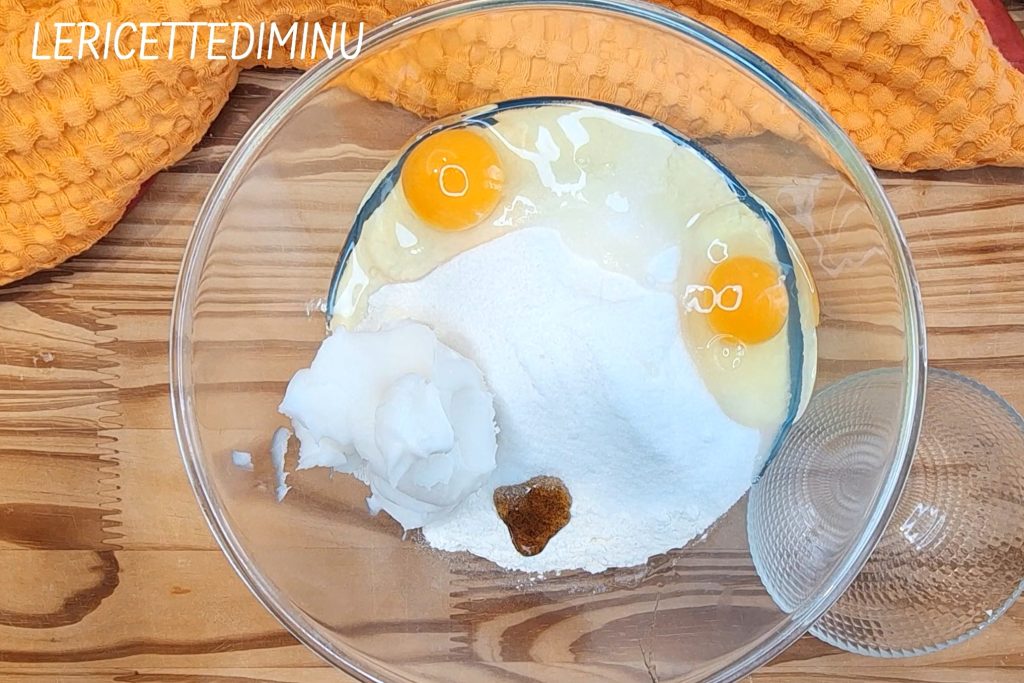
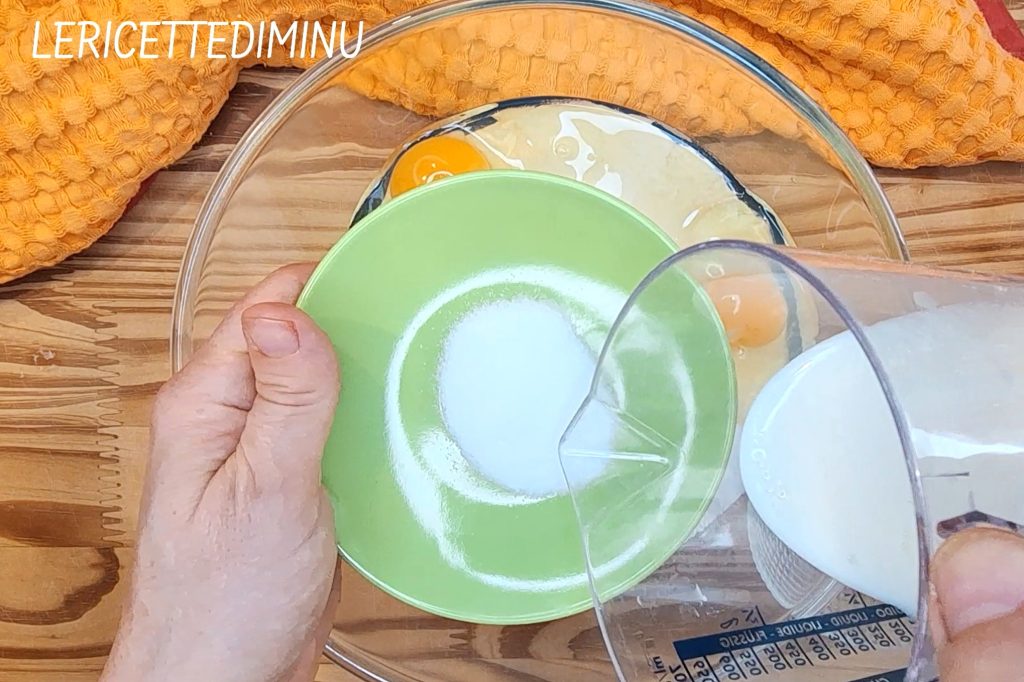
Start kneading with your hands, adding milk as needed to achieve a soft and workable dough, but not sticky.
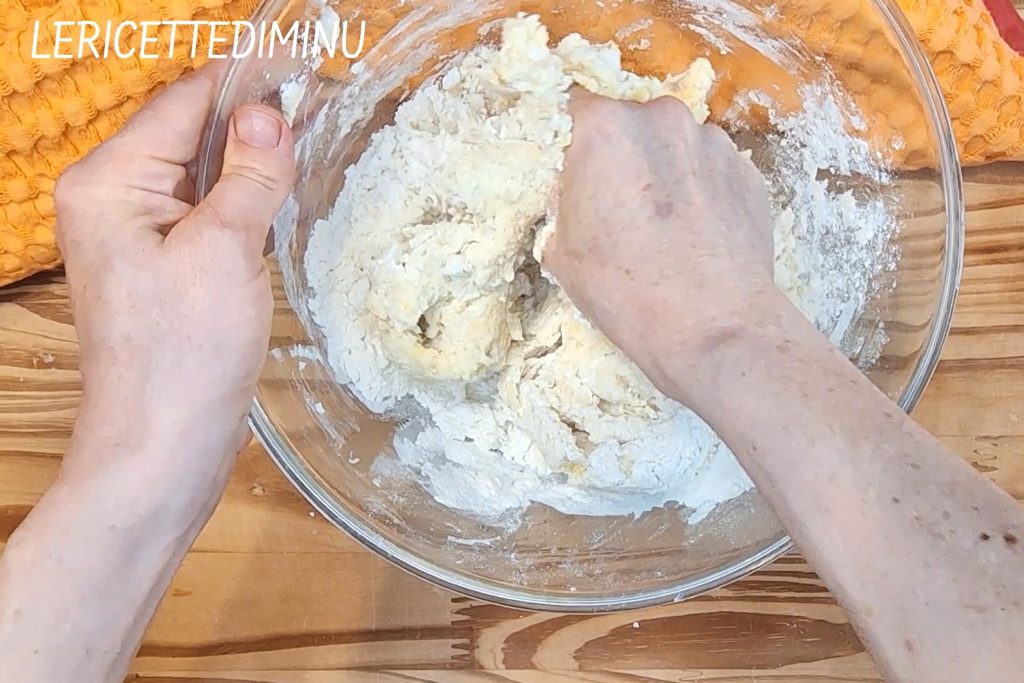
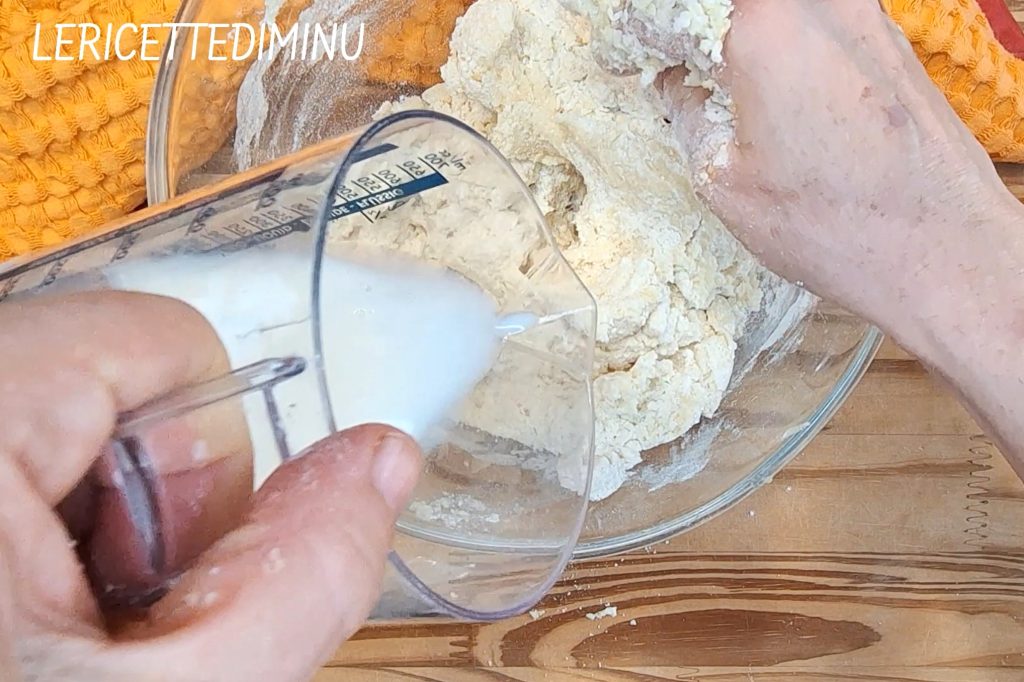
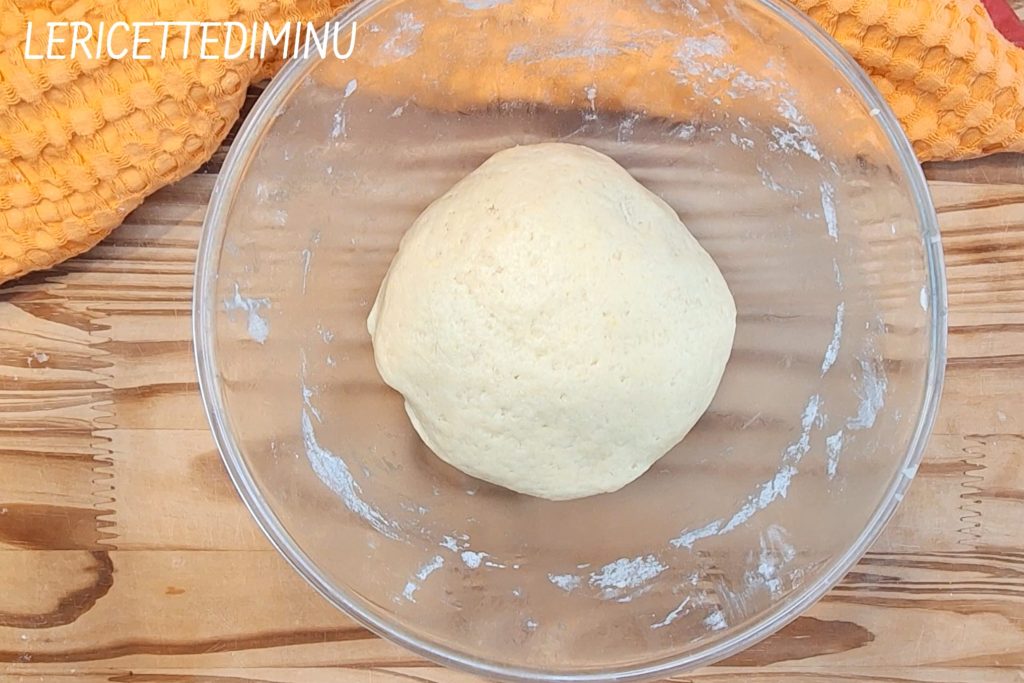
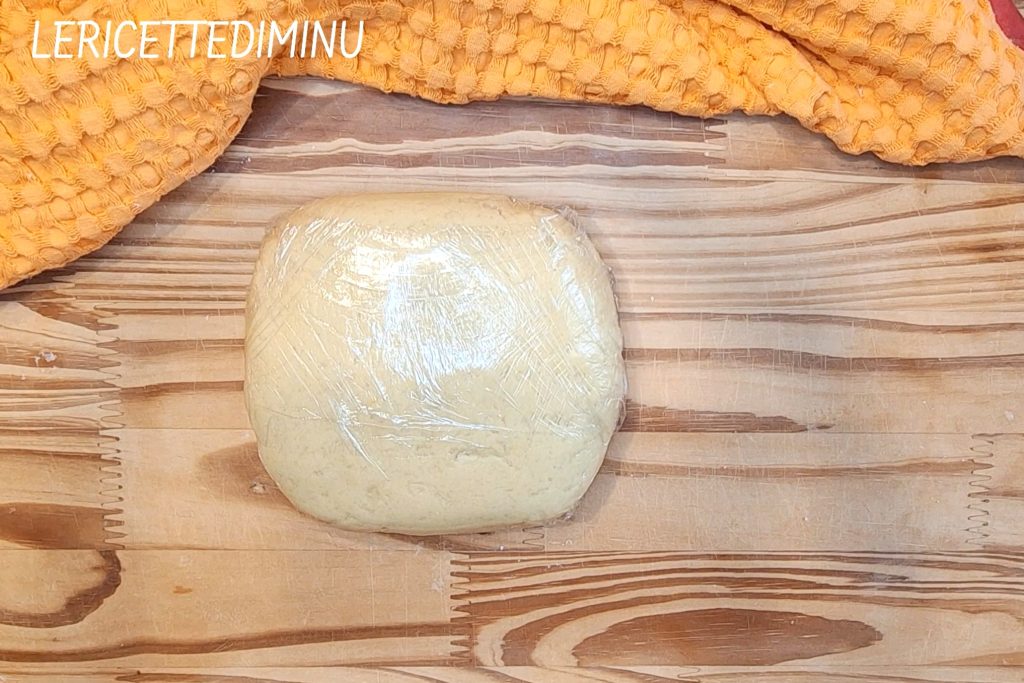
Then wrap the obtained dough in plastic wrap and let it rest in the fridge for at least half an hour.
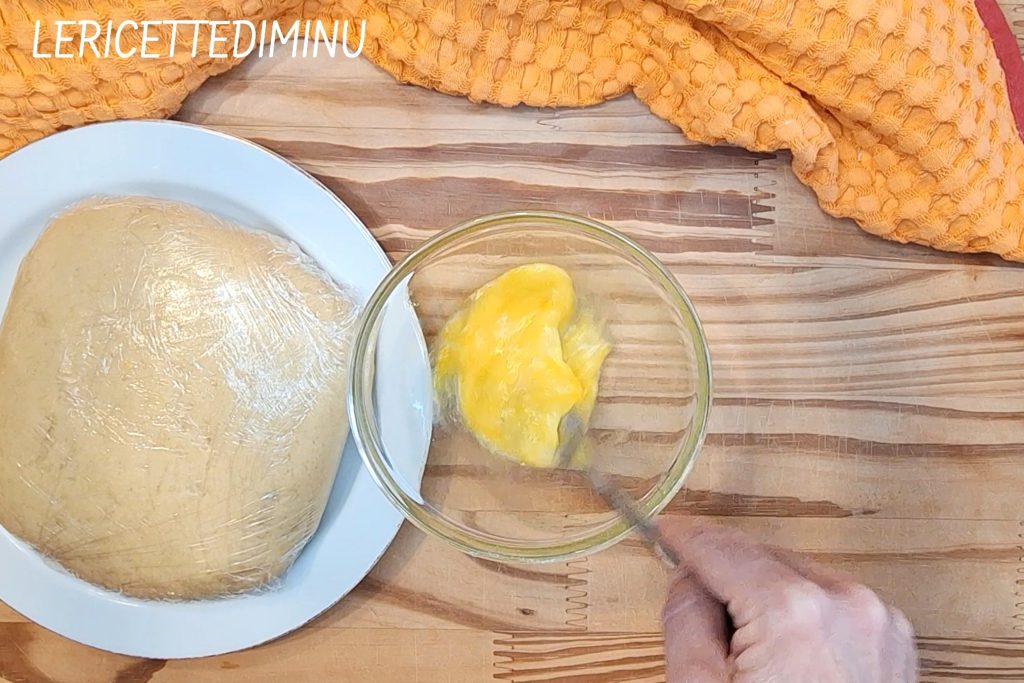
In a small bowl, work an egg with a pinch of vanillin. We will use it later to brush the biscuit dough.
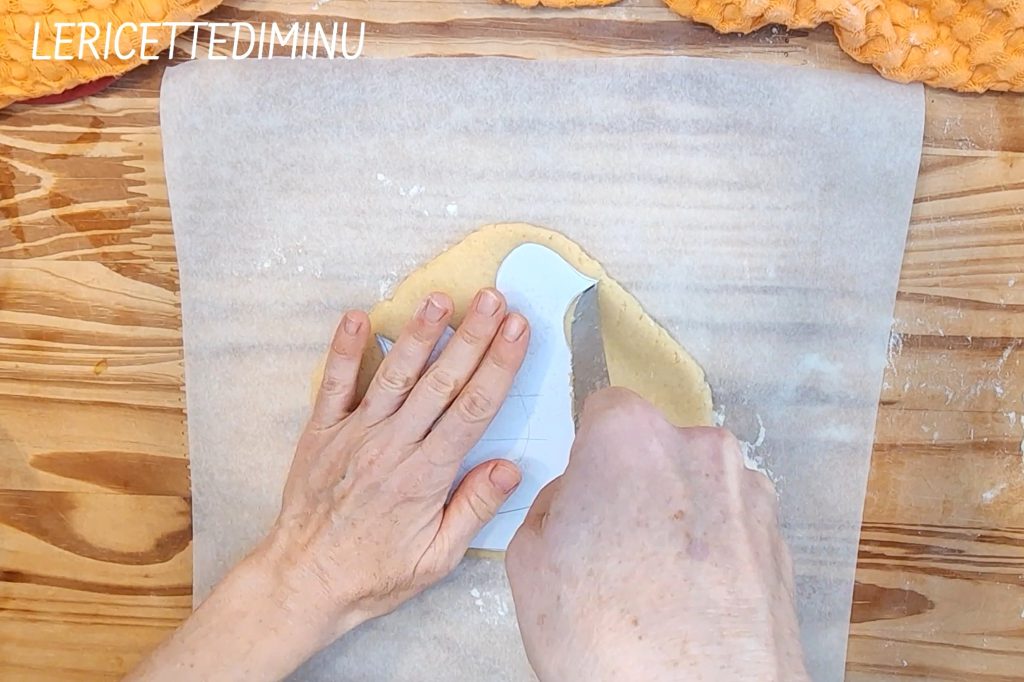
On a sheet of parchment paper and with the help of some flour, roll out one-quarter of the dough with the rolling pin to a thickness of about 3/10 inch.
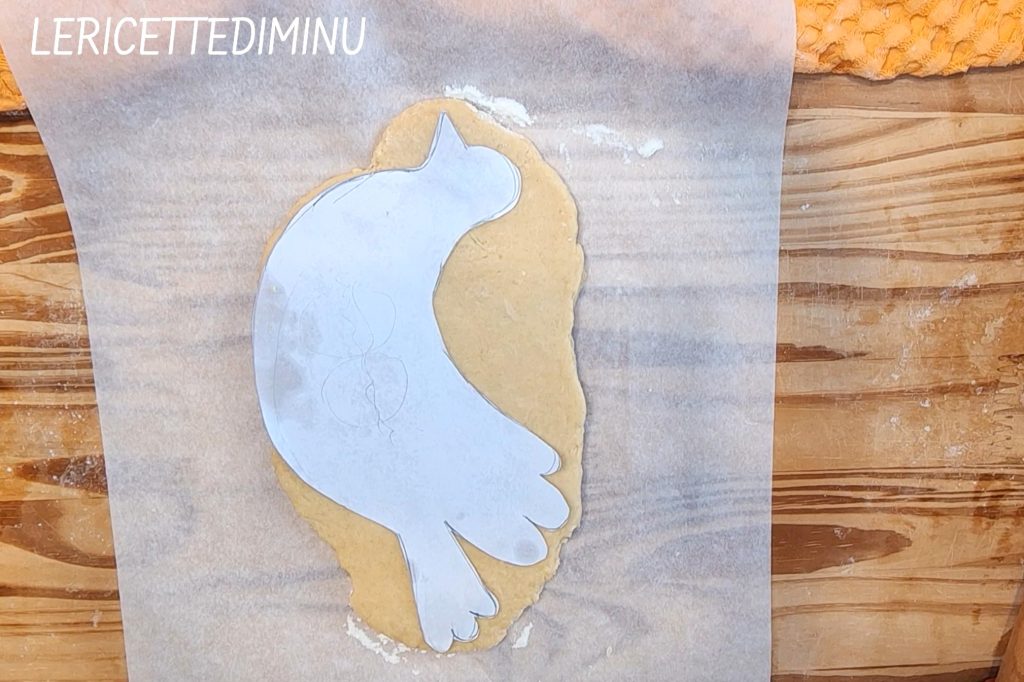
Cut the desired shapes.
In my area, the most common subjects are the dove, the chick, the bell, or even the basket.
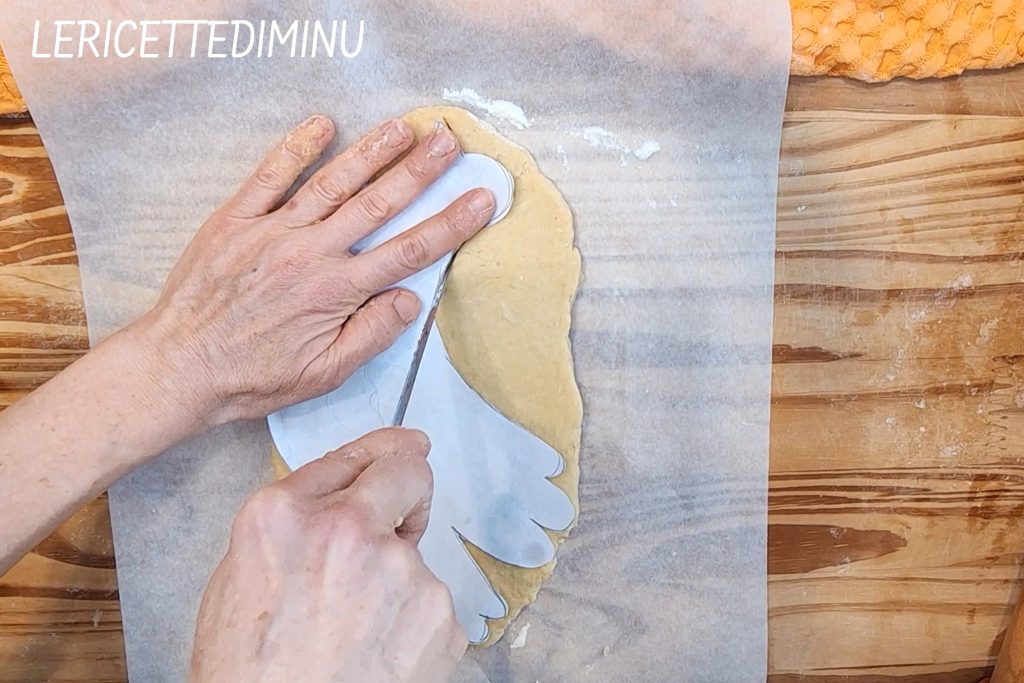
Transfer the dough shape onto the baking tray.
Consider that they will tend to puff up during baking, so you will need several trays. Larger shapes should be baked alone, while smaller ones can be baked with sufficient space between them.
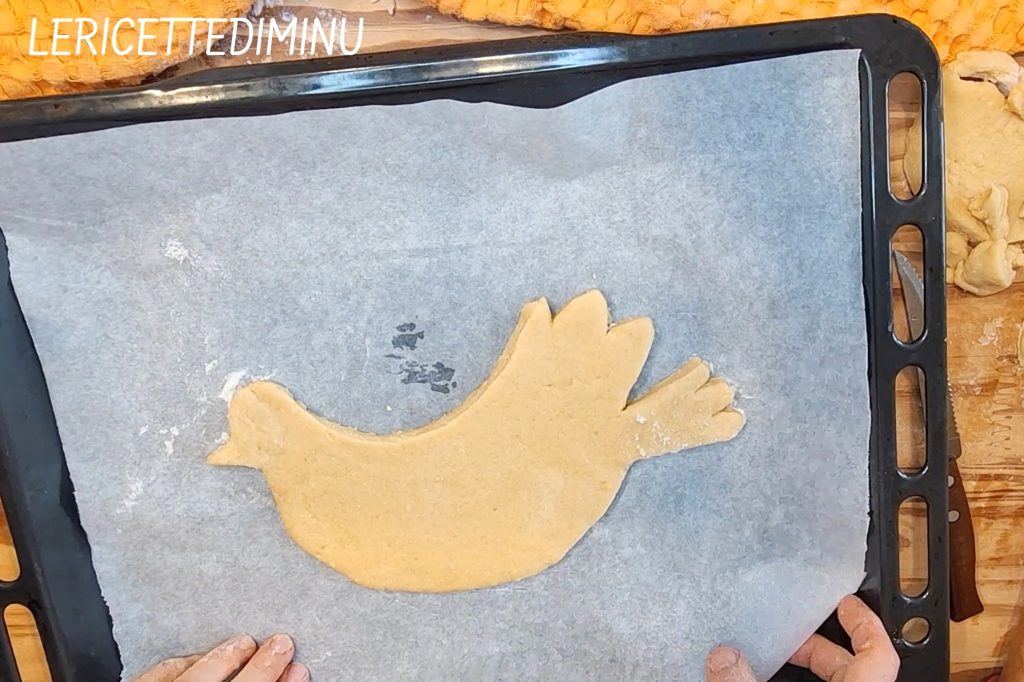
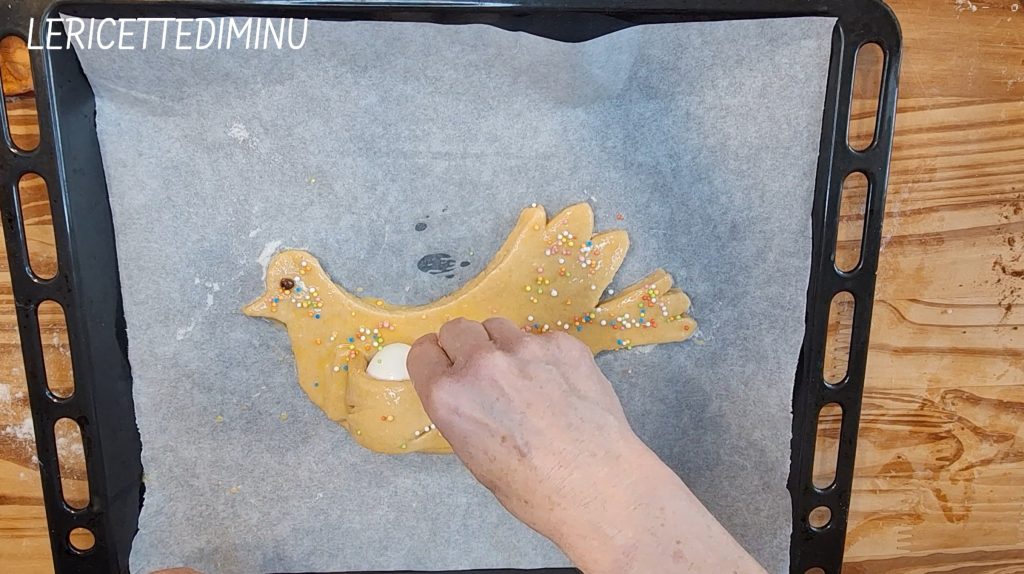
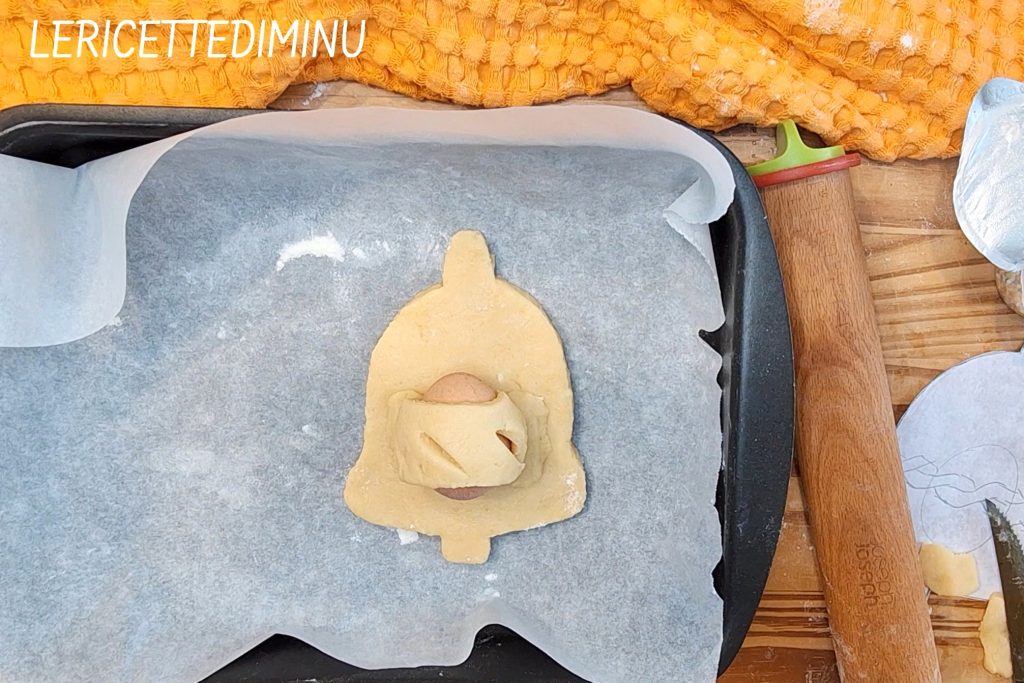
Create a small round base with a piece of dough to adhere to each hard-boiled egg.
Moisten under and over this small base with water.Then adhere the egg.
It’s clear that if we made a dove, we might insert two or even three eggs depending on its size, while on a chick, we will attach a single egg.
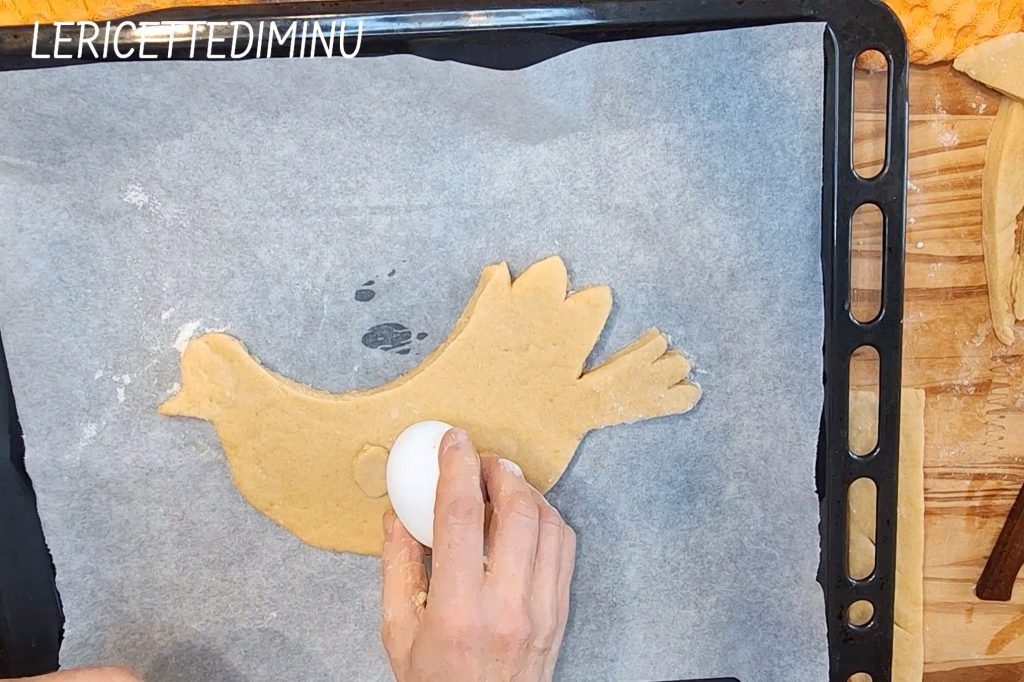
Create a wide strip slightly thinner than the rest of the biscuit.
Make incisions for decoration purposes on this strip.
Lightly moisten the points where you will attach the strip, both on the dough and on the egg itself.
Make sure the strip adheres well to the sides of the egg and on it.
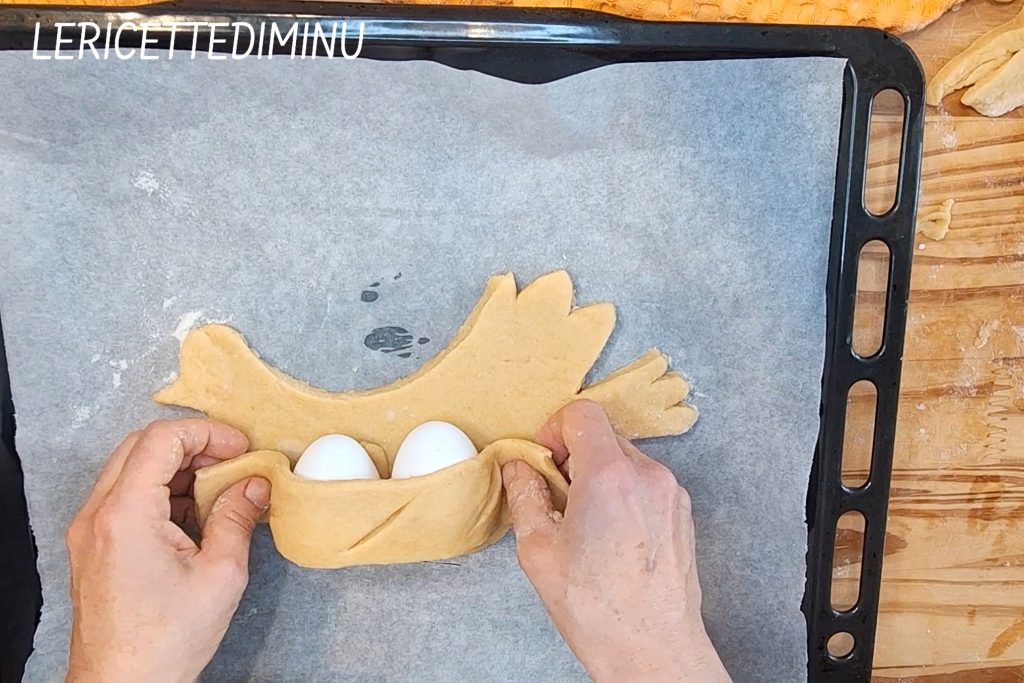
Cut the excess of the strip.
With a coffee bean, a chocolate chip, or a piece of dough worked with cocoa and then moistened, create the eye of the dove or chick.
With the beaten egg we prepared earlier, carefully brush the entire surface of the cuddura, including the hard-boiled egg and strip.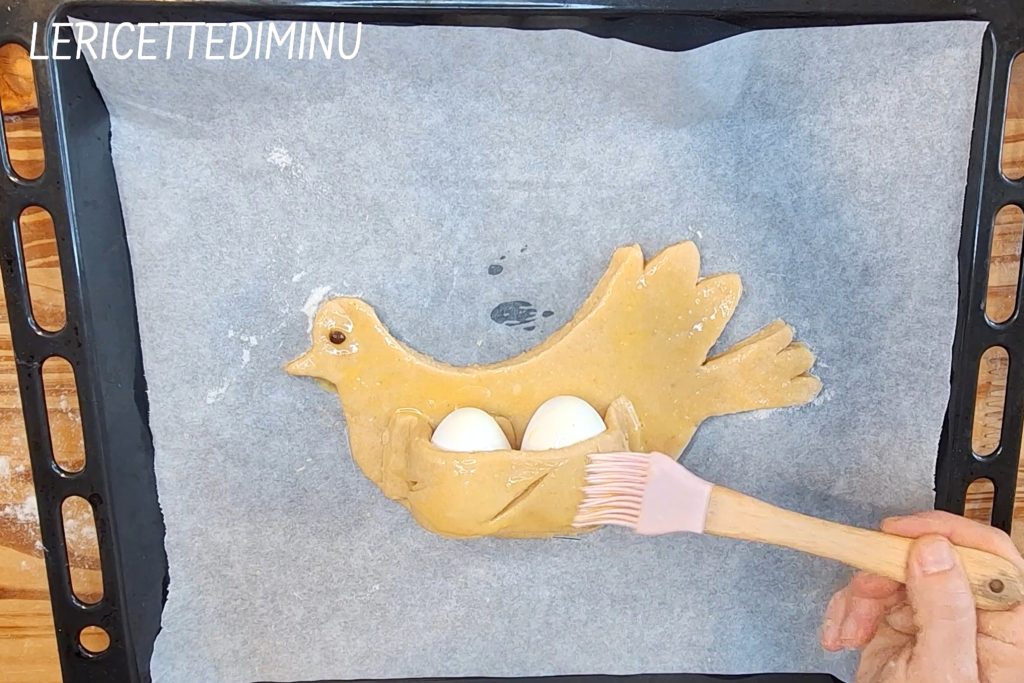
Sprinkle with colored sprinkles and bake in a preheated static oven at 350°F, in the center of the oven, for about 18/20 minutes. Monitor the biscuit’s cooking in the last few minutes.
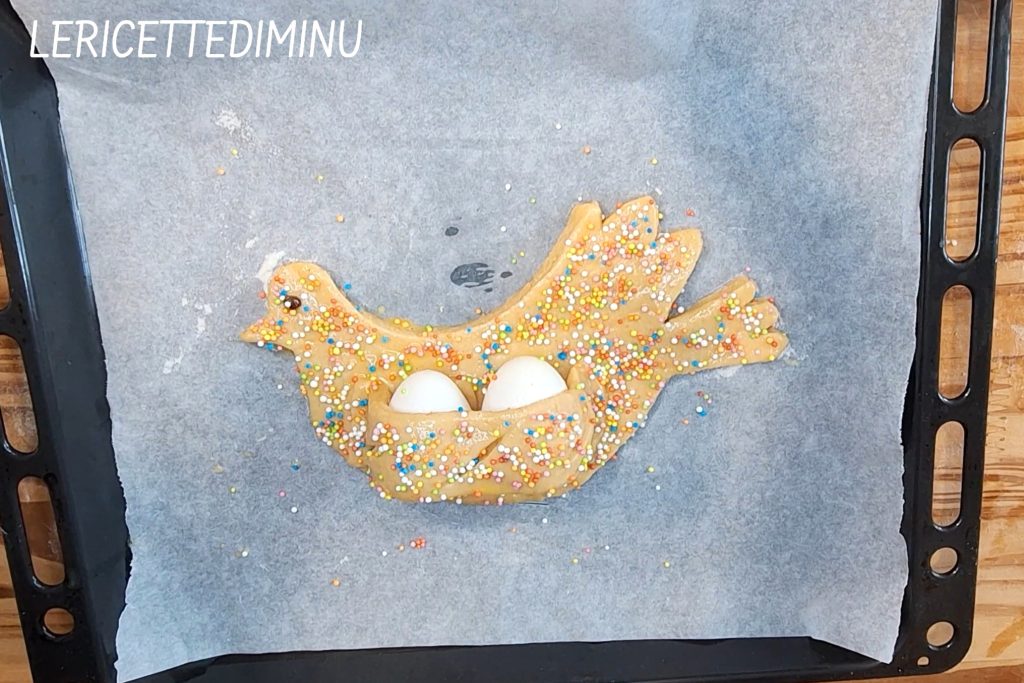
Note that the part that takes the longest to cook is underneath and around the egg.
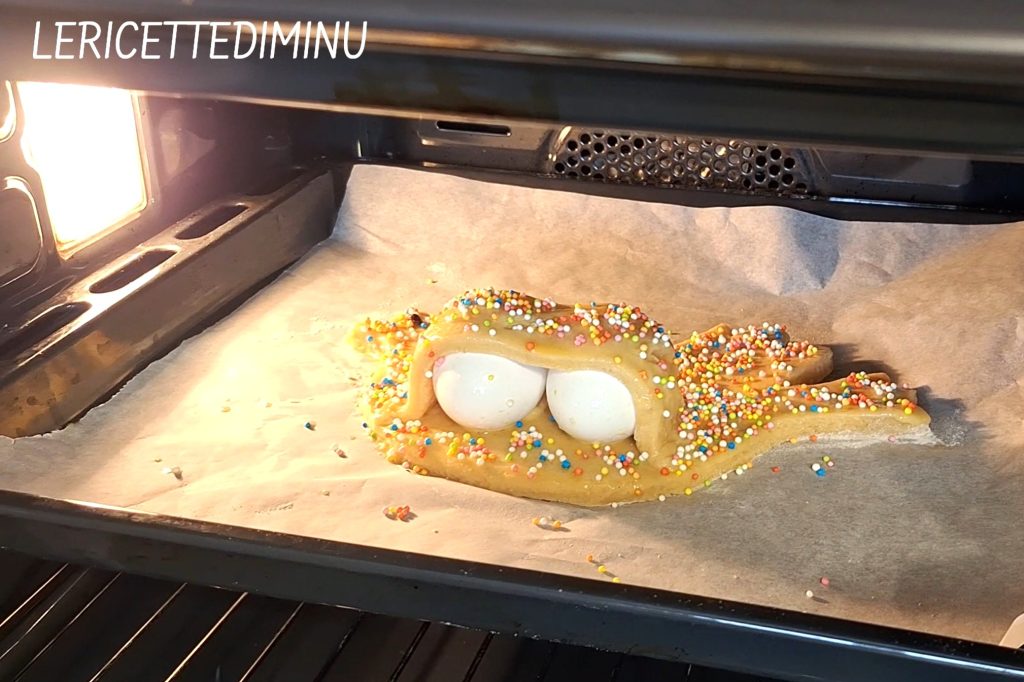
Ensure that this area is cooked before removing from the oven, even though it tends to maintain a lighter color even at the end of cooking.
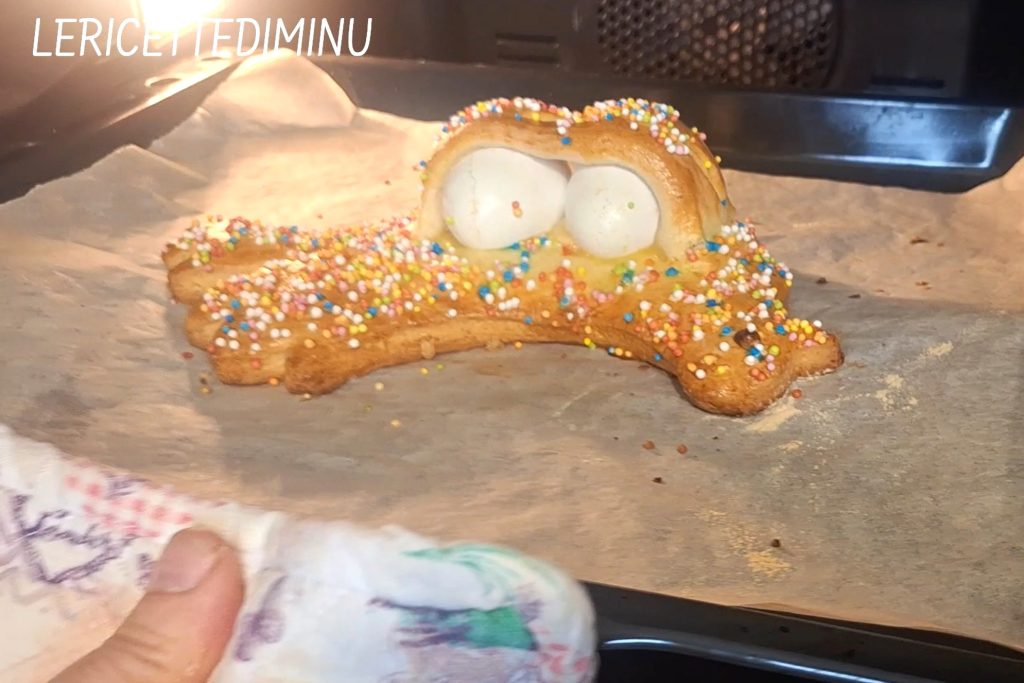
While the first ones bake, continue making the other cuddura.
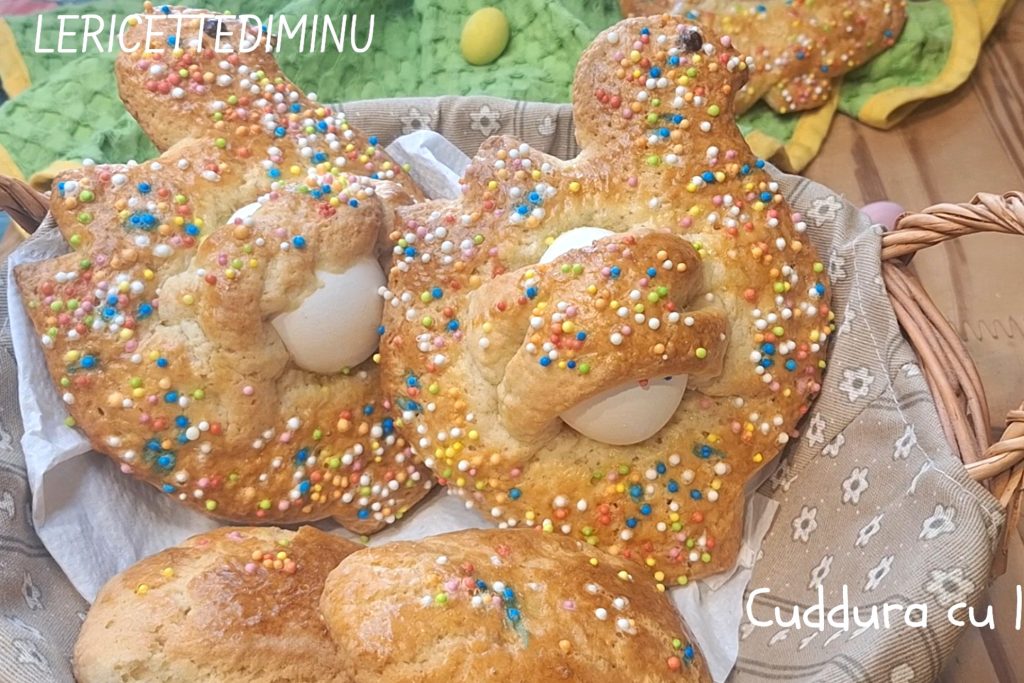
Wait for them to warm before removing them from the tray, especially for the larger cuddura which are more delicate.
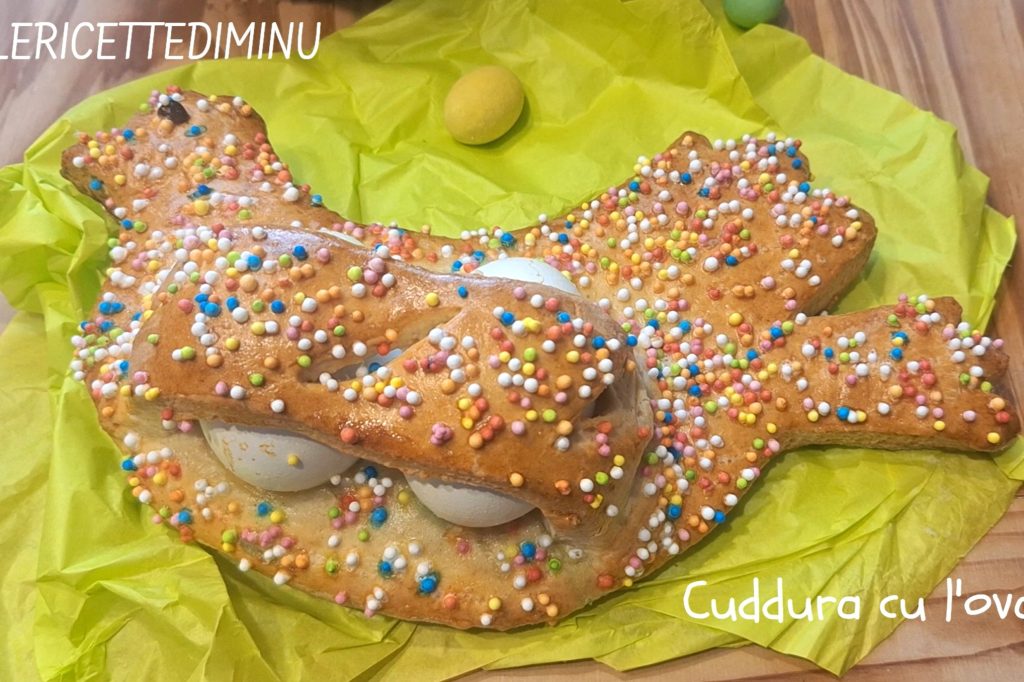
The cuddura cu l’ova are now ready.
Storage
Store at room temperature, in a closed cake container, for about 5 days.
