
The pizza dough with dry brewer’s yeast is simple to make, you just need a pinch of patience and skill.
It has multiple uses, as mentioned, it can be used to make the pizza base, but also for flatbreads, savory pies, appetizers, and also to make bread or individual buns at home depending on the shape given and with some adjustments during rising.
By making it yourself, you will ensure it rises well, you can enrich your preparations as you like, and use the raw materials you prefer.
Giving the dough the right time to rise is the best way to get more digestible breads and allows you to use minimal amounts of yeast.
I recommend trying to make it yourself, remember to knead vigorously!
- Difficulty: Very easy
- Cost: Very cheap
- Rest time: 2 Hours
- Preparation time: 15 Minutes
- Portions: 4
- Cuisine: Italian
- Energy 432.98 (Kcal)
- Carbohydrates 85.00 (g) of which sugars 1.68 (g)
- Proteins 11.33 (g)
- Fat 4.04 (g) of which saturated 0.53 (g)of which unsaturated 0.00 (g)
- Fibers 3.17 (g)
- Sodium 681.71 (mg)
Indicative values for a portion of 191 g processed in an automated way starting from the nutritional information available on the CREA* and FoodData Central** databases. It is not food and / or nutritional advice.
* CREATES Food and Nutrition Research Center: https://www.crea.gov.it/alimenti-e-nutrizione https://www.alimentinutrizione.it ** U.S. Department of Agriculture, Agricultural Research Service. FoodData Central, 2019. https://fdc.nal.usda.gov
Ingredients
- 2 1/2 cups semolina flour
- 1 1/4 cups all-purpose flour
- 1 tsp dry brewer's yeast (dehydrated non-instant)
- 1 tbsp extra virgin olive oil
- 1 tsp sugar
- 1 1/3 cups water
- 1 1/4 tsp fine salt
Preparation
To prepare the pizza dough with dry brewer’s yeast, start by heating the water we’ll need in a saucepan.
Be careful to only warm it slightly, or excessive heat will damage the yeast, preventing it from rising.
If in doubt, you can use room temperature water.
Combine the flour, dry yeast, sugar, oil, and water in a bowl.
Note that the amount of water to be added may vary slightly, for example in the summer when the flour is drier, it requires more.
The important thing is to keep in mind that the final dough should be soft and elastic, but not mushy and sticky.
Start kneading, mixing the ingredients well.
For these quantities, you can choose whether to knead the whole time in the bowl or transfer to a work surface.
Then add the fine salt after about 5 minutes and continue kneading vigorously for at least another 5 minutes.
Sprinkle flour on the surface where the dough rests and cover the bowl with a cloth.
Then let the dough rise in a turned-off oven, previously preheated to 122°F (50°C).
To prevent the dough from drying out, place a small cup of water in the oven.
Let it rise for at least 2 hours, or until the dough doubles in volume.
If you want to make bread, after an hour of rising as indicated, give the desired shape and place on the baking sheet you will use for baking, and let it finish rising.
If you let the dough rise outside the oven, rising times will vary especially in winter due to low temperatures.
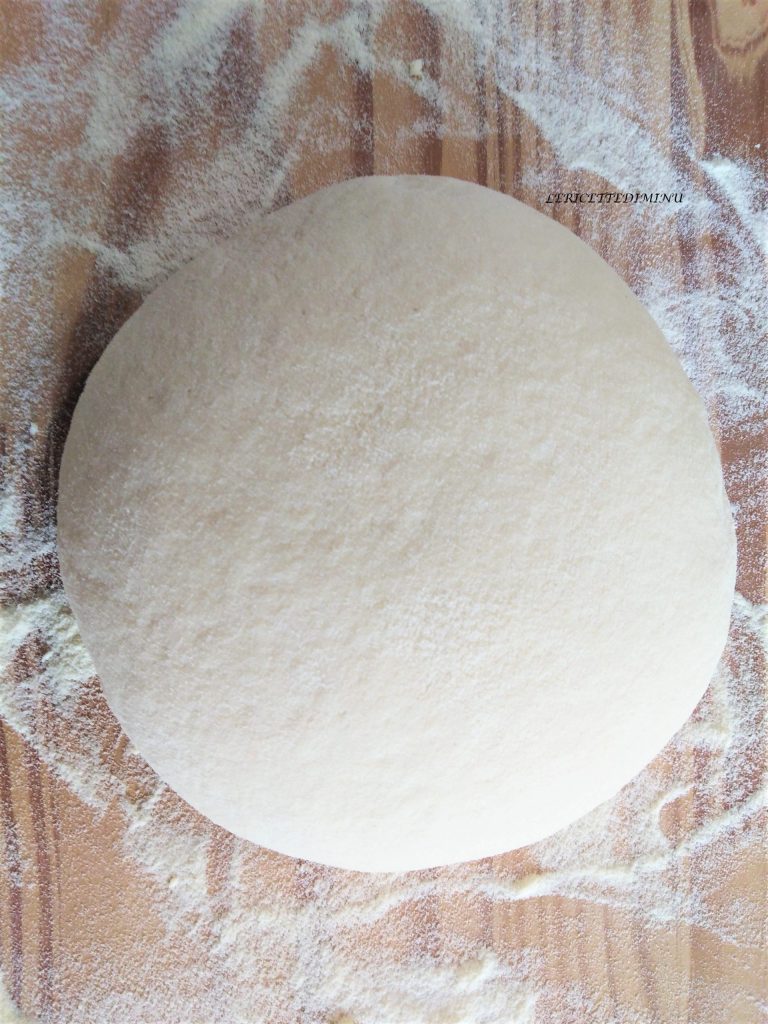
After the indicated time, your pizza dough with dry brewer’s yeast is ready.
Storage
The basic pizza dough can be frozen, preferably before rising. To thaw, put it in the fridge the night before use.
The basic pizza dough can be frozen, preferably before rising. To thaw, put it in the fridge the night before use.
Here is a selection of excellent products useful in the kitchen. Many of these I have personally purchased and tested. The list will be constantly updated.
To view recommended products click here.
To view recommended products click here.
