
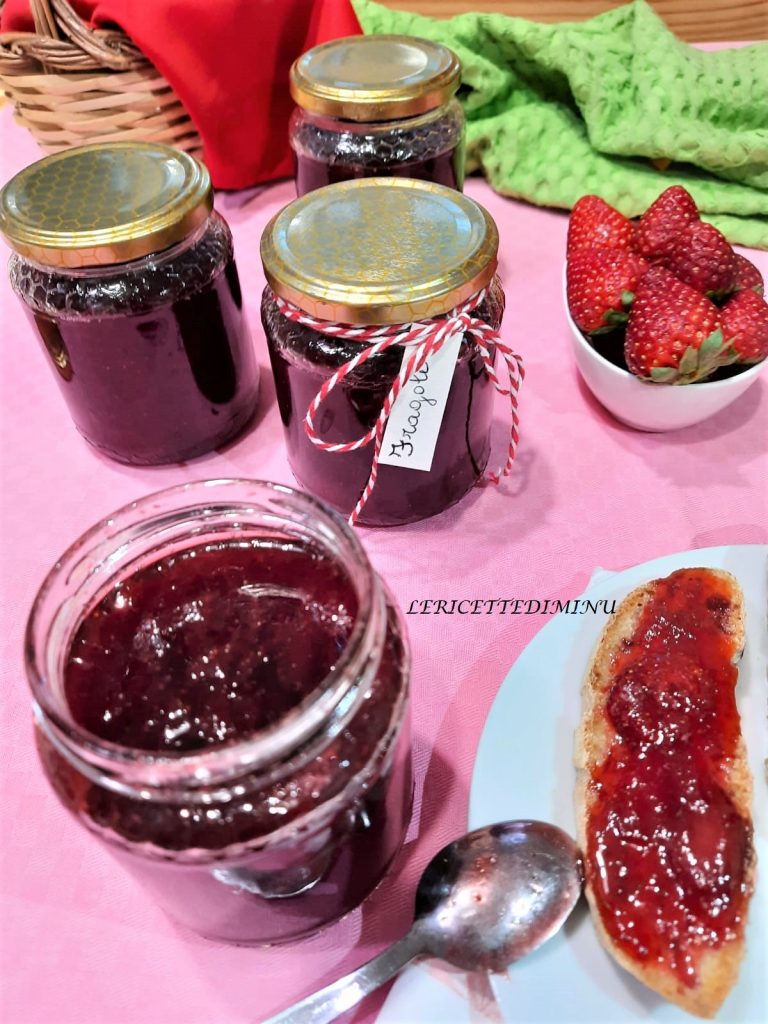
The strawberry jam recipe, or more precisely homemade strawberry conserve, allows you to obtain a jam that stands out from the ready-made one for its strong strawberry flavor, its bright ruby color, and the intense aroma that spreads when you spread it on even a simple slice of bread and bite into it.
A true delight that is as genuine as the one made at home by our grandmothers and mothers, and today, easily and in a short time, we can prepare it for our family.
In this way, we can indisputably choose the best fruit and decide, as in this case, to make it with a reduced amount of sugar, making it surely healthier for both us adults and our children.
Certainly, making preserves at home requires time, effort, and some preparation, for example, in obtaining jars and lids in excellent condition beforehand, but believe me, you will be amply rewarded by the result.
The family will certainly appreciate it, and it will be difficult, after trying homemade jams, to adapt back to consuming industrial ones, which, alas, despite the different types of fruit used, all have a similar taste.
A truly delicious jam, and if you use it to fill pies, cakes, or cheesecakes, I assure you that even your desserts will have an extra touch, an unmistakable fruit aroma will envelop every single portion.
If you like my recipes, you can follow me on my FACEBOOK page and on INSTAGRAM
Thank you ❤️😘❤️
- Difficulty: Medium
- Cost: Medium
- Preparation time: 30 Minutes
- Cooking methods: Stovetop
- Cuisine: Italian
- Seasonality: Spring, Summer
- Energy 247.65 (Kcal)
- Carbohydrates 65.23 (g) of which sugars 62.65 (g)
- Proteins 0.63 (g)
- Fat 0.28 (g) of which saturated 0.01 (g)of which unsaturated 0.18 (g)
- Fibers 1.85 (g)
- Sodium 1.53 (mg)
Indicative values for a portion of 100 g processed in an automated way starting from the nutritional information available on the CREA* and FoodData Central** databases. It is not food and / or nutritional advice.
* CREATES Food and Nutrition Research Center: https://www.crea.gov.it/alimenti-e-nutrizione https://www.alimentinutrizione.it ** U.S. Department of Agriculture, Agricultural Research Service. FoodData Central, 2019. https://fdc.nal.usda.gov
Ingredients
- 3 lbs strawberries
- 4 1/2 cups sugar
- lemon juice (from 1 lemon)
Tools
- 4 Jars 14 oz with click clack lids
- Scale kitchen
- Wooden Spoon
- Pot thick base, 11 inches diameter
- 1 Food Mill
- Citrus Juicer
- 1 Skimmer
- Ladle
- Funnel for jam
Steps
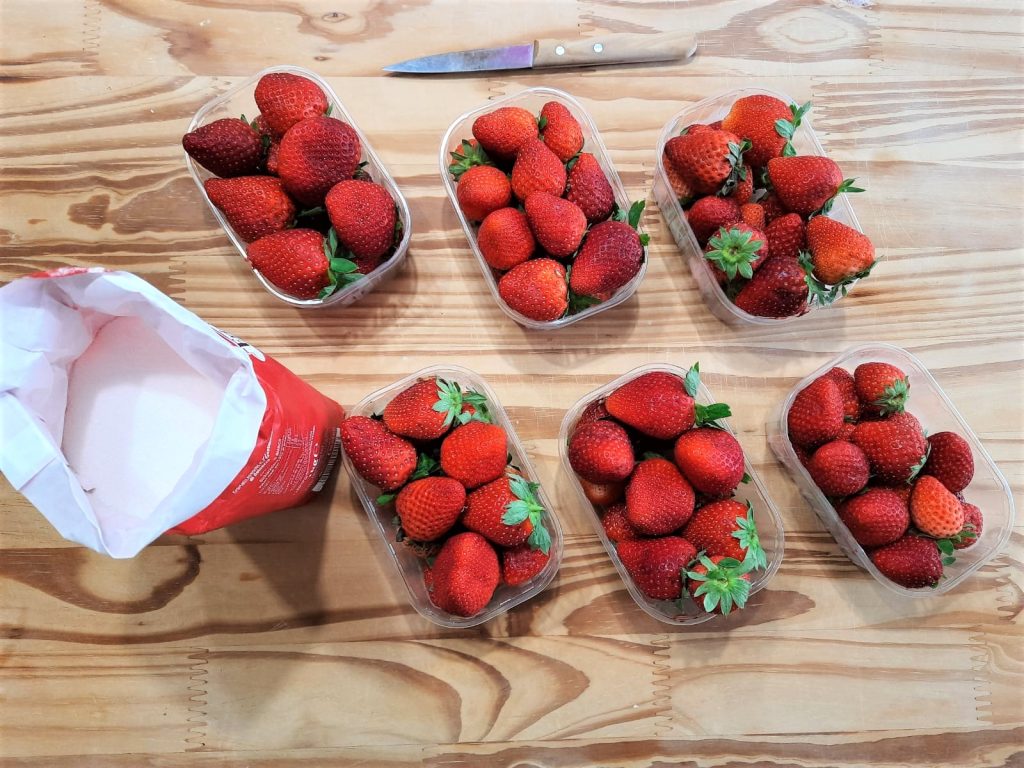
To execute the strawberry jam recipe with reduced sugar, boil the jars with the lids for about 40 minutes, then turn off and let cool.
Take out the jars and lids and allow them to drain upside down on a clean towel.
Then take care of the strawberries. Wash them quickly under running water, drain them, and as you pick them up to remove leaves and stalks, pat them dry on paper towels or a clean cloth.
Cut the strawberries in half, or into quarters if larger.
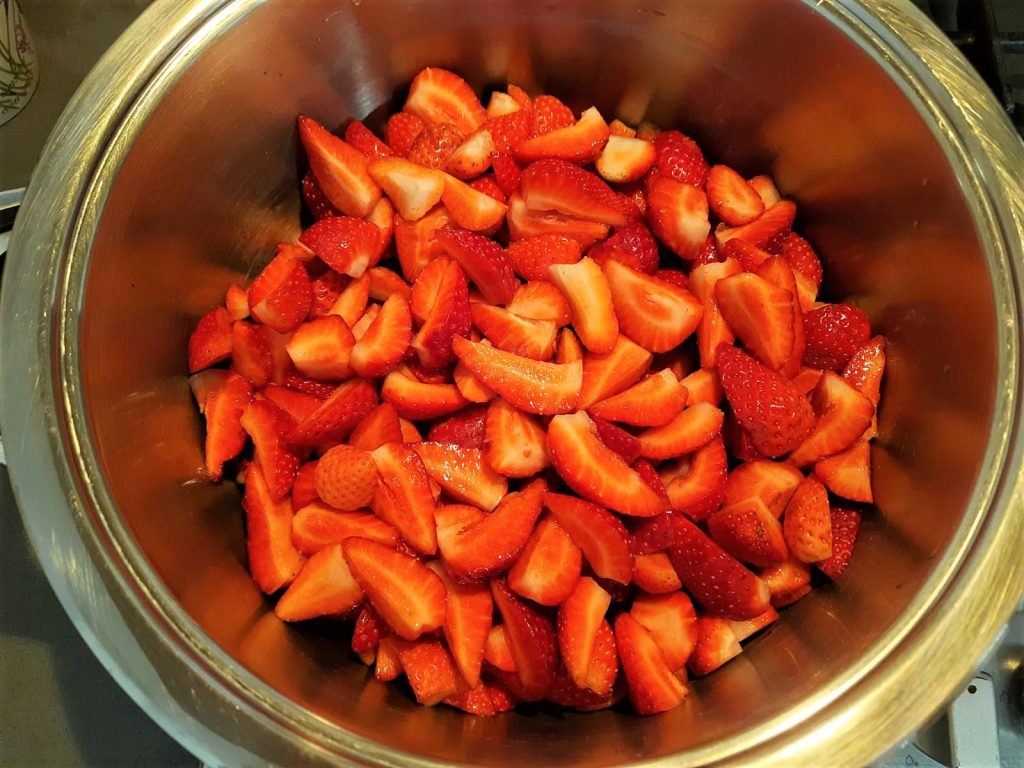
Weigh the strawberries obtained net of waste and place them in a large pot with a thick base, which should be brought to a boil over a lively flame, but not too strong.
Stir often to keep the cooking under control.
Cook the strawberries for about 25 minutes from the boil.
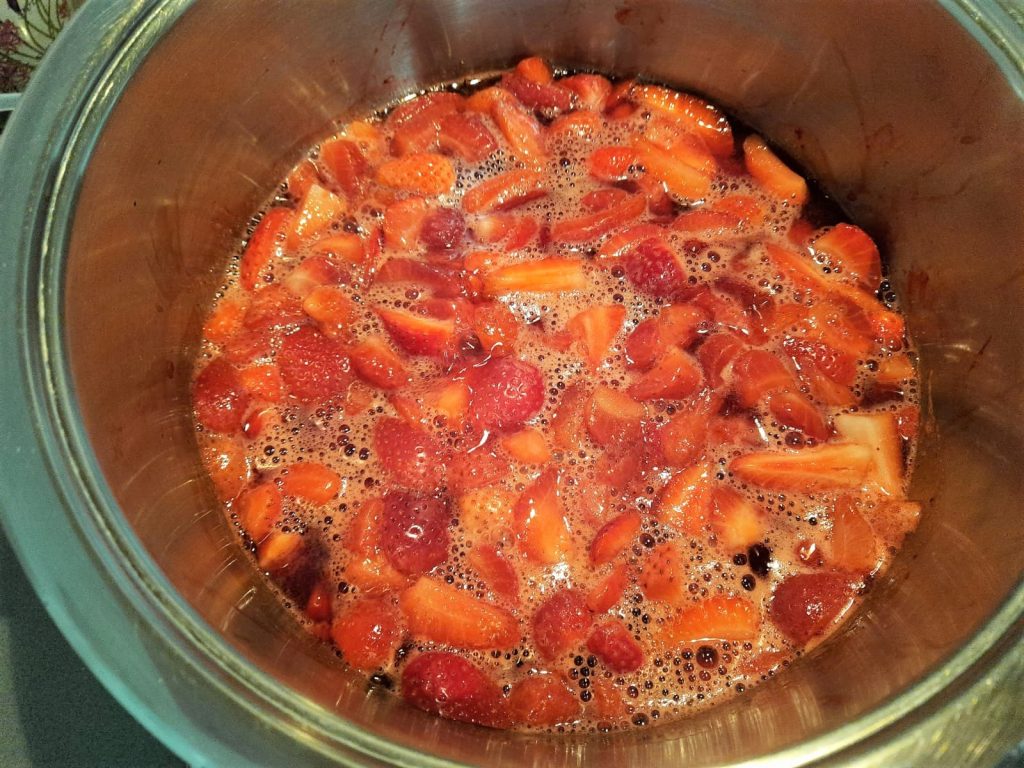
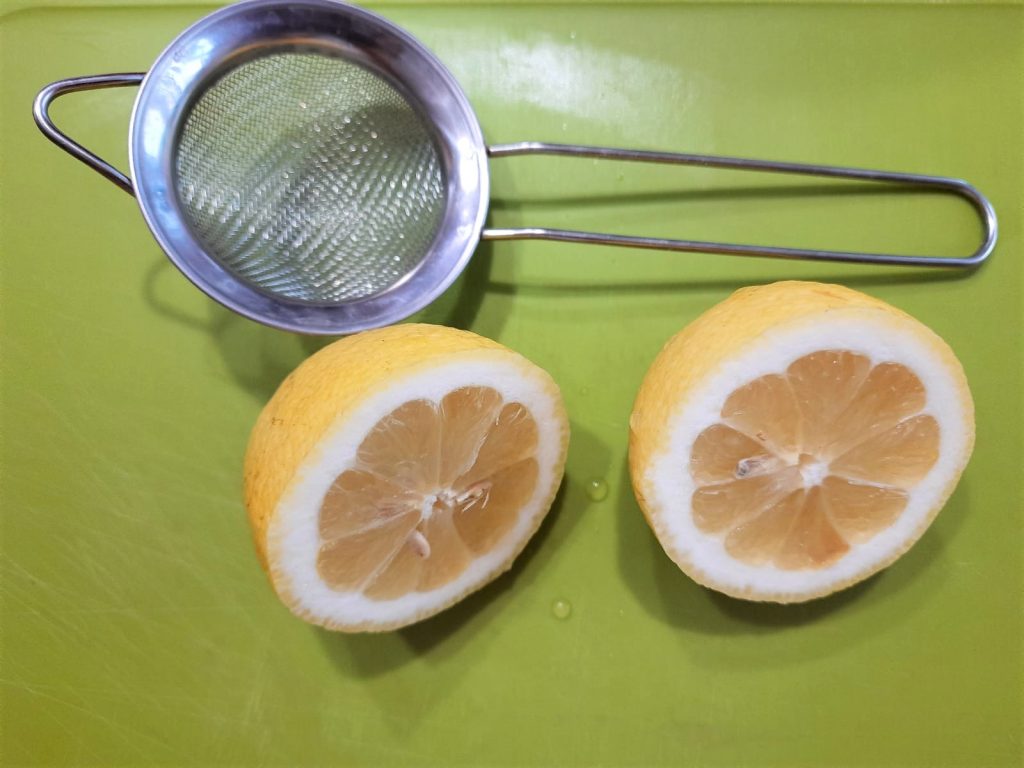
In the meantime, squeeze the juice of one lemon and strain it (or use a citrus juicer), then weigh the sugar and keep it aside.
After twenty minutes, turn off the heat. If desired, at this stage, sieve the strawberries using the medium-grain milling grid.
Add the sugar and lemon juice. Stir to dissolve well, then turn the heat back on.
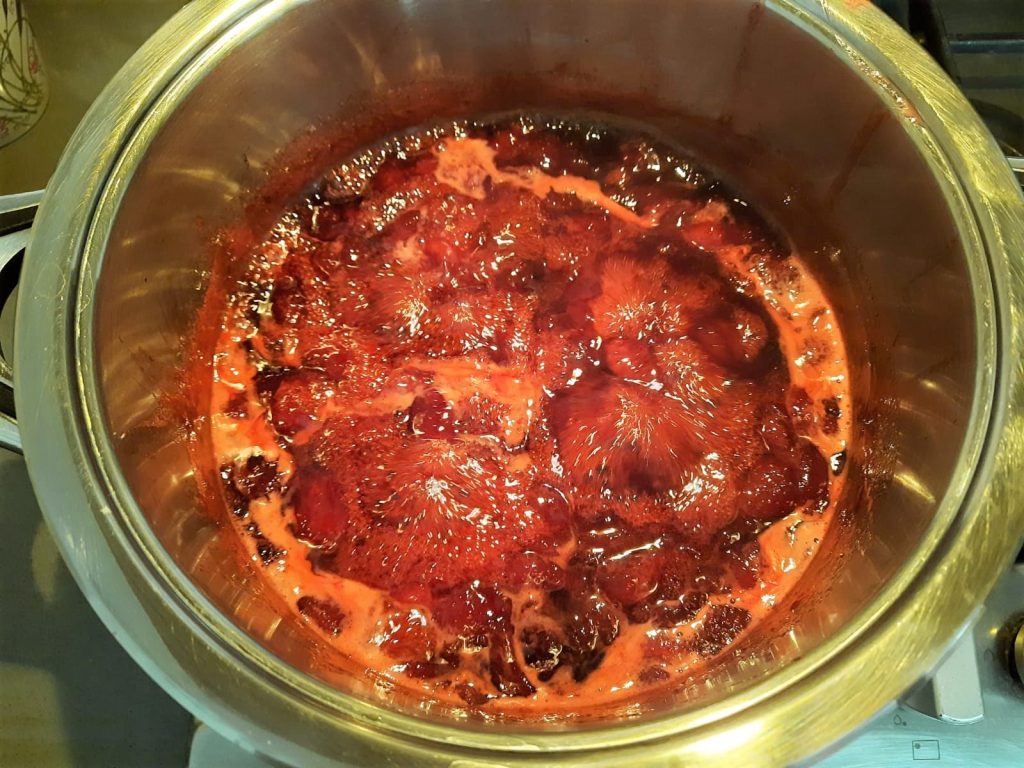
Continue cooking for another 20 minutes from boiling, keeping the flame medium.
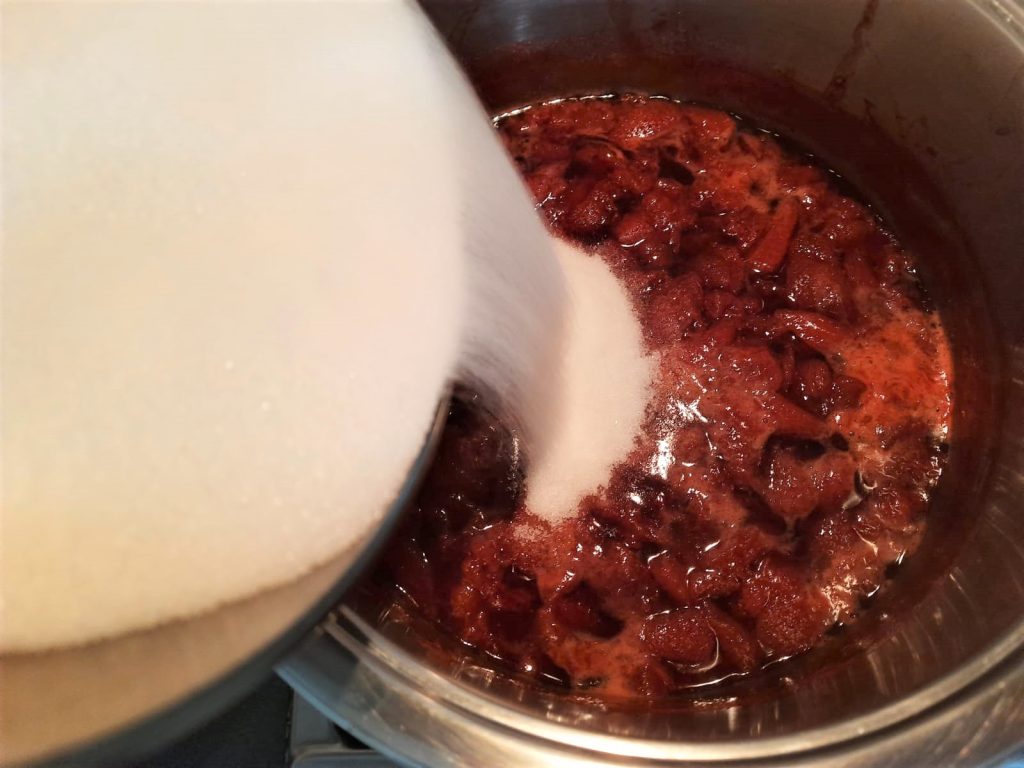
Stir often and use a skimmer to remove acidity that forms.
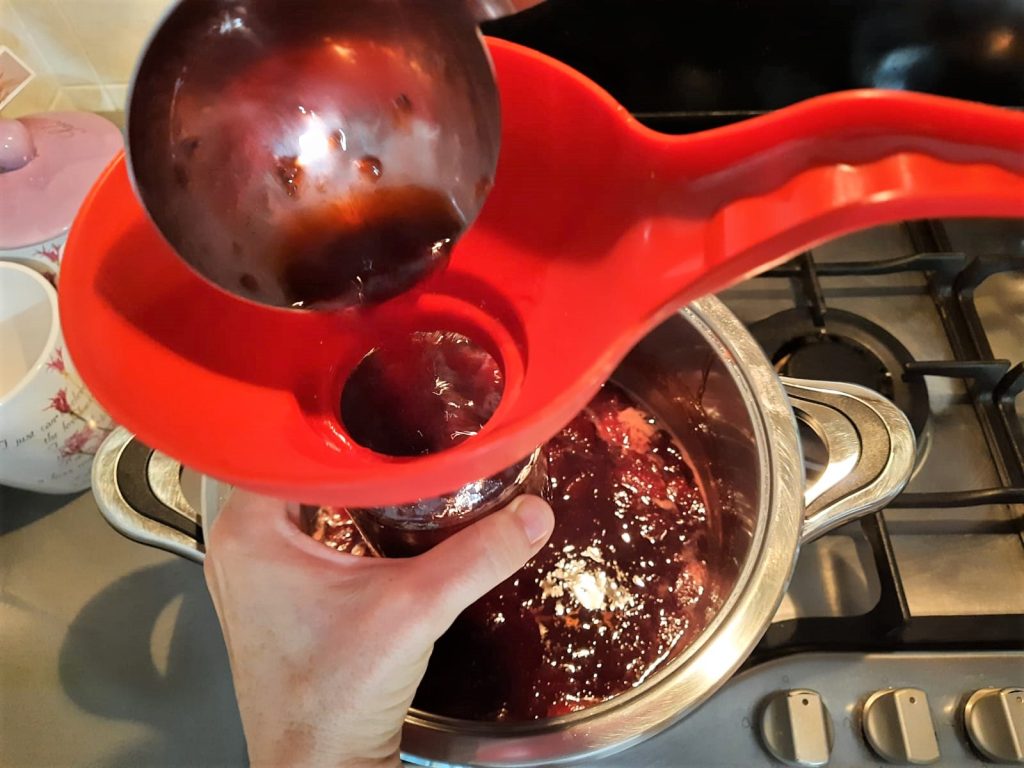
As soon as you turn off the heat, fill the well-dried jars with hot jam. Use a ladle and a specific funnel for jams and keep at least one finger below the lid rim of the jar.
Close well with the lids (also well dried) and immediately turn the jars upside down, repeat this operation until the jam is finished.
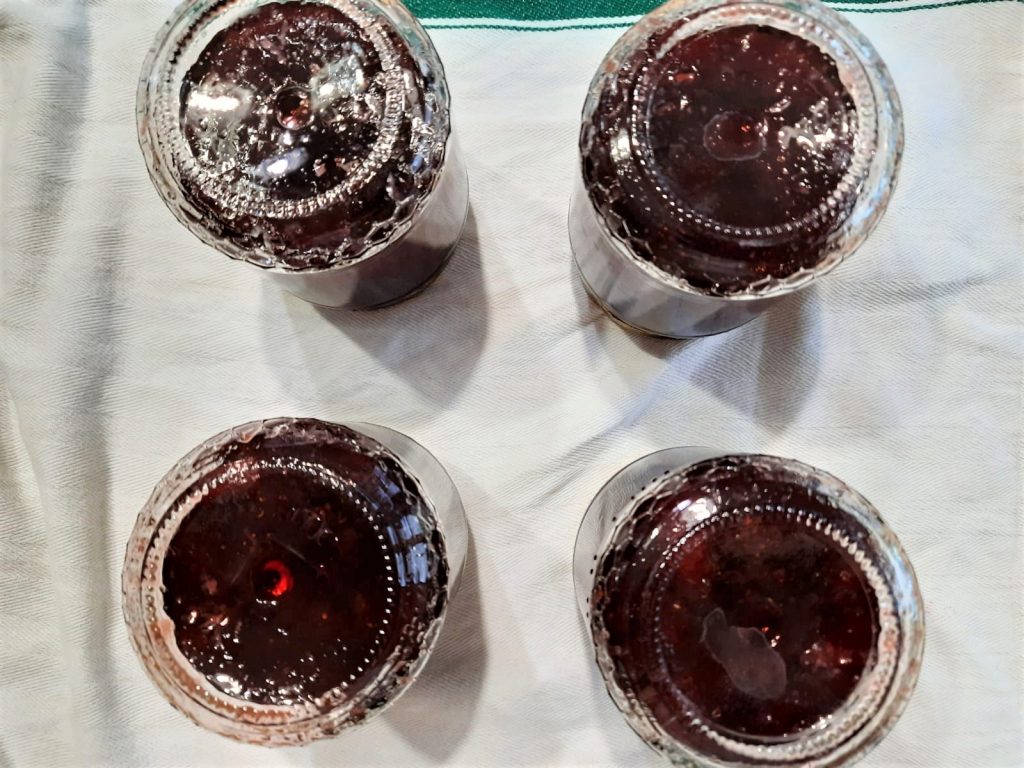
After about 1 hour and a half, turn the jars and check that a vacuum has formed.
For this purpose, press on the center of the lid, if it does not go down further, it means that the vacuum has formed.
If instead, you hear the classic click-clack and the lid sinks inward under the pressure of your fingers, it will be evident that air is present and therefore the vacuum was not created.
In this case, most likely the lid was responsible, perhaps already used several times and therefore partly damaged.
Replace the lid with a new and sterilized one, and proceed with boiling the jars without vacuum: in a tall pot, place a large towel to cover the base and sides.
Lay the jars in it and place some other cloths between them so that they do not break during boiling by hitting each other.
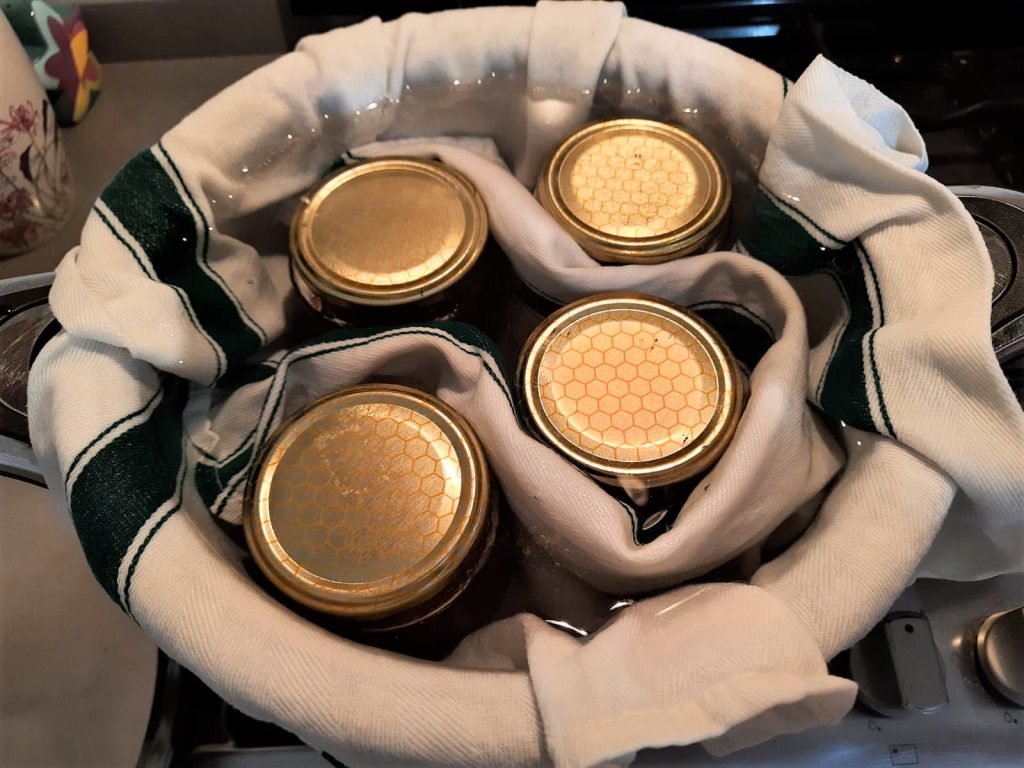
Fill the pot above the jars with water heated to a temperature as close as possible to that of the jam to avoid jars breaking from possible thermal shocks.
Fold over the excess edges of the used cloths and close the pot with its lid. Let boil for about half an hour.
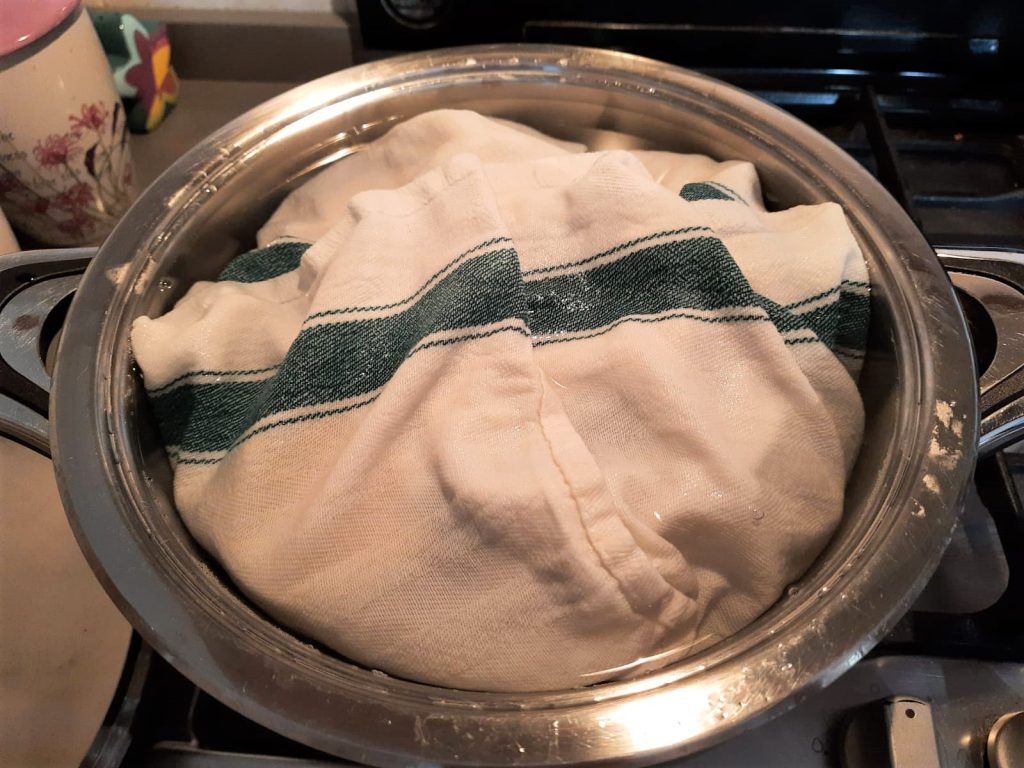
Take out the jars from the water only when they are lukewarm. To check if the vacuum has formed, press the center of the lid as explained before.
The strawberry jam recipe with reduced sugar is thus executed.
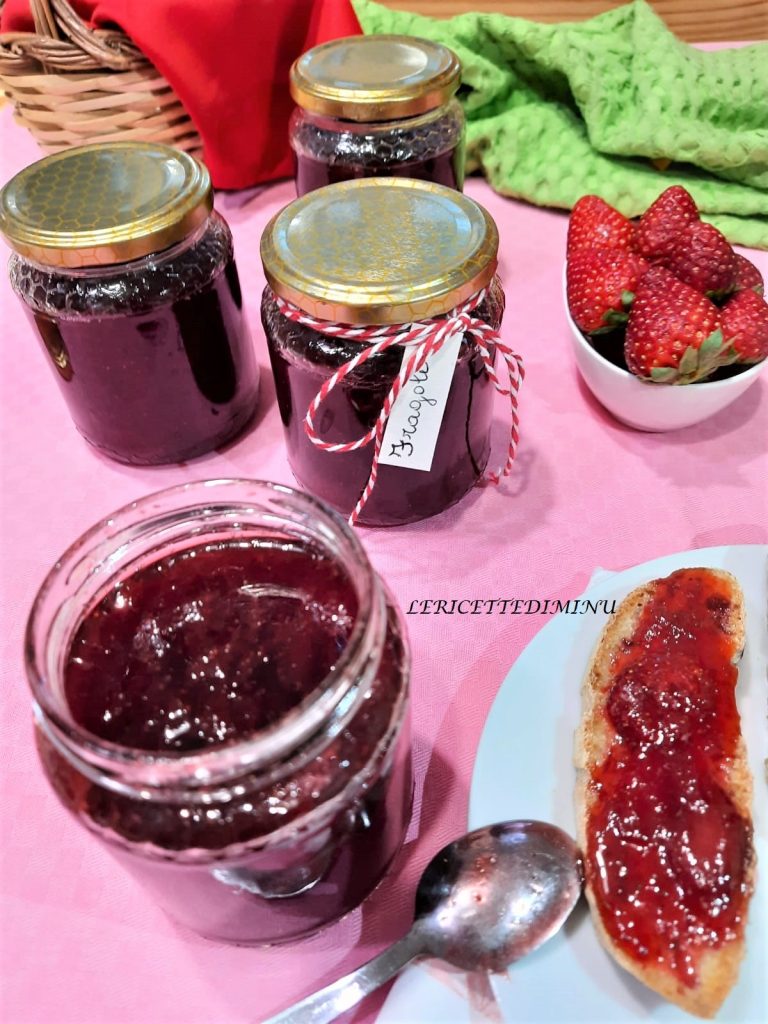
Store in a dark, cool, and dry place for a period ranging from six months to a year, after labeling the jars indicating the start of preservation date.
Once opened, keep the jar in the fridge and consume within about six days.
Once opened, keep the jar in the fridge and consume within about six days.
Here is a selection of products decidedly useful in making desserts. Many of these have been bought and tested by myself. To view the recommended products click here.
Here is a selection of products decidedly useful in making desserts. Many of these have been bought and tested by myself. To view the recommended products click here.
