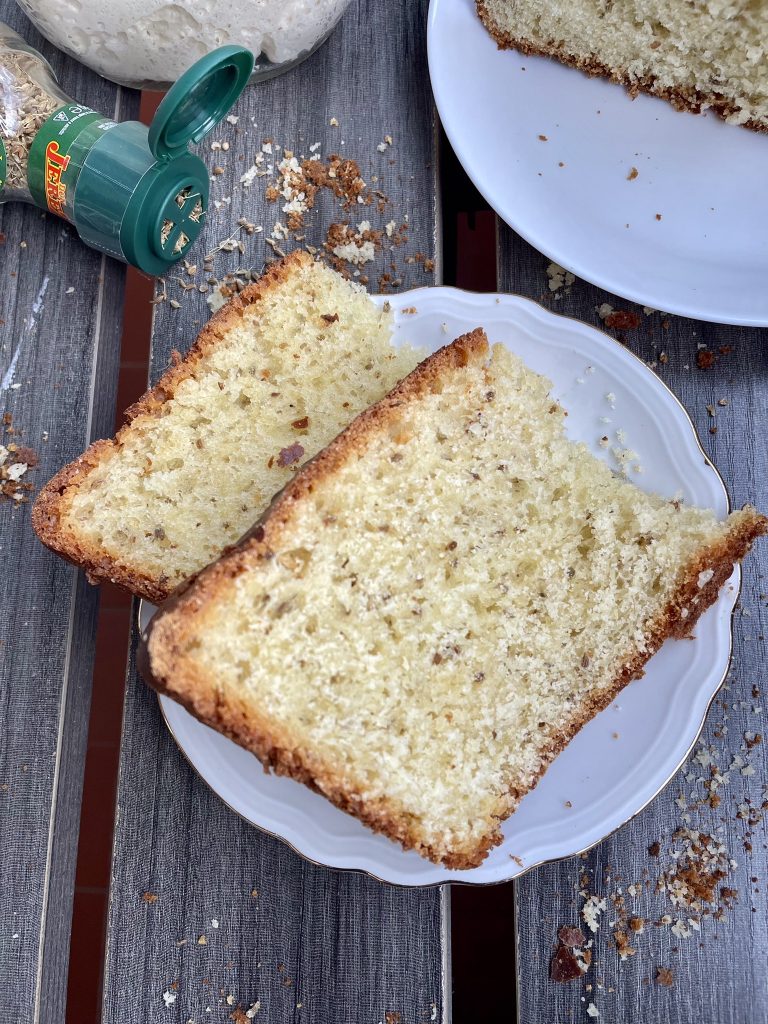
The raised anise pizza — soft and fragrant is one of the most cherished sweets of the Easter tradition, perfect for a hearty, wholesome breakfast.
The version I want to share today is the sweet anise pizza my mother always made for Easter morning: tall, tender and unmistakably aromatic. It’s delicious both with chocolate from eggs and with classic savory dishes, just as tradition dictates.
I also love it plain, because its delicate, aromatic flavor doesn’t need anything else. And it doesn’t have to be made only at Easter: this raised pizza is perfect year-round for a simple but special breakfast or snack.
I like to follow tradition and make these raised pizzas with sourdough starter, which makes them even softer and easier to digest. Of course, you need an active starter, meaning one that can double its volume in about 3 hours after feeding.
👉 You can also make the raised anise pizza with brewer’s yeast if you prefer shorter rising times — you’ll still get a soft, fragrant result.
If you use brewer’s yeast:
– replace 150 g of sourdough starter with a 20 g (fresh) baker’s yeast
– add about 100 g of flour and 50 ml of milk
- Difficulty: Easy
- Cost: Low cost
- Rest time: 16 Hours
- Preparation time: 20 Minutes
- Cooking time: 45 Minutes
- Portions: 2 pizzas (10 pieces each)
- Cooking methods: Oven
- Cuisine: Italian
- Seasonality: Easter
- Energy 331.69 (Kcal)
- Carbohydrates 46.56 (g) of which sugars 17.12 (g)
- Proteins 6.75 (g)
- Fat 14.47 (g) of which saturated 2.47 (g)of which unsaturated 11.32 (g)
- Fibers 0.98 (g)
- Sodium 55.13 (mg)
Indicative values for a portion of 90 g processed in an automated way starting from the nutritional information available on the CREA* and FoodData Central** databases. It is not food and / or nutritional advice.
* CREATES Food and Nutrition Research Center: https://www.crea.gov.it/alimenti-e-nutrizione https://www.alimentinutrizione.it ** U.S. Department of Agriculture, Agricultural Research Service. FoodData Central, 2019. https://fdc.nal.usda.gov
Ingredients for the soft and fragrant raised anise pizza
Simple, wholesome ingredients to make a tall, soft raised anise pizza with an irresistible aroma — perfect for Easter and beyond.
- 7/8 cup milk
- 5.3 oz sourdough starter (very active)
- 3/4 cup sugar
- 1/2 tbsp honey
- 2 eggs
- 2 3/4 cups 00 flour (all-purpose)
- 3 eggs
- 3/4 cup sugar
- 3 cups 00 flour (all-purpose)
- 3 tbsp anise seeds
- 1 cup seed oil (about 8.8 oz)
Useful tools to make the raised anise pizza
To achieve a perfect raised pizza you only need a few kitchen tools — the kind most of us already have at home.
- 1 Stand Mixer Howork
- 2 Pans
- 1 Bowl
How to make the raised anise pizza with sourdough or baker’s yeast
To start the first dough for the Easter pizzas, it’s important to have a very active sourdough starter — one that can double its volume about 3 hours after feeding.
If you use baker’s yeast, you can proceed directly with the dough without that waiting time.
Half an hour before preparing the second dough, soak the anise seeds in the oil: this will release all their aroma and make the pizza even more fragrant.
To prepare the first dough for the raised anise pizza, put the flour in the stand mixer along with the starter dissolved in warm milk, the sugar, the honey and the eggs.
Knead until you get a smooth, elastic dough. Alternatively, you can work the dough by hand in a bowl: it will take a little longer, but the result will still be excellent.
Cover the dough with plastic wrap and let it rise until doubled in a place without temperature fluctuations. The ideal spot is an off oven with the light on.
⏱️ The first dough usually needs about 6–8 hours of rising. For this reason I recommend making it in the evening so it will be ready for the second dough in the morning.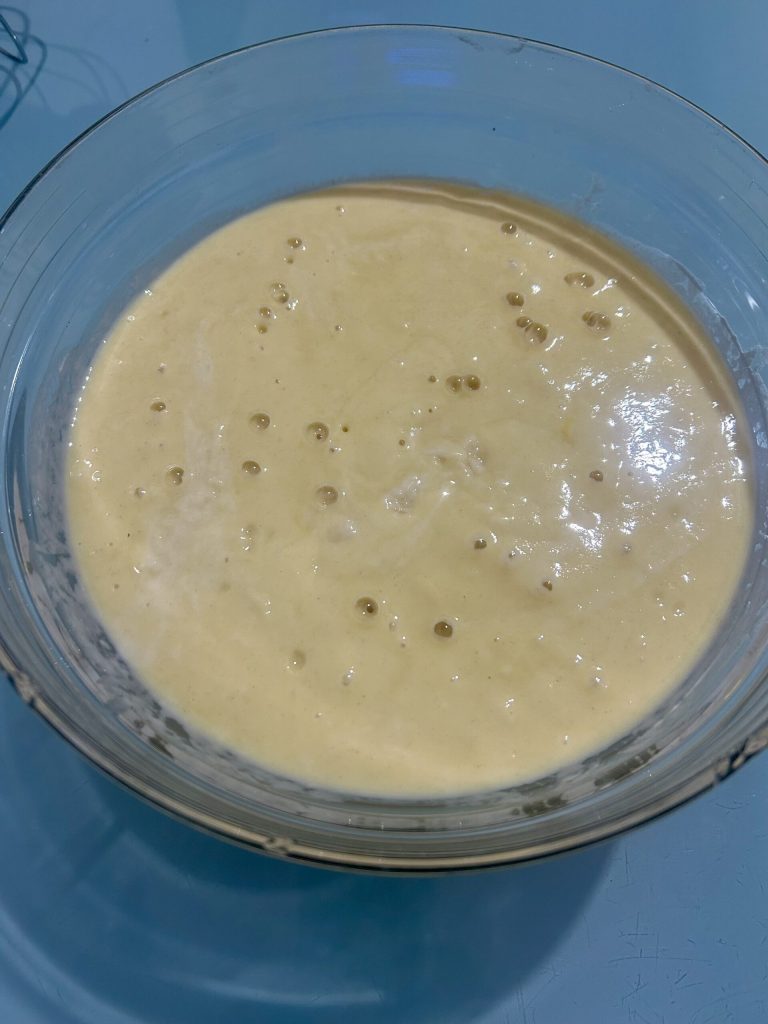
To prepare the second dough for the raised anise pizza, put the risen first dough into the stand mixer with the flour and the sugar. Start mixing using the paddle or dough hook.
Add the eggs one at a time, waiting until each egg is fully absorbed before adding the next.
Then pour in the oil with the soaked anise seeds, adding it slowly in a thin stream and letting the dough absorb it well. Finally, add a splash of sambuca for extra aroma.
Divide the dough into two well-oiled pans, preferably classic raised-pizza pans about 6¼–7 in (16–18 cm) in diameter.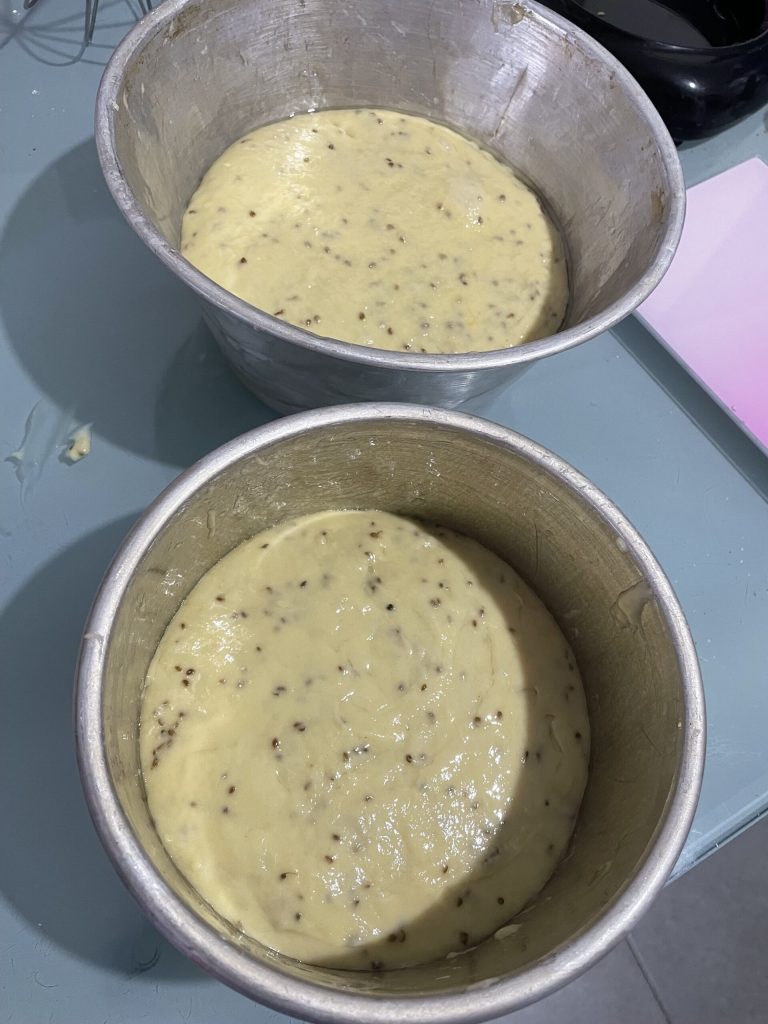
Fill the pans only halfway, because the dough for the raised anise pizza will rise a lot, coming almost to the rim during the final proof.
Cover with plastic wrap and let rise in a warm place without drafts until the dough is well puffed.
Bake in a conventional oven at 320°F for about 50 minutes. Always do the toothpick test before removing from the oven, as the interior should be fully dry.
Once baked, let cool completely before removing the raised pizzas from the pans.
👉 You will obtain a tall, soft raised anise pizza perfectly baked through.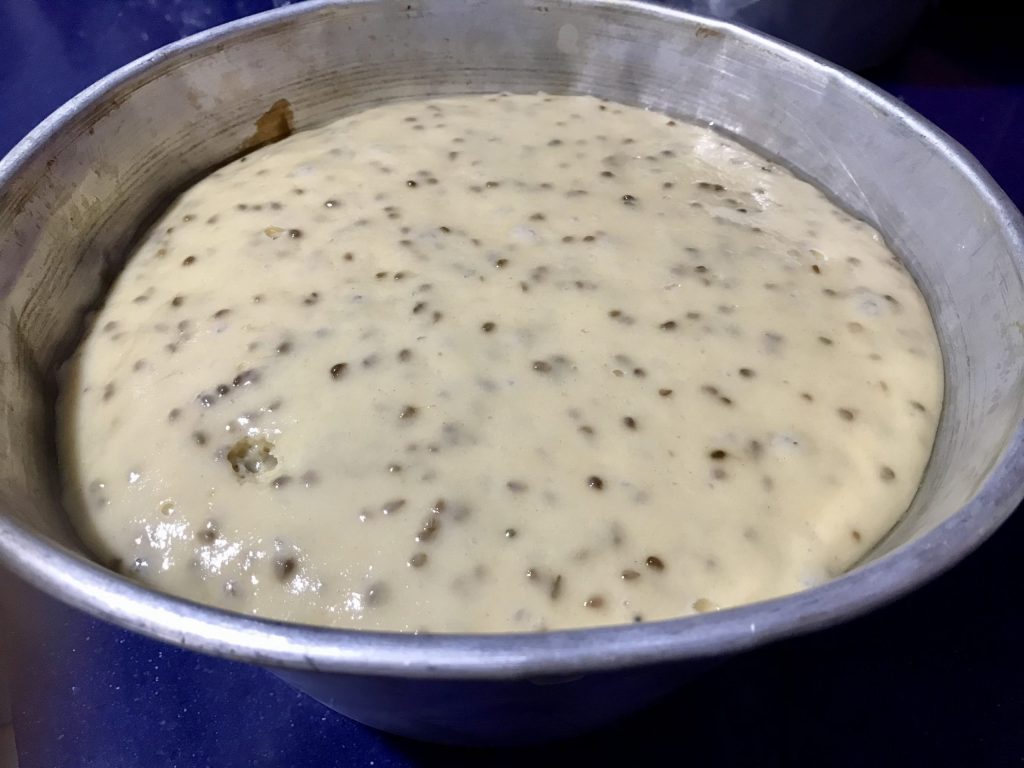
✨ NOTES AND STORAGE
The soft and fragrant raised anise pizza is delicious fresh from the oven, but it also keeps well in the following days.
Once cooled, store it in airtight food bags: this will keep it soft and fragrant for up to a week.
For this reason it’s great to prepare in advance, whether you’re organizing Easter morning or want to give it as a homemade gift.
👉 Thanks to the long fermentation, this raised anise pizza retains its softness and aroma for days.
❓ FAQ — Questions and Answers
Can I make the raised anise pizza with baker’s yeast?
Yes, you can replace the sourdough starter with 20 g of fresh baker’s yeast. In that case you should add about 100 g of flour and 50 ml of milk to balance the dough.
How long should the raised anise pizza proof?
Proofing times can vary, but typically the first dough needs 6–8 hours, while the final proof continues until the dough almost reaches the rim of the pan.
How do I know if the sourdough starter is ready?
The starter is ready when it doubles its volume in about 3 hours after feeding. Only then will it guarantee a good rise.