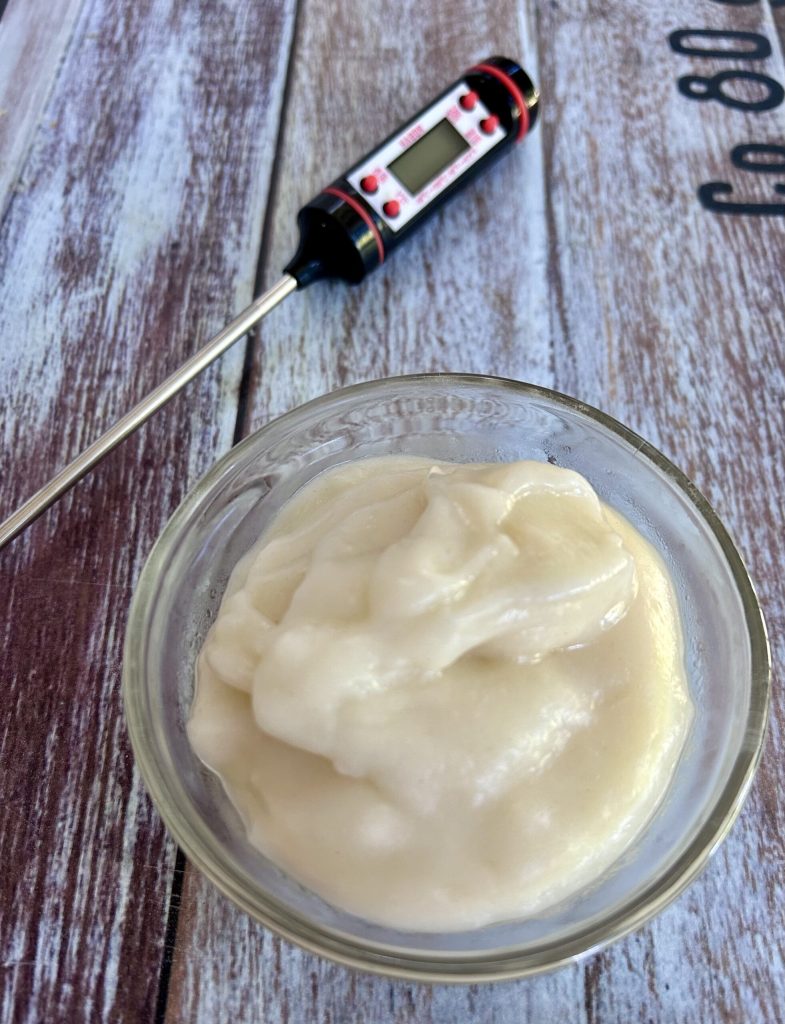
Water roux or tang zhong is a pre-dough based on water and flour that, once heated, acquires a gelatinous consistency. It is a preparation that seems to have originated in Japanese cuisine and helps reduce the amount of oil, butter, and even eggs in the dough, but most importantly, it makes leavened doughs much softer and keeps them longer.
Water Roux can be used in all leavened doughs, both sweet and savory: for sweet doughs, the preparation with milk instead of water is used and is thus called Milk Roux.
I tried using water roux for the first time in this recipe and I think I will always use it in my leavened doughs that need to be soft because the result was extraordinary.
The proportions of water and flour to prepare the water roux or tang zhong are 1:5, and it is used in recipes at a maximum of 30% of the weight of the flour. To make it easier, I indicate the dose normally used for doughs with 500g of flour: prepare a water roux with 25g of flour and 125g of water and integrate it fully into the dough.
I recommend adding the water roux or tang zhong to recipes such as
- Cost: Very economical
- Preparation time: 10 Minutes
- Portions: 1 batch for 500g flour
- Cooking methods: Stovetop
- Cuisine: Italian
- Energy 80.75 (Kcal)
- Carbohydrates 17.90 (g) of which sugars 0.43 (g)
- Proteins 2.75 (g)
- Fat 0.18 (g) of which saturated 0.00 (g)of which unsaturated 0.00 (g)
- Fibers 0.55 (g)
- Sodium 5.75 (mg)
Indicative values for a portion of 150 g processed in an automated way starting from the nutritional information available on the CREA* and FoodData Central** databases. It is not food and / or nutritional advice.
* CREATES Food and Nutrition Research Center: https://www.crea.gov.it/alimenti-e-nutrizione https://www.alimentinutrizione.it ** U.S. Department of Agriculture, Agricultural Research Service. FoodData Central, 2019. https://fdc.nal.usda.gov
Ingredients
- 0.88 oz all-purpose flour
- 0.53 cup water
Tools
It is recommended to use a food thermometer, but if you don’t have one, it’s not essential, although nowadays they are easily available and very economical.
- 1 Thermometer
- 1 Small saucepan
Preparation
The preparation is very simple and quick; it is recommended to let it cool before adding it to the dough.
Put the flour in the saucepan and dilute with water, stirring with a fork to avoid lumps. Place the saucepan on the heat and stir with a ladle, pressing against the sides any flour lumps that may form, and turn off the heat when the thermometer reads 149°F. If you don’t have a thermometer, turn off the heat when you see the mixture thickening and gelatinizing; it will take just a few minutes.
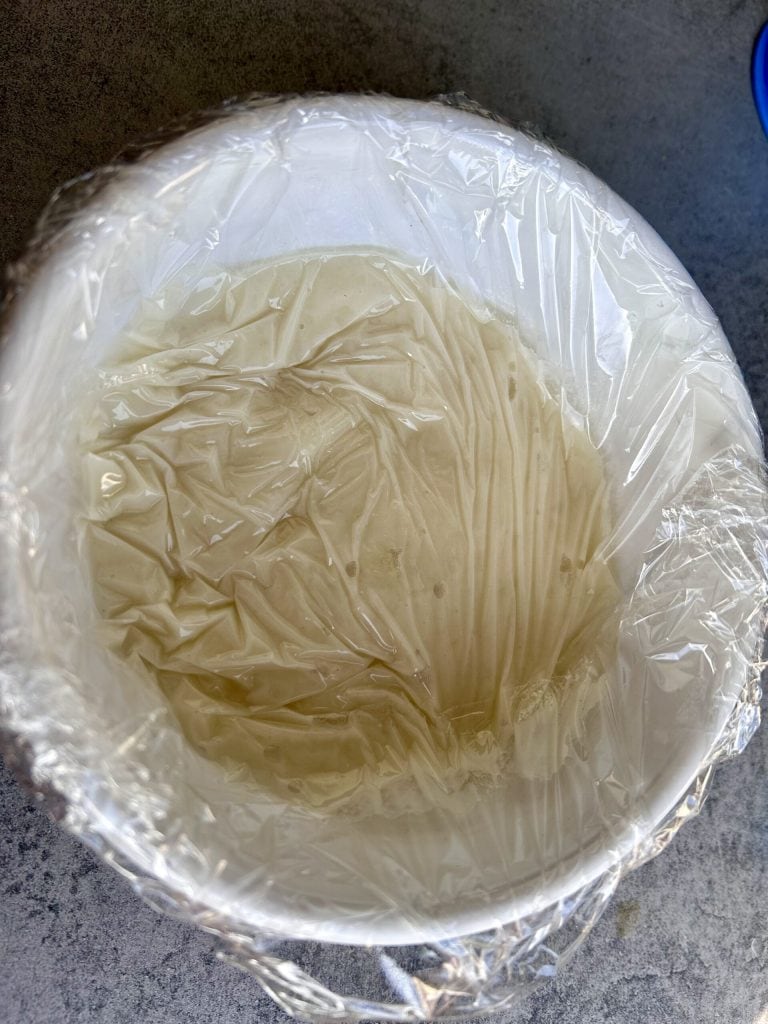
Once prepared, I recommend pouring it into a glass or ceramic bowl to cool, but make sure to cover it well with plastic wrap as seen in the photo. The wrap should adhere completely to the water roux to prevent it from solidifying on the surface as it cools.
When the water roux is cooled, you can add it to the dough immediately after incorporating the flour.
NOTES
The water roux will help keep the doughs well hydrated; it is advisable to add it to the doughs when it’s cold, so you can prepare it in advance, even the night before, but keep it refrigerated. I have indicated the dose for 500g of flour; if you prepare larger doughs, double or triple the doses as needed.
This recipe contains one or more affiliate links.
If you liked the recipe or have any questions, feel free to comment here or on social media Facebook, Pinterest, Instagram, and Twitter
Frequently Asked Questions
Can it be added to bread and pizza?
The water roux or tang zhong should be added to doughs that you want to make softer; therefore, if you want a pizza or bread with a crust, I do not recommend it.
How long does it last?
I recommend preparing it just a few hours before making the dough, at most the night before for the next day, but always keeping it refrigerated and covered with cling wrap in contact