Those who have been following me for a while know that I love making desserts, and to make them softer and lighter, I always try to use oil instead of butter!
I don’t know about you, but I often gave up on trying recipes that initially caught my attention because they called for an excessive amount of butter!
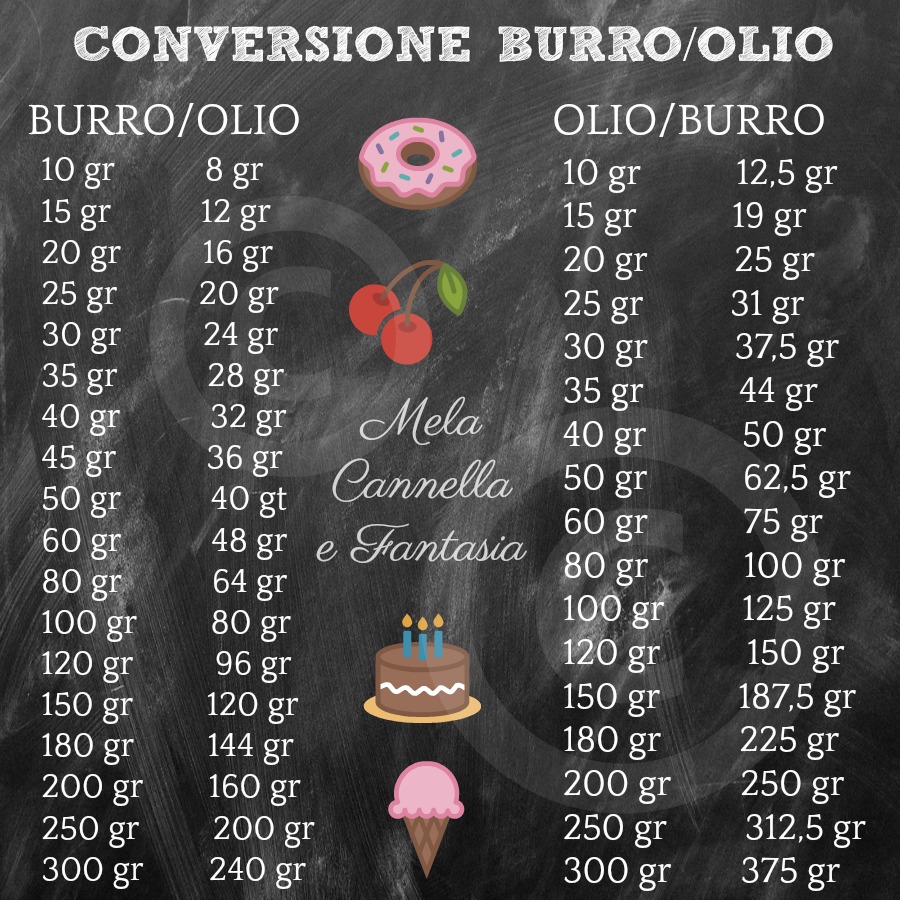
What to do in these cases? Simple, just do the butter/oil conversion! No worries, you don’t need a calculator, just save this table!
The substitution between butter and oil in cooking is a common practice, but it requires some caution to ensure a perfect result.
In this article, I will reveal all the secrets to successfully convert these ingredients without compromising the texture and flavor of your dishes.
Other easy and tasty recipes I recommend you try 😉
Mascarpone and Ricotta Tart
Diplomatic Cake
Carnival Fritters without Butter or Oil
Cocoa Tart with Ricotta and Jam
Baked Pink Castagnole
Easy and Quick Millefoglie with Cream and Strawberries
- Cost: Medium
- Cooking methods: Electric oven
- Cuisine: Italian
- Seasonality: All seasons
Ingredients
- 2 1/2 cups all-purpose flour
- 3 eggs (medium whole)
- 1 cup sugar
- 1/2 cup corn oil
- 2/3 cup water (or milk)
- to taste lemon zest
- 1 packet baking powder (16 grams)
- 2 1/2 cups all-purpose flour (approximately, you might need a few grams less)
- 3 eggs (medium whole)
- 1 cup sugar
- 1/2 cup butter
- 2/3 cup water (or milk)
- to taste lemon zest
- 1 packet baking powder (16 grams)
Tools
- Bowls
- Hand mixer
- Mold
- Spatula
- Sieve
Preparation
Important note: in the oil/butter conversion, you will notice that the measurements are different, it’s not a mistake, it’s just like that, be sure to follow what you read 😉
Since I’m not the only one who likes to bake without butter and considering the requests from some readers, I decided to share with you the butter/oil conversion table useful for making lighter and softer cakes and pastries.
The most accurate ratio would be 80%, meaning 100 grams of butter corresponds to 80 grams of oil (whether it’s seed oil or olive oil is not specified in the tables found online, I always use seed oil for desserts because the flavor is much more delicate).
In the table above, you will also find the reverse conversion, for those who prefer to make a cake using butter instead of oil, so that everyone is satisfied 🙂 I hope this article will be helpful for you to make many delicious desserts!
In the ingredient measurements, I included a recipe example with oil and the conversion with butter.
Find the full procedure for the oil-based recipe here: Super Soft Water Cake without Butter and Milk.
For the recipe converted with butter, the procedure is as follows: Melt the butter in a bain-marie and cool.
Beat the eggs and sugar with an electric mixer for about 10 minutes, add the lemon zest.
Sift flour and baking powder and add, a little at a time, to the mixture, alternating with a bit of water (or milk).
Lastly, pour in the melted butter and mix well. Transfer to a mold and bake following the same methods as the other recipe.
An important tip: when doing the butter/oil conversion, the flour amount might vary (changes by a few grams).
The mixture with butter will have a different consistency, thicker and might require less flour.
Adjust based on the dough’s consistency and if necessary, remove a few grams of flour.
The same goes if the starting recipe is butter-based and you want to convert it with oil. You will need to add a bit more flour if the dough is too liquid.
Here are some easy and delicious recipes without butter, those who wish can obviously use butter following the measurements listed above.
Super Soft Lemon Cake without Butter and Milk
Notes
Which oil to use instead of butter?
Seed oils (sunflower, corn, peanut): Ideal for desserts and preparations where you don’t want a strong flavor.
Extra virgin olive oil: Excellent for savory recipes and some rustic desserts where its flavor pairs well (e.g., olive oil cakes).
Other oils (coconut, avocado): Can be used depending on the recipe and desired flavor, keeping their characteristics in mind (e.g., coconut oil is solid at room temperature).What changes when replacing butter with oil?
Texture: Desserts with oil are often more moist, soft, and less crumbly compared to those with butter. In savory preparations, the texture difference can be less noticeable.
Flavor: Oil can add its distinctive flavor, especially if using extra virgin olive oil. Butter gives a richer taste and a particular “melt-in-the-mouth” quality.Do desserts made with oil keep the same way as those with butter?
Generally, desserts made with oil tend to stay moist longer than those made with butter, which can dry out more quickly.
Is replacing butter with oil healthy? / Fewer calories with oil instead of butter?
From a nutritional standpoint, oil (especially extra virgin olive oil) is generally considered healthier than butter due to its unsaturated fatty acid profile. However, the caloric intake is similar by weight.