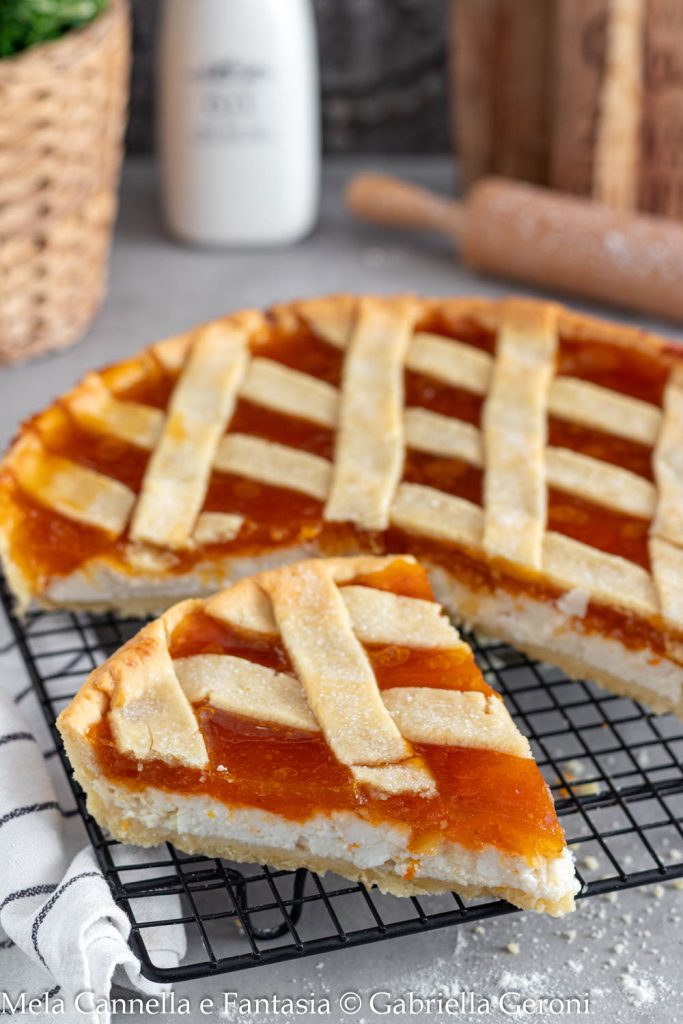
Some desserts don’t need too many effects to be loved. The double layer tart with ricotta and jam is just like that: simple, elegant, and delicious!
A base of oil shortcrust pastry, a soft heart of creamy ricotta, and a layer of apricot jam that delicately ties everything together.
How to prepare the double layer tart with ricotta and jam?
It’s easier than you think! Roll out the pastry, fill with ricotta and jam, cover with strips, and bake in the oven or air fryer.
The creaminess of the ricotta and the fruity taste of the jam make this dessert very versatile.
It’s perfect for family breakfast, for a refined snack, or to offer to guests at the end of a meal, perhaps after a nice Sunday lunch.
And if you love informal atmospheres, you can also propose it at an aperitif with friends, served in small portions it will be a success!
Don’t you like tarts with oil shortcrust pastry? No problem, you’ll also find the quantities for classic butter shortcrust pastry, so we can please everyone!
This tart with double filling is a simple and genuine recipe, perfect for those who love homemade baked desserts and traditional flavors.
Few ingredients, no complicated steps, and in the end, you bring to the table that smell of home and family that tastes good and authentic. 🧡
I invite you to read the article to the end ❤️ I have collected the most common questions about this type of preparation for you. Practical suggestions on storage, variations, and many useful tips for perfect success.
But first, I’ll leave you my best tarts to discover and enjoy 👩🍳🥣❤️
- Difficulty: Easy
- Cost: Medium
- Rest time: 2 Hours
- Preparation time: 40 Minutes
- Portions: about 10 people
- Cooking methods: Electric oven, Air frying
- Cuisine: Italian
- Seasonality: All seasons
Ingredients
- 2 3/4 cups all-purpose flour
- 2 eggs (medium size)
- 7 tbsp sugar
- 6 1/2 tbsp extra virgin olive oil (or seed oil, read at the end of the guide for the suitable choice)
- 1 tsp baking powder (optional)
- dried chickpeas (about 1.75 lbs for blind baking)
- lemon zest
- 14 oz ricotta (read at the end which one to choose)
- 3 tbsp sugar (to season the ricotta)
- 1 1/4 cups jam (or any jam of your choice)
- orange zest (or lemon)
- Half vial orange flavoring (not essential)
Tools
- Bowls
- Rolling pin
- Work surface
- Spatula
- Tart pan
- Parchment paper
- Sieve
- Lemon grater
- Hand whisk
Steps
Choosing the right ricotta is fundamental for the success of the double layer tart.
Too fresh or too moist ricotta might release whey during cooking, making the base soggy and compromising the shortcrust’s crispness.
Which ricotta is best to choose? You’ll find all the details at the end 🧡
Pour the ricotta into a fine-mesh sieve or a clean cloth, let it drain in the refrigerator for at least 2–3 hours (better overnight).
Then place it in a bowl and gently mix it with a fork until it’s soft and uniform.
For a more stable filling, you can add a teaspoon of cornstarch (or starch) ONLY IF the ricotta is still slightly moist, it will help absorb excess liquid during cooking.
Add sugar, orange zest (or lemon), and the flavoring you prefer (I used orange for a more intense fragrance and flavor).
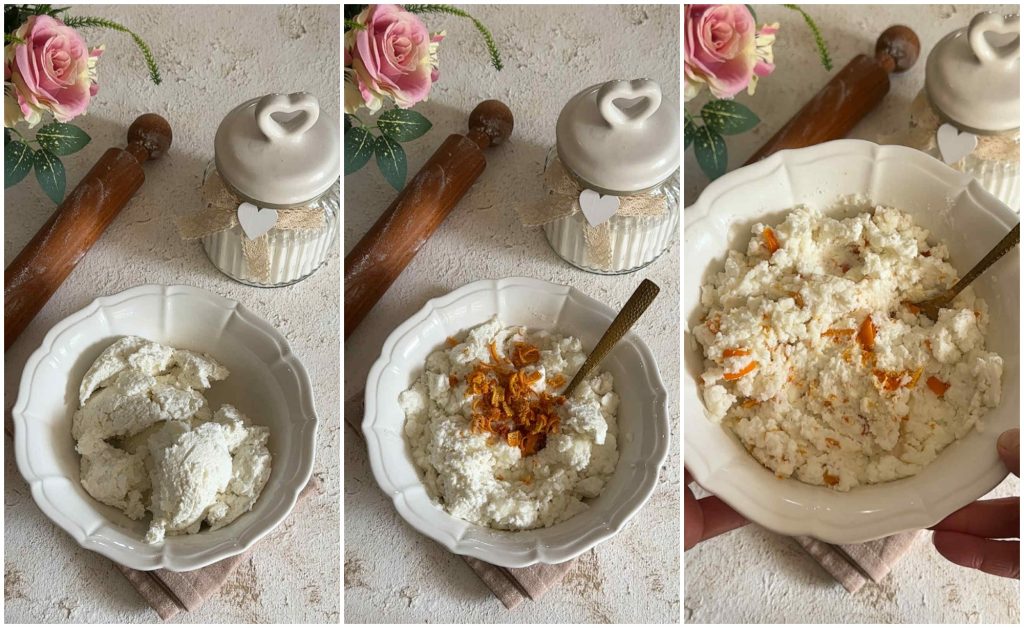
Give it a good stir and the filling is ready. Store in the fridge and proceed to prepare the shortcrust pastry.
A smart tip before starting is to weigh all the ingredients you need, so you have them all at hand.
This way you will also be sure not to forget anything during preparation!
Take a large bowl and break the eggs inside. Add the sugar and immediately mix with a hand whisk to dissolve it.

Grate the lemon zest (organic and well washed) and add the oil, a pinch of salt. Mix well for a couple of minutes.
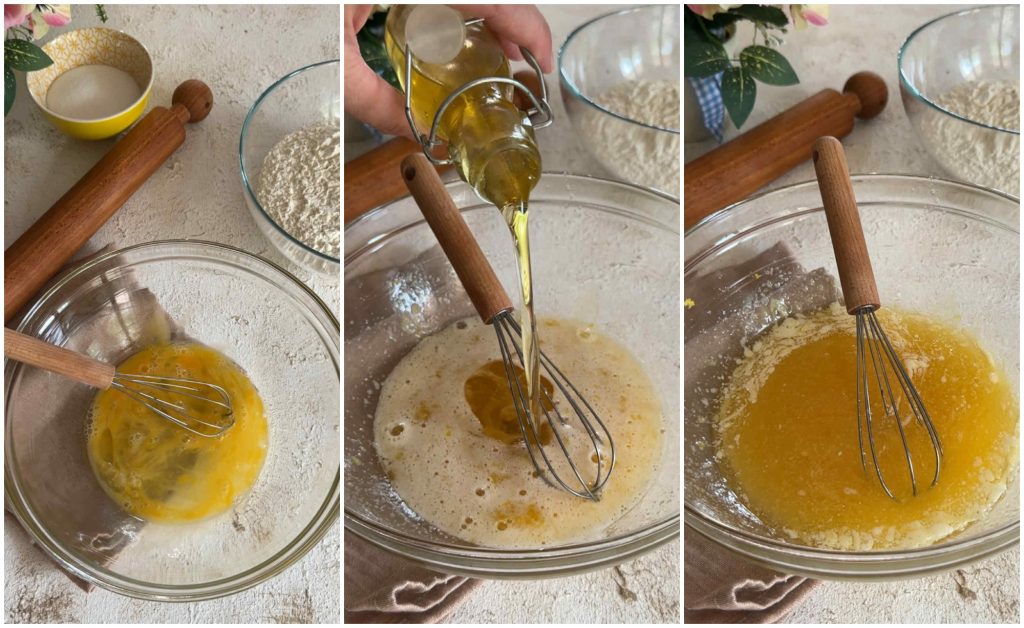
Finally, incorporate the flour and baking powder and mix first with a fork, this will prevent dirtying your hands.
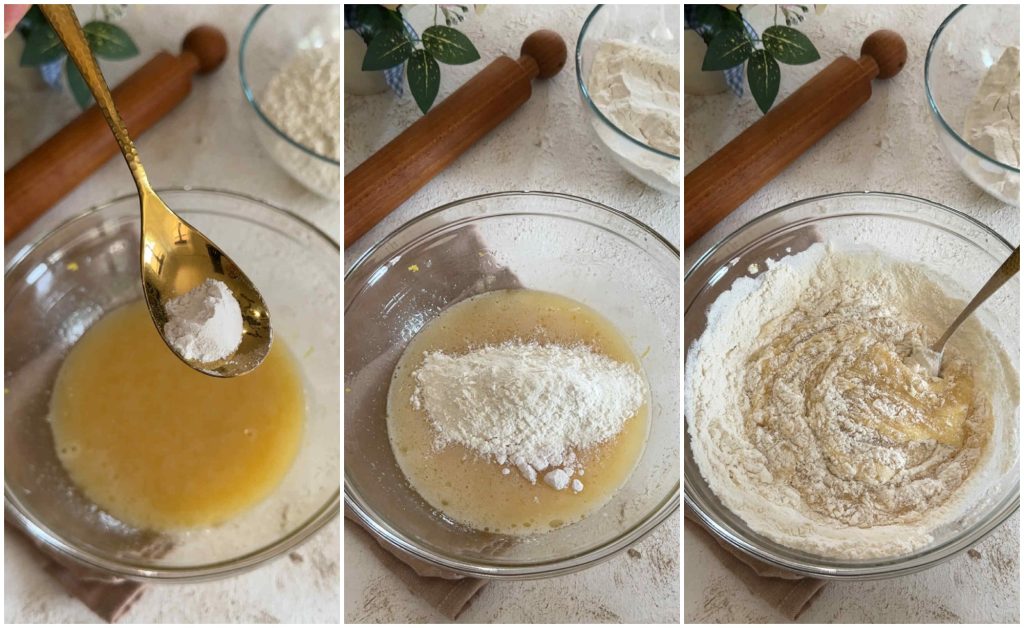
When the dry ingredients have absorbed the liquid ones, turn everything onto a work surface and knead quickly with your hands until you get a smooth and homogeneous dough.
If you’re experienced, you can do this directly in the bowl like I do, so you won’t have to dirty the work surface!
Divide the pastry into two parts, one larger to line the pan and one to make the decorative strips.
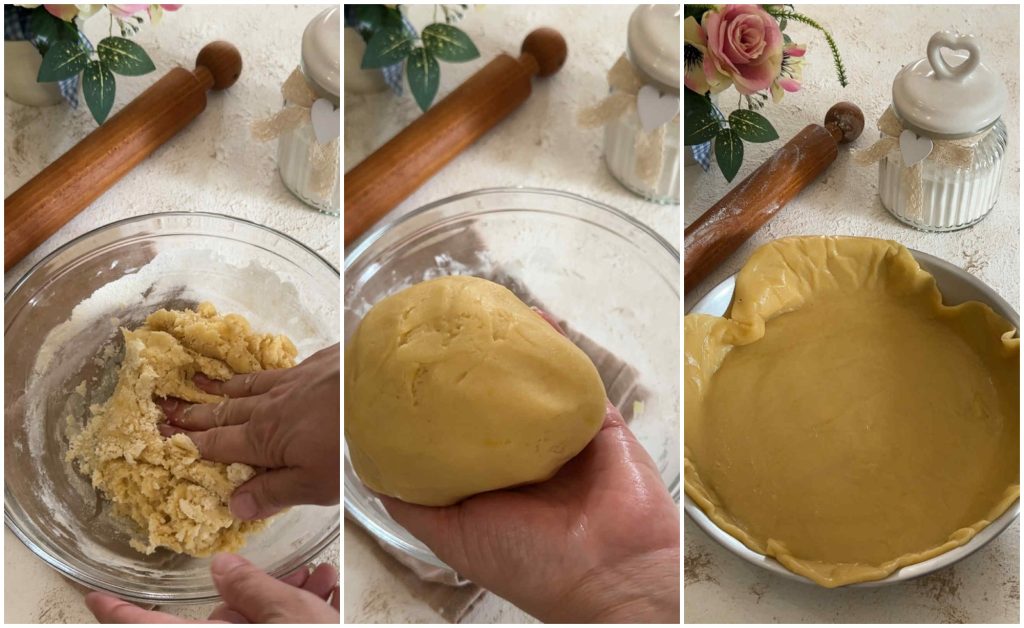
Cover the smaller part with a bowl or film to prevent it from drying out and leave it at room temperature.
With the help of a rolling pin, roll out the larger pastry on a sheet of parchment paper which you will then turn directly into the pan.
Take a tart dish (mine measured 11 inches in diameter and 2 inches in height) and line it with the rolled-out pastry.
Make sure the dough adheres well to the edges to have a high enough shell to contain the two types of filling.
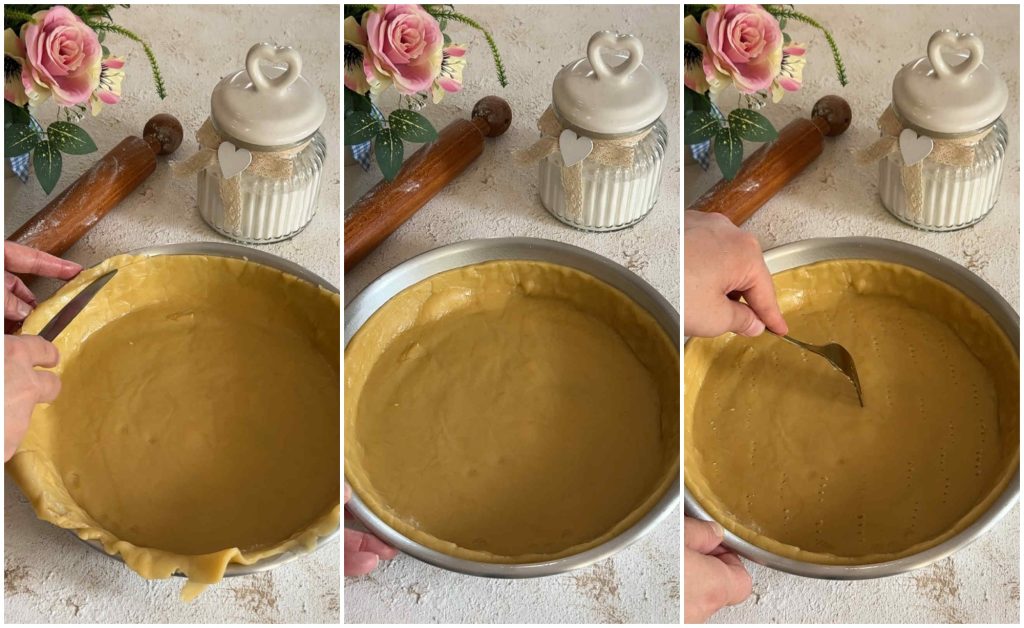
At this point, you can choose between two cooking methods: “blind baking” (i.e., base without filling) or complete baking, with ricotta and jam together.
It’s the method I prefer, especially when using ricotta-based fillings, because it allows you to get a perfectly dry and crumbly base.
To do it, line the pastry with a sheet of parchment paper, pour dried legumes (or ceramic beads) on top, which act as a counterweight otherwise the pastry will swell.
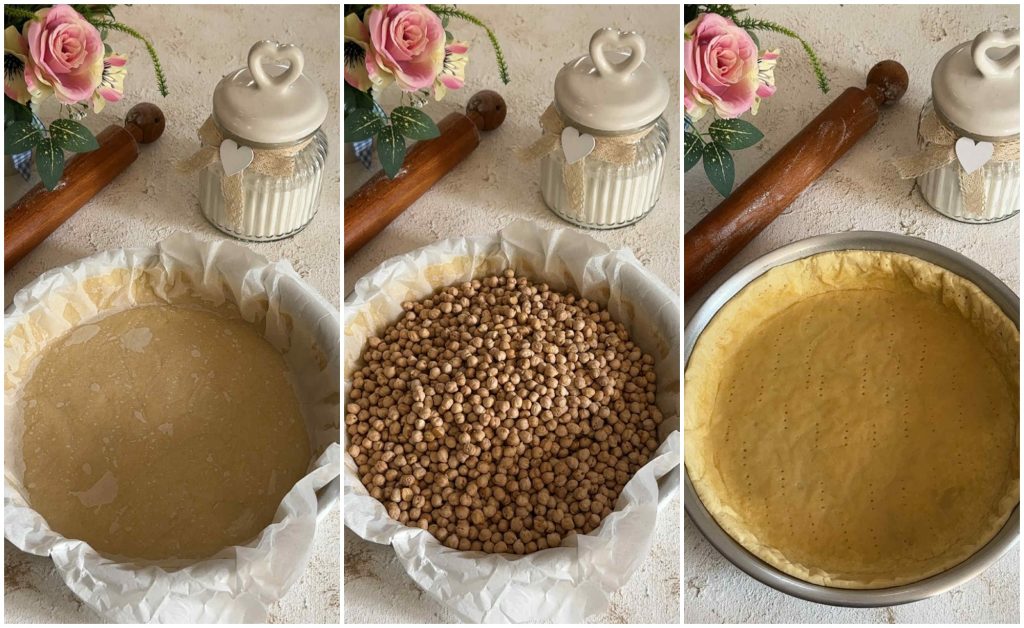
About 1.75 lbs of dried chickpeas are needed to create a substantial weight. Once baking is done, let them cool and set them aside for the next blind baking 👌
✅ Pros of this cooking:
Dry and crumbly base
More stable ricotta during baking
Perfect for those who want to serve the tart even the next day
⚠️ Cons:
Simply requires an extra step (pre-baking + filling and second baking)Bake the base for about 15 minutes in a preheated oven, static mode at 340°F.
After the time has elapsed, remove the tart from the oven, remove the chickpeas and the parchment paper, and pour the previously seasoned ricotta on the bottom.
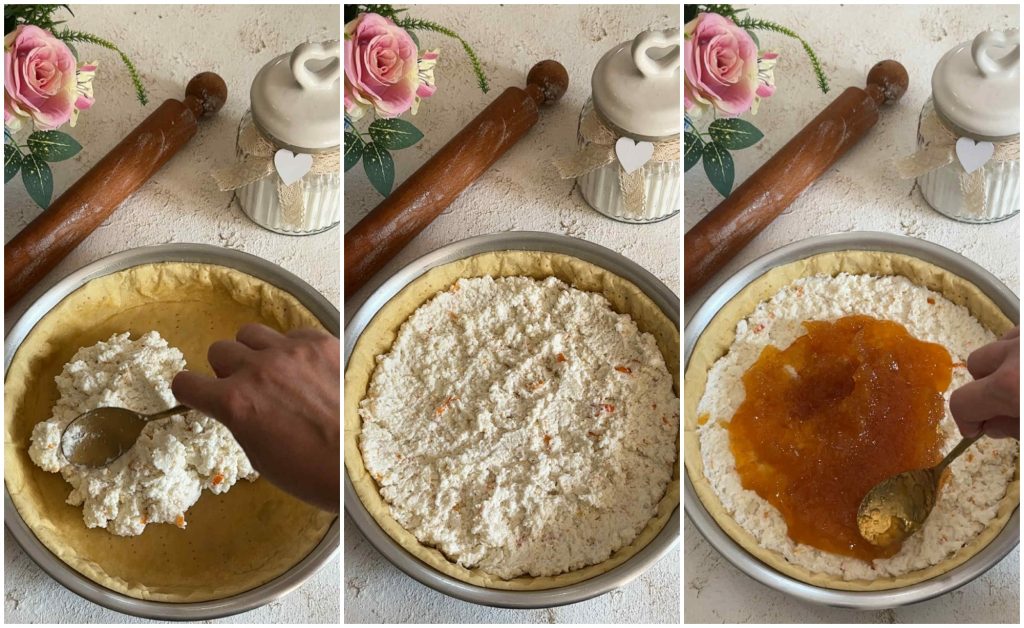
Level with a spatula and finally pour the jam or jelly of your choice on top. Spread with the back of a spoon.
Roll out the leftover pastry and create the decorative strips. Decorate the tart’s surface and put back in the oven at 320°F for another 30 minutes approximately.
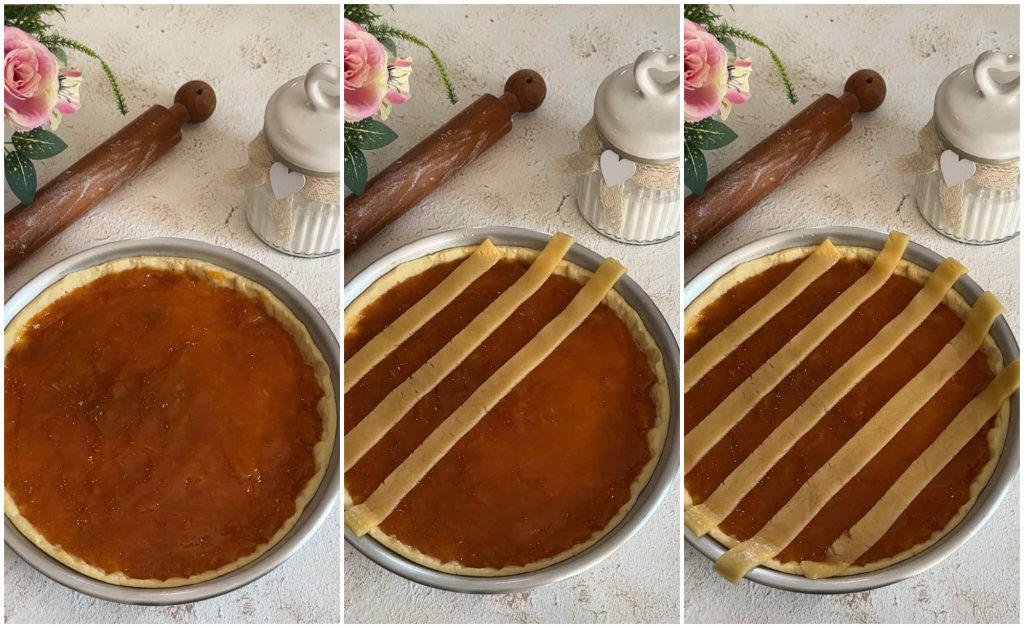
Only if you like to sprinkle the strips of pastry with granulated sugar, which will make them delicious and crunchy!

Always do the check before taking it out of the oven and read at the end my tips to check if the tart base is cooked.
It’s the fastest method: roll out the pastry, fill with ricotta and jam, and bake everything together at 356°F for ABOUT 40 minutes.
✅ Pros:
Faster, one baking step
Moister filling
⚠️ Cons:
The base tends to remain softer
After a few hours, it may lose a bit of crunchiness under the filling.In this case, the ingredients for the shortcrust remain UNCHANGED. Only the fat part to use will change, namely butter, equal to 8 1/2 oz.
If you want to prepare the shortcrust quickly and cleanly, you can easily make it in the mixer or food processor. It will only take a few seconds!
Put the flour, cold butter in pieces, and a pinch of salt in the bowl, then pulse until you get a sandy mixture.
Add sugar, eggs, and lemon zest, then pulse again until the dough starts to come together.
At that point, transfer it onto a sheet of film, compact it with your hands without kneading too much, form a dough ball, and let it rest in the refrigerator for AT LEAST 30 minutes.
If you don’t have a mixer, you can easily make the shortcrust by hand, directly in a bowl. Cut the cold butter into cubes and quickly work it with the flour, rubbing between your fingers until you get the classic sandy consistency.
Add sugar, egg, and flavors, then knead just enough to get a smooth and homogeneous dough ball.
You can do it without a work surface, inside the bowl, or on a sheet of parchment paper, so you avoid flouring the entire work surface.
Wrap in film and let rest in the fridge. After the time has passed, proceed as for the oil shortcrust pastry choosing whether to pre-cook or bake everything together.
Article protected by copyright © – Gabriella Geroni © All Rights Reserved
🔍 Which flour to choose
How many times have you wondered which flour is best to choose for making a classic tart?
Generally, it’s preferable to use a weak or medium strength flour. Too strong flours (like manitoba, used for bread/pizza) tend to develop too much gluten, risking obtaining a shortcrust that is not very crumbly.
1)“00” weak flour: it’s the most classic choice for shortcrust pastry.
It has little gluten and gives the shortcrust a crumbly texture that is not too rough. It’s perfect if you want the shortcrust to melt in the mouth without being too “rustic”.
It has little gluten and gives the shortcrust a crumbly texture that is not too rough. It’s perfect if you want the shortcrust to melt in the mouth without being too “rustic”.
2)Type 1 or 2 flour / ancient grains: for those who love stronger flavors and a slightly more rustic texture.
In this case, however, you need to dose the flour well because the presence of bran and fibers might make the dough harder to roll out.
In this case, however, you need to dose the flour well because the presence of bran and fibers might make the dough harder to roll out.
3)Wholemeal flour: you can replace a small part (for example up to 10-20%) with wholemeal or with special flours (spelt, ancient grains). Be careful not to add too much because the shortcrust could become much more delicate and less workable.
3)Wholemeal flour: you can replace a small part (for example up to 10-20%) with wholemeal or with special flours (spelt, ancient grains). Be careful not to add too much because the shortcrust could become much more delicate and less workable.
🌼 Which oil to use
When I prepare oil shortcrust pastry, I opt for a delicate seed oil, or a light extra virgin, to not overpower the other flavors. If the oil is too strong, the shortcrust may leave an overpowering aftertaste. Here’s how to choose:
💚Seed oil (peanut, sunflower, corn; or rice oil): has a neutral flavor, does not overpower delicate aromas;
💚Delicate extra virgin olive oil (EVO): if you use it, choose an EVO with a sweet or slightly bitter taste profile. A good compromise if you want a more characteristic or rustic flavor.
FAQ (Questions and Answers)
How long should the tart rest before cutting?
At least 2-3 hours at room temperature; it’s better if you let it rest overnight in the fridge so the flavors meld.
Can the tart be frozen?
Yes, cut it into slices, wrap each slice well in film + aluminum foil, and freeze them. It keeps for 1-2 months. Let thaw in the fridge or at room temperature before serving.
What is the ideal temperature and cooking time?
For this recipe, the tart should be baked in a preheated oven at 356°F for about 40 minutes if you choose to bake everything together, until the shortcrust turns golden (depends on the oven).
🍎 Can I use fresh fruit instead of jam/jelly?
Certainly! It could be a great variant that would make this tart really interesting. Choose the fruit you like best (apples, apricots, peaches, blueberries, depending on the season), cut them into thin slices, and place them on top of the ricotta.
If you prefer, you can also cook the fruit in a pan (about ten minutes) with a tablespoon of sugar until soft, then place it on the tart.Who is this recipe suitable for?
Suitable for those who love classic baked desserts, simple and tasty.
Perfect for those looking for homemade breakfast cakes.
Interesting for those wanting a “homemade” dessert with a refined look to serve to guests.
For those wanting to make DIY desserts without too much complexity.🌿 Which ricotta to choose?
Prefer good quality cow ricotta: it’s delicate, creamy, and blends easily.
If you love stronger flavors, you can use sheep ricotta (or mixed), but make sure it’s always well-drained.
Avoid industrial ricotta in tubs that are too liquid: they contain more whey and tend to separate during cooking.