The ricotta castagnole are extra soft doughnuts without butter or oil. Very easy to prepare, fragrant, and so delicious! Once ready, I recommend hiding them to resist the temptation of eating one after the other!
The ricotta castagnole are truly fluffy and can be made with just a few ingredients: eggs, flour, ricotta, sugar, and baking powder. No butter or oil (except for frying them!).
I flavored the ricotta castagnole with plenty of lemon zest. However, we can replace it with powdered cinnamon, orange zest, rum aroma, vanillin, etc.
The castagnole, also known as “favette“, are a typical Carnival sweet but can actually be enjoyed all year round! They are popular throughout Italy, particularly in some regions including Abruzzo.
There are several versions of this traditional sweet. The classic one involves eggs, butter, sugar, and flour. Then there’s the version with added baking powder and rum, with limoncello or with Alchermes to make them softer and more fragrant.
Today, however, we are preparing extra soft castagnole without butter or oil. Ricotta is added to the batter, making them really soft. Once the mixture is ready, it is scooped out with a spoon, or rather two, and placed into the saucepan with vegetable oil.
The castagnole must be fried while carefully controlling the temperature of the oil to ensure they come out beautifully golden and dry.
Once drained from the oil, they are immediately rolled in granulated sugar and are ready to spread happiness!
Try this special version of oven-baked pink Castagnole, beautiful and colorful, lighter compared to the fried ones!
It wouldn’t be Carnival without a nice tray of castagnole on the table! Whether fried or baked, with or without butter, they are so delicious that we can’t resist making them!
So let’s see together the step-by-step procedure with photos!
Do you like fried sweets? Then don’t miss these delicious recipes!

- Cost: Medium
- Preparation time: 10 Minutes
- Portions: about 60 medium-small pieces
- Cooking methods: Frying
- Cuisine: Italian
- Seasonality: All seasons
Ingredients
- 2 eggs (medium whole)
- 200 g ricotta (see below for substitution options)
- 160 g all-purpose flour
- 55 g cornstarch
- 70 g sugar
- 30 g lemon juice
- to taste lemon zest
- 2 teaspoons baking powder
Tools
- Thermometer
- Bowl
- Skimmer
- Hand Whisk
- Saucepan
- Paper Towels
Steps
An important note before starting to prepare these delicious castagnole!
It is necessary to use dry ricotta otherwise it might affect the final result of the recipe.
Therefore, I recommend placing the ricotta in a sieve in the fridge a couple of hours beforehand to let it lose its whey.
If it’s already dry, you can proceed without waiting 😉
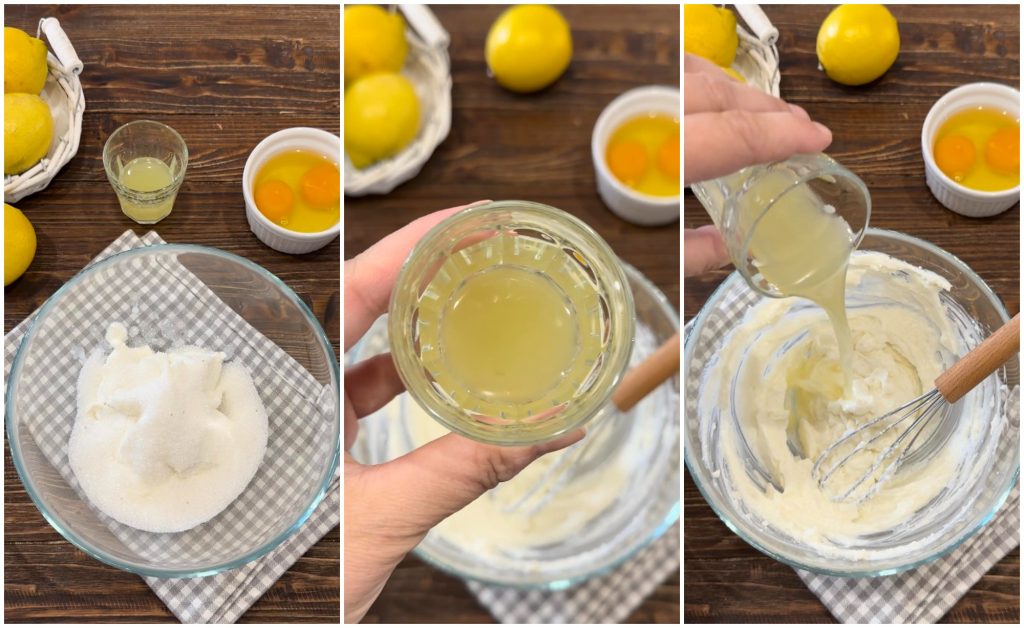
In a bowl, place the ricotta and sugar. Mix with a simple hand whisk until you get a nice cream.

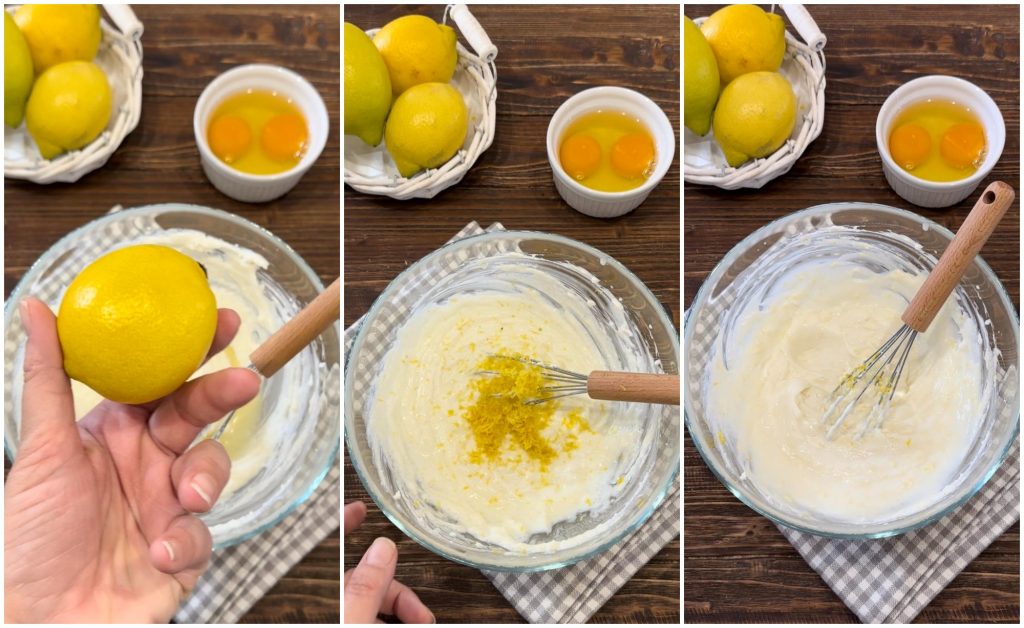
Then add the lemon juice and zest and mix. Those who prefer can use orange juice and zest.
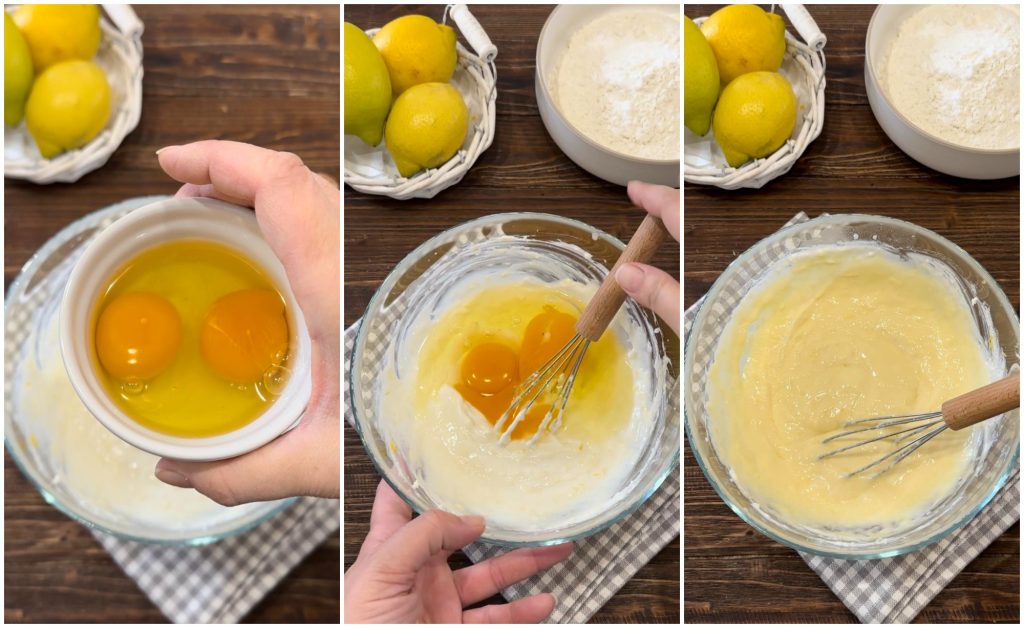
Add the medium whole eggs and mix well.
Work well with the spatula to combine all the ingredients until you get a thick and sticky batter.
Finally, incorporate flour, cornstarch, and baking powder.
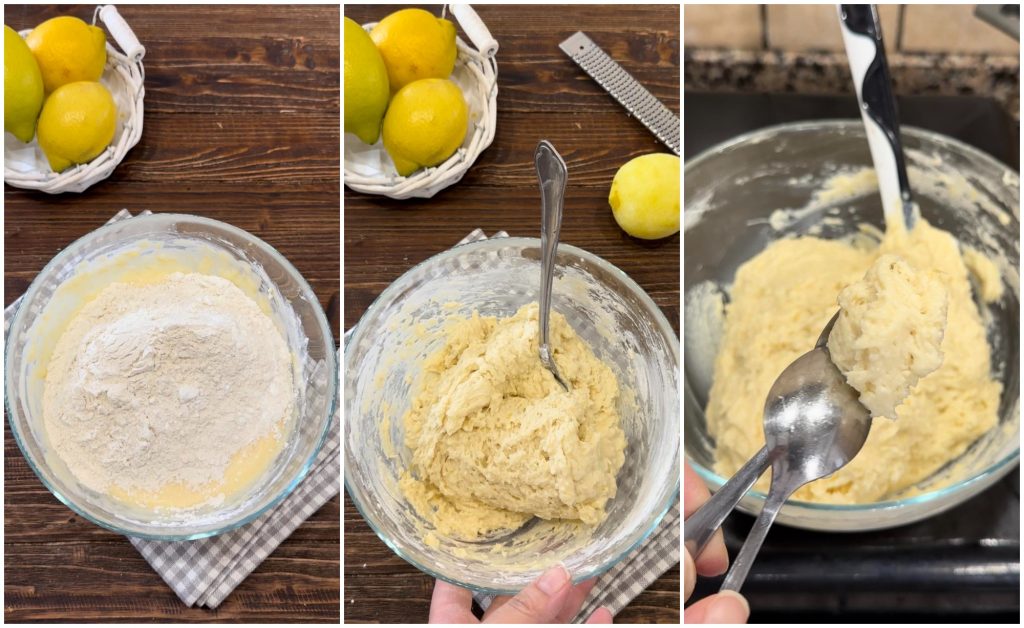
Now you just need to fry as if there’s no tomorrow!!
I chose the longer path! I preferred to make small castagnole to get more of them!
However, this way you need to devote more time to frying!!
Before moving on to cooking the castagnole, let me give you some other important tips for a perfect frying!
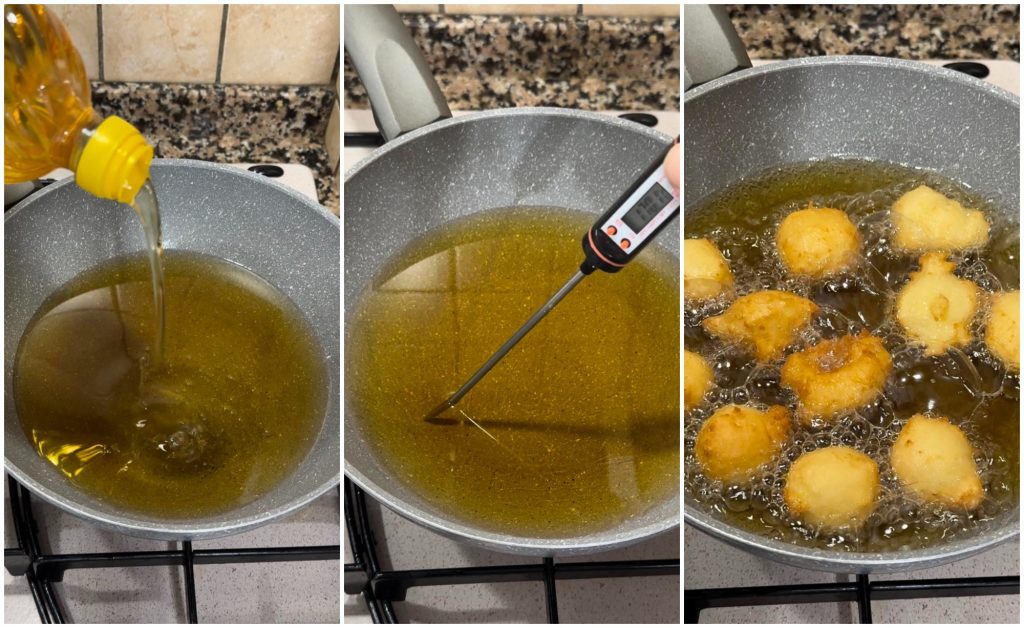
The first rule to follow, which applies in general when frying, is that the temperature of the oil must be between 320°F and 356°F before you can immerse the food.
In the past, we did not have practical tools like we do today and relied on experience.
For frying, a small amount of batter (or a piece of bread crumb or a toothpick) was inserted into the hot oil, and if it sizzled, it meant it was ready!
However, today we can fortunately use more professional tools, which make it really hard to go wrong, such as the food thermometer.
If you have one at home, use it, and when the temperature reaches 338°F, you can fry!
Another golden rule for excellent frying is to add a few pieces at a time to the saucepan.
This way, you can more easily control the cooking, preventing the temperature from dropping sharply.
Equally important is the quality and quantity of oil used for frying.
As for the type of oil, it is preferable to use peanut oil or, if you like, extra virgin olive oil.
Regarding the quantity of oil to use, the only thing to remember is to USE ABUNDANTLY! Better too much than too little 😉
Let’s move on to the ricotta castagnole! Take a saucepan and pour the oil inside.
If you want to finish quicker, I advise using a wide pan where you must necessarily add more oil.
Otherwise, use a narrow and tall pan, but you will have to cook the castagnole in several batches.
Turn on the gas and wait for the oil to reach the temperature indicated above, checking with the thermometer or the old-fashioned way!
Then take a bit of batter with two teaspoons and immerse it in the boiling oil.
Insert a few pieces inside, trying to do this operation quickly so that they will be cooked (more or less) at the same time.
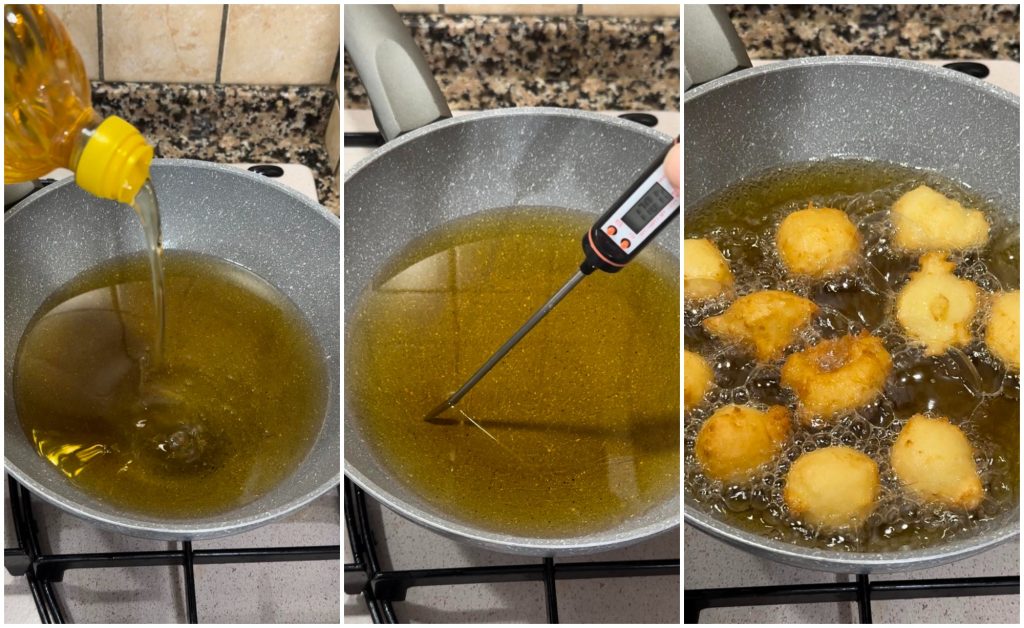
Since there is baking powder in the batter and they tend to puff up during cooking, I decided to make them not too big, and I got 60 pieces in total!
Keep an eye on the cooking, turning the castagnole after a couple of minutes, and continue for a TOTAL of ABOUT 5 minutes.
When they become beautifully golden, drain with a skimmer onto paper towels.
Move the pan away from the heat for a moment to prevent the oil from further exceeding the temperature.
Immediately pass the castagnole in granulated sugar and then arrange them on a nice serving plate.

This operation must be done while the castagnole are still hot; otherwise, the sugar will no longer stick!
When you’ve finished covering the castagnole with sugar, place the pan back on the heat and wait about 3-4 minutes.
The temperature of the oil will likely have dropped, and we need to bring it back up to 338°F. At that point, immerse a few pieces of batter inside again.
When they become beautifully golden, drain the castagnole and pass them in sugar, repeating all the steps as indicated.
Continue frying until you finish the batter, and once done, all that’s left is to take a castagnole, close your eyes, and take a bite!
You will be surprised by the crispness and softness of these simple and delicious ricotta doughnuts!
I hope you feel like trying them (let me know in the comments!). Until the next recipe!
Article protected by copyright © – Gabriella Geroni © All Rights Reserved
Contains advertising content
FAQ
How can I replace ricotta?
You can replace ricotta with mascarpone, robiola, cream cheese, or at most Greek yogurt. Not classic yogurt, which has a more liquid consistency and may require adjusting the dry ingredients.
Can I skip using cornstarch?
Of course! I used some cornstarch because it makes cakes softer, but you can make castagnole using just all-purpose flour.
Can I use liquor instead of lemon juice?
Absolutely! If you like, you can use your favorite liquor (or a mix of liquors). Rum, for example, fits perfectly. For a pink effect, try using Alchermes if you like it.
How long do castagnole last?
Like all fried foods, castagnole should be eaten on the same day, unfortunately! The next day they are still edible but lose their characteristic crispness and softness. However, if you want to eat them the next day, store them at room temperature, not in the fridge, in a container. The next day you’ll see that the sugar will have almost completely absorbed. It’s normal! Roll them quickly in a bit of sugar, and they will seem freshly made!
Can I freeze castagnole after frying?
Never tried it, and I don’t recommend it for the reasons mentioned above. Castagnole should be eaten freshly fried!
At most, you can freeze the raw batter and fry it later.
For practicality, I recommend shaping the castagnole, placing them on a tray spaced apart. When you want to fry them, throw them directly into the hot oil while still frozen. In this case, they will take a few more minutes to cook, so adjust accordingly.Can I fill castagnole after cooking?
Yes, this type of dough allows you to fill the castagnole with the creams you like best. In this case, you will need to use a piping bag with a small nozzle.