Today we will prepare Sicilian orange marmalade together using my recipe, which is simple but 100% reliable. I will share tips and tricks to create perfect marmalade, to enjoy at any time of the day!
Is there anything better than waking up in the morning and having a good, healthy breakfast? I love sipping my rice drink with a nice slice of fresh bread and my homemade orange marmalade.
It has an intoxicating aroma, an intense flavor, and it’s so delicious that, for me, it’s a real temptation!
Making orange marmalade is an ancient art, a ritual passed down from generation to generation, but with the right precautions, it is undoubtedly within everyone’s reach.
Did you know that orange marmalade has ancient origins? It dates back to ancient Greece and the Roman Empire, where they used to cook fruit with honey to preserve it.
Roman cookbooks from the 4th-5th centuries AD document the practice of slow cooking quince and other fruits with honey or mulled wine with the aim of preserving them for long periods.
The sugar used today to make jams and jellies only arrived in Europe during the Crusades, so honey and wine were precious allies for preserving fruit.
Orange marmalade is associated with several legends.
One of the most famous tells that the Spanish queen, Catherine of Aragon, wife of King Henry VIII of England, introduced orange marmalade to the English court.
Nostalgia for the fruits of her homeland inspired her to create this delicious cream, making the distance less painful.
Another legend claims that the birth of orange marmalade was thanks to Maria de’ Medici. After marrying Henry IV, Maria moved to France with her cooks and pastry chefs.
She suffered from a vitamin deficiency, so to remedy it, she sent some courtiers to Italy to gather the finest Sicilian citrus fruits.
However, the return journey from Italy to France was very long, especially considering the means of transportation of the time (the horse). Therefore, the court cooks decided to find a solution to prevent the oranges from arriving in poor condition.
Thus, orange marmalade was born, cooked with sugar to preserve it for a long time.
Apparently, when transporting crates full of marmalade, the labels on the containers said “pour Marie malade” or “for sick Mary“, hence “marmalade” in French, Italianized to Marmellata.
How much truth there is in these stories is uncertain, but marmalade certainly represents a way to preserve the sun and fragrance of citrus fruits even in the colder months.
An important clarification should be made, as many still confuse the two terms!
Marmalade and jam are not synonyms.
The term marmalade refers to a product made from citrus fruits (i.e., lemon, orange, and mandarin as well as citron, bergamot, and grapefruit).
The term jam refers to any other type of fruit or vegetables (for example, plums, strawberries, peaches, but also onions, peppers, pumpkin, tomatoes, etc.).
The difference is not only in the type of fruit chosen but also in the percentage used.
For marmalade, at least 20% is needed, while for jam, it’s 35%, and for extra jam, it’s 45%. This was established by the European Union in 1979.
Orange marmalade pairs perfectly not only with cookies, pies, and cakes but also with savory foods, for example, it is excellent with cheese. It will become the perfect companion for tasty homemade appetizers.
But now let’s look at the procedure to make Sicilian Orange Marmalade.
Don’t forget to read the article to the end. You will find tips on what to do if the marmalade doesn’t thicken or the right amount of sugar to use.
I will reveal the famous plate trick to check if the marmalade is cooked and also valuable tips on preservation and how to sterilize jars.
Of course, orange marmalade can only be prepared using untreated oranges because we will also include the peel.
For any doubts, feel free to write to me in the comments, I will be happy to answer you.
Before we begin, here are some delicious recipes you can make using oranges 🍊🧡
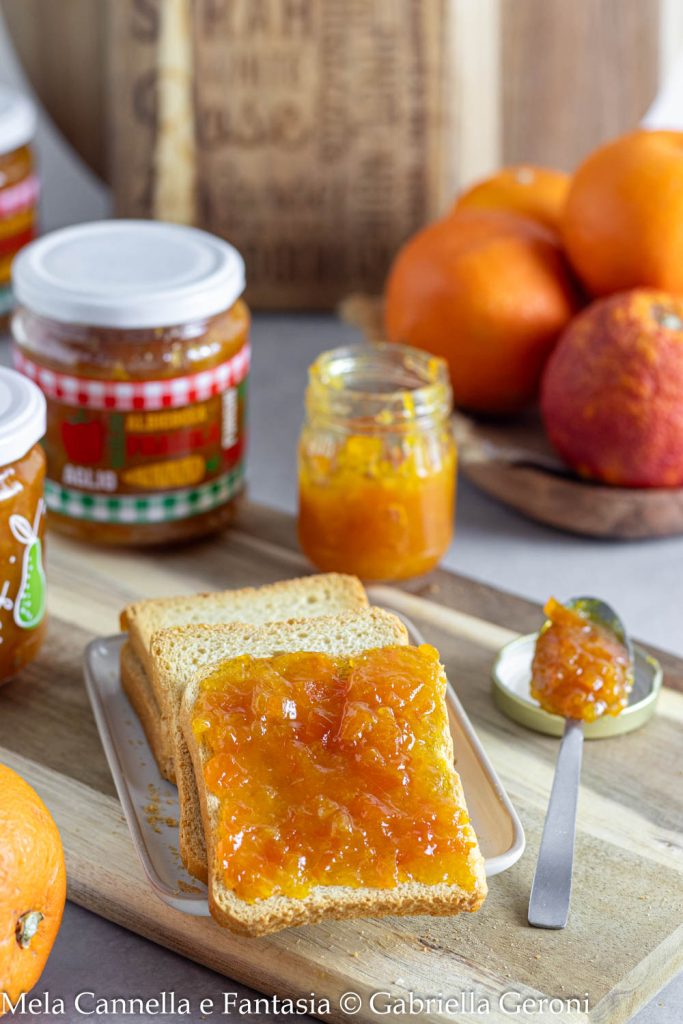
- Cost: Moderate
- Preparation time: 30 Minutes
- Portions: about 4 jars of 14 oz
- Cooking methods: Stovetop
- Cuisine: Italian
- Seasonality: Autumn, Winter, and Spring
Ingredients
- 3 kg oranges (Moro or Navel or Tarocco, weight with peel 3 kg, weight without peel 1.9 kg)
- 950 g sugar (the sugar amount should be calculated after peeling the oranges and should be 50% less than the weight of the fruit. In this case, it is 950 grams)
Tools
- Bowls
- Cutting Board
- Saucepan
- Ladle
- Jars
- Knife
- Small Pot
- Tea Towel
- Hand Blender
- Peeler
- Sieve
Steps
With the indicated doses, I obtained 2 jars of about 12 oz, 3 jars of about 7 oz, and 2 of about 2 oz. I recommend using containers that are not too large to make it easier to consume the marmalade once opened.
IMPORTANT: IN THIS RECIPE the sugar amount should be calculated after peeling the oranges and should be 50% less than the weight of the fruit. For example, if once peeled the oranges weigh two kilos, you should use exactly half, which is one kilo of sugar. In my case, the weight with the peel was 3 kg, without the peel 1.9 kg so I used 950 grams
Even though we are using (make sure) organic UNTREATED oranges, I always recommend washing them thoroughly under running water using a kitchen brush to remove any impurities.
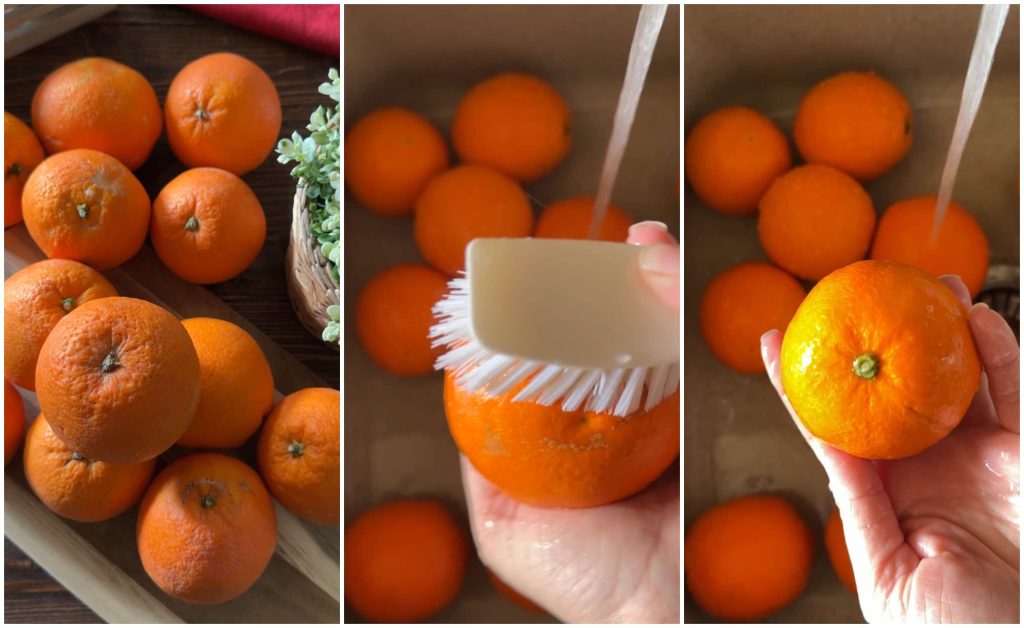
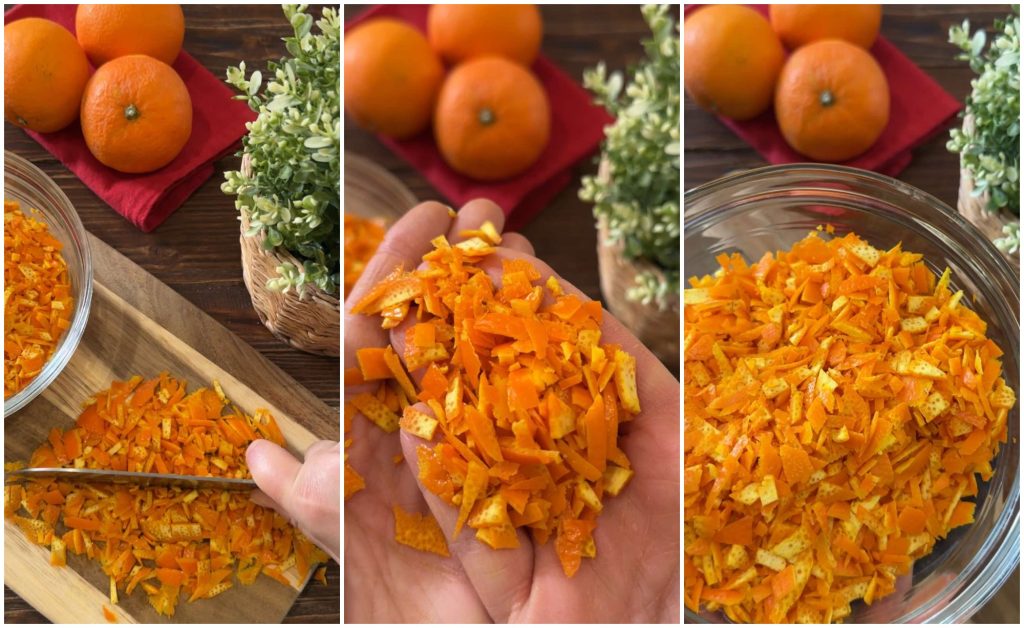
After washing the oranges, use a peeler to remove all the yellow peel, being careful not to take the white part.
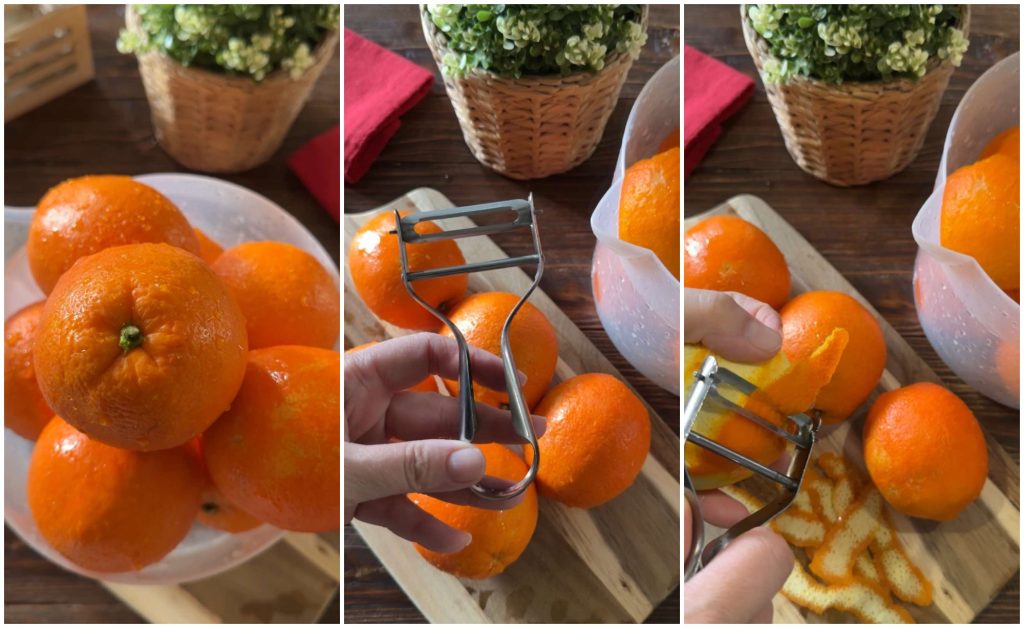
Cut all the peel into thin strips, chop them into very small pieces, and set them aside.
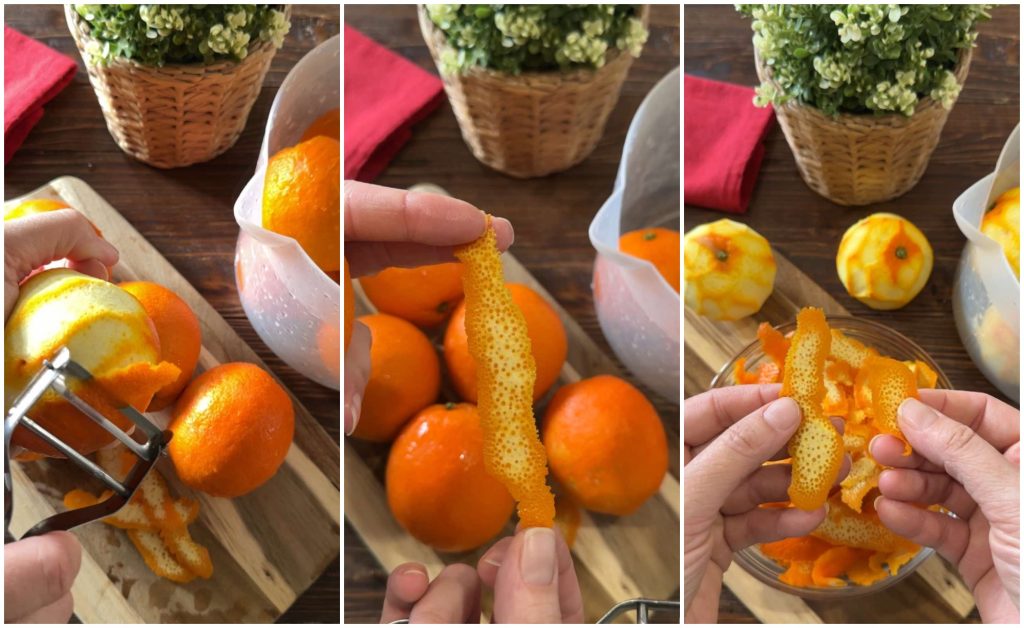
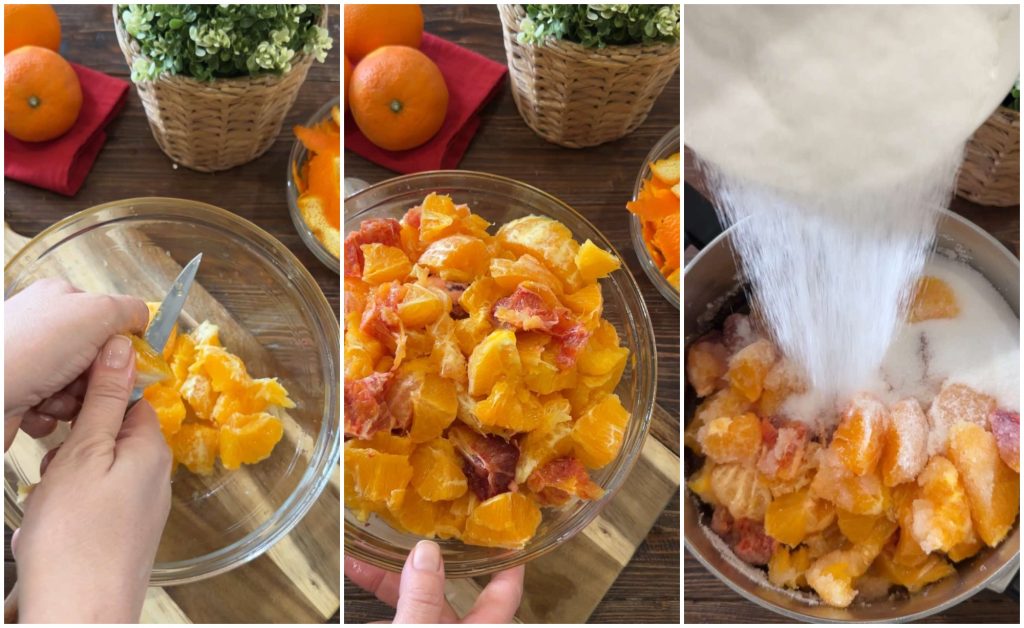
Now remove all the white part from the peeled oranges using a knife, then cut them into large chunks and remove any seeds if present.
At this point, place the oranges in a saucepan, add the sugar, and bring to the heat, on low flame, remembering to stir often with a wooden spoon.
Remember to cover halfway through cooking and then remove the lid.
While your marmalade is cooking, take the chopped peels and place them in a small pot.
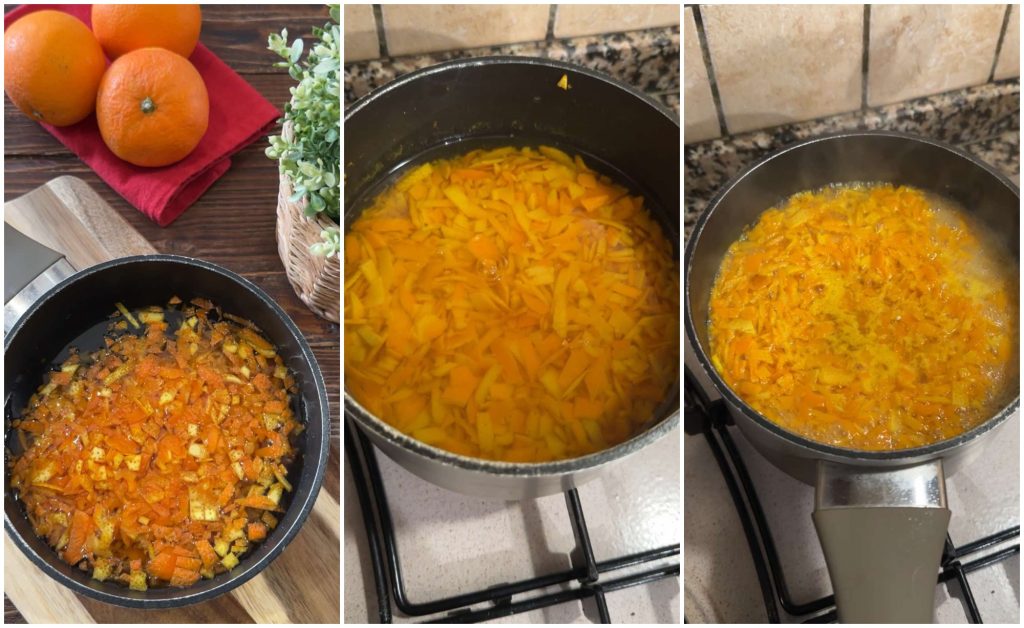
Cover the peels with cold water, bring to a boil and count 5 minutes. After that, throw away the water, refill with fresh water, bring to a boil, and count another 5 minutes.
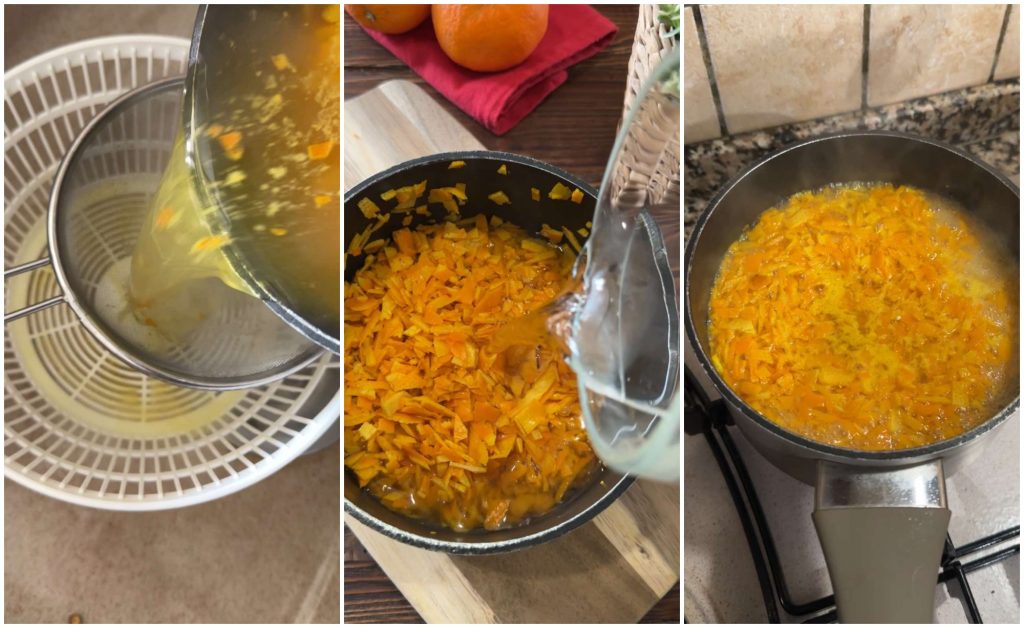
This operation should be repeated at least three times, even better if five, and it is essential to remove the typical bitterness of the peels.
Once your marmalade is ready (you will need to boil it for about 2.5 hours, you can find below how to know if it’s ready) blend it with the hand blender to make it more homogeneous.
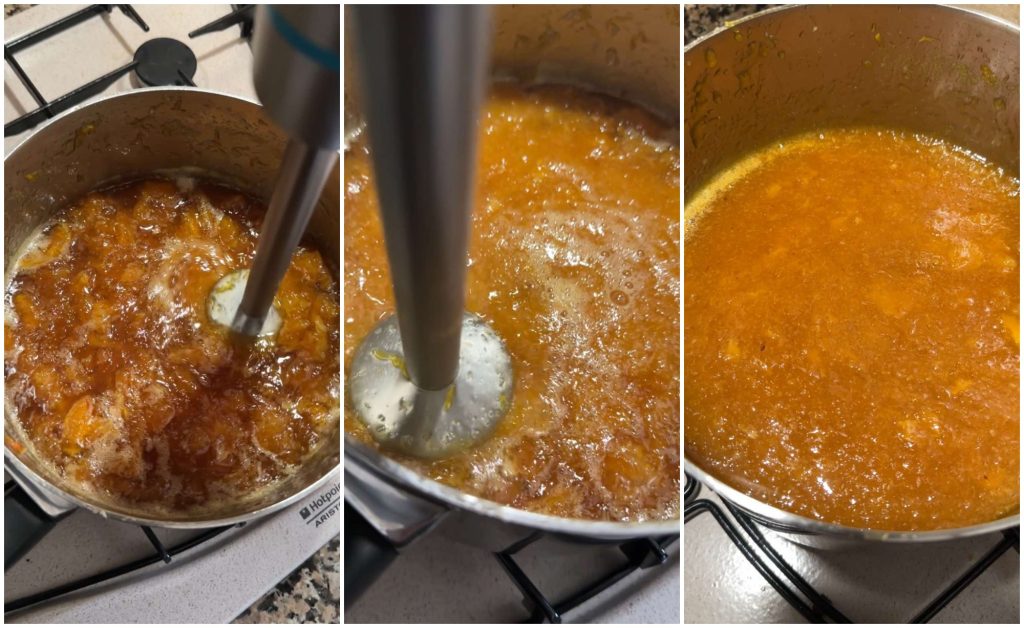
This step is not essential and if you prefer a marmalade with larger pieces, that’s perfectly fine. I blend it just for a few moments to give it a less coarse texture.
At this point, add the previously boiled peels (all or even just part of them) and, stirring with a wooden spoon, leave on the heat for another 15 minutes.
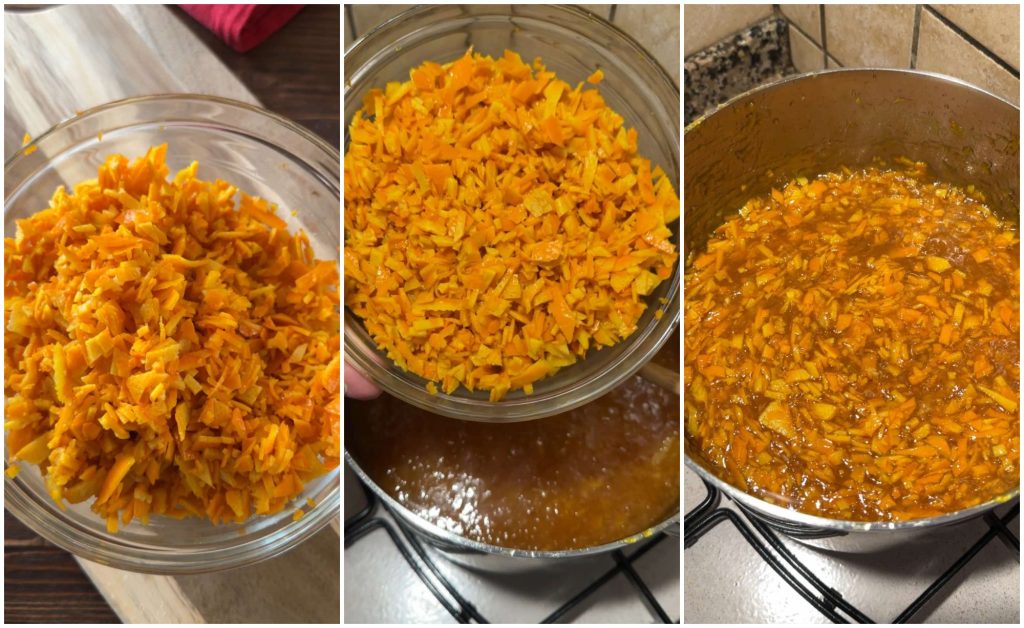
I have added slightly more than half of the obtained peels to the marmalade and let the other half dry completely on a tea towel to then freeze it and use it to flavor my desserts.
Finally, your marmalade is ready! You can enjoy it immediately on a nice slice of bread and then proceed to the next step.
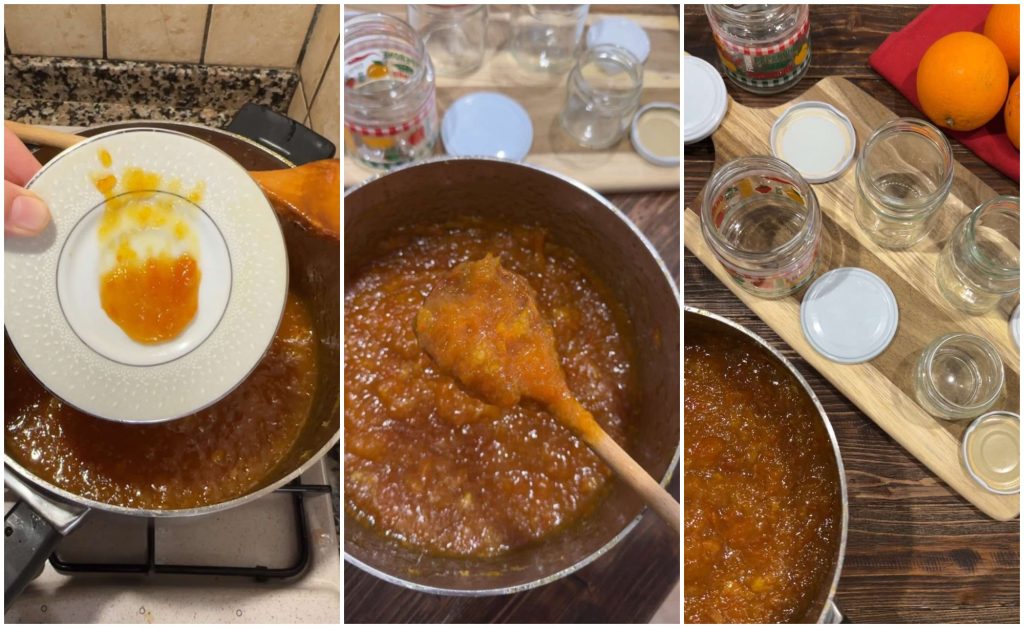
You need to decide (better to do it before you start!) whether to create a vacuum seal with the hot packing technique or with the boiling pasteurization technique.
I will explain both.
Hot packing: as soon as it is ready, immediately pour the marmalade while still boiling into jars which have been PREVIOUSLY STERILIZED IN BOILING WATER AND FULLY DRY. Visit the manufacturer’s webpage if needed for instructions on the proper use of purchased jars.
Before pouring the boiling marmalade into the jars, it is preferable to keep them warm to avoid breakages due to thermal shock (they are typically left in boiling water but must then be drained and thoroughly dried before packing). Moreover, it is better not to place them on marble surfaces.
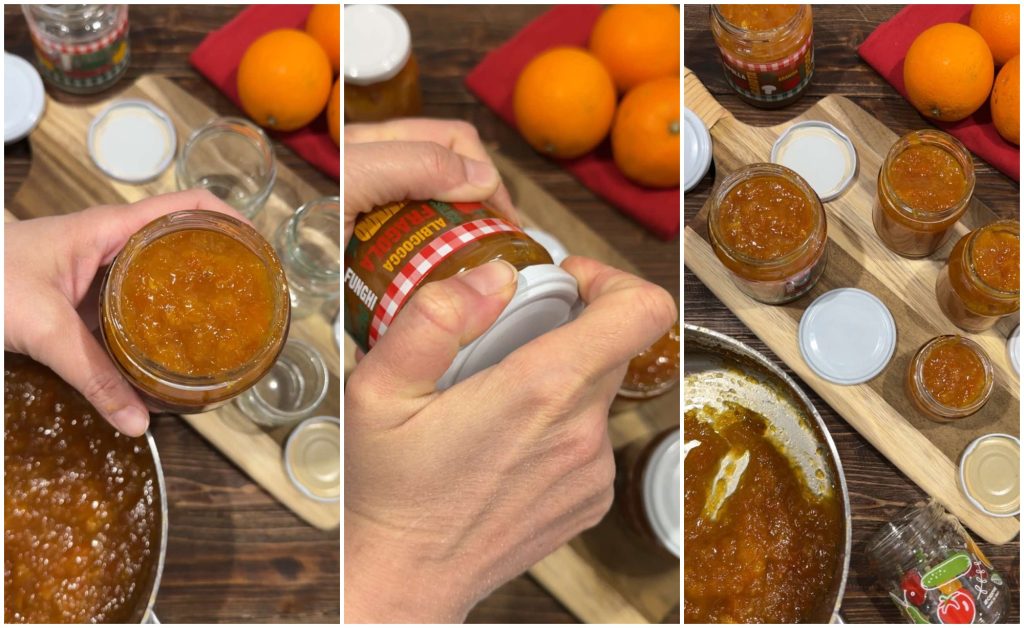
Fill the jars up to about 1 cm from the edge, carefully clean the rim of the container, seal tightly, and immediately turn them upside down to create a vacuum. Leave them upside down for about 15 minutes.
This procedure is very important for proper preservation. This way, you can store your marmalade in a pantry for several months. Let them cool completely before storing them in a cool, dry place.
Make sure to check that a vacuum has formed, even before opening it later. Once the jar is opened, keep it in the fridge and consume it within a few days.
Boiling pasteurization: cool the marmalade directly in the saucepan covering it with the lid.
After a few hours, fill the jars and seal them tightly with the lid (jars, lids, and gaskets must first be sterilized, read this guide to know how).
Next, proceed to the water bath. Take a nice tall pot, place a kitchen tea towel inside, preferably white but mostly clean.
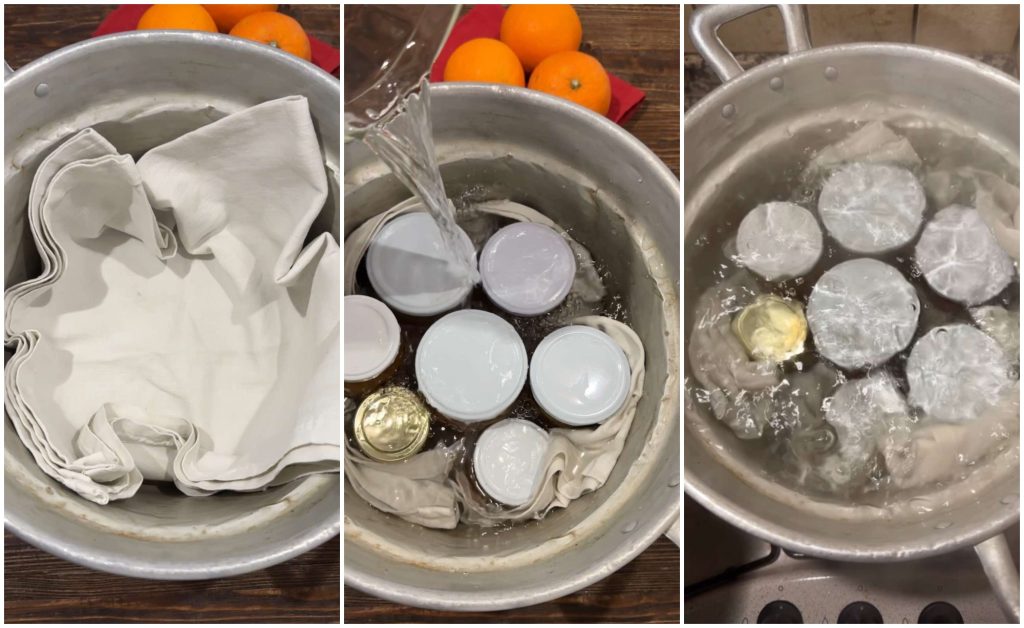
The tea towel is a trick I learned from my mom. It’s used to prevent the jars from breaking or suffering even the smallest trauma during boiling as they bump into each other.
Once all the jars are placed inside, cover with water and bring to the stove over medium heat.
Bring the water to a boil, then cover with a lid and let it boil for about 30 minutes. Check the water level, if it drops, add until the jars are covered.
After the time has passed, leave the jars inside the saucepan and let them cool completely. Then take them out by holding them from the sides, not the lid, and check if a vacuum has formed.
If not, remove the lids and repeat the boiling operation.
Before opening the jar, always check that the vacuum is present. The center of the capsule should be depressed.At this point, the orange marmalade will finally be ready to be stored in the pantry! I hope you liked this recipe! Let me know if you try it! 🍊🧡
Article protected by copyright © – Gabriella Geroni © All Rights Reserved
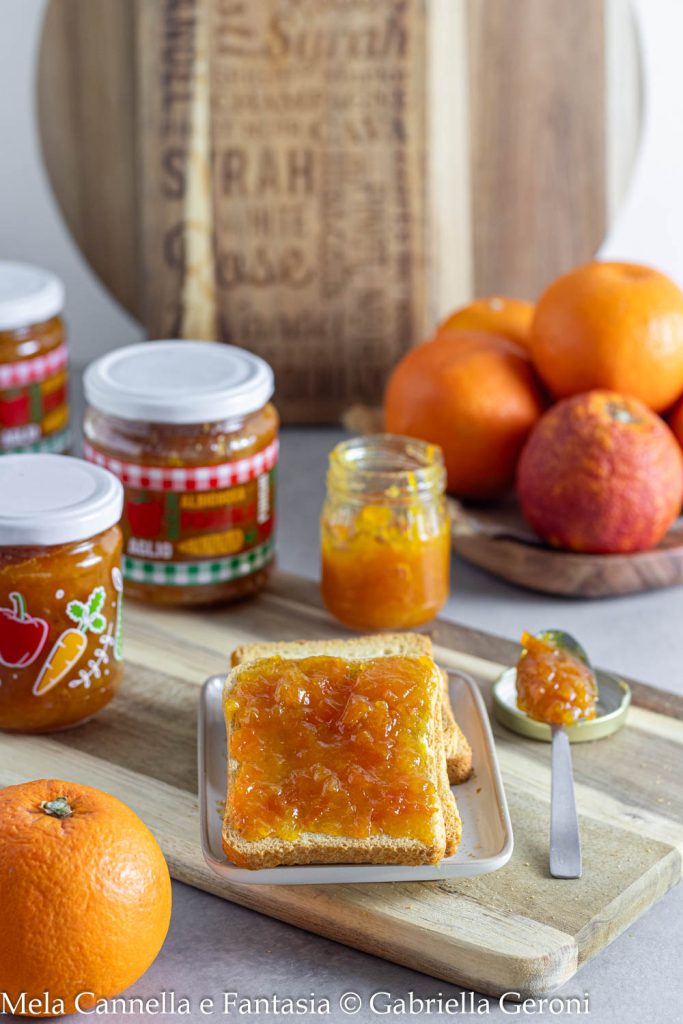
To make orange marmalade, I rely exclusively on organic oranges from Agrumi Faro, a company based in the heart of Sicily that has been passionately working in the citrus farming sector for over 3 generations.
I invite you to take a look at their website to discover how many wonderful products you could bring to your tables.
If you like, here is also a DISCOUNT CODE: GABRIELLA03 that you can use whenever you want. For any information, just ask 🧡🍊😘
FAQ (Frequently Asked Questions)
Why didn’t the vacuum form after boiling sterilization?
If after pasteurization we notice that the jars haven’t formed a vacuum, we need to fix it.
First of all, verify by keeping in mind that in the case of Twist-Off jars the center should not make any sound. Therefore, I recommend first getting to know well the containers we will use.
But why doesn’t the vacuum form? It can happen if, for example, the jars were overfilled or if the rim was not properly cleaned.
It can also occur if the lid wasn’t properly screwed on or if the jar’s rim was damaged. In this case, not all is lost!
It would be better to change the lid and then proceed again to boiling for about 20 minutes. Obviously, jars that have correctly formed a vacuum should be set aside otherwise, if boiled again, they will lose it.How long do marmalade jars last?
Properly sealed marmalade jars can be stored for several months, up to a year. Once opened, the jar should be stored in the refrigerator and consumed within a few weeks, at most 3. Before consuming the marmalade, always check for any presence of mold, imperfections, or strange odors. If so, discard the contents.
How to store jars?
Once we have verified that the vacuum has been properly formed, we will store the jars in a dry place, not exposed to sunlight. Avoid stacking the jars to save space in the cupboard as they might get damaged.
Using adhesive labels to indicate the production date is crucial as well.Why does orange marmalade have a very bitter aftertaste?
In the procedure, I explained the trick to eliminate or significantly reduce the characteristic bitter taste of orange marmalade.
This is due to the use of peels which should be boiled several times.
If necessary, we can add fewer peels to have a less intense taste. However, the typical slight aftertaste will remain, and if you don’t like it, it’s better to switch to another type of marmalade 😉How much sugar is needed to make marmalade?
Sugar is used not only to sweeten the marmalade but primarily to ensure long-term preservation, just like they did in ancient times using honey.
Usually, the amount for making marmalade is 500-700 g of sugar per kilo of fruit.
Making homemade marmalade without sugar is particularly risky for our health because the fruit, which is generally acidic, cannot preserve correctly without sugar.
Our grandmothers used to say that for every kg of fruit, you needed a kg of sugar. Today, depending on the type of fruit (like grapes, which are naturally sugary), slightly lower amounts are used, but it’s preferable never to go below 500 grams per kg.
Specifically, the sugar amount represents exactly half the weight of the cleaned oranges.Can I reduce the amount of sugar?
Absolutely NOT, sugar is essential to make the product safe for preservation and avoid health risks. I strongly advise against any modification to the recipe.
How do you know when the marmalade is ready?
I’ll reveal a very simple trick that all the grandmothers and mothers of the past passed down to their children and grandchildren. It’s called the plate method!
After boiling the marmalade for ABOUT two and a half hours, take a teaspoon of marmalade and place it on the edge of a plate. Then tilt the plate vertically and wait for the marmalade to slide down. If it “flows” quickly, the marmalade is not ready. If instead, it takes time and also visually appears not liquid but has a certain consistency typical of marmalade, then it means it’s ready!How long does it take for marmalade to cook?
It depends! In this case, the oranges I used were very juicy, and the marmalade took quite some time to thicken. Let’s say the time can range from an hour to over two. I’ve already explained the method to check the cooking, which is the plate method 😉
Once opened, the marmalade is too dense and almost hard, what to do?
No problem, you just need to soften it by placing the closed jar in a pot filled with water. Let it boil for a few minutes to make it softer. Remember, once the jar is opened, it should be kept in the fridge and consumed within a few days.
What to do if the orange marmalade doesn’t thicken?
If the marmalade is too liquid, don’t despair because we can fix it.
In this case, you need to add pectin, a natural thickener present in fruit.
I would avoid buying pectin in powder. Just add a couple of chopped apples, which naturally contain pectin, and the marmalade will thicken.
Once the apples are added, we need to cook the marmalade again for a few minutes until it thickens. Always check with the plate test.Which oranges are best for making marmalade?
I used Navel oranges, but bitter oranges (or Seville), Tarocco, Sanguinello, or Moro are also excellent choices.