Today we will prepare lemon custard together with step-by-step photos! It is one of the basic preparations in pastry. It is made with 4 ingredients. Egg yolk, sugar, thickener (e.g., flour, corn starch), and milk. Different aromas can be used to flavor the custard. Lemon or orange zest. Vanilla, Rum, Marsala, Limoncello, etc. Today I present my version! A velvety lemon custard without flour. It is prepared with corn starch, for a gluten-free version. The gluten-free custard is perfect for filling cakes, tarts, and desserts by the spoonful. For example, the pastiera tart with cherries. Or the cake with custard in the batter. To fill some delicious doughnuts! Or the tartlets with cream and fruit! But now let’s see how to prepare the perfect non-dripping custard, with the scent and flavor of lemon! At the end of the article, you will find tips, advice, and variations.
Other recipes you might be interested in!
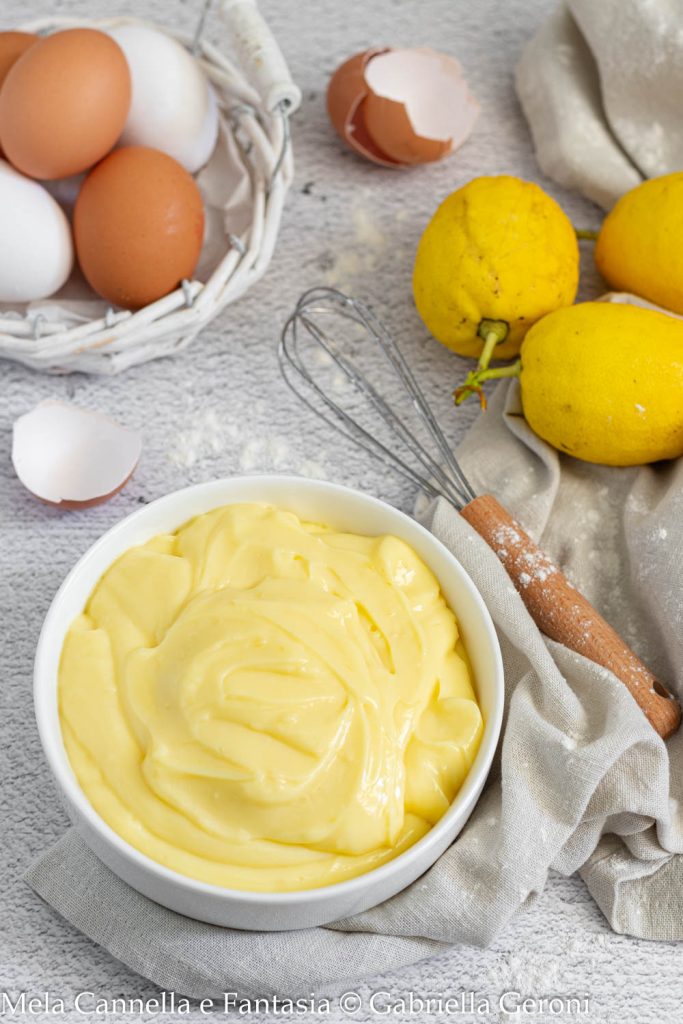
- Cost: Economical
- Rest time: 4 Hours
- Preparation time: 10 Minutes
- Cooking methods: Stove
- Cuisine: Italian
- Seasonality: All seasons
Ingredients
- 1 l whole milk (fresh)
- 6 egg yolks (from medium eggs)
- 230 g sugar
- 100 g corn starch (or rice starch, all-purpose flour, etc.)
- 1 lemon (large, organic and untreated)
Tools
- Bowls
- Hand Whisk
- Saucepan
- Spatula
- Grater
- Cling Film
Steps
First, wash a preferably organic lemon very well under water.
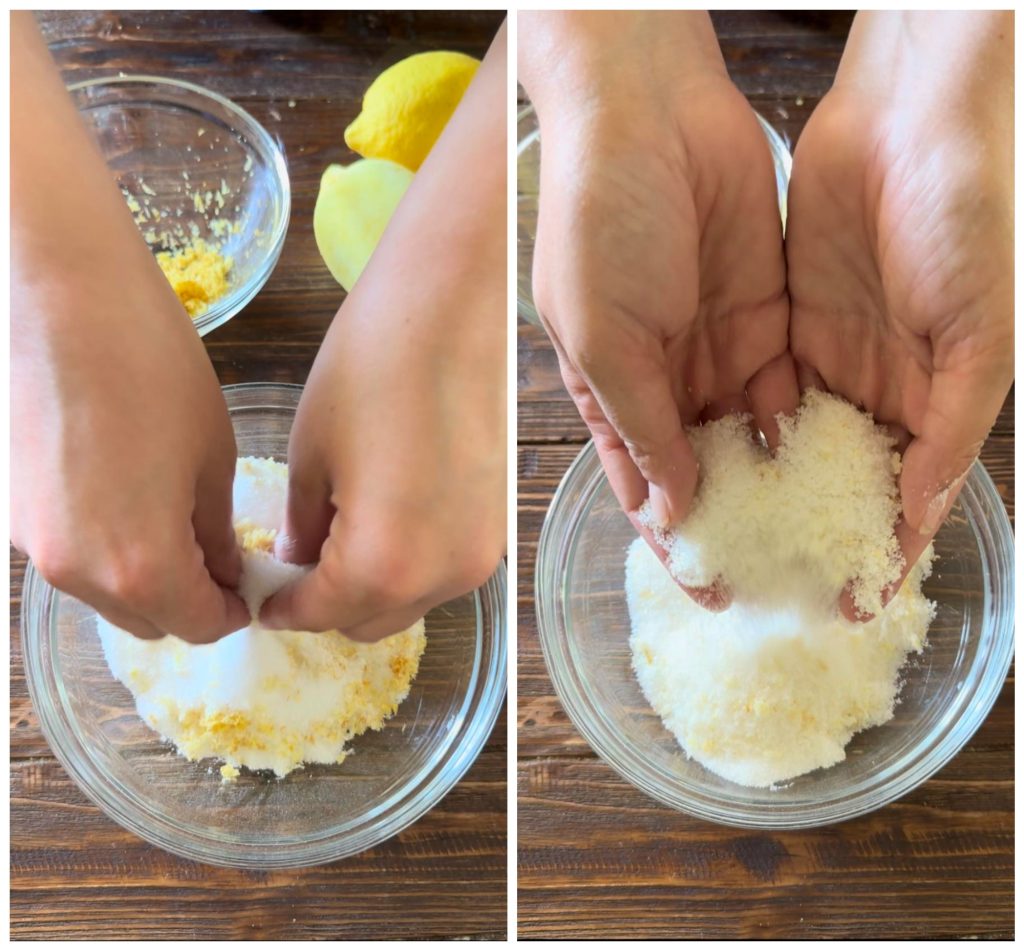
Grate the zest and place it in a small bowl. Add the sugar and rub with your hands to absorb all its aromas.
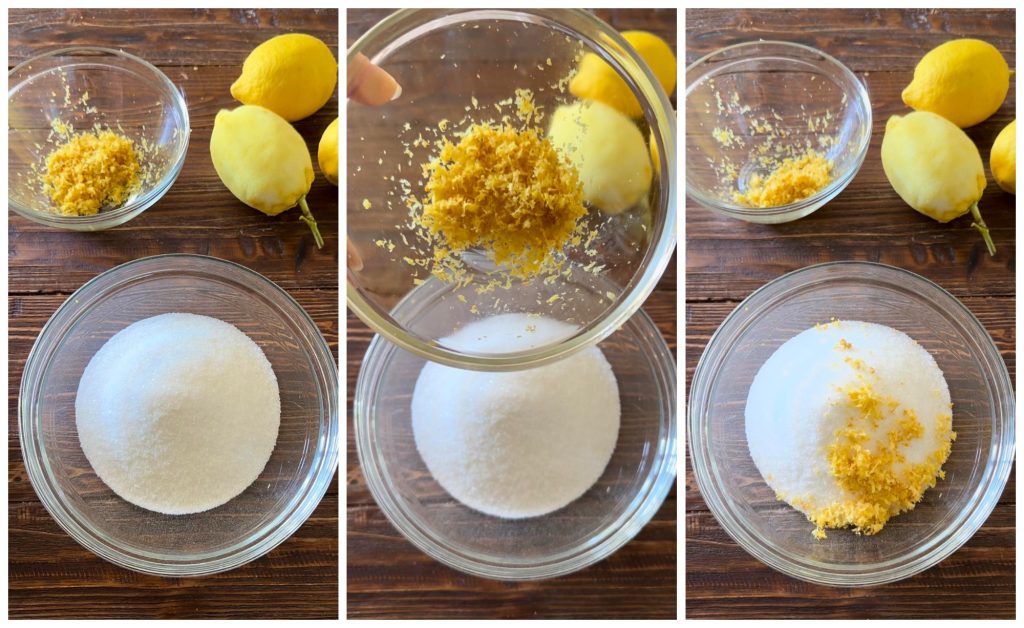
If you use grated lemon zest shortly after washing it, you will notice that it is moist.
Even the sugar will become moist in contact with it, but it’s not a problem.
If you prefer, you can let the grated zest dry for a while before using it.
This method makes our desserts even more fragrant and can be used to prepare donuts, cookies, tarts, etc.
Put a non-stick saucepan on the stove to prevent the custard from sticking to the bottom.
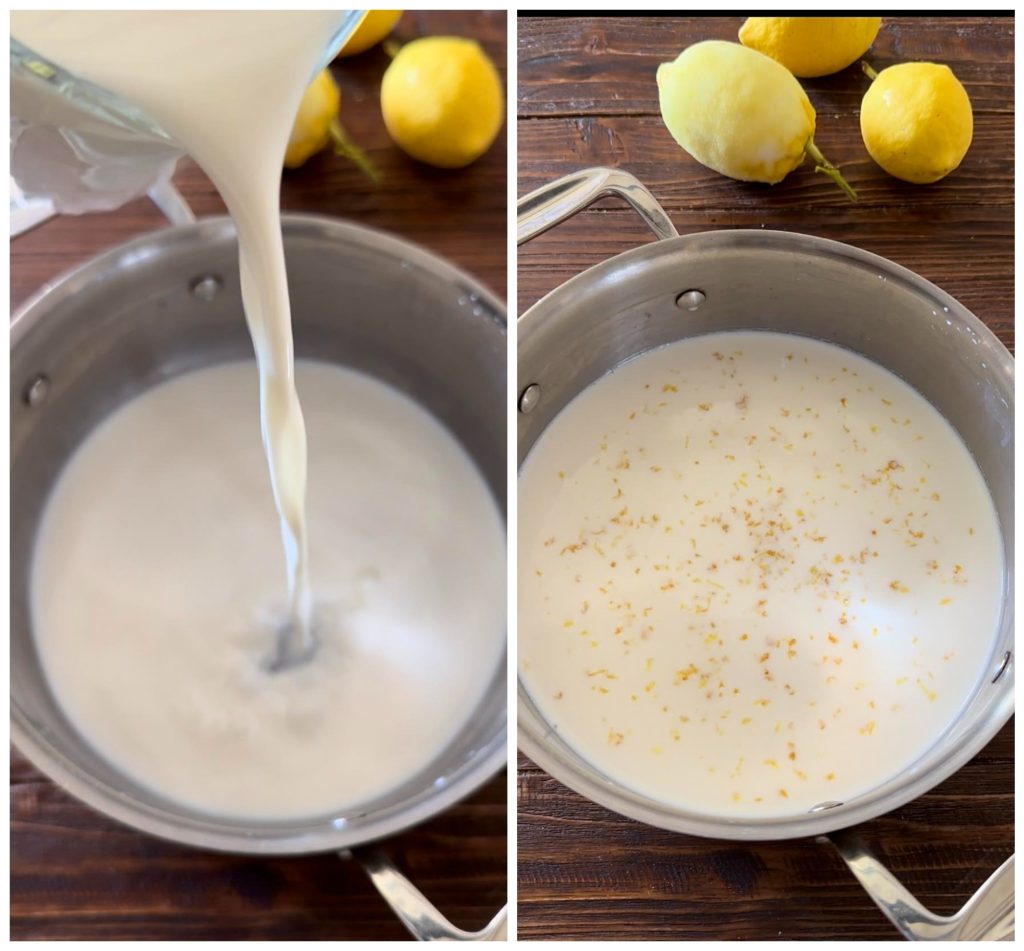
Pour in a liter of fresh whole milk and add some grated lemon zest.
Turn the heat to low and let it go.
In a bowl, combine the yolks from medium eggs and the sugar with the lemon zest.
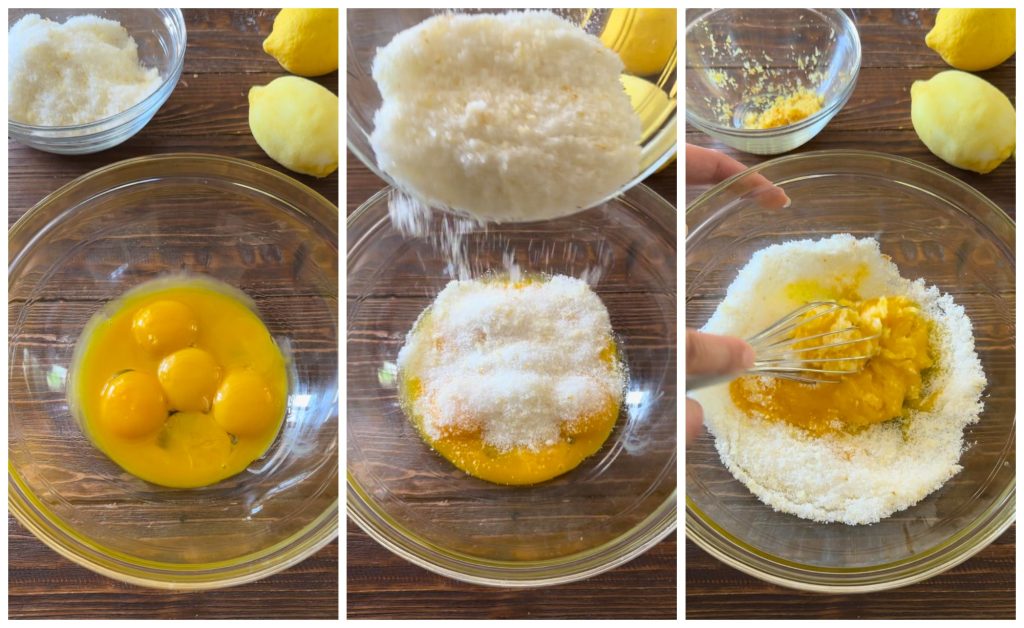
With a hand whisk (or an electric mixer) work vigorously until you obtain a light and creamy mixture.
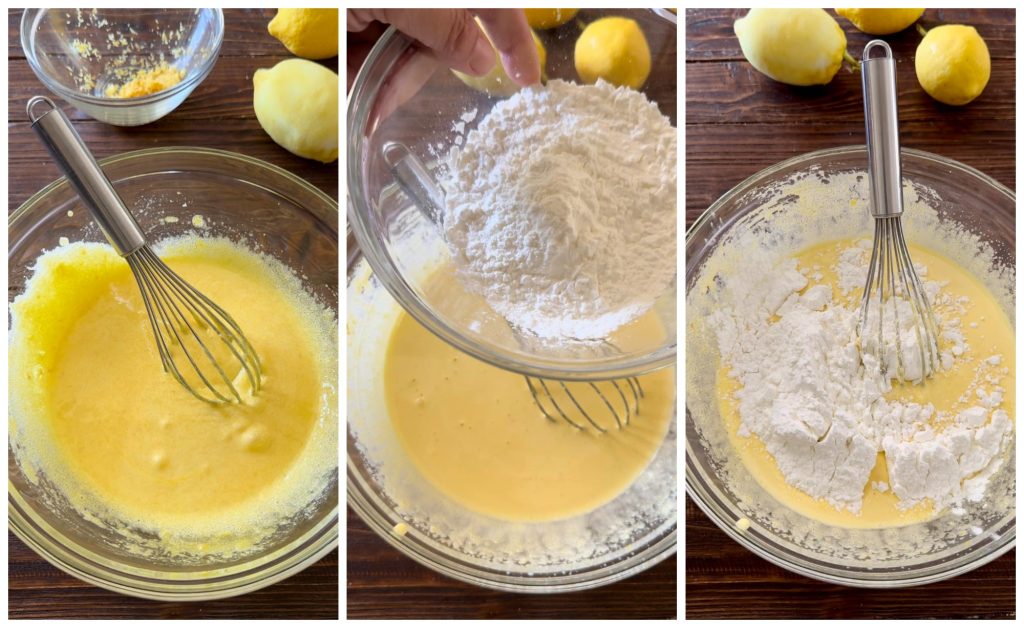
Now add the corn starch (or your preferred thickener) and mix very well.
Dilute with a ladle of milk taken directly from the saucepan and stir quickly with the hand whisk.
Then pour all the milk (NOT BOILING) over the egg mixture.
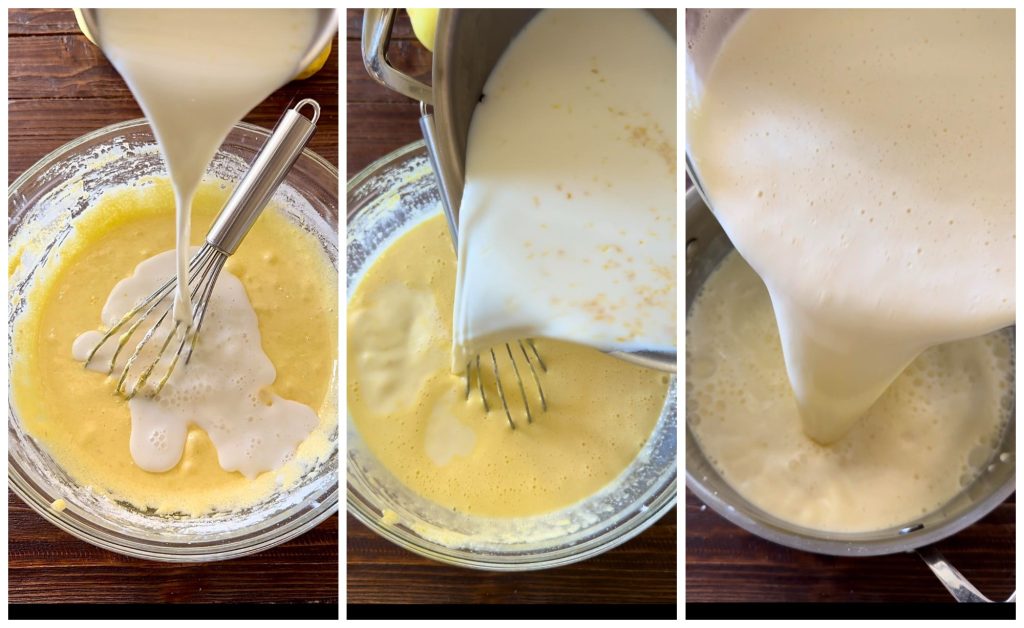
Mix and pour everything back into the saucepan. Put it back on the heat and cook over low flame.
Stir continuously with a whisk until the custard thickens.
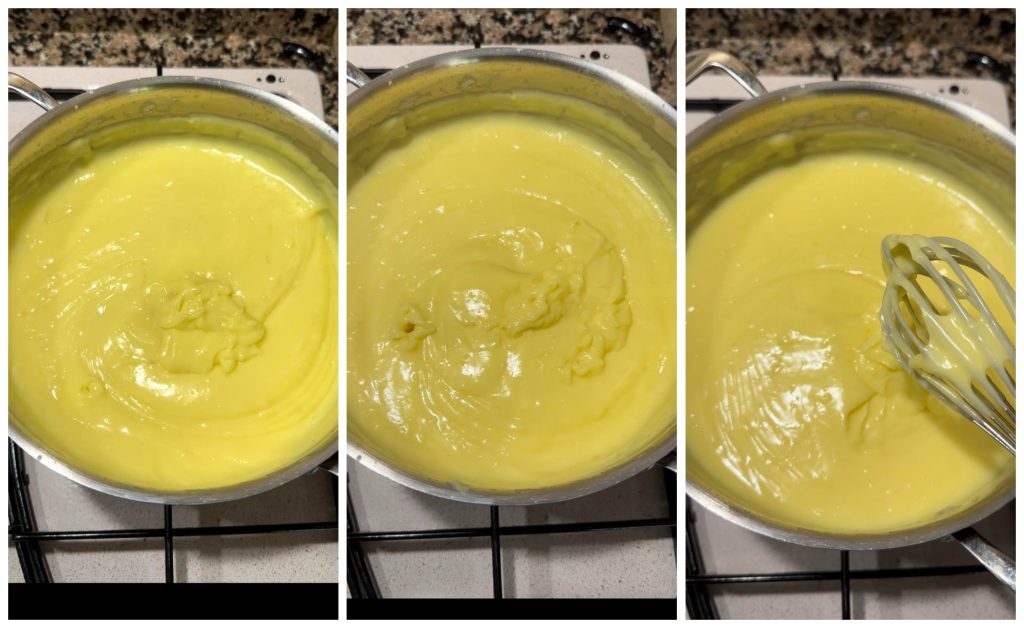
It takes about 10 minutes. As soon as the custard starts to boil (similar to a volcano), turn off the heat.
Immediately pour the custard into a glass or ceramic container, preferably NOT plastic.
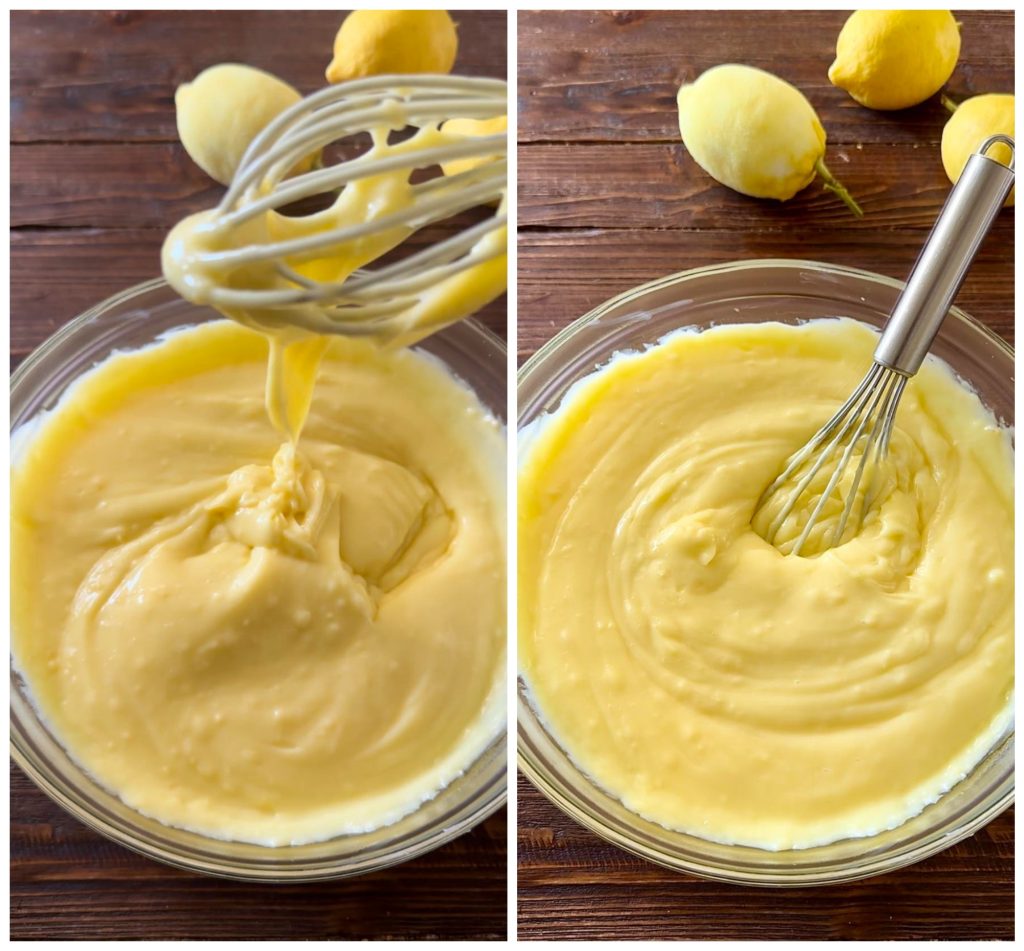
Give a good mix with a hand whisk and then cover with cling film in contact.
A tip: spread out the cling film well to avoid air bubbles.
The film is used to prevent that annoying skin from forming on the surface, so I recommend using it.
If you don’t have it, use a CLEAN food bag cut in half and lay it on the surface.
Let the custard cool first at room temperature and then in the fridge for about 4 hours before using.
The custard is ready! Velvety, smooth, with the scent and taste of lemon! So delicious you can eat it by the spoonful!
I hope you liked this recipe! Visit me again soon!
Article protected by copyright © Reproduction Reserved
ADVERTISING CONTENT PRESENT
Storage, Useful Tips, and Substitutions
How can I replace the flour?
As a thickener for custard, we can use all-purpose flour, wheat starch (or frumina), potato starch, corn starch (or cornstarch), rice starch. The last three are more suitable for a gluten-free version.
Why does homemade custard become hard?
In this case, the amount of flour may be excessive compared to the eggs and milk used. It may also depend on too long cooking of the custard. In this case, you can try to work the custard with an electric mixer with the flame off.
Liquid custard. Where did I go wrong and what to do to thicken it?
The reason could be that the custard was not cooked for the necessary time. Or too little flour was used. When the custard is too liquid, we can try to fix it!
First solution. With the custard still on the heat, add a tablespoon of corn starch or another thickener mentioned above. To avoid, especially in this case, the formation of lumps, it would be better not to use flour. The amount of thickener to add is one tablespoon per liter of milk.
Second solution. Soak 5 sheets of edible gelatin (or fish glue) (equal to 10 g, dose for a 1-liter custard) in cold water for 10 minutes. After the time is up, squeeze the sheets well and insert them into the still warm custard. Mix very well to avoid the formation of lumps. Fish glue can be replaced with 4 g of agar agar powder. I haven’t used it, but it must first be dissolved in a drop of warm milk. Then inserted into the still warm custard. Mix well and remove from heat. As the custard cools, the agar agar thickens.
Why does the custard have a strong egg flavor/smell?
The reason could be that the milk added to the egg mixture was too hot. In this case, the phenomenon of “egg cooking” occurs, which can leave that marked and unpleasant taste or smell. It is therefore recommended to be careful. The milk must not be boiling but slightly warm. If you feel more confident, it is better tepid. Those with a kitchen thermometer can also measure the temperature of the milk, which should not exceed 104/122°F.
How to avoid lumps in custard? First of all, it’s good to use a sieve to incorporate the thickener into the beaten egg mixture. It would be better not to use flour but corn starch, which helps reduce lump formation. If, once thickened, the custard has small lumps, remove from heat and blend for just a couple of minutes with an electric mixer. This will help dissolve them!
Why does the custard taste like flour? It can happen when the custard is not cooked for the necessary time. Or the flour has not been properly absorbed by the liquid ingredients. If we use starches instead of flour, this risk decreases.
How long should custard rest before it can be used?
The ideal would be to prepare it the night before and let it rest in the fridge well covered with cling film. If you prepare it at the last minute, it should rest for at least four hours. The longer it rests, the more it solidifies, and you can use it without difficulty.
Can I leave the custard at room temperature?
Yes, but it’s better for short times, one hour at most. The fridge is always the best choice!