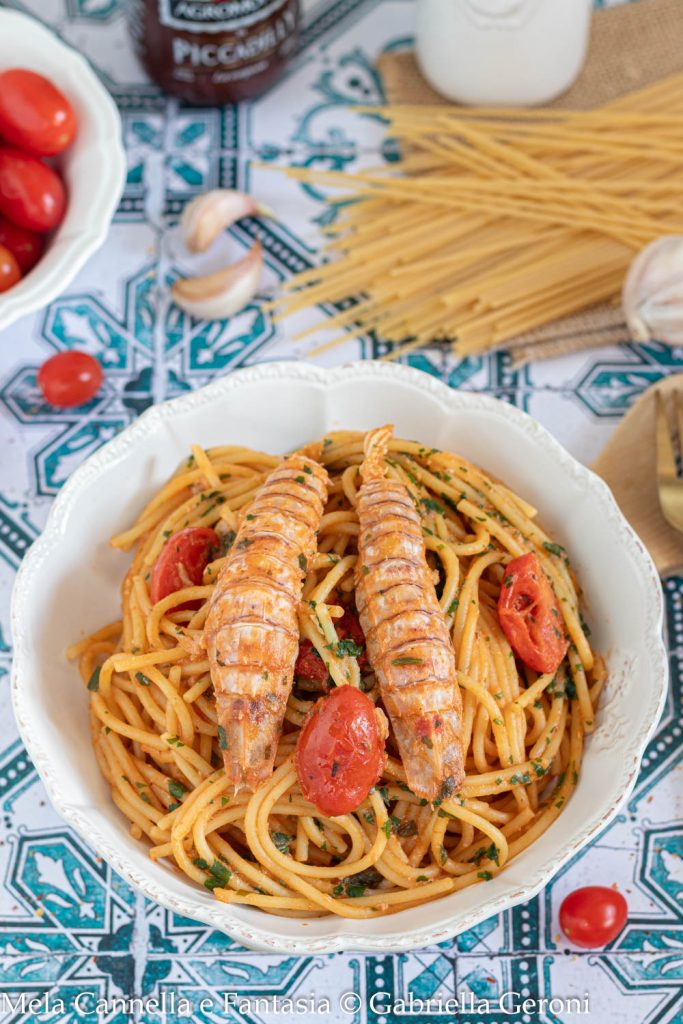
Everyone to the tableee!! Today’s menu includes: “pasta with mantis shrimp in sauce“. An easy and economical seafood main dish, perfect to prepare even at the last minute!
The mantis shrimp, or slipper lobster, is a crustacean that is often also called “sea cicada.” However, the same name is also used for the Scyllarus arctus, or the magnosella. The latter, however, belongs to a very different family, so don’t confuse them.
Spaghetti with sea cicadas or mantis shrimp is a really tasty, super creamy, and delicate main dish. It is easily prepared, not even excessively expensive compared to other seafood dishes, and perfect for any occasion! For example, during the Christmas holidays, we can prepare it for the Christmas Eve dinner.
To make this dish creamy, the pasta, which can be of any shape you like, is cooked risotto-style in the pan with a broth made from the mantis shrimp scraps.
In addition to a more intense flavor, thanks to the starch released by the pasta, a silky sauce will form that will make your mouth water!
If you like seafood dishes, don’t miss out on this fantastic collection full of ideas!
Other easy and tasty recipes you might be interested in, all seafood-based!
- Cost: Medium
- Preparation time: 20 Minutes
- Portions: serves 4 people
- Cooking methods: Boiling, Stove
- Cuisine: Italian
- Seasonality: Summer, Autumn
Ingredients
- 14 oz spaghetti (or choose the pasta shape you prefer)
- 12 oz tomato sauce
- 7 oz cherry tomatoes
- 2 lbs mantis shrimp
- cloves garlic (two or three)
- q.b. chopped parsley
- 4 tablespoons olive oil (about 40 grams)
- q.b. salt
- Half teaspoon chili pepper (fresh or dried, only if you like it)
Tools
- Saucepan
- Frying Pan
- Sieve
- Colander
- Ladle
- Cutting Board
- Bowl
Steps
First of all, start by cleaning the mantis shrimp. You can use either fresh or frozen ones.
Remove the head from all the mantis shrimp and put them in a bowl along with other scraps as you go along.
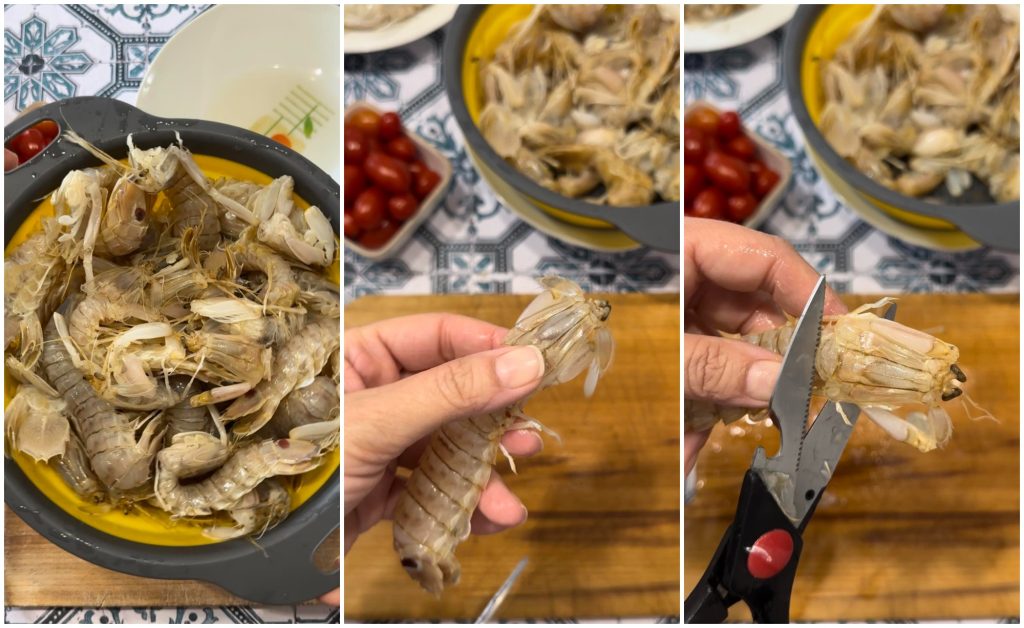
Then clean half of these by removing everything, until you are left with only the inner flesh that you will chop with a knife.
To avoid pricking yourself, cut the tail diagonally (it’s the one with two spots that look like eyes but aren’t) to remove the “spikes.”
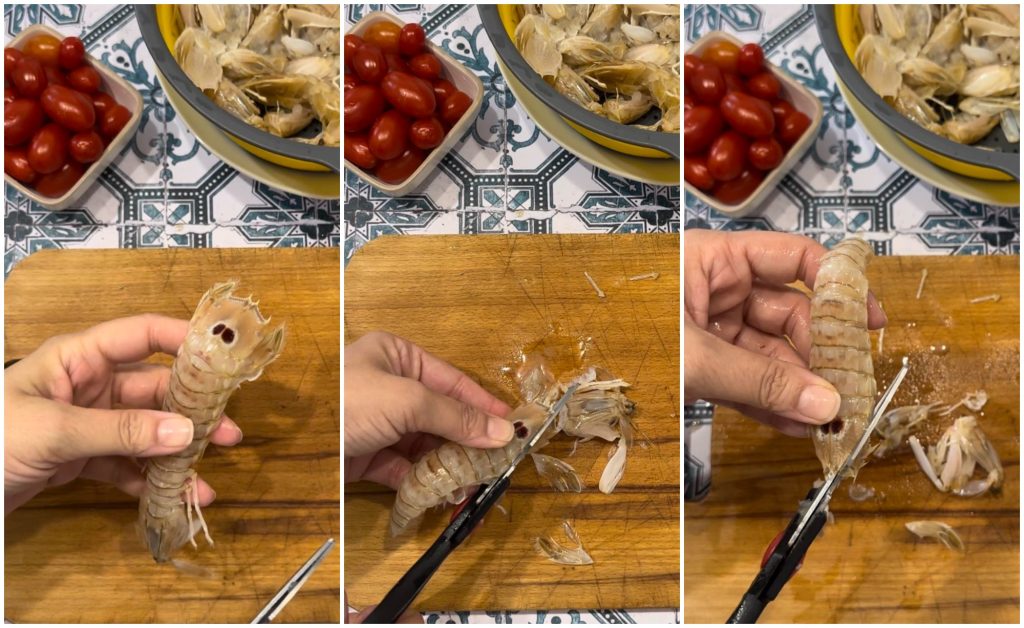
Then, still using a pair of scissors, cut the sea cicada along the sides, also removing the “legs.”
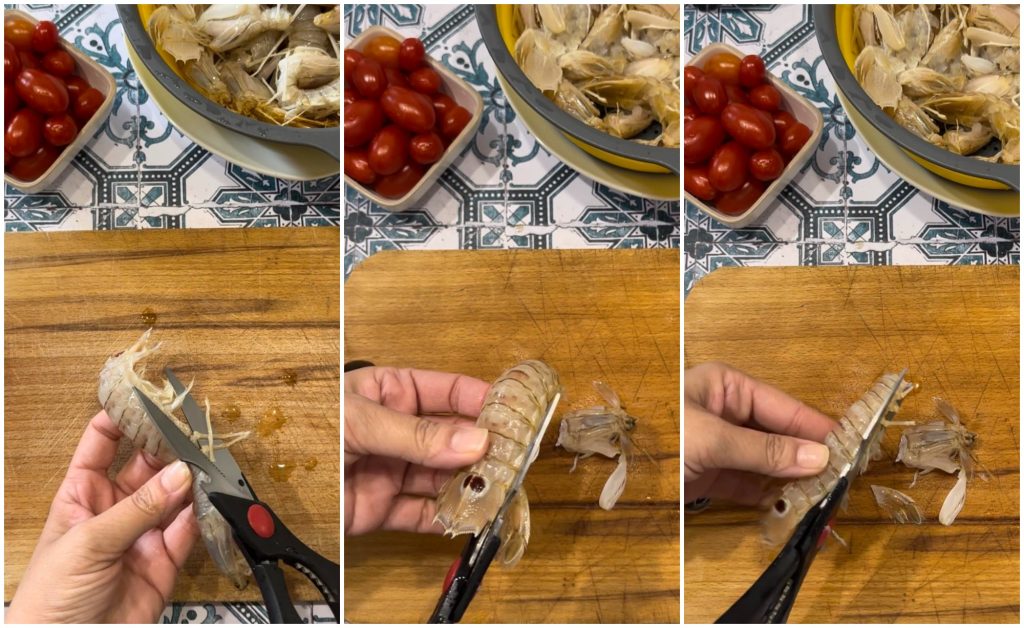
Once this operation is finished, just lift the shell and beneath it, you’ll find the flesh.
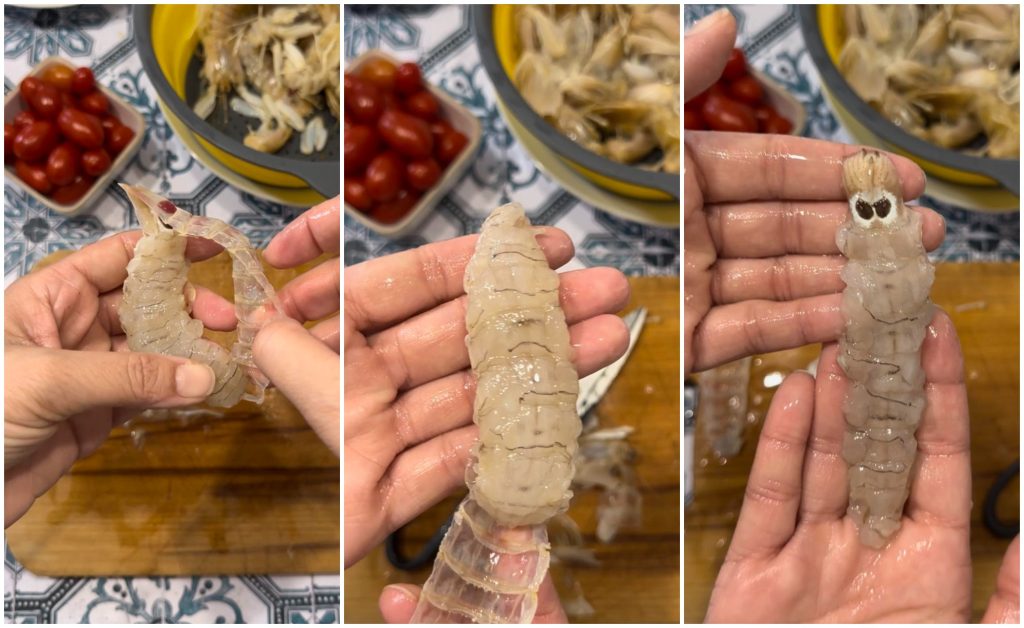
Flip it over and also remove the lower part of the shell, and the sea cicada is all clean!
On a cutting board, mince ALL the obtained flesh, using a knife. Chop it coarsely.
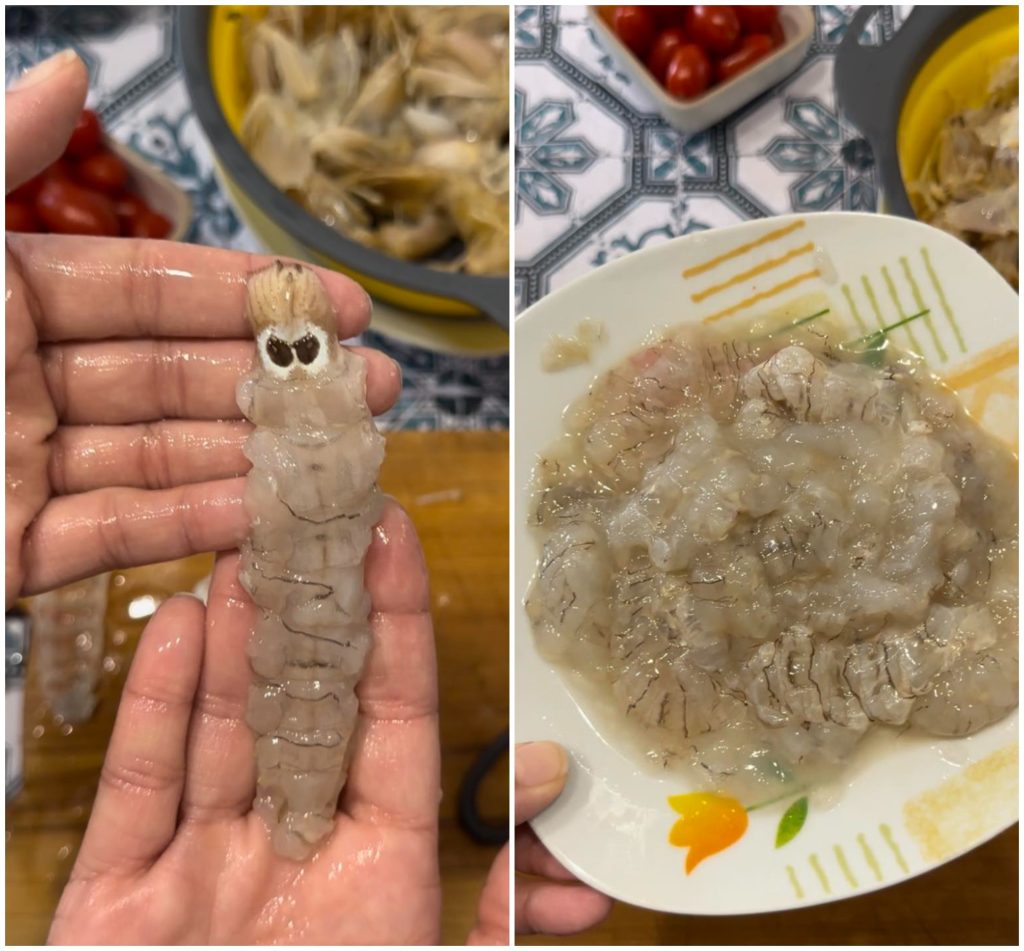
Then place it in a bowl and set aside.
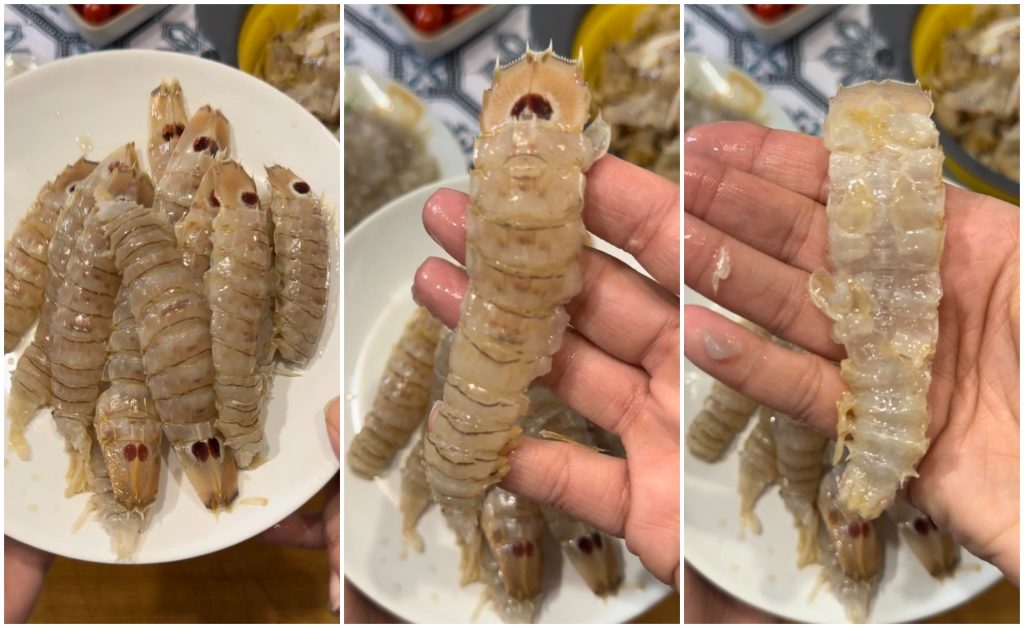
The remaining half of the slipper lobsters should be cleaned exactly as done above.
Furthermore, you should remove the fins found on the belly but without removing the shell.
In this case, the flesh will remain inside but will still be easy to consume thanks to the cuts made along the sides.
Now take a tall, narrow saucepan, the kind you usually use to make broth.
Pour in a tablespoon of oil, two cloves of garlic, chili pepper, and fresh chopped parsley.
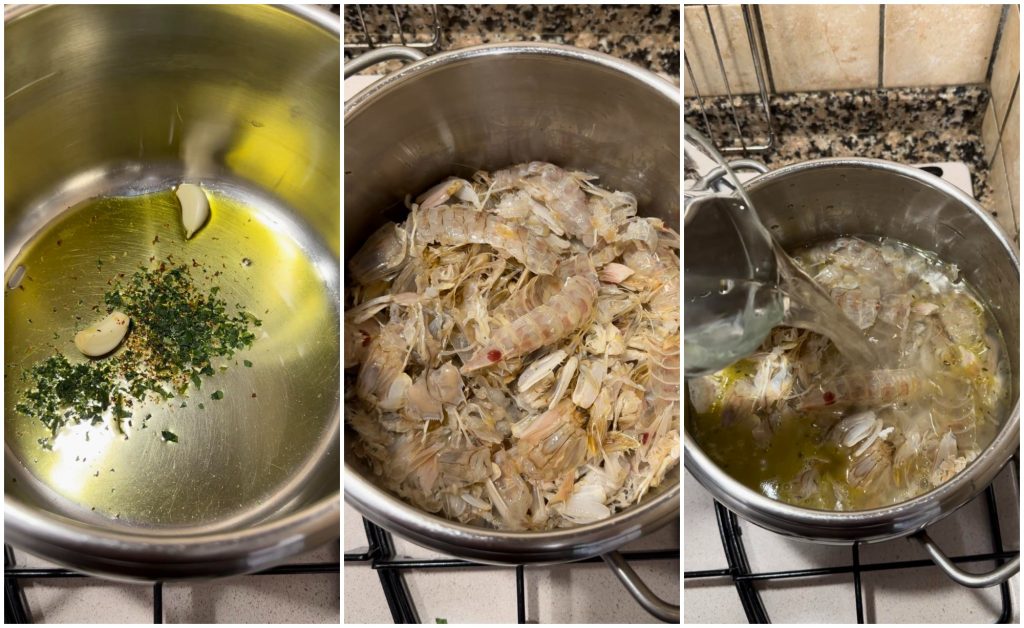
Add all the scraps obtained from cleaning the mantis shrimp and after a couple of minutes, cover with water.
I recommend using about 10 cups of water. Let it go over medium heat for at least 15 minutes. Remove the garlic halfway through cooking.
In a separate frying pan, pour a couple of tablespoons of oil, garlic, and chopped parsley. Add ONLY the mantis shrimp with the shell.
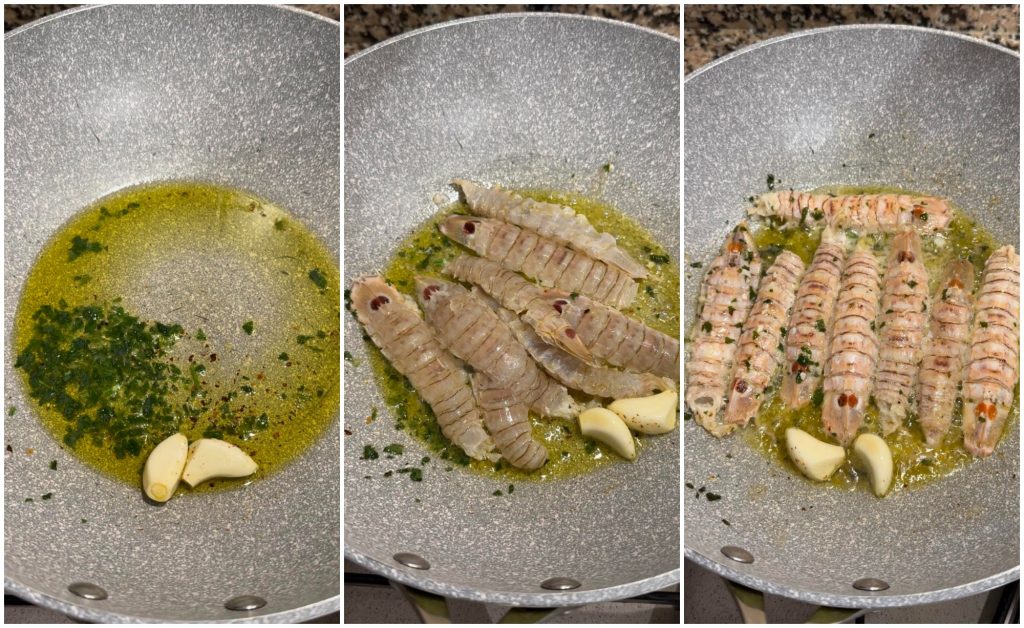
Cook for a couple of minutes on each side over medium heat, then drain them and set them aside.
Wash the cherry tomatoes thoroughly and cut them in half.
Add them to the same pan where you cooked the mantis shrimp and add another tablespoon of olive oil.
Adjust the salt and cook over high heat. After about 5 minutes, add the tomato sauce.
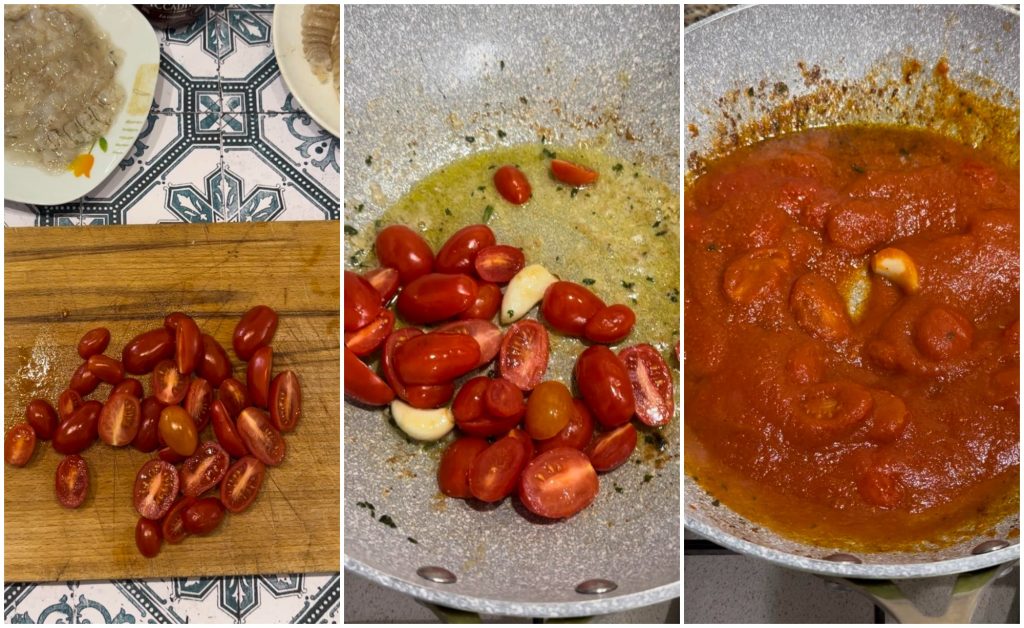
Meanwhile, while the sauce cooks over low heat, filter the broth obtained from the mantis shrimp scraps.
Boil the pasta for 3 minutes in the fish broth. Then drain it into the sauce and finish cooking in the pan, adding little by little, the filtered broth.
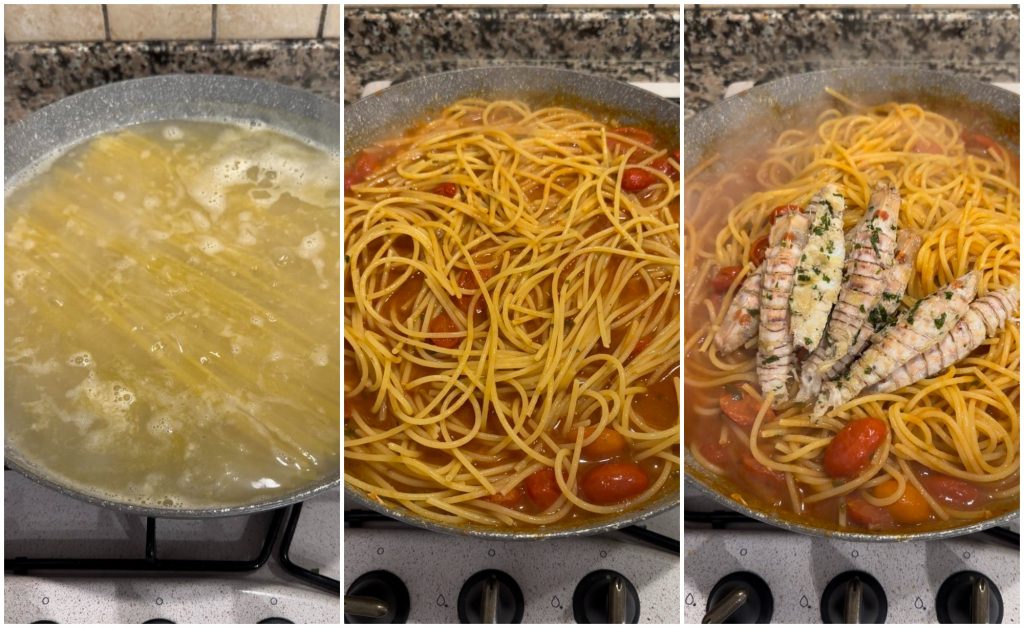
This way, you’ll get a super creamy main dish thanks to the starch released by the pasta with the risotto-style technique.
Stir the pasta often, adding more broth, little by little, only if necessary.
Just five minutes before the end, add both the cooked cicadas and the raw mantis shrimp flesh.
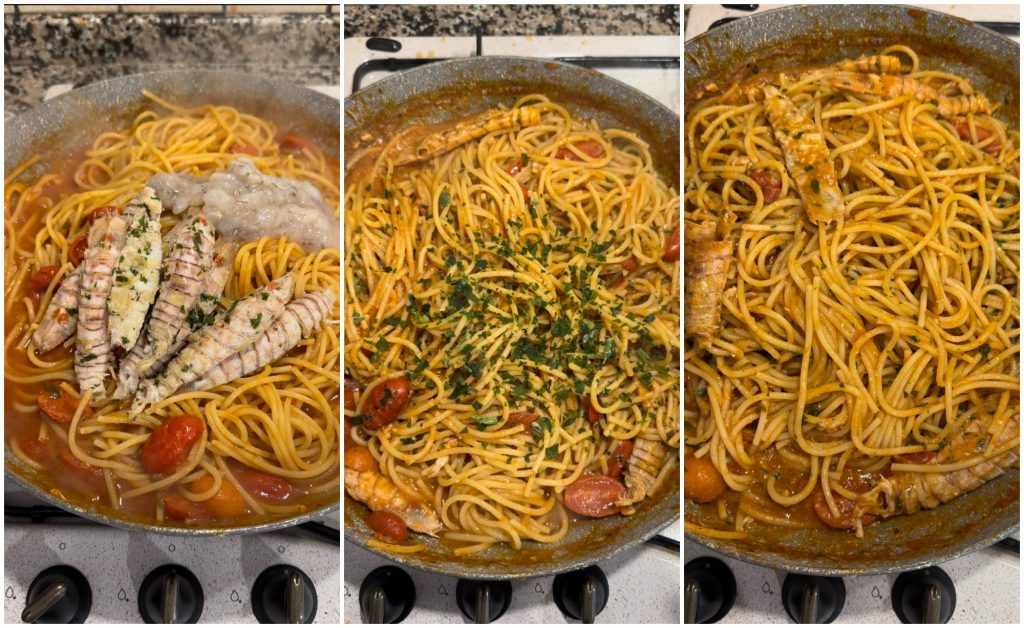
The heat will be enough to cook the flesh in 5 minutes while the pasta will absorb the flavor from the mantis shrimp with the shell.
Taste and adjust salt if necessary. Sprinkle with plenty of fresh chopped parsley and stir.
The spaghetti with mantis shrimp in sauce is ready to go on the table, super creamy, fragrant, and delicious!
I hope you liked this recipe! Let me know in the comments if you try it ❤️
Article protected by copyright © – Gabriella Geroni © All Rights Reserved
FAQ (Frequently Asked Questions)
Can I prepare pasta with mantis shrimp in white sauce?
Yes, if you prefer the version without sauce😉
When can you eat mantis shrimp?
It’s usually advisable not to consume them during their breeding months, which are from March to June. The summer and autumn months, up to December, are definitely better.
Can I buy mantis shrimp the day before and keep them in the fridge?
Yes, if you want to prepare a main dish with mantis shrimp, you can buy them from the fish market the day before and keep them in the fridge. Remember, at most for one day, better if already cleaned and always placed in a container with a hermetic seal, also to avoid unpleasant odors inside the fridge.
Can you freeze mantis shrimp? And how do you defrost them?
Slipper lobsters, or mantis shrimp, can be preserved in the freezer but must first be cleaned, placed in sturdy food bags and stored in the freezer for up to 3 months. Subsequently, to defrost sea cicadas, simply leave them in the refrigerator overnight or for 6 hours, but always in the fridge.
Can I just cut the cicadas in half and avoid cleaning them as described?
If you prefer, yes! I did it this way to enhance the flavor of the cicadas and also to make it easier for those eating them, but if you want, you can cut them in half or into three parts and cook them for about 4 minutes all together. At the end of the pasta cooking, add them to the sauce and mix everything.