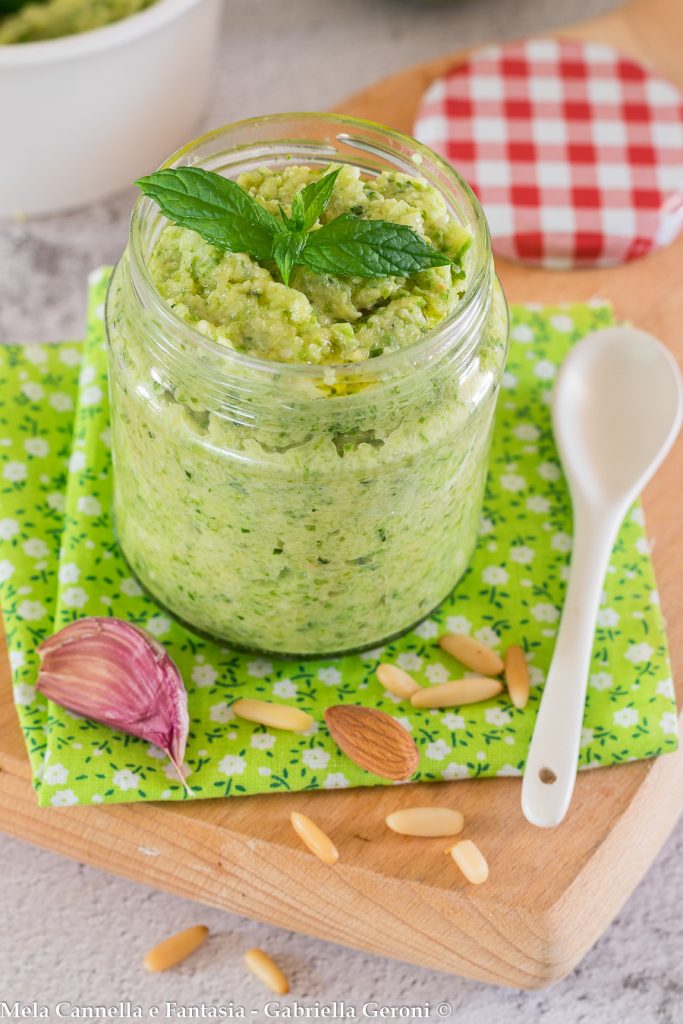
After the version with cooked zucchini, I decided to try the no-cook version! So, I prepared a delightful raw zucchini pesto with almonds and pine nuts.
The result was surprising! Creamy, fresh, and delicate, ready in 5 minutes! The raw zucchini pesto is excellent for tossing with pasta dishes or spreading on bruschetta.
To make it even tastier, I used both almonds and pine nuts. In reality, you can use any nuts you prefer, it’s also great with walnuts or pistachios.
This NO-COOK raw zucchini pesto version includes garlic, but if you don’t like it, you can omit it!
In Italy, the main zucchini season is from June to September. This is when the harvest is most abundant, and zucchinis are at their best in terms of flavor and texture.
However, thanks to greenhouse cultivation, zucchinis are available in the market all year round. You might also find them in May and October, depending on the region and the year.
Zucchini pesto can be stored in the fridge or frozen in single-serving jars for convenience (read all my tips at the end on how to do it).
I also recommend trying the Asparagus Pesto with Almonds or the Arugula Pesto with Pistachios, Almonds, and Walnuts.
But now, let’s see together how to prepare raw zucchini pesto.
Other delicious recipes you shouldn’t miss!
- Cost: Medium
- Preparation time: 5 Minutes
- Portions: about 4 people
- Cooking methods: No cooking
- Cuisine: Italian
- Seasonality: Spring, Summer
Ingredients
- 24.7 oz zucchini (preferably with light skin)
- 4 leaves mint
- 8 leaves basil
- 0.7 oz Parmigiano Reggiano DOP
- 0.5 oz almonds (or walnuts)
- 0.5 oz pine nuts (or pistachios)
- 5 tbsps olive oil (approximately)
Tools
- 1 Blender / Mixer ( immersion blender )
- Grater
- Sieve
- Tea towel
- Cutting board
Preparation
Preparing raw zucchini pesto is a breeze! Easy and super fast!
Wash the zucchini well and grate them julienne. Then squeeze them well to remove the excess liquid.
You can place them in a sieve and let them drain until they have lost all the excess liquid.
Or, as I did to save time, put the zucchini in a cloth (cotton or linen) and squeeze them very well.
You’ll see that in the end, they will become nicely dry 😉
At this point, take an immersion blender and put the almonds, pine nuts, and Parmigiano Reggiano in it.
Blend just for a few seconds. Then add the zucchini, mint leaves, basil leaves, and garlic.
Pour in the olive oil and blend again until you get a cream. Add a bit more oil if necessary.
The raw zucchini pesto is ready! Creamy and irresistibly delicious!
I preferred not to use salt to avoid the zucchini releasing more liquids.
Whether used for dressing pasta or spreading on bruschetta, you can salt the zucchini pesto afterward.
I hope you enjoyed this recipe! Come back soon!
P.S.: To get a lighter-colored zucchini pesto, it’s better to use zucchini with light skin.
Article protected by copyright © – Gabriella Geroni © All Rights Reserved
What zucchinis are ideal for raw pesto?
The light-skinned, Romanesque, or small and tender in-season zucchinis are perfect as they have a sweet flesh and low water content. Darker ones work well too, as long as you drain them well and squeeze them thoroughly, you’ll still get a great pesto.
How is raw zucchini pesto stored?
It keeps in the refrigerator for about 3-4 days in a glass container with a layer of oil on the surface to prevent oxidation and color change.
How do you store zucchini pesto in the freezer?
Freezing raw zucchini pesto is a fantastic way to preserve its fresh flavor and have it available even out of season. It can be stored in the freezer for a period ranging from 3 to 5 months, maintaining its flavor and properties.
Here are some tips on how to freeze it best:
I recommend freezing the pesto in small portions to avoid unnecessary waste. You can use:
Ice cube trays: Fill the compartments with pesto. Once frozen, transfer the cubes to a freezer bag with a zip. This way, you can defrost only the amount needed.
Small airtight containers: Use freezer-safe containers, filling them without reaching the top to allow the pesto to expand during freezing.
Freezer bags: Place the pesto in special freezer bags and flatten them to take up less space and defrost more quickly.
You can pour a drizzle of extra virgin olive oil over the pesto surface before freezing. This helps protect the color and prevent oxidation.
Glass containers: If you’re using glass containers, choose those with a straight or flared shape and do not fill them completely to avoid breaking due to liquid expansion during freezing.
Labeling: Remember to label the containers or bags with the freezing date. Freezing zucchini pesto is a great way to enjoy its summer flavor all year round!How do you defrost zucchini pesto?
To defrost the pesto, you can transfer it from the freezer to the fridge a few hours before use, or leave it at room temperature for a shorter time. Avoid defrosting it in the microwave to maintain its texture and flavor. Once defrosted, consume it within a couple of days and do not refreeze.
How can I use raw zucchini pesto?
Pasta dressing: It’s the classic use! You can dress spaghetti, linguine, trofie, or any pasta shape you prefer. For an extra touch, add fresh cherry tomatoes cut in half or a sprinkle of salted ricotta.
Bruschetta and crostini: Spread the pesto on slices of toasted bread or crostini for a fresh and tasty appetizer. You can enrich them with mozzarella, sun-dried tomatoes, or olives.
Canapés: Use the pesto as a base for fancy canapés, maybe with smoked salmon, shrimp, or grilled vegetables.
Sauces for main dishes: Accompany baked or grilled meats or fish with a spoonful of zucchini pesto. It pairs well with chicken, white fish, or even hard-boiled or poached eggs.
Stuffing for vegetables: Use it to stuff tomatoes, peppers, or zucchinis to bake in the oven.
Base for savory pies and quiches: Spread a layer of pesto on the bottom of the shortcrust or puff pastry before adding other filling ingredients.
Condiment for grain or rice salads: Add a couple of tablespoons of pesto to your cold salads for an extra flavor touch.
Dip for raw vegetables: Serve the pesto in a bowl as a dip for carrots, celery, fennel, or cucumbers during an aperitif.
Marinade: You can use the pesto as a base for a quick marinade for meat or fish before cooking.
Sandwiches and paninis: Spread a bit of pesto inside your sandwiches or paninis to make them tastier.
As you can see, the possibilities are really many! Its freshness makes it particularly suitable for summer dishes, but you can enjoy it in many ways throughout the year, especially if you have stored it in the freezer!What are alternatives to pine nuts?
You can use the nuts you prefer, for example, it’s excellent with both almonds and walnuts.