
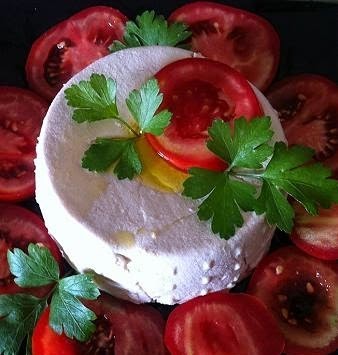
Store-bought tofu or homemade tofu is a food of Eastern tradition, made from soy and rich in protein and calcium. When not overused, it is a valid protein alternative to cheese for those who are lactose intolerant or who do not want to consume animal proteins. In fact, tofu can be compared to a fresh-textured cheese such as “primo sale”: whitish and tasteless, it is versatile in the kitchen for many recipes. It can be found commercially in various versions: plain, with herbs, preserved in oil with spices, smoked, soft or firmer.
To make homemade tofu you can use homemade soy milk or store-bought soy milk,
the important thing is that the latter contains a fat percentage not lower than 2%.
The coagulant I use to make tofu is not of animal origin but mineral/vegetable.
In fact Nigari (the Japanese name for the product) is nothing more than magnesium chloride at 97% plus 3% trace elements. It comes in flakes, is easily found at pharmacies in 100 g packages (about 3.5 oz) and costs a few euros.
You can also use magnesium chloride purchased at the pharmacy (I prefer it) or, alternatively, use lemon juice *.
During the heating of the soy milk you can add a sheet of kombu seaweed to enrich the tofu with extra trace elements such as vitamins, iron, calcium and magnesium, which are always beneficial in our diet; remove it before proceeding to coagulation.
The doses of the plant coagulant to make tofu are:
7 g of magnesium chloride (or about 1 1/3 tsp) (or 7.5 g Nigari ≈ 1 1/2 tsp) per 1 liter of soy milk.
*Nigari or magnesium chloride can alternatively be replaced with lemon juice in these amounts:
75 g of lemon juice (about 5 tbsp or roughly 1/3 cup) per 1 liter of soy milk.
The temperature to coagulate the soy milk is:
if using magnesium chloride or Nigari: about 85°C–88°C (185°F–190°F),
whereas if using lemon juice as the coagulant the temperature should be about 40°C–45°C (104°F–113°F)
- Difficulty: Medium
- Cost: Economical
- Preparation time: 15 Minutes
- Portions: 1 piece
- Cooking methods: Stovetop
- Cuisine: Italian
Ingredients
- 6 1/3 cups soy milk (plain, without added flavorings or sugar (1.5 L))
- 2 tsp magnesium chloride (or about 2 1/4 tsp Nigari (11 g))
- 1/8 tsp water (hot/boiling)
- 1 leaf kombu seaweed (optional)
Preparation
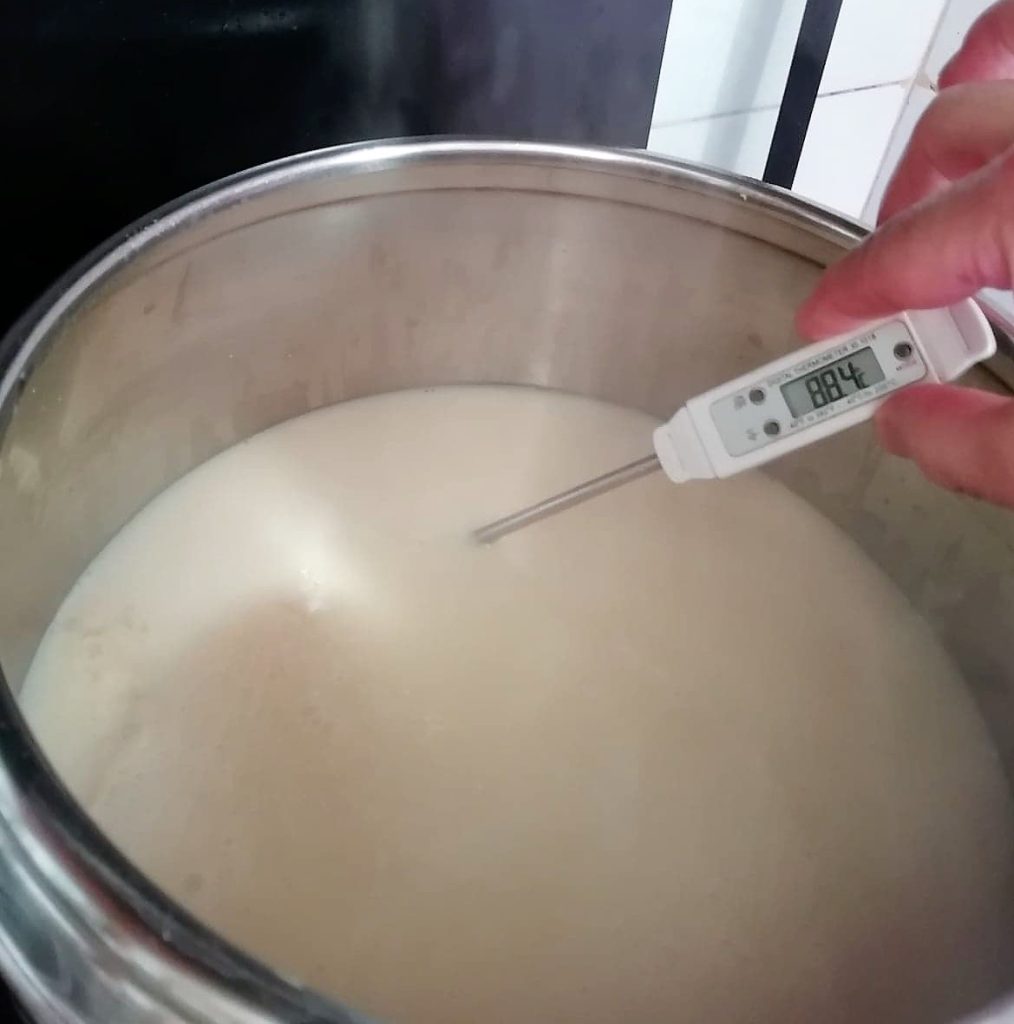
Heat the soy milk in a pot and, if you like, add a sheet of kombu seaweed. Bring it to about 85°C–88°C (185°F–190°F) and turn off the heat. Remove the seaweed leaf.
If you don’t have a food thermometer you will know it has reached the right temperature when a ring of small bubbles forms around the edges of the pot, just before boiling.
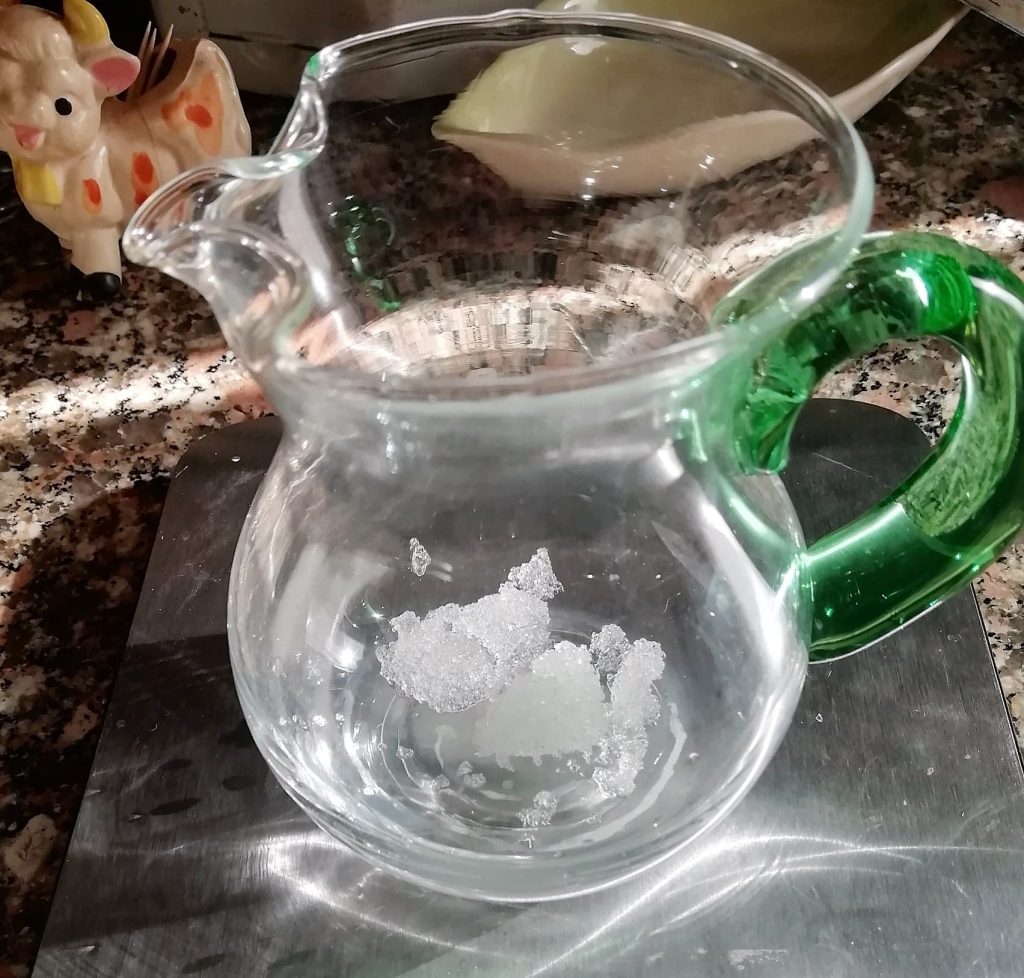
Dissolve the magnesium chloride crystals, or the Nigari, in the measured amount of boiling water and pour it all at once into the pot with the soy milk.
I recommend pouring the coagulant from a height of about 20 in (50 cm) above the soy milk without stirring. Then immediately cover the pot with a lid and let the coagulation mature for about 45 minutes.
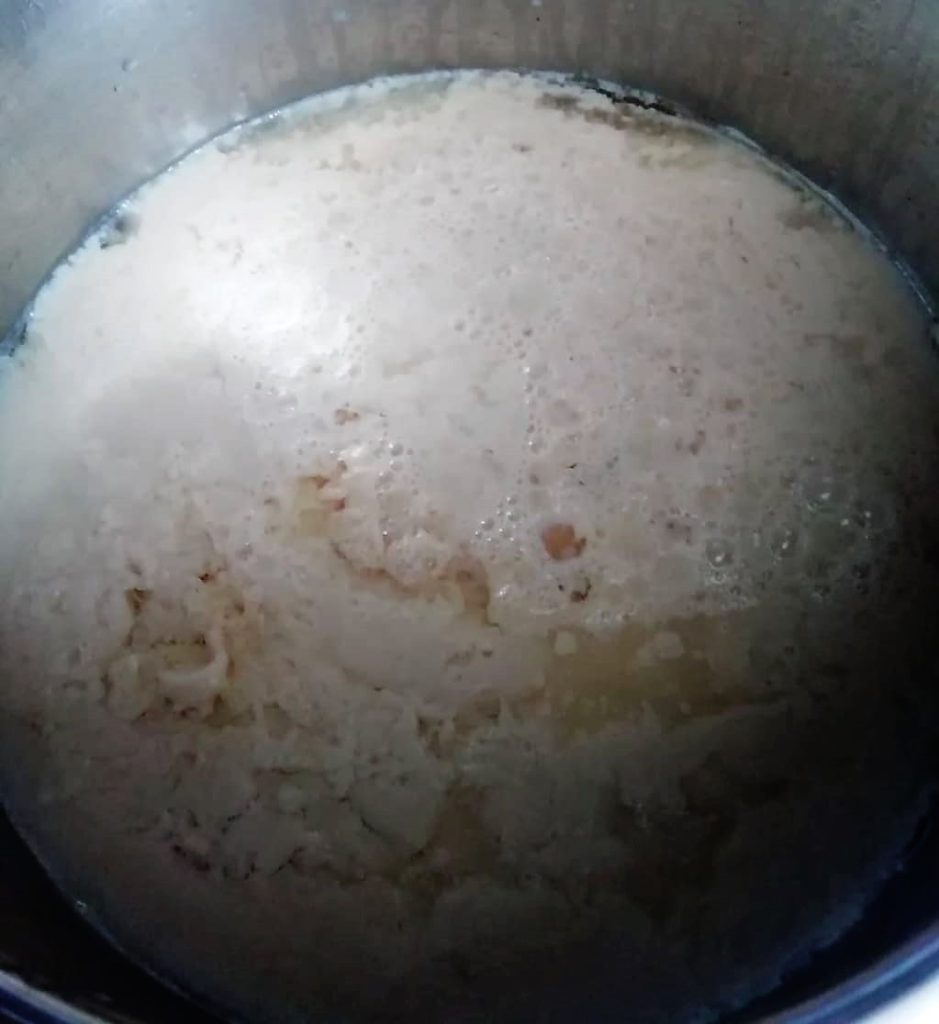
After the resting time you will see the milk coagulated and separated from a slightly yellowish whey.
At this point, before draining the curds, you can flavor the tofu by adding the spices and aromas you prefer.
Meanwhile prepare a perforated mold lined with a damp cotton cloth. With a slotted spoon gently lift the soy milk curds so as not to break the curd, and place them all in the container lined with the cloth.
Occasionally press the cheese in the mold to help drain the whey.
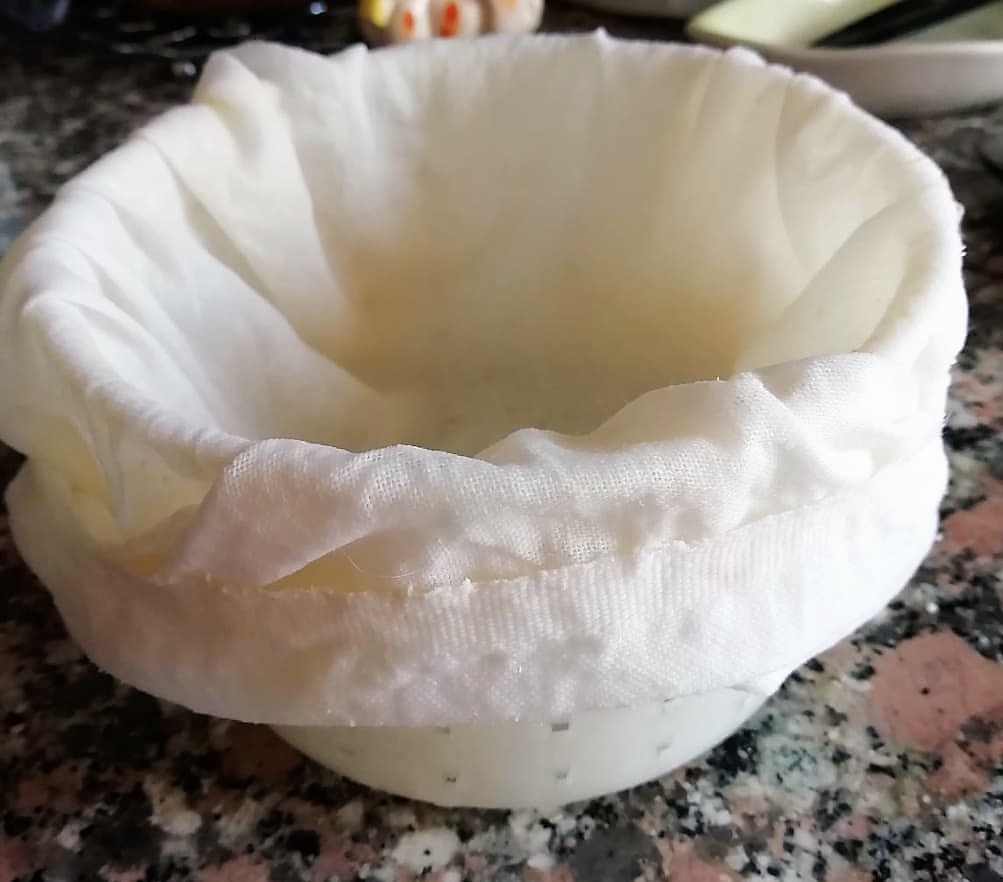
Let all the excess liquid drain away and finally cover the tofu with the edges of the cloth, placing a weight on top to press it. In this way the tofu will release all the whey and will compact.
Keep the tofu under pressure for at least 1 hour before removing the cotton cloth and continue to let the whey drain for another 3–4 hours before removing it from the mold.
After the tofu has drained all the whey transfer it to a container with brine and store it in the refrigerator for 7–10 days.
The brine is made with 2 cups (500 ml) of boiling water and about 1 tbsp + 1 tsp (20 g) fine salt. Let the brine cool before immersing the tofu.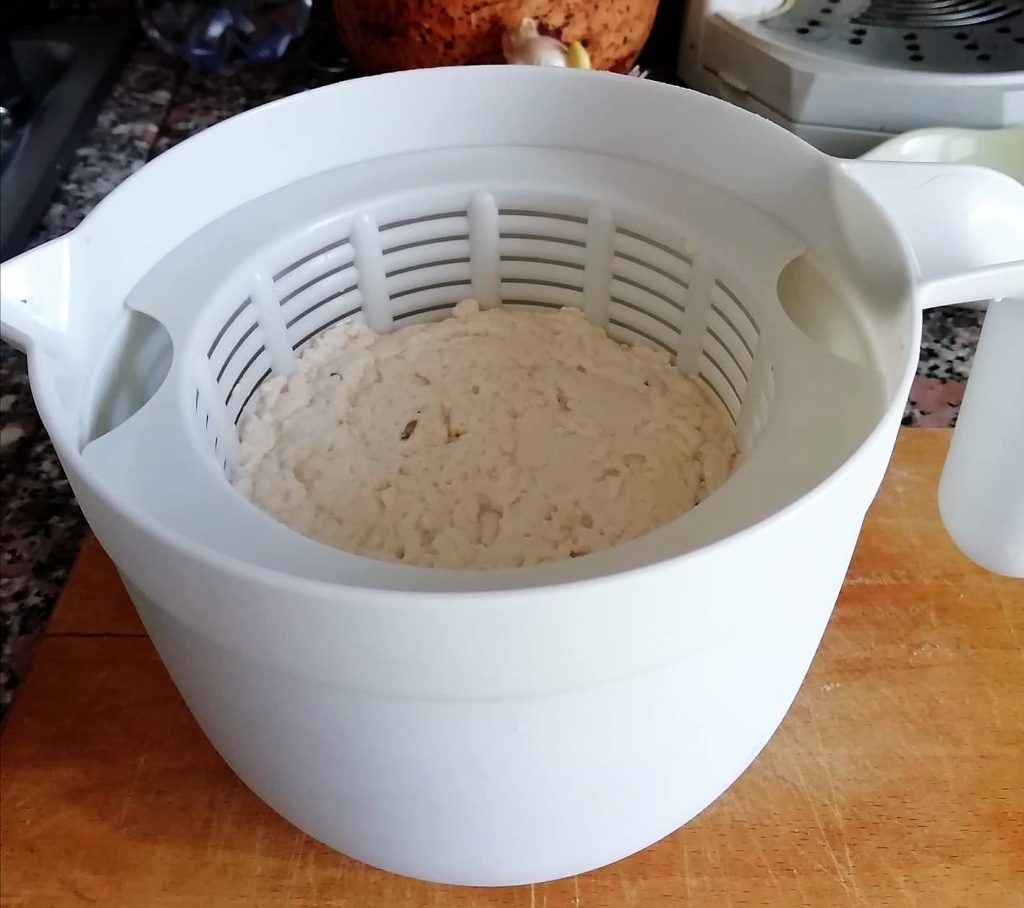
How to store Tofu
Tofu can also be preserved in oil (with corn or sunflower seed oil). Cut it into cubes and place it in a glass jar, adding herbs and spices to taste (oregano, basil, chili, capers and garlic are a delight). Sayonara!! ^_^
