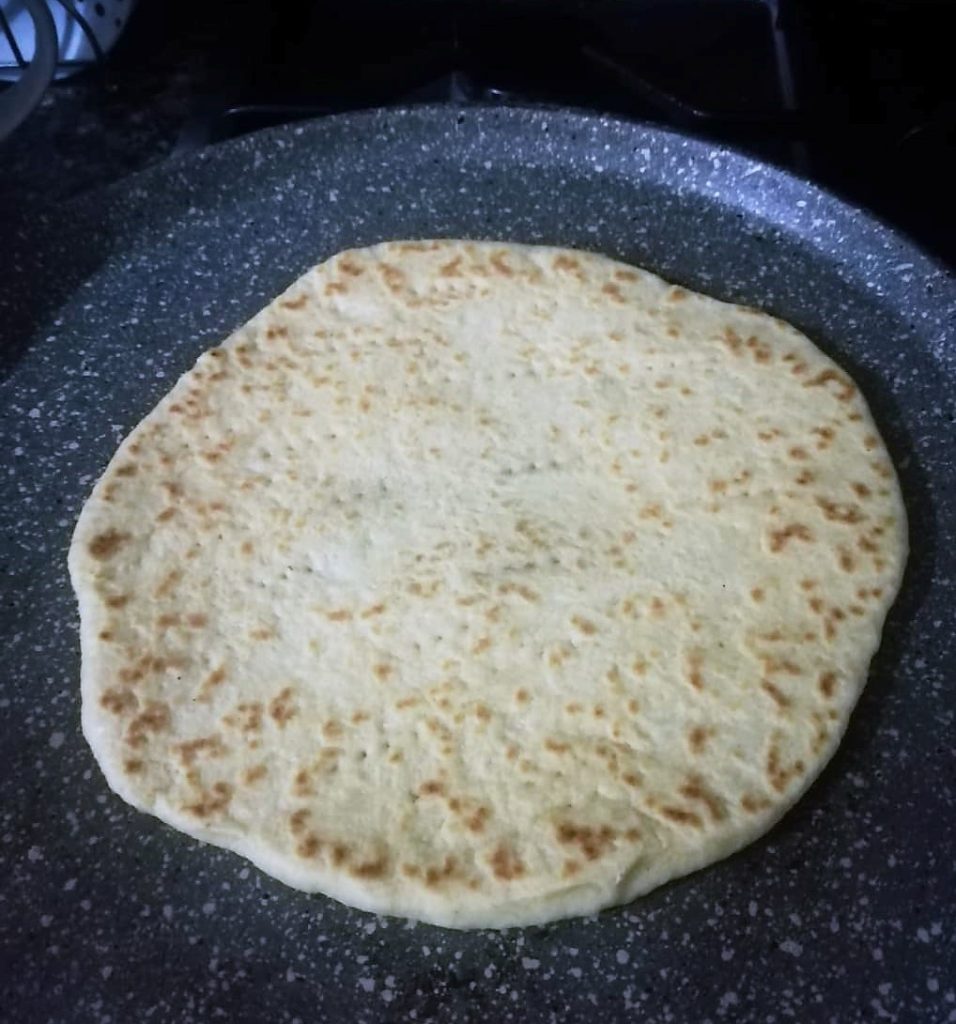
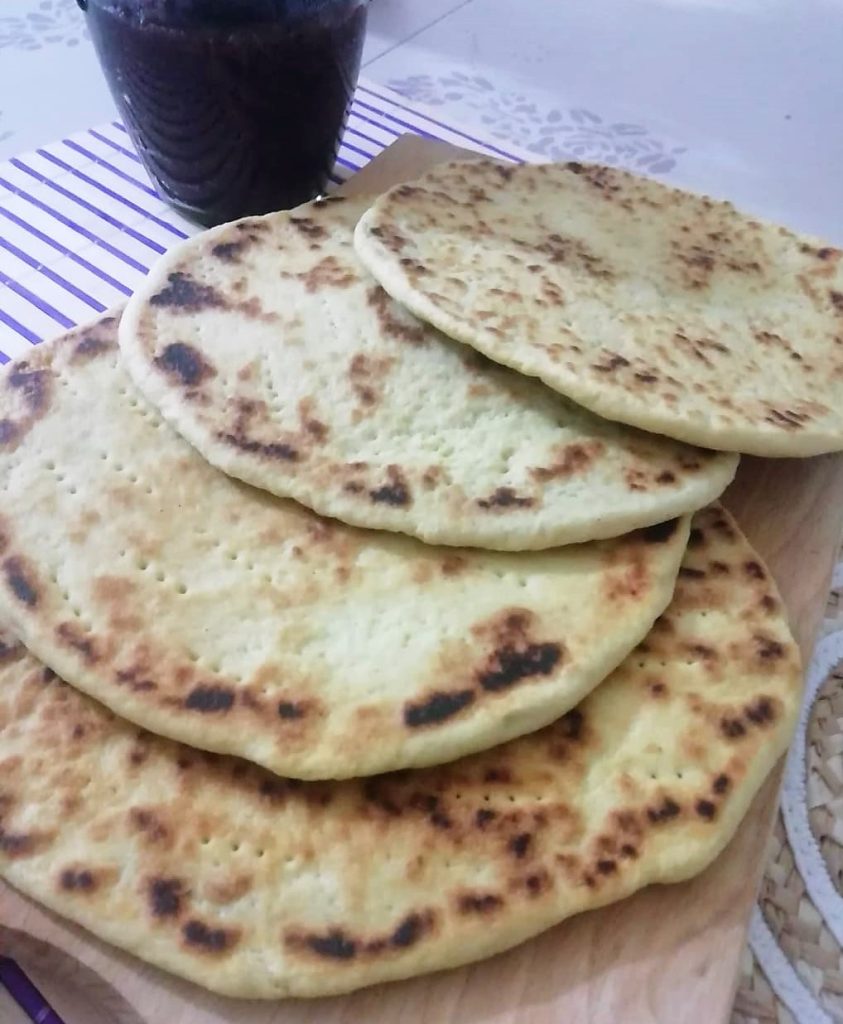
My pan-fried bread is nothing other than the famous pizzillo without yeast that my grandmother used to make under the hot ashes of the fireplace. She kneaded the durum wheat flour with water and lard, then added baking soda, shaped the pizzilli and rested them on the hot stone of the hearth, which in the mountains was always lit.
The pizzillo without yeast replaced bread at meals, but it was also served as a snack with cold cuts and cheese. I remember my grandmother Annina’s sausages preserved in oil, or freshly sliced pink lard — all light foods fit for true mountaineers. But I can assure you no one complained about the lack of bread.
In my pan-fried bread recipe I replaced the lard with olive oil and cooked the pizzillo without yeast on a stovetop griddle, but the usefulness of a quick pan bread and the magic of the pizzillo remain the same. In any case, I recommend you also try homemade piadine in the olive oil version and the soft version.
- Cost: Very inexpensive
- Preparation time: 5 Minutes
- Portions: 4 Pieces
- Cooking methods: Stovetop
- Cuisine: Italian
Ingredients
- 1 1/4 cups durum wheat flour (re-milled)
- 1 1/4 cups Type 0 flour (all-purpose equivalent)
- 3 1/3 tbsp olive oil
- 5/8 cup water
- 1 tsp fine salt
- 1 tsp baking soda (scant)
undefined
Tools
undefined
Preparation
Mix all the ingredients: flours, lukewarm water, oil, salt and baking soda.
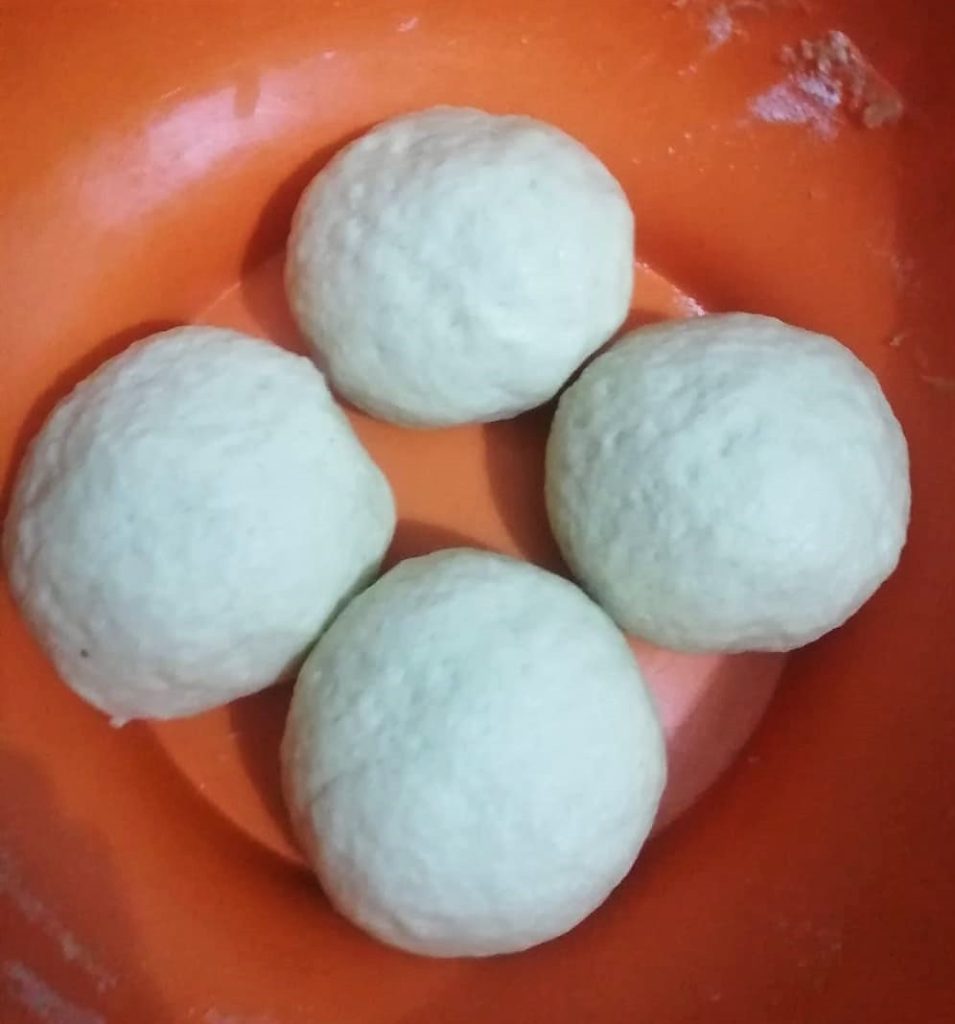
Work into a smooth, firm dough, then divide it into 4 portions, about 4.4 oz each. You can also do this by eye.
Meanwhile, heat the nonstick griddle on the stovetop.
Take a dough ball, roll it out, shape it into a round and place it on the hot griddle. Then prick the pizzillo here and there with a fork.

Flip the little flatbread and cook it on both sides — in just a few minutes it’s ready.
Pan-fried bread keeps for several days if stored in a food-grade plastic bag.