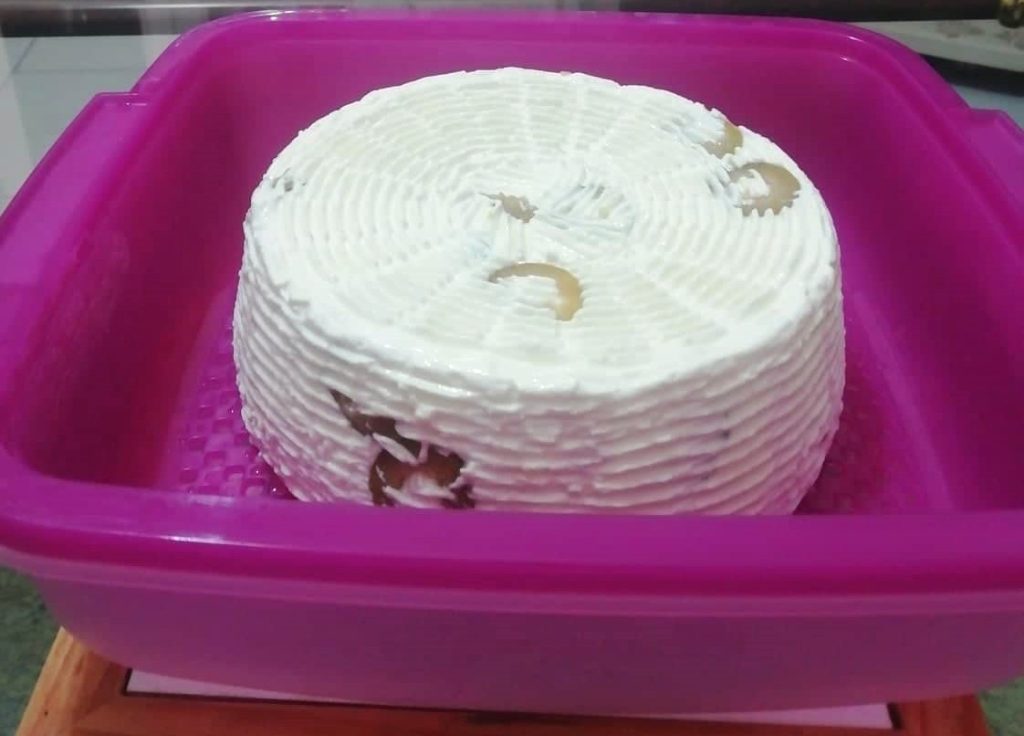
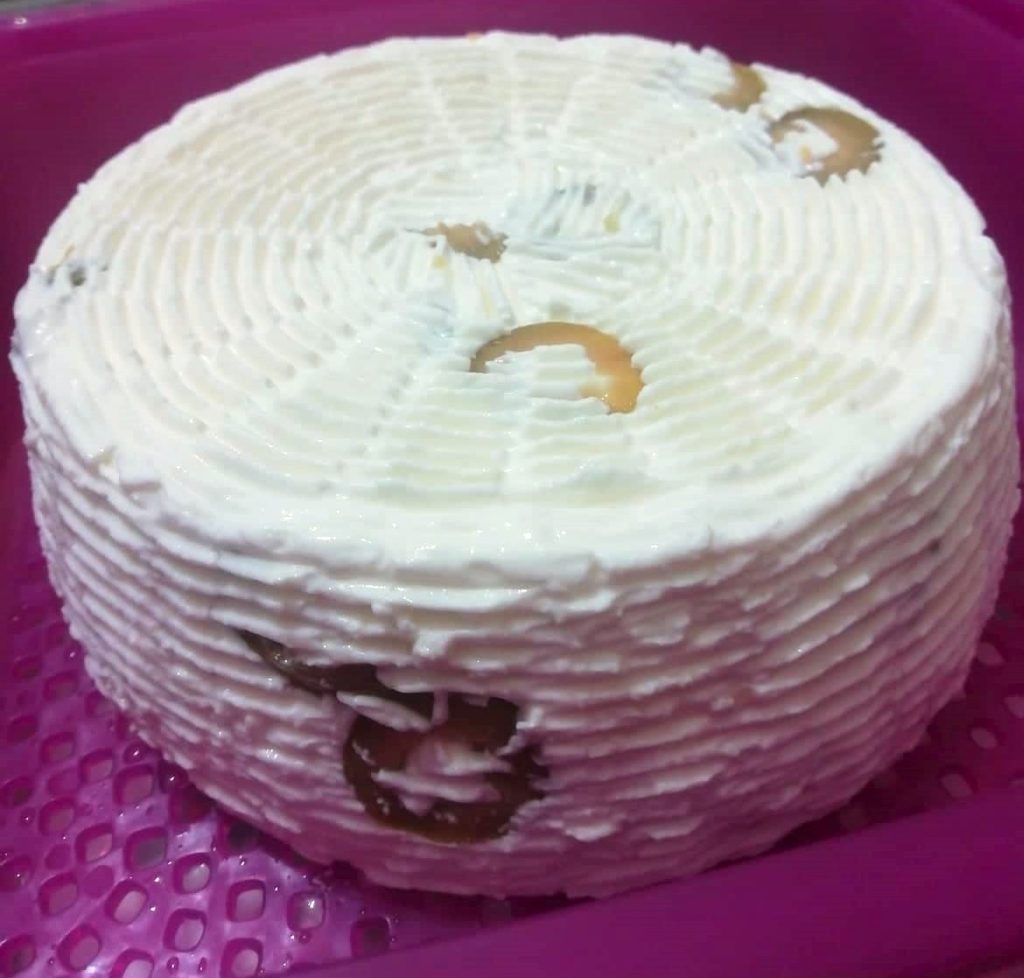
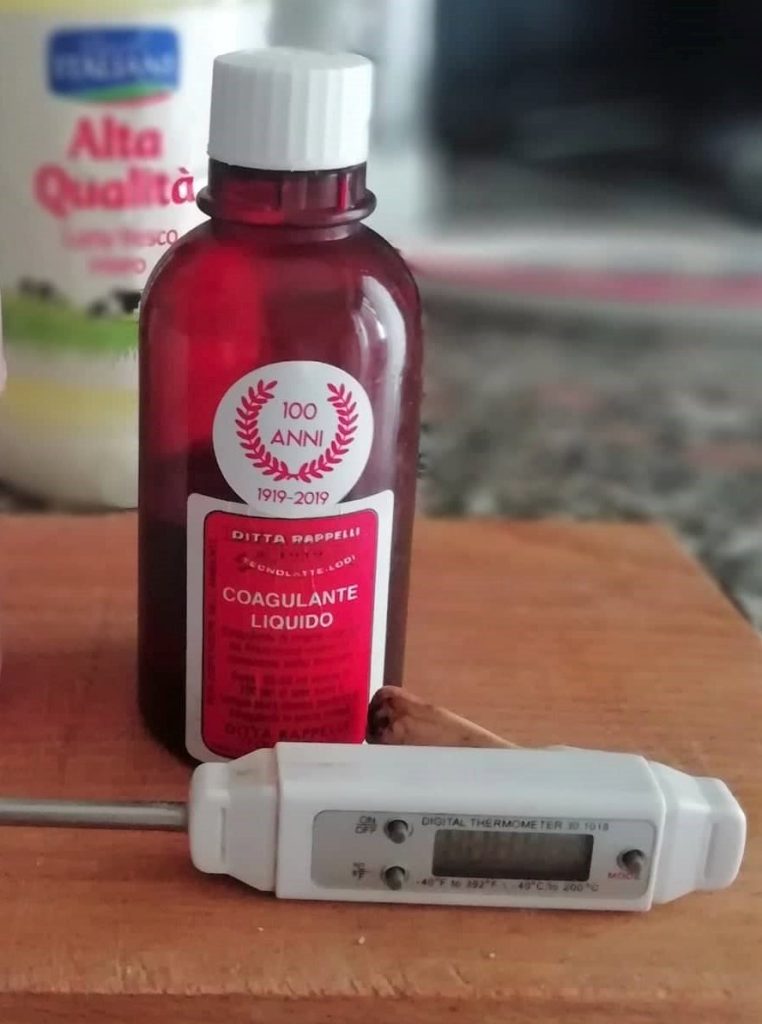
To make this delicious primo sale with olives, you will need fresh whole milk from the fridge section with at least 3.6% fat, not partially skimmed, not microfiltered, and not long-life. Then a vegetable or animal coagulant, which you can find in pharmacies, a food thermometer to measure the temperature, and a half-kilo cheese mold.
That’s it. With 3 liters of milk and a few steps, you’ll get a 500-gram cheese, which is not bad to enjoy a good homemade fresh cheese in just a few hours. You can also enrich it with other ingredients to taste, such as walnuts and chili pepper, and it will be a great success.
The procedure is similar to the basic recipe of primo sale with vegetable rennet and with the whey extracted from the curd you can always make a small ricotta, which is worth tasting.
Keep the basic doses in mind if you want to make a larger or smaller form: For every liter of milk corresponds to 1 teaspoon of rennet and 1/2 scant teaspoon of salt (the latter also according to your taste).
- Difficulty: Very easy
- Cost: Economical
- Rest time: 4 Minutes
- Preparation time: 1 Hour 30 Minutes
- Portions: 1 lb.
- Cuisine: Italian
Ingredients
- 3 liters whole milk (fresh, from fridge section)
- 3 teaspoons rennet (I use the vegetable one from Rappelli, or animal)
- fine salt (1 and 1/2 teaspoons)
- 1.76 oz green olives (pitted and sliced)
Steps
In a large pot, stainless steel or copper, pour the milk and salt and place it over low heat, bringing it to a temperature between 100/102°F maximum. Stir the milk to dissolve the salt and measure the temperature with an immersion food thermometer.
Meanwhile, put the vegetable rennet in a small glass and dilute it with two teaspoons of water.
Once the temperature is reached, turn off the heat, stir the milk with a wooden spoon, and while stirring, add the rennet into the vortex. Stop the circular motion by stirring in the opposite direction and stop immediately.
Put the lid on the pot and let it rest in a warm environment, without moving it, for 40 minutes. I wrap the pot with a warm fleece blanket, which I use for the occasion.
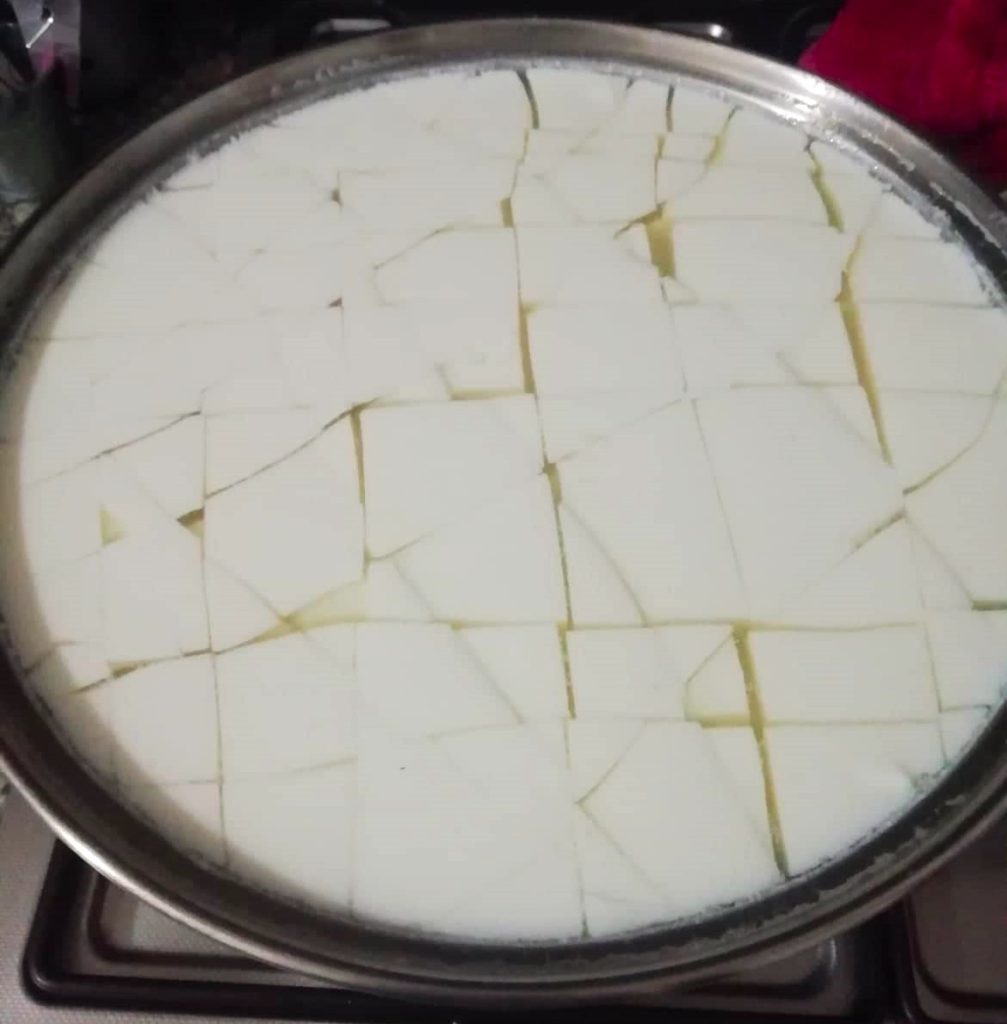
After 40 minutes, the magic of the cheese is done. The curd is ready and you’ll see in the pot a pudding-like mass that slightly sinks into the whey (yellowish liquid). Perform the skewer test, insert a wooden skewer stick into the center of the curd, if it stays upright and firm, it’s ready. If not, wait another 10 minutes, keeping everything warm.
With a long smooth blade knife, cut the curd into medium cubes, reaching the bottom of the pot.
Put the lid back on and let the curd rest for another 10 minutes.
After the 10-minute rest time, break the curd a second time into smaller pieces like peanuts, using a pastry whisk. Do this operation very gently, from bottom to top.
Let the curd rest for another 10 minutes with the lid on.
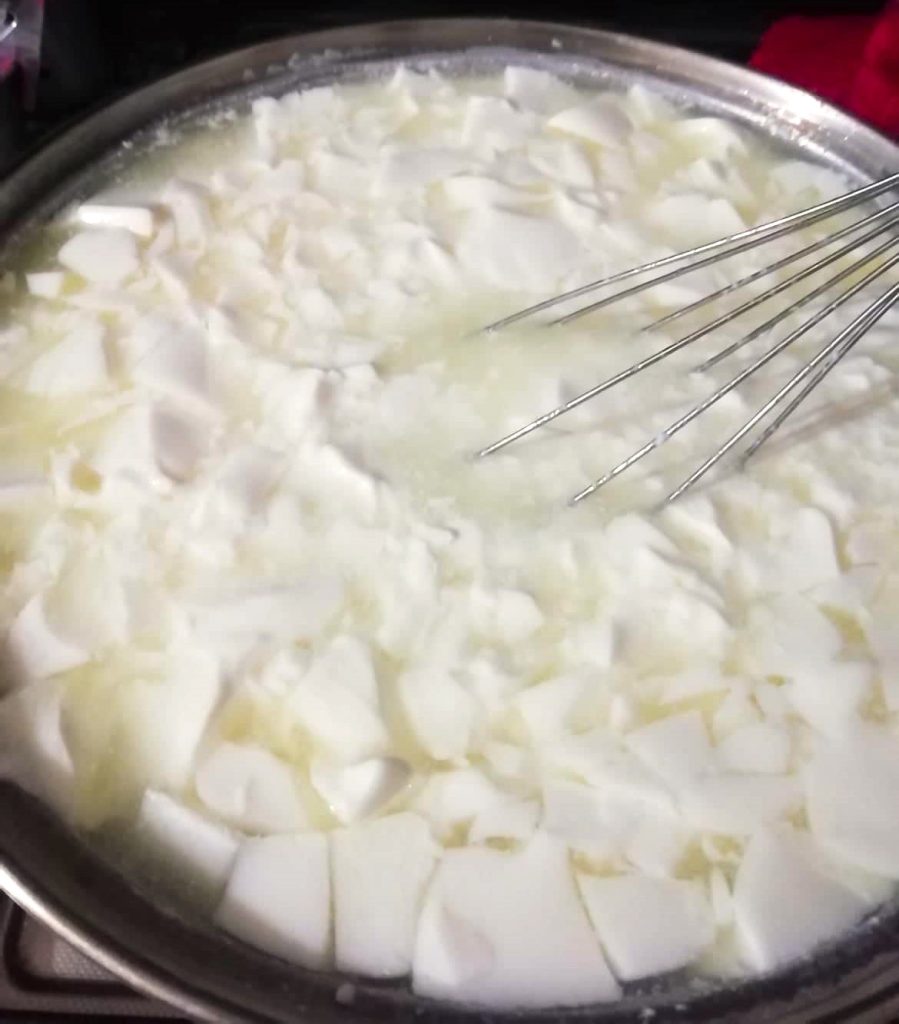
At this point, you can decide whether to pour the sliced olives directly into the pot before transferring the curd into the cheese mold, or to add the olives into the mold while transferring the curd.
If you won’t use the whey for other purposes, like ricotta, you can put them in the pot and then use a slotted spoon to transfer the cheese into the mold.
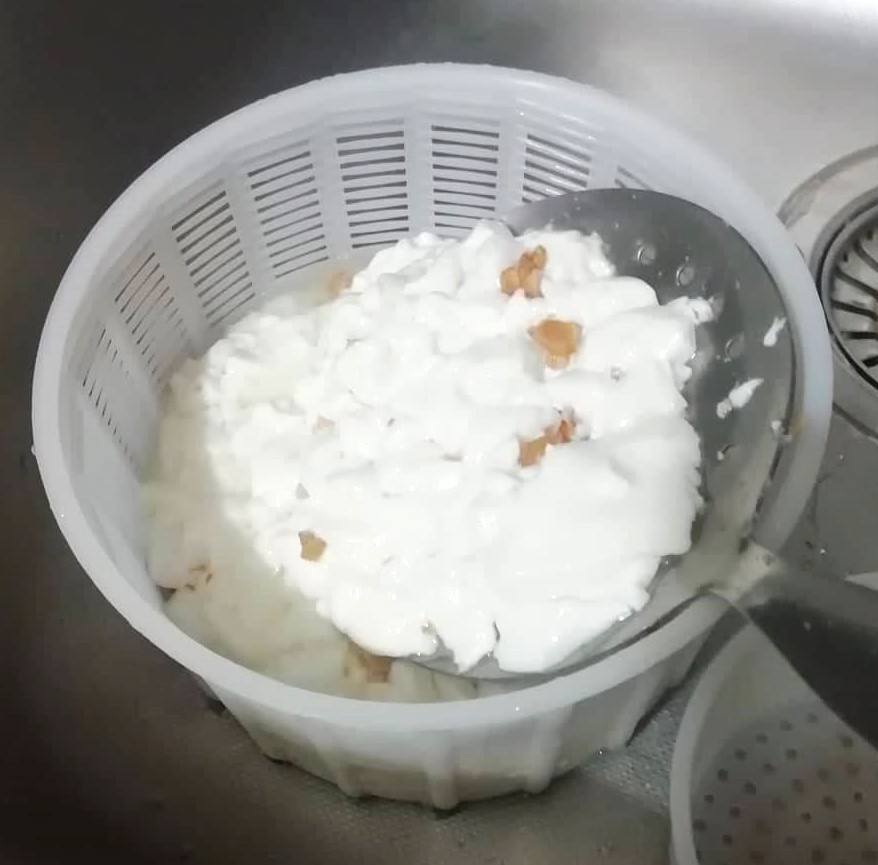
You can place the cheese mold inside the kitchen sink or in a large bowl to drain excess whey.
With your hands, press the cheese in the mold and compact it well.
Let the whey drain for 2/4 hours.
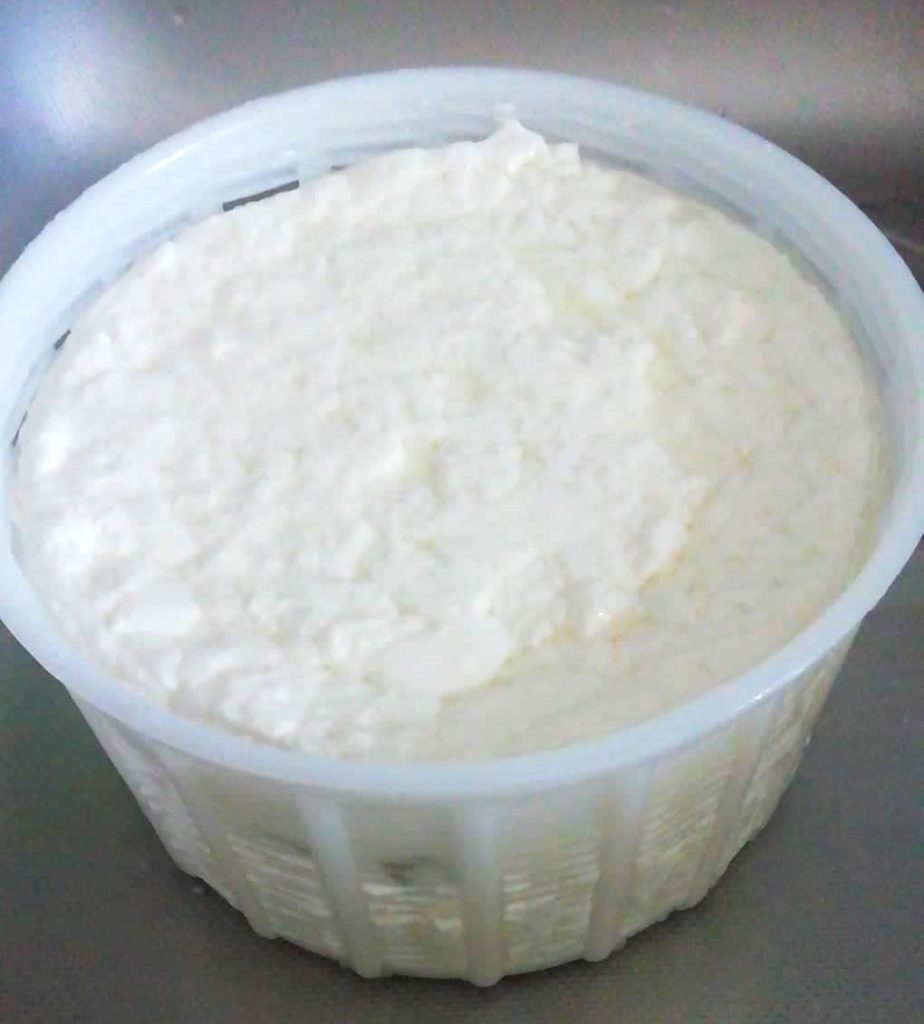
After this time, you can flip the cheese into a perforated container, gently remove the cheese mold, and let more whey drain.
Put the cheese form in the refrigerator for at least 4-5 hours or overnight, then serve it.