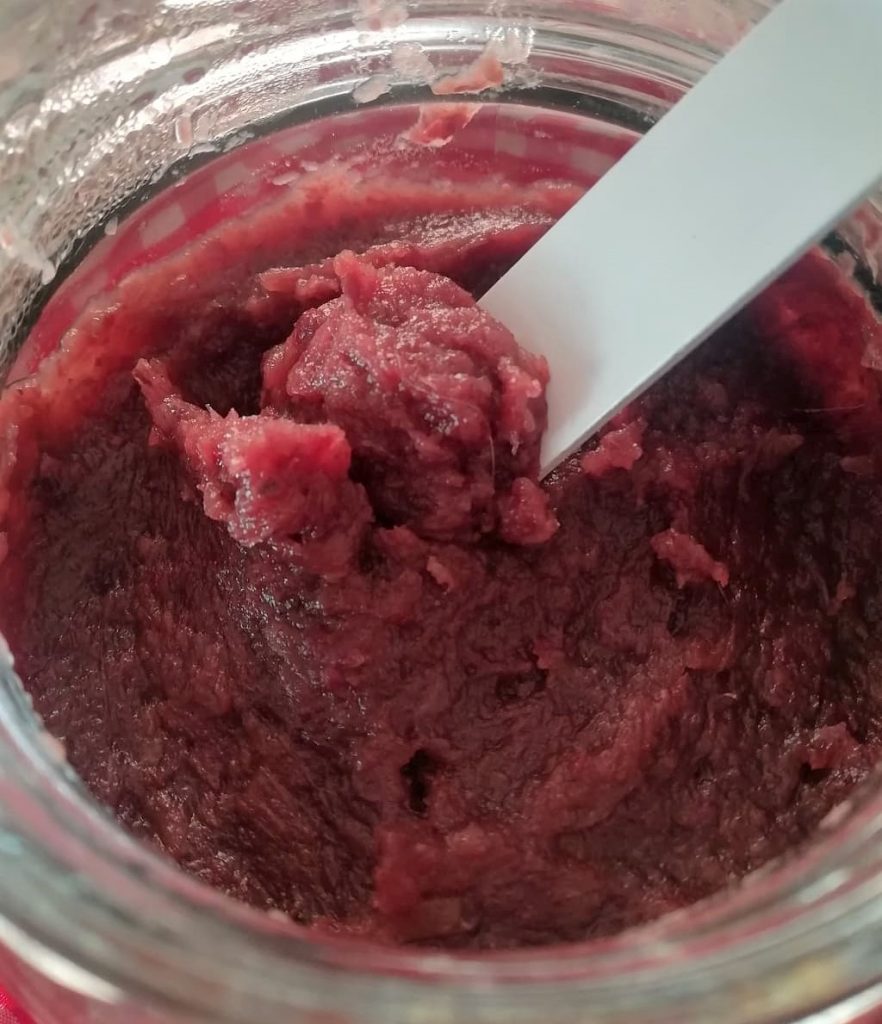
The sweet-and-sour compote of azuki and onions is made with the seeds of the plant Vigna angularis, called azuki in Japanese, which means “small bean.” These beans have many properties and contain numerous minerals and trace elements beneficial to our bodies. They are good for the kidneys thanks to their cleansing properties, and helpful for the liver, bones, brain and the immune system. They are also more digestible than many other legumes.
These remarkable legumes are cooked like others: dried ones are soaked before cooking and can be served in soups or broths, or cold in salads. They are versatile for sweet or savory recipes, or—as we will do today—in a sweet-and-sour compote of azuki and red onions, excellent for spreading.

- Difficulty: Easy
- Cost: Inexpensive
- Preparation time: 30 Minutes
- Portions: For a 17.6 oz jar (about 1 pint)
- Cooking methods: Stovetop
- Cuisine: Japanese
Ingredients
- 8.5 oz pre-cooked azuki beans (about 1 cup)
- 10.6 oz red onions (about 2 medium onions)
- 2/3 cup raisins (dried)
- 1/3 cup apple cider vinegar
- 2 3/4 tbsp Marsala wine
- 6 1/2 tbsp sugar
- 2 1/2 tbsp sugar (for caramelizing the onions)
- 1 pinch ground ginger
- 1 pinch salt
Preparation
Soak the dried raisins in about two “fingers” of hot water and let them rehydrate.
If you are using canned pre-cooked beans, drain them from the preserving liquid.
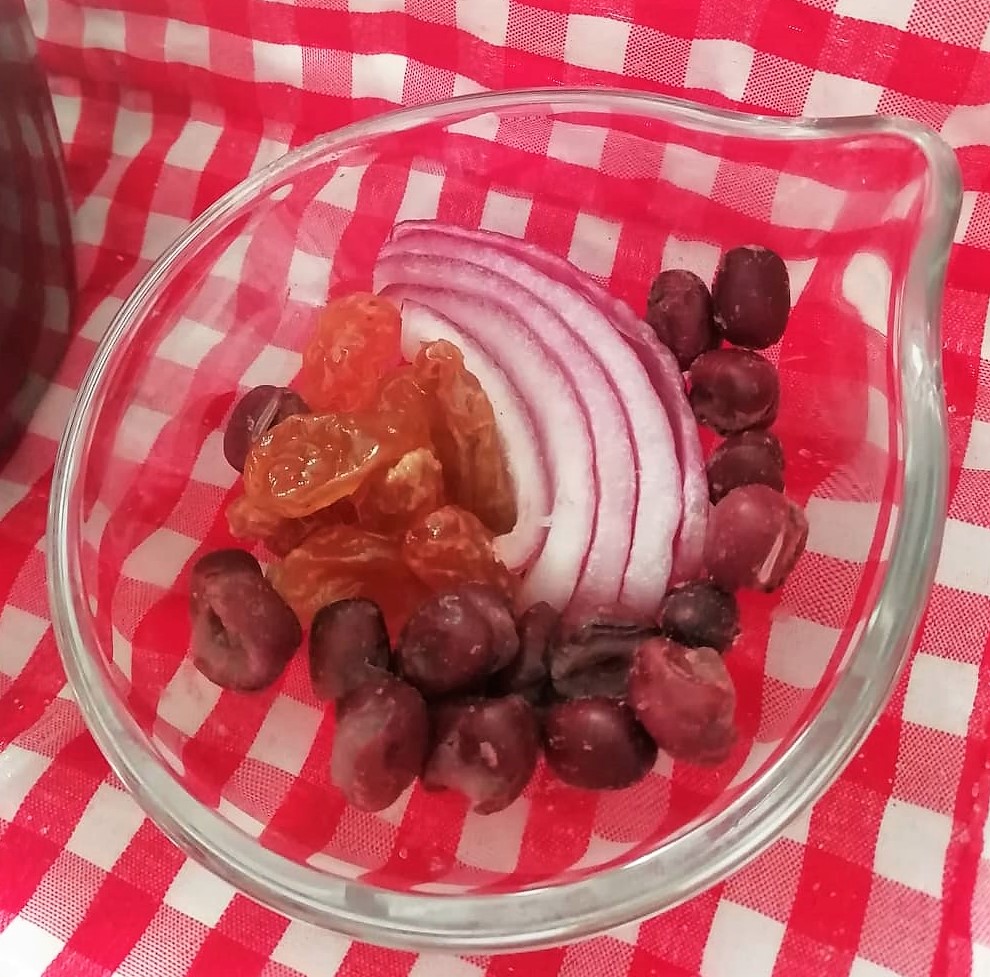
Slice the red onions thinly and place them in a nonstick pan with the sugar.
Let them caramelize as needed; it will take about 5–8 minutes over low heat, stirring so they don’t burn.
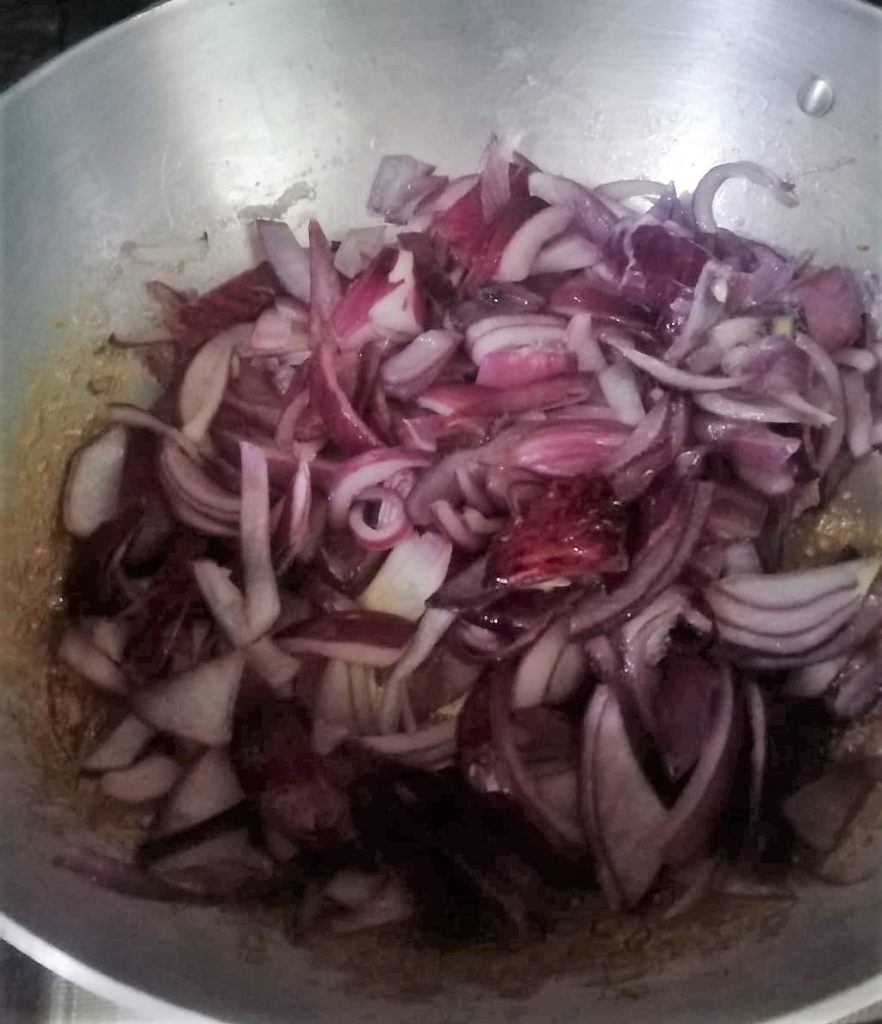
When the onions have softened and caramelized, add the azuki beans and the drained raisins.
Then add the sugar, apple cider vinegar, Marsala, ginger, and salt, and mix the ingredients together.
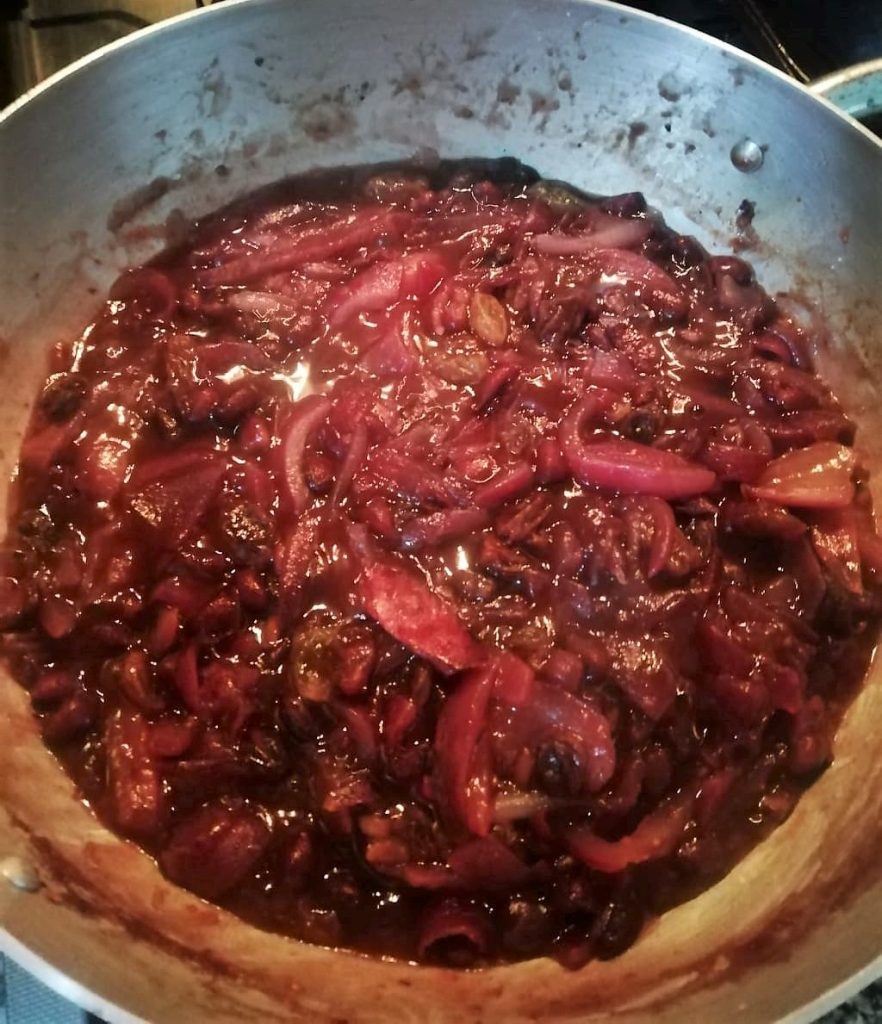
Let the sweet-and-sour compote cook for 15 minutes, stirring occasionally so it doesn’t stick to the pan.
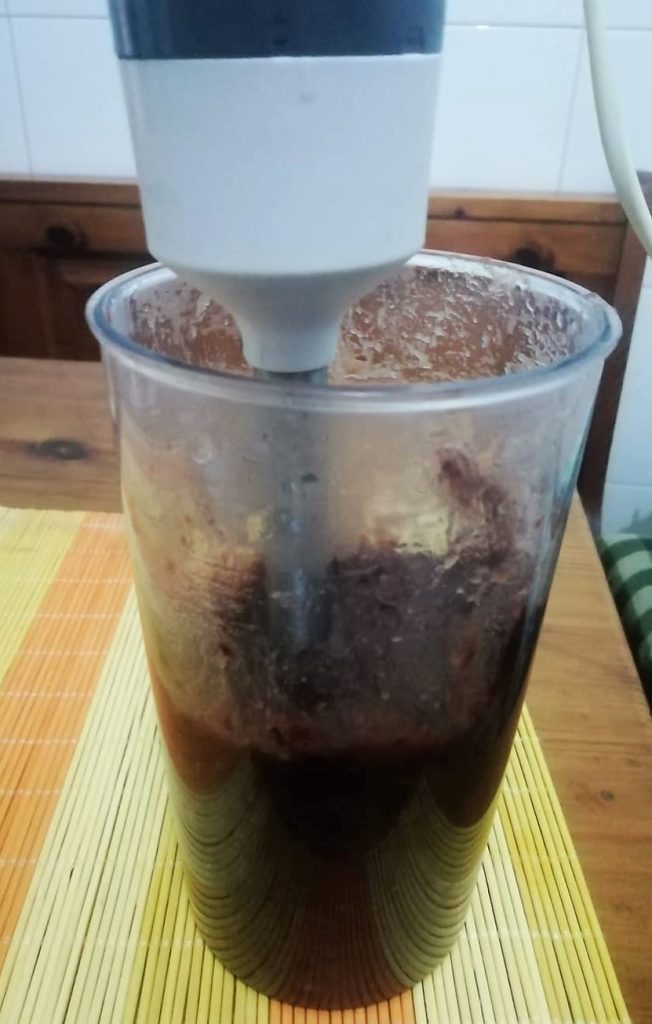
Finally, turn off the heat, let it cool slightly, transfer to a blender and puree until you have a smooth, homogeneous cream.
Store the sweet-and-sour azuki and red onion compote in the refrigerator in a sealed glass jar.
It’s excellent to accompany plant-based cheeses and any other kind of cheese, or spread on crostini or used to fill rustic tarts.
A curiosity: In China and Japan azuki beans are considered lucky, and for this reason they are served during celebrations.