
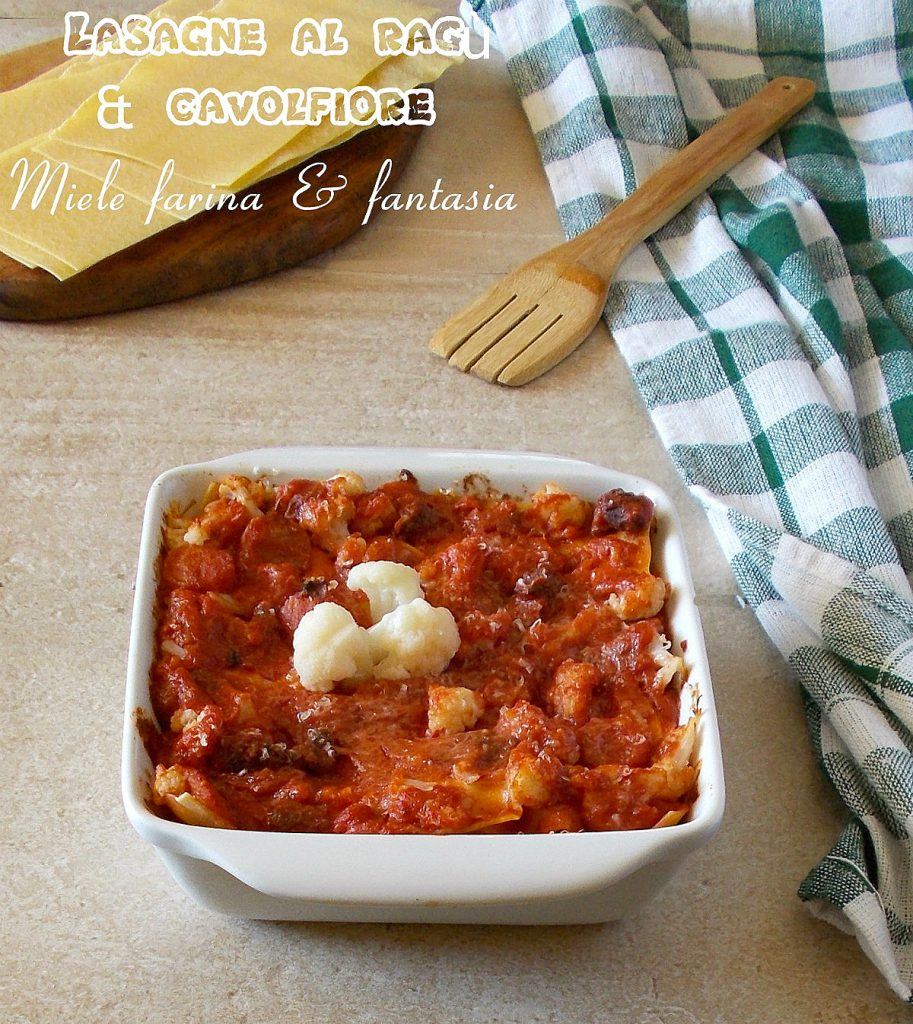
Lasagna with ragù and cauliflower is a tasty leftover dish. If, in fact, we have leftover ragù from Sunday lunch, we can reuse it, along with cauliflower, to create a simple and easy dish. It is ideal for those who work and have little time to dedicate to cooking, because it is a dish that can be prepared the day before. We can use whatever we like and customize these exquisite lasagnas based on what we have left over. We will also be able to enjoy and present cauliflower in a different guise that will appeal even to children.
- Difficulty: Very Easy
- Cost: Economical
- Preparation time: 30 Minutes
- Portions: 2-3 servings
- Cooking methods: Oven, Boiling
- Cuisine: Italian
- Seasonality: Autumn, Winter, and Spring
Ingredients
- 14 oz Ragù Sauce (Bolognese, Neapolitan)
- 2/3 lb Cauliflower (boiled)
- 4 Lasagna Sheets (fresh)
- to taste Cheese (grated)
- to taste Cheese (melty)
- to taste Fine Salt
Preparation
In this recipe, we can use any type of ragù, Neapolitan, Bolognese, goat ragù, etc.
Dilute the ragù with a little water or other raw tomato sauce if it is too thick.
Clean and wash the cauliflower. Cut it into not too large pieces and divide the florets. Put cold water in a pot, bring it to a boil, add salt, and then add the cauliflower.Wait for the water to return to a boil and let it boil for 5 minutes. After the time has passed, drain it immediately and set it aside.
On the bottom of a small baking dish, put some ragù, lay the first sheet, and fill it with boiled cauliflower (which we will have crumbled with our hands), grated cheese, Emmenthal or provola in cubes, 3-4 tablespoons of sauce; proceed in the same way with the other sheets.Finish with more cauliflower, sauce, and a sprinkling of grated cheese, and the lasagna with ragù and cauliflower is ready to go in the oven at 392°F for about 15 minutes.
The extra idea. We can replace the lasagna with any type of fresh or dry pasta; in the latter case, the dry pasta must be boiled in advance for half the cooking time on the package (if the package has a recommended cooking time range for a more or less al dente pasta – for example, “cooking time 11-13” – refer to the first, which always refers to al dente cooking).
