
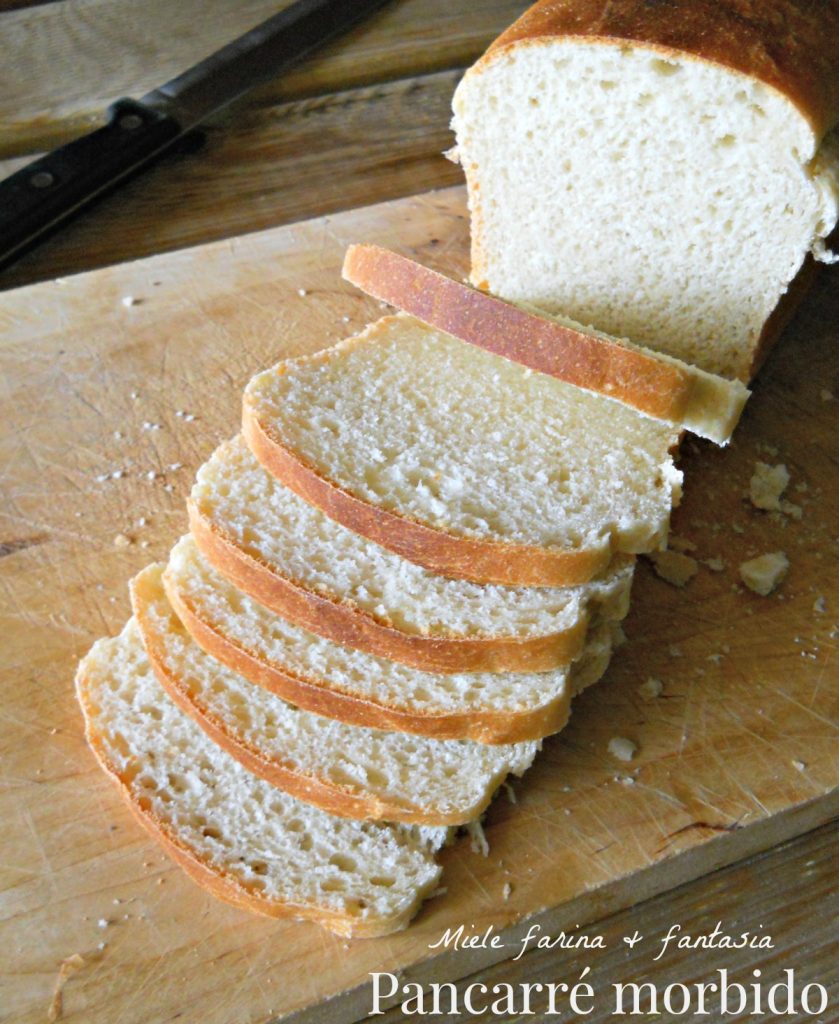
Making soft white bread is easy, and the result is amazing. My homemade soft white bread contains no alcohol, is free of dyes and preservatives, yet retains its aroma and softness for days, thanks to a mix of flours and double rising. It’s perfect for breakfast, lunch, to create delicious sandwiches, club sandwiches, toast, canapés. The starting point was the white bread recipe by the Simili sisters. Then, I gradually developed my own recipe and method. For those who do not have a sourdough starter, I have also included the procedure using fresh yeast. Enjoy your bread-making and happy continuation.
- Difficulty: Very Easy
- Cost: Economical
- Rest time: 6 Hours
- Preparation time: 20 Minutes
- Portions: 15/18 slices
- Cooking methods: Oven
- Cuisine: Italian
- Seasonality: All Seasons
Ingredients
- 4 1/4 oz Sourdough
- 2 3/4 tbsp Butter (soft)
- 2 tsp Salt
- 1 tsp Wildflower Honey
- 1 1/4 cup Water
- 3 1/2 cups Manitoba Flour
- 1 cup Flour Type 0
- 3 1/2 oz Manitoba Flour
- 1/4 cup Water
- 1/6 oz Fresh Yeast (in summer, the quantity can be reduced.)
Preparation
In white bread, to give the characteristic neutral flavor, neither sweet nor salty, it is usual to use, in addition to salt, honey (which can be replaced by sugar if necessary).
Refresh the sourdough starter as you are used to, let it double, and take the quantity you need for kneading.
Put the sourdough in the mixer bowl (or in a large bowl if you want to work it by hand) along with half of the sifted flours, the teaspoon of honey (or sugar), and half of the water. Use the paddle attachment and start mixing at the lowest speed and in pulses – that is, run the mixer for only a few seconds and turn it off – for 3-4 times, to dissolve the yeast.
Add the other part of the flours, the salt, and the other half of the water (the water quantities can vary based on the flour’s absorption rate; therefore, I recommend adding the second half of the water little by little, to avoid ending up with a dough that is too soft or too stiff). Finally, add the soft butter cut into pieces. Use the dough hook to knead the ingredients for about ten minutes (also by hand); each time the dough sticks to the hook, detach it and start kneading again. The dough is ready when there are no more traces of butter and it no longer sticks to your hands.
Turn the dough onto a lightly floured table, knead it a little more by hand, shape it into a ball, and let it rise covered by a cloth or a large bowl (it will take 6 to 12 hours, depending on the ambient temperature where you let it rise).
When the dough has doubled in volume, take it, without deflating it, place it on a lightly floured table, and roll it up on itself a couple of times, making a loaf (as shown in the photos). Let it rise for the last time in the loaf pan (or white bread pan) lined with parchment paper.
As soon as it reaches the edges of the pan, bake it in a preheated oven at 356°F (180°C) for about 30/35 minutes (depending on your oven). Once cooked, let it rest vertically, leaning it on the short side, and cut it only when it is completely cool!
Second Procedure with Fresh Yeast.
Dissolve the yeast in water and add the flour.
Mix to obtain a soft dough, cover, and let rise until doubled before using. When ready, add it to the flour mix, salt, honey, water, and butter, and proceed as described above for the natural yeast procedure. The baking will follow the same instructions. The rising times, however, will be much shorter. In summer, you can reduce the fresh yeast, using from a minimum of 1 gram up to 3 grams.
