
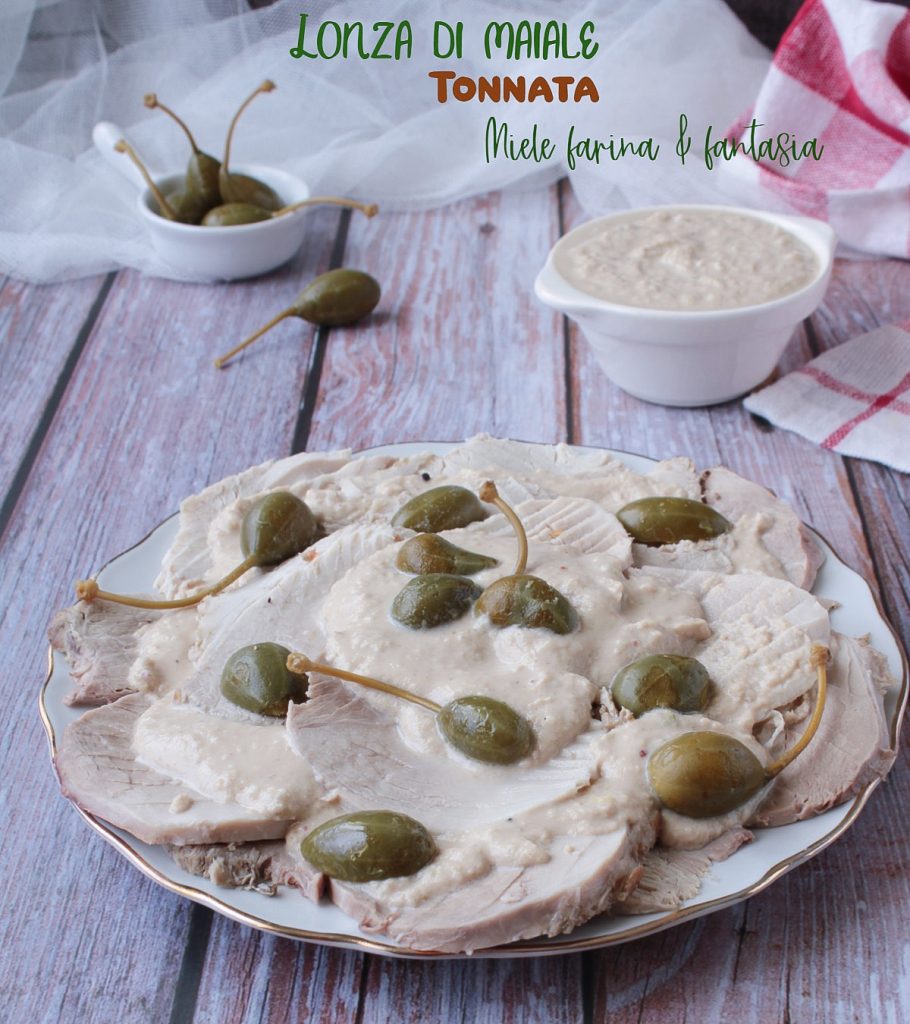
Pork loin tonnato is my personal reinterpretation of another great classic of Italian cuisine, namely vitello tonnato. The recipe I partially followed is Pellegrino Artusi’s and concerns only the preparation of the tonnato sauce without mayonnaise. It’s a very easy, succulent dish, perfect for using up leftover roasts, grilled meats and the like. The first time I made it I had quite a bit of leftover pork loin without its accompanying sauce; so I decided to dress it with a decadent tonnato sauce in Artusi’s original version without mayonnaise. This dish can be served as a main course, but it also makes a fine impression as an appetizer; furthermore, it contains no eggs, gluten, lactose or milk proteins. Pork loin tonnato should be prepared well in advance (at least two days before) to allow the meat to absorb the flavors. In this regard Artusi recommends marinating it in a container for a few days after generously coating it with sauce. The pork loin should be sliced very thinly (where possible), since it is drier than veal. In my opinion this dish is at its best when served cold. Here’s how I prepared it.
- Difficulty: Very easy
- Cost: Medium
- Rest time: 1 Day
- Preparation time: 30 Minutes
- Cooking time: 50 Minutes
- Portions: 8
- Cooking methods: Slow cooking
- Cuisine: Italian
- Seasonality: All seasons, Christmas
Ingredients
- 2.2 lbs pork loin
- 3 carrots
- 2 leaves bay leaves
- 2 cloves, crushed
- 1 sprig rosemary
- 1 sliced onion (ramata (coppery/red variety))
- 1 glass dry white wine (about 7 fl oz (200 ml))
- 1 1/4 cups boiling water
- to taste fine salt
- 2 tbsp extra-virgin olive oil
- 1 stalk celery
- 1/4 tsp curry (optional)
- 1 freshly ground pepper
- 14 oz tuna in oil or in water
- 20 capers (salt-packed)
- 1 lemon
- 3 fillets anchovy fillets in oil
Steps
Some suggestions before you start.
This recipe should be prepared 24 hours in advance to allow the meat to firm up and absorb the aromas of the spices.
Use a tall, sufficiently large pot to hold a 2.2 lb pork loin, bearing in mind that after cooking the meat will have lost about 30% of its initial weight.
You can also use capers packed in vinegar.
Prepare the pork loin
Thinly slice the onion after removing any inedible parts.
Wash and roughly chop the celery stalk and the carrots.
Wash the rosemary and bay leaves and pat them dry with paper towels.
Crush the cloves.
Heat 1 1/4 cups (300 ml) of water in a small saucepan separately.
Pour the extra-virgin olive oil into the pot and warm it over a medium-low flame (in this case I brown the meat in oil only, without the classic spices and aromatics, because they might burn during the searing which takes between 7 and 10 minutes at most).
When the oil is hot enough, add the pork loin, raise the heat and sear it well on all sides (don’t rush this step), turning it often with wooden spoons that don’t puncture the meat. It’s important that the juices remain inside the loin to make it as tender as possible at the end of cooking.
When the meat appears evenly browned, add the sliced onion, the celery, the carrots and all the other spices.
Douse the pork loin with the white wine and let the alcohol evaporate over a high flame.
When the alcohol has evaporated, season with salt and pepper and add the boiling water.
Cover the pot, reduce the heat to the minimum and let cook for about 45 minutes.
To check the cooking and ensure the pork remained slightly pink, I used a probe meat thermometer.
I turned off the heat as soon as the meat reached an internal temperature of 145°F. It took 50 minutes in my case.
I removed the pot from the stove and let the loin cool inside the pot, in its juices, for 12 hours, without touching it.
Prepare the sauce
You can use tuna packed in oil or in water; I prefer the latter because the sauce has a lighter, less heavy flavor, but it’s just a matter of taste.
Drain the tuna very well from the liquid (oil or water), placing it in a large sieve.
Rinse the capers and let them sit in fresh water for a few minutes to remove as much salt as possible.
In the bowl of a blender combine all the ingredients above, adding the anchovy fillets, the finely grated zest and the juice of one whole lemon.
Blend until you obtain a smooth, very fluid mixture (more fluid than a yogurt, to be clear) and refrigerate (if the sauce is too thick add a little more lemon juice or extra-virgin olive oil).
After 12 hours, remove the loin from its juices (which I use, after blending, to dress risottos, pappardelle, tagliatelle and so on), remove any fat that has surfaced during the resting of the meat and slice it as thinly as possible.
Prepare an earthenware or glass terrine.
Spread a little tonnato sauce on the bottom of the terrine and layer the slices of meat, alternating layers of sauce with layers of meat. Cover with cling film directly on the surface and let everything sit for at least another 12 hours in the refrigerator. Pork loin tonnato is ready to serve.
Enjoy your meal
