
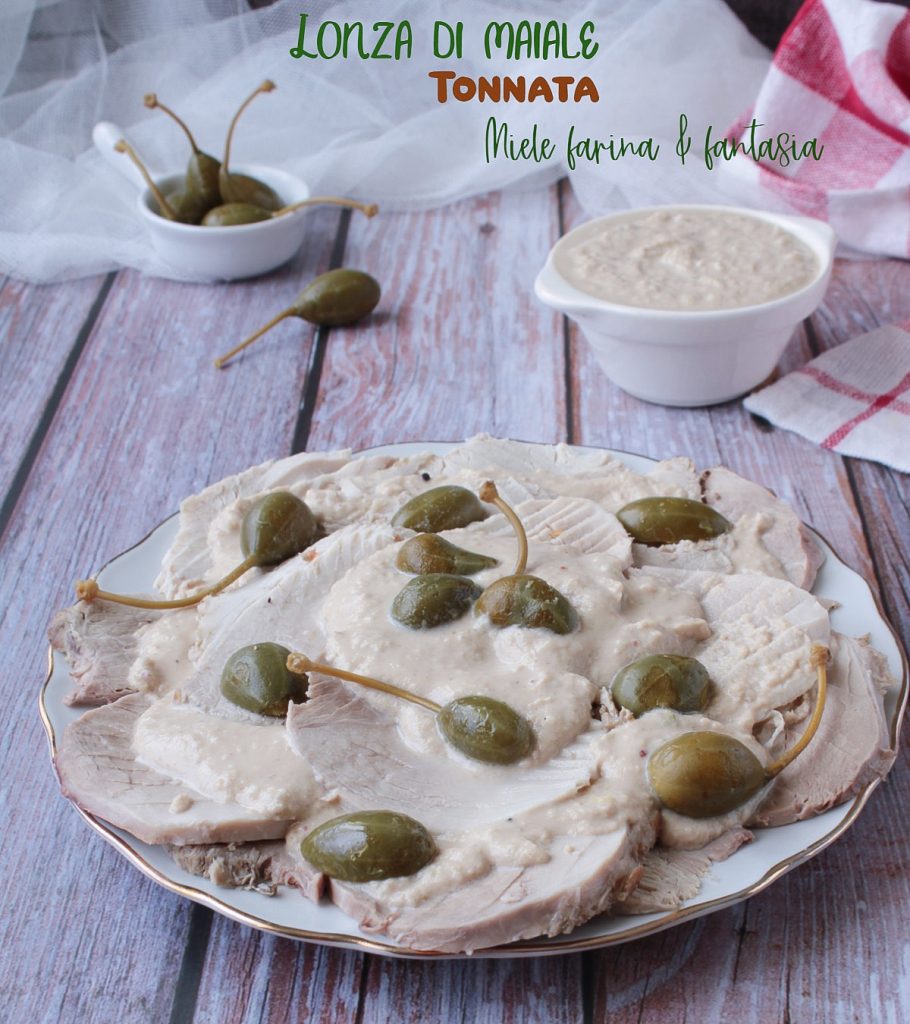
Pork loin with tuna sauce is my personal reinterpretation of another great classic of Italian cuisine, namely veal with tuna sauce. The recipe, which I only partially followed, is that of Pellegrino Artusi and concerns only the preparation of the tuna sauce without mayonnaise. It is a very easy, succulent dish, perfect for using up leftovers of roasts, grilled meats, and so on. The first time I prepared it was because I had quite a bit of leftover roast without the accompanying sauce; so, I decided to dress it with a delicious tuna sauce in Artusi’s original version without mayonnaise. This dish can be served as a main course, but it also makes a great appetizer; moreover, it contains no eggs, gluten, or lactose or milk proteins. The pork loin should be prepared well in advance (at least two days before) to give the meat time to absorb the flavors. In this regard, Artusi recommends marinating it in a container for a few days after seasoning it with plenty of sauce. The pork loin should be cut very thin (where possible), as it is drier than veal. In my opinion, this dish is at its best when cold. Here’s how I prepared it.
- Difficulty: Very easy
- Cost: Medium
- Rest time: 1 Day
- Preparation time: 30 Minutes
- Portions: 8
- Cooking methods: Slow cooking
- Cuisine: Italian
- Seasonality: All seasons, Christmas
Ingredients
- 2.2 lbs pork loin
- 3 carrots
- 2 leaves bay leaves
- 2 crushed cloves
- 1 sprig rosemary
- 1 sliced onion (golden)
- 1 glass dry white wine (about 200 milliliters)
- 1 1/4 cups boiling water
- to taste fine salt
- 2 tablespoons extra virgin olive oil
- 1 stalk celery
- 1/4 teaspoon curry (optional)
- 1 grind of fresh pepper
- 14 oz canned tuna in oil or natural
- 20 capers in salt
- 1 lemon
- 3 fillets anchovies in oil
Steps
Let’s prepare the pork loin with tuna sauce
We use a tall and large pot to contain a one-kilo loin, bearing in mind that after cooking, the meat will have lost about 30% of its initial weight.
Slice the onion thinly after discarding the inedible waste parts.
Wash and roughly chop the celery stalk and carrots.
Wash the rosemary and bay leaves and pat them dry with paper towels.
Crush the cloves.
Put 1 1/4 cups of water in a saucepan to heat.
Pour the extra virgin olive oil into the pot and heat it on a medium burner over low heat (in this case, I brown the meat only in the oil, without the classic spices and herbs, because they risk burning during the browning of the meat, which takes between 7 and 10 minutes at most).
When the oil is hot enough, add the loin, raise the heat and brown it perfectly on all sides (don’t rush this step), turning it often with wooden spoons that don’t pierce the meat. It is important, in fact, that all the juices stay inside the loin to make it as tender as possible at the end of cooking.
When the meat is browned evenly, add the sliced onion, celery, carrots, and all other spices.
Drizzle the loin with white wine and let the alcohol evaporate over high heat.
Once the alcohol has evaporated, add salt, pepper, and the boiling water.
Cover the pot, lower the heat to a minimum, and let cook for about 45 minutes.
To check the cooking and make sure the loin remains pink, I used a meat probe thermometer.
I turned off the heat as soon as the internal temperature (at the center) reached 145°F. In my case, it took 50 minutes.
I removed the pot from the burners and let the loin cool inside the pot, in its juice, for 12 hours, without touching it.
Let’s prepare the sauce
You can use either tuna in oil or natural; I prefer the latter, because the sauce has a lighter, less heavy flavor, but it’s just a matter of taste.
Drain the tuna thoroughly from the liquid (whether oil or water), putting it in a large colander.
Rinse the capers and let them sit for a few minutes in fresh water, to remove as much salt as possible.
In the bowl of a blender, combine all the above ingredients, to which we will add the anchovy fillets, the (finely chopped) peel and the juice of a whole lemon.
Blend until a soft and very fluid mixture is obtained (more fluid than yogurt, to be precise) and store in the fridge (if the sauce is too thick, add a little more lemon juice or extra virgin olive oil).
After 12 hours, remove the loin from its juice (which I use, after blending everything, to dress risottos, pappardelle, tagliatelle, and so on), remove any fat that will have surfaced during the rest of the meat, and slice it as thinly as possible.
Prepare an earthenware or glass dish.
Spread a bit of tuna sauce on the bottom of the dish and add slices of meat, alternating layers of tuna sauce with layers of meat. Cover with cling film and let everything soak for at least another 12 hours in the fridge. The pork loin with tuna sauce is ready to be served.
Bon appetit
