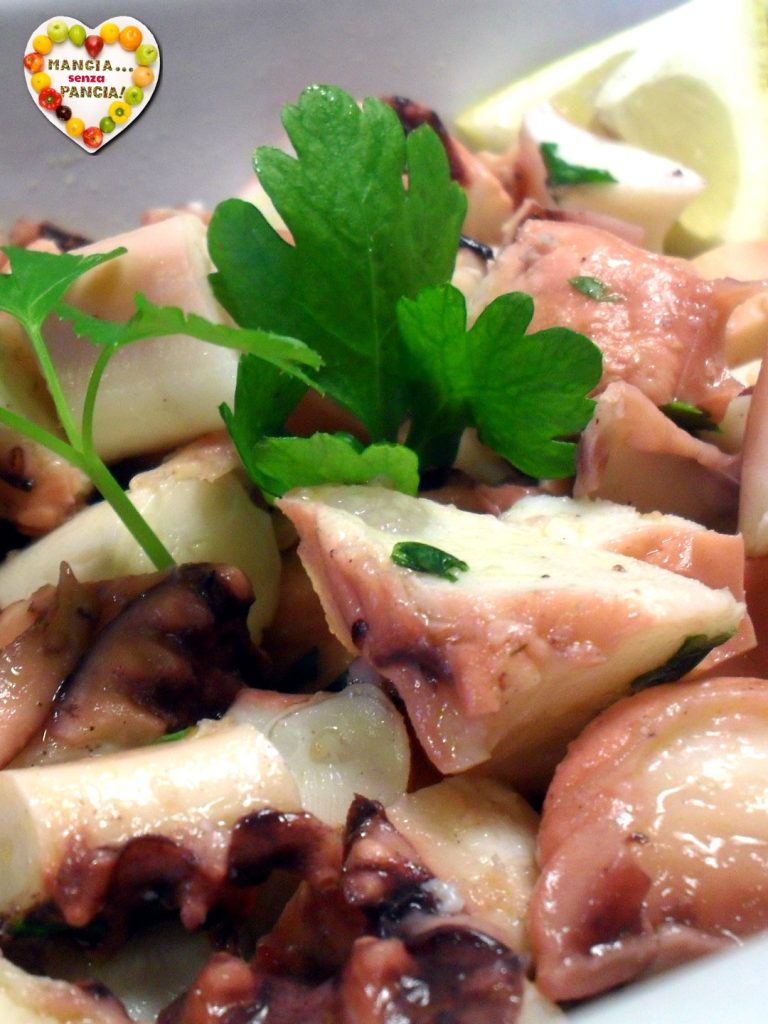
The octopus salad has always been one of my favorite dishes even though for a while I couldn’t find the main ingredient here in the Netherlands. But since I discovered where to get octopus I often make it and it’s really tasty even dressed with very little oil.
Preparing the octopus salad is simple but you need to keep in mind a few tips to avoid the octopus becoming too tough. Tradition says you should put a cork stopper in the boiling water to make it tender: this is a myth, nevertheless I continue to add it out of tradition…
I also discovered the reason for this popular belief: in the south boiled octopus, called ‘o purp’, was sold in the streets and the polparo (octopus seller) left it immersed in the boiling water until the moment he sold one. To be able to pull it up when he needed to prepare it for sale, he tied a string and a cork stopper to each octopus which, by floating, made it easier to “fish” the octopus out.
Perhaps someone eventually thought this cork was essential also for the cooking of the octopus and from there the tradition was born. In fact, to ensure the octopus is tender you should either use a thawed one or, incredible but true, freeze it fresh and then let it thaw slowly at room temperature without any forced methods (hot water, microwave, etc.).
Surely this way you’ll get a more tender octopus salad. Later I’ll explain a few other tricks…
You can find other light fish main courses here:
- Difficulty: Easy
- Cost: Medium
- Preparation time: 5 Minutes
- Cooking time: 40 Minutes
- Portions: 4People
- Cooking methods: Stovetop
- Cuisine: Healthy
- Seasonality: All seasons
Ingredients
- 2 lb 3 oz lb octopus (fresh or thawed, already cleaned)
- 2 lemons
- 4 cloves garlic
- 1 glass dry white wine (the wine is not counted in WW points as it is not absorbed during cooking)
- 2 tsp extra virgin olive oil
- 1 bunch fresh parsley
- to taste salt and pepper
- Points per serving = 5 WW points
Preparation
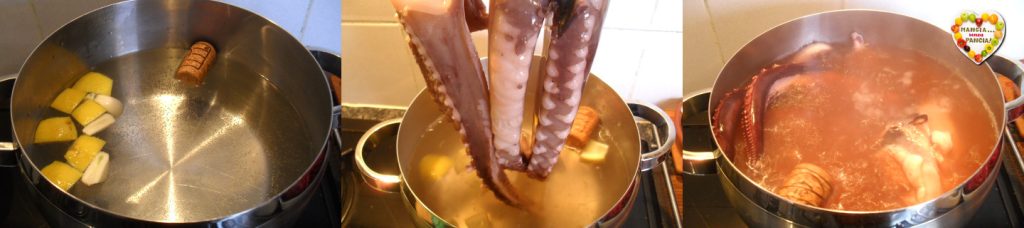
Fill a large pot with water, add a glass of wine, one lemon and two cloves of garlic cut into pieces, and bring to a boil. The cork, as explained in the introduction, is optional: I add it out of tradition and because it reminds me of my childhood.
When the water boils dip and lift just the tentacles 3-4 times so they curl up, then immerse the whole octopus. Cover and let simmer over low heat for 30-40 minutes.
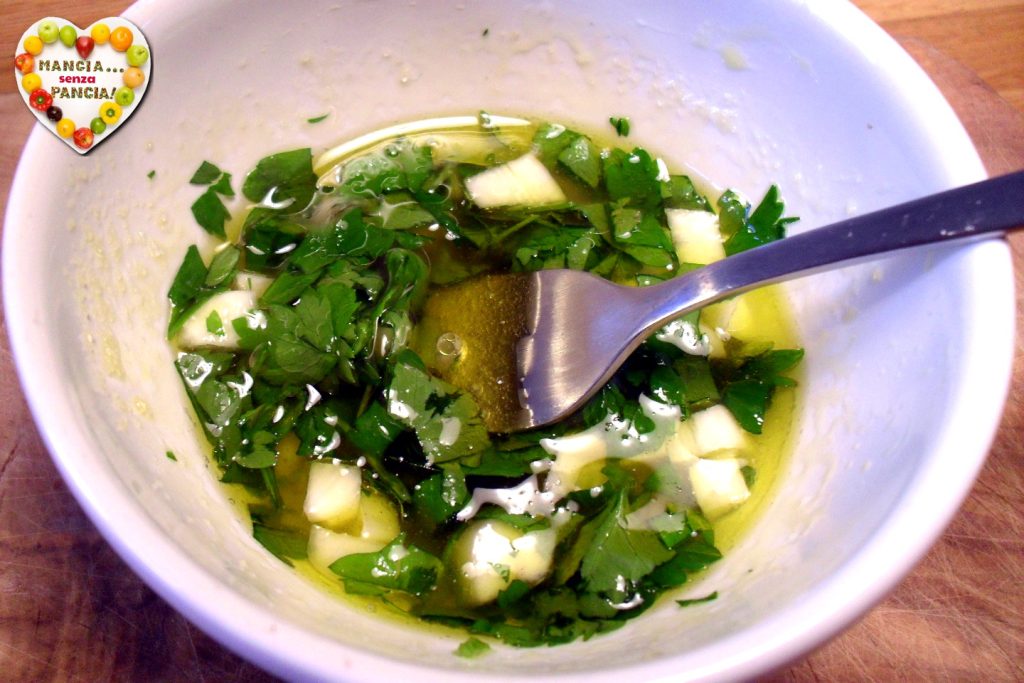
While the octopus cooks prepare the dressing. Put in a small bowl the 2 garlic cloves chopped, the juice of 1 lemon, the 2 teaspoons of oil, the chopped parsley, a little salt and pepper (if you like), and add 1-2 tablespoons of octopus cooking water if the dressing seems too dry. Emulsify well and set aside.
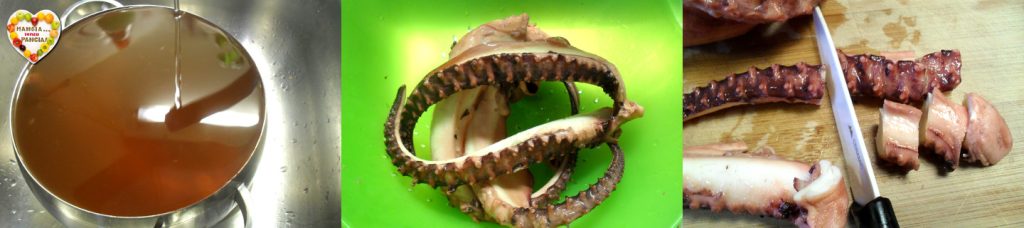
Check that the octopus is cooked by inserting a fork into the thickest part. When it’s ready do not drain it immediately or the skin will come off in pieces and it will look unappealing. Place the pot in the sink and let it cool by running the tap water slowly into the pot.
The water will start to overflow and the octopus will cool gradually. When the water in the pot has become cold you can remove the octopus, rinse it well and cut it into pieces. Put the octopus pieces on the serving plate and dress with the oil, lemon and garlic emulsion prepared earlier, mixing thoroughly.
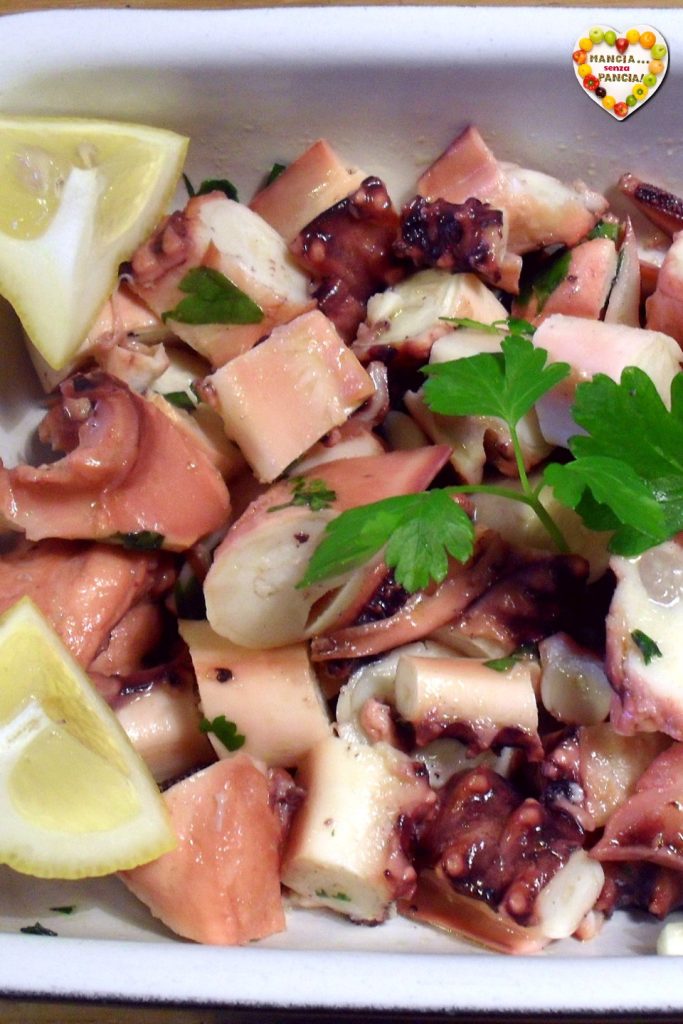
And here is our light octopus salad ready to be served! To present it simply add lemon wedges and fresh parsley. Another idea is to serve it on a bed of arugula…
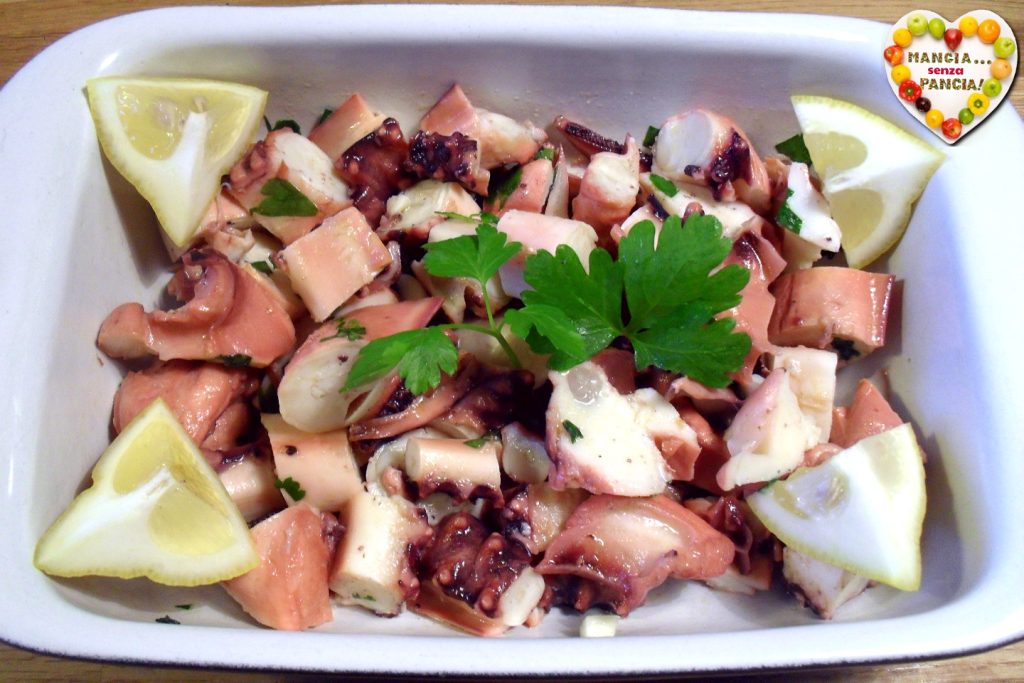
You can also add cubes of boiled potato which combine very well with the flavor of the octopus or simply serve with a couple of slices of toasted country-style bread for a light and nutritious meal.
Enjoy your meal!
by Giovanna Buono