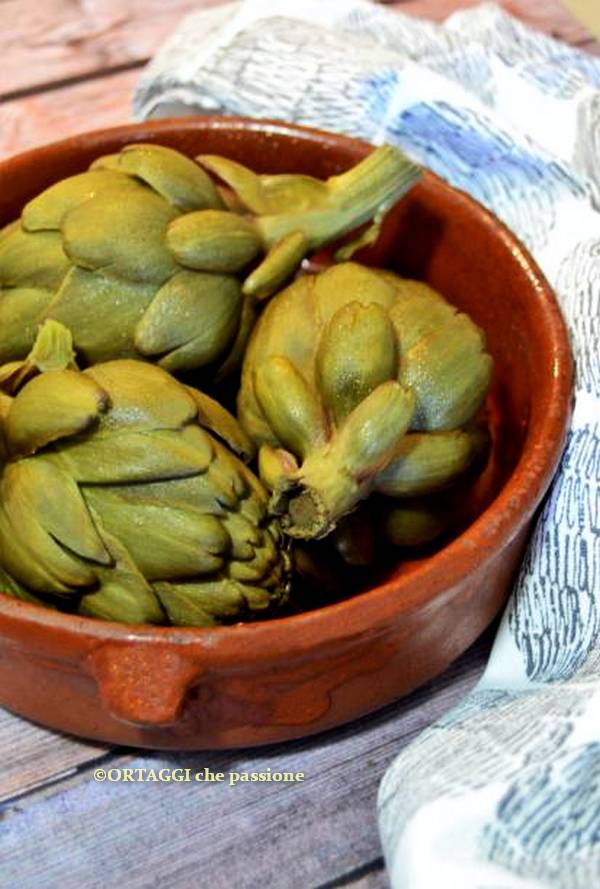
Boiled artichokes are a simple and light side dish, prepared whole and boiled to enhance their taste and naturalness. Popular in traditional boiled dishes, from Neapolitan boiled artichokes to Sicilian whole boiled artichokes, they combine low calories with numerous nutritional properties. For perfect results, it’s important to consider the cooking time and choose whether to start with hot or cold water, to obtain soft artichokes, also great sautéed in a pan.
Understanding how to season the boiled artichokes allows you to enhance them simply, while the benefits of boiled artichokes make them ideal for a balanced diet, rich in taste and wellness.
SEASONALITY of the #artichoke: from October to May depending on the variety.
RECIPES with artichokes
- Difficulty: Easy
- Cost: Economical
- Preparation time: 5 Minutes
- Portions: 3 Pieces
- Cooking methods: Stovetop, Pressure cooker
- Cuisine: Healthy
- Seasonality: Autumn, Winter, and Spring
Boiled Artichokes
- 3 artichokes (Brindisi, Catania, Albenga, Paestum, Romanesco, Sardinian Spinoso, Ligurian Spinoso, Tuscan Violet, Sicilian Violet, Romanesco Violet)
- to taste water
Do boiled artichokes have many calories?
They are a light side dish: few calories, many fibers, and several properties useful for digestion.
Tools
- Pressure cooker for quick steam cooking
Boiled Artichokes
How to prevent artichokes from darkening during cooking?
After cleaning, it’s useful to immerse them in water and lemon. This small precaution preserves color and freshness, especially when cooking them whole and boiled.
Can you boil the artichoke stems?
Yes, the stems are also tender and rich in properties. Just peel them lightly and cook them together with the artichokes to avoid waste and obtain an even more complete side dish.
Remove the tougher and darker outer leaves, then shorten the stem, which can be peeled with a vegetable peeler to remove the fibrous part. The stem can be left attached to the artichoke or cut off and cooked separately, depending on the preference and the recipe. Once cleaned, immerse them in cold water, preferably with a little lemon juice: water alone helps, but lemon more effectively prevents oxidation and removes any soil residues between the leaves.
TYPES OF COOKING
In a pressure cooker
Cooking in a pressure cooker with steam is the fastest solution. The artichokes stay in the basket above a small amount of water. From the moment of the whistle 8-12 minutes are enough to have them soft and ready. The steam under pressure speeds up the process and allows you to retain texture and nutrients well, obtaining evenly and deliciously cooked artichokes.
In water
Cooking in a pot with water is the most traditional way to obtain whole and boiled artichokes. After cleaning, they are immersed in salted water, starting with cold or already hot water based on the desired result, and left to cook until they become soft. Usually 20-30 minutes are enough, variable according to the size. This method makes the artichokes tender and delicate, perfect for seasoning naturally or for pan-frying.
Steamed
Steaming in a pot is a more delicate technique that helps preserve flavor and properties. A little water is poured at the bottom, the basket is inserted, and the artichokes are placed without touching the water. With the lid closed, the steam slowly cooks them in 25-35 minutes, keeping them compact and less watery, with a more concentrated taste.
Just extra virgin olive oil, lemon, salt, and parsley are enough, or they can be sautéed in a pan for a bolder taste. Regional versions, like Neapolitan boiled artichokes or whole Sicilian boiled artichokes, involve simple but fragrant aromas and seasonings.
After boiling, the simplest and most traditional way to eat artichokes is the “grandmother’s way.” You remove one leaf at a time, dipping them into the chosen dressing, such as an emulsion of extra virgin olive oil and lemon.
The tender part at the base of each leaf can be scraped with the teeth or easily detached using the side of a fork or spoon, while the hard part is discarded.
Once you reach the heart, remove any internal fuzz and move on to the softer and more flavorful pulp.It’s a convivial and simple way of eating them, perfect for savoring them slowly and appreciating every part.
They are excellent both ways. Freshly boiled, they are softer and more fragrant, while cold, they become a practical and light side dish, perfect for being seasoned with simple emulsions.
Can you prepare boiled artichokes in advance?
Boiled artichokes keep well in the refrigerator for up to three days, stored in an airtight container and seasoned only at the moment of serving. This way, they maintain texture and properties without losing flavor.
FAQ (Questions and Answers)
What are the benefits of boiled artichokes?
Among the main benefits of boiled artichokes are their purifying and digestive qualities, making them particularly appreciated in a balanced and light diet. This vegetable is naturally rich in fibers, useful for promoting intestinal well-being and regularity, and contains bitter substances like cynarin, known to support liver function and stimulate digestion. Boiled artichokes also provide B vitamins, vitamin C, and minerals like potassium, iron, and magnesium, contributing to the proper functioning of the body without being heavy.
Does cooking change the nutrients in artichokes?
Cooking can partially alter the vitamin and antioxidant content of artichokes, but at the same time, it makes them more digestible and pleasant in taste. Gentle and brief methods, like steaming or light boiling, help better preserve water-soluble vitamins and antioxidant compounds, including flavonoids and polyphenols. Baking can also be suitable if not overdone with temperatures and times. It is preferable to limit prolonged and high-temperature frying, as excessive heat reduces some nutritional properties, making artichokes less rich in benefits compared to those cooked more gently.
Is it better to cook artichokes in hot or cold water?
It depends on the desired texture: starting with cold water promotes more even cooking, while already hot water shortens the cooking time and maintains a more intense flavor.