The cooking time for bulgur is short, usually around 15 minutes, making it ideal for quick preparations. There are two main types of bulgur: the coarse one with a thicker texture and longer cooking time, generally used for soups or vegetable dishes; and the fine one, which has a thinner texture and cooks in just 10 minutes, ideal for salads and pilaf.
The recommended serving per person is 50-80 grams, depending on your appetite and the recipe chosen.
In absorption cooking, water is essential: generally, you use double the volume of cracked wheat. For example, for 100 grams of bulgur, you use 200 ml of water or more. Or, for 1 cup of bulgur, you use 2 cups of water.
In summer, bulgur is delicious in main dishes and cold salads, while in winter it pairs perfectly in hot soups, adding substance and a rustic touch. It’s also ideal as a base for a healthy and energizing breakfast or as a substitute for rice in a risotto.
What is it? Bulgur (bulghur, boulghor, or cracked wheat) is a cereal obtained from sprouted whole durum wheat. After being steamed and dried, the wheat is ground into small pieces. This process gives it a crunchy texture and significantly reduces its cooking time.
Bulgur is also prepared raw. In this case, the durum wheat grains are selected and crushed without any heat treatment. This type of grind is rougher than cooked bulgur, and to use it in cooking, you need to cook it for 15-20 minutes before incorporating it into recipes.
Bulgur, the Turkish term for “boiled barley,” is a cereal originating from the Middle East.
Rich in fiber and protein, this precooked and chopped cereal is very filling and generally improves intestinal well-being. Its versatility makes it a beloved ingredient in many international cuisines, suitable for every season and every dish!
#cookingcereals
COOKING grains
- Difficulty: Easy
- Cost: Economical
- Preparation time: 2 Minutes
- Portions: 4
- Cooking methods: Stovetop, Pressure cooker
- Cuisine: Healthy
- Seasonality: All seasons
- Energy 256.50 (Kcal)
- Carbohydrates 56.90 (g) of which sugars 0.31 (g)
- Proteins 9.22 (g)
- Fat 1.00 (g) of which saturated 0.17 (g)of which unsaturated 0.54 (g)
- Fibers 9.38 (g)
- Sodium 503.43 (mg)
Indicative values for a portion of 228 g processed in an automated way starting from the nutritional information available on the CREA* and FoodData Central** databases. It is not food and / or nutritional advice.
* CREATES Food and Nutrition Research Center: https://www.crea.gov.it/alimenti-e-nutrizione https://www.alimentinutrizione.it ** U.S. Department of Agriculture, Agricultural Research Service. FoodData Central, 2019. https://fdc.nal.usda.gov
BULGUR – absorption cooking
DOSAGE per person:
– 1.5 to 1.75 oz if added to soup or used as a side dish or in salads
– 2.5 to 2.8 oz if used as a main dish or in poke
(in the recipe below I used 2.6 oz per person)
- 10.5 oz bulgur
- 1 tsp fine salt (more or less according to taste)
- 21 oz water
HOW TO CALCULATE the WATER amount
– 1 cup of bulgur = 2 cups of water
– 3.5 oz of bulgur = 7 oz of water
Tools
- Pan tall and narrow with lid
BULGUR – easy and quick cooking
Cooking bulgur is similar to cooking couscous.
Always rinse the cracked wheat thoroughly under running water before use to remove excess starch.
Optionally, you can toast it lightly for a few minutes in a pan before adding it to the water.
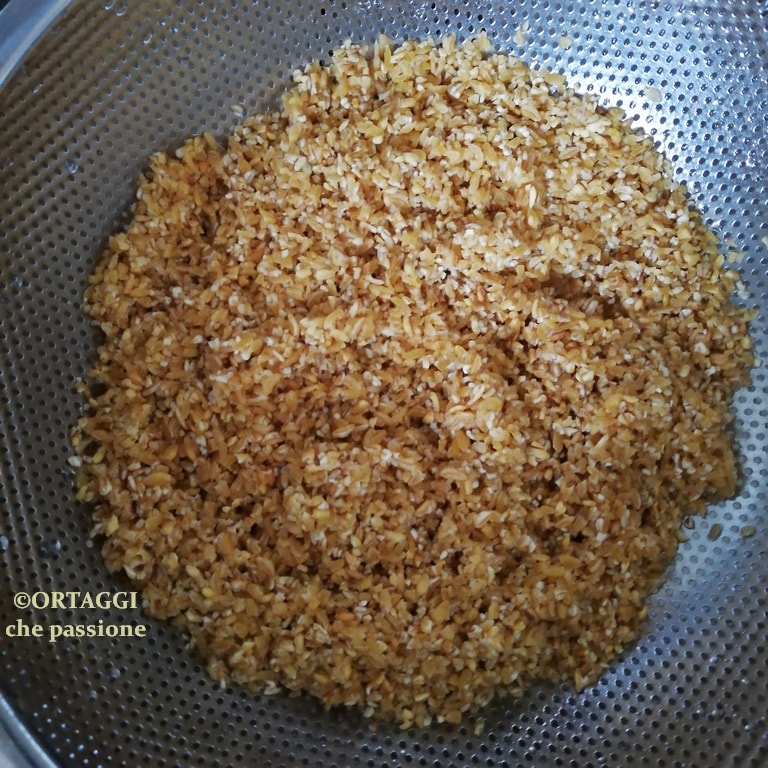
Pour the rinsed bulgur into the pressure cooker and cover it with the required water (salt now or at the end of cooking).
Seal the pressure cooker and turn on the heat. Once it whistles, lower the heat and continue gentle cooking. When the cooking time is over, turn off the heat and let the pressure cooker release naturally and open it only when the safety lock has lowered, so the grain will continue cooking (a technique that also makes opening the pressure cooker safer). If there is still water at the end of cooking, close the pot again and wait for the bulgur to absorb all the water.
How do you calculate the cooking time in a pressure cooker?
Generally, the cooking time in a pressure cooker is halved.
However, if you allow the pressure cooker to release naturally after turning off the heat (also to avoid being inundated by cooking steam), the times are reduced by one-third, saving energy and time.
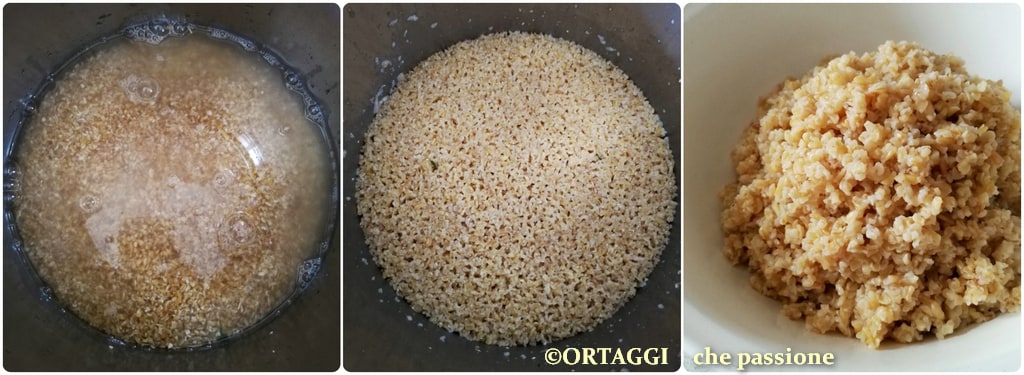
– WITH COLD WATER
Place the rinsed bulgur in a saucepan, then cover it with cold water and stir quickly. Cover the pan with a lid and cook over low heat for about 15 minutes, so that the liquid is completely absorbed. If necessary, add more water during cooking. Once cooked, turn off the heat and let it rest in the pot until the liquid is fully absorbed.
– WITH HOT WATER
Place the water (or broth for a more intense flavor) in a pot, bring it to a boil, and salt it, turn off the heat and pour the washed cracked wheat inside. Stir and cover with a lid, let it rest for about 15 minutes or until the desired consistency is reached. Before serving, fluff with a fork.
Alternatively, pour the rinsed bulgur into a bowl and cover it with hot water. After salting and stirring, cover the bowl and let the bulgur soak. This will allow the grain to swell and fully absorb the water.
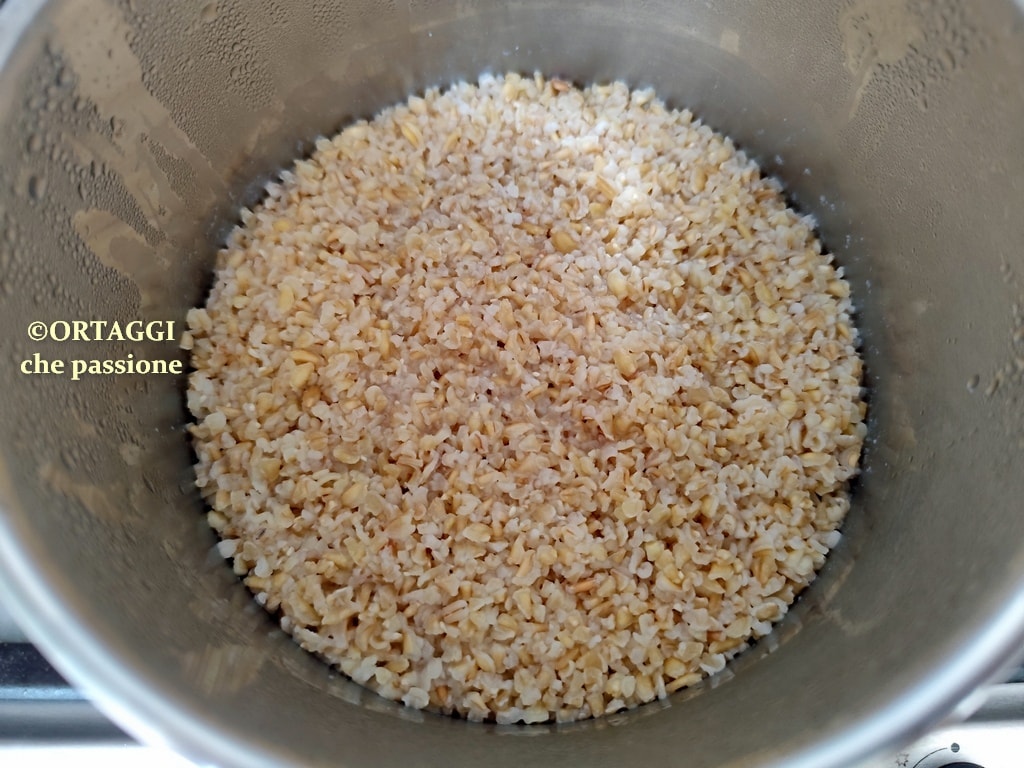
WHAT IS THE RIGHT CONSISTENCY OF COOKED BULGUR?
At the end of cooking, the bulgur should be soft but not mushy.
After cooking, it’s always better to cover the pot with a lid and let it rest for another 5 minutes or more to allow the bulgur to absorb any remaining liquid and become even softer.
Once the bulgur is ready, fluff it with a fork to separate the grains and achieve a light and fluffy consistency. Optionally, season with raw extra virgin olive oil and/or lemon.
Transfer the washed bulgur to a microwave-safe container and add the water (or broth), using a ratio of 8.1 oz of water for every 3.5 oz of bulgur. Cover the container with a microwave-safe lid, leaving a small opening to allow air to escape.
Cook the bulgur at maximum power for 5-6 minutes. After the time is up, check the consistency of the grain, and if necessary, continue cooking for another 2 minutes until the bulgur is soft but still slightly al dente. Once cooked, let it rest covered for a few minutes, allowing it to absorb any residual liquid and reach the perfect consistency. Finally, fluff with a fork.
Among the most common spices used with bulgur are CUMIN (adds an earthy touch), CORIANDER (provides a slightly citrusy aroma), BLACK pepper or chili pepper (add a bit of spiciness), CINNAMON (for a sweet and warm flavor), PAPRIKA (offers a smoky and colorful touch), TURMERIC (with its intense yellow color, can be used to add color). These spices can be added individually or in a mix to further enrich the dish. The use of spices depends on the type of dish you want to prepare and personal tastes.
STORING cooked bulgur
After cooking, let the boiled bulgur cool at room temperature. Cooked bulgur can be stored, in an airtight container, in the fridge for up to 4 days.
FAQ
What’s the difference between couscous and bulgur?
Couscous is a type of semolina pasta, typical of North Africa, while bulgur is partially cooked and dried whole grain wheat, originating from the Middle East. Both are used in many recipes, but they have different textures and preparations.
Where can bulgur be found?
Bulgur can be bought in well-stocked supermarkets (usually in the ethnic or cereals and legumes section), herbalists, organic stores, or at an exotic products market.
What does bulgur taste like?
Bulgur has a slightly nutty flavor and a texture similar to brown rice.
How much does bulgur cost per kg?
The cost of bulgur can vary depending on where it’s purchased and the type of bulgur. Generally, the price ranges between 4 and 8 euros, but it can be higher for organic or specialty varieties.