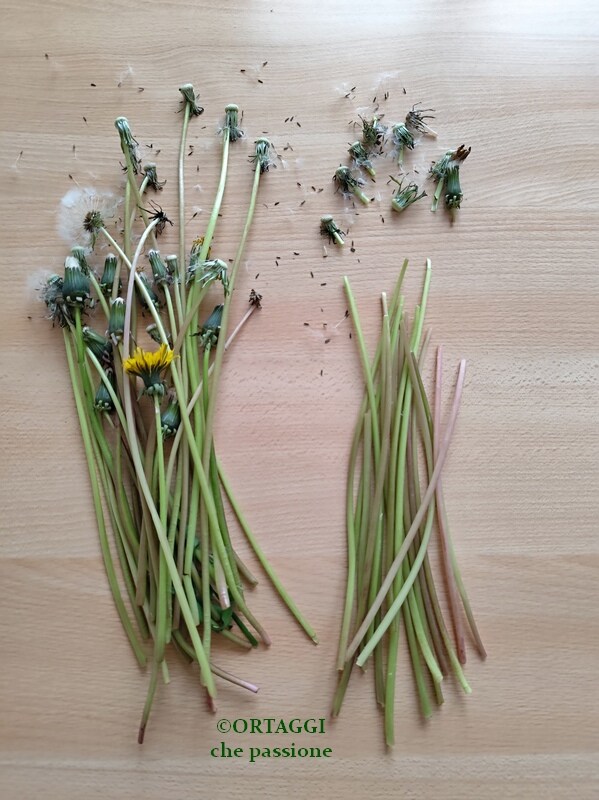
Pan-fried dandelion stems are a simple and natural side dish. This recipe is really quick and allows you to enjoy a healthy dish in just a few minutes. The only step that requires a bit more time is gathering the hollow stems, the ones that support the flower or the puffball: they, with their unique texture, add character to the dish.
SEASON of #dandelion stems – from spring to autumn, depending on the harvest location.
RECIPES with dandelion
- Difficulty: Easy
- Cost: Very Cheap
- Preparation time: 3 Minutes
- Portions: 1 Person
- Cooking methods: Stovetop
- Cuisine: Wellness
- Seasonality: Spring, Summer, and Autumn
- Energy 29.50 (Kcal)
- Carbohydrates 2.76 (g) of which sugars 0.21 (g)
- Proteins 0.81 (g)
- Fat 2.08 (g) of which saturated 0.32 (g)of which unsaturated 0.10 (g)
- Fibers 1.05 (g)
- Sodium 410.78 (mg)
Indicative values for a portion of 35 g processed in an automated way starting from the nutritional information available on the CREA* and FoodData Central** databases. It is not food and / or nutritional advice.
* CREATES Food and Nutrition Research Center: https://www.crea.gov.it/alimenti-e-nutrizione https://www.alimentinutrizione.it ** U.S. Department of Agriculture, Agricultural Research Service. FoodData Central, 2019. https://fdc.nal.usda.gov
Pan-fried Dandelion Stems
- 1.1 oz dandelion (lion's tooth) (hollow stems)
- 1 thread extra virgin olive oil
- to taste salt (and thyme)
- to taste water (if needed)
How many stems are needed for one serving? It depends on the size of the stems, but generally for a side portion you need about 30-40 stems.
Tools
- Frying Pan
- Ladle
It’s important to collect the stems in clean areas, away from busy roads or chemically treated fields. Dandelions grow everywhere, but not all places are suitable for harvesting.
Pan-fried Dandelion Stems
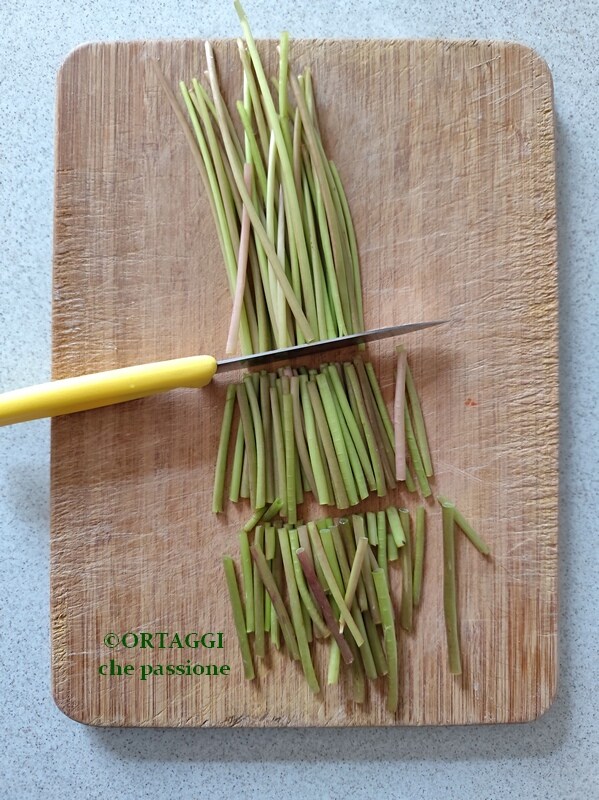
Collect and clean the dandelion stems. Cut them into regular pieces, then wash them carefully.
Sauté them directly in the pan with a thread of oil and salt, maybe adding garlic or spices to taste.
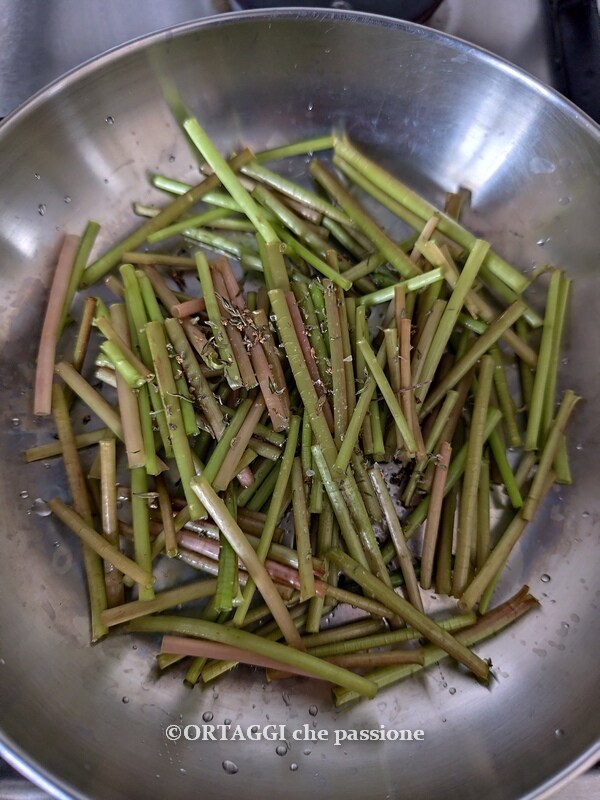
Just mix well and, only if necessary, add a splash of water.
They cook in a few minutes.
Do I need to blanch them before cooking them in the pan? It is not necessary. Their cooking is very quick.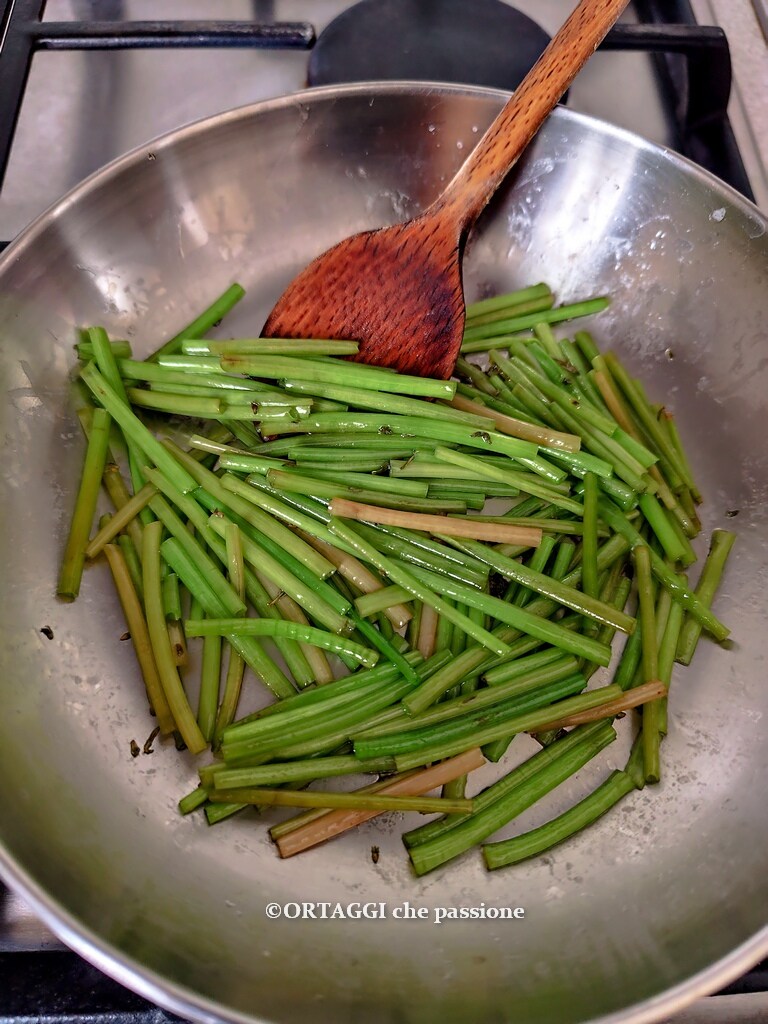
Dandelion Stems in the Kitchen
🌿 Raw in Salad: cut into small pieces and mixed with other fresh vegetables, maybe with a drizzle of oil, lemon, and seeds.
🌿 Dandelion Spaghetti: blanched for a few minutes in hot salted water.
🌿 In Frittata: chopped and added to eggs, alone or with other wild herbs.
🌿 Sauce for Pasta: add them in small cubes to tomato sauce to make a similar ragù.
🌿 In Soups or Stews: added at the end of cooking, they add a bitter and purifying touch.
STORING Cooked Dandelion Stems
Let them cool completely, then store in the refrigerator in an airtight container. Consume within 3 days.
Freezing is not recommended.
FAQ (Questions and Answers)
How do you recognize the right stems to gather?
Simply look for those that feel hollow to the touch, easy to snap, with the flower still attached or the puffball. It’s best to collect them in areas away from pollution sources, preferably in the countryside or untreated meadows.
Are dandelion stems edible raw?
Yes, but their bitter taste is much more intense when raw.
Maria Treben (famous Austrian herbalist and author of the book “Health from God’s Pharmacy”) strongly recommended the use of fresh dandelion stems, especially in spring, when the plant is in its most vital state. She advised eating five to ten a day, chewing them slowly. According to her, these stems are an effective natural remedy for cleansing the liver, stimulating bile production, and improving digestion.
Moreover, Maria Treben claimed they could be useful even in cases of mild diabetes, naturally helping to regulate blood sugar levels. The stems, rich in bitter substances, are considered cleansing and balancing, ideal for a spring “awakening” of the body.What do they taste like?
The taste is distinctive: slightly bitter, with grassy and fresh notes. If you enjoy rustic and natural flavors, you’ll love them.
What can I pair them with?
They pair well with potatoes, legumes, fresh cheeses, or eggs. But they can also be an unusual side dish for plant-based main courses.