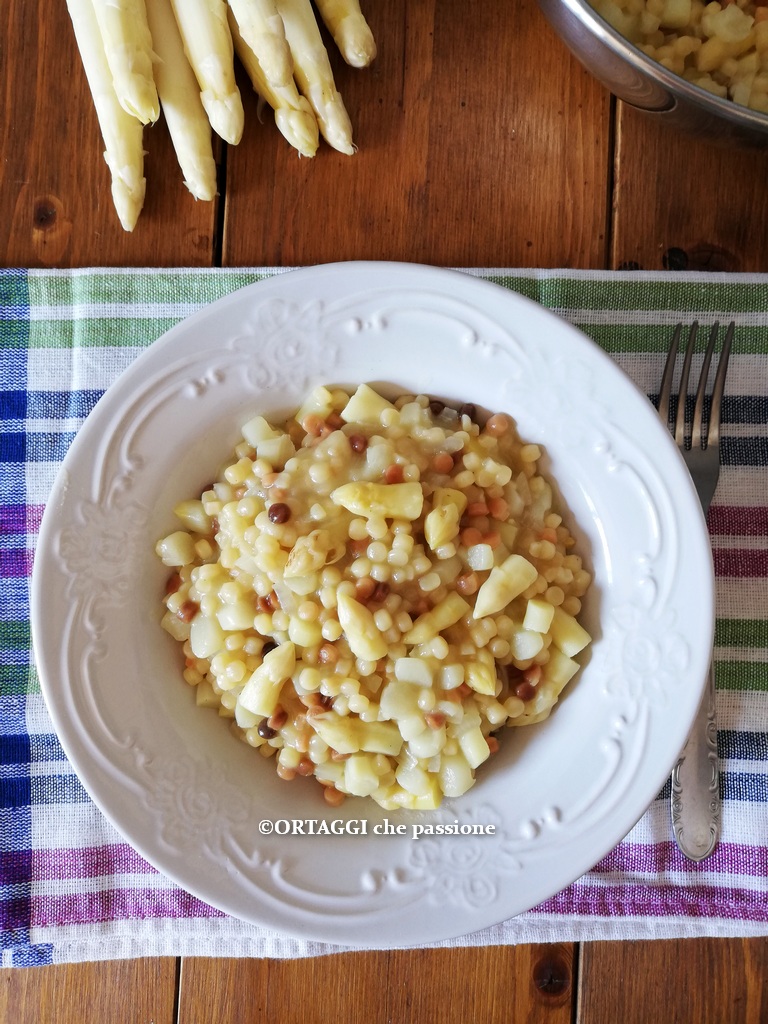
Fregola with asparagus is a simple first course with a fresh, seasonal identity.
In this version I used white asparagus, which have a more delicate and slightly bitter taste, but the recipe also works very well with green or purple asparagus, which give more herbaceous or slightly sweet notes.
The vegan base is essential and clean: fregola cooked risotto-style, sautéed asparagus, a good extra virgin olive oil and, if desired, a splash of white wine. The result is a balanced dish where the slightly rustic texture of the fregola meets the softness of the asparagus, without unnecessary additions. From here, however, a world of variations opens up.
With wild asparagus the flavor becomes more intense and aromatic, almost bitter. Adding saffron brings a warm, perfumed note, while an asparagus cream makes the dish more enveloping and creamy, while still keeping a vegetable soul.
For those who don’t follow a vegan diet, possibilities expand further: shrimp add an elegant marine sweetness, bottarga gives a decisive, iodized character, while goat cheese introduces a pleasant acidity that contrasts the asparagus’ sweetness; pancetta or sausage add depth and savoriness.
This is a recipe that starts from a very simple base, but precisely for this reason it can be easily interpreted, adapting to tastes and available ingredients.
HARVEST period for #asparagus – from mid-March to early June.
RECIPES with white asparagus
- Difficulty: Easy
- Cost: Economical
- Preparation time: 15 Minutes
- Cooking time: 25 Minutes
- Portions: 2Servings
- Cooking methods: Stovetop
- Cuisine: Italian
- Seasonality: Spring
- Energy 249.13 (Kcal)
- Carbohydrates 28.01 (g) of which sugars 4.48 (g)
- Proteins 7.12 (g)
- Fat 13.40 (g) of which saturated 2.11 (g)of which unsaturated 0.92 (g)
- Fibers 2.39 (g)
- Sodium 809.76 (mg)
Indicative values for a portion of 430 g processed in an automated way starting from the nutritional information available on the CREA* and FoodData Central** databases. It is not food and / or nutritional advice.
* CREATES Food and Nutrition Research Center: https://www.crea.gov.it/alimenti-e-nutrizione https://www.alimentinutrizione.it ** U.S. Department of Agriculture, Agricultural Research Service. FoodData Central, 2019. https://fdc.nal.usda.gov
Fregola with asparagus
- 5.3 oz white asparagus (or green – net weight without waste)
- 2 cups vegetable broth
- Half onion (about 3 oz (80 g))
- 2 tablespoons extra virgin olive oil (for the sauté and for finishing)
- 5.6 oz fregola
- to taste nutritional yeast (or grated hard cheese for non-vegans – optional)
Tools
- Peeler
- Saucepan for risotto
Fregola with asparagus
Prepare the broth for the risotto.
Choose them according to your taste: white, green or purple.
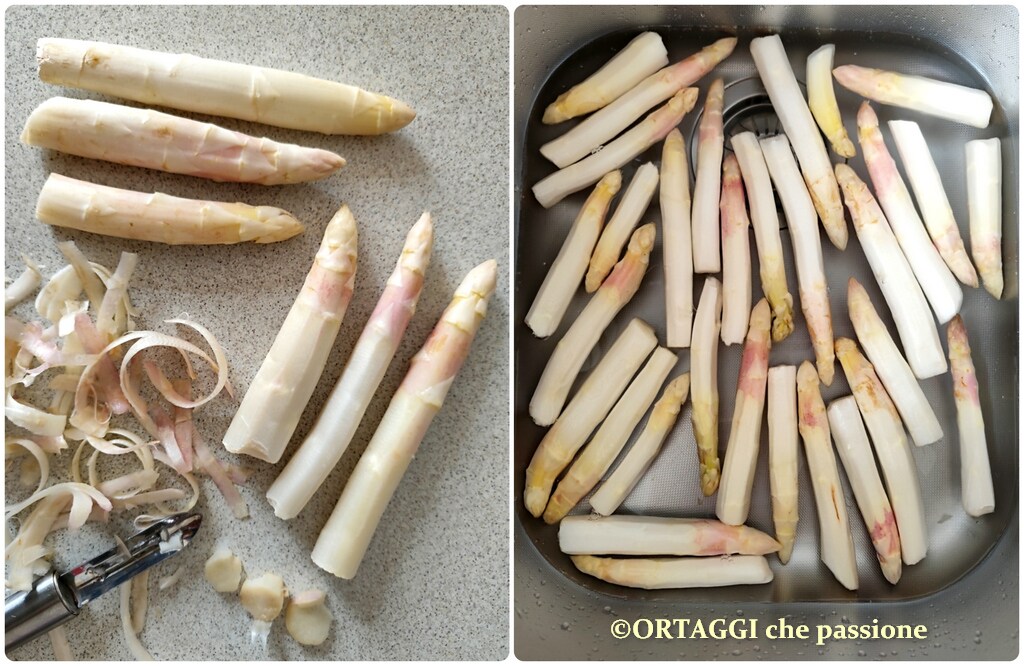
Clean the white asparagus by removing the toughest bottom part, then peel them with a peeler starting just below the tip to remove the tough outer fibers. Soak them in cold water for a while to rehydrate and make them more tender.
Alternatively, clean green asparagus by removing only the fibrous bottom part, with no need to soak.Cut the asparagus into pieces, keeping the tips aside.
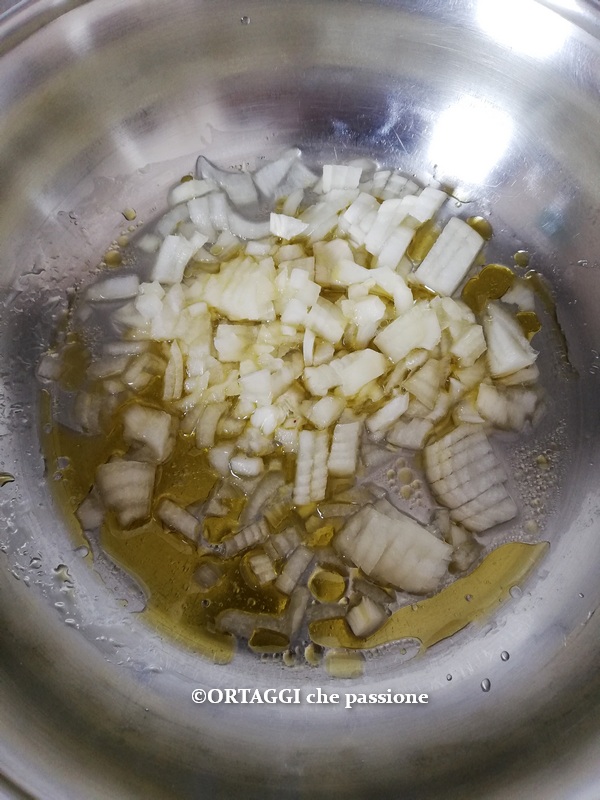
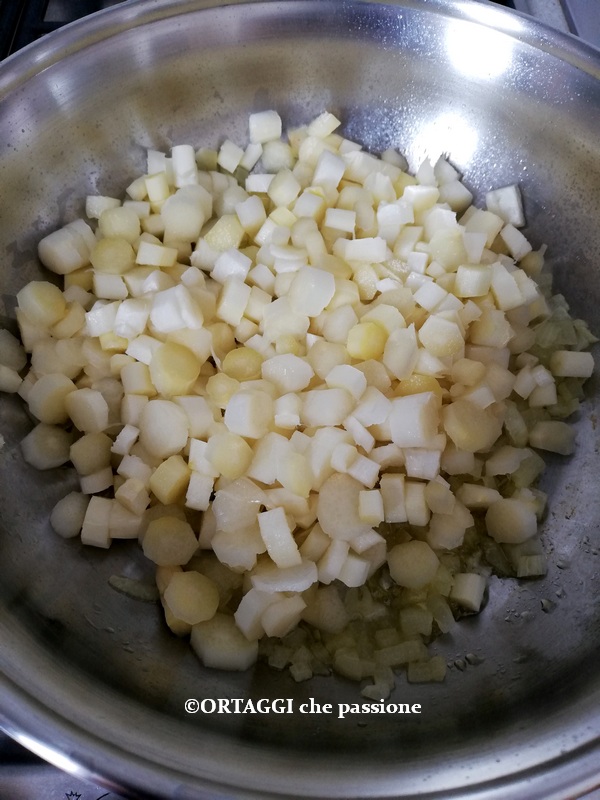
Finely chop the onion. Put it in a pan with the oil and a little broth and let it sweat gently for a few minutes, until soft and translucent.
Now add the asparagus pieces and flavor them with a little broth until they soften.
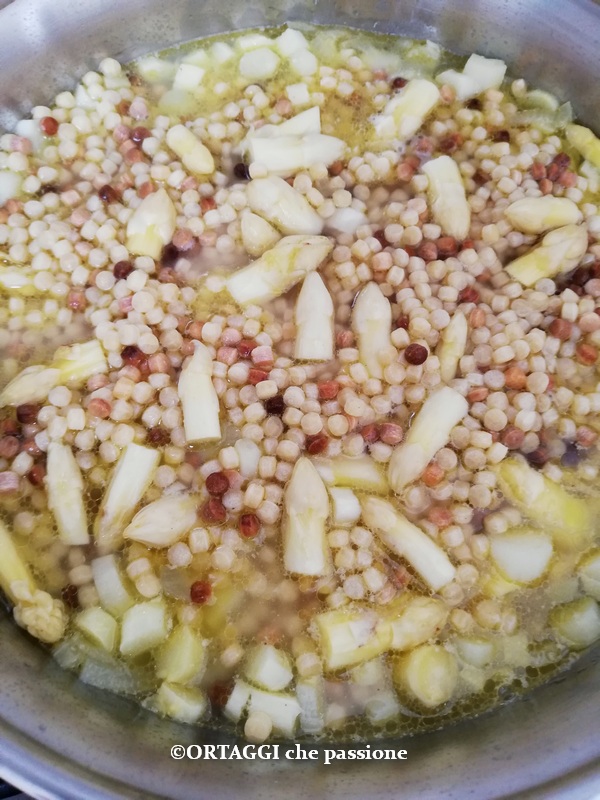
Add the fregola and toast it for a few minutes (if you like, deglaze with some white wine), then cook it as if it were a risotto, adding a little broth at a time and stirring occasionally. Toward the end of cooking add the asparagus tips so they stay intact.
Finish with olive oil: for a vegan version you can flavor with a tablespoon of nutritional yeast or a small amount of nut cream (such as almond or cashew).
Alternatively, for a vegetarian version add a little creamy cheese or grated cheese. Serve immediately.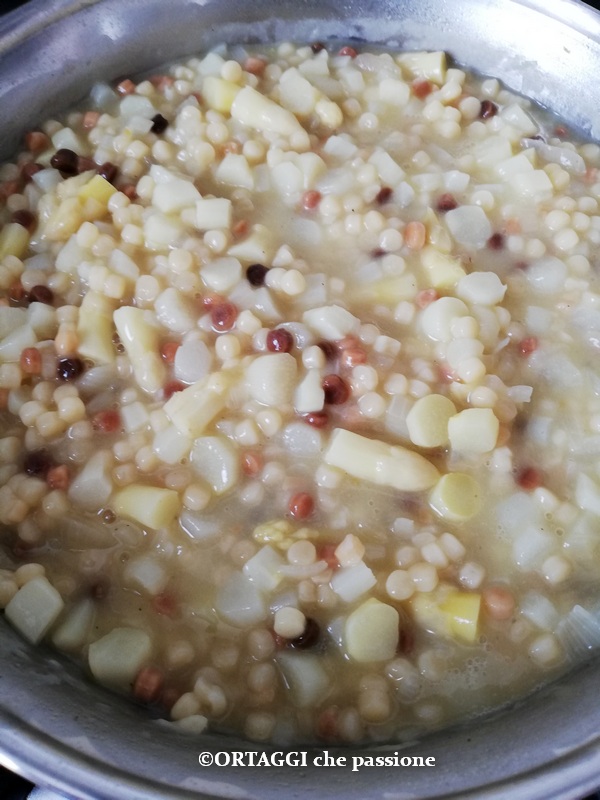
TIPS
The fregola should be soft but “al dente”. It is preferable to leave it slightly brothy, as it tends to absorb liquid quickly even after cooking.
VARIATIONS
🍀 Vegan: with wild asparagus for a more intense flavor; with saffron or turmeric for an aromatic note; with blended asparagus cream to increase creaminess; with nutritional yeast flakes or almond/cashew cream for a dairy-free finish; with fresh peas for a springtime sweetness; with mint or lemon zest for a fresh, citrusy note.
🍀 Vegetarian: add fresh goat cheese for a slightly tangy note; grated cheeses for more savory flavor; butter for a richer finish; ricotta for a delicate creaminess; gorgonzola for a stronger, enveloping taste; chopped walnuts or hazelnuts for a crunchy component.
🍀 With seafood: with shrimp for a delicate marine sweetness; with bottarga for a decisive flavor added at the end of cooking; with clams for a more maritime version; with squid or cuttlefish for a more structured texture; with fresh tuna for a richer variant.
🍀 With meat: with crispy pancetta for a salty, crunchy element; with crumbled sausage for a more intense flavor; with speck for a smoky note; with guanciale for more aromatic fattiness.
STORING fregola with asparagus
Store in the refrigerator in an airtight container for up to 3 days, letting it cool completely before storing. When consuming, reheat adding a little water or broth to restore creaminess.
Freezing is not recommended.
FAQ (Questions and Answers)
Can other types of grains be used instead of fregola?
Yes, you can substitute with pearled barley, spelt or rice, taking into account that cooking times and the amount of liquid required will change.
What’s the difference between couscous and fregola?
Couscous consists of granules of durum wheat semolina processed by steaming and then dried, with a fine and uniform texture that rehydrates without true cooking. Fregola, on the other hand, is a Sardinian pasta made of small irregular semolina spheres, toasted in the oven and cooked directly in the pot, with a more rustic and flavorful texture.
How to choose the best asparagus?
They should be firm, with compact tips and no signs of wilting; thinner ones are generally more tender, while thicker ones are meatier but require more careful peeling.
What flavors pair well with asparagus in fregola?
They pair well with lemon, black pepper, fresh herbs like parsley or mint, and delicate spices like saffron, which enhance their flavor without covering it.